
KINGDOM PLANTAE Botany the study of plants Characteristics
KINGDOM PLANTAE Botany = the study of plants Characteristics That All Plants Have in Common : • Eukaryotic • Multicellular • Autotrophic • Cell Walls made of cellulose 1
Menu of Knowledge Plant Classification Plant Body Parts Transport of Materials In Plants Plant Reproduction Growth of Plants Plant Hormones Tropisms and Photoperiodism 2
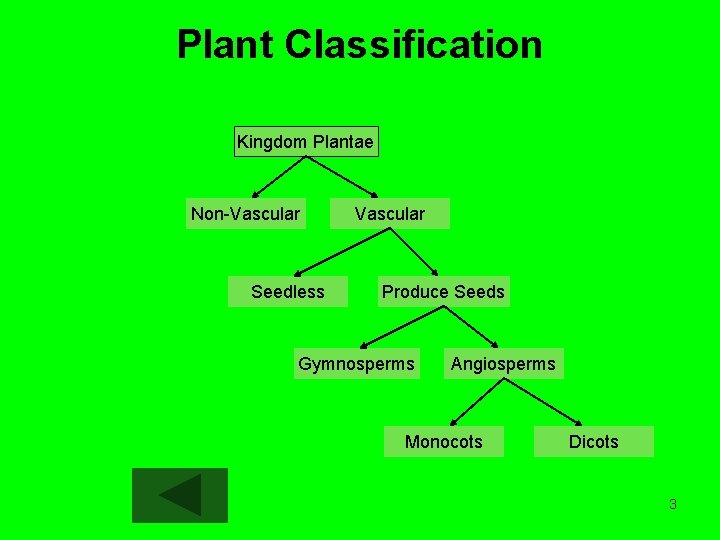
Plant Classification Kingdom Plantae Non-Vascular Seedless Vascular Produce Seeds Gymnosperms Angiosperms Monocots Dicots 3
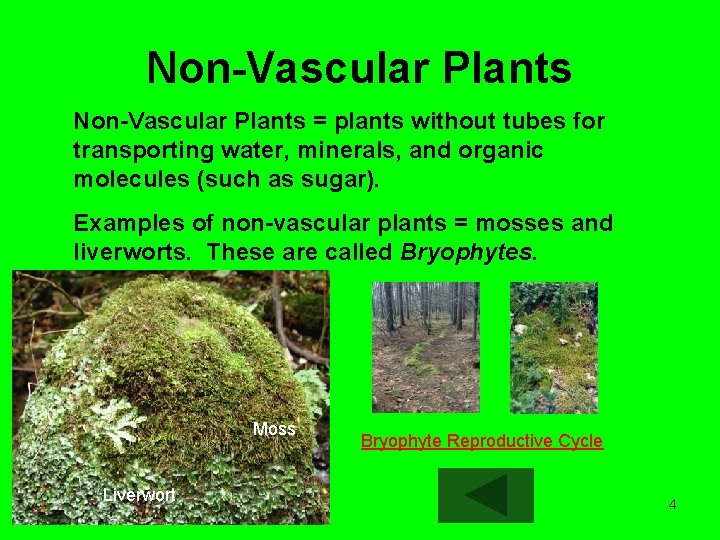
Non-Vascular Plants = plants without tubes for transporting water, minerals, and organic molecules (such as sugar). Examples of non-vascular plants = mosses and liverworts. These are called Bryophytes. Moss Liverwort Bryophyte Reproductive Cycle 4
Vascular Plants Vascular plants = plants with tubes to transport water, minerals, and organic molecules (such as sugars). Examples of Vascular Plants = all plants except mosses and liverworts 5
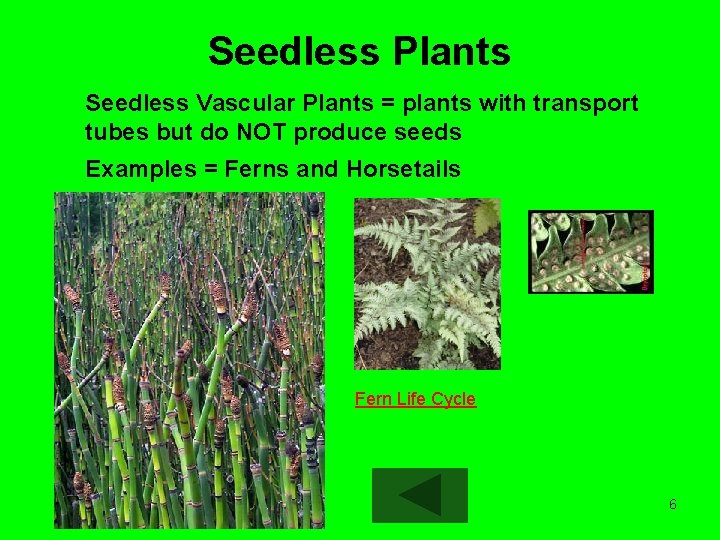
Seedless Plants Seedless Vascular Plants = plants with transport tubes but do NOT produce seeds Examples = Ferns and Horsetails Fern Life Cycle 6
Plants That Produce Seeds All plants except mosses (and other Bryophytes) and ferns are plants that produce seeds. There are two groups of plants that produce seeds : Gymnosperms and Angiosperms. 7
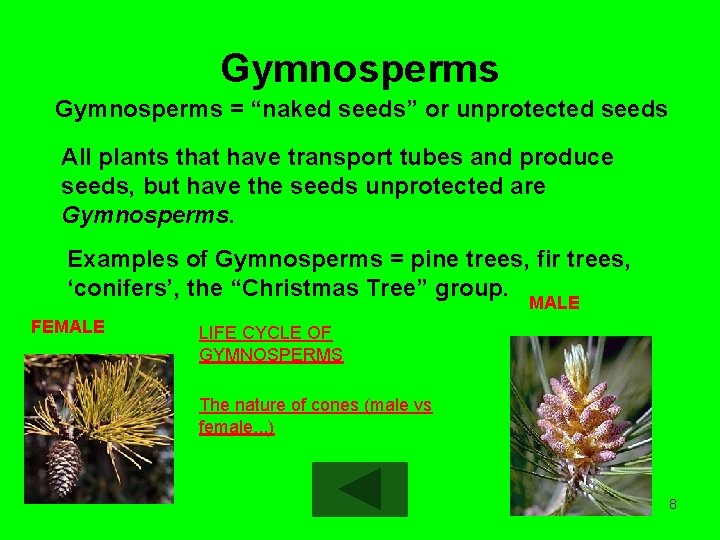
Gymnosperms = “naked seeds” or unprotected seeds All plants that have transport tubes and produce seeds, but have the seeds unprotected are Gymnosperms. Examples of Gymnosperms = pine trees, fir trees, ‘conifers’, the “Christmas Tree” group. MALE FEMALE LIFE CYCLE OF GYMNOSPERMS The nature of cones (male vs female. . . ) 8
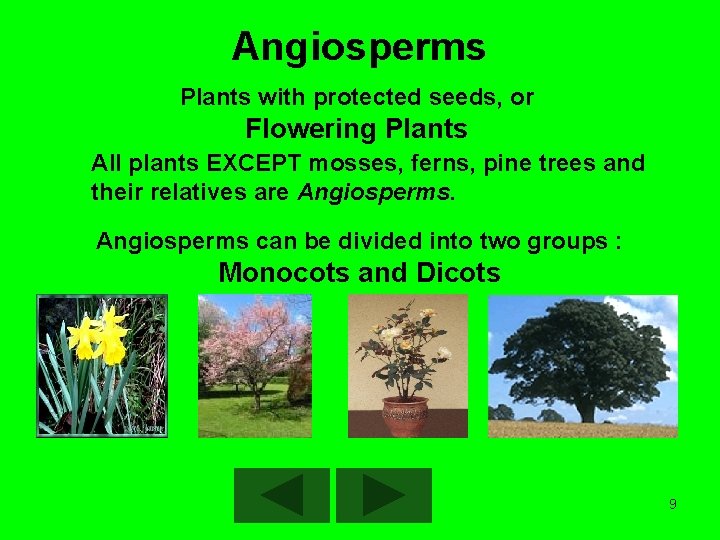
Angiosperms Plants with protected seeds, or Flowering Plants All plants EXCEPT mosses, ferns, pine trees and their relatives are Angiosperms can be divided into two groups : Monocots and Dicots 9
Monocots vs. Dicots All plants EXCEPT mosses, ferns, pine trees and their relatives are Angiosperms. All angiosperms are either monocots or dicots. Monocots and Dicots are the two divisions of Angiosperms (flowering plants). They are different based on the characteristics described on the next slide. 10
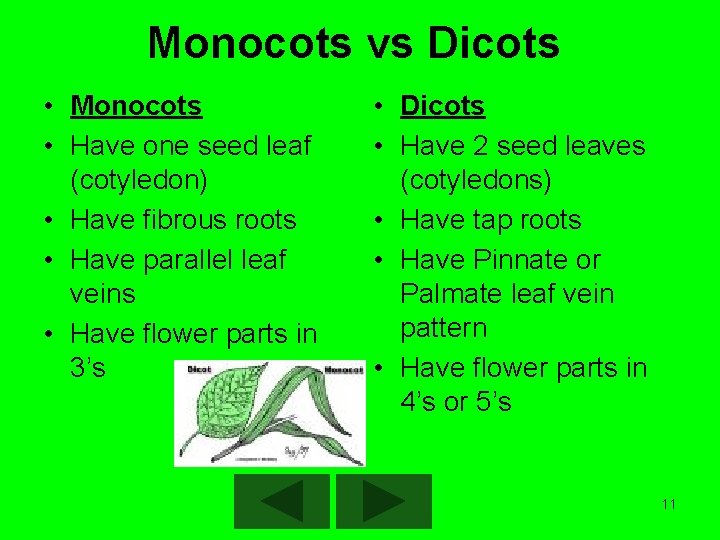
Monocots vs Dicots • Monocots • Have one seed leaf (cotyledon) • Have fibrous roots • Have parallel leaf veins • Have flower parts in 3’s • Dicots • Have 2 seed leaves (cotyledons) • Have tap roots • Have Pinnate or Palmate leaf vein pattern • Have flower parts in 4’s or 5’s 11
Examples of Monocots and Dicots • Monocots • Dicots • Grass, tulips, corn, wheat, daffodils, iris, Palm trees. • All flowering plants except the Grass families and the Bulb families. • These are the most successful plants on Earth. 12
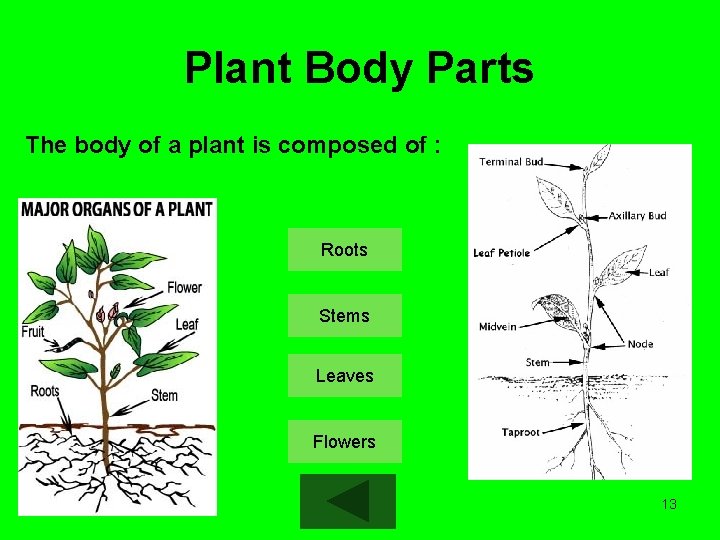
Plant Body Parts The body of a plant is composed of : Roots Stems Leaves Flowers 13
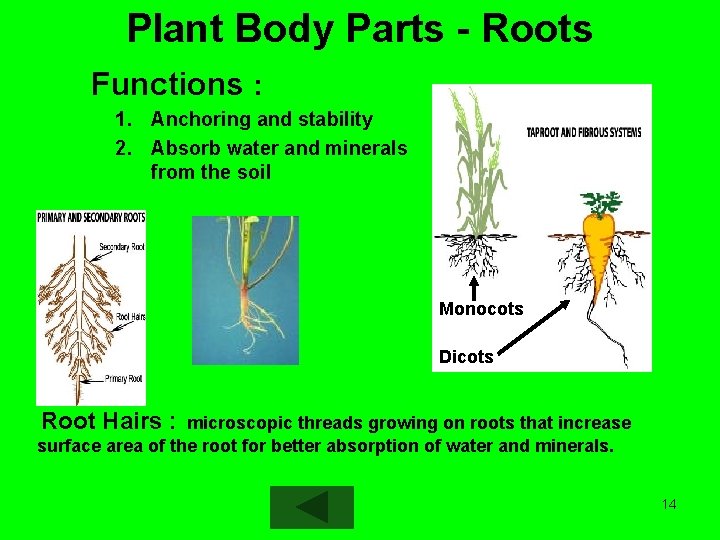
Plant Body Parts - Roots Functions : 1. Anchoring and stability 2. Absorb water and minerals from the soil Monocots Dicots Root Hairs : microscopic threads growing on roots that increase surface area of the root for better absorption of water and minerals. 14
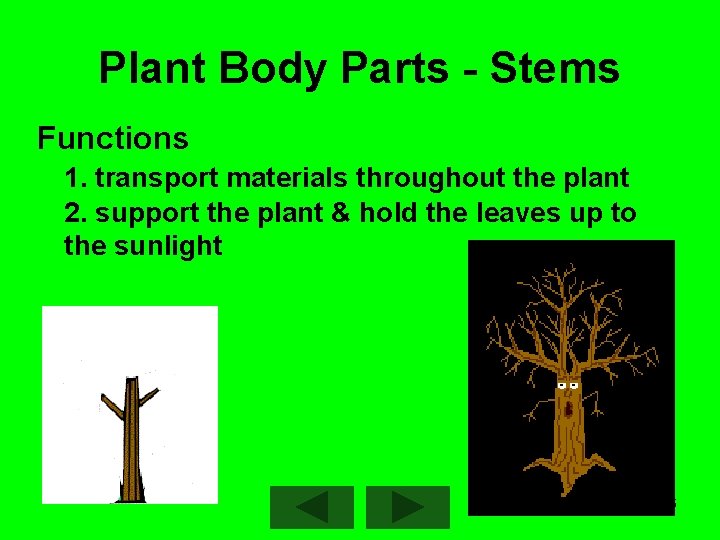
Plant Body Parts - Stems Functions 1. transport materials throughout the plant 2. support the plant & hold the leaves up to the sunlight http: //www. ars. usda. gov/ s/kids/plants/story 1/treeb 2. gif 15
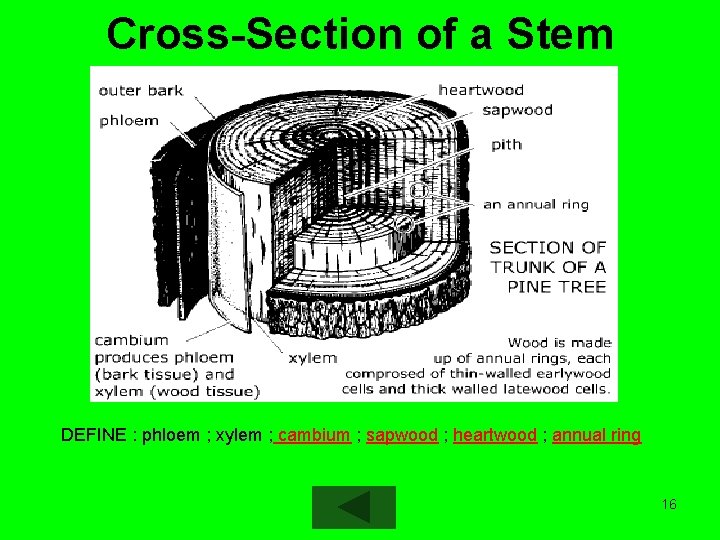
Cross-Section of a Stem DEFINE : phloem ; xylem ; cambium ; sapwood ; heartwood ; annual ring 16
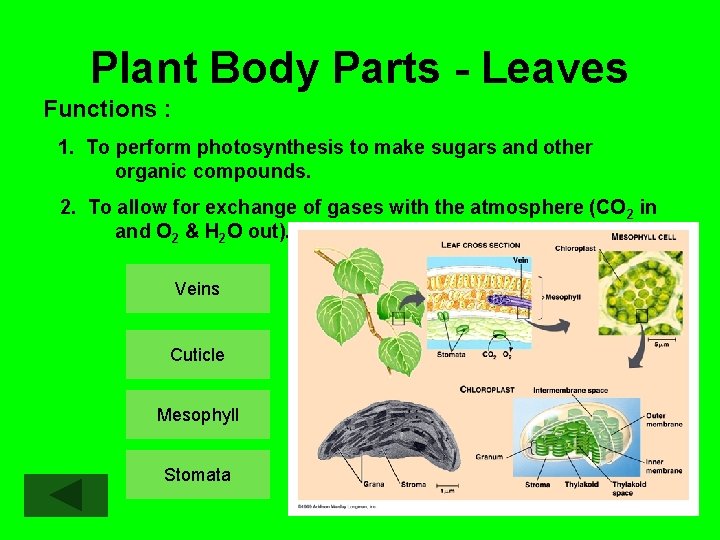
Plant Body Parts - Leaves Functions : 1. To perform photosynthesis to make sugars and other organic compounds. 2. To allow for exchange of gases with the atmosphere (CO 2 in and O 2 & H 2 O out). Veins Cuticle Mesophyll http: //fig. cox. miami. edu/~cmallery/150/phts/leaf. jpg Stomata 17
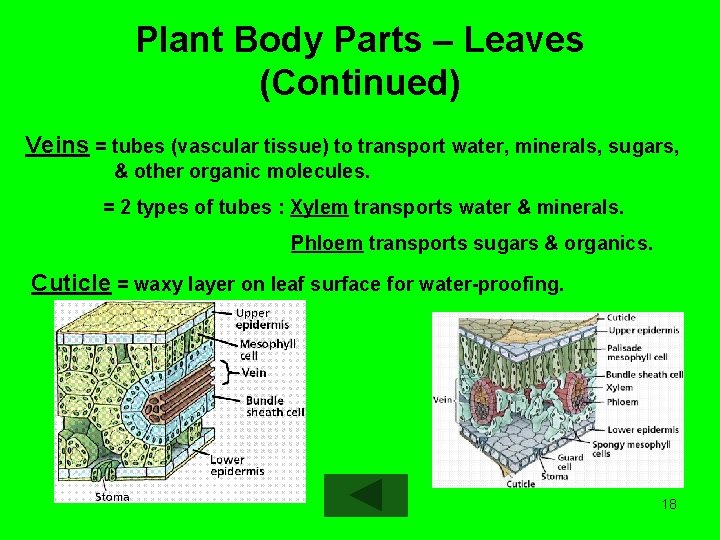
Plant Body Parts – Leaves (Continued) Veins = tubes (vascular tissue) to transport water, minerals, sugars, & other organic molecules. = 2 types of tubes : Xylem transports water & minerals. Phloem transports sugars & organics. Cuticle = waxy layer on leaf surface for water-proofing. http: //www. emc. maricopa. edu/faculty /farabee/BIOBK/C 4 leaf. gif 18
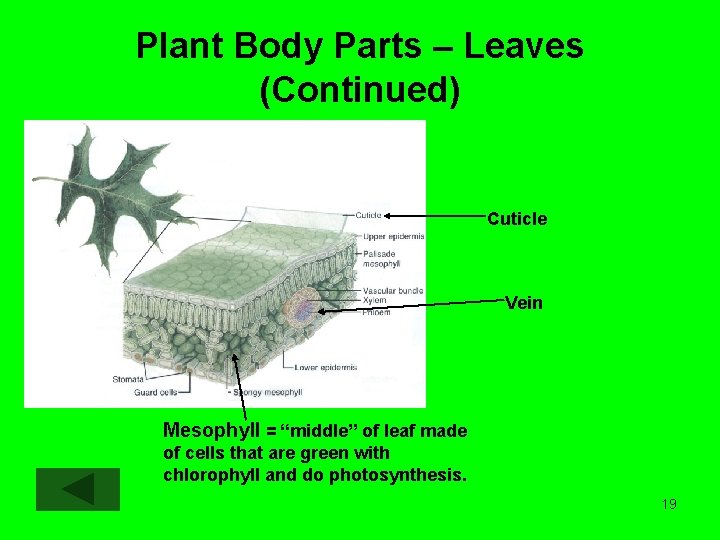
Plant Body Parts – Leaves (Continued) Cuticle http: //sci. gallaudet. edu/soarhigh 2002/amandakrieger/leafinsideparts. jpg Vein Mesophyll = “middle” of leaf made of cells that are green with chlorophyll and do photosynthesis. 19
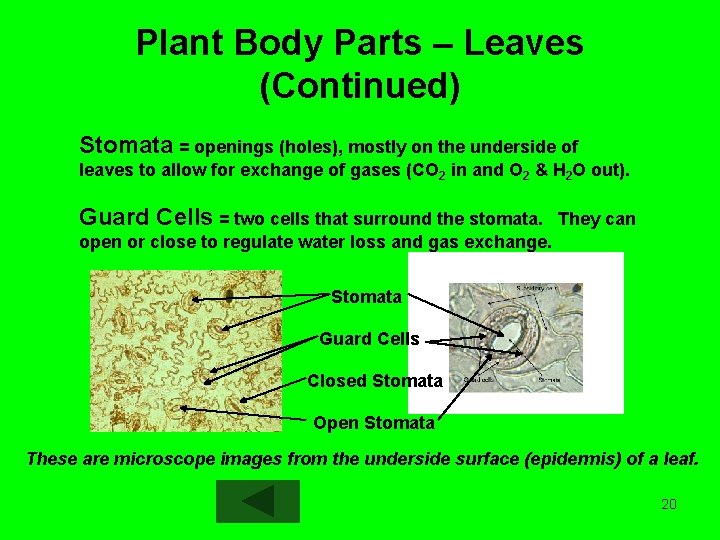
Plant Body Parts – Leaves (Continued) Stomata = openings (holes), mostly on the underside of leaves to allow for exchange of gases (CO 2 in and O 2 & H 2 O out). Guard Cells = two cells that surround the stomata. They can open or close to regulate water loss and gas exchange. Stomata Guard Cells Closed Stomata Open Stomata These are microscope images from the underside surface (epidermis) of a leaf. 20
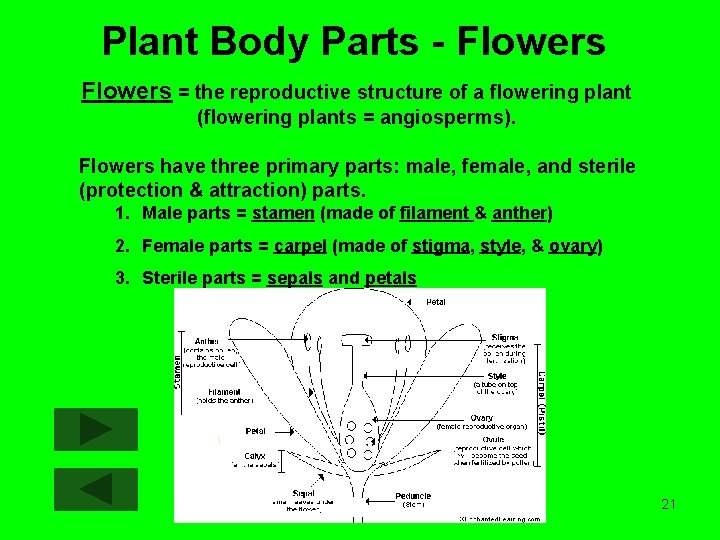
Plant Body Parts - Flowers = the reproductive structure of a flowering plant (flowering plants = angiosperms). Flowers have three primary parts: male, female, and sterile (protection & attraction) parts. 1. Male parts = stamen (made of filament & anther) 2. Female parts = carpel (made of stigma, style, & ovary) 3. Sterile parts = sepals and petals http: //www. enchantedlearning. com/subjects/plants/printouts/floweranatomy. shtml 21
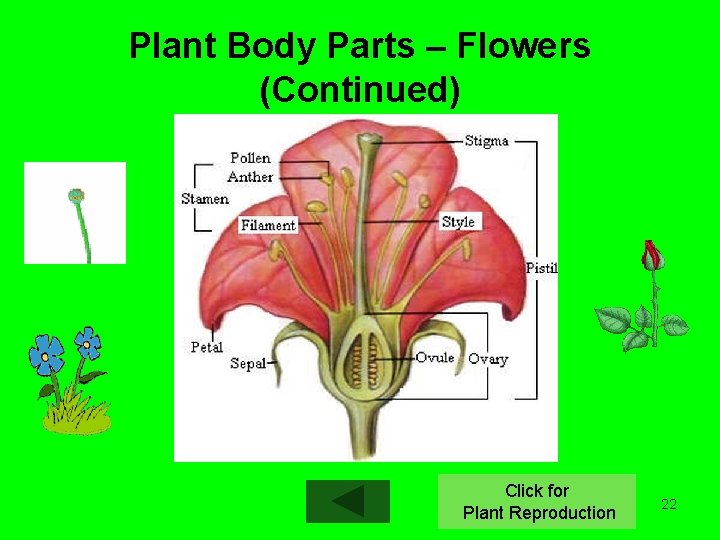
Plant Body Parts – Flowers (Continued) http: //kvhs. nbed. nb. ca/gallant/biology/flower. jpg Click for Plant Reproduction 22
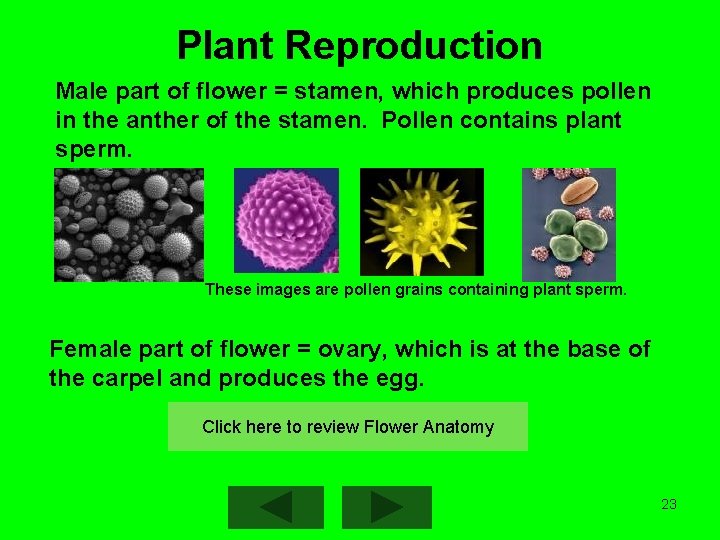
Plant Reproduction Male part of flower = stamen, which produces pollen in the anther of the stamen. Pollen contains plant sperm. These images are pollen grains containing plant sperm. Female part of flower = ovary, which is at the base of the carpel and produces the egg. Click here to review Flower Anatomy 23
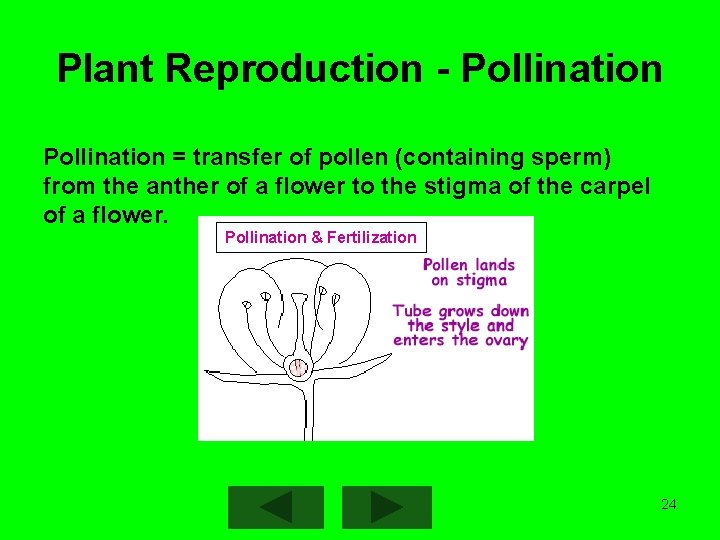
Plant Reproduction - Pollination = transfer of pollen (containing sperm) from the anther of a flower to the stigma of the carpel of a flower. Pollination & Fertilization http: //www. urbanext. uiuc. edu/gpe/glossary/fertilization. html 24
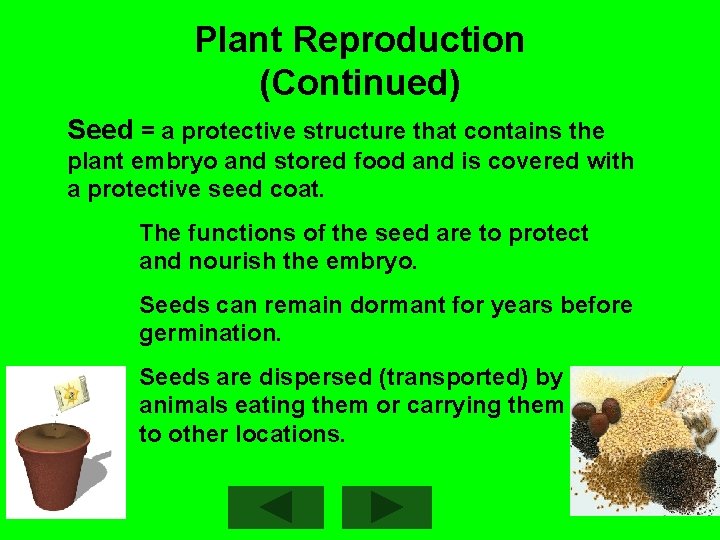
Plant Reproduction (Continued) Seed = a protective structure that contains the plant embryo and stored food and is covered with a protective seed coat. The functions of the seed are to protect and nourish the embryo. Seeds can remain dormant for years before germination. Seeds are dispersed (transported) by animals eating them or carrying them to other locations. 25
Plant Reproduction (Continued) Fruit = a ripened ovary that protects the seeds of a plant. The ovary is the base of the carpel at the lower end of a flower. The fruit contains the seeds. The fruit and seeds are eaten by animals, the fruit is digested and the seeds are passed through the animal digestive tract and deposited in the ground away from the parent plant. This is one way seeds can be dispersed (another way is by the wind, like in dandelions and most trees). Examples of ripened ovaries (fruit) = squash, cucumbers, & tomatoes. 26
- Slides: 26