
kingdom phylum Fungi Ascomycota Saccharomycetes Candida albicans 1
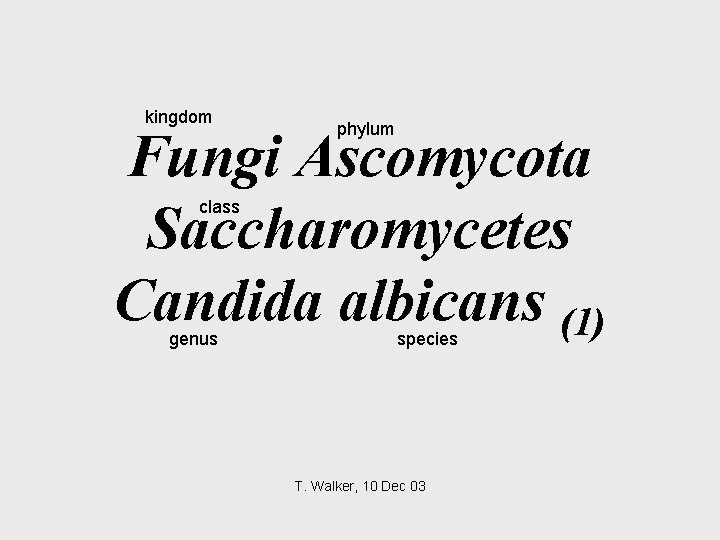
kingdom phylum Fungi Ascomycota Saccharomycetes Candida albicans (1) class genus species T. Walker, 10 Dec 03
Taxonomy, Ecology, Epidemiology • A common commensal, normally found in mouth, gastro-intestinal tract, vagina (B, abstract) – There is a bit of C. Albicans in the healthy intestine; bacteria that control yeast growth may by killed through overuse of: • antibiotics • too much sugar consumption (feeding C. albicans, which competes against the bacteria) • altering p. H to suit fungal growth through minimal vegetable consumption (9). • Environmental presence due to human/animal contamination; b/c of this, found in food, soil, and fomites. – NOT normally found in environs, except when in mold form for transfer between hosts. – Infection by colonizing host’s organisms, e. g. the host’s hosts… (B) • Closely related to C. krusei, a cause of fungemia (derivative of sepsis) (3)
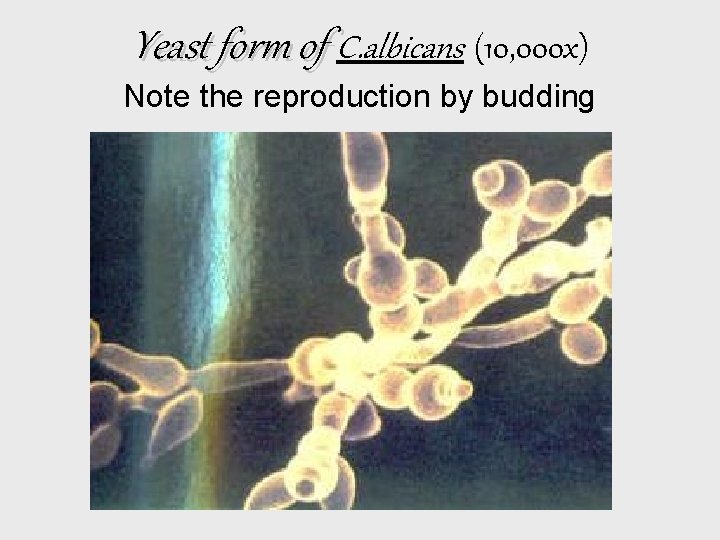
Yeast form of C. albicans (10, 000 x) Note the reproduction by budding
Taxonomy, Ecology, Epid. , c’ond; Prevention • Medically-important fungi, dimorphic [having two forms; here yeast when in host, mold in environs – this is the YM shift] • As yeast, in skin/mucous membranes; is type of opportunism (txt)
Infection symptoms; • Include fatigue, sweat, pain, sore throat, fever, numbness, asthma susceptibility, sinusitis, allergies, irritabilty, abdomen pain, gas • Notable are irregular menstrual cycles/pain, or yeast rashes – Possibly due to lack of estrogen or a menstrual cycle! – If these symptoms untreated while young, may delay menarche, and menopause may come earlier (possibly early 20 s).
Pathogenicity; Disease • Medical abstract suggests “substantial differences in mortality, organ colonization, and severity of tissue damage” after C. albicans inoculation (A) • If lacking a certain compliment in the brain, one is more susceptible to disease caused by the fungus (A) • Candida infections one-tenth of hospital bloodstream infections • 80% AIDS patients have Candida • Move from bloodstream to organs (4) • Candidisis is a mycosis [a disease caused by fungi, here C. albicans]; recognized since early 1800 s under many names (txt)
Disease, con’d • The fungi normally found in body, as mentioned; growth usually limited by other organisms, but causes candidisis when uncontrolled
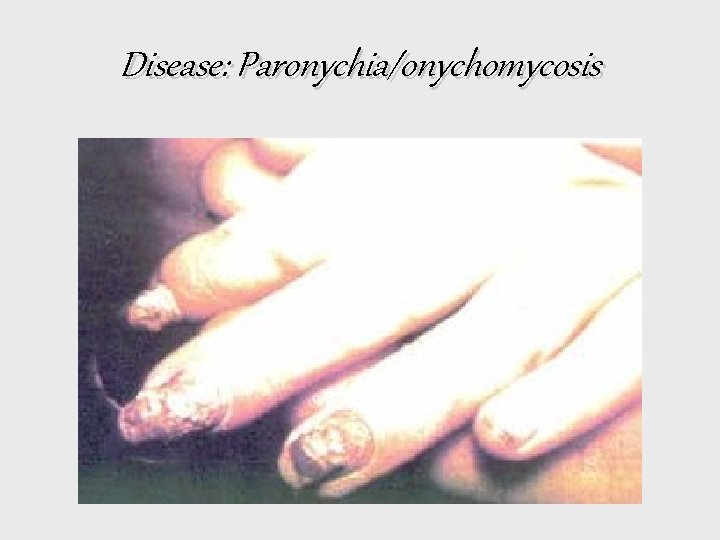
Disease: Paronychia/onychomycosis
Disease: Candidisis • Again, may be induced by overuse of antibiotics (kills systemic bacteria that control C. albicans growth); also theraputic/surgical procedures (transplants and prosthetics) that allow it to contaminate body • Also STD (txt)
Disease: Candidisis • Symptoms include arthritis, various inflammations (eye, heart, abdomen) (4, txt), meningitis, myositis [muscular pain] • Vaginal form: yeast infection • Candidisis affects all organs and tissues! • Other types are oral candidisis (thrush) and diaper c’isis (when diapers moist and erratically changed) (txt)
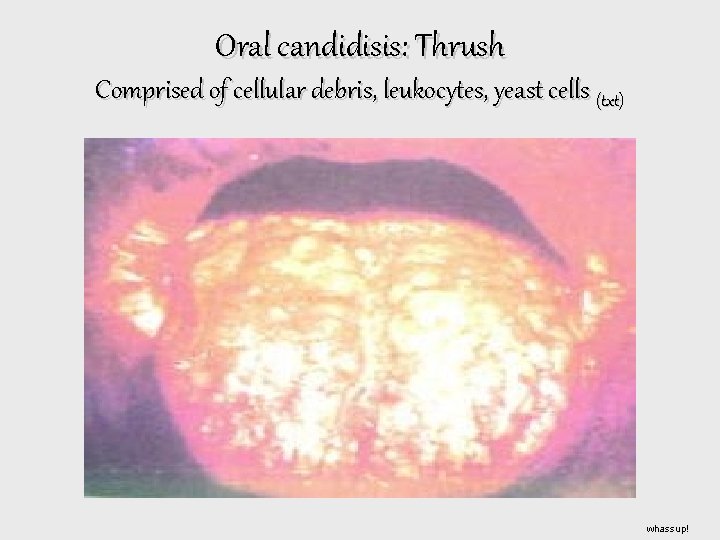
Oral candidisis: Thrush Comprised of cellular debris, leukocytes, yeast cells (txt) (txt whassup!
Disease: Vulvovaginal C’isis (a reiteration, of sorts); also Prevention • +50% of women over 25 yrs develop it • Again, recurrance (in less than 5% of cases) may b/c of: – – – Species similar to C. albicans acting “in place” of it) Many antibiotics Contraceptives (easier passage than dry skin) Immunocompromization Hyperglycemia (excess sugar) (9) • One should avoid the above factors to repel c’isis, etc.
Treatment; Mortality • In vitro techniques in conjunction w/ antifungal agents may counter Candida • A suggested cure is limiting internal adherance of the fungus; this concept is not understood, however (6, abstract) • Very high mortality: 46% mean mortality from candidemia, with C. albicans involved in 70% of those deaths (5)
Identification • Tef. I gene from C. albicans and C. dubliniensis amplified, compared to pure fungal genome (7) • Another confirmation method: – After make inoculum, compare with densitometer to known – Incubate, then use system like Fungi. Fast to ID (similar to E-II, for those in 202) – Based on colours produced by enzymes in rxns… (8)
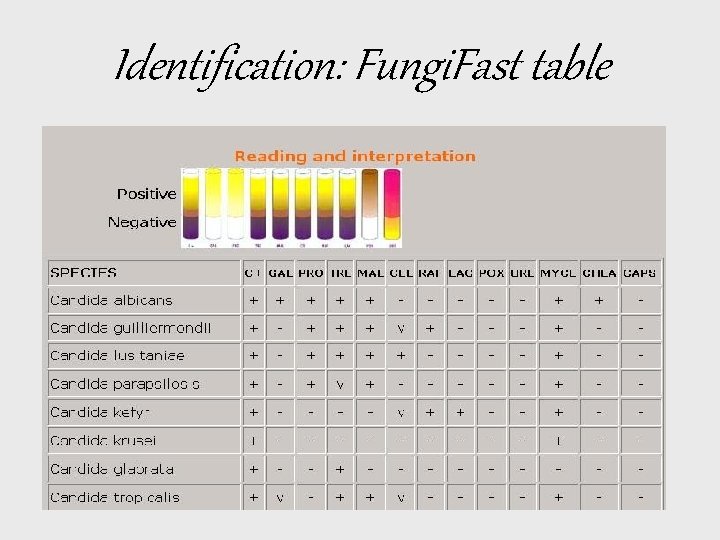
Identification: Fungi. Fast table
Works Cited • http: //www. candidapage. com/cccomp. shtml (1) • http: //alces. med. umn. edu/candida/taxonomy. html (3) • http: //www. ncbi. nlm. nih. gov/entrez/query. fcgi? cmd=Retrieve&db=Pu b. Med&list_uids=10999981&dopt=Abstract (11) • http: //pathology 5. pathology. jhmi. edu/micro/v 16 n 05. htm (5) • http: //www. unr. edu/mycology/ (6) • http: //www. int-microbio. com/Fungifast_ITwin. htm (8) • http: //www. excel. net/~jaguar/candida. html (9) • http: //www. pubmedcentral. nih. gov/articlerender. fcgi? rendertype=abs tract&artid=174007 (A) • http: //www. smartcycler. com/pdfs/candidas_poster. pdf (7) • http: //www. intelihealth. com/IH/iht. IH/WSIHW 000/9339/9935. html (E) • http: //www. aafp. org/afp/20000601/3306. html (9) • Some definitions taken from www. m-w. com
- Slides: 16