
Kingdom of Saudi Arabia The Royal Commission at
Kingdom of Saudi Arabia The Royal Commission at Yanbu University College Yanbu Al-Sinaiyah x Educational Technology CALL and the 3 Web(s) EDU 401
Lecture Outline • What is Technology? • What is Educational Technology? • History of Educational Technology • CALL • Web
What is Technology? http: //www. youtube. com/watch? v=x. FAWR 6 hz. Zek
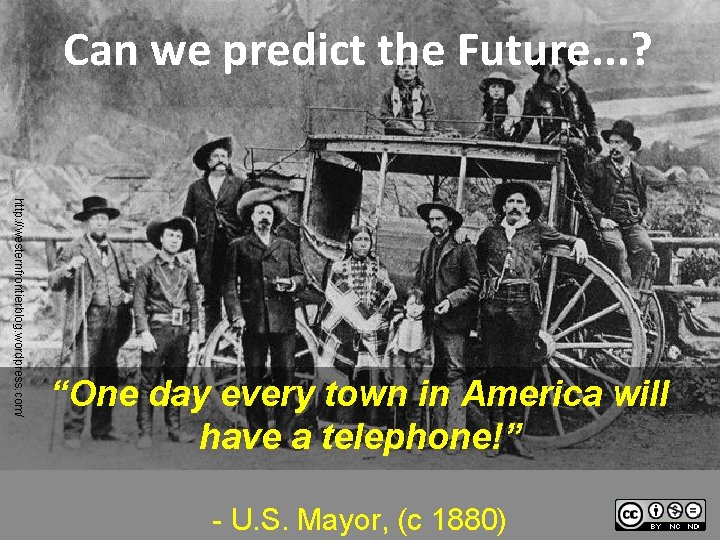
Can we predict the Future. . . ? http: //westernfrontierblog. wordpress. com/ “One day every town in America will have a telephone!” - U. S. Mayor, (c 1880)
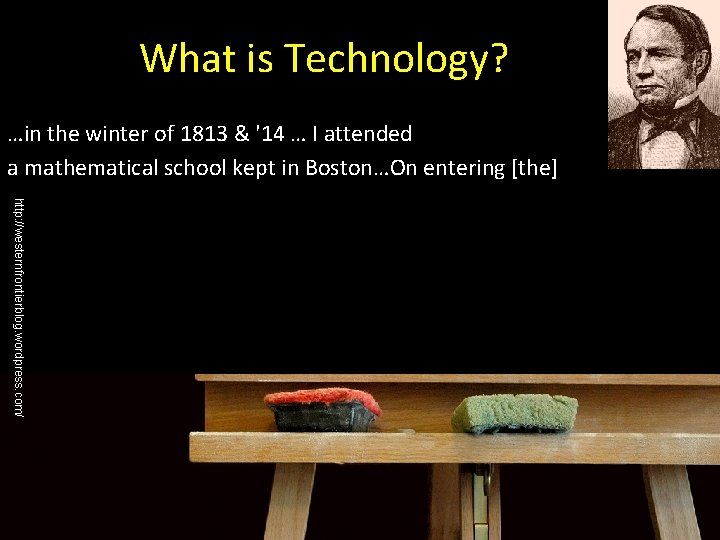
What is Technology? …in the winter of 1813 & '14 … I attended a mathematical school kept in Boston…On entering [the] room, we were struck at the appearance of an ample Black http: //westernfrontierblog. wordpress. com/ Lllllllllllllll Board suspended on the wall, with lumps of chalk on a ledge below, and cloths hanging at either side. I had never heard of such a thing before. [Samuel J. May, 1855] Objective?
Can we predict the Future. . . ? • 1989: ‘The future is multi-media’ • 1999: ‘The future is the Web’ • 2009: ‘The future is smart mobile’ http: //www. slideshare. net/timbuckteeth/web-30 -the-way -forward? from=ss_embed hof. povray. org
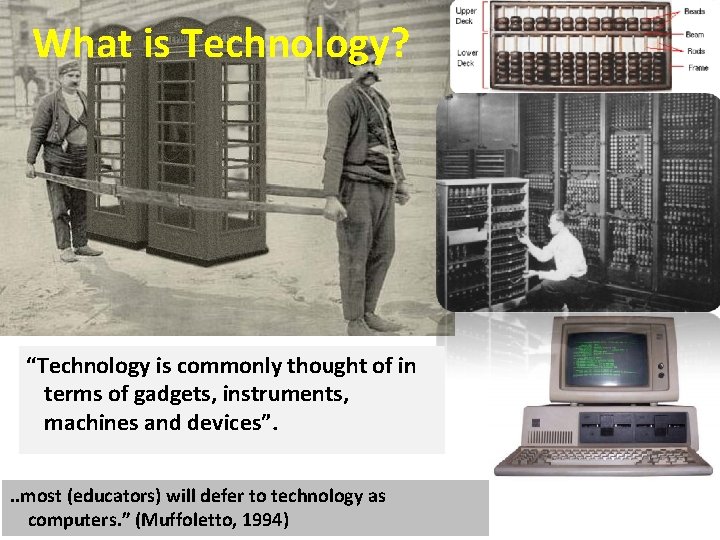
What is Technology? “Technology is commonly thought of in terms of gadgets, instruments, machines and devices”. . . most (educators) will defer to technology as computers. ” (Muffoletto, 1994)
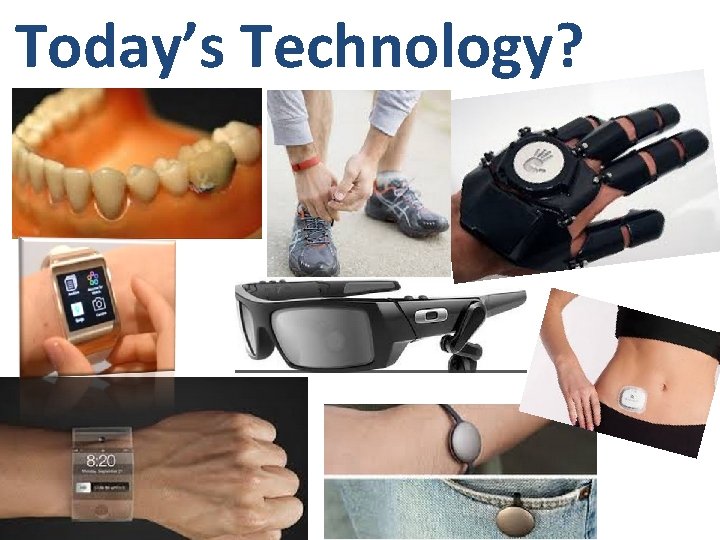
Today’s Technology?
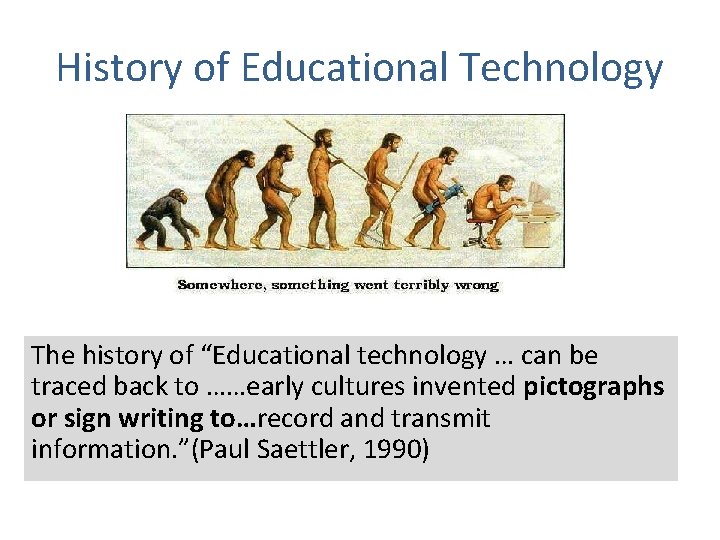
History of Educational Technology The history of “Educational technology … can be traced back to ……early cultures invented pictographs or sign writing to…record and transmit information. ”(Paul Saettler, 1990)
What is Educational Technology? …. . is the study and ethical practice of facilitating learning and improving performance by creating, using and managing appropriate technological processes and resources.

What is CALL? (CALL) Computer Assisted Language Learning (sometimes expanded as computer-aided language learning) An approach to language teaching and learning in which ‘computer’ technology is used as an aid to the presentation, reinforcement and assessment of material to be learned, usually including a considerable interactive element. Levy (1997) The term CALI (Computer-assisted language instruction) was in use before CALL Computer-assisted language learning (CALL) was agreed upon at the 1983 TESOL convention in a meeting of all interested participants
Other Acronyms (TELL) Technology Enhanced Language Learning (NBLT) Network-Based Language Teaching (CMC) Computer Mediated Communication Information
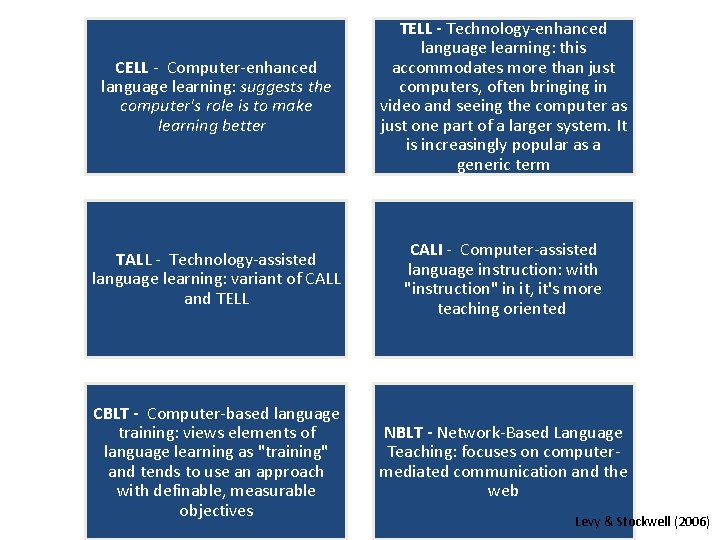
CELL - Computer-enhanced language learning: suggests the computer's role is to make learning better TELL - Technology-enhanced language learning: this accommodates more than just computers, often bringing in video and seeing the computer as just one part of a larger system. It is increasingly popular as a generic term TALL - Technology-assisted language learning: variant of CALL and TELL CALI - Computer-assisted language instruction: with "instruction" in it, it's more teaching oriented CBLT - Computer-based language training: views elements of language learning as "training" and tends to use an approach with definable, measurable objectives NBLT - Network-Based Language Teaching: focuses on computermediated communication and the web Levy & Stockwell (2006)
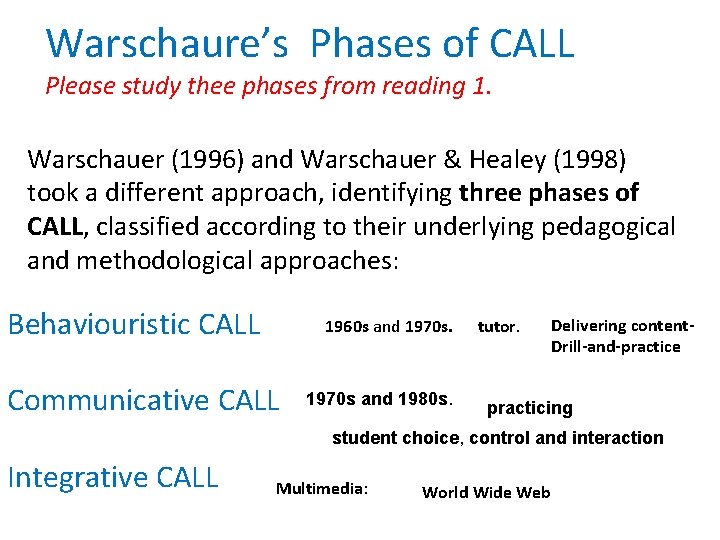
Warschaure’s Phases of CALL Please study thee phases from reading 1. Warschauer (1996) and Warschauer & Healey (1998) took a different approach, identifying three phases of CALL, classified according to their underlying pedagogical and methodological approaches: Behaviouristic CALL 1960 s and 1970 s. Communicative CALL 1970 s and 1980 s. tutor. Delivering content. Drill-and-practice practicing student choice, control and interaction Integrative CALL Multimedia: World Wide Web
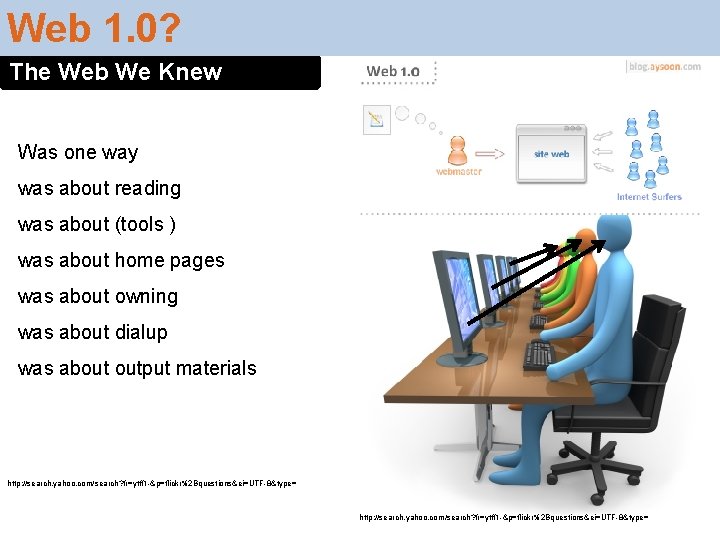
Web 1. 0? The Web We Knew Was one way was about reading was about (tools ) was about home pages was about owning was about dialup was about output materials http: //search. yahoo. com/search? fr=ytff 1 -&p=flickr%2 Bquestions&ei=UTF-8&type=
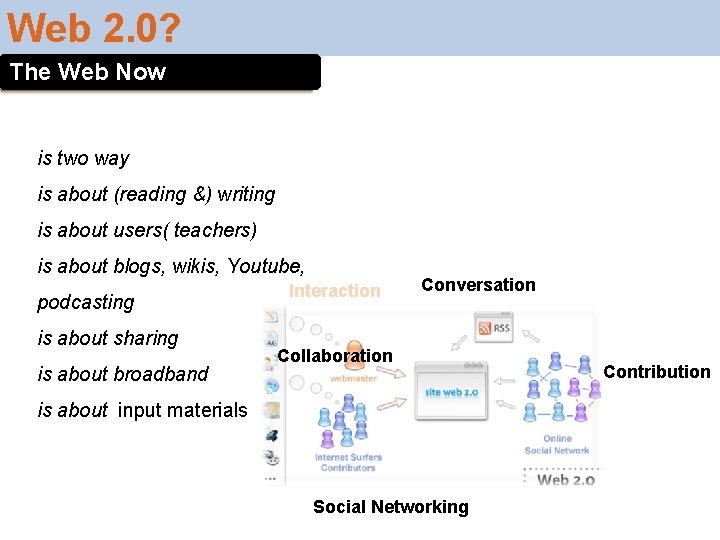
Web 2. 0? The Web The. Now Web Now is two way is about (reading &) writing is about users( teachers) is about blogs, wikis, Youtube, podcasting is about sharing is about broadband Interaction Conversation Collaboration is about input materials Social Networking Contribution
Web 2. 0? The Web The. Now Web Now • • • Coined by O'Reilly Media in 2003 is two way Popularized by the first Web 2. 0 conference in 2004 contribute is. Refers aboutto (reading &) writing a second generation of web 1. 0 collaborate is about users( teachers) • Summarized in "social is about blogs, wikis, Youtube, software" or tools that Interaction podcasting connect people and allow them to: is about sharing is about broadband Conversation Collaboration is about input materials Social Networking share information edit content create networks
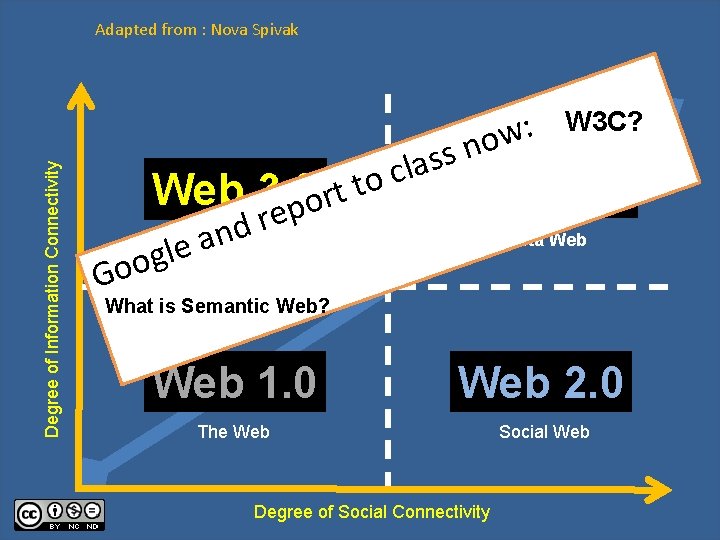
Degree of Information Connectivity Adapted from : Nova Spivak l c o t t Web 3. 0 r o p e r d Semantic Web n a le g o Go : w o n s as W 3 C? Web x. 0 Meta Web What is Semantic Web? Web 1. 0 Web 2. 0 The Web Social Web Degree of Social Connectivity
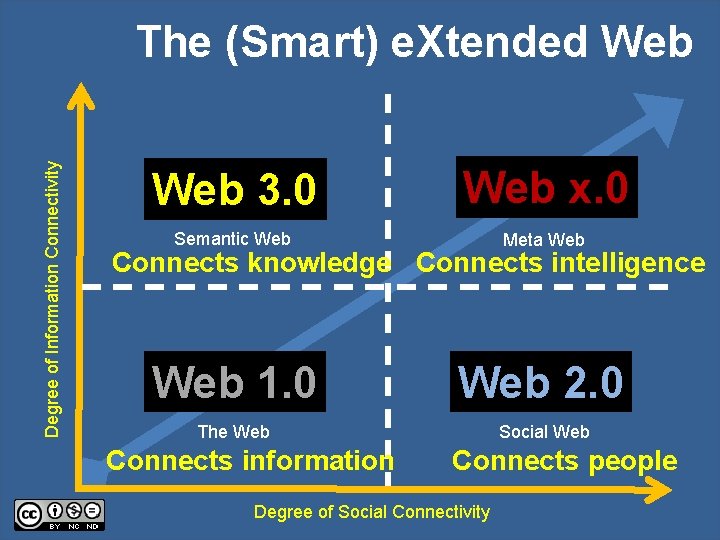
Degree of Information Connectivity The (Smart) e. Xtended Web 3. 0 Web x. 0 Semantic Web Meta Web 1. 0 Web 2. 0 The Web Social Web Connects knowledge Connects intelligence Connects information Connects people Degree of Social Connectivity
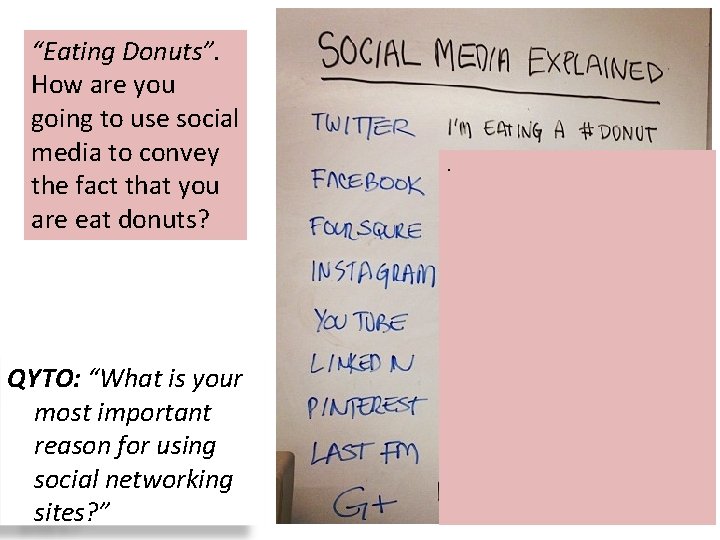
“Eating Donuts”. How are you going to use social media to convey the fact that you are eat donuts? QYTO: “What is your most important reason for using social networking sites? ” .
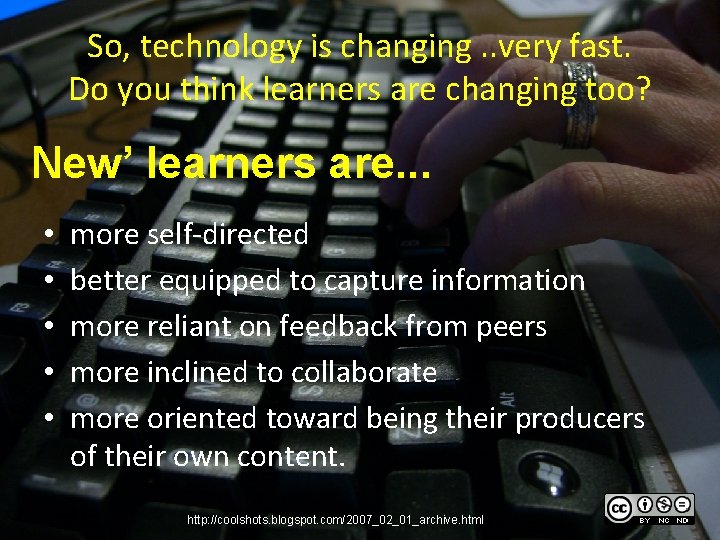
So, technology is changing. . very fast. Do you think learners are changing too? New’ learners are. . . more self-directed better equipped to capture information more reliant on feedback from peers more inclined to collaborate more oriented toward being their producers of their own content. • • • http: //coolshots. blogspot. com/2007_02_01_archive. html
Learning 3. 0 • Distributed (Cloud) computing • Extended smart mobile technology • 3 D visualisation and interaction • Wearable devices. . Google watch is out soon! (132)
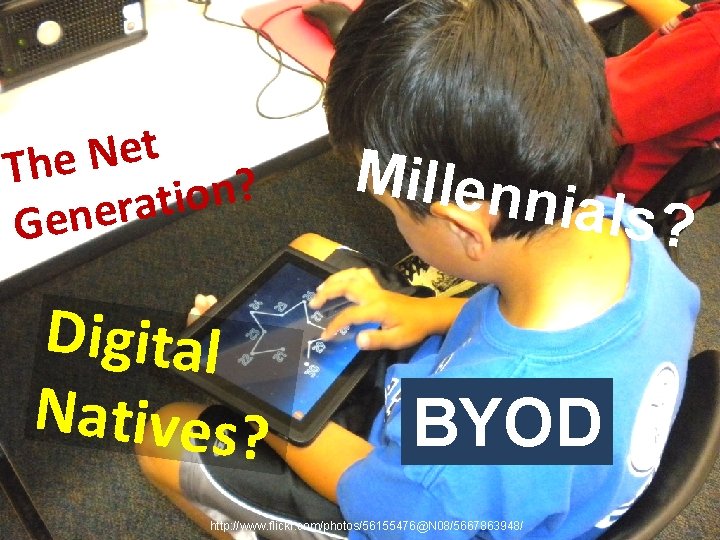
t e N e Th ? n o i t a r e n Ge Digital Natives? Millenn ials? BYOD http: //www. flickr. com/photos/56155476@N 08/5667863948/
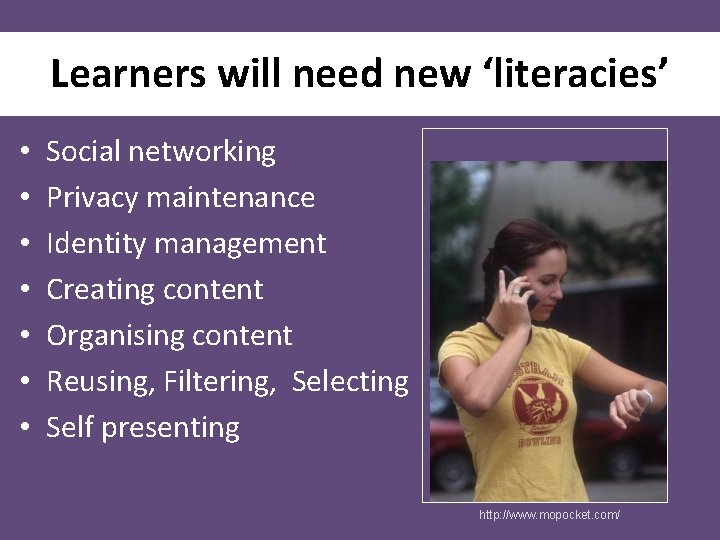
Learners will need new ‘literacies’ • • Social networking Privacy maintenance Identity management Creating content Organising content Reusing, Filtering, Selecting Self presenting http: //www. mopocket. com/
What does tomorrow holds…? ? • Do you think you need to know how to integrate techno 9 logy in your EFL/ESL classroom? • What type of technology do you need to integrate? • What type of learners you will be teaching?
- Slides: 26