
Kingdom of Saudi Arabia Al Imam Mohammad Ibn
ﺑﺴﻢ ﺍﻟﻠﻪ ﺍﻟﺮﺣﻤﻦ ﺍﻟﺮﺣﻴﻢ Kingdom of Saudi Arabia Al Imam Mohammad Ibn Saud Islamic University College of Science Department of Biology ANIMAL PHYSIOLOGY BIO 314 1
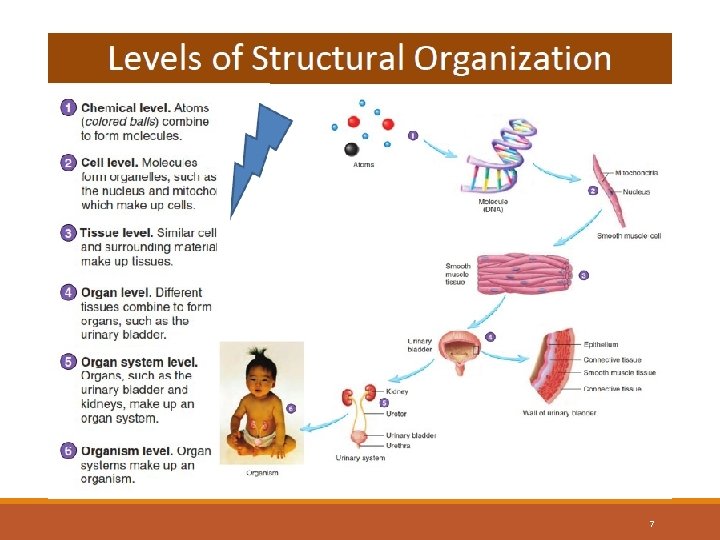
Lecture outline I. Overview of physiology. II. Levels of Structural Organization i. Cells ii. Tissues iii. Organs iv. Organ systems 2
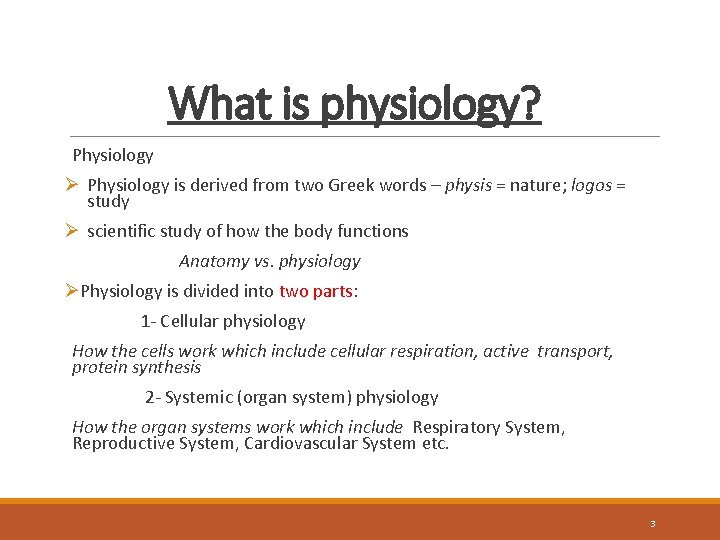
What is physiology? Physiology Ø Physiology is derived from two Greek words – physis = nature; logos = study Ø scientific study of how the body functions Anatomy vs. physiology ØPhysiology is divided into two parts: 1 - Cellular physiology How the cells work which include cellular respiration, active transport, protein synthesis 2 - Systemic (organ system) physiology How the organ systems work which include Respiratory System, Reproductive System, Cardiovascular System etc. 3
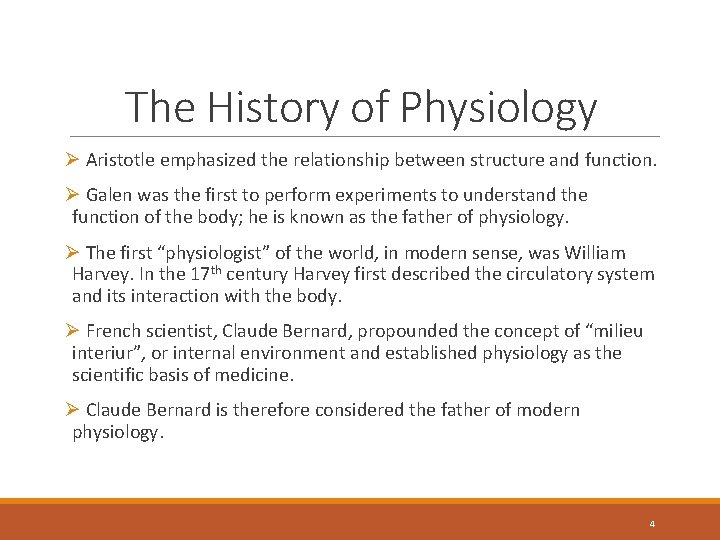
The History of Physiology Ø Aristotle emphasized the relationship between structure and function. Ø Galen was the first to perform experiments to understand the function of the body; he is known as the father of physiology. Ø The first “physiologist” of the world, in modern sense, was William Harvey. In the 17 th century Harvey first described the circulatory system and its interaction with the body. Ø French scientist, Claude Bernard, propounded the concept of “milieu interiur”, or internal environment and established physiology as the scientific basis of medicine. Ø Claude Bernard is therefore considered the father of modern physiology. 4
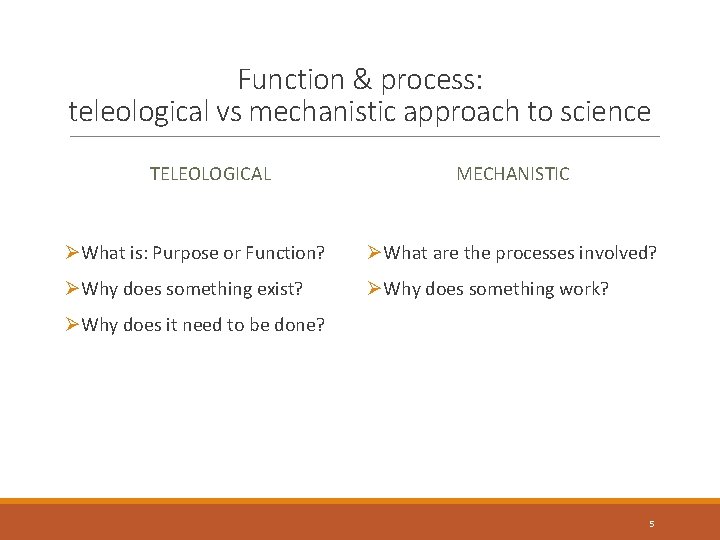
Function & process: teleological vs mechanistic approach to science TELEOLOGICAL MECHANISTIC ØWhat is: Purpose or Function? ØWhat are the processes involved? ØWhy does something exist? ØWhy does something work? ØWhy does it need to be done? 5
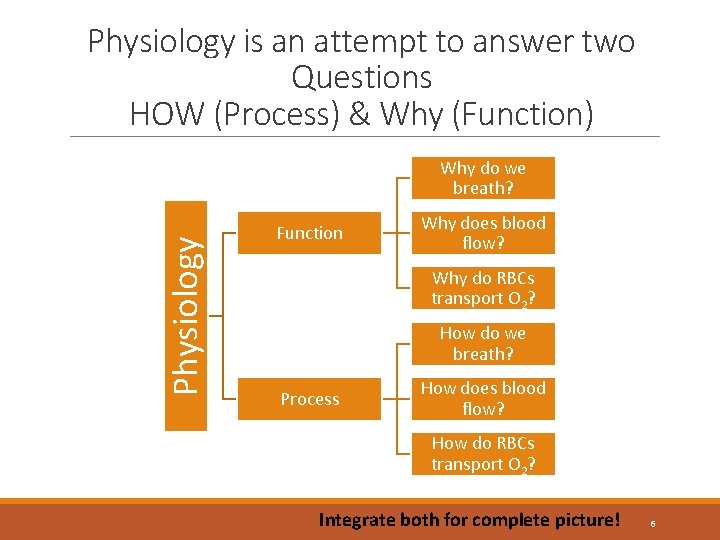
Physiology is an attempt to answer two Questions HOW (Process) & Why (Function) Physiology Why do we breath? Function Why does blood flow? Why do RBCs transport O 2? How do we breath? Process How does blood flow? How do RBCs transport O 2? Integrate both for complete picture! 6
7
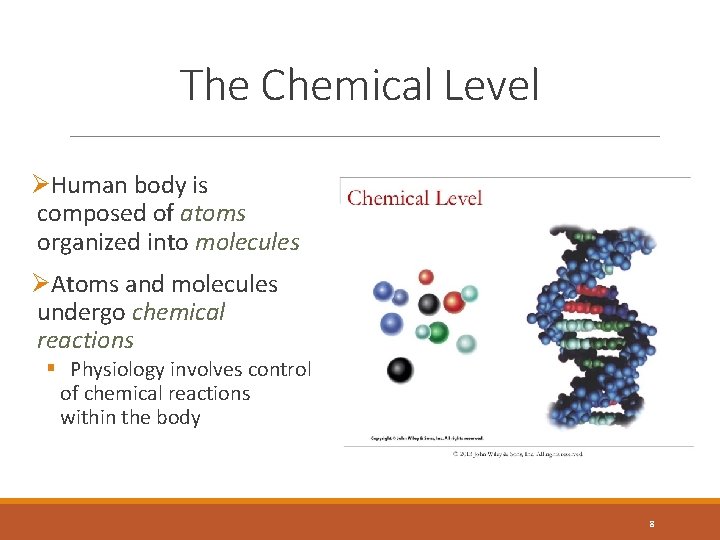
The Chemical Level ØHuman body is composed of atoms organized into molecules ØAtoms and molecules undergo chemical reactions § Physiology involves control of chemical reactions within the body 8
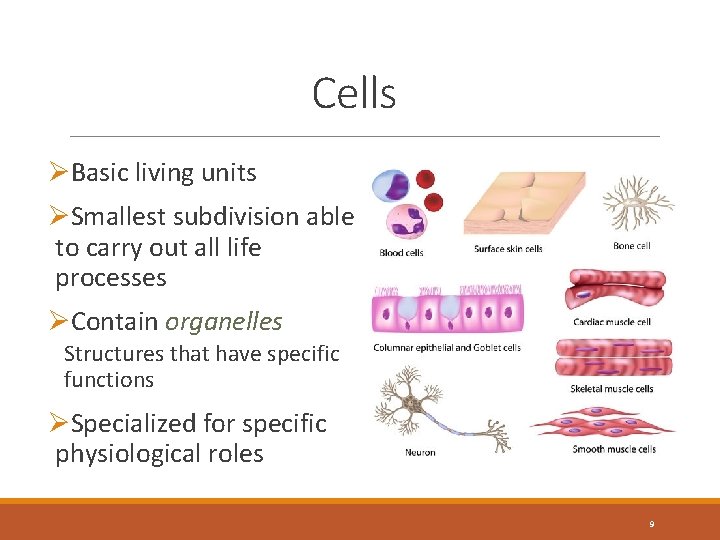
Cells ØBasic living units ØSmallest subdivision able to carry out all life processes ØContain organelles Structures that have specific functions ØSpecialized for specific physiological roles 9
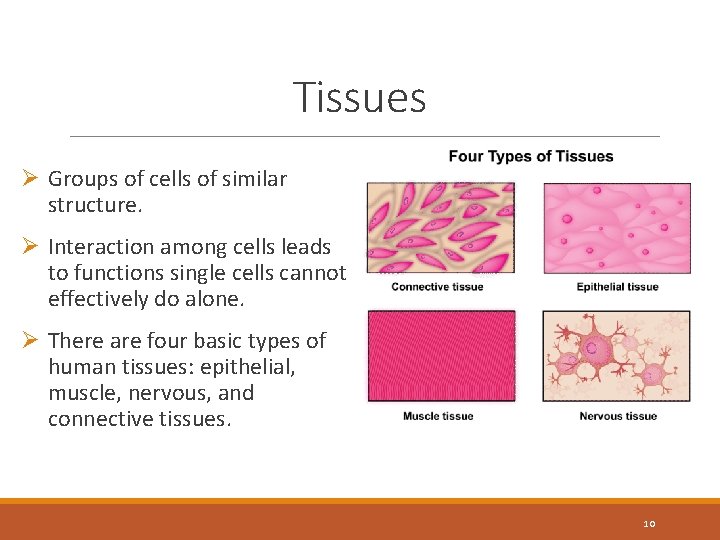
Tissues Ø Groups of cells of similar structure. Ø Interaction among cells leads to functions single cells cannot effectively do alone. Ø There are four basic types of human tissues: epithelial, muscle, nervous, and connective tissues. 10
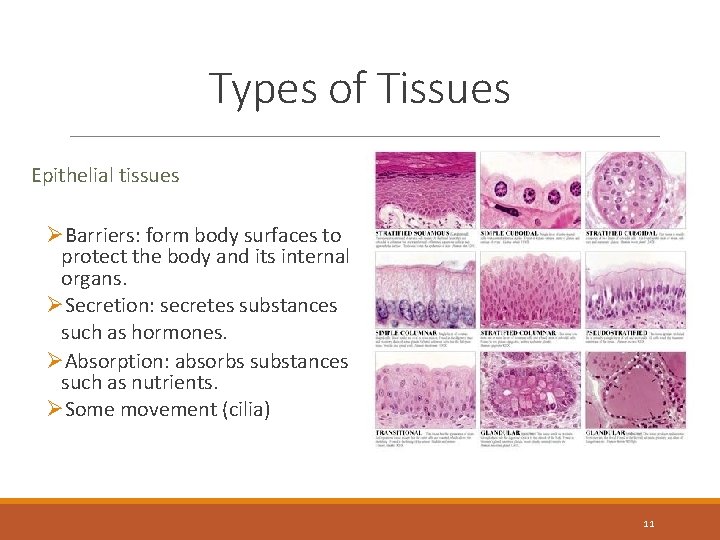
Types of Tissues Epithelial tissues ØBarriers: form body surfaces to protect the body and its internal organs. ØSecretion: secretes substances such as hormones. ØAbsorption: absorbs substances such as nutrients. ØSome movement (cilia) 11
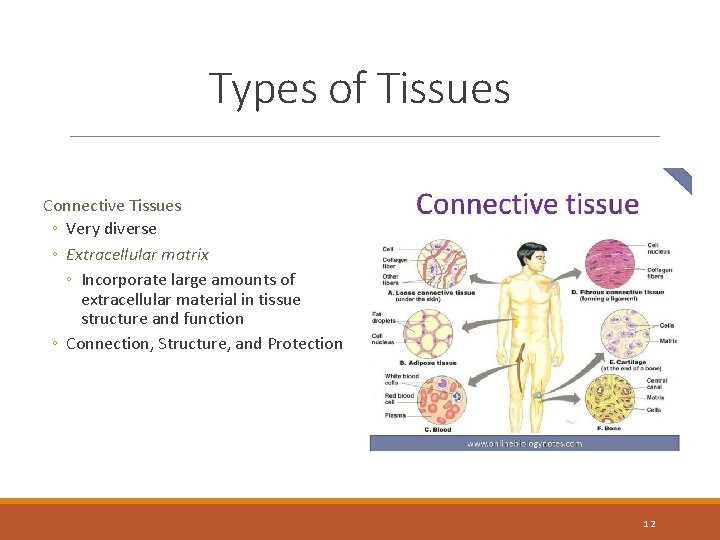
Types of Tissues Connective Tissues ◦ Very diverse ◦ Extracellular matrix ◦ Incorporate large amounts of extracellular material in tissue structure and function ◦ Connection, Structure, and Protection 12
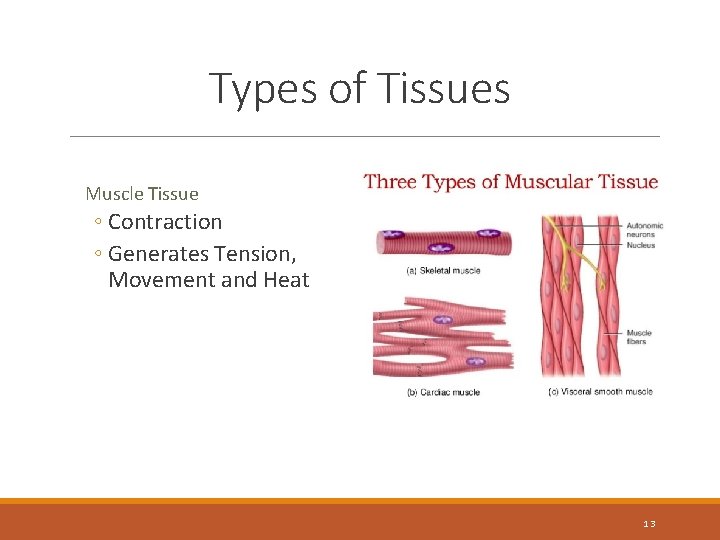
Types of Tissues Muscle Tissue ◦ Contraction ◦ Generates Tension, Movement and Heat 13
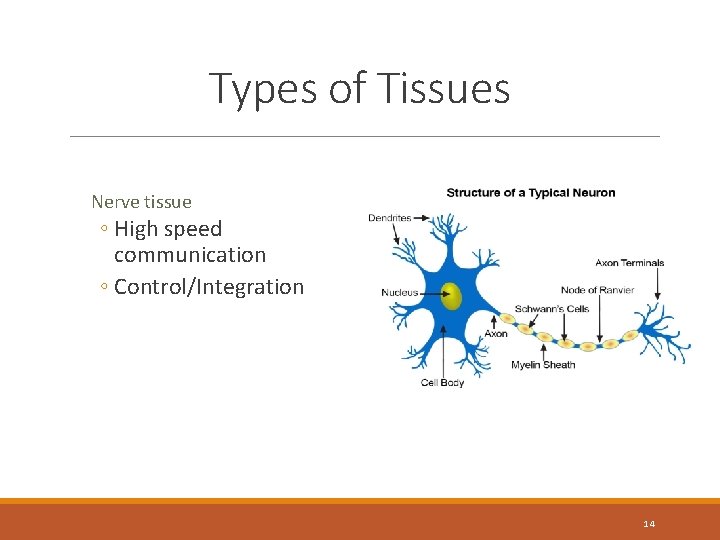
Types of Tissues Nerve tissue ◦ High speed communication ◦ Control/Integration 14
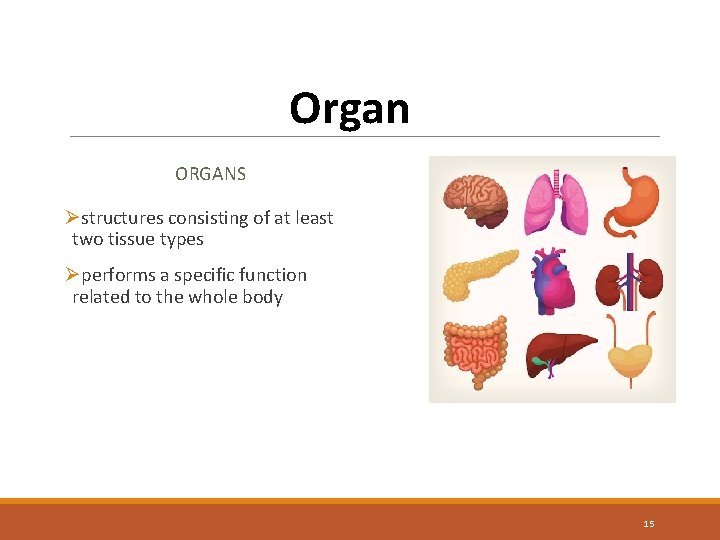
Organ ORGANS Østructures consisting of at least two tissue types Øperforms a specific function related to the whole body 15
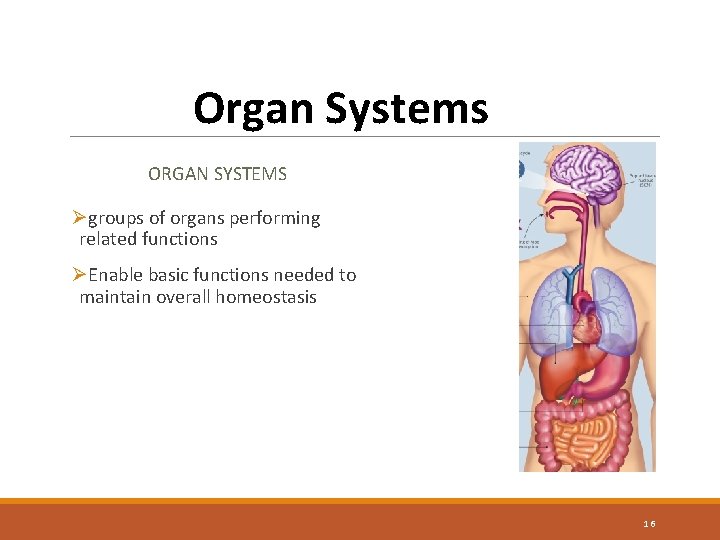
Organ Systems ORGAN SYSTEMS Øgroups of organs performing related functions ØEnable basic functions needed to maintain overall homeostasis 16
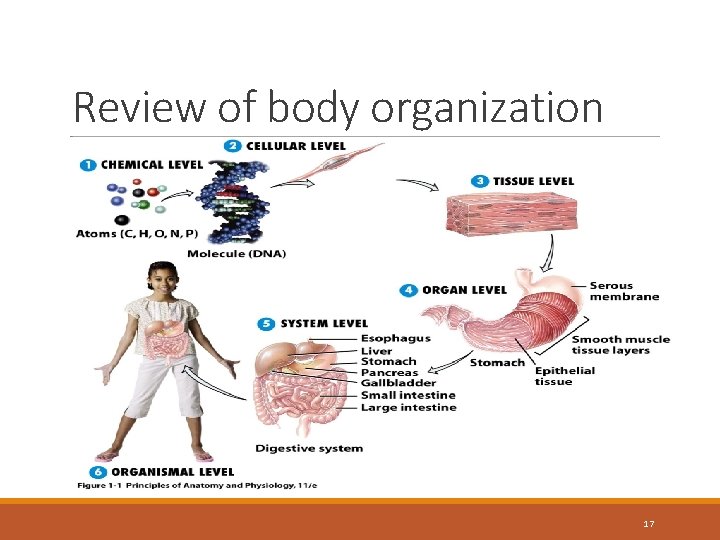
Review of body organization 17
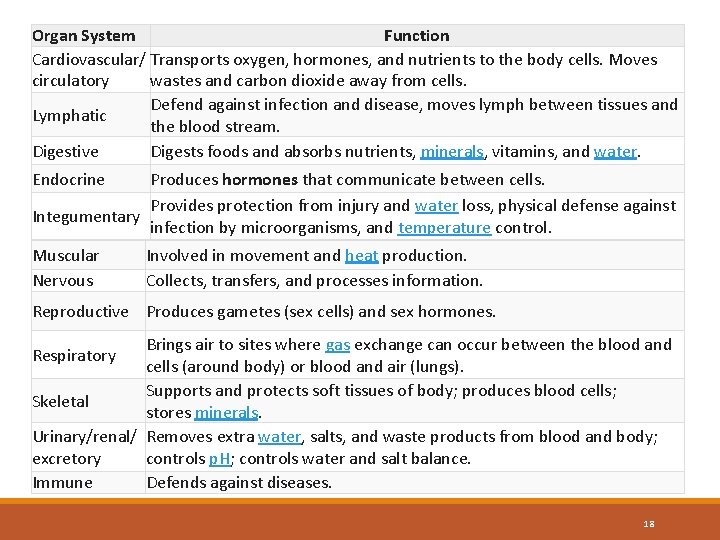
Organ System Function Cardiovascular/ Transports oxygen, hormones, and nutrients to the body cells. Moves circulatory wastes and carbon dioxide away from cells. Defend against infection and disease, moves lymph between tissues and Lymphatic the blood stream. Digestive Digests foods and absorbs nutrients, minerals, vitamins, and water. Endocrine Produces hormones that communicate between cells. Provides protection from injury and water loss, physical defense against Integumentary infection by microorganisms, and temperature control. Muscular Nervous Involved in movement and heat production. Collects, transfers, and processes information. Reproductive Produces gametes (sex cells) and sex hormones. Brings air to sites where gas exchange can occur between the blood and cells (around body) or blood and air (lungs). Supports and protects soft tissues of body; produces blood cells; Skeletal stores minerals. Urinary/renal/ Removes extra water, salts, and waste products from blood and body; excretory controls p. H; controls water and salt balance. Immune Defends against diseases. Respiratory 18
Organ Systems groups: 19
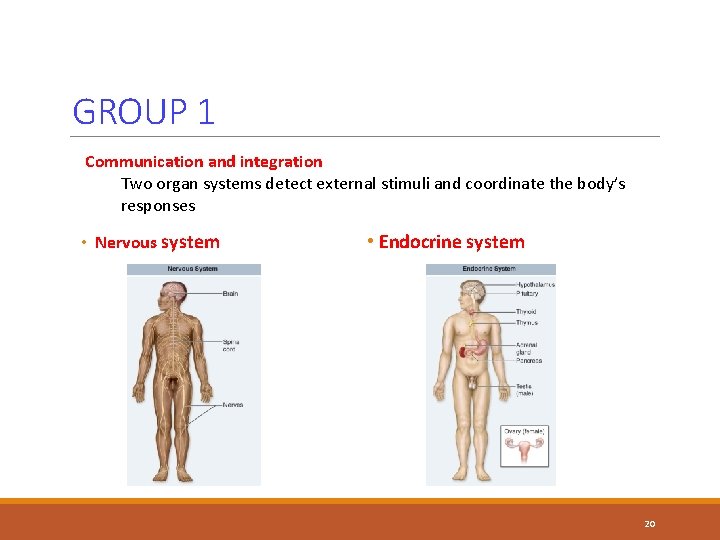
GROUP 1 Communication and integration Two organ systems detect external stimuli and coordinate the body’s responses • Nervous system • Endocrine system 20
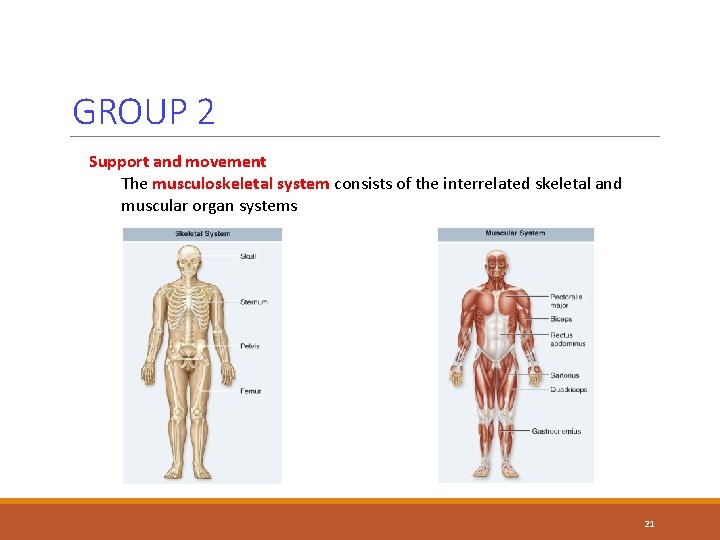
GROUP 2 Support and movement The musculoskeletal system consists of the interrelated skeletal and muscular organ systems 21
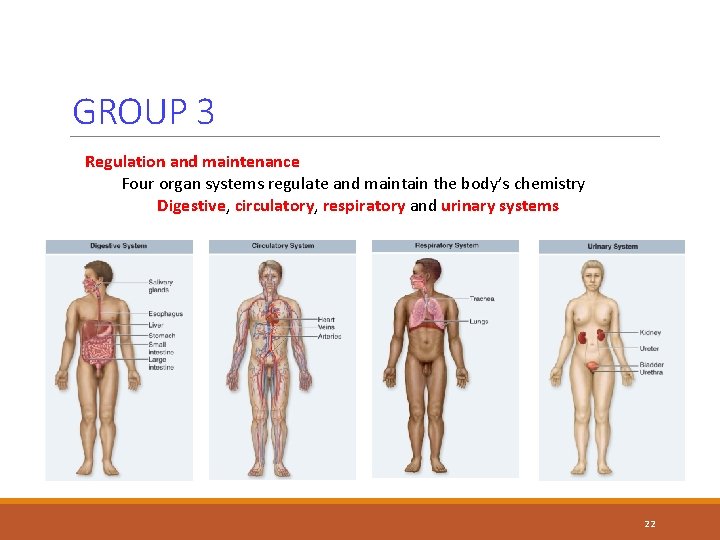
GROUP 3 Regulation and maintenance Four organ systems regulate and maintain the body’s chemistry Digestive, circulatory, respiratory and urinary systems 22 22
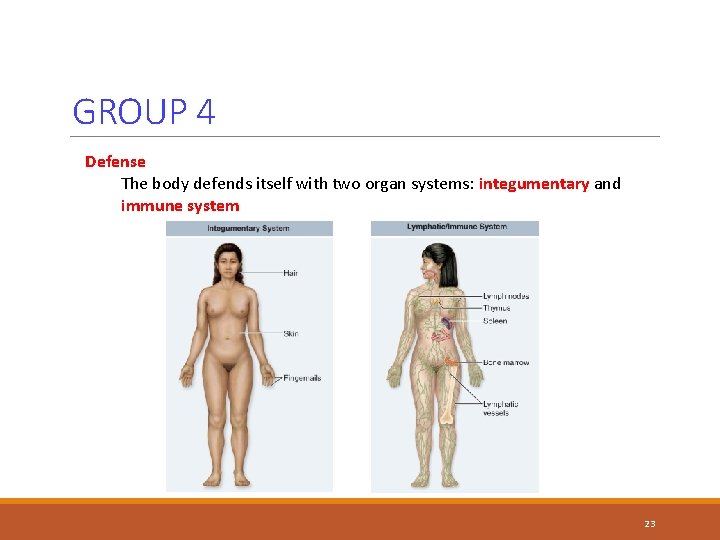
GROUP 4 Defense The body defends itself with two organ systems: integumentary and immune system 23 23
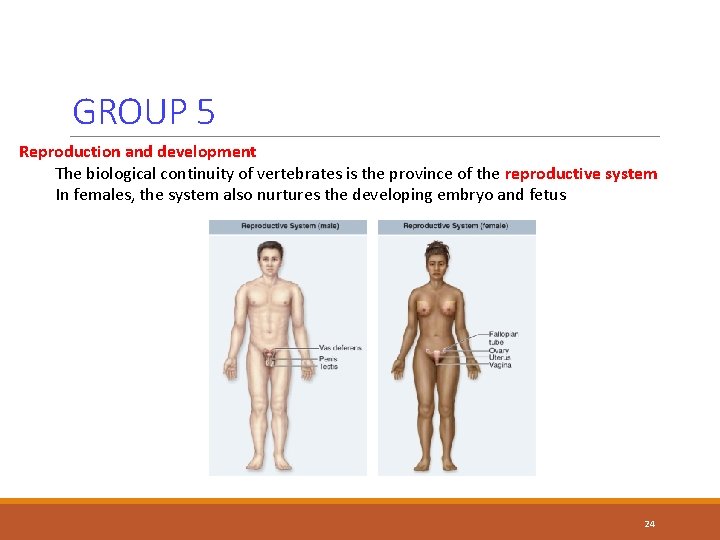
GROUP 5 Reproduction and development The biological continuity of vertebrates is the province of the reproductive system In females, the system also nurtures the developing embryo and fetus 24 24
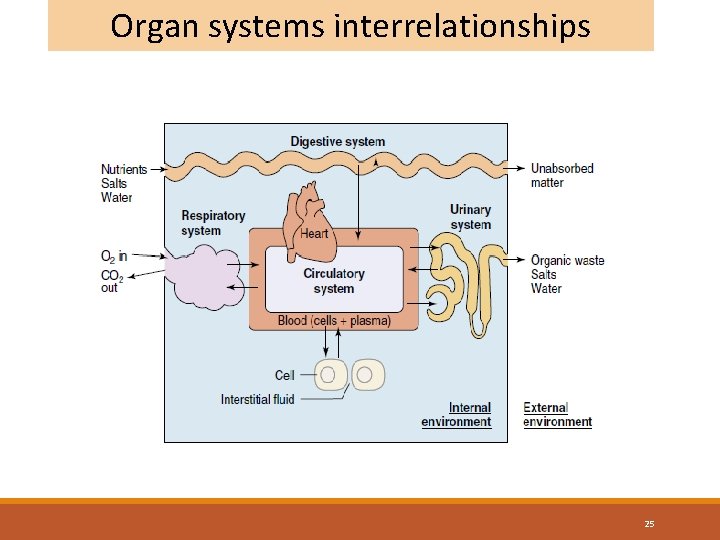
Organ systems interrelationships 25
Review: Ø What are the levels of organization of the human body? Ø Which type of tissue covers the surface of the body? Ø What are the functions of the skeletal system? Ø Which organ system supports the body and allows it to move? Study well & good luck 26
- Slides: 26