
Kingdom of Bahrain Arabian Gulf University College of
Kingdom of Bahrain Arabian Gulf University College of Medicine and Medical Sciences Year 2 – Unit II – Problem 7 Anatomy: Posterior Mediastinum Ali Jassim Alhashli www. alhashli. com
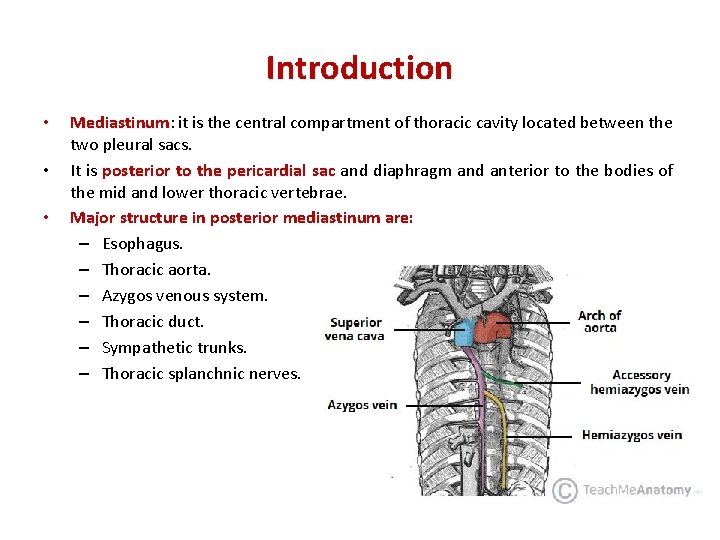
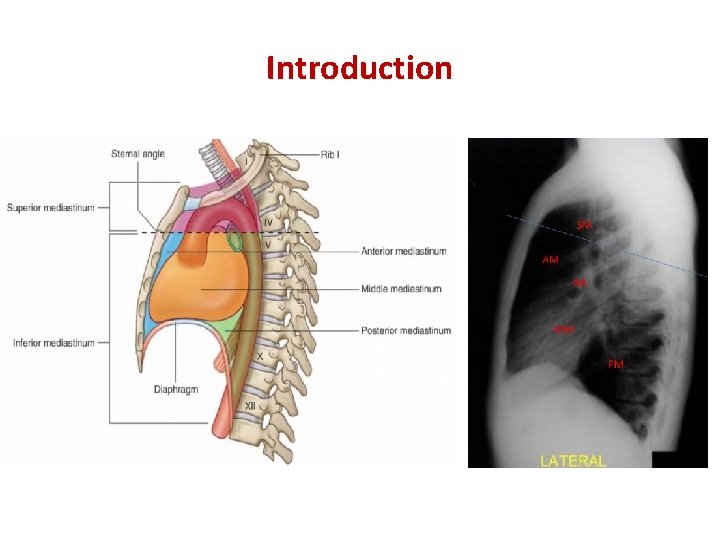
Introduction • • • Mediastinum: Mediastinum it is the central compartment of thoracic cavity located between the two pleural sacs. It is posterior to the pericardial sac and diaphragm and anterior to the bodies of the mid and lower thoracic vertebrae. Major structure in posterior mediastinum are: – Esophagus. – Thoracic aorta. – Azygos venous system. – Thoracic duct. – Sympathetic trunks. – Thoracic splanchnic nerves.
Introduction
Esophagus • It is a muscular tube passing between the pharynx in the neck and the stomach in the abdomen (from C 6 – T 11). T 11 • Descends on the anterior aspect of the bodies of the vertebrae, vertebrae generally in the midline position as it moves through the thorax. • As it approaches the diaphragm, it moves anteriorly and to the left, crossing from the right side of the thoracic aorta to eventually assume a position anterior to it. • Then it passes through the esophagial hiatus, an opening in the muscular part oh the diaphragm (at the level of T 10). T 10
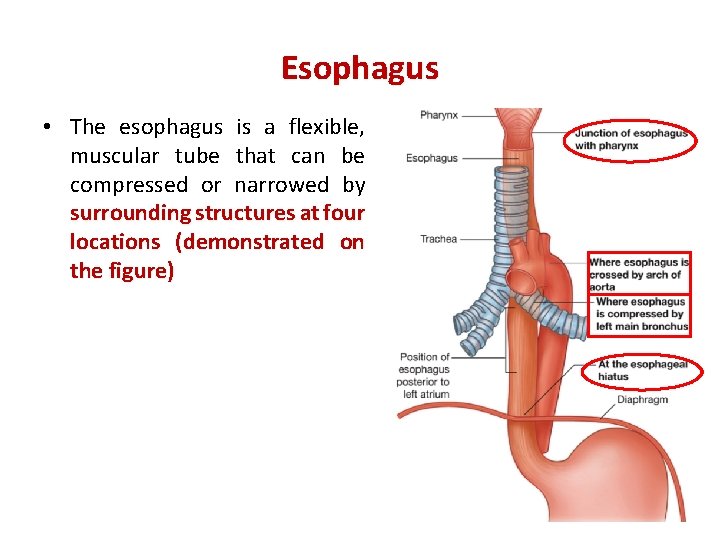
Esophagus • The esophagus is a flexible, muscular tube that can be compressed or narrowed by surrounding structures at four locations (demonstrated on the figure)
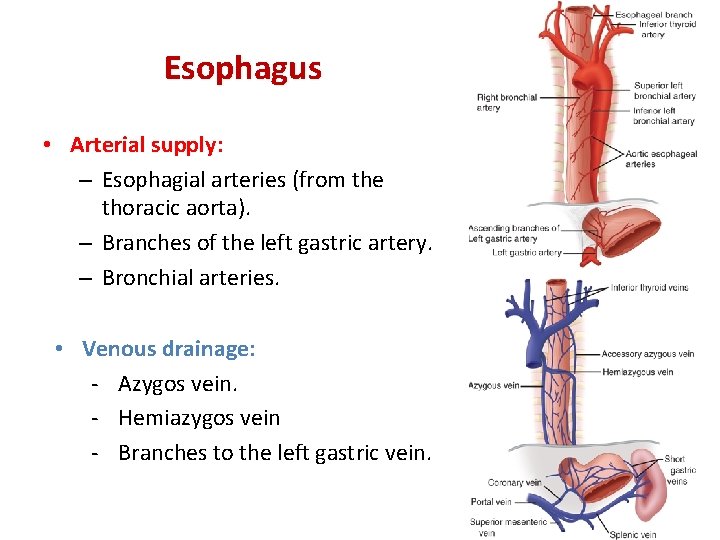
Esophagus • Arterial supply: – Esophagial arteries (from the thoracic aorta). – Branches of the left gastric artery. – Bronchial arteries. • Venous drainage: - Azygos vein. - Hemiazygos vein - Branches to the left gastric vein.
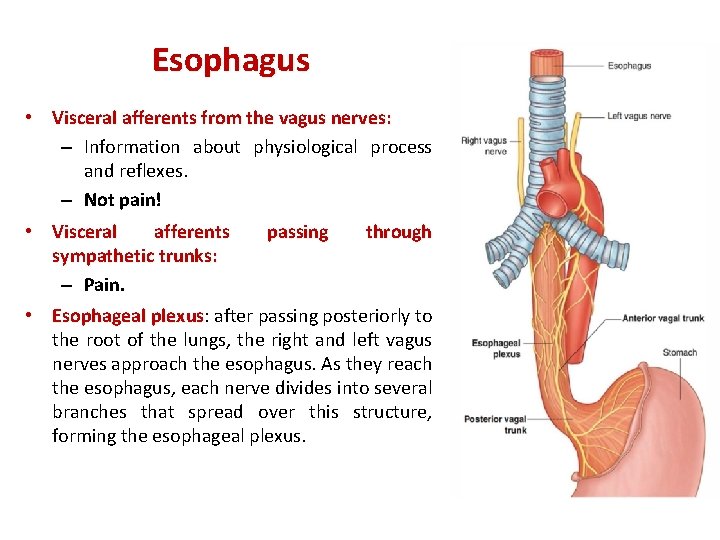
Esophagus • Visceral afferents from the vagus nerves: – Information about physiological process and reflexes. – Not pain! • Visceral afferents sympathetic trunks: – Pain. passing through • Esophageal plexus: plexus after passing posteriorly to the root of the lungs, the right and left vagus nerves approach the esophagus. As they reach the esophagus, each nerve divides into several branches that spread over this structure, forming the esophageal plexus.
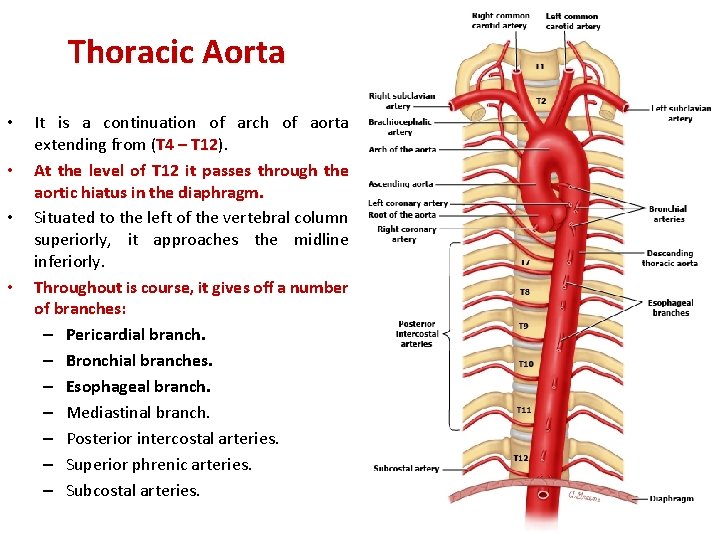
Thoracic Aorta • • It is a continuation of arch of aorta extending from (T 4 – T 12). T 12 At the level of T 12 it passes through the aortic hiatus in the diaphragm. Situated to the left of the vertebral column superiorly, it approaches the midline inferiorly. Throughout is course, it gives off a number of branches: – Pericardial branch. – Bronchial branches. – Esophageal branch. – Mediastinal branch. – Posterior intercostal arteries. – Superior phrenic arteries. – Subcostal arteries.
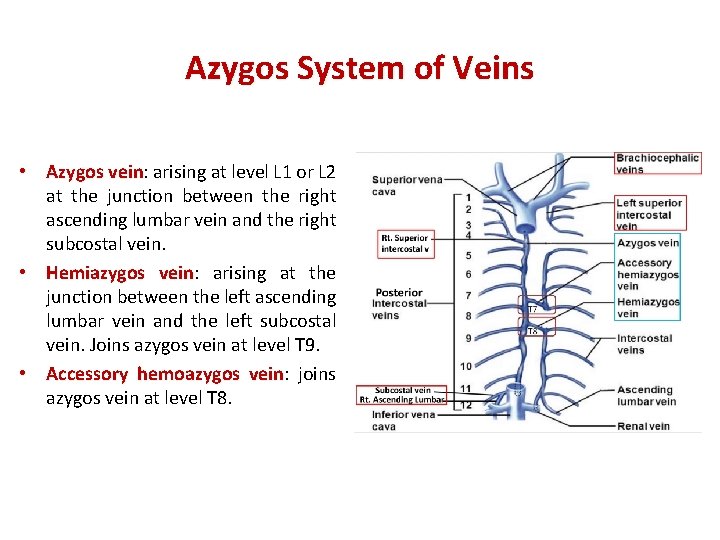
Azygos System of Veins • Azygos vein: vein arising at level L 1 or L 2 at the junction between the right ascending lumbar vein and the right subcostal vein. • Hemiazygos vein: vein arising at the junction between the left ascending lumbar vein and the left subcostal vein. Joins azygos vein at level T 9. • Accessory hemoazygos vein: vein joins azygos vein at level T 8.
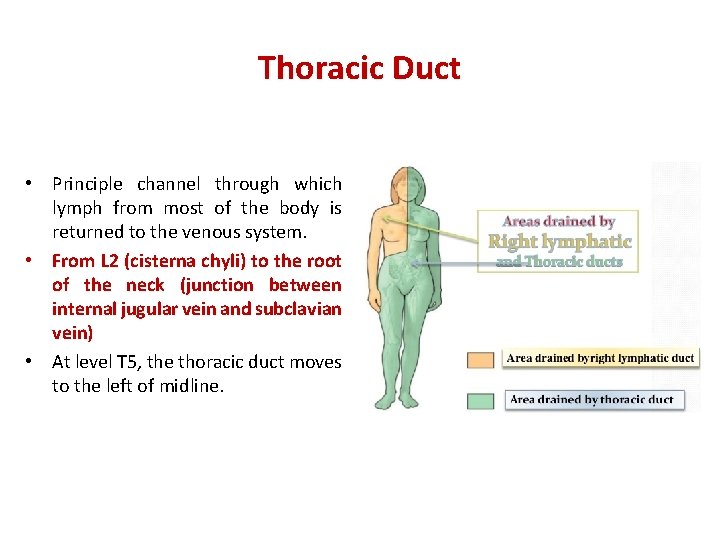
Thoracic Duct • Principle channel through which lymph from most of the body is returned to the venous system. • From L 2 (cisterna chyli) to the root of the neck (junction between internal jugular vein and subclavian vein) • At level T 5, the thoracic duct moves to the left of midline.
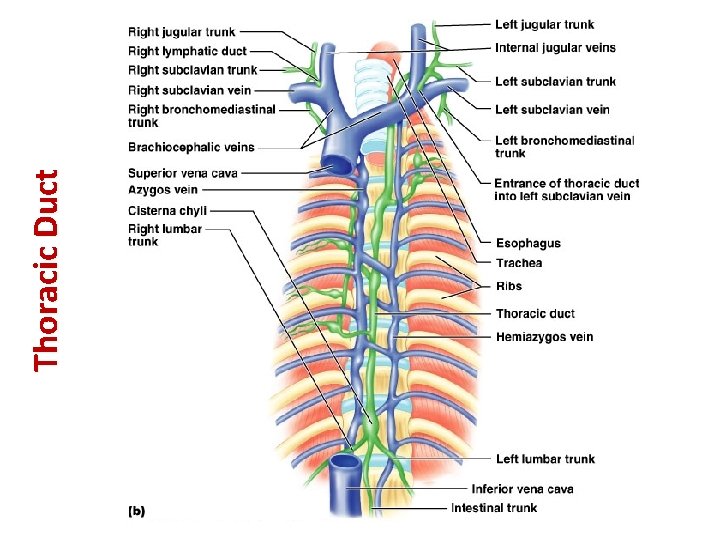
Thoracic Duct
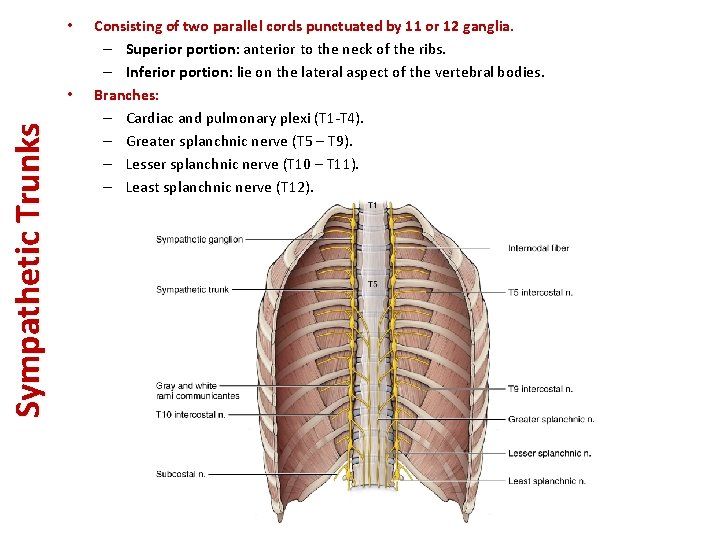
• Sympathetic Trunks • Consisting of two parallel cords punctuated by 11 or 12 ganglia. – Superior portion: anterior to the neck of the ribs. – Inferior portion: lie on the lateral aspect of the vertebral bodies. Branches: – Cardiac and pulmonary plexi (T 1 -T 4). – Greater splanchnic nerve (T 5 – T 9). – Lesser splanchnic nerve (T 10 – T 11). – Least splanchnic nerve (T 12).
- Slides: 12