
Kingdom Monera Bacteria Biology 11 Prokaryotes Review o
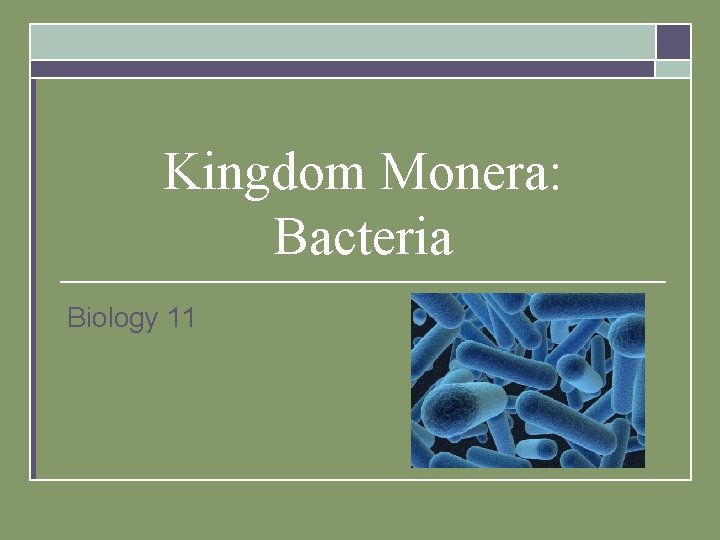
Kingdom Monera: Bacteria Biology 11
Prokaryotes Review: o o No true nucleus (no nuclear membrane) No cellular organelles Single celled The bacteria
Good or Bad Bacteria Activity: n n What did you use to make your decision? Are there any bacteria that ended up on both sides? Good or bad depends on you perspective! But for humans most “bad bacteria” produced toxins that negatively affect us.

Kingdom Monera: o o All are prokaryotes Include bacteria and cyanobacteria (blue/green algae)
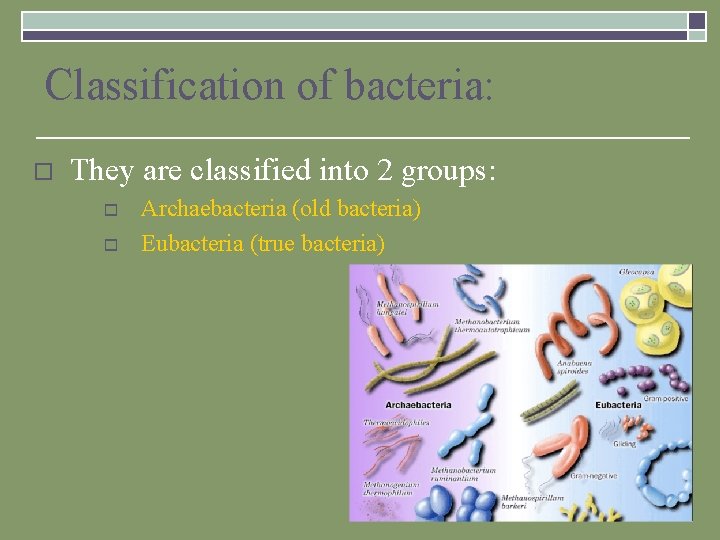
Classification of bacteria: o They are classified into 2 groups: o o Archaebacteria (old bacteria) Eubacteria (true bacteria)
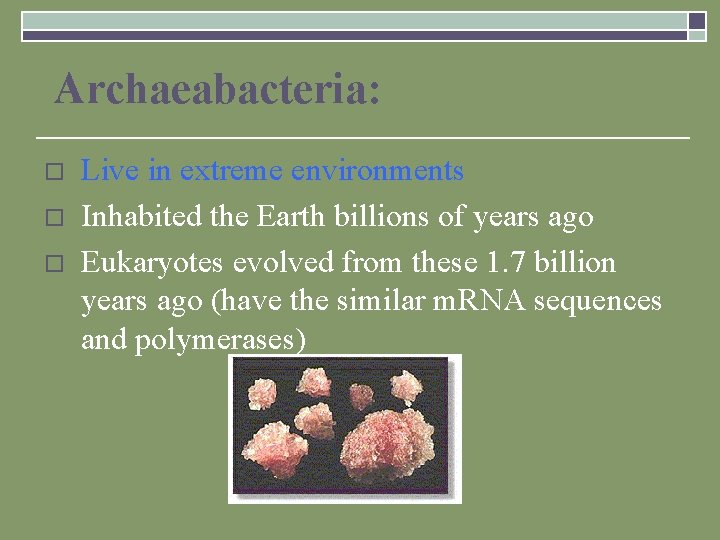
Archaeabacteria: o o o Live in extreme environments Inhabited the Earth billions of years ago Eukaryotes evolved from these 1. 7 billion years ago (have the similar m. RNA sequences and polymerases)
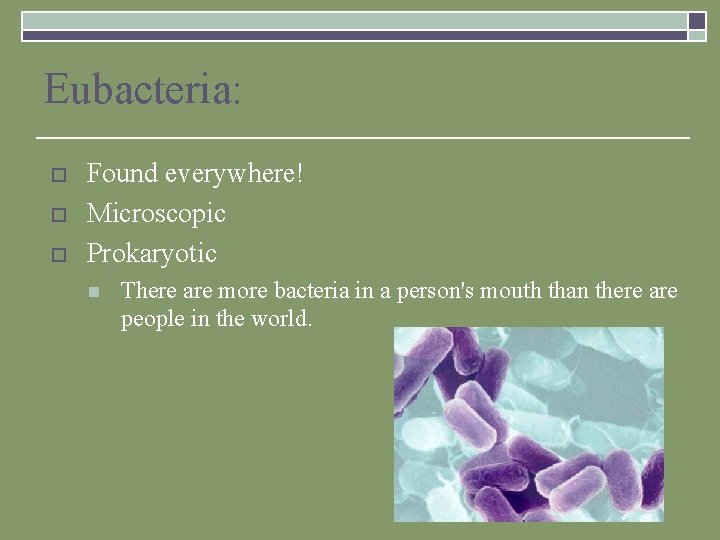
Eubacteria: o o o Found everywhere! Microscopic Prokaryotic n There are more bacteria in a person's mouth than there are people in the world.
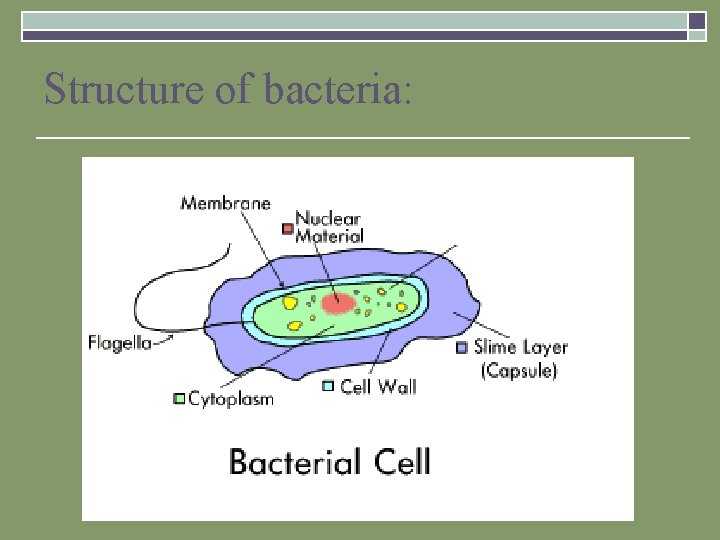
Structure of bacteria:
Structure of bacteria: o o Cell wall: protect and maintain osmotic balance Capsule: found outside cell wall, added protection, helps attach the cell Nuclear material: contains the genetic information need for reproduction Flagella: for movement
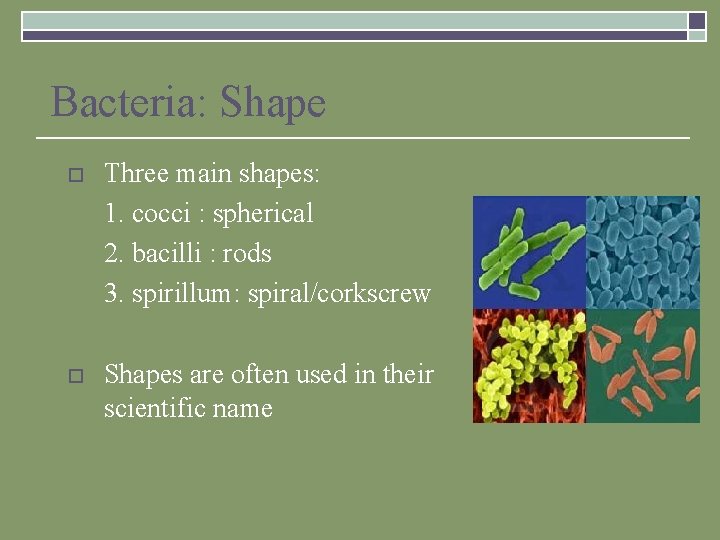
Bacteria: Shape o Three main shapes: 1. cocci : spherical 2. bacilli : rods 3. spirillum: spiral/corkscrew o Shapes are often used in their scientific name
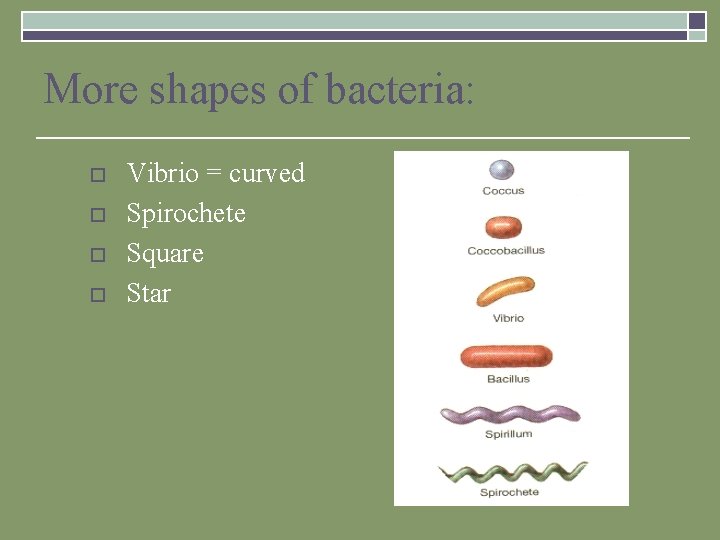
More shapes of bacteria: o o Vibrio = curved Spirochete Square Star
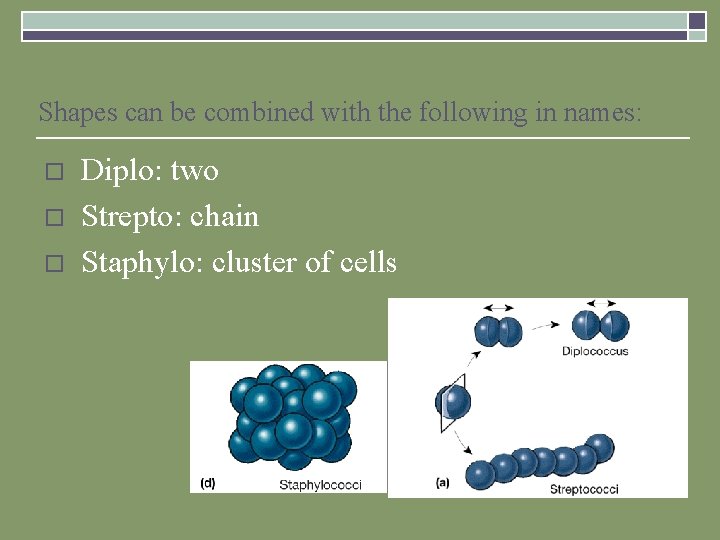
Shapes can be combined with the following in names: o o o Diplo: two Strepto: chain Staphylo: cluster of cells
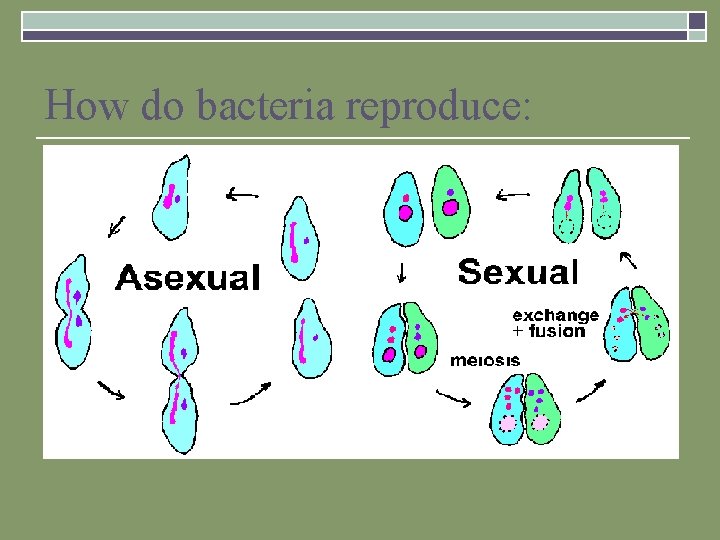
How do bacteria reproduce:
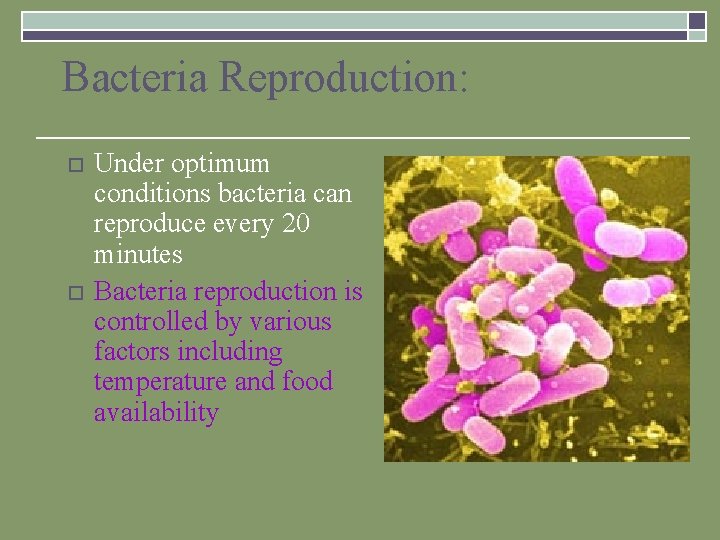
Bacteria Reproduction: o o Under optimum conditions bacteria can reproduce every 20 minutes Bacteria reproduction is controlled by various factors including temperature and food availability
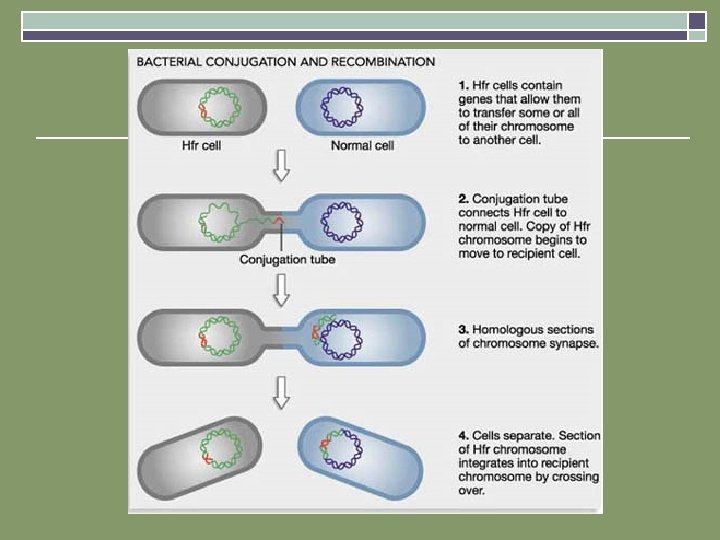
How do bacteria reproduce: o Asexual reproduction: is the process by which an organism creates an identical copy of itself without a contribution of genetic material from another individual. o o Binary Fission Sexual reproduction: is the process by which organisms create descendants that have a combination of genetic material contributed from two different members of the species. o Conjugation
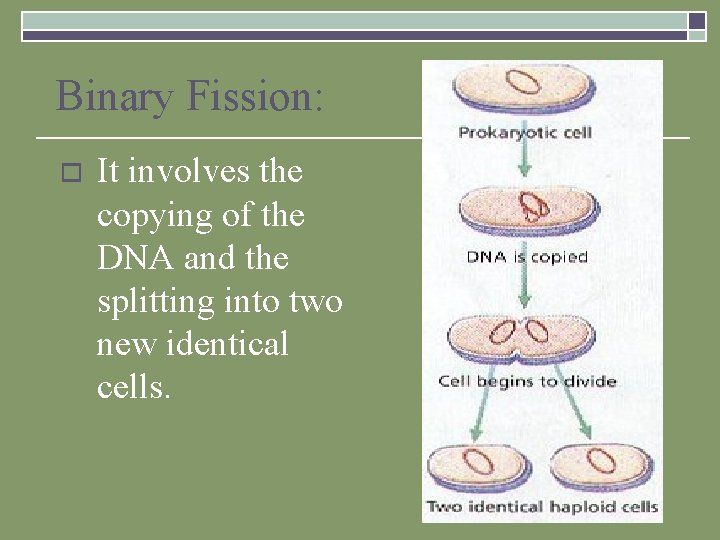
Binary Fission: o It involves the copying of the DNA and the splitting into two new identical cells.
(Steps) Conjugation: 1. 2. 3. 4. 5. Mating pair formation: one of the two bacteria cells extends a pillus to the other cell to form the conjugation tube DNA synthesis: one bacteria makes a copy of its DNA transfer: copied DNA is sent to other cell DNA recombination: in one cell the DNA from the other bacteria integrates with its own Cells separate
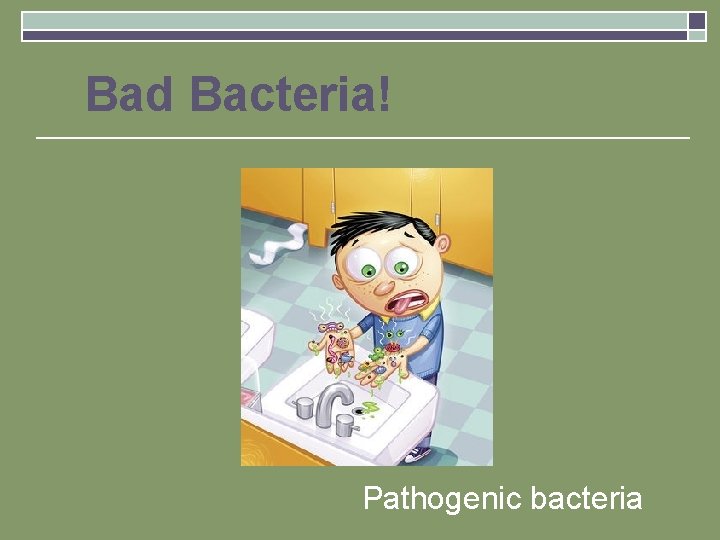
Bad Bacteria! Pathogenic bacteria
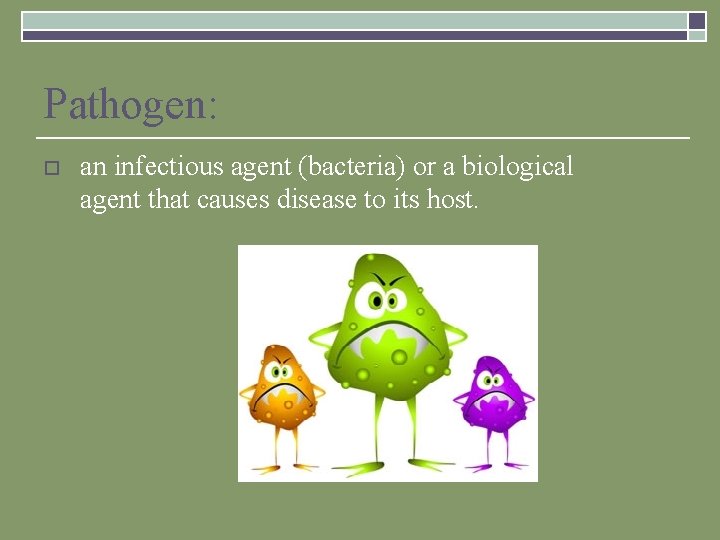
Pathogen: o an infectious agent (bacteria) or a biological agent that causes disease to its host.
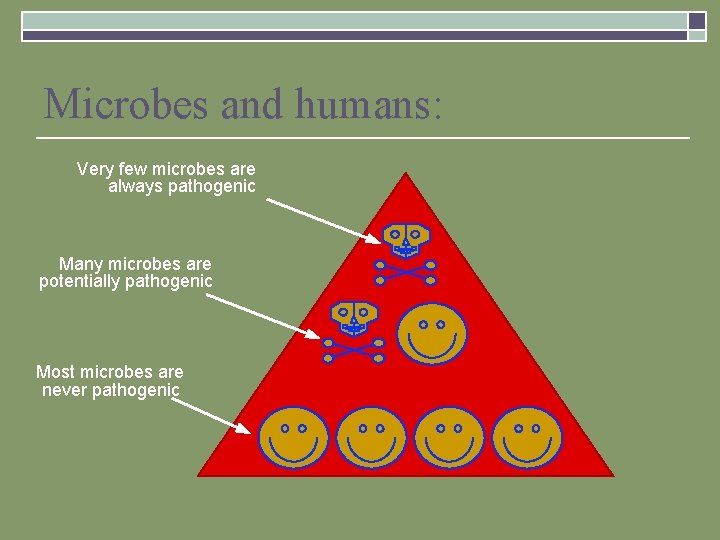
Microbes and humans: Very few microbes are always pathogenic Many microbes are potentially pathogenic Most microbes are never pathogenic
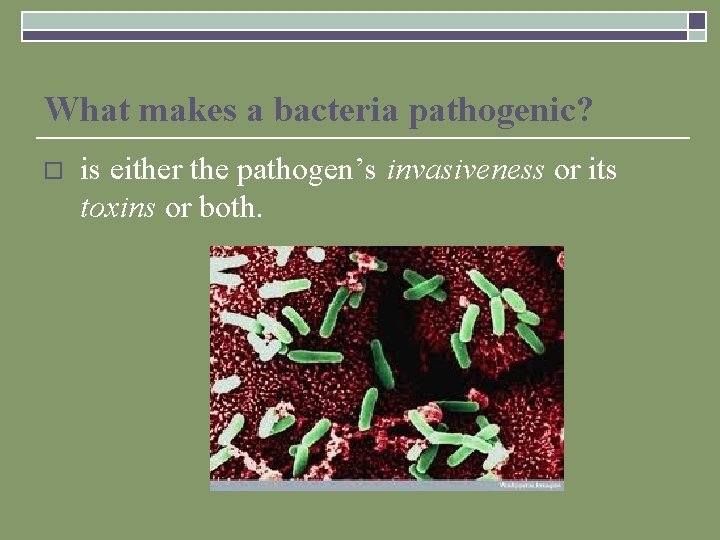
What makes a bacteria pathogenic? o is either the pathogen’s invasiveness or its toxins or both.
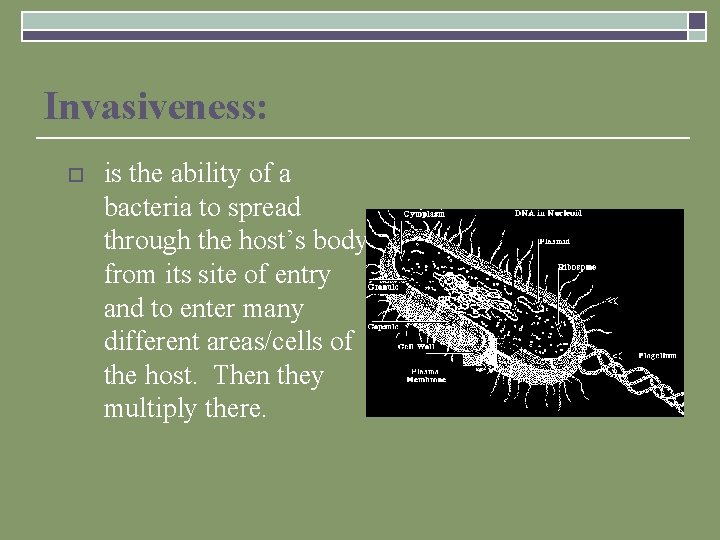
Invasiveness: o is the ability of a bacteria to spread through the host’s body from its site of entry and to enter many different areas/cells of the host. Then they multiply there.
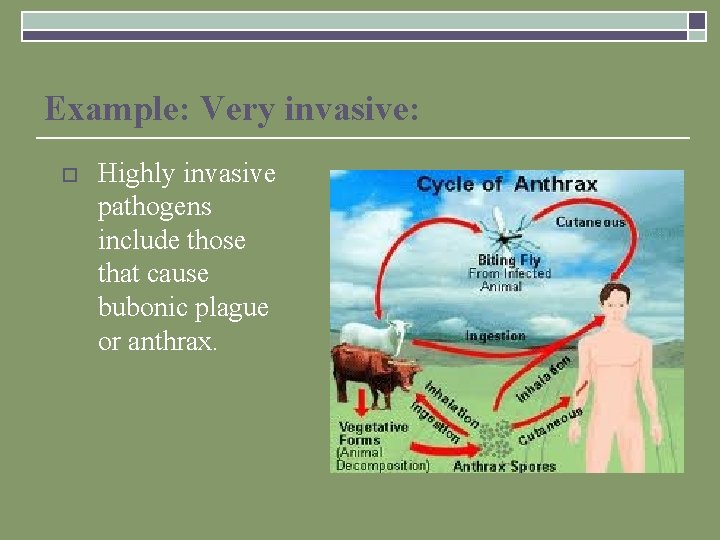
Example: Very invasive: o Highly invasive pathogens include those that cause bubonic plague or anthrax.
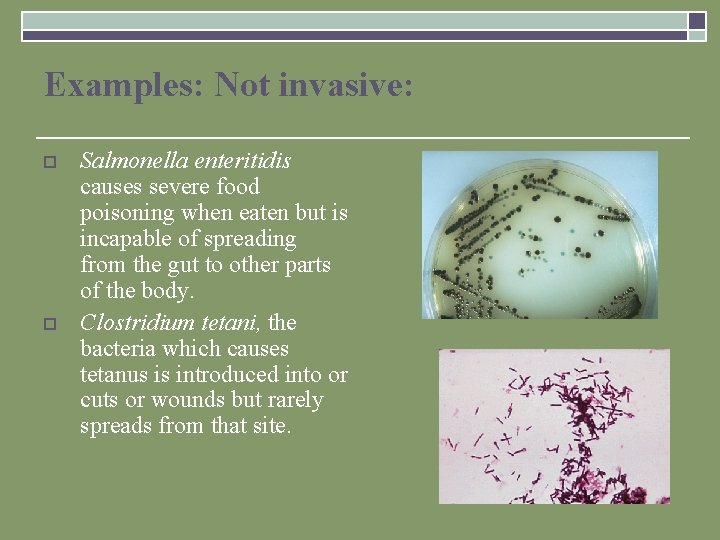
Examples: Not invasive: o o Salmonella enteritidis causes severe food poisoning when eaten but is incapable of spreading from the gut to other parts of the body. Clostridium tetani, the bacteria which causes tetanus is introduced into or cuts or wounds but rarely spreads from that site.
Toxins: o Pathogens which are non-invasive cause their disease by releasing chemicals (toxins) which are poisonous to the host.
Two types of toxins: 1. 2. Exotoxins are chemicals which are secreted by pathogens into their surroundings. Endotoxins are components of the cell wall of bacteria. They are not secreted, but are released when bacterial cells break up after death.
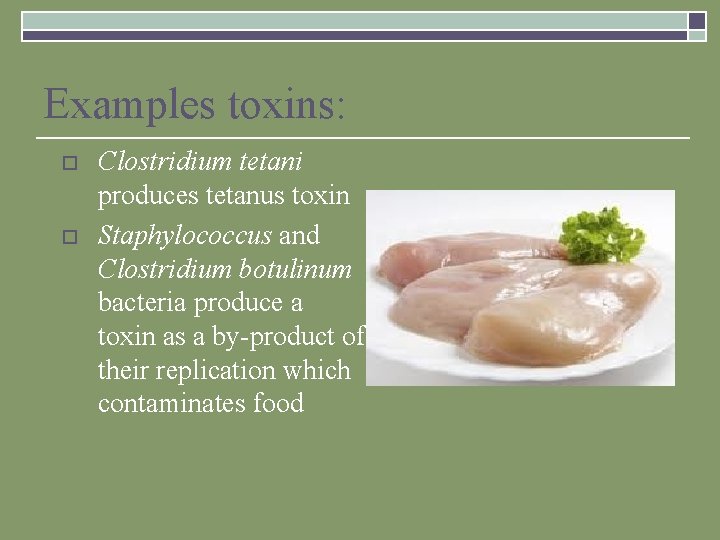
Examples toxins: o o Clostridium tetani produces tetanus toxin Staphylococcus and Clostridium botulinum bacteria produce a toxin as a by-product of their replication which contaminates food
Conditionally pathogenic: o Conditionally pathogenic bacteria are only problematic under certain conditions, n n o o a wound that allows for entry into the blood a decrease in immune function (weak immune system). For example, Staphylococcus or Streptococcus are usually exist on the skin or in the nose without causing disease but can potentially cause skin or throat infections, pneumonia, etc Some species of bacteria are opportunistic pathogens and cause disease mainly in people suffering from weak immune systems
- Slides: 29