
Kingdom Fungi Eukaryotic heterotrophs How does this make

- Slides: 22
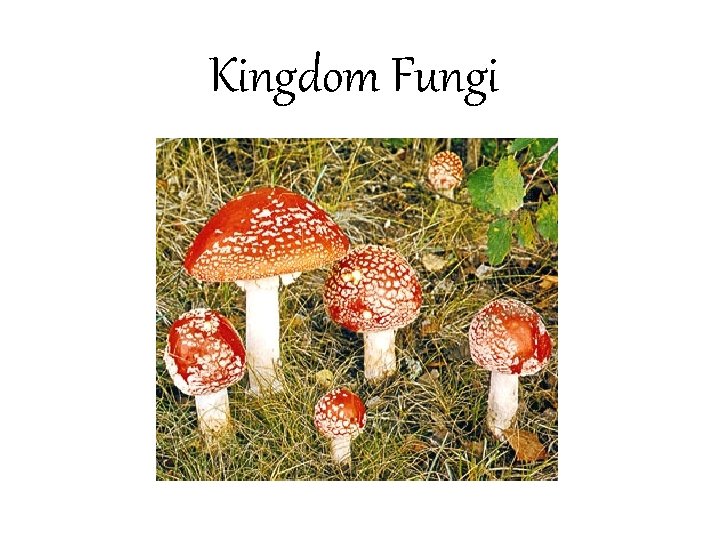
Kingdom Fungi
Eukaryotic heterotrophs (How does this make them different from plants? ? ? ) • Many are saprophytes • Many are parasites • Many are symbionts
The next few slides show some examples of common fungi. . .
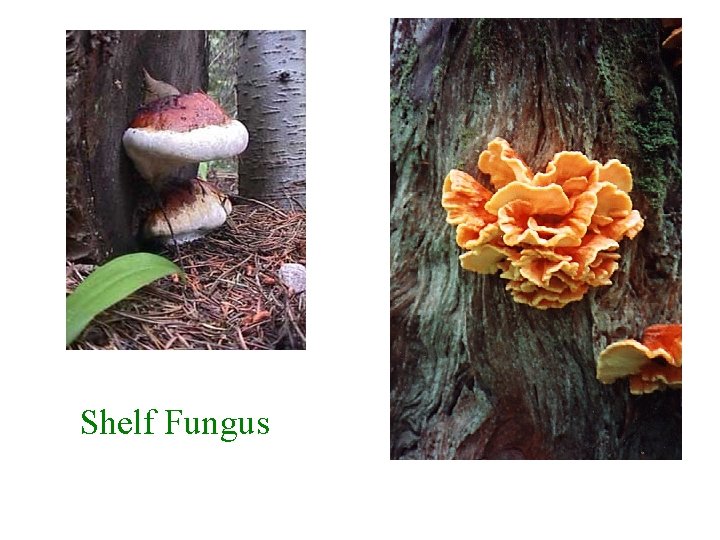
Shelf Fungus
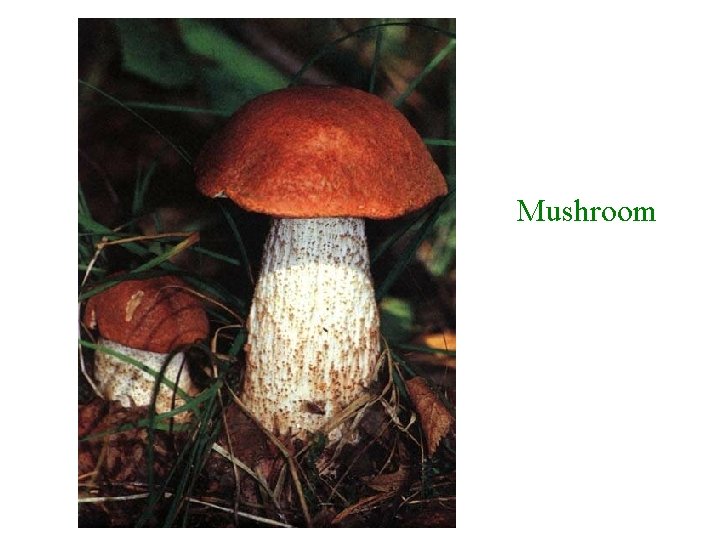
Mushroom
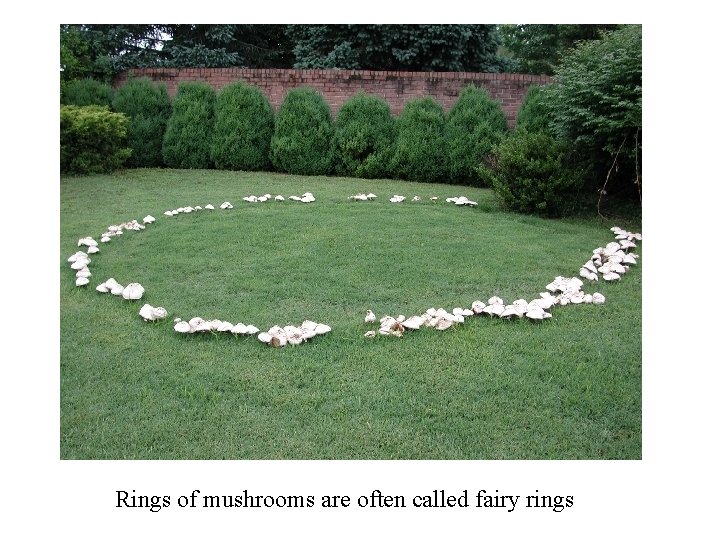
Rings of mushrooms are often called fairy rings
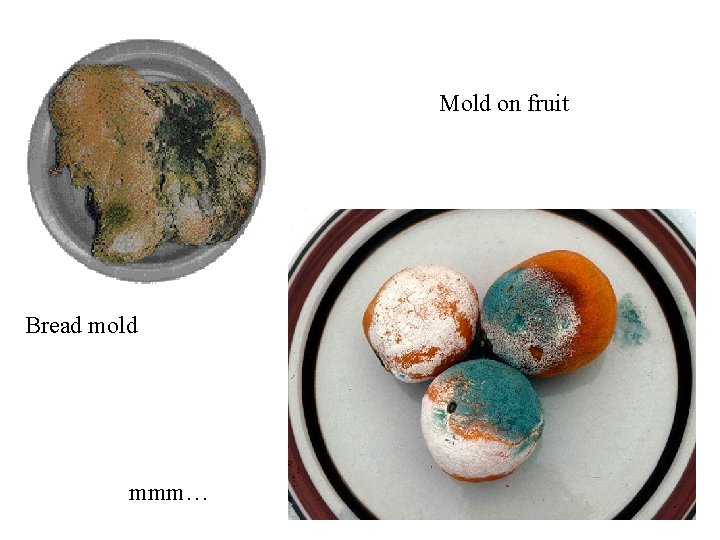
Mold on fruit Bread mold mmm…
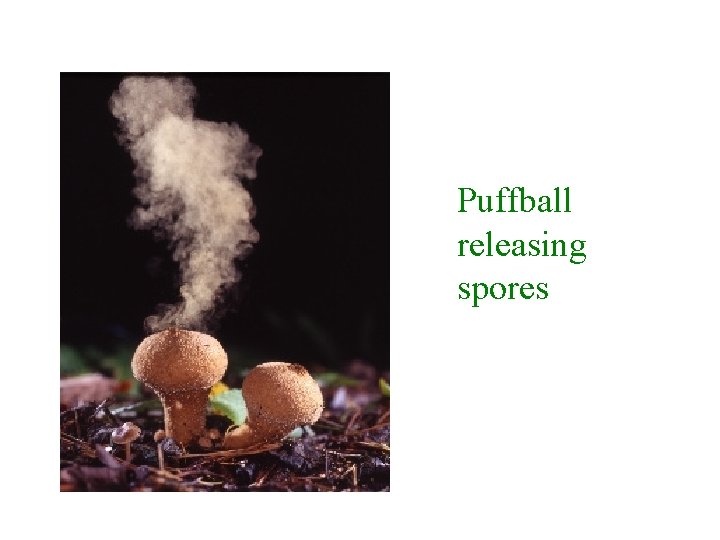
Puffball releasing spores
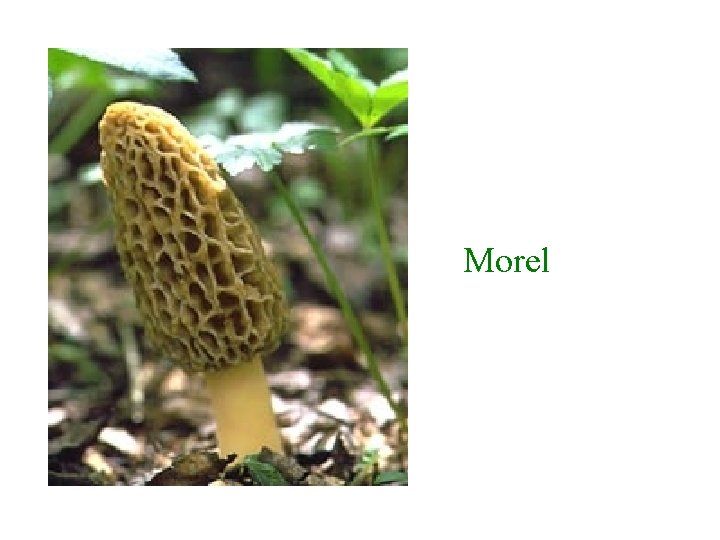
Morel
The cell walls are made with CHITIN instead of cellulose.
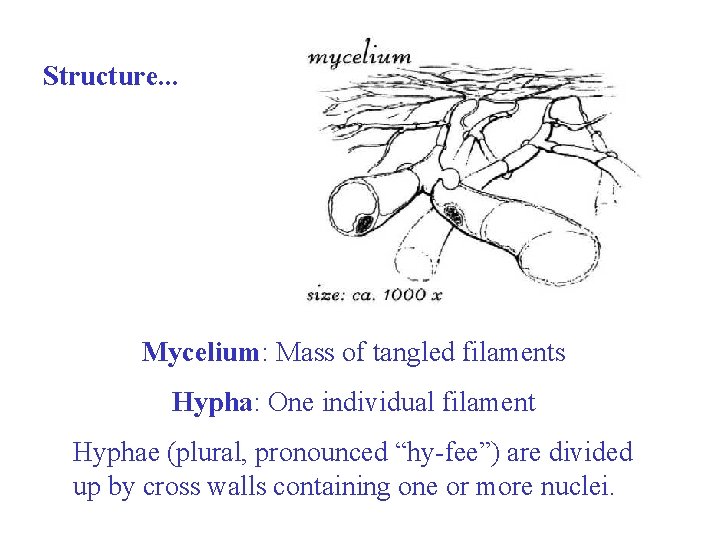
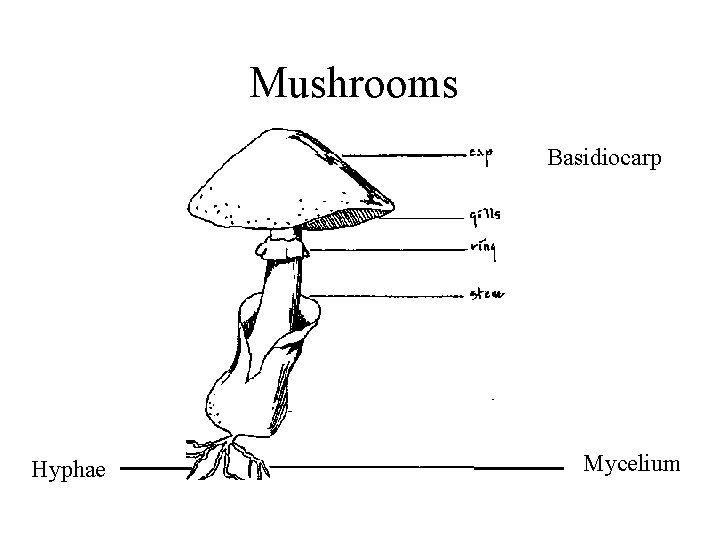
Structure. . . Mycelium: Mass of tangled filaments Hypha: One individual filament Hyphae (plural, pronounced “hy-fee”) are divided up by cross walls containing one or more nuclei.
How does a fungus obtain energy? It secretes digestive enzymes that break down organic material into simple molecules. The fungus absorbs the molecules into the hyphae.
How do they reproduce? Sexually • Not male or female, but plus or minus! • Opposite types of hyphae meet, fuse, and form a new mycelium containing cells with 2 haploid nuclei Asexually • Fragmentation (pieces of hyphae break off and form new mycelia) • Spores • Budding
Mushrooms Basidiocarp Hyphae Mycelium
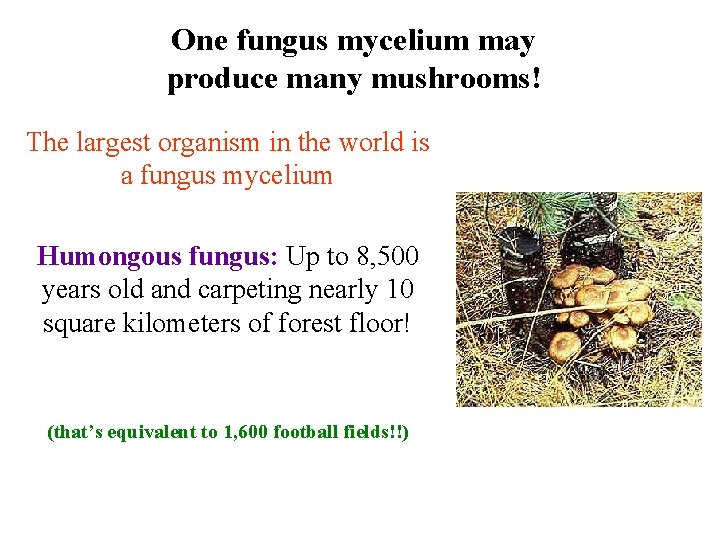
One fungus mycelium may produce many mushrooms! The largest organism in the world is a fungus mycelium Humongous fungus: Up to 8, 500 years old and carpeting nearly 10 square kilometers of forest floor! (that’s equivalent to 1, 600 football fields!!)
Role of fungi in nature: Decomposers – Decompose and recycle organic and inorganic nutrients – Use chemical energy in dead organisms – Return nutrients and minerals to the soil for use by plants
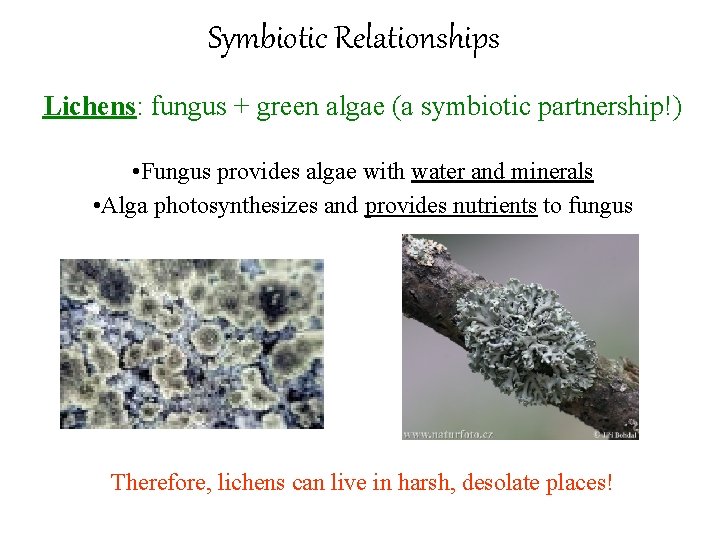
Symbiotic Relationships Lichens: fungus + green algae (a symbiotic partnership!) • Fungus provides algae with water and minerals • Alga photosynthesizes and provides nutrients to fungus Therefore, lichens can live in harsh, desolate places!
Another symbiotic relationship. . . Mycorrhizae: Fungus and green plant (partnership on roots of plants) • Fungal hyphae help absorb water, minerals, nutrients • Plants give fungi products of photosynthesis
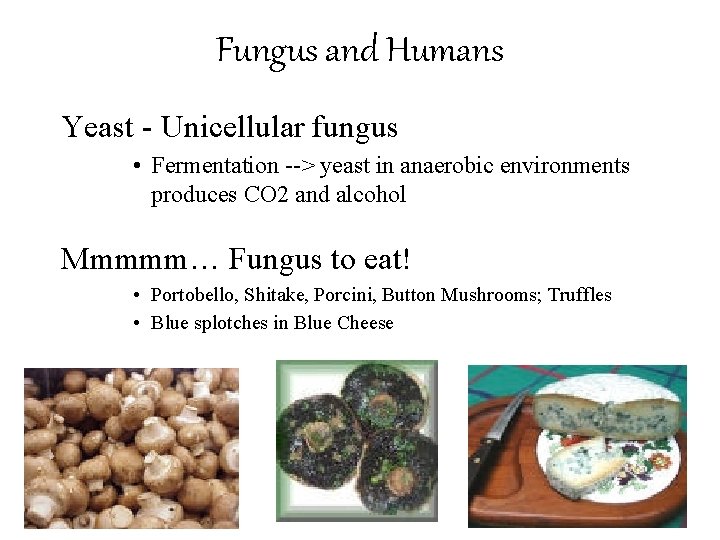
Fungus and Humans Yeast - Unicellular fungus • Fermentation --> yeast in anaerobic environments produces CO 2 and alcohol Mmmmm… Fungus to eat! • Portobello, Shitake, Porcini, Button Mushrooms; Truffles • Blue splotches in Blue Cheese
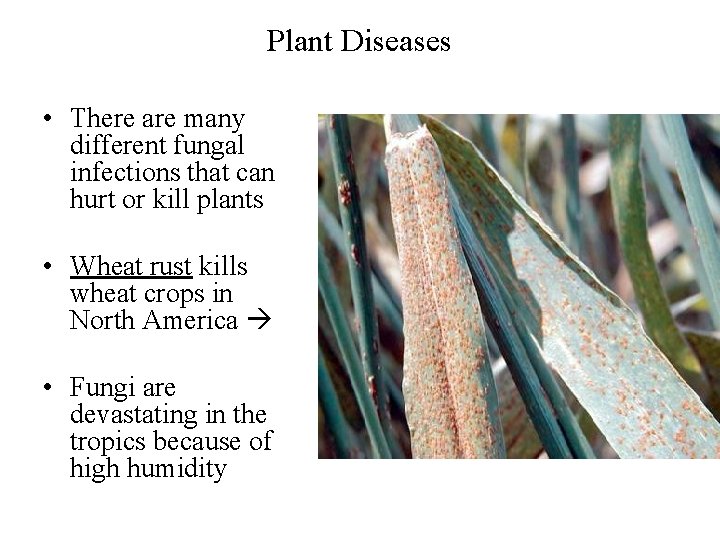
Plant Diseases • There are many different fungal infections that can hurt or kill plants • Wheat rust kills wheat crops in North America • Fungi are devastating in the tropics because of high humidity
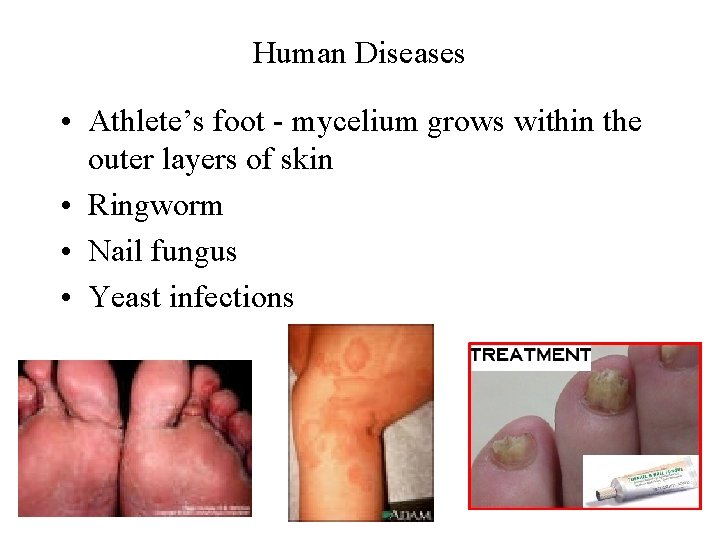
Human Diseases • Athlete’s foot - mycelium grows within the outer layers of skin • Ringworm • Nail fungus • Yeast infections
The End