
Kingdom Diversity Modern Classification of Organisms Linnaeus used

- Slides: 11
Kingdom Diversity
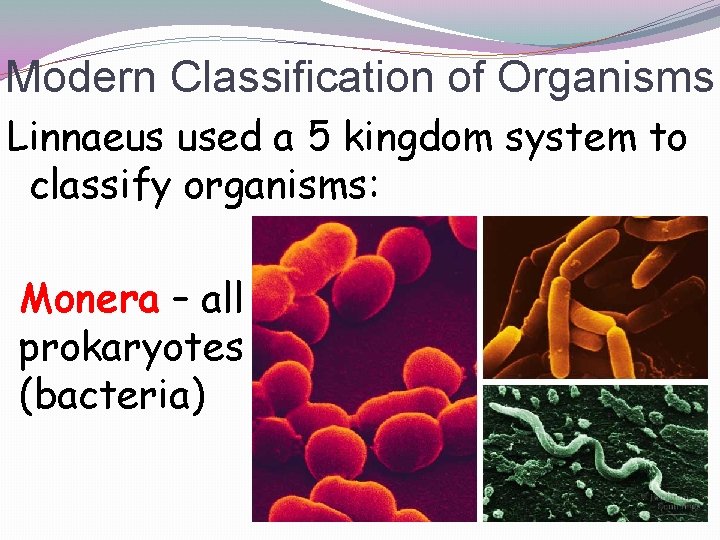
Modern Classification of Organisms Linnaeus used a 5 kingdom system to classify organisms: Monera – all prokaryotes (bacteria)
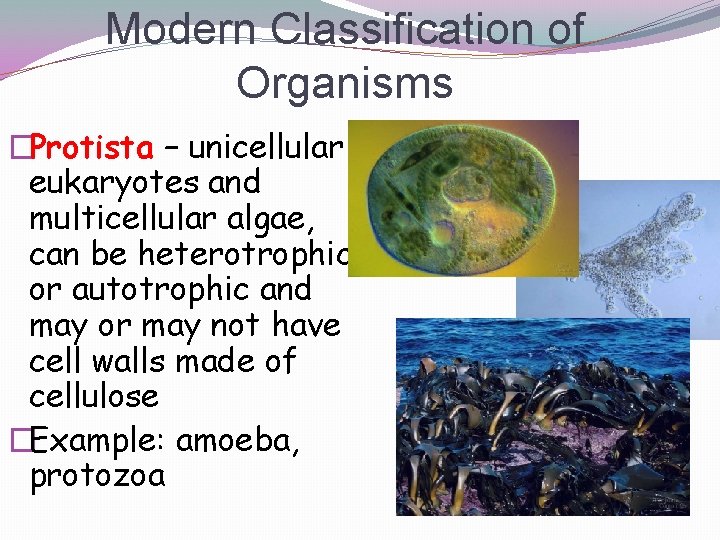
Modern Classification of Organisms �Protista – unicellular eukaryotes and multicellular algae, can be heterotrophic or autotrophic and may or may not have cell walls made of cellulose �Example: amoeba, protozoa
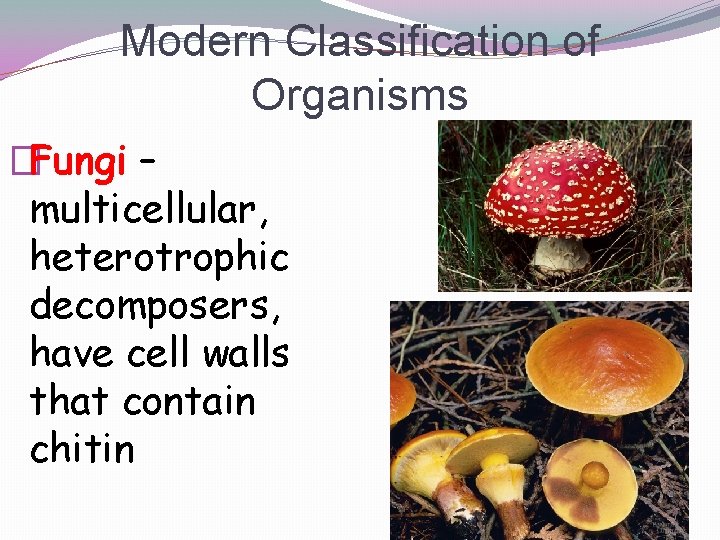
Modern Classification of Organisms �Fungi – multicellular, heterotrophic decomposers, have cell walls that contain chitin
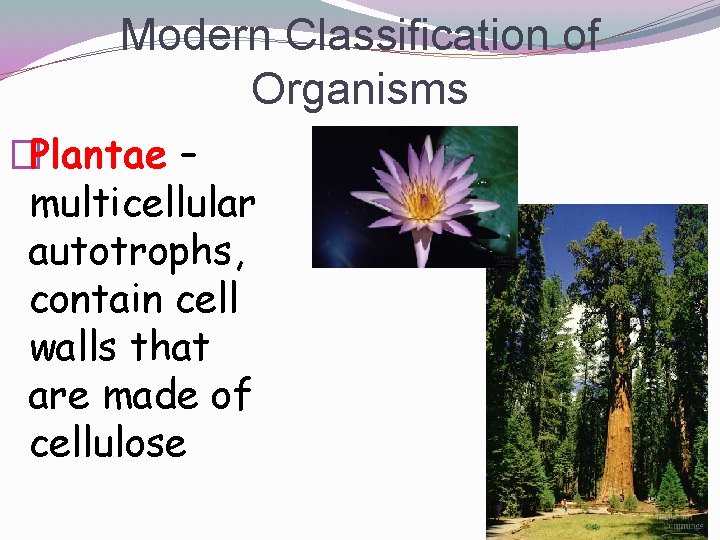
Modern Classification of Organisms �Plantae – multicellular autotrophs, contain cell walls that are made of cellulose
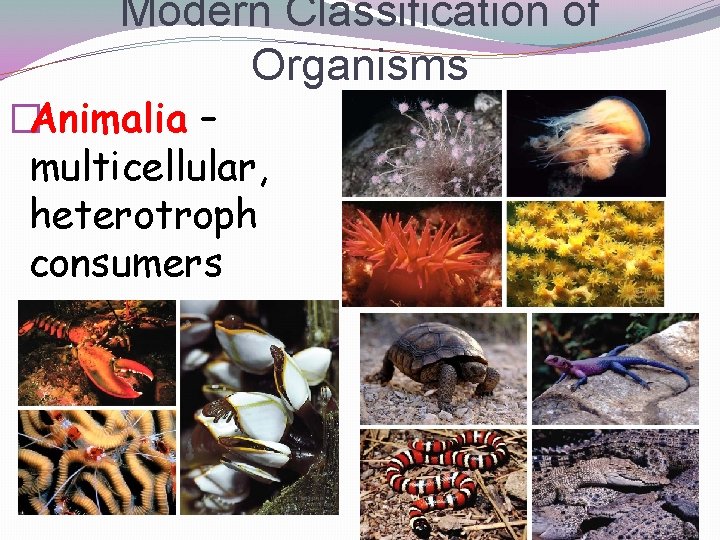
Modern Classification of Organisms �Animalia – multicellular, heterotroph consumers
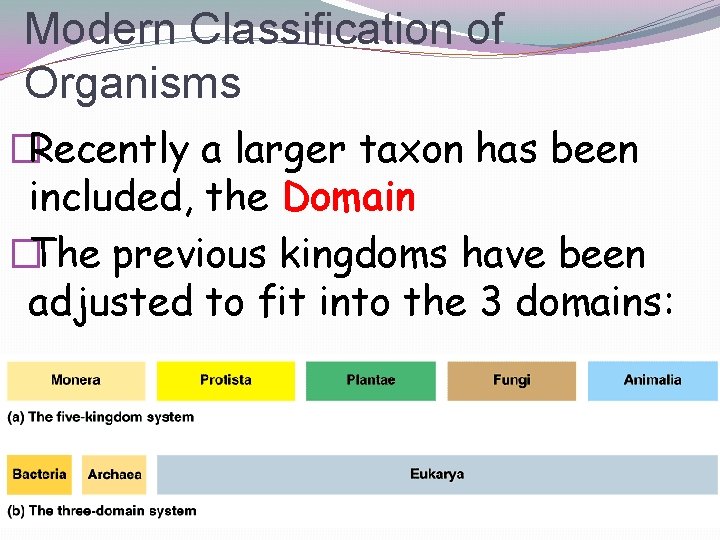
Modern Classification of Organisms �Recently a larger taxon has been included, the Domain �The previous kingdoms have been adjusted to fit into the 3 domains:
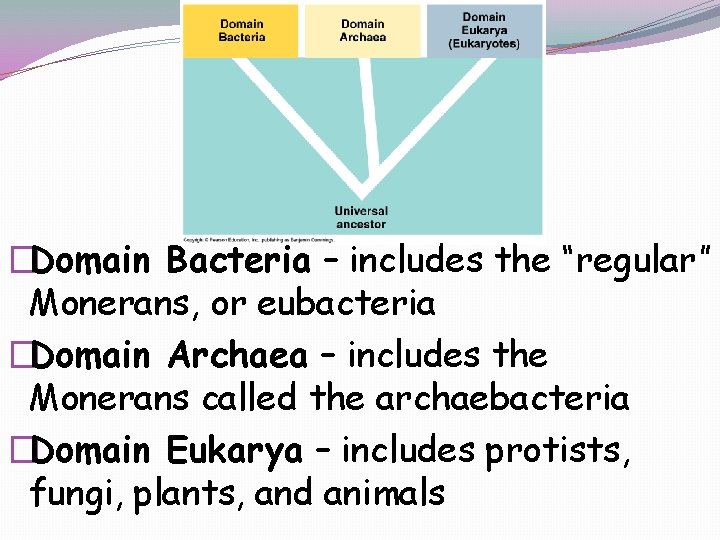
�Domain Bacteria – includes the “regular” Monerans, or eubacteria �Domain Archaea – includes the Monerans called the archaebacteria �Domain Eukarya – includes protists, fungi, plants, and animals
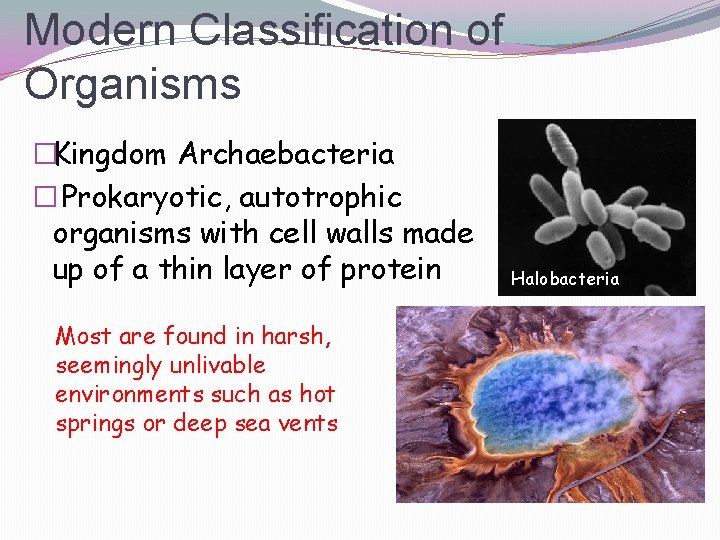
Modern Classification of Organisms �Kingdom Archaebacteria � Prokaryotic, autotrophic organisms with cell walls made up of a thin layer of protein Most are found in harsh, seemingly unlivable environments such as hot springs or deep sea vents Halobacteria
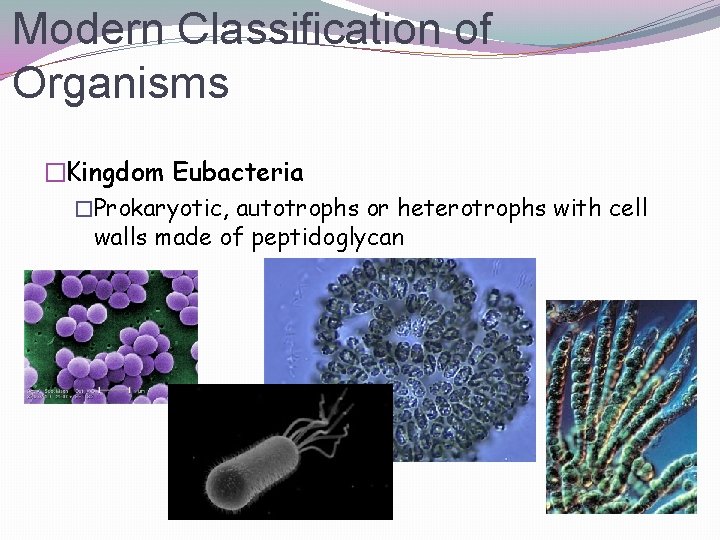
Modern Classification of Organisms �Kingdom Eubacteria �Prokaryotic, autotrophs or heterotrophs with cell walls made of peptidoglycan
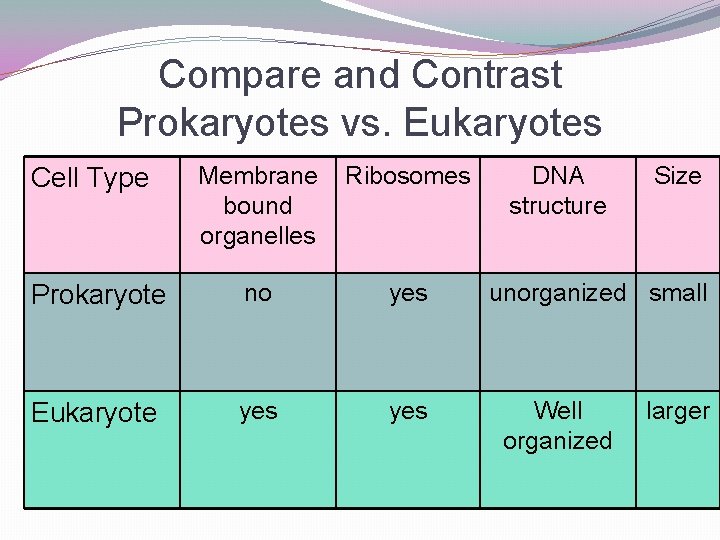
Compare and Contrast Prokaryotes vs. Eukaryotes Membrane bound organelles Ribosomes Prokaryote no yes Eukaryote yes Cell Type DNA structure Size unorganized small Well organized larger