
Kingdom AnimaliaPhylum Annelida Annelid worms Ex Earthworms Segmented

- Slides: 12
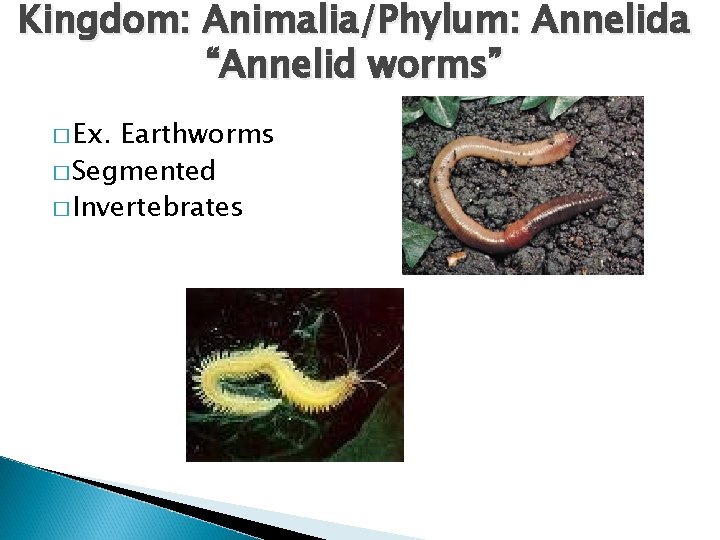
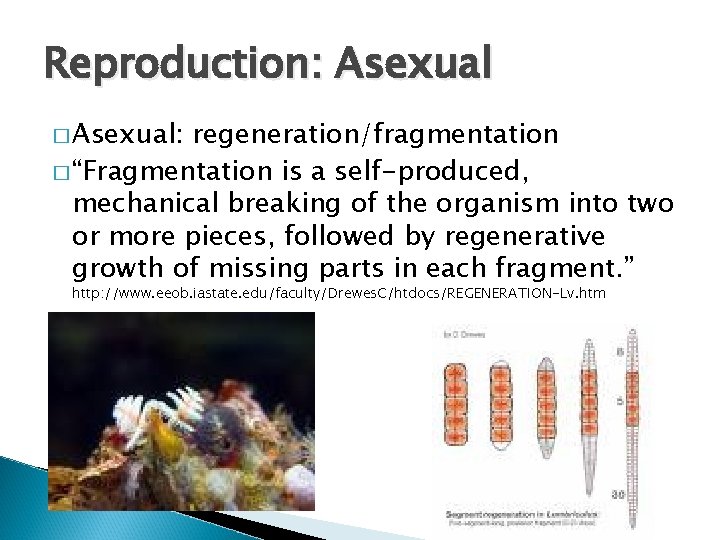
Kingdom: Animalia/Phylum: Annelida “Annelid worms” � Ex. Earthworms � Segmented � Invertebrates
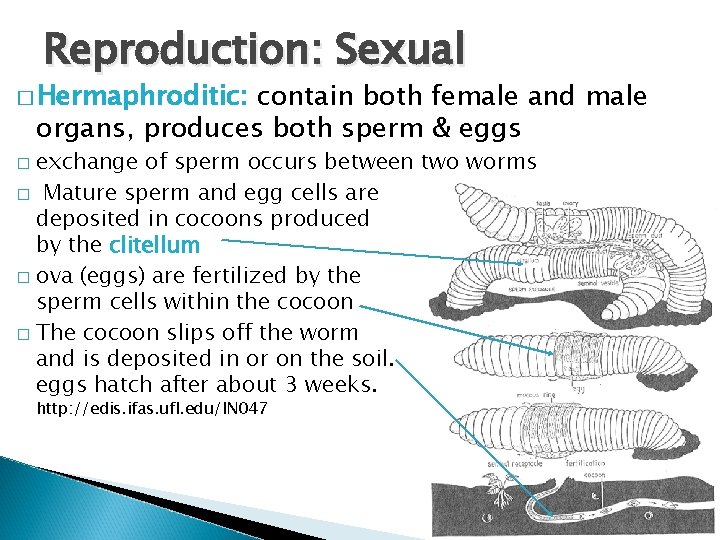
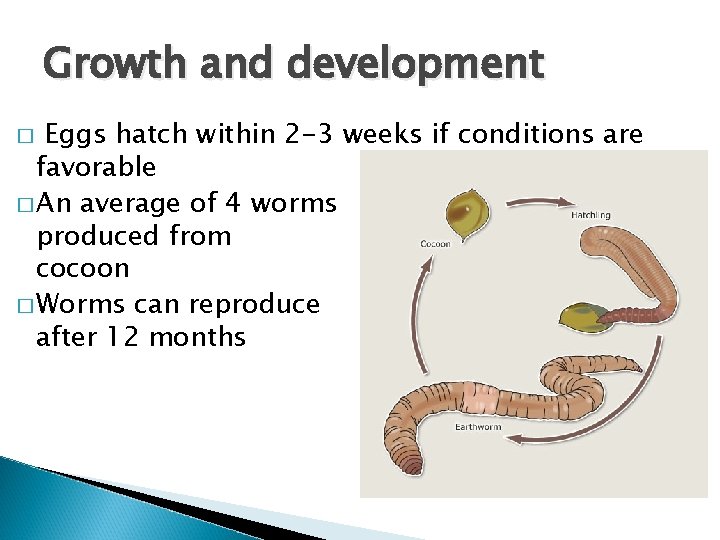
Reproduction: Asexual � Asexual: regeneration/fragmentation � “Fragmentation is a self-produced, mechanical breaking of the organism into two or more pieces, followed by regenerative growth of missing parts in each fragment. ” http: //www. eeob. iastate. edu/faculty/Drewes. C/htdocs/REGENERATION-Lv. htm
Reproduction: Sexual � Hermaphroditic: contain both female and male organs, produces both sperm & eggs exchange of sperm occurs between two worms � Mature sperm and egg cells are deposited in cocoons produced by the clitellum � ova (eggs) are fertilized by the sperm cells within the cocoon � The cocoon slips off the worm and is deposited in or on the soil. eggs hatch after about 3 weeks. � http: //edis. ifas. ufl. edu/IN 047 The
Growth and development Eggs hatch within 2 -3 weeks if conditions are favorable � An average of 4 worms are produced from each cocoon � Worms can reproduce after 12 months �
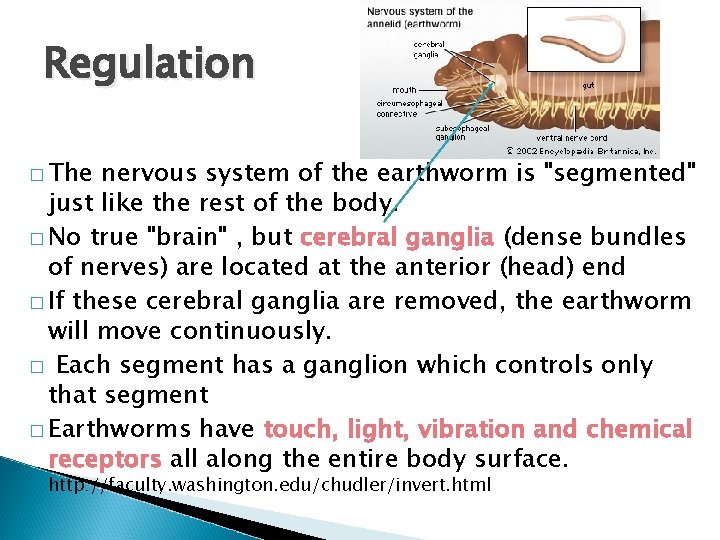
Regulation � The nervous system of the earthworm is "segmented" just like the rest of the body. � No true "brain" , but cerebral ganglia (dense bundles of nerves) are located at the anterior (head) end � If these cerebral ganglia are removed, the earthworm will move continuously. � Each segment has a ganglion which controls only that segment � Earthworms have touch, light, vibration and chemical receptors all along the entire body surface. http: //faculty. washington. edu/chudler/invert. html
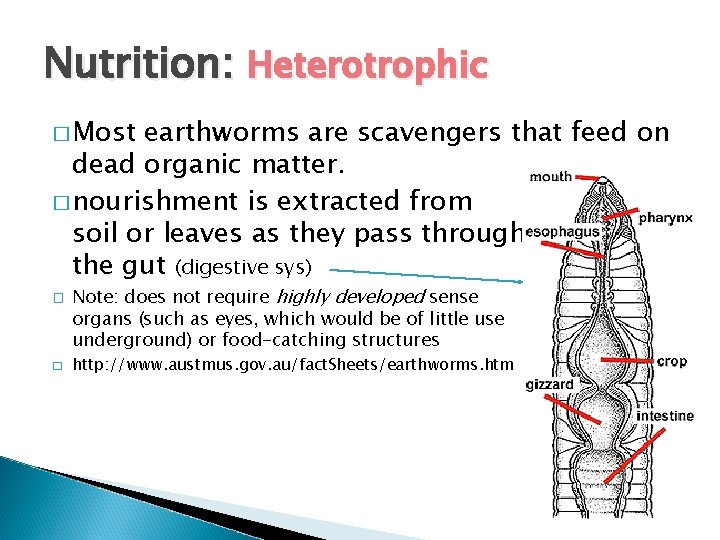
Nutrition: Heterotrophic � Most earthworms are scavengers that feed on dead organic matter. � nourishment is extracted from soil or leaves as they pass through the gut (digestive sys) � � Note: does not require highly developed sense organs (such as eyes, which would be of little use underground) or food-catching structures http: //www. austmus. gov. au/fact. Sheets/earthworms. htm
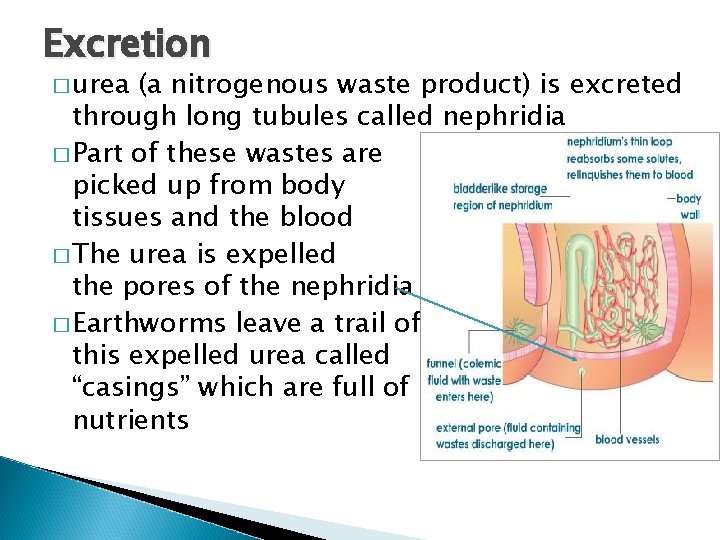
Excretion � urea (a nitrogenous waste product) is excreted through long tubules called nephridia � Part of these wastes are picked up from body tissues and the blood � The urea is expelled through the pores of the nephridia � Earthworms leave a trail of this expelled urea called “casings” which are full of nutrients
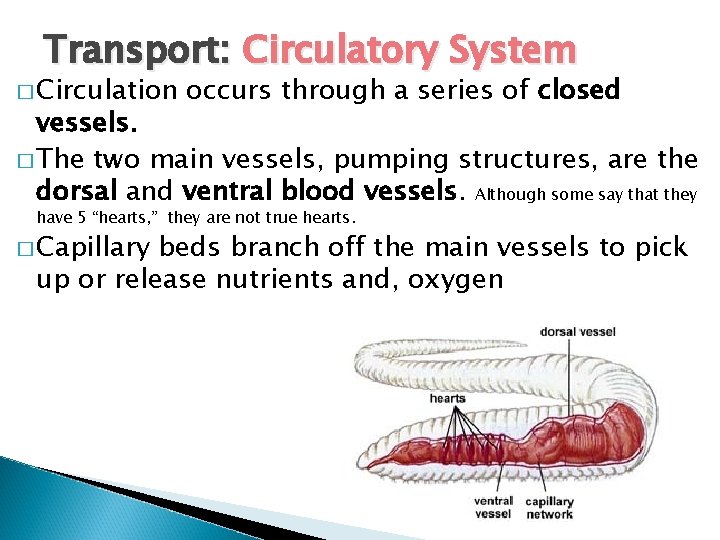
Transport: Circulatory System � Circulation occurs through a series of closed vessels. � The two main vessels, pumping structures, are the dorsal and ventral blood vessels. Although some say that they have 5 “hearts, ” they are not true hearts. � Capillary beds branch off the main vessels to pick up or release nutrients and, oxygen
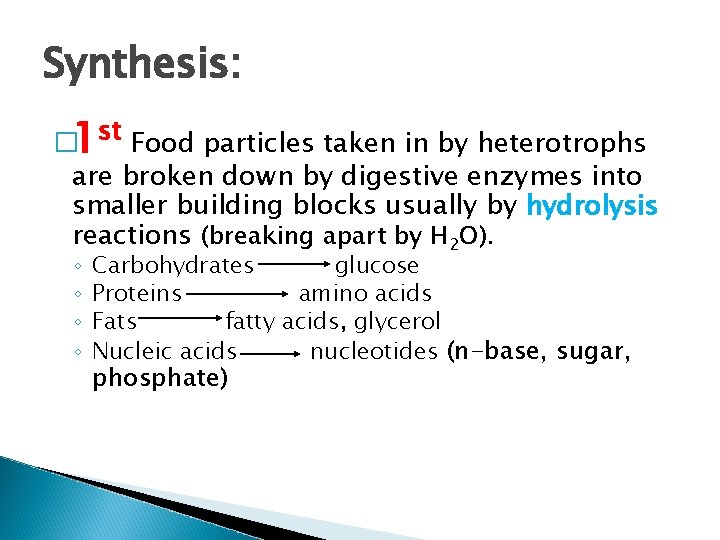
Synthesis: � 1 st Food particles taken in by heterotrophs are broken down by digestive enzymes into smaller building blocks usually by hydrolysis reactions (breaking apart by H 2 O). ◦ ◦ Carbohydrates glucose Proteins amino acids Fats fatty acids, glycerol Nucleic acids nucleotides (n-base, sugar, phosphate)
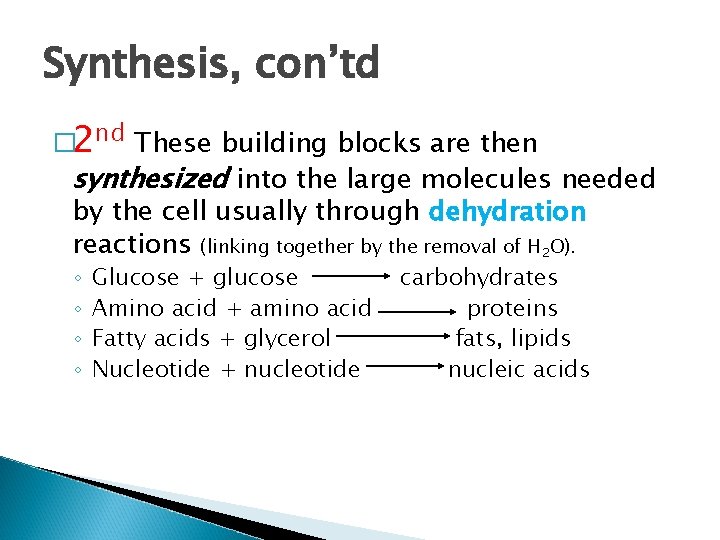
Synthesis, con’td � 2 nd These building blocks are then synthesized into the large molecules needed by the cell usually through dehydration reactions (linking together by the removal of H 2 O). ◦ ◦ Glucose + glucose Amino acid + amino acid Fatty acids + glycerol Nucleotide + nucleotide carbohydrates proteins fats, lipids nucleic acids
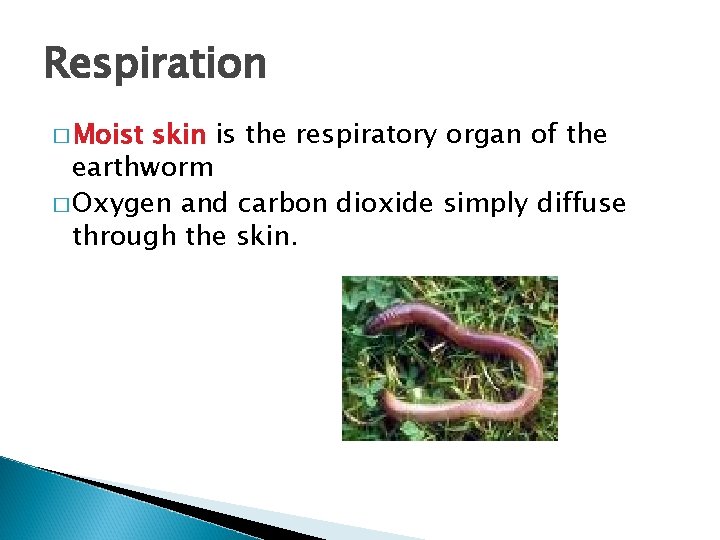
Respiration � Moist skin is the respiratory organ of the earthworm � Oxygen and carbon dioxide simply diffuse through the skin.