
KINGDOM ANIMALIA WHAT IS AN ANIMAL Multicellular Heterotrophic
- Slides: 48
KINGDOM ANIMALIA
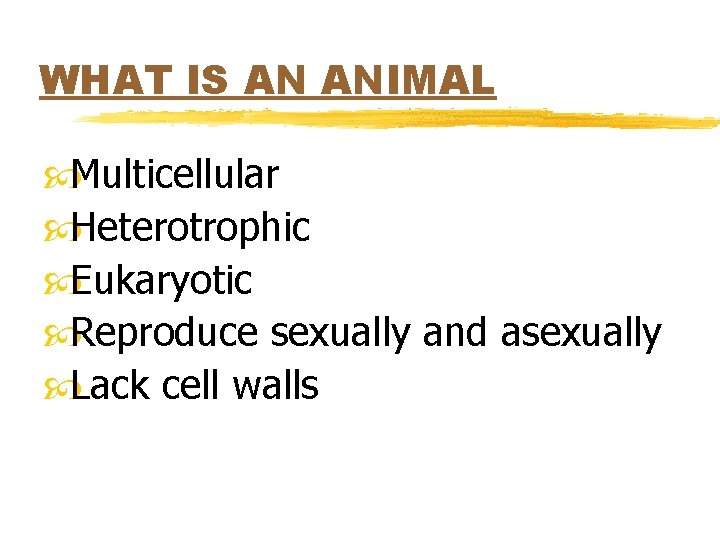
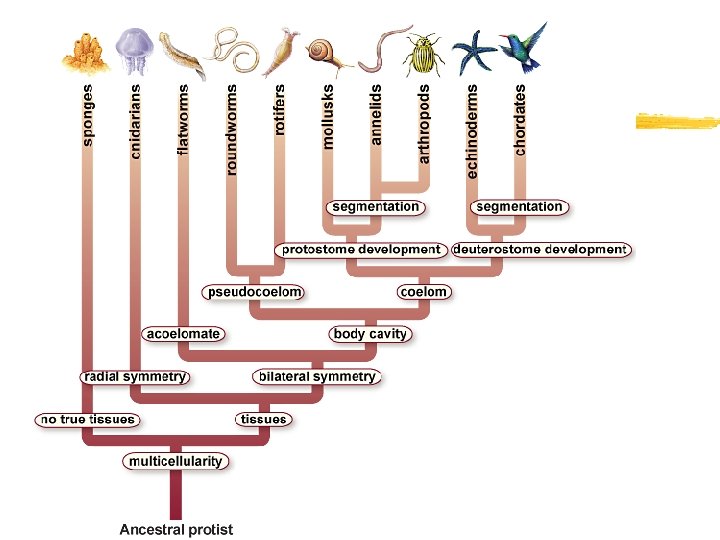
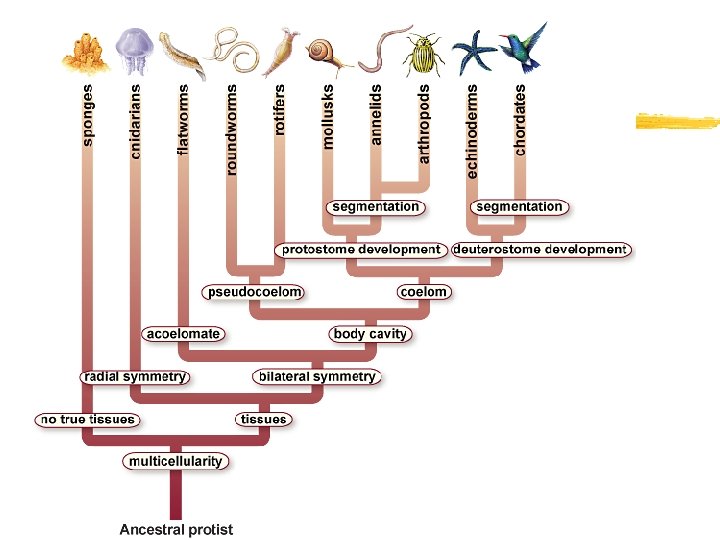
WHAT IS AN ANIMAL Multicellular Heterotrophic Eukaryotic Reproduce sexually and asexually Lack cell walls
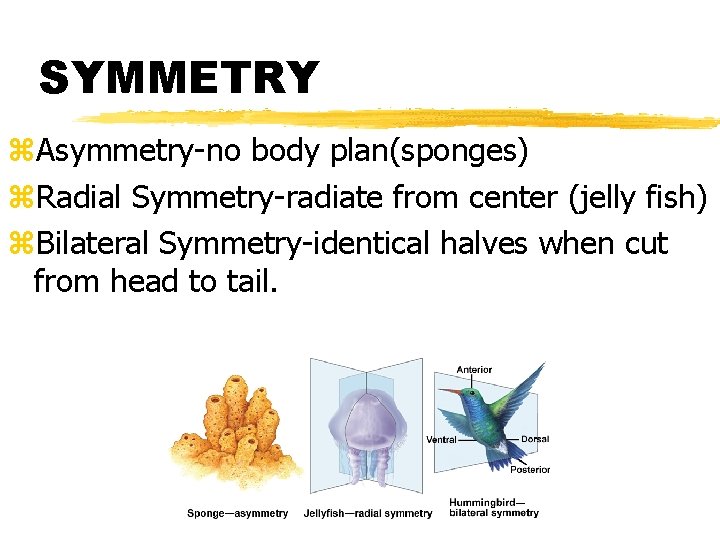
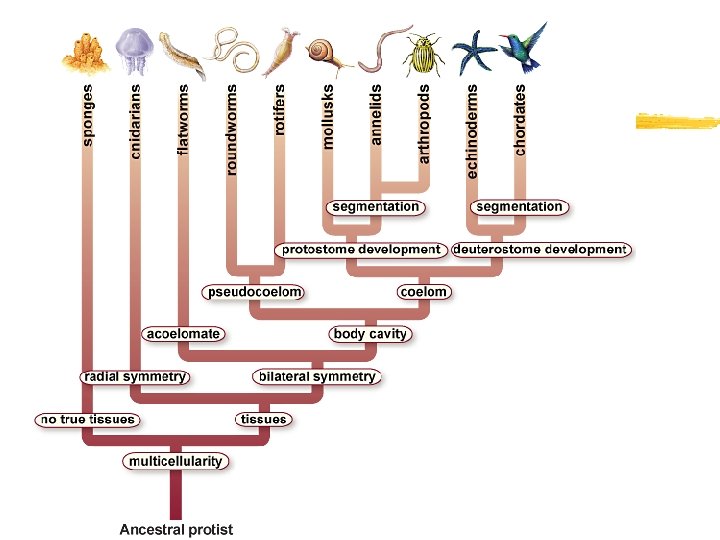
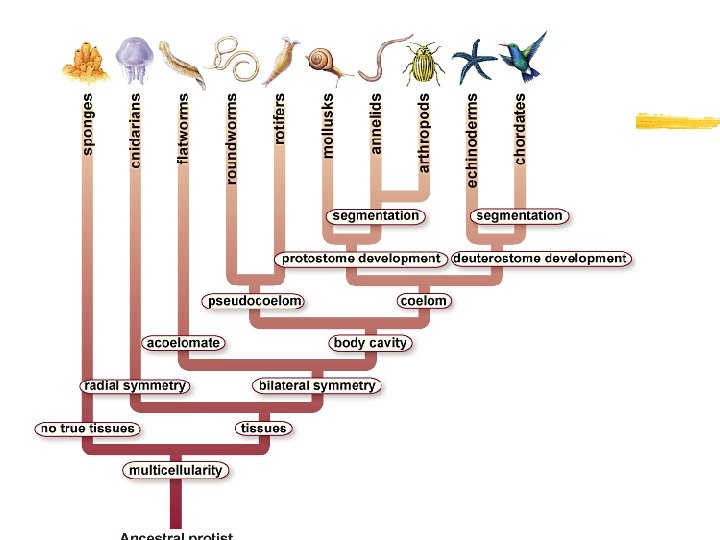
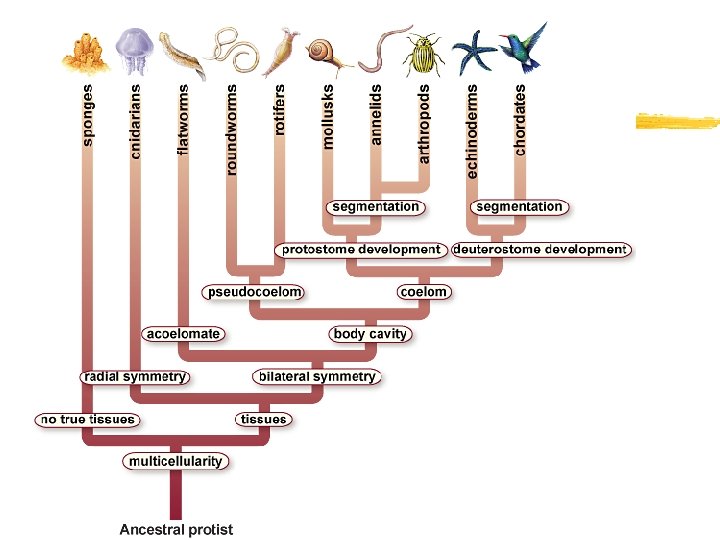
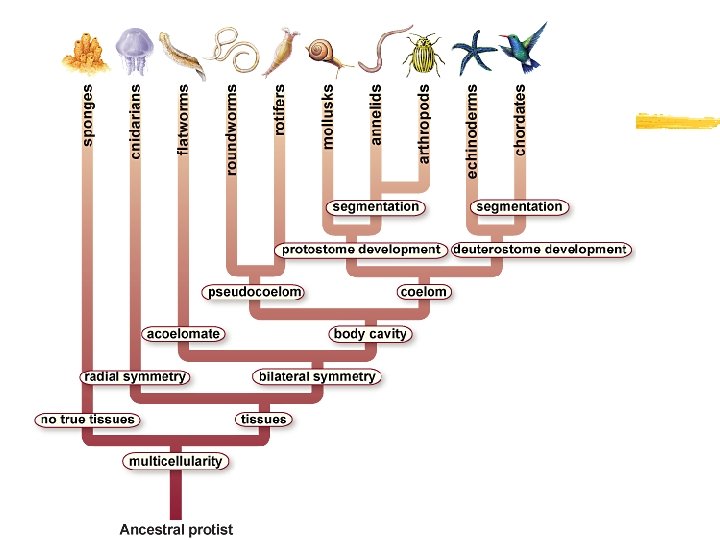
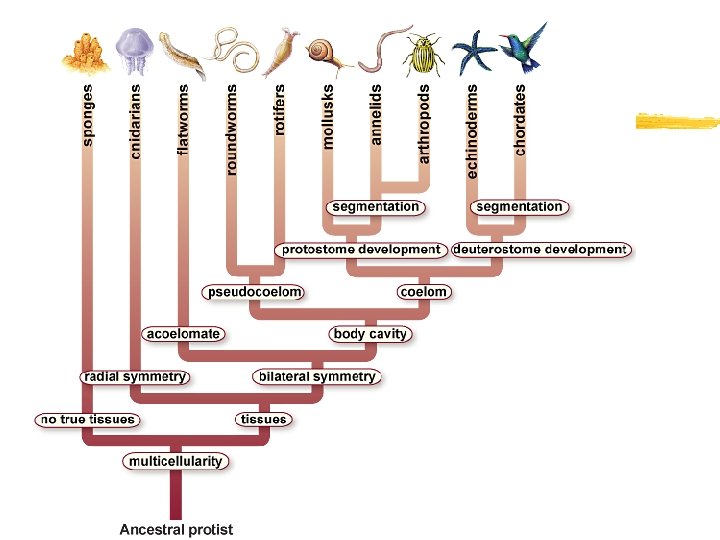
SYMMETRY z. Asymmetry-no body plan(sponges) z. Radial Symmetry-radiate from center (jelly fish) z. Bilateral Symmetry-identical halves when cut from head to tail.
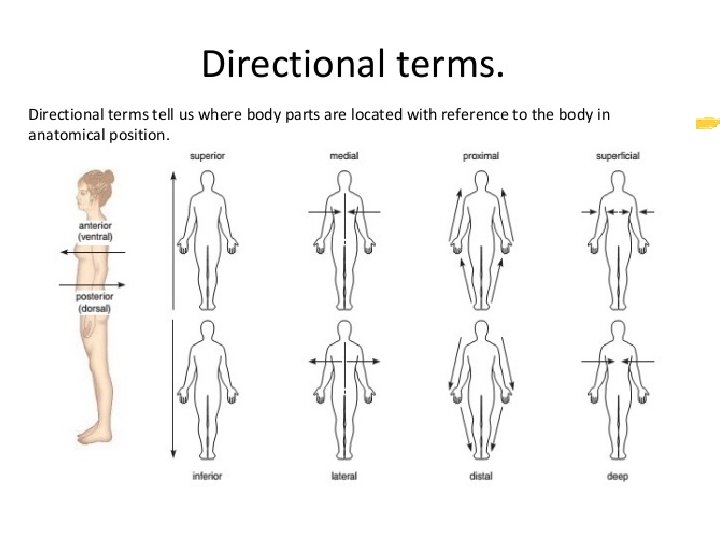
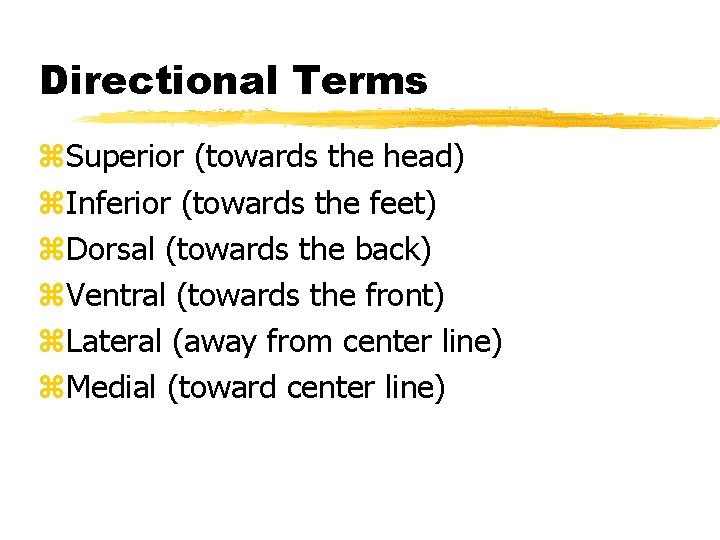
Directional Terms z. Superior (towards the head) z. Inferior (towards the feet) z. Dorsal (towards the back) z. Ventral (towards the front) z. Lateral (away from center line) z. Medial (toward center line)
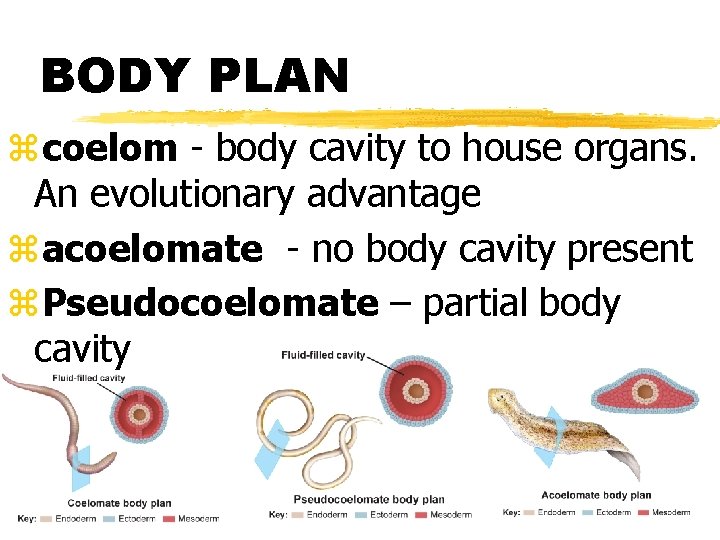
BODY PLAN zcoelom - body cavity to house organs. An evolutionary advantage zacoelomate - no body cavity present z. Pseudocoelomate – partial body cavity
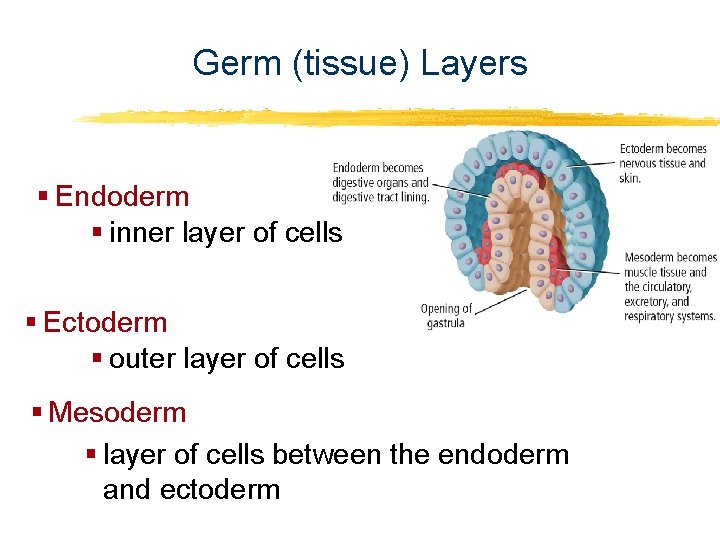
Introduction to Animals Germ (tissue) Layers § Endoderm § inner layer of cells § Ectoderm § outer layer of cells § Mesoderm § layer of cells between the endoderm and ectoderm
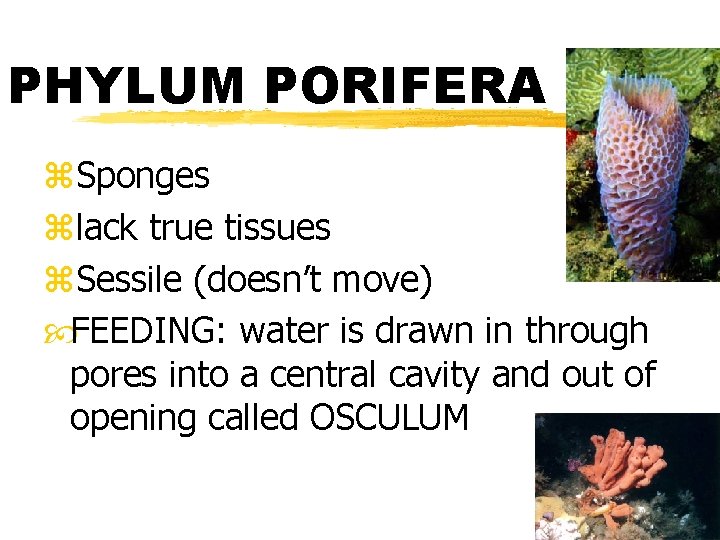
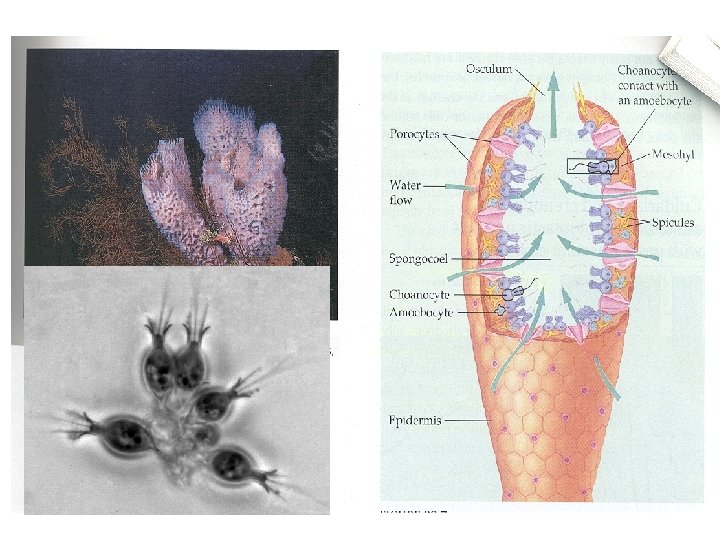
PHYLUM PORIFERA z. Sponges zlack true tissues z. Sessile (doesn’t move) FEEDING: water is drawn in through pores into a central cavity and out of opening called OSCULUM
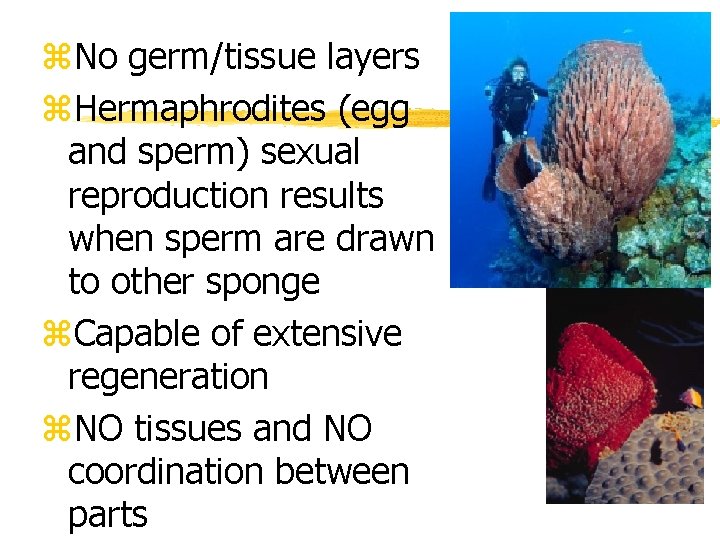
z. No germ/tissue layers z. Hermaphrodites (egg and sperm) sexual reproduction results when sperm are drawn to other sponge z. Capable of extensive regeneration z. NO tissues and NO coordination between parts
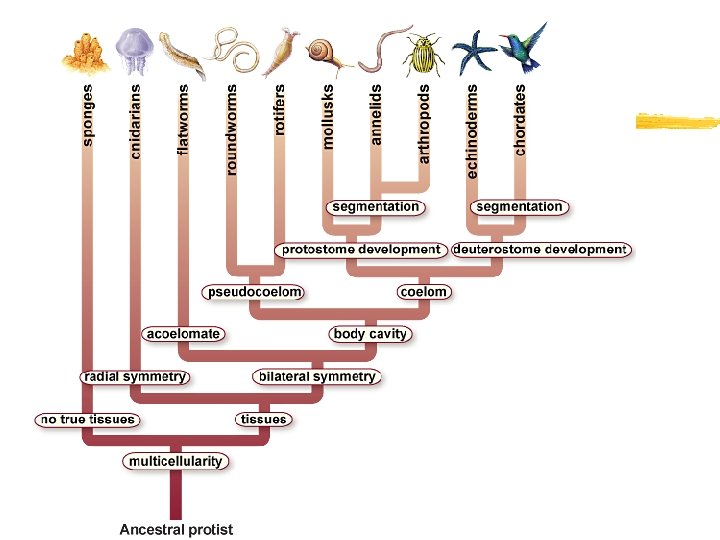
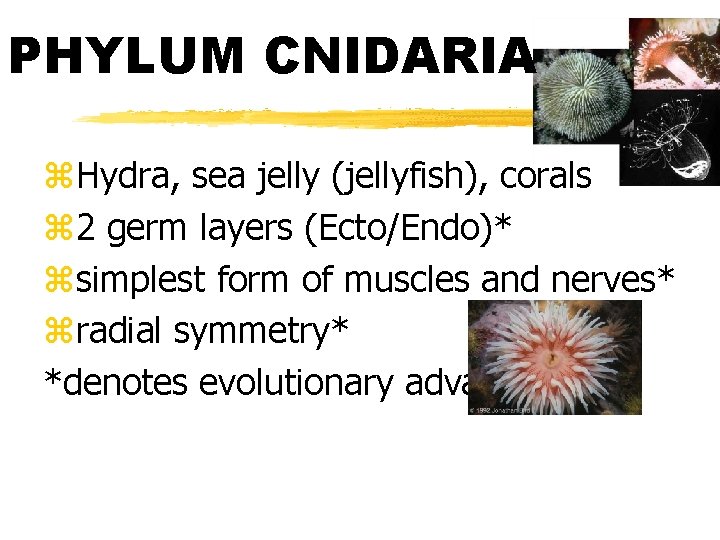
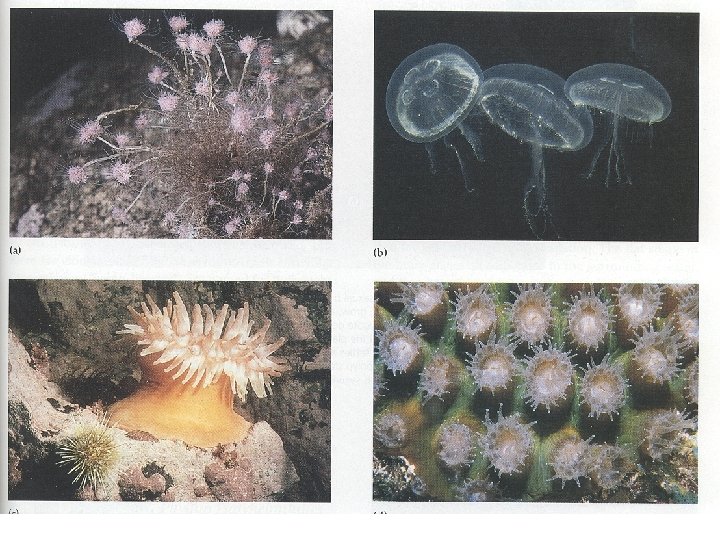
PHYLUM CNIDARIA z. Hydra, sea jelly (jellyfish), corals z 2 germ layers (Ecto/Endo)* zsimplest form of muscles and nerves* zradial symmetry* *denotes evolutionary advancement
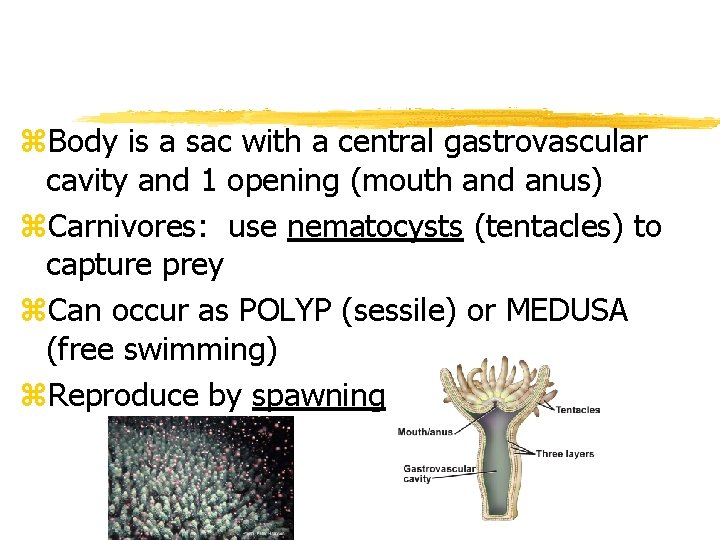
z. Body is a sac with a central gastrovascular cavity and 1 opening (mouth and anus) z. Carnivores: use nematocysts (tentacles) to capture prey z. Can occur as POLYP (sessile) or MEDUSA (free swimming) z. Reproduce by spawning
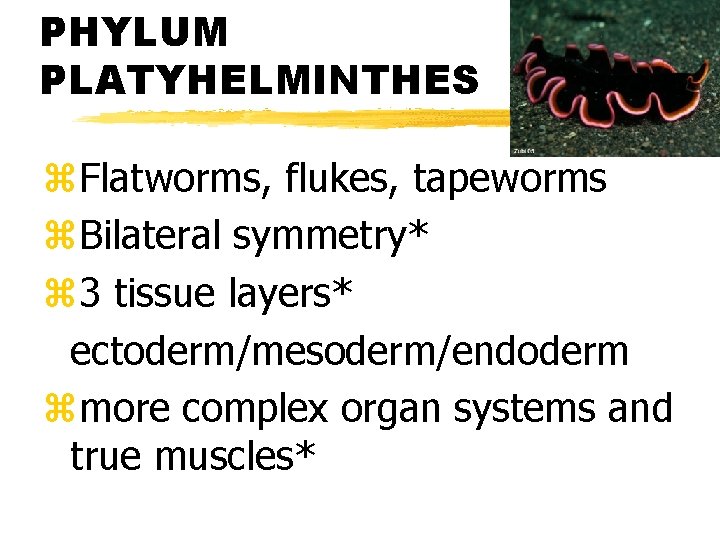
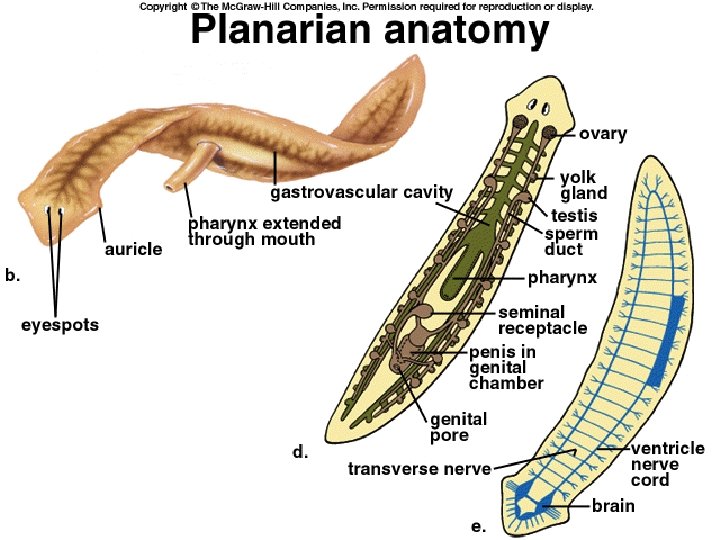
PHYLUM PLATYHELMINTHES z. Flatworms, flukes, tapeworms z. Bilateral symmetry* z 3 tissue layers* ectoderm/mesoderm/endoderm zmore complex organ systems and true muscles*
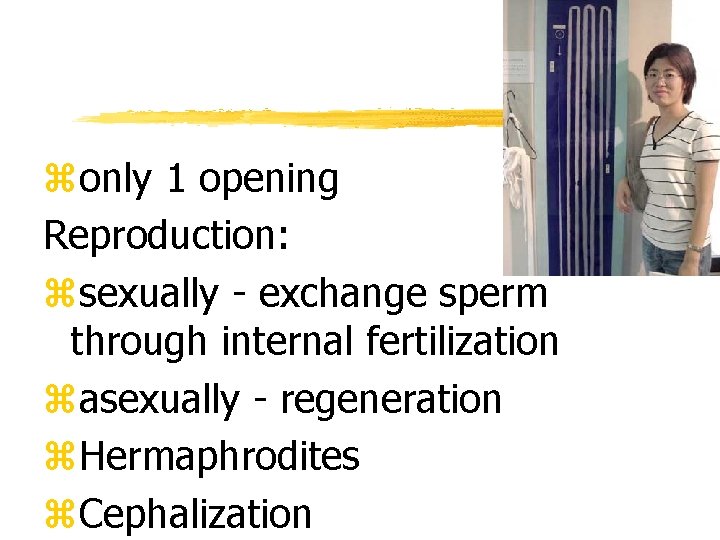
zonly 1 opening Reproduction: zsexually - exchange sperm through internal fertilization zasexually - regeneration z. Hermaphrodites z. Cephalization
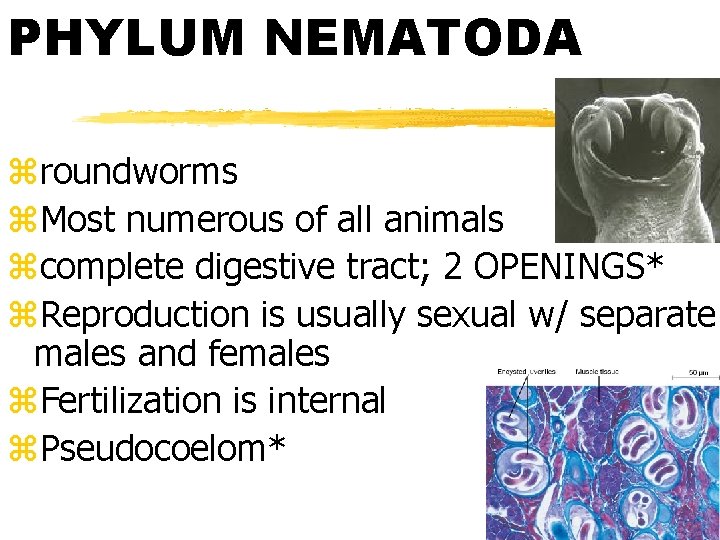
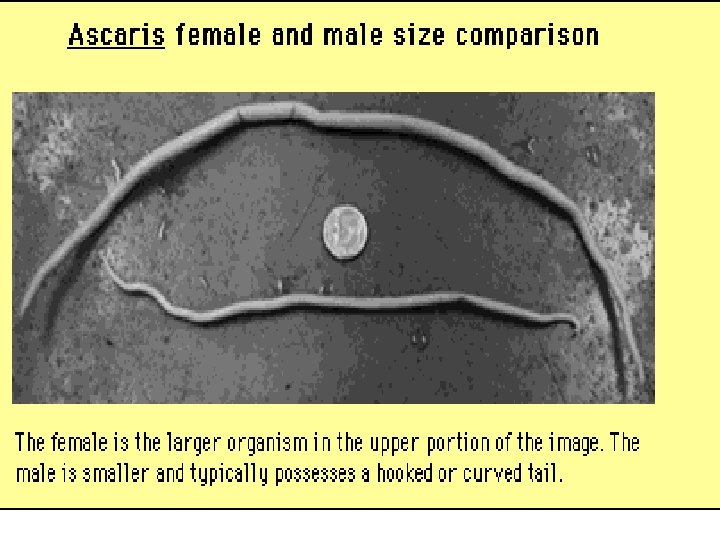
PHYLUM NEMATODA zroundworms z. Most numerous of all animals zcomplete digestive tract; 2 OPENINGS* z. Reproduction is usually sexual w/ separate males and females z. Fertilization is internal z. Pseudocoelom*
Guinea Worm
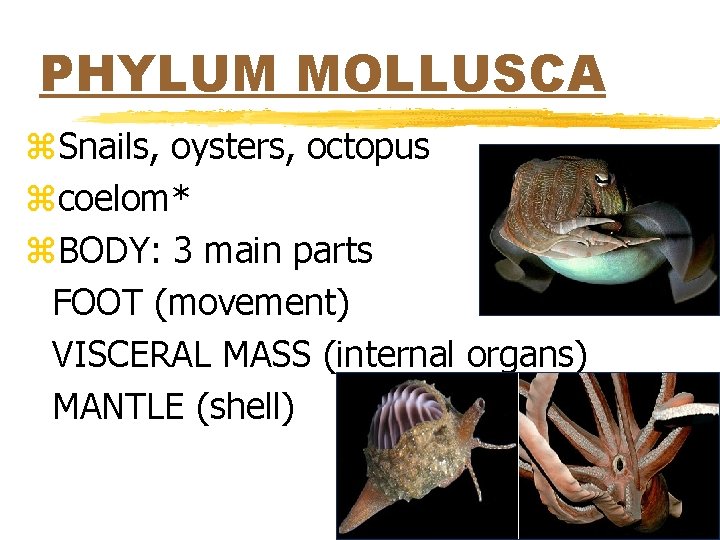
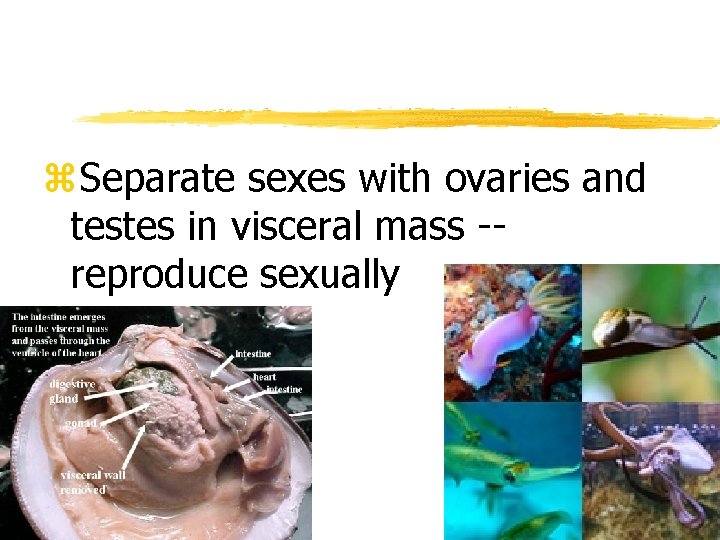
PHYLUM MOLLUSCA z. Snails, oysters, octopus zcoelom* z. BODY: 3 main parts FOOT (movement) VISCERAL MASS (internal organs) MANTLE (shell)
z. Separate sexes with ovaries and testes in visceral mass -reproduce sexually
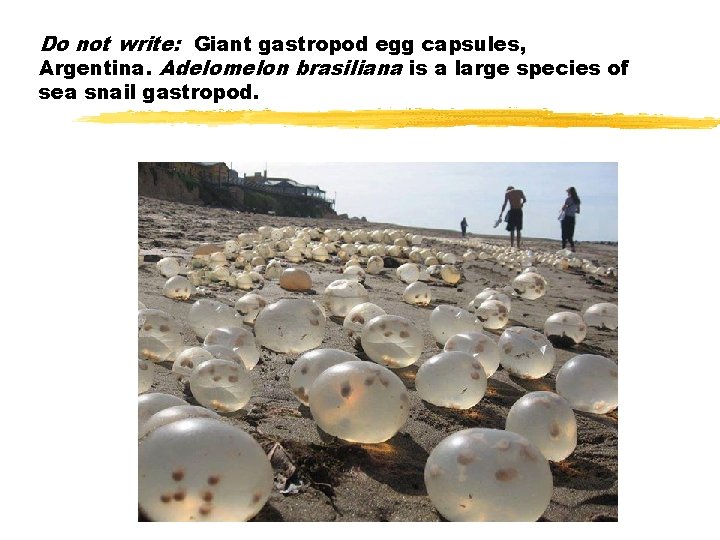
Do not write: Giant gastropod egg capsules, Argentina. Adelomelon brasiliana is a large species of sea snail gastropod.
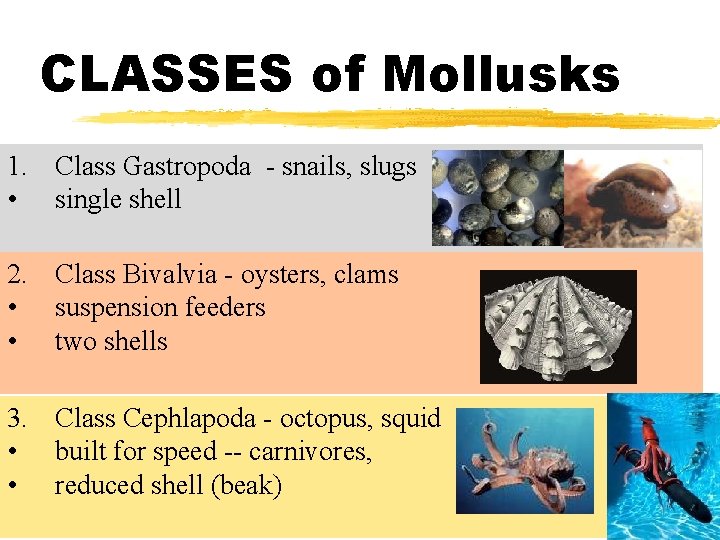
CLASSES of Mollusks 1. Class Gastropoda - snails, slugs • single shell 2. Class Bivalvia - oysters, clams • suspension feeders • two shells 3. Class Cephlapoda - octopus, squid • built for speed -- carnivores, • reduced shell (beak)
Sponges, Cnidarian, Mollusks
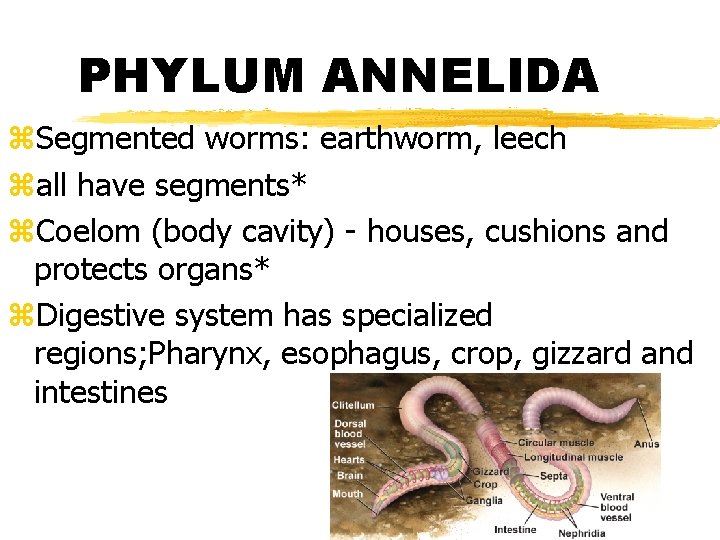
PHYLUM ANNELIDA z. Segmented worms: earthworm, leech zall have segments* z. Coelom (body cavity) - houses, cushions and protects organs* z. Digestive system has specialized regions; Pharynx, esophagus, crop, gizzard and intestines
z. Closed circulatory system; blood* z“brainlike” cerebral ganglia z. Hermaphroditic but cross fertilize (exchange sperm and store it in clitellium)
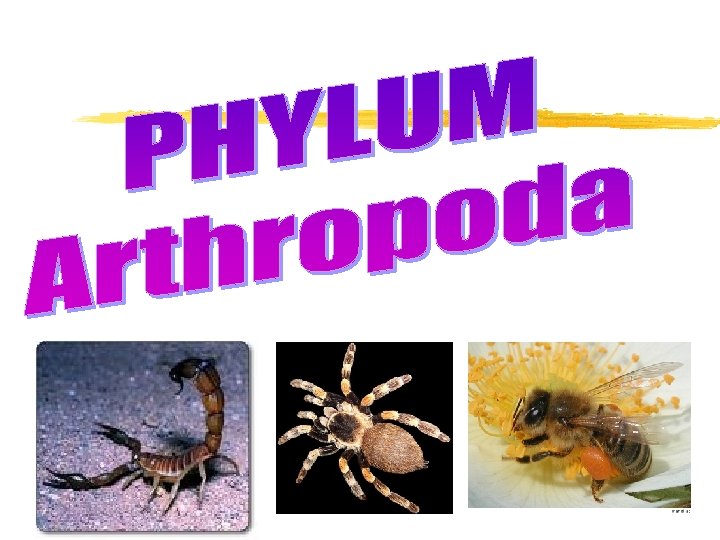
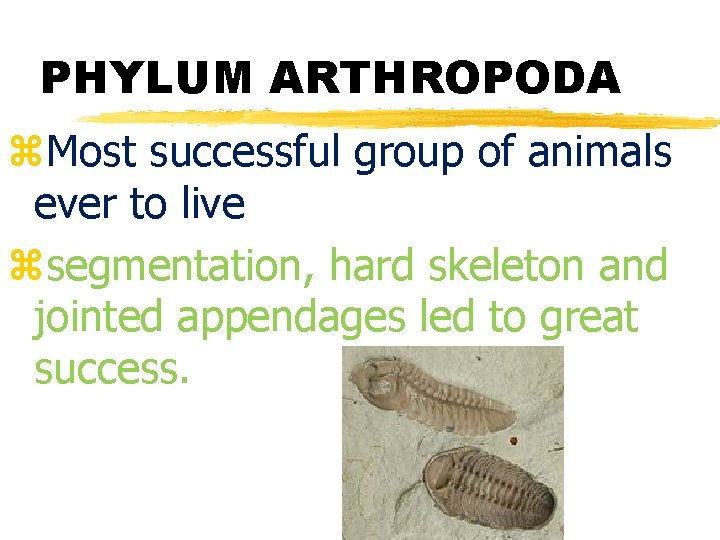
PHYLUM ARTHROPODA z. Most successful group of animals ever to live zsegmentation, hard skeleton and jointed appendages led to great success.
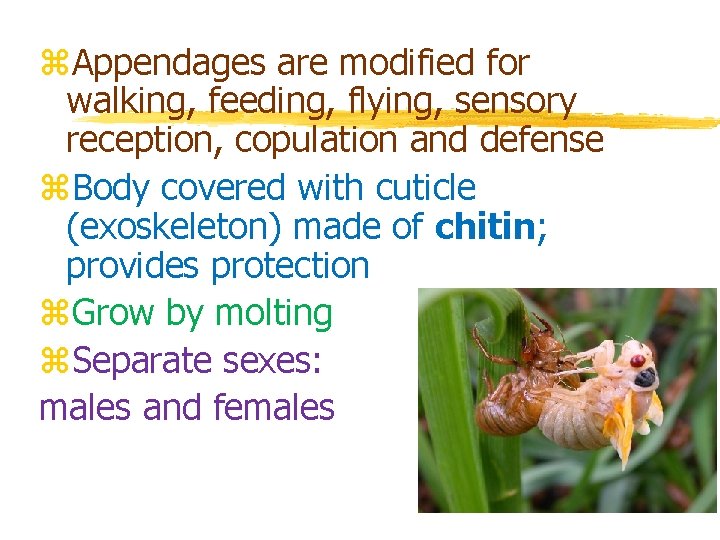
z. Appendages are modified for walking, feeding, flying, sensory reception, copulation and defense z. Body covered with cuticle (exoskeleton) made of chitin; provides protection z. Grow by molting z. Separate sexes: males and females
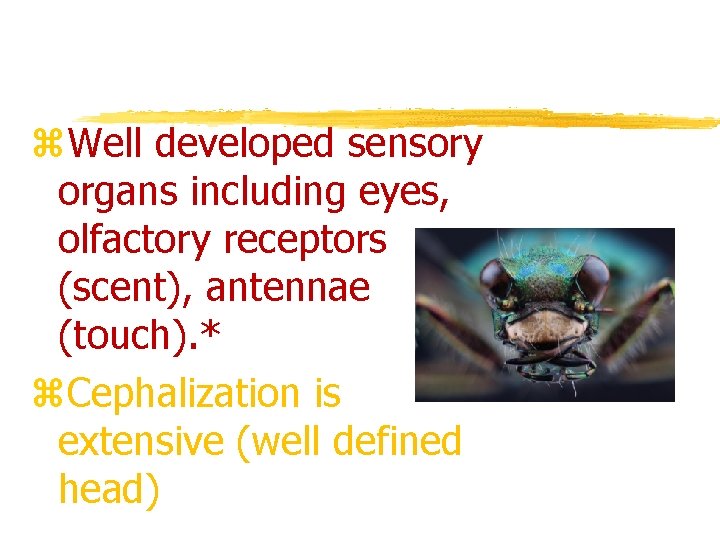
z. Well developed sensory organs including eyes, olfactory receptors (scent), antennae (touch). * z. Cephalization is extensive (well defined head)
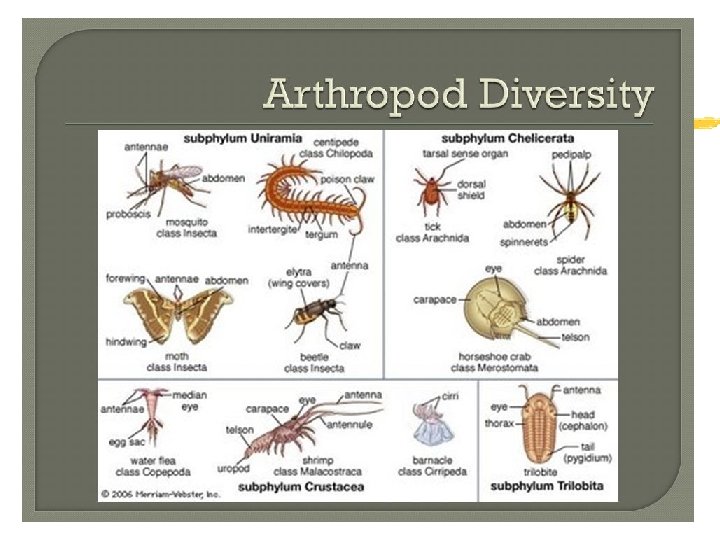
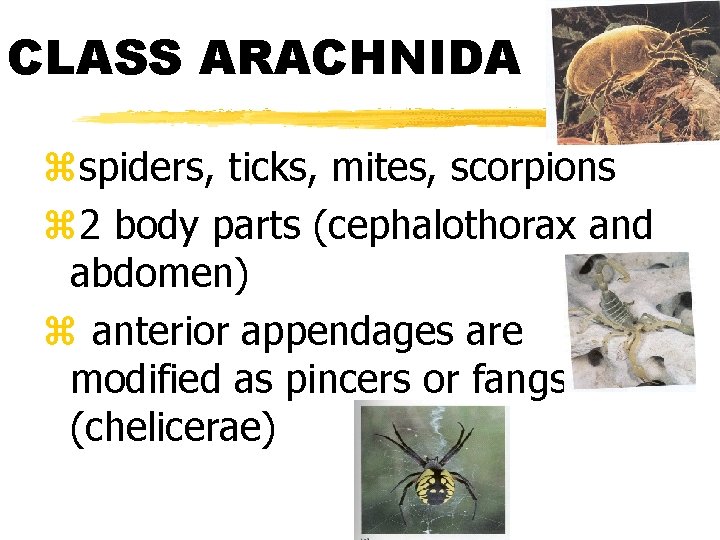
CLASS ARACHNIDA zspiders, ticks, mites, scorpions z 2 body parts (cephalothorax and abdomen) z anterior appendages are modified as pincers or fangs (chelicerae)
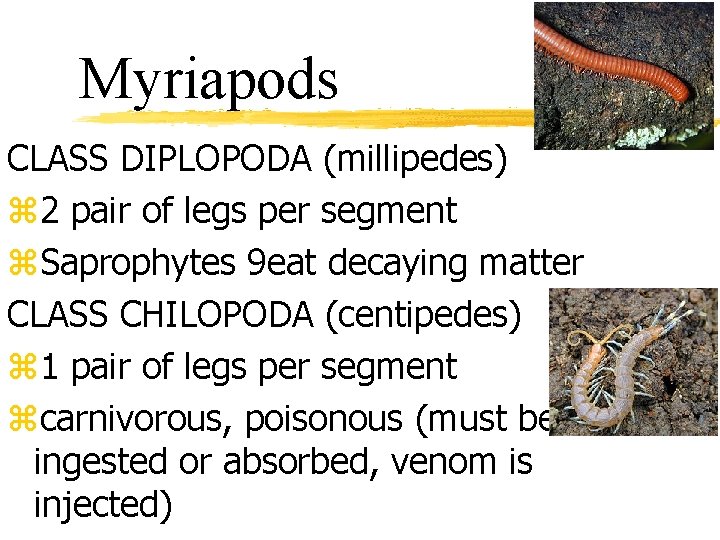
Myriapods CLASS DIPLOPODA (millipedes) z 2 pair of legs per segment z. Saprophytes 9 eat decaying matter CLASS CHILOPODA (centipedes) z 1 pair of legs per segment zcarnivorous, poisonous (must be ingested or absorbed, venom is injected)
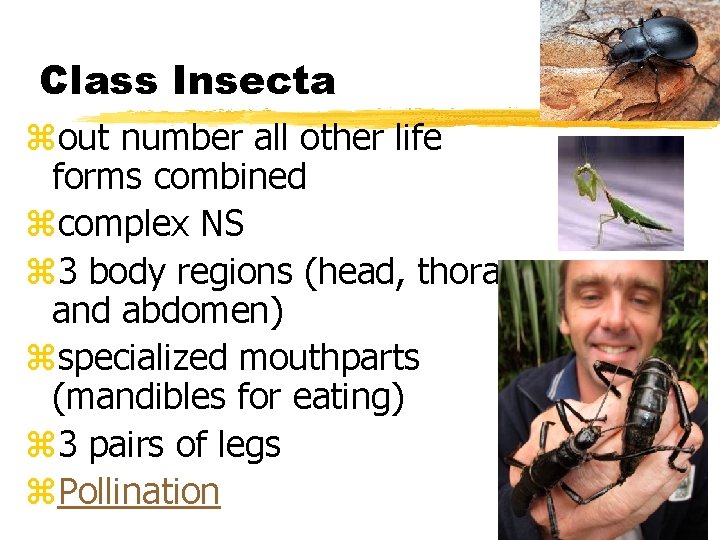
Class Insecta zout number all other life forms combined zcomplex NS z 3 body regions (head, thorax and abdomen) zspecialized mouthparts (mandibles for eating) z 3 pairs of legs z. Pollination
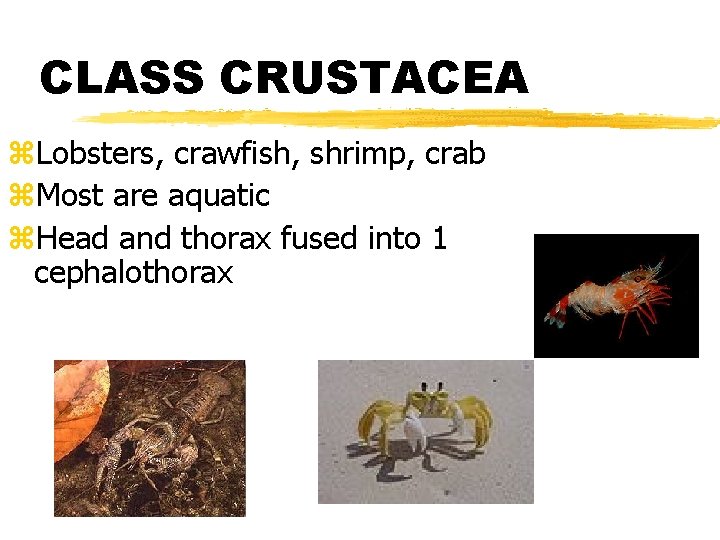
CLASS CRUSTACEA z. Lobsters, crawfish, shrimp, crab z. Most are aquatic z. Head and thorax fused into 1 cephalothorax
Crash Course (annelida and Arthropods)
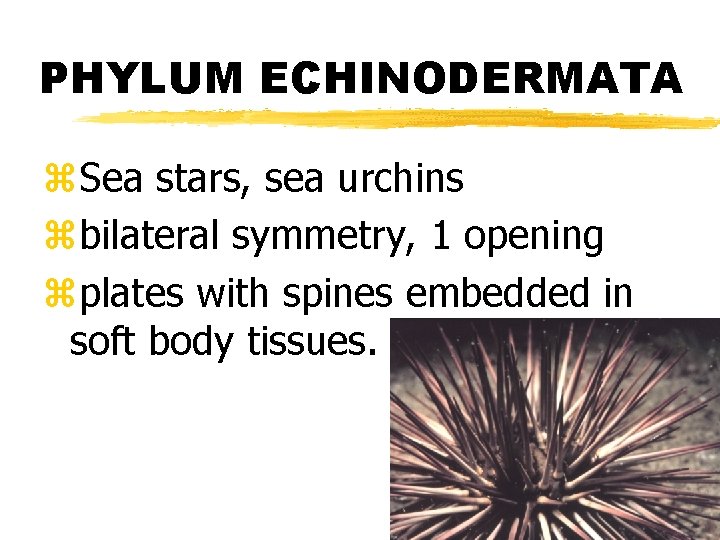
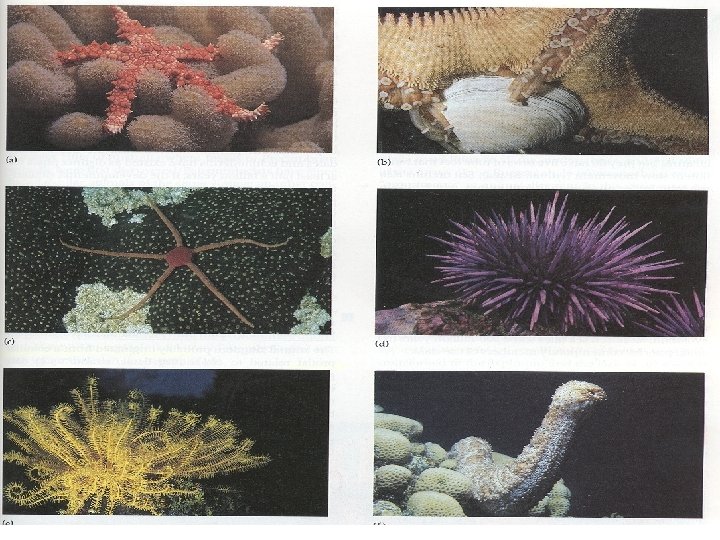
PHYLUM ECHINODERMATA z. Sea stars, sea urchins zbilateral symmetry, 1 opening zplates with spines embedded in soft body tissues.
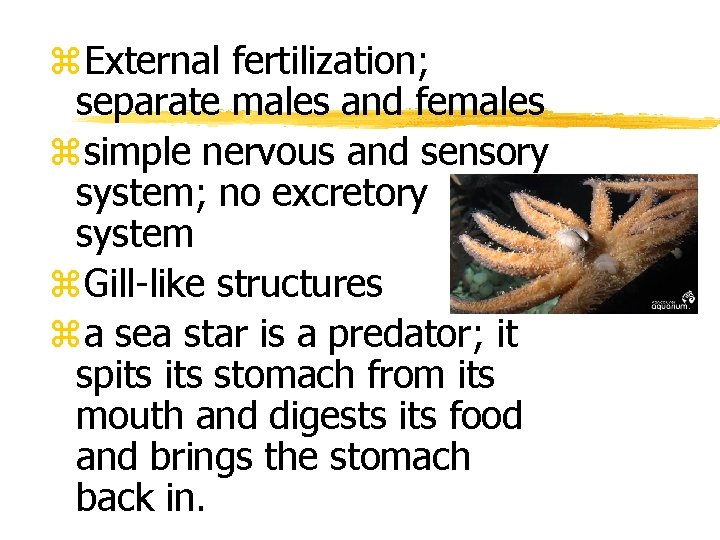
z. External fertilization; separate males and females zsimple nervous and sensory system; no excretory system z. Gill-like structures za sea star is a predator; it spits stomach from its mouth and digests its food and brings the stomach back in.
Echinoderms: The Ultimate Animal