
Kingdom Animalia Porifera Cnidarians How Are Animals Classified
- Slides: 15
Kingdom Animalia, Porifera& Cnidarians
How Are Animals Classified? � All are Multicellular Eukaryotes � All animals are consumers � � No producers or decomposers Scientists generally look at several things: 1. Absence or presence of backbone 2. Symmetry 3. Presence of organ systems 4. Embryonic Development
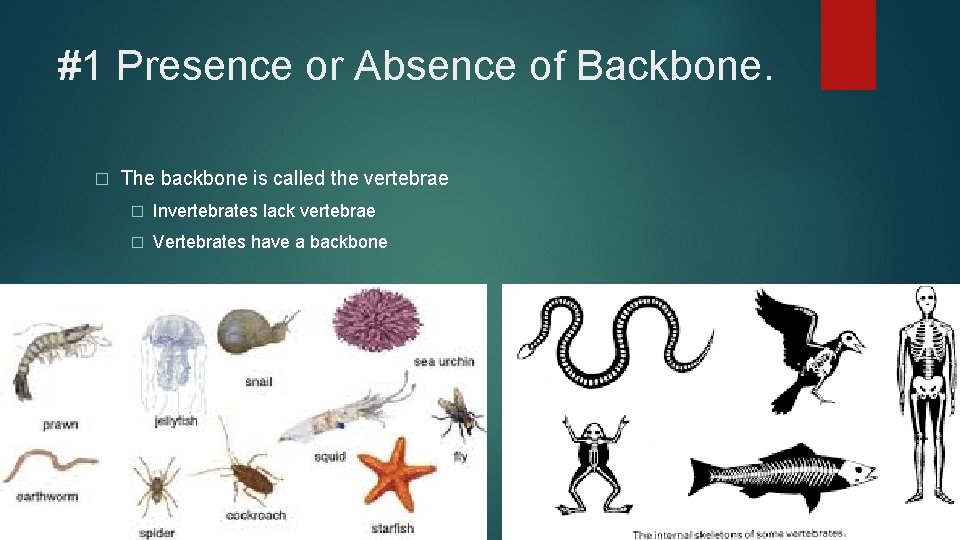
#1 Presence or Absence of Backbone. � The backbone is called the vertebrae � Invertebrates lack vertebrae � Vertebrates have a backbone
#2: Symmetry � If an organism has no symmetry, it is asymmetrical � Radial symmetry-Organism is arranged in a circle around a central point � Bilateral symmetry-2 sides that are mirror-images
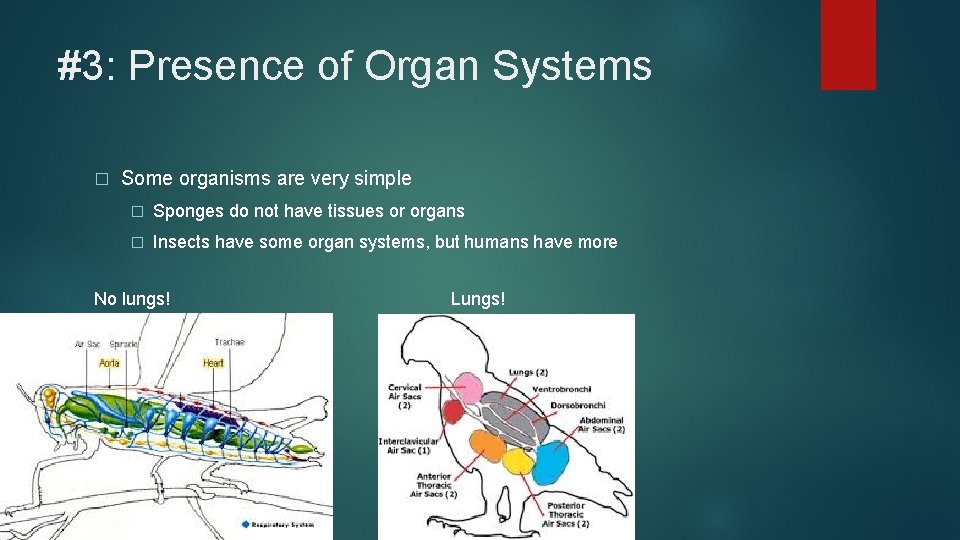
#3: Presence of Organ Systems � Some organisms are very simple � Sponges do not have tissues or organs � Insects have some organ systems, but humans have more No lungs! Lungs!
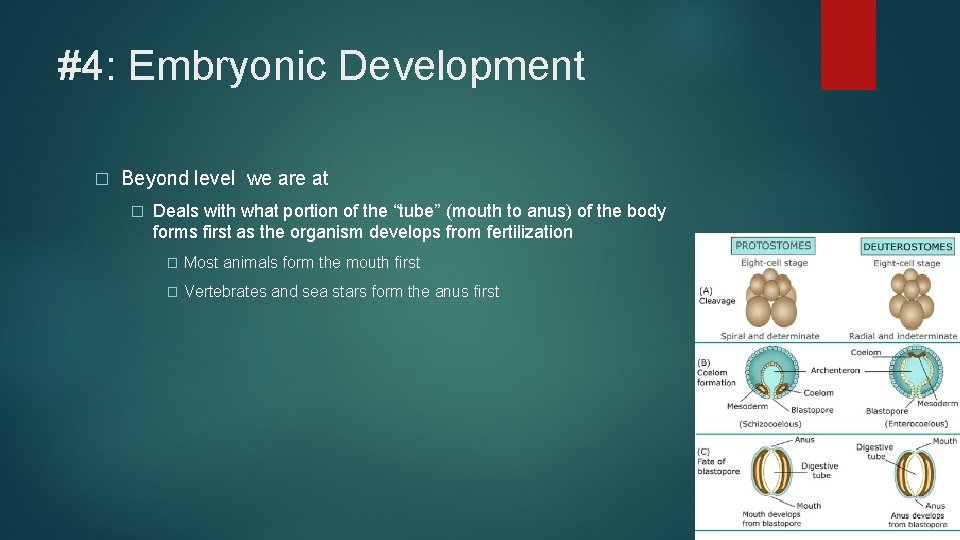
#4: Embryonic Development � Beyond level we are at � Deals with what portion of the “tube” (mouth to anus) of the body forms first as the organism develops from fertilization � Most animals form the mouth first � Vertebrates and sea stars form the anus first
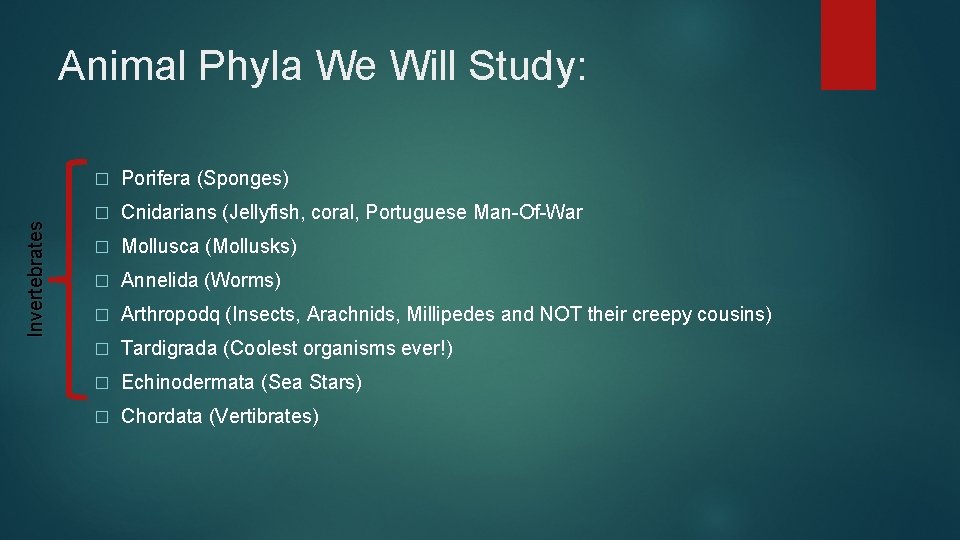
Invertebrates Animal Phyla We Will Study: � Porifera (Sponges) � Cnidarians (Jellyfish, coral, Portuguese Man-Of-War � Mollusca (Mollusks) � Annelida (Worms) � Arthropodq (Insects, Arachnids, Millipedes and NOT their creepy cousins) � Tardigrada (Coolest organisms ever!) � Echinodermata (Sea Stars) � Chordata (Vertibrates)
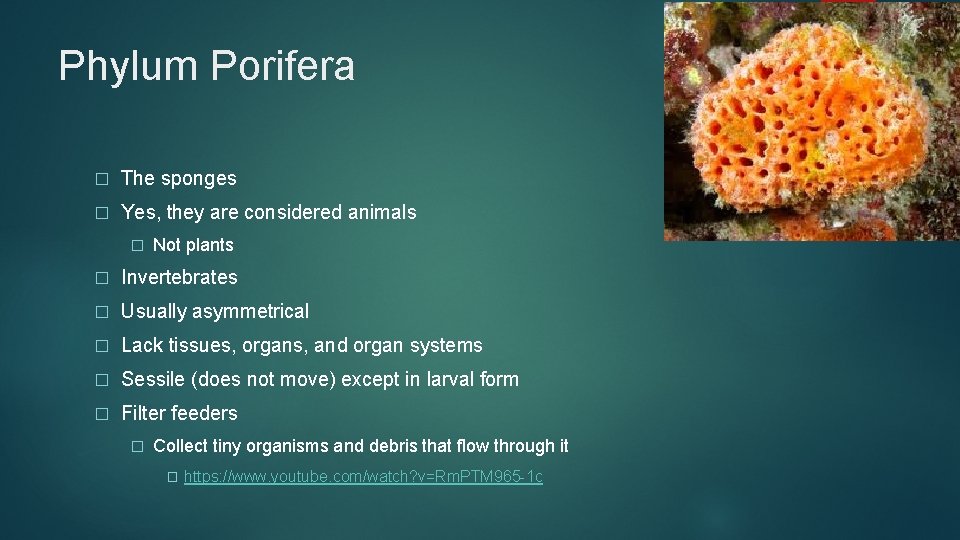
Phylum Porifera � The sponges � Yes, they are considered animals � Not plants � Invertebrates � Usually asymmetrical � Lack tissues, organs, and organ systems � Sessile (does not move) except in larval form � Filter feeders � Collect tiny organisms and debris that flow through it � https: //www. youtube. com/watch? v=Rm. PTM 965 -1 c
Porifera Reproduction � Can be sexual or asexual � Sponges are hermaphroditic as adults � � One sponge will release millions of sperm in the water � � It then lands on the ground nearby, and never moves again Asexual � Budding � � A “baby” sponge grows on the parent sponge, breaks off, then grows where it landed Regeneration � � They reach another sponge and fertilize the egg The “baby” (called a larva) grows a flagella and swims out of the parent sponge � � Can produce both sperm and eggs A part of the sponge breaks off and grows into a new sponge https: //www. youtube. com/watch? v=xj-C 52 c 9 ql. I (audio quality not good; visuals are)
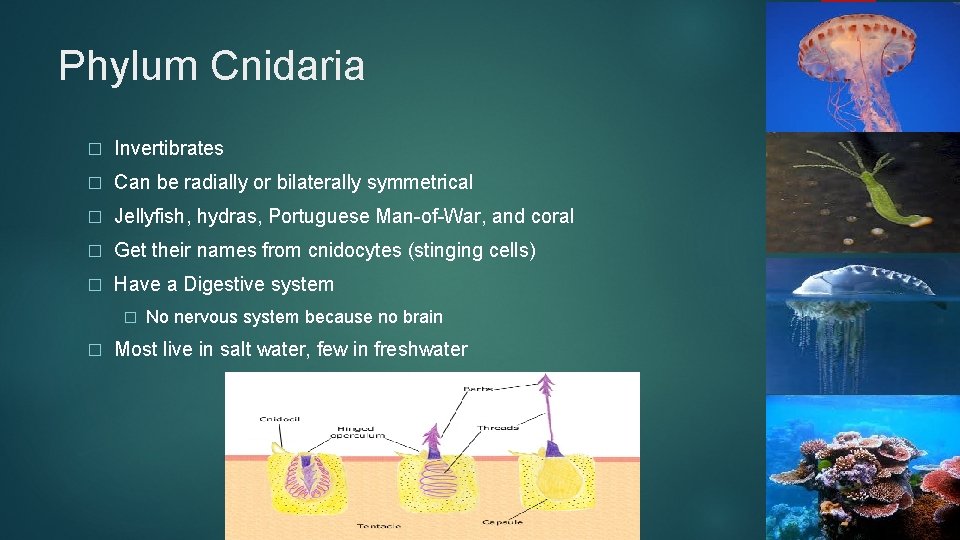
Phylum Cnidaria � Invertibrates � Can be radially or bilaterally symmetrical � Jellyfish, hydras, Portuguese Man-of-War, and coral � Get their names from cnidocytes (stinging cells) � Have a Digestive system � � No nervous system because no brain Most live in salt water, few in freshwater
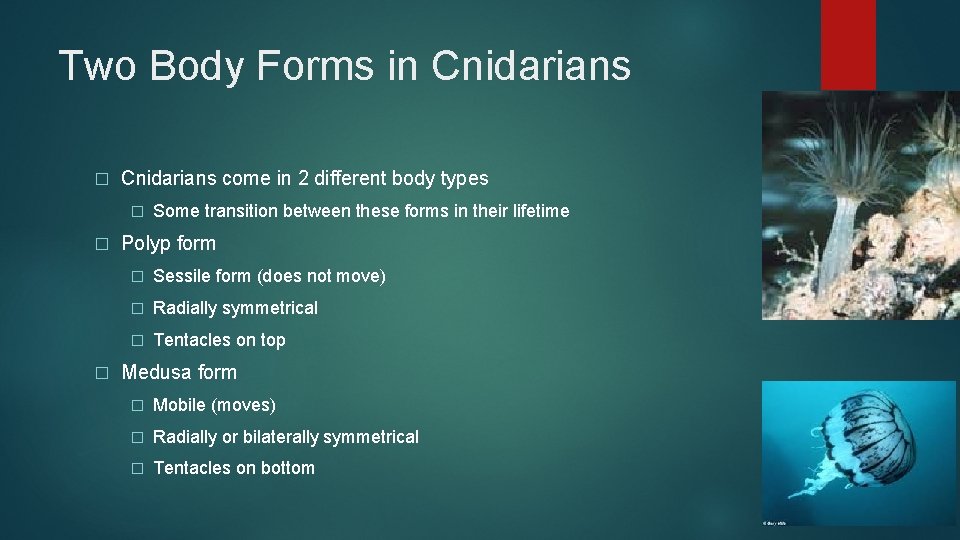
Two Body Forms in Cnidarians � Cnidarians come in 2 different body types � � � Some transition between these forms in their lifetime Polyp form � Sessile form (does not move) � Radially symmetrical � Tentacles on top Medusa form � Mobile (moves) � Radially or bilaterally symmetrical � Tentacles on bottom
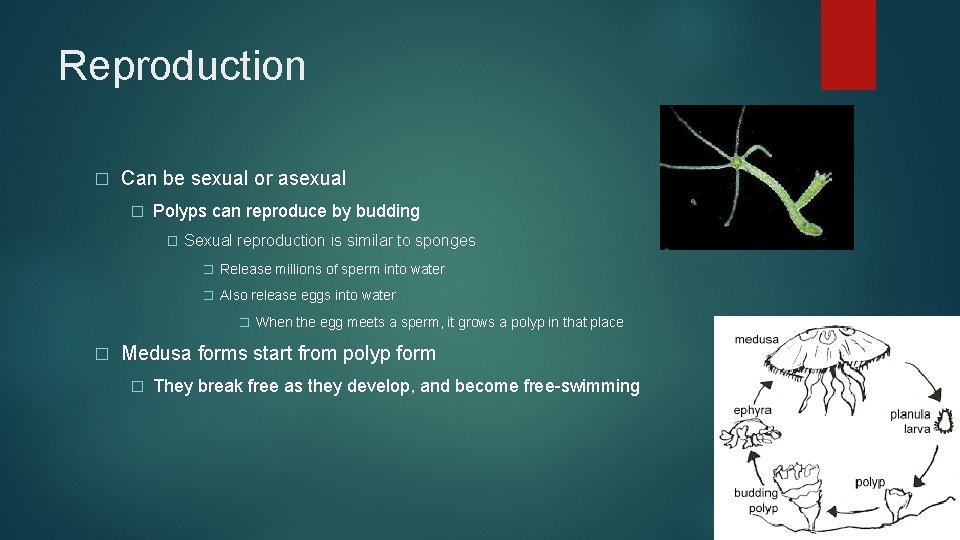
Reproduction � Can be sexual or asexual � Polyps can reproduce by budding � Sexual reproduction is similar to sponges � Release millions of sperm into water � Also release eggs into water � When the egg meets a sperm, it grows a polyp in that place � Medusa forms start from polyp form � They break free as they develop, and become free-swimming
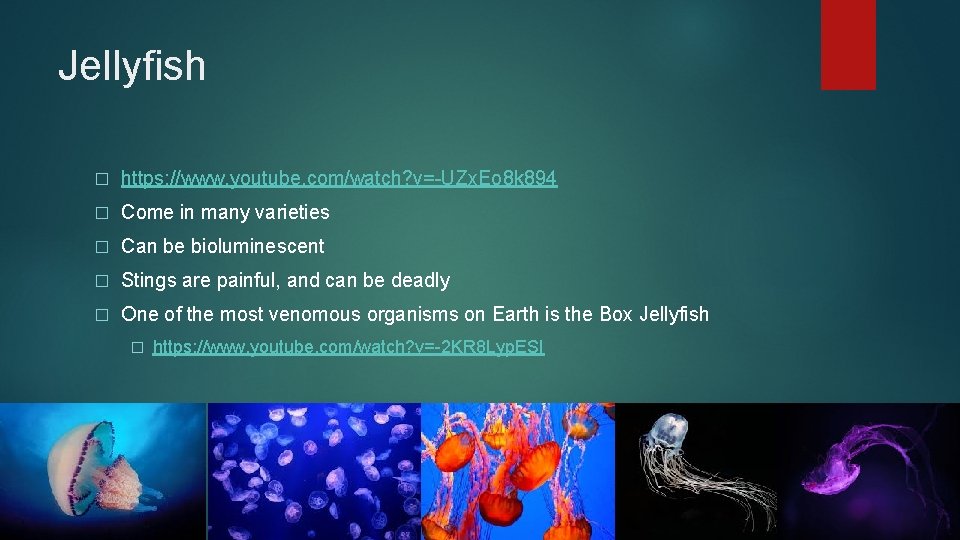
Jellyfish � https: //www. youtube. com/watch? v=-UZx. Eo 8 k 894 � Come in many varieties � Can be bioluminescent � Stings are painful, and can be deadly � One of the most venomous organisms on Earth is the Box Jellyfish � https: //www. youtube. com/watch? v=-2 KR 8 Lyp. ESI
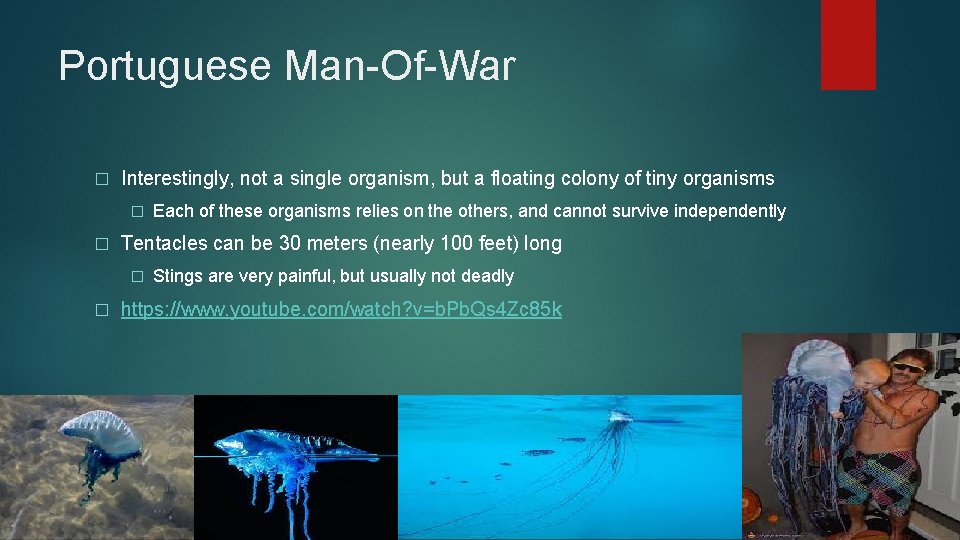
Portuguese Man-Of-War � Interestingly, not a single organism, but a floating colony of tiny organisms � � Tentacles can be 30 meters (nearly 100 feet) long � � Each of these organisms relies on the others, and cannot survive independently Stings are very painful, but usually not deadly https: //www. youtube. com/watch? v=b. Pb. Qs 4 Zc 85 k
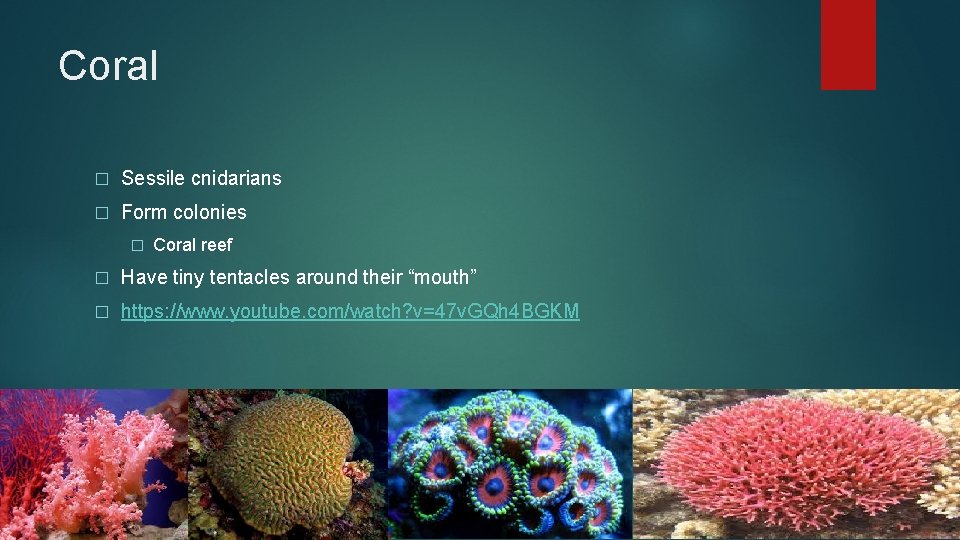
Coral � Sessile cnidarians � Form colonies � Coral reef � Have tiny tentacles around their “mouth” � https: //www. youtube. com/watch? v=47 v. GQh 4 BGKM