
KINGDOM ANIMALIA Phylum Platyhelminthes Phylum Platyhelminthes Members of
KINGDOM ANIMALIA Phylum Platyhelminthes
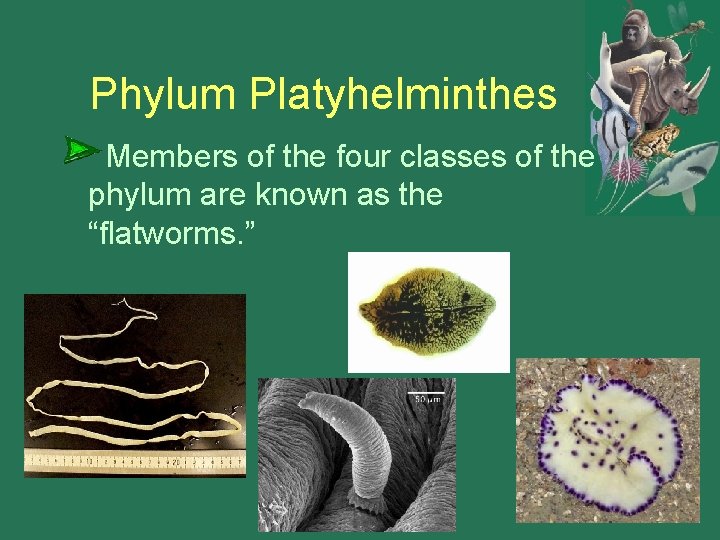
Phylum Platyhelminthes Members of the four classes of the phylum are known as the “flatworms. ”
Members of the Phylum Platyhelminthes …are bilaterally symmetrical. …generally have flattened bodies …are acoelomates with only one internal space. …have an organ-system level of organization …are hermaphroditic. …range in size from 1 mm to 20 m.
Question Because flatworms have only one internal space (the gut), their bodies are said to be A. coelomate. B. acoelomate. C. pseudocoelomate.

Question True (A) or False (B) All flatworms live in aquatic environments.
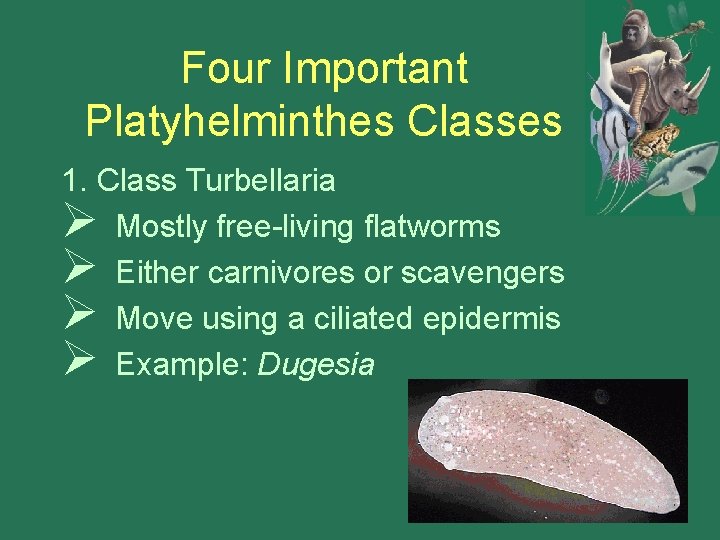
Four Important Platyhelminthes Classes 1. Class Turbellaria Ø Mostly free-living flatworms Ø Either carnivores or scavengers Ø Move using a ciliated epidermis Ø Example: Dugesia
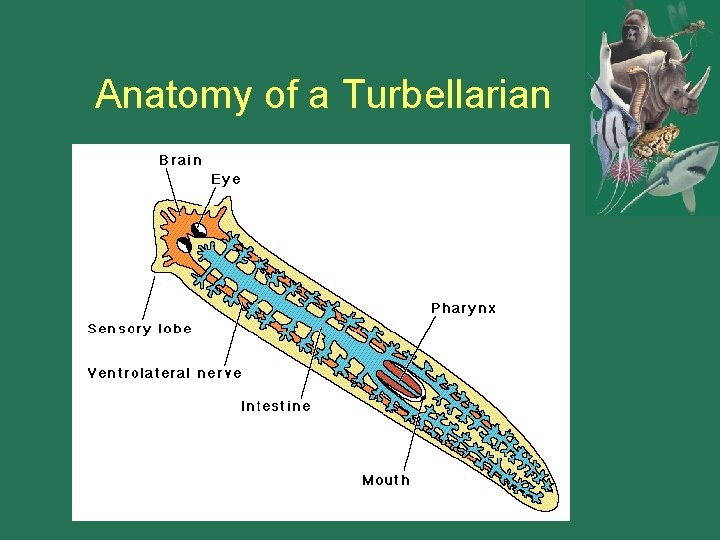
Anatomy of a Turbellarian
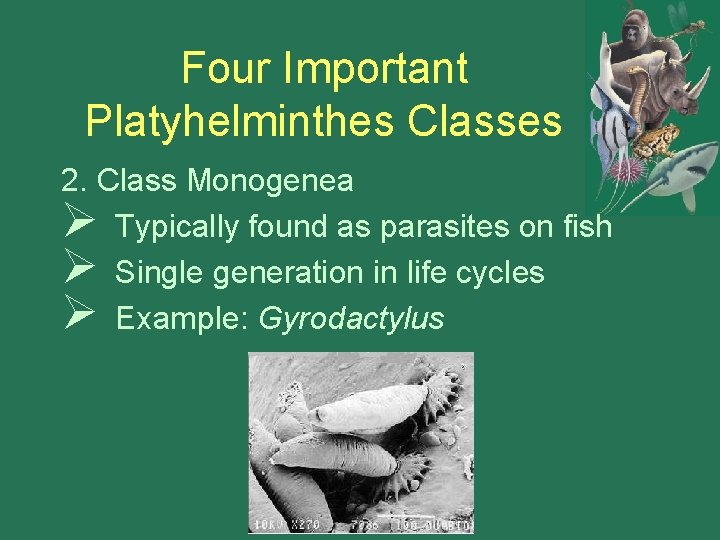
Four Important Platyhelminthes Classes 2. Class Monogenea Ø Typically found as parasites on fish Ø Single generation in life cycles Ø Example: Gyrodactylus
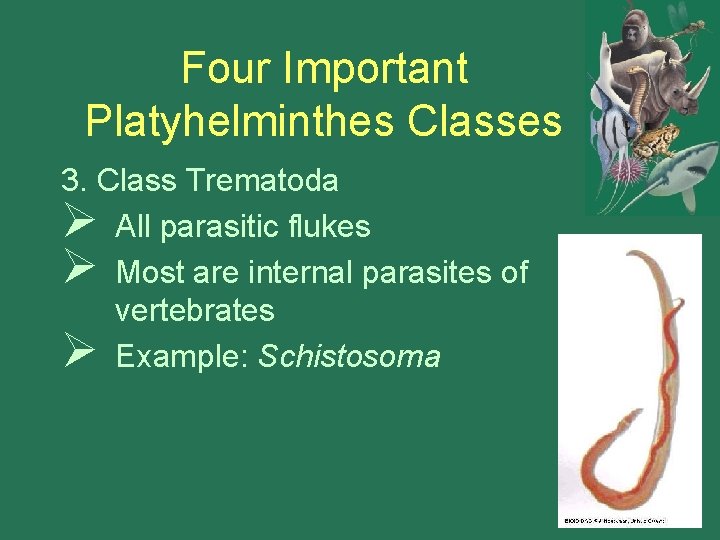
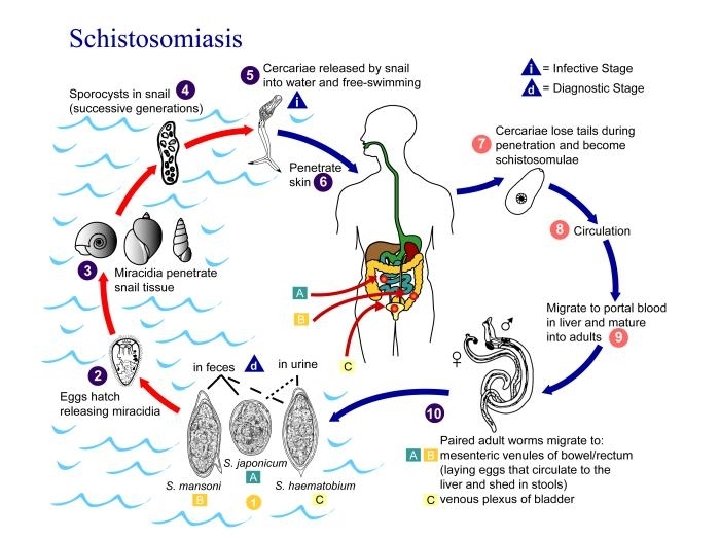
Four Important Platyhelminthes Classes 3. Class Trematoda Ø All parasitic flukes Ø Most are internal parasites of vertebrates Ø Example: Schistosoma
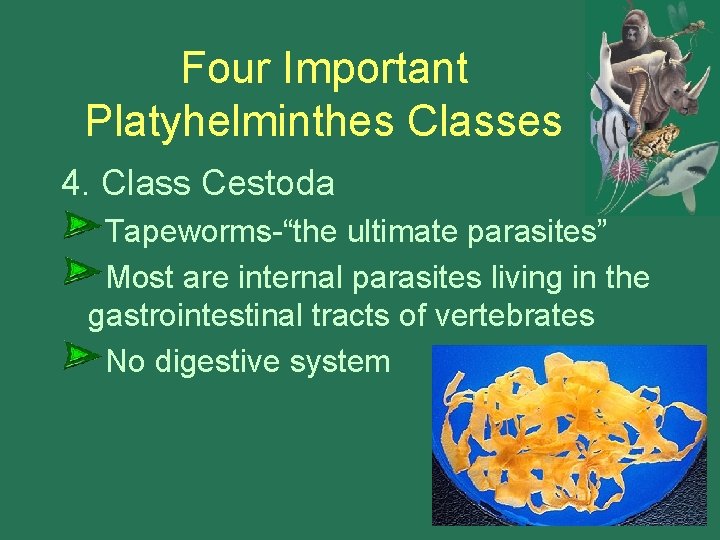
Four Important Platyhelminthes Classes 4. Class Cestoda Tapeworms-“the ultimate parasites” Most are internal parasites living in the gastrointestinal tracts of vertebrates No digestive system
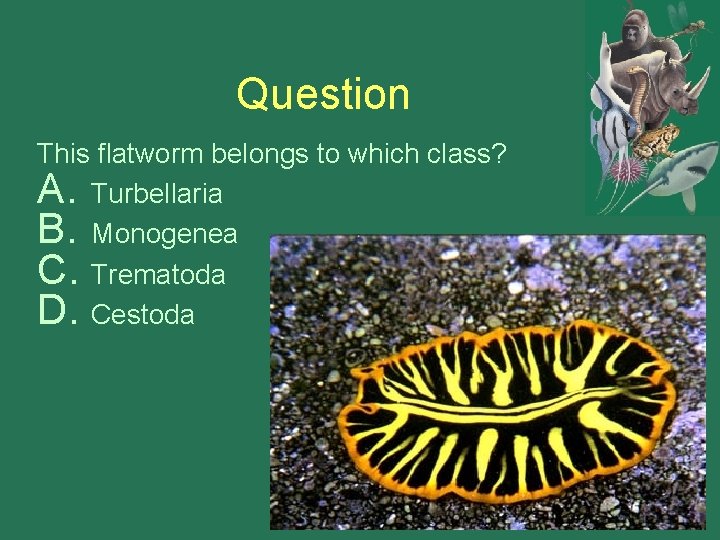
Question This flatworm belongs to which class? A. Turbellaria B. Monogenea C. Trematoda D. Cestoda
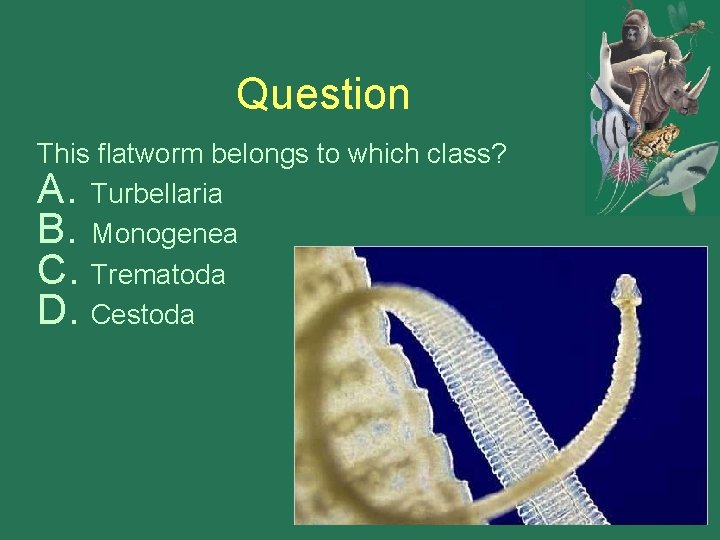
Question This flatworm belongs to which class? A. Turbellaria B. Monogenea C. Trematoda D. Cestoda
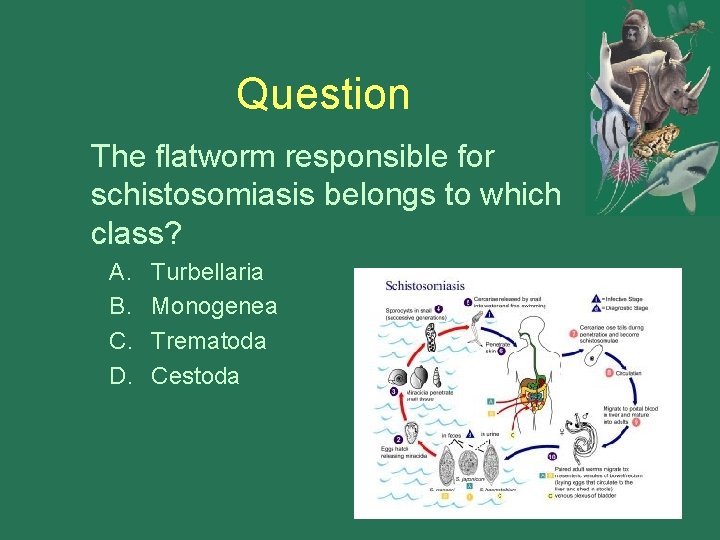
Question The flatworm responsible for schistosomiasis belongs to which class? A. B. C. D. Turbellaria Monogenea Trematoda Cestoda
- Slides: 14