
KINGDOM ANIMALIA Phylum Arthropoda Subphylum Mandibulata Members of
KINGDOM ANIMALIA Phylum Arthropoda
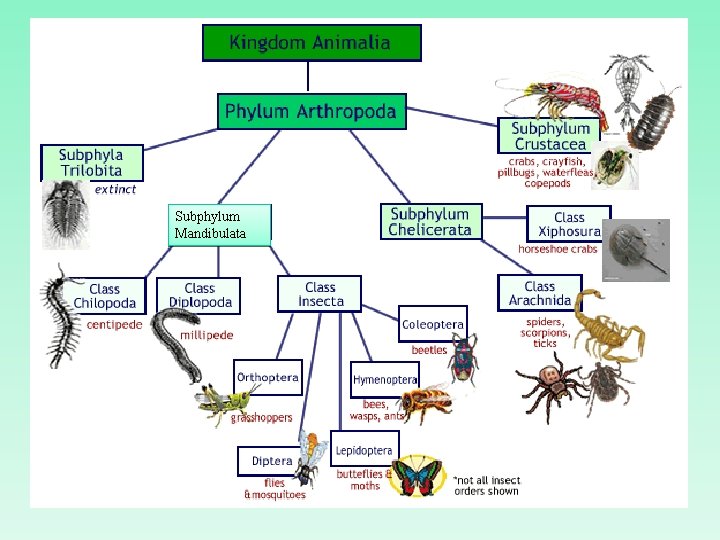
Subphylum Mandibulata
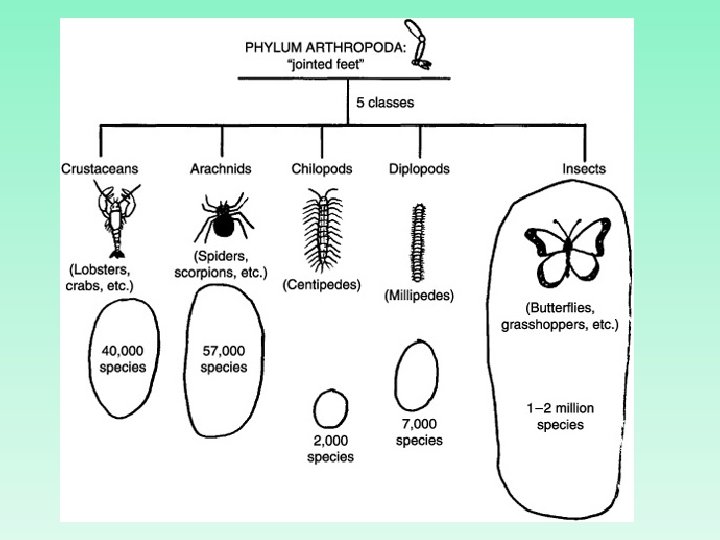
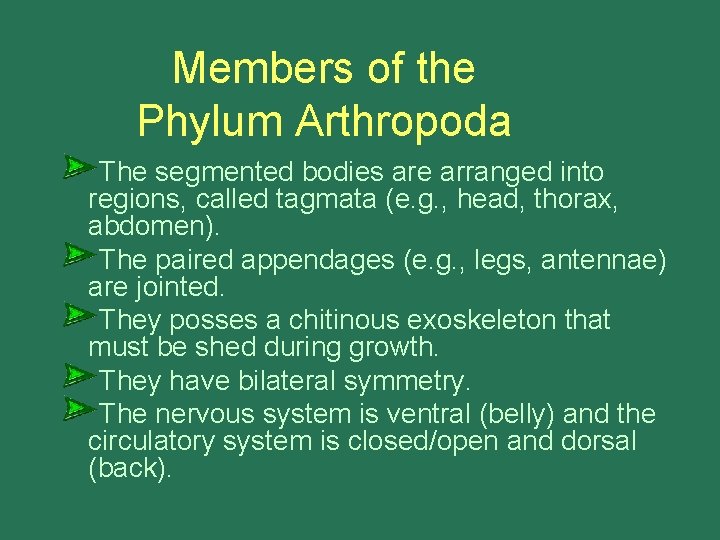
Members of the Phylum Arthropoda The segmented bodies are arranged into regions, called tagmata (e. g. , head, thorax, abdomen). The paired appendages (e. g. , legs, antennae) are jointed. They posses a chitinous exoskeleton that must be shed during growth. They have bilateral symmetry. The nervous system is ventral (belly) and the circulatory system is closed/open and dorsal (back).
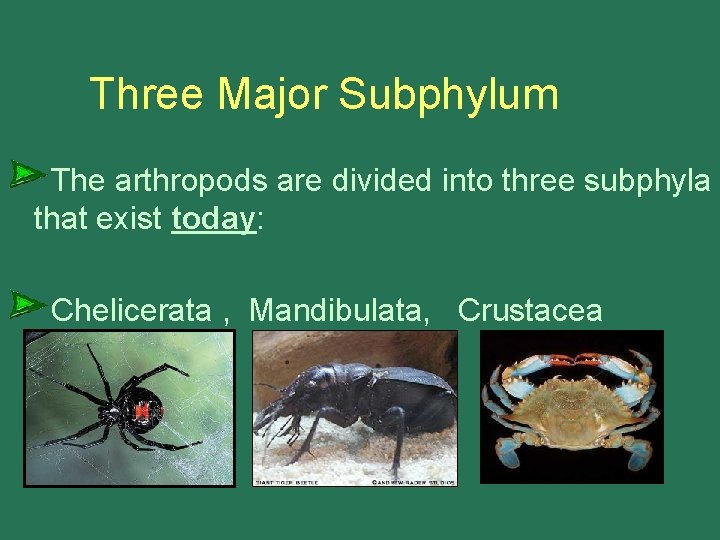
Three Major Subphylum The arthropods are divided into three subphyla that exist today: Chelicerata , Mandibulata, Crustacea
Mandibulata Characteristics: Mouthparts are mandibles normally chewing sideways One or two pairs of antennae Various body region arrangements depending on species – cephalothorax & abdomen – head & trunk – head, thorax & abdomen Variable leg numbers Includes insects, chilopoda, & diplopoda
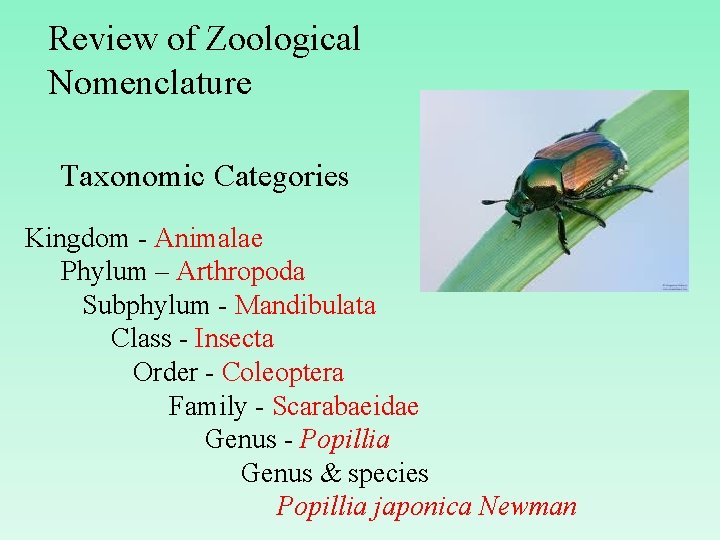
Review of Zoological Nomenclature Taxonomic Categories Kingdom - Animalae Phylum – Arthropoda Subphylum - Mandibulata Class - Insecta Order - Coleoptera Family - Scarabaeidae Genus - Popillia Genus & species Popillia japonica Newman
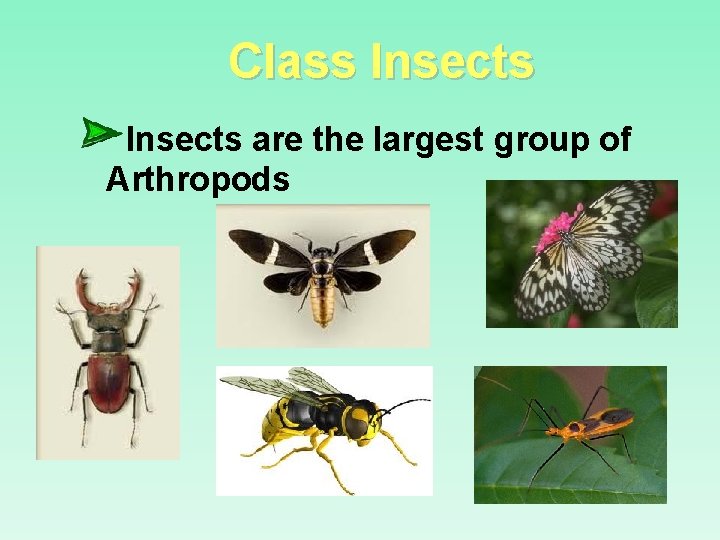
Class Insects are the largest group of Arthropods
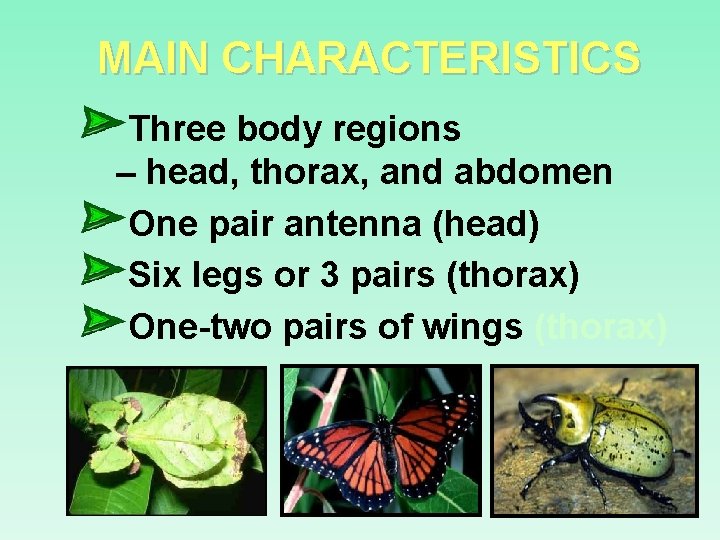
MAIN CHARACTERISTICS Three body regions – head, thorax, and abdomen One pair antenna (head) Six legs or 3 pairs (thorax) One-two pairs of wings (thorax)
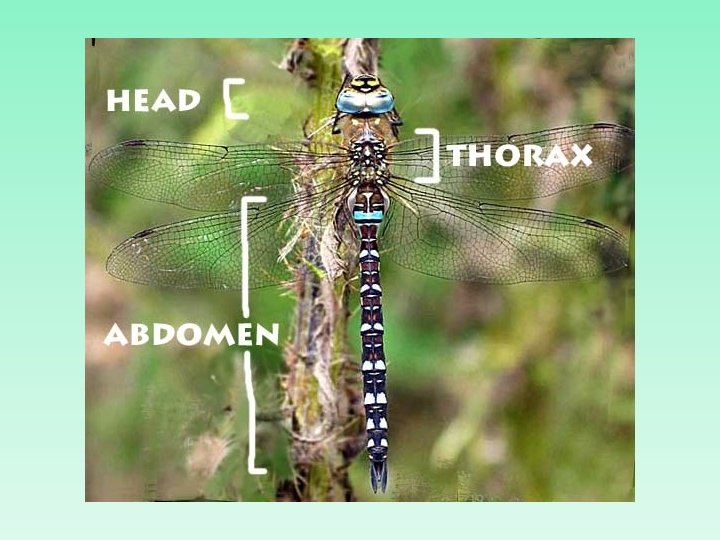
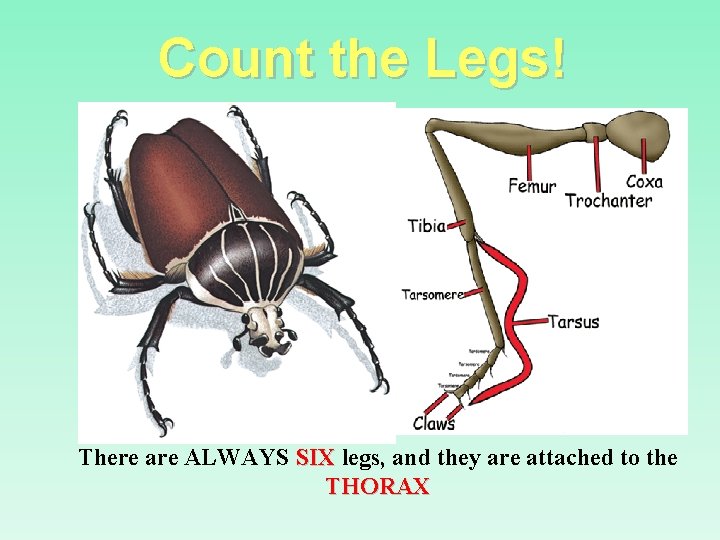
Count the Legs! There are ALWAYS SIX legs, and they are attached to the THORAX
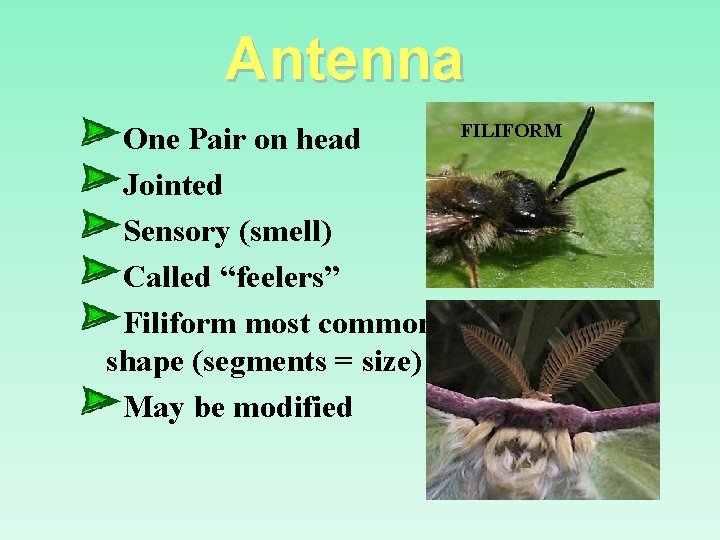
Antenna One Pair on head Jointed Sensory (smell) Called “feelers” Filiform most common shape (segments = size) May be modified FILIFORM
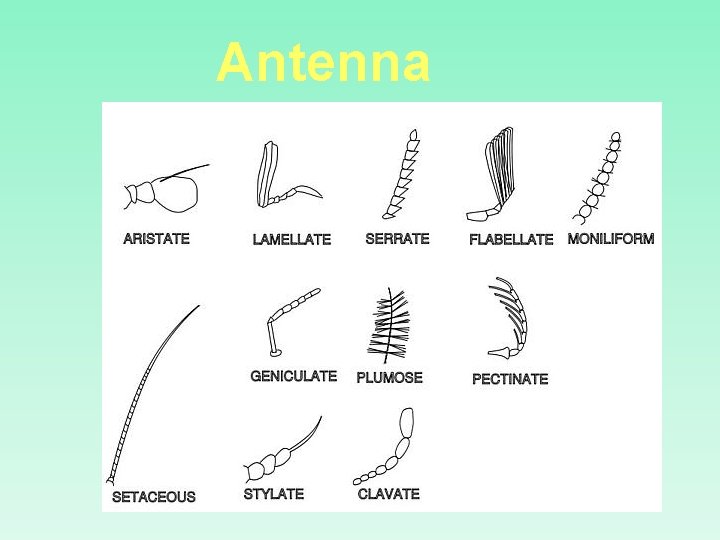
Antenna Modifications
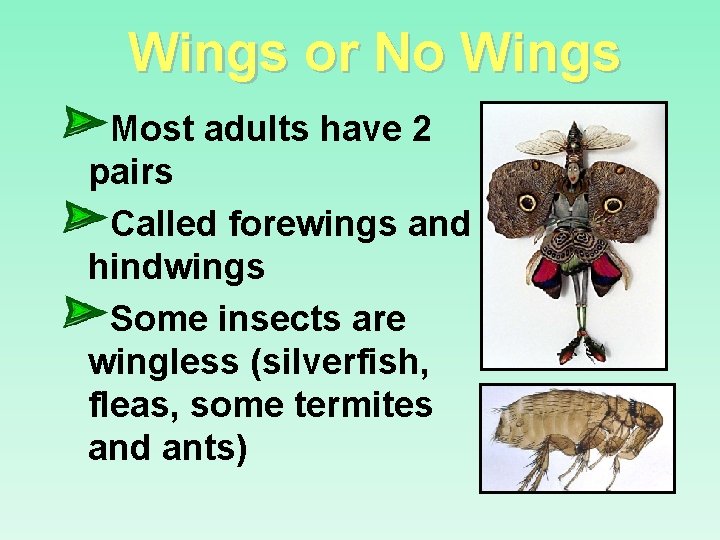
Wings or No Wings Most adults have 2 pairs Called forewings and hindwings Some insects are wingless (silverfish, fleas, some termites and ants)
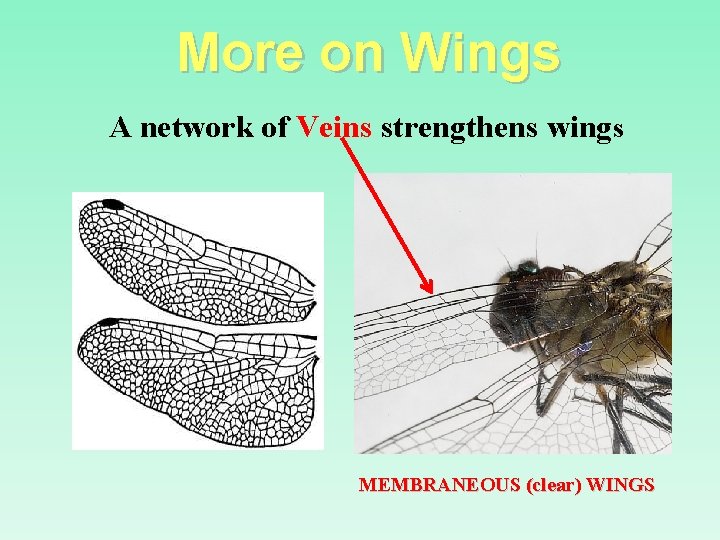
More on Wings A network of Veins strengthens wings MEMBRANEOUS (clear) WINGS
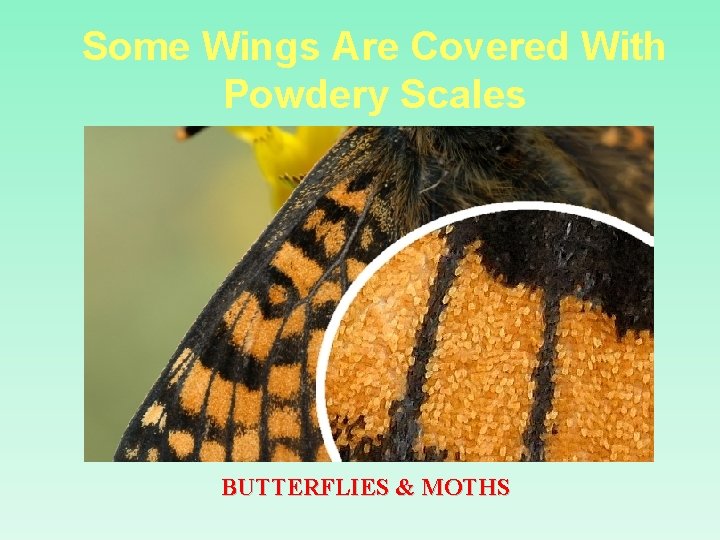
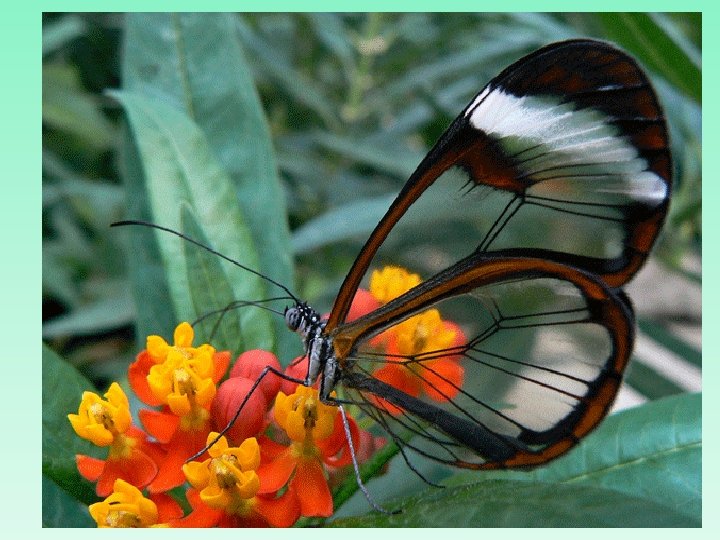
Some Wings Are Covered With Powdery Scales BUTTERFLIES & MOTHS
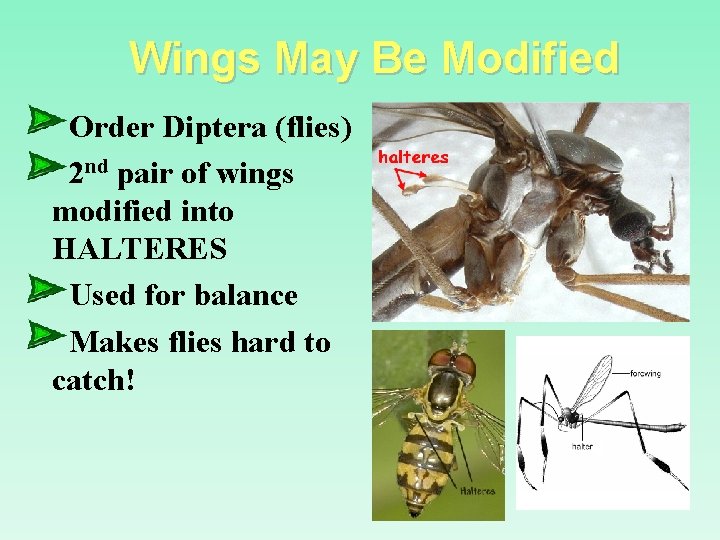
Wings May Be Modified Order Diptera (flies) 2 nd pair of wings modified into HALTERES Used for balance Makes flies hard to catch!
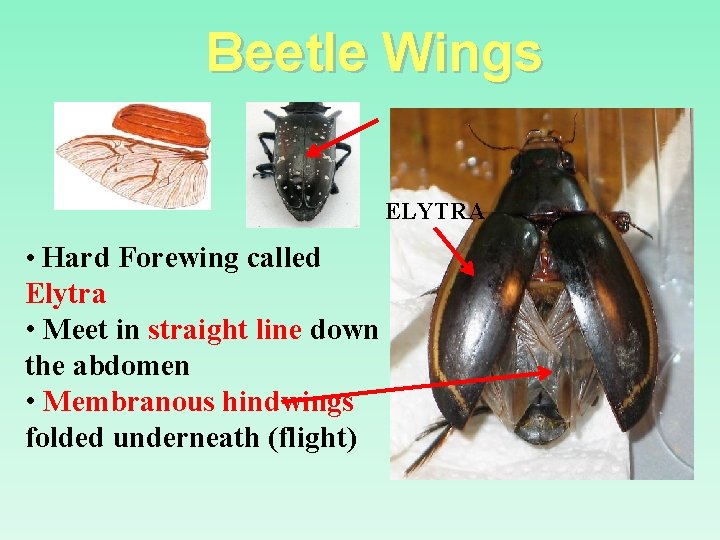
Beetle Wings ELYTRA • Hard Forewing called Elytra • Meet in straight line down the abdomen • Membranous hindwings folded underneath (flight)
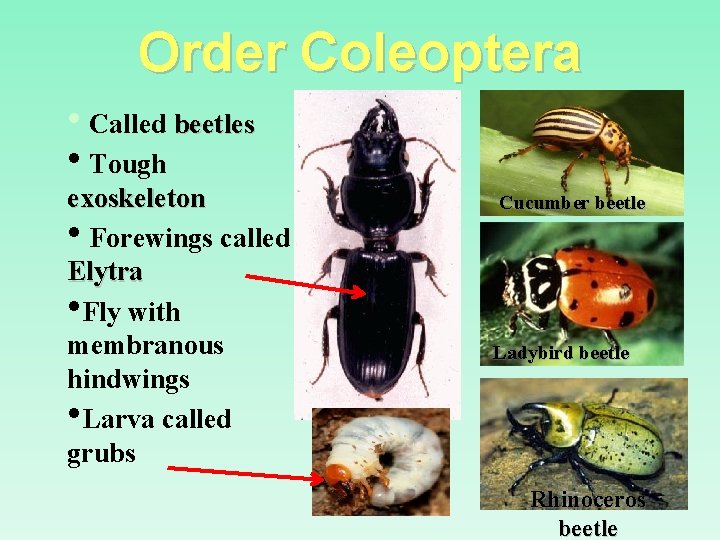
Order Coleoptera • Called beetles • Tough exoskeleton • Forewings called Elytra • Fly with membranous hindwings • Larva called grubs Cucumber beetle Ladybird beetle Rhinoceros beetle
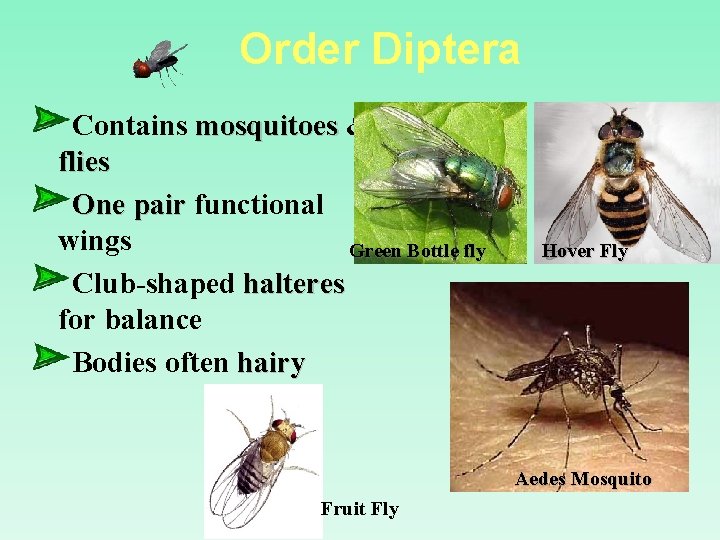
Order Diptera Contains mosquitoes & flies One pair functional wings Green Bottle fly Club-shaped halteres for balance Bodies often hairy Hover Fly Aedes Mosquito Fruit Fly
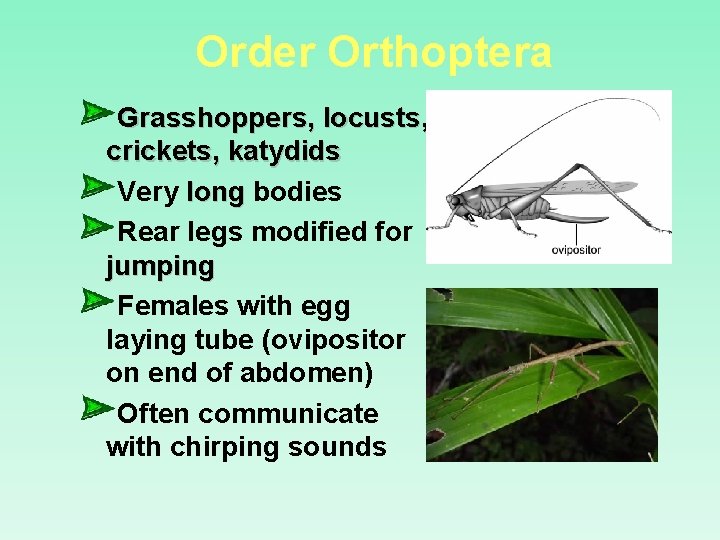
Order Orthoptera Grasshoppers, locusts, crickets, katydids Very long bodies Rear legs modified for jumping Females with egg laying tube (ovipositor on end of abdomen) Often communicate with chirping sounds
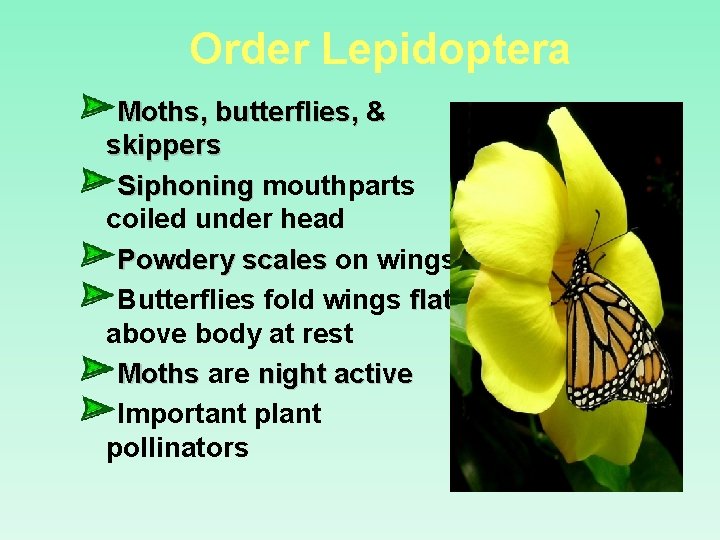
Order Lepidoptera Moths, butterflies, & skippers Siphoning mouthparts coiled under head Powdery scales on wings Butterflies fold wings flat above body at rest Moths are night active Important plant pollinators
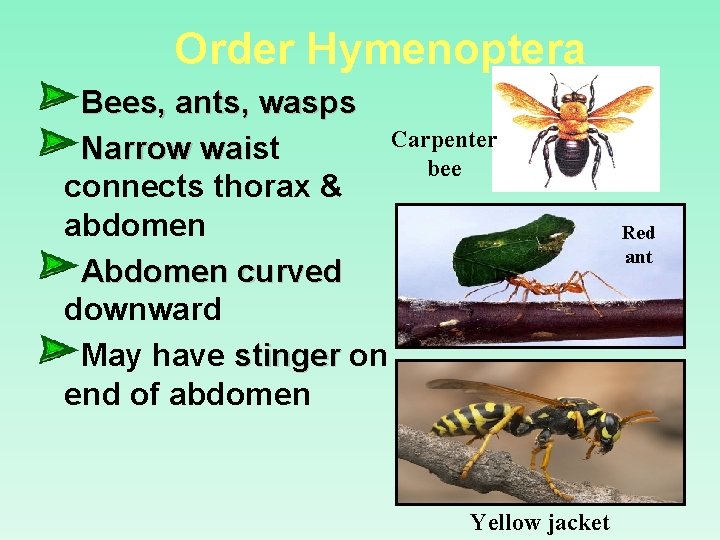
Order Hymenoptera Bees, ants, wasps Carpenter Narrow waist wai bee connects thorax & abdomen Abdomen curved downward May have stinger on end of abdomen Yellow jacket Red ant
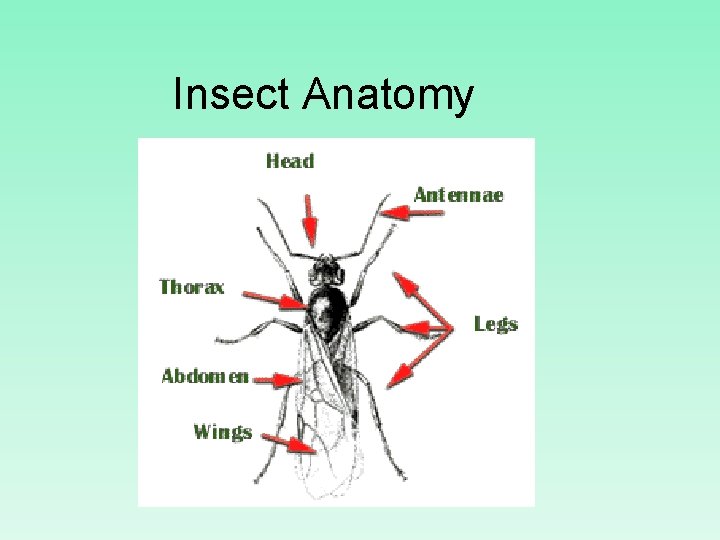
Insect Anatomy
Chelicerata Characteristics: Pincher-like mouthparts (chelicerae) and pedipalps NO antennae Two body regions, usually - cephalothorax & abdomen Four pairs of legs Horseshoe crabs and arachnids are the only living groups. Arachnids include scorpions, pseudoscorpions, daddy long-legs, mites & ticks, spiders
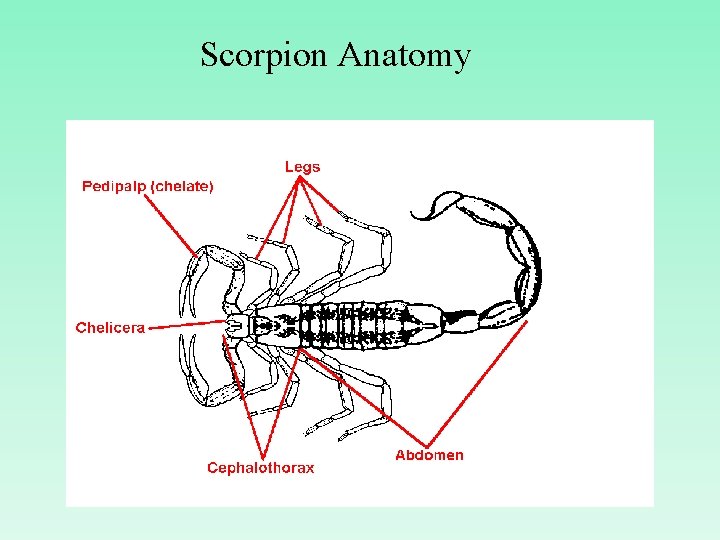
Scorpion Anatomy
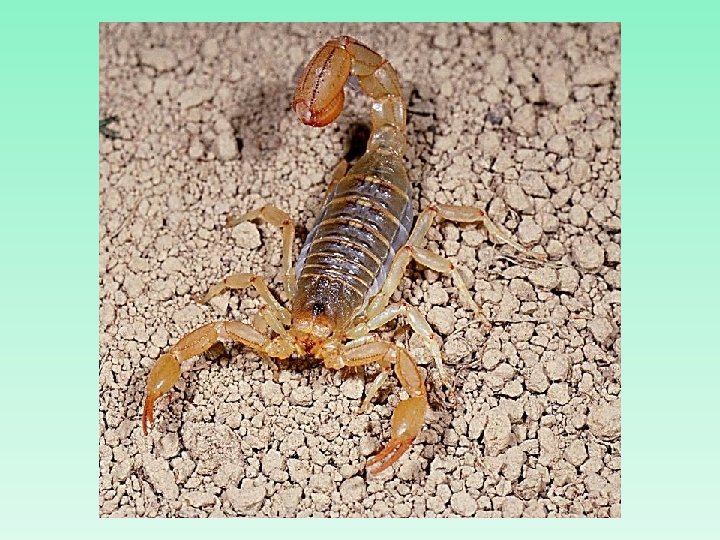
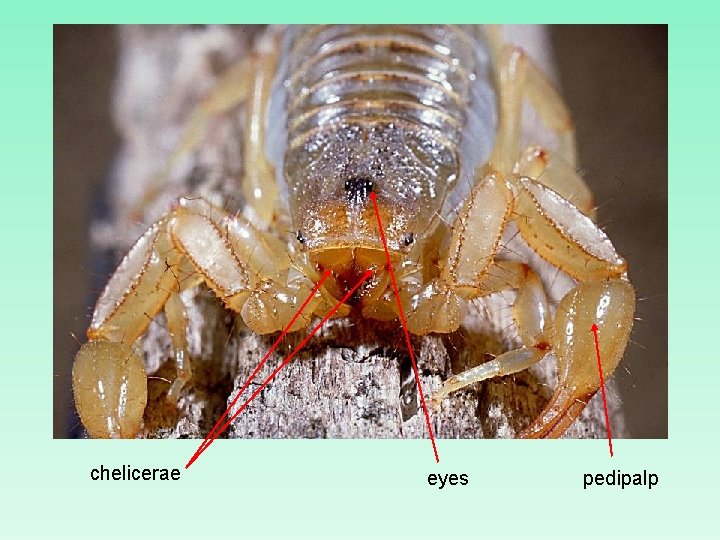
chelicerae eyes pedipalp
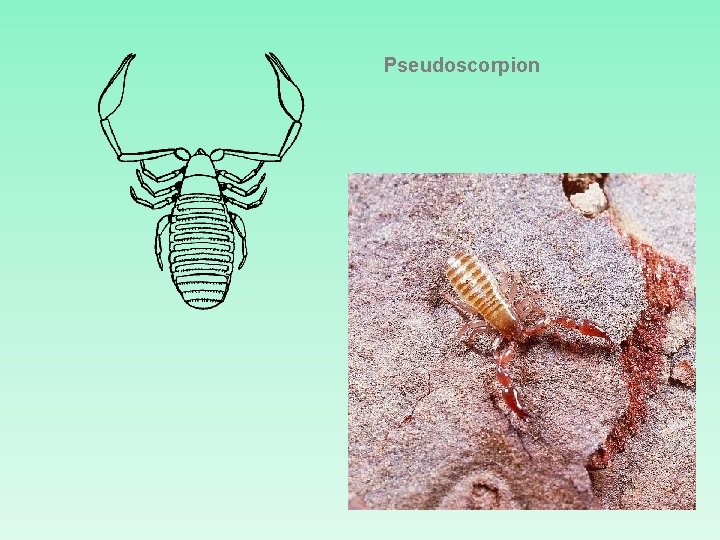
Pseudoscorpion
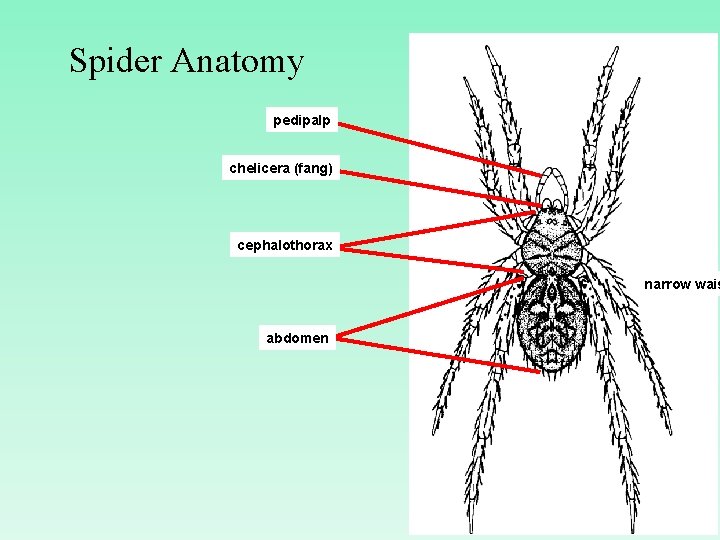
Spider Anatomy pedipalp chelicera (fang) cephalothorax narrow wais abdomen
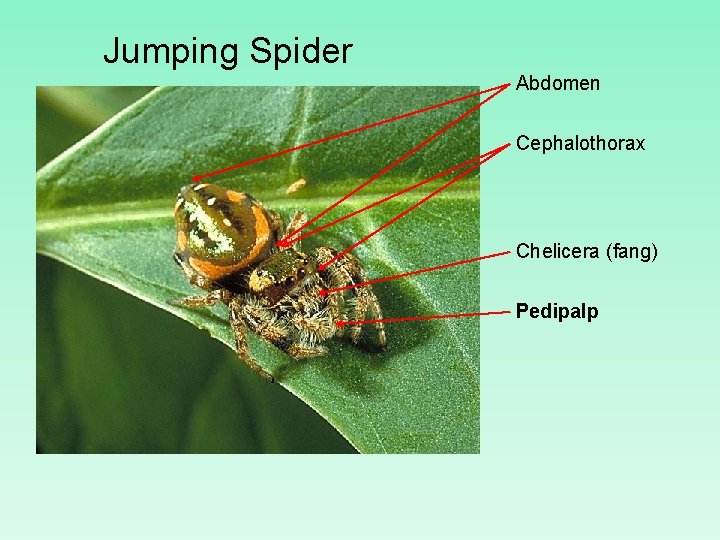
Jumping Spider Abdomen Cephalothorax Chelicera (fang) Pedipalp
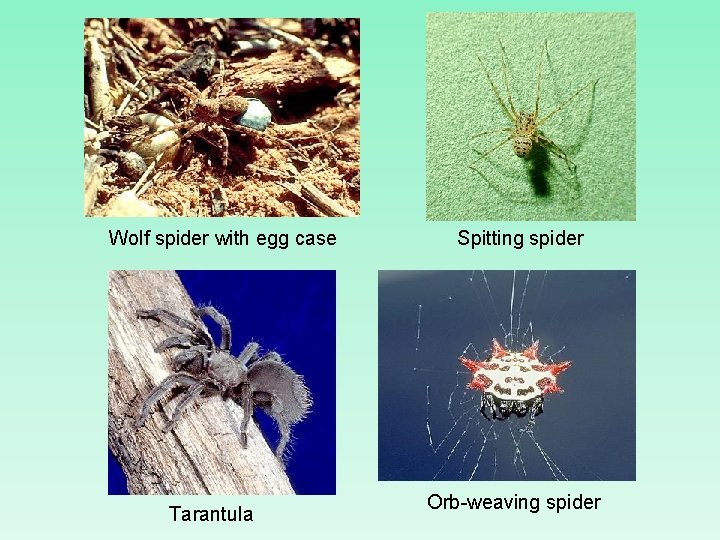
Wolf spider with egg case Tarantula Spitting spider Orb-weaving spider
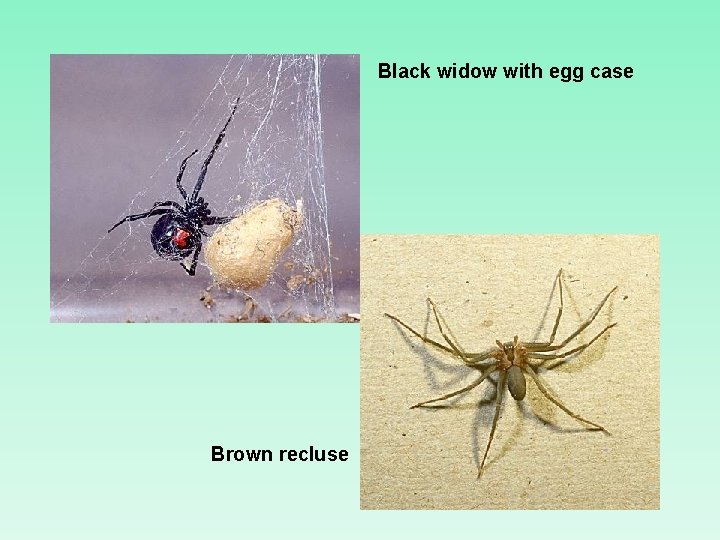
Black widow with egg case Brown recluse
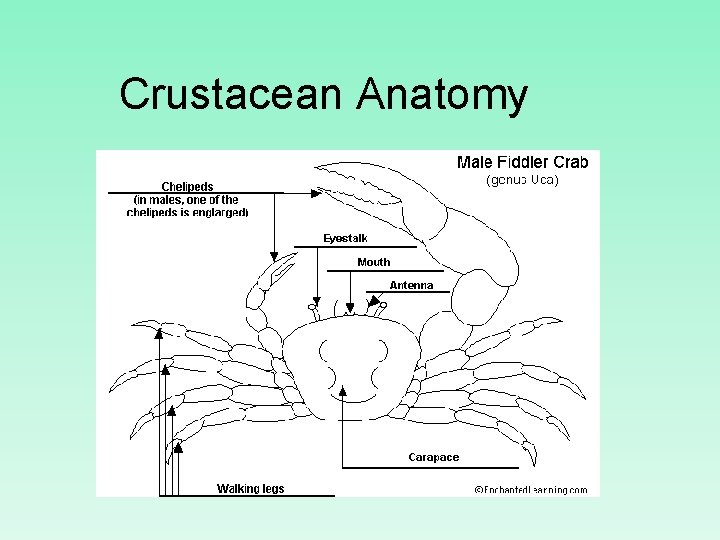
Crustacean Anatomy
Classes of Crustacea • mostly marine, fresh water, a few terrestrial • all have two pair of antennae • five or more pairs of legs • segmented abdominal appendages • head & trunk or cephalothorax & abdomen body arrangement • have gills Sowbugs or pillbugs Sand fleas Barnacles Crabs, lobster, shrimp
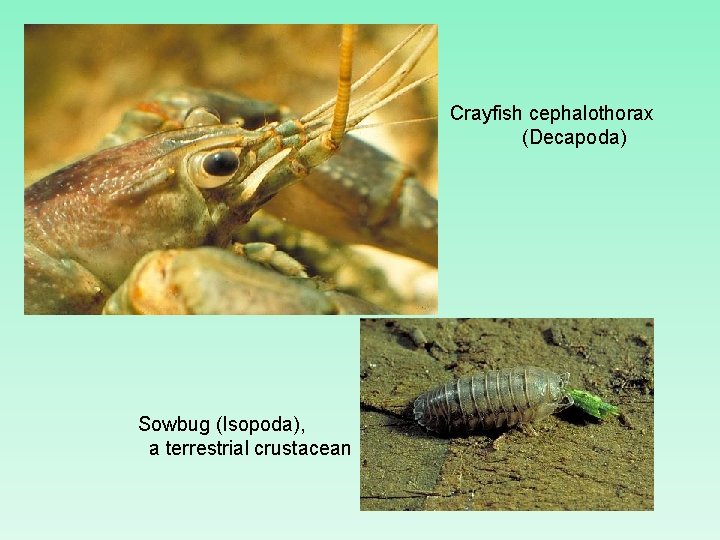
Crayfish cephalothorax (Decapoda) Sowbug (Isopoda), a terrestrial crustacean
Classes of Myriapods (many legged arthropods) (all have one pair of antennae, a head region, and trunk with many pairs of legs, use trachea) Diplopoda - millipedes Chilopoda - centipedes
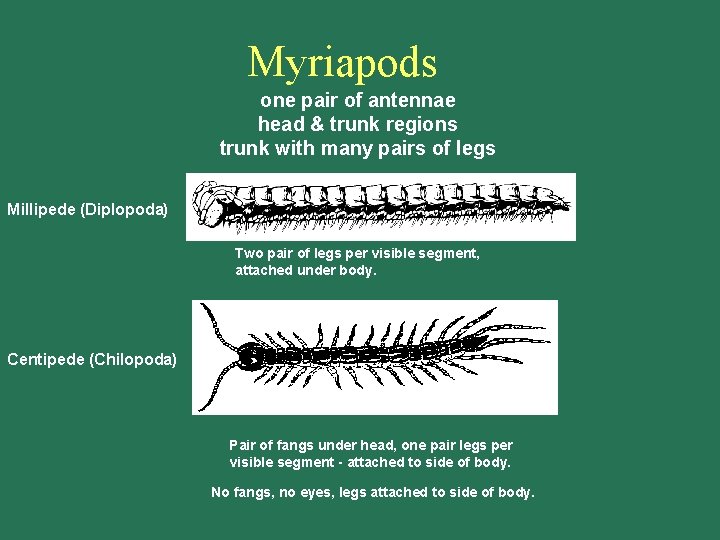
Myriapods one pair of antennae head & trunk regions trunk with many pairs of legs Millipede (Diplopoda) Two pair of legs per visible segment, attached under body. Centipede (Chilopoda) Pair of fangs under head, one pair legs per visible segment - attached to side of body. No fangs, no eyes, legs attached to side of body.
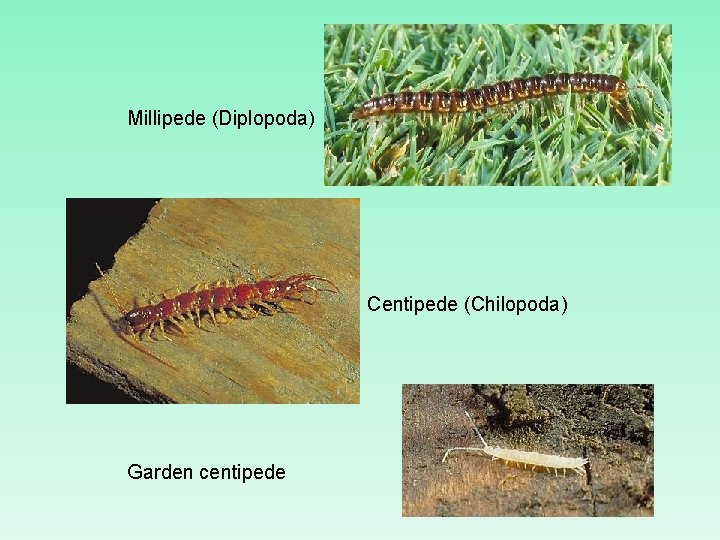
Millipede (Diplopoda) Centipede (Chilopoda) Garden centipede
Orders of Arachnids Scorpions Pseudoscorpions Daddy Long-Legs Mites & Ticks Spiders
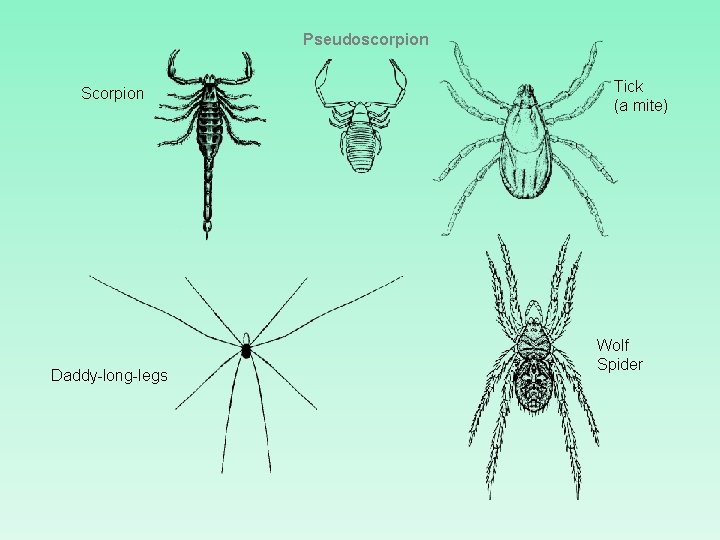
Pseudoscorpion Scorpion Daddy-long-legs Tick (a mite) Wolf Spider
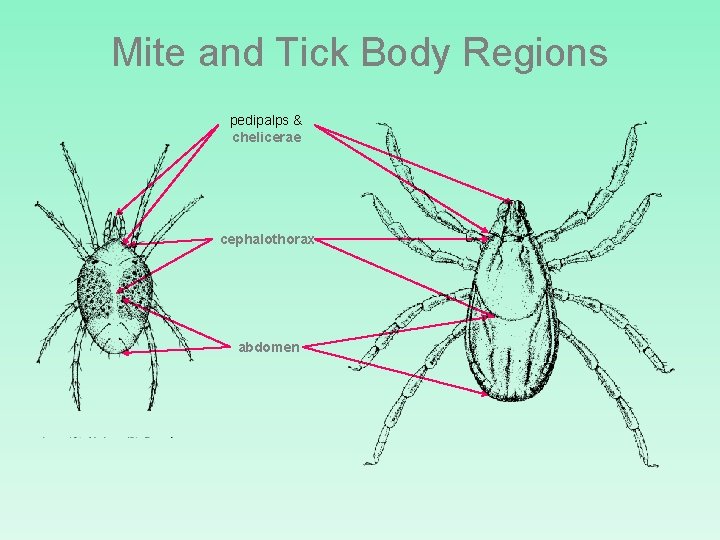
Mite and Tick Body Regions pedipalps & chelicerae cephalothorax abdomen
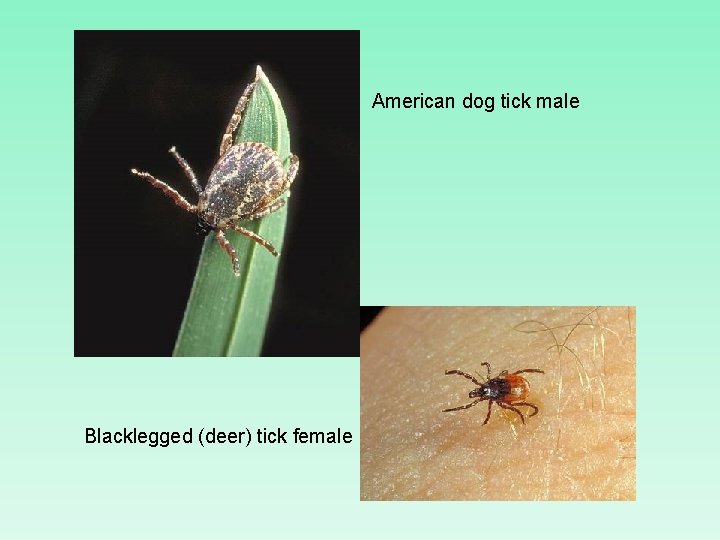
American dog tick male Blacklegged (deer) tick female
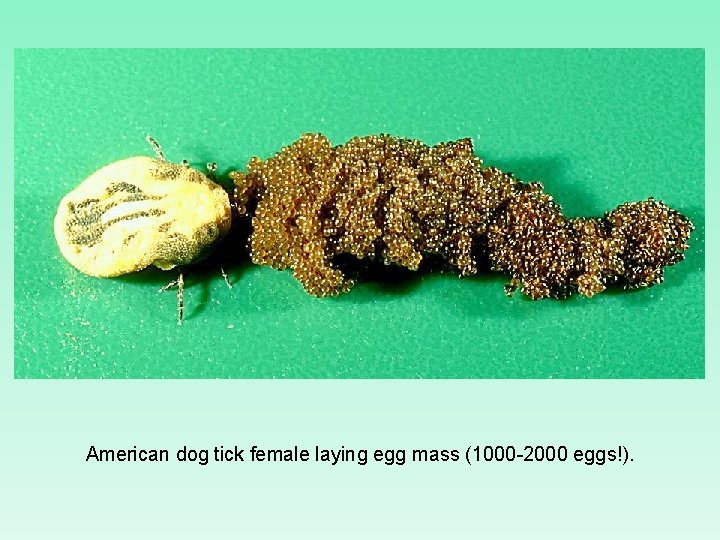
American dog tick female laying egg mass (1000 -2000 eggs!).
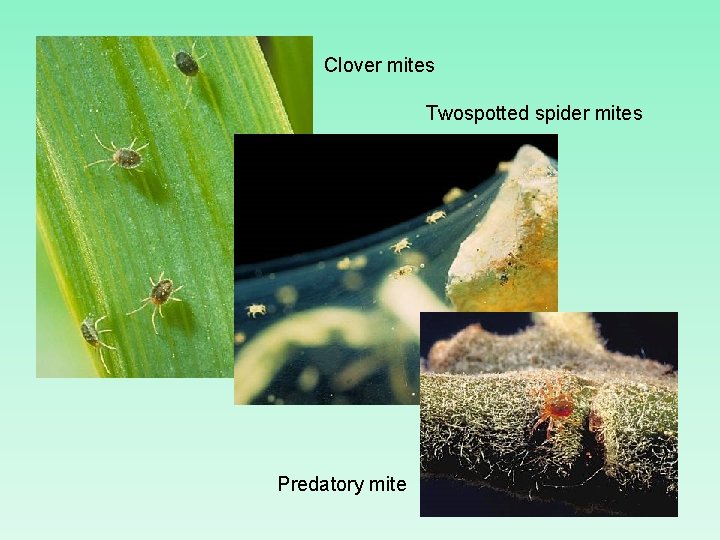
Clover mites Twospotted spider mites Predatory mite
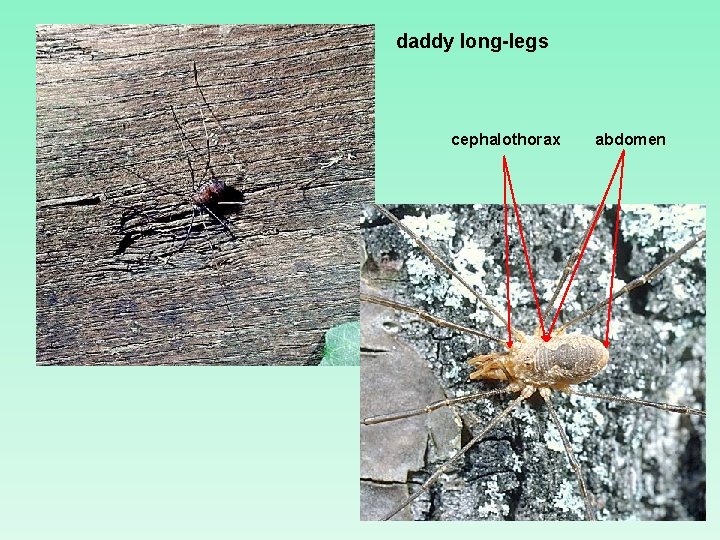
daddy long-legs cephalothorax abdomen
- Slides: 47