
Kingdom Animalia Marine Science General Characteristics Multicellular n
- Slides: 16
Kingdom Animalia Marine Science
General Characteristics Multicellular n Heterotrophic n n Digest food internally in a body cavity Eukaryotic n Habitat: aquatic and terrestrial n Possess body symmetry n Most utilize complex and rapid locomotion n Most reproduce sexually (egg & sperm) n
The Animal Kingdom Can be divided into 2 large groups: 1)INVERTEBRATE- An animal that does not have a backbone 2) - worms, arthropods, mollusks, echinoderms 3) sponges, cnidaria 2) VERTEBRATE- An animal that has a backbone -chordates
Environmental Characteristic n Divided into two types: n Cold-blooded n Body temperature depends on environment n Warm-blooded n Body temperature stays the same n Ex. Humans – 98. 6 degrees F
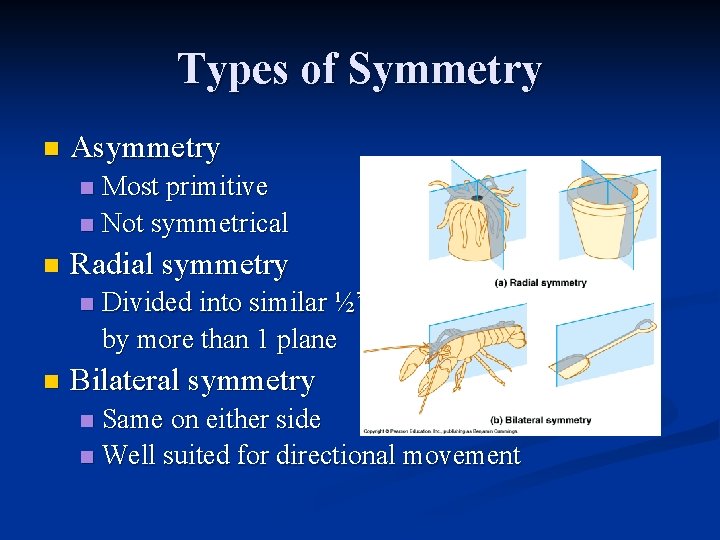
Types of Symmetry n Asymmetry Most primitive n Not symmetrical n n Radial symmetry n n Divided into similar ½’ by more than 1 plane Bilateral symmetry Same on either side n Well suited for directional movement n
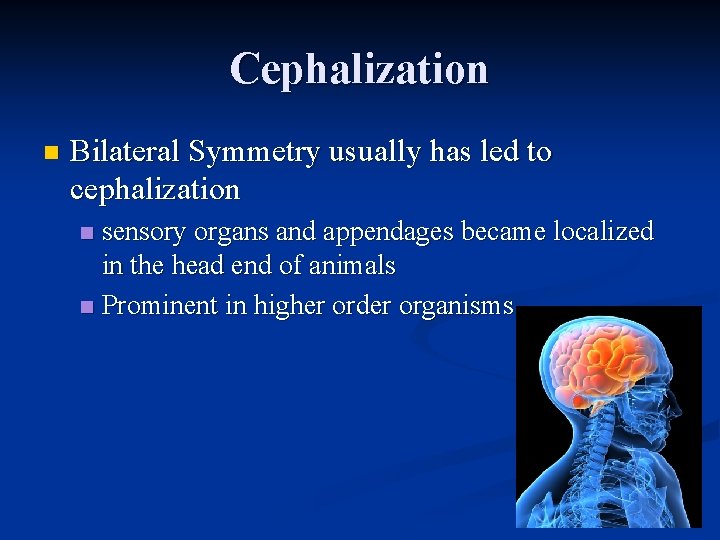
Cephalization n Bilateral Symmetry usually has led to cephalization sensory organs and appendages became localized in the head end of animals n Prominent in higher order organisms n
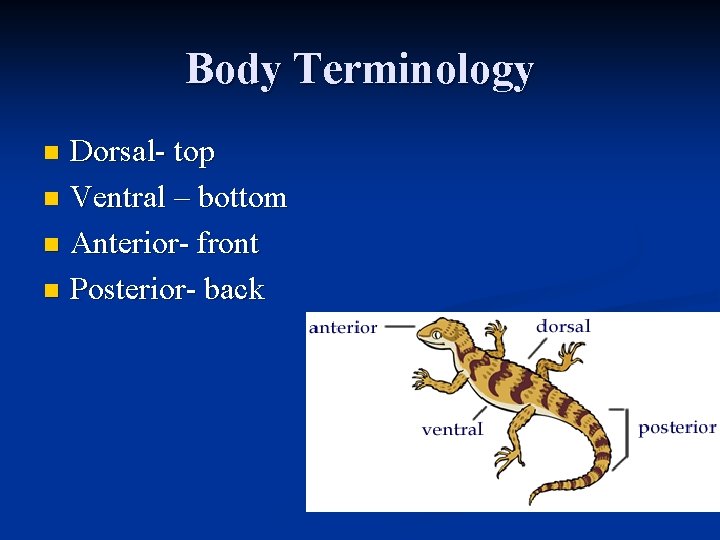
Body Terminology Dorsal- top n Ventral – bottom n Anterior- front n Posterior- back n
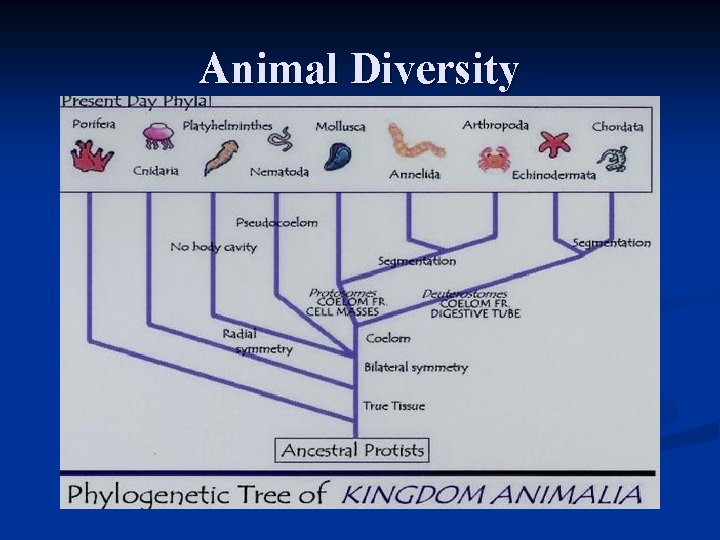
Animal Diversity
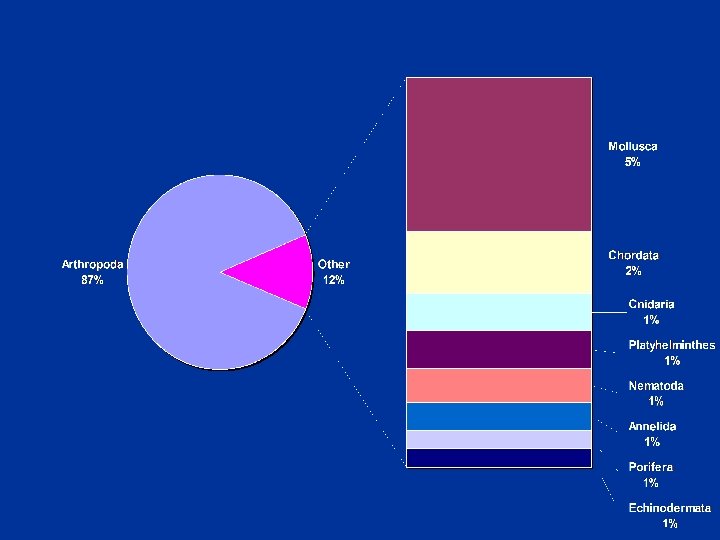
Major Animal Phyla
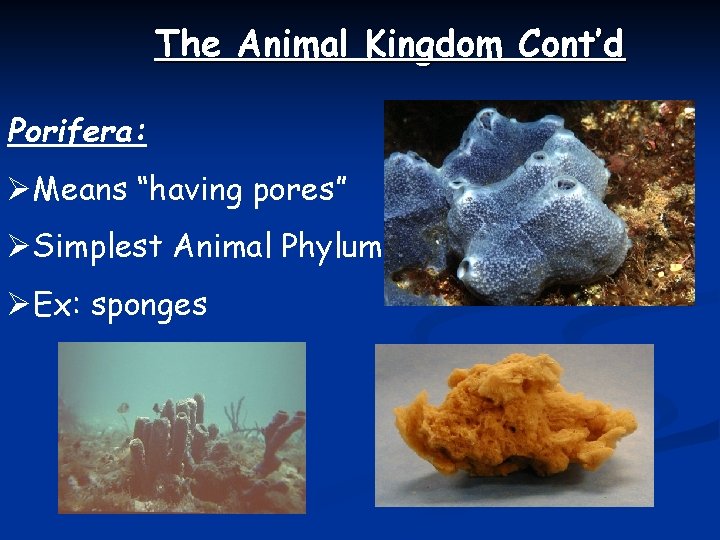
The Animal Kingdom Cont’d Porifera: ØMeans “having pores” ØSimplest Animal Phylum ØEx: sponges
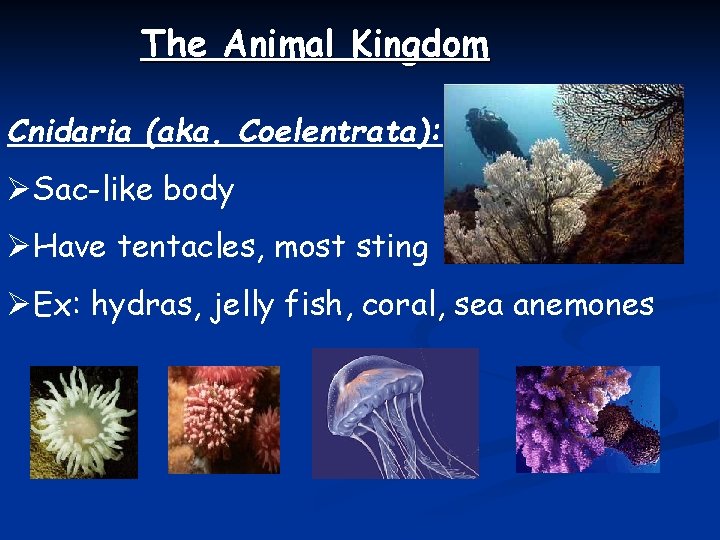
The Animal Kingdom Cnidaria (aka. Coelentrata): ØSac-like body ØHave tentacles, most sting ØEx: hydras, jelly fish, coral, sea anemones
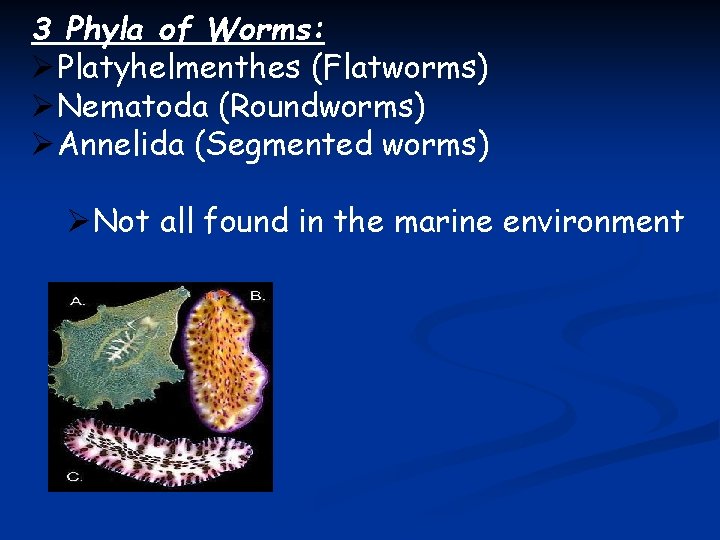
3 Phyla of Worms: ØPlatyhelmenthes (Flatworms) ØNematoda (Roundworms) ØAnnelida (Segmented worms) ØNot all found in the marine environment
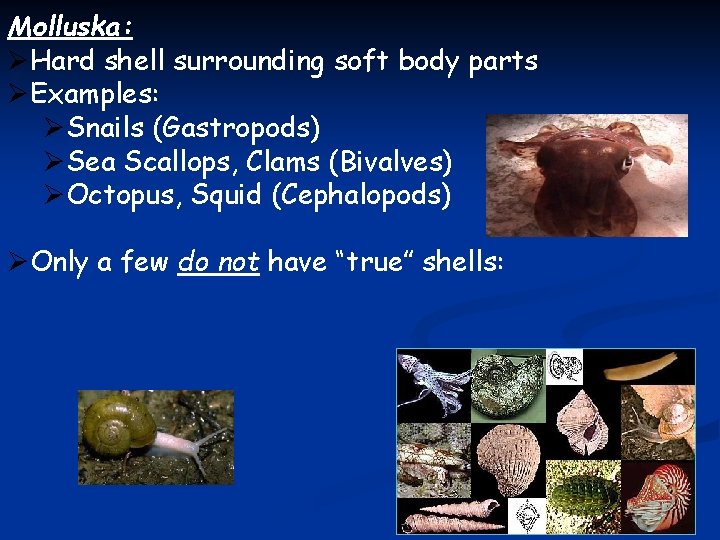
Molluska: ØHard shell surrounding soft body parts ØExamples: ØSnails (Gastropods) ØSea Scallops, Clams (Bivalves) ØOctopus, Squid (Cephalopods) ØOnly a few do not have “true” shells:
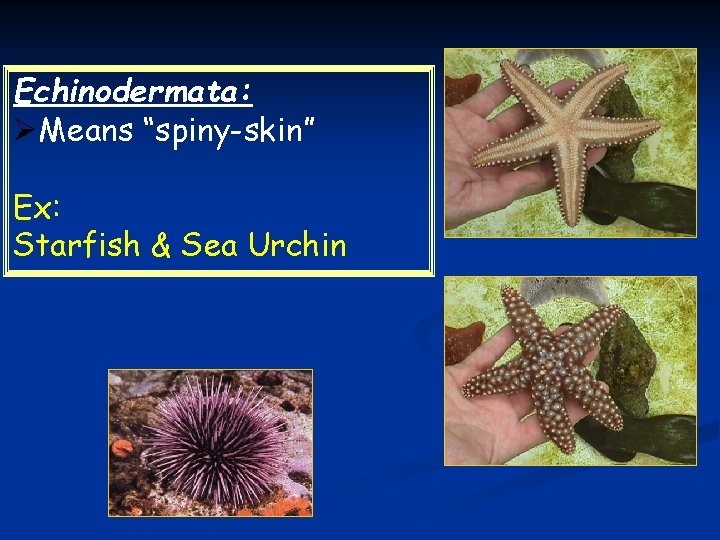
Echinodermata: ØMeans “spiny-skin” Ex: Starfish & Sea Urchin
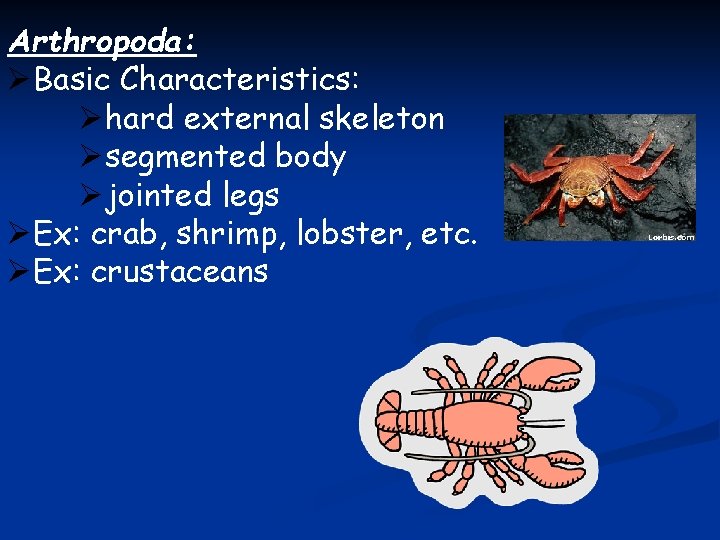
Arthropoda: ØBasic Characteristics: Øhard external skeleton Øsegmented body Øjointed legs ØEx: crab, shrimp, lobster, etc. ØEx: crustaceans
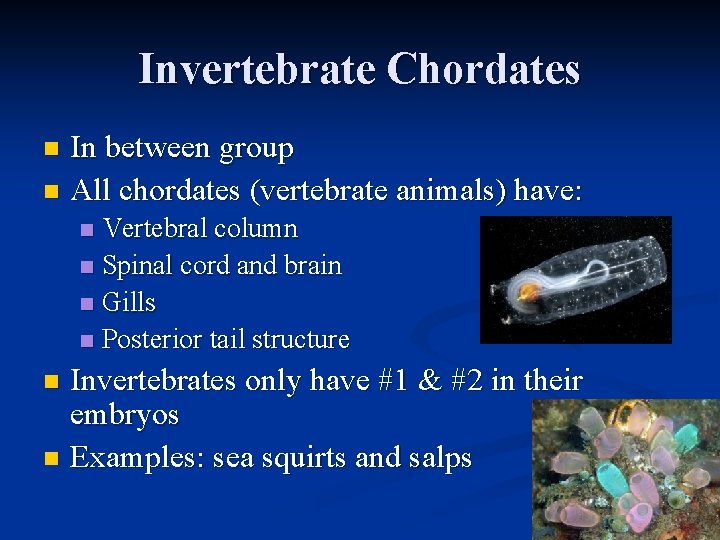
Invertebrate Chordates In between group n All chordates (vertebrate animals) have: n Vertebral column n Spinal cord and brain n Gills n Posterior tail structure n Invertebrates only have #1 & #2 in their embryos n Examples: sea squirts and salps n