
Kingdom Animalia Introduction to Invertebrates What is an
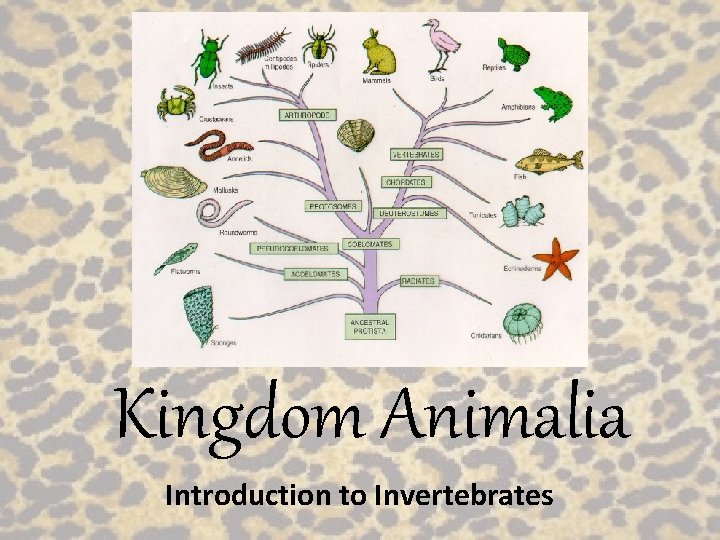
Kingdom Animalia Introduction to Invertebrates
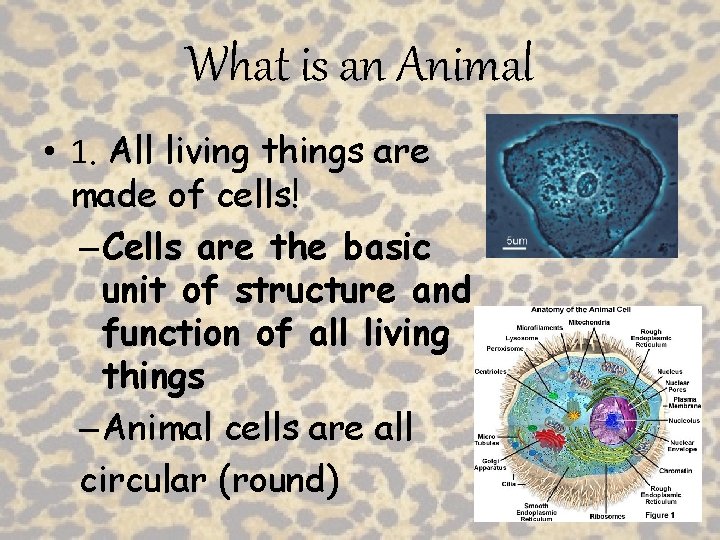
What is an Animal • 1. All living things are made of cells! – Cells are the basic unit of structure and function of all living things – Animal cells are all circular (round)
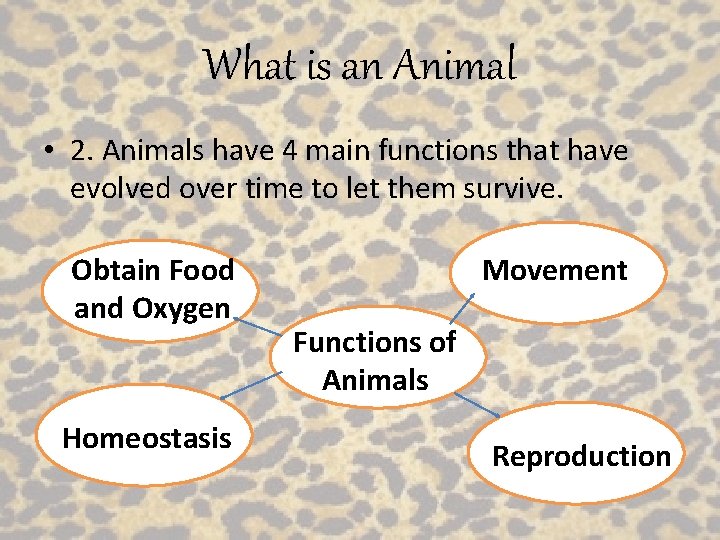
What is an Animal • 2. Animals have 4 main functions that have evolved over time to let them survive. Obtain Food and Oxygen Homeostasis Movement Functions of Animals Reproduction
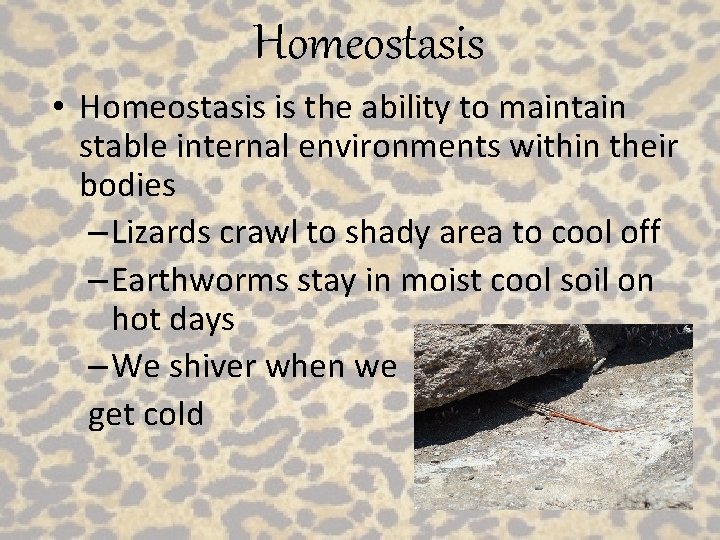
Homeostasis • Homeostasis is the ability to maintain stable internal environments within their bodies – Lizards crawl to shady area to cool off – Earthworms stay in moist cool soil on hot days – We shiver when we get cold
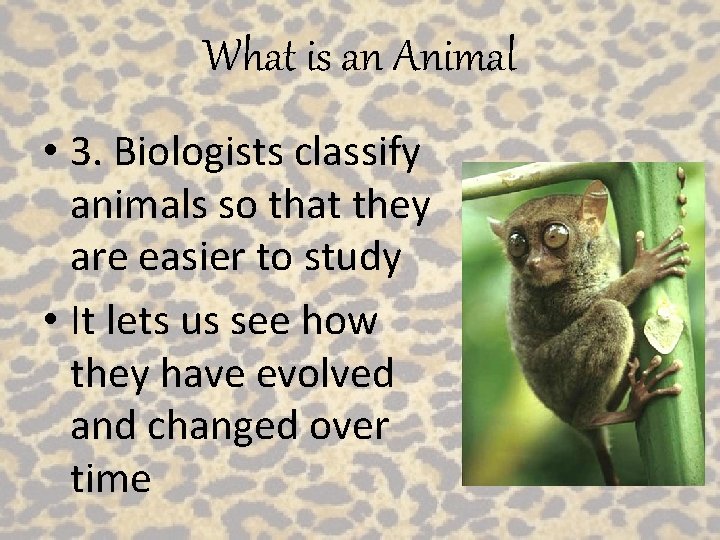
What is an Animal • 3. Biologists classify animals so that they are easier to study • It lets us see how they have evolved and changed over time
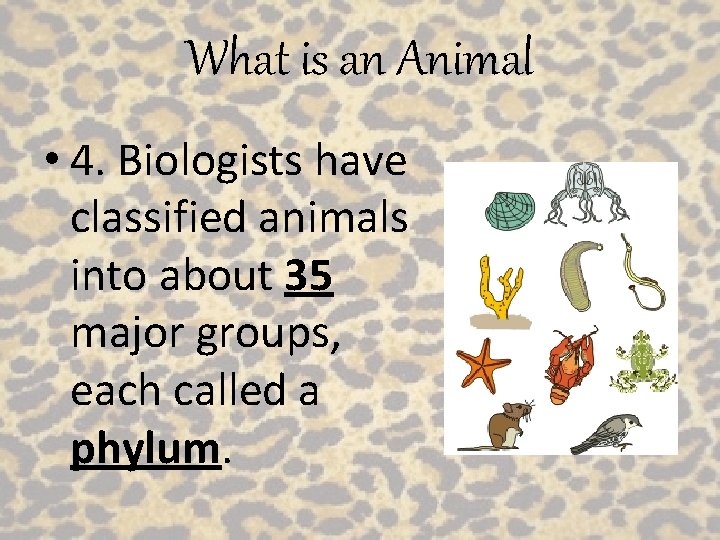
What is an Animal • 4. Biologists have classified animals into about 35 major groups, each called a phylum.
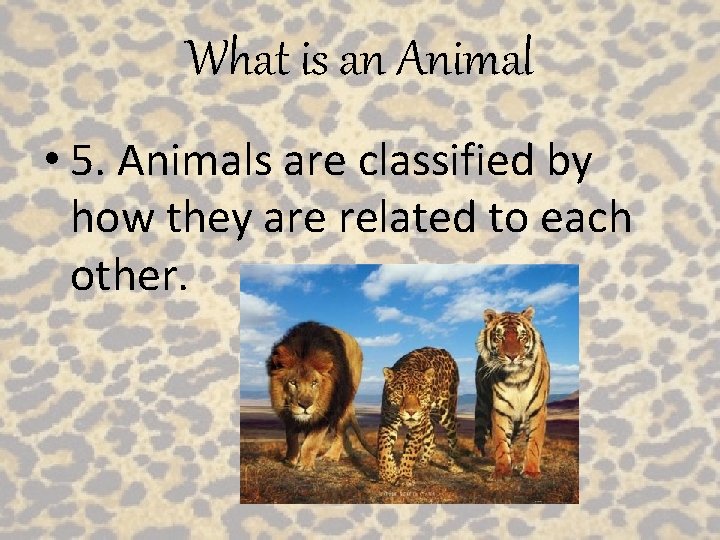
What is an Animal • 5. Animals are classified by how they are related to each other.
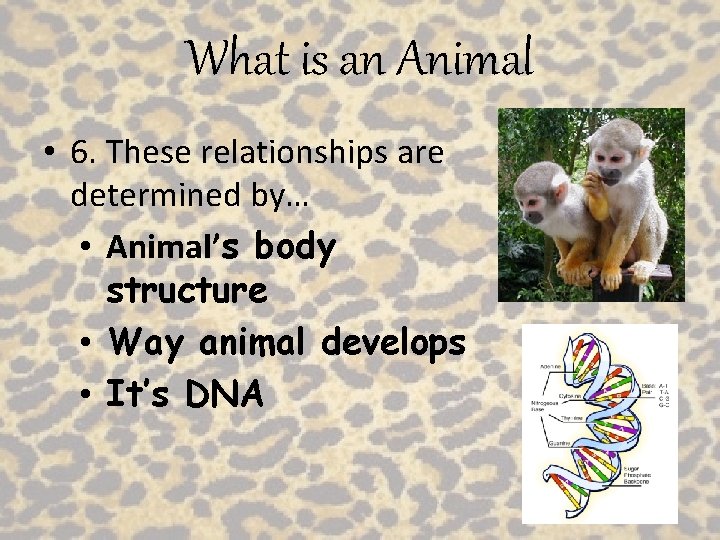
What is an Animal • 6. These relationships are determined by… • Animal’s body structure • Way animal develops • It’s DNA

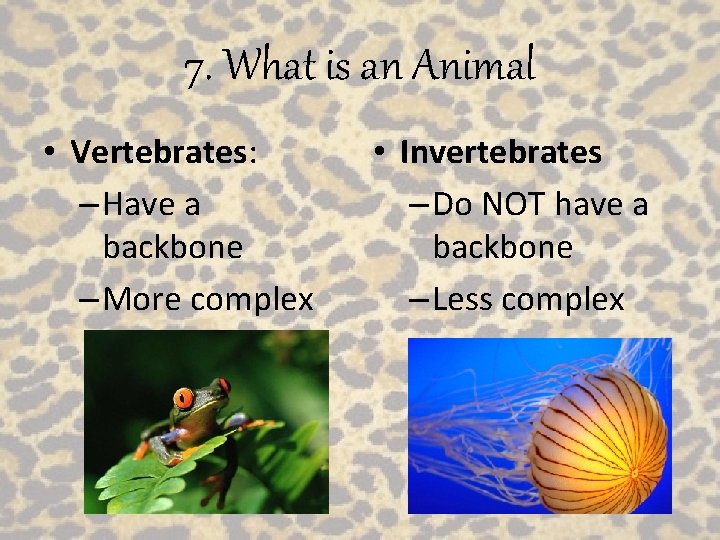
7. What is an Animal • Vertebrates: – Have a backbone – More complex • Invertebrates – Do NOT have a backbone – Less complex
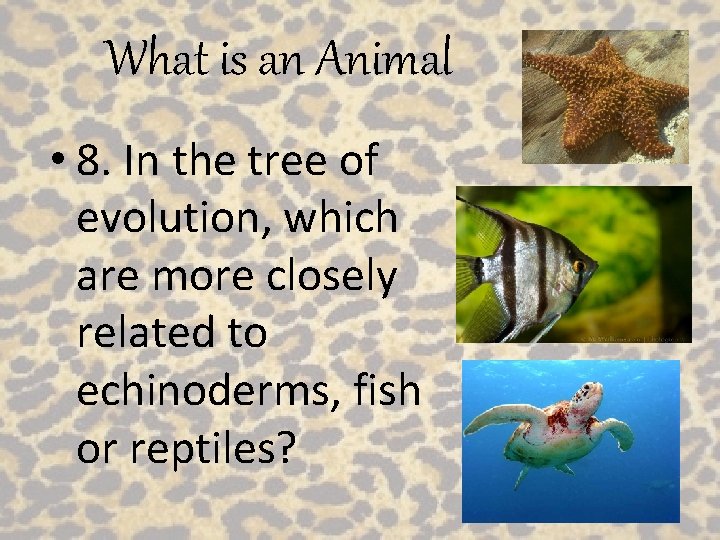
What is an Animal • 8. In the tree of evolution, which are more closely related to echinoderms, fish or reptiles?
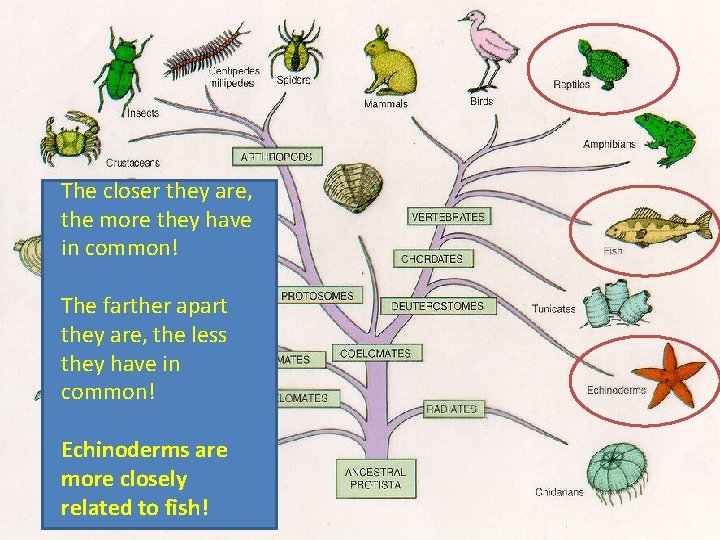
The closer they are, the more they have in common! The farther apart they are, the less they have in common! Echinoderms are more closely related to fish!
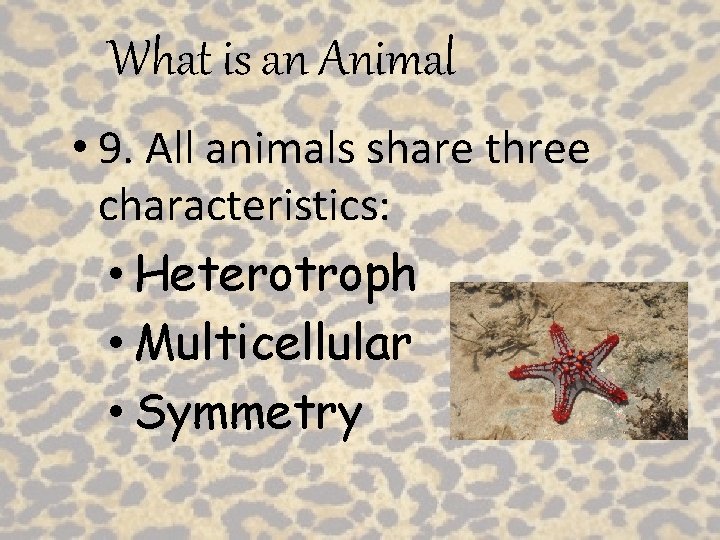
What is an Animal • 9. All animals share three characteristics: • Heterotroph • Multicellular • Symmetry
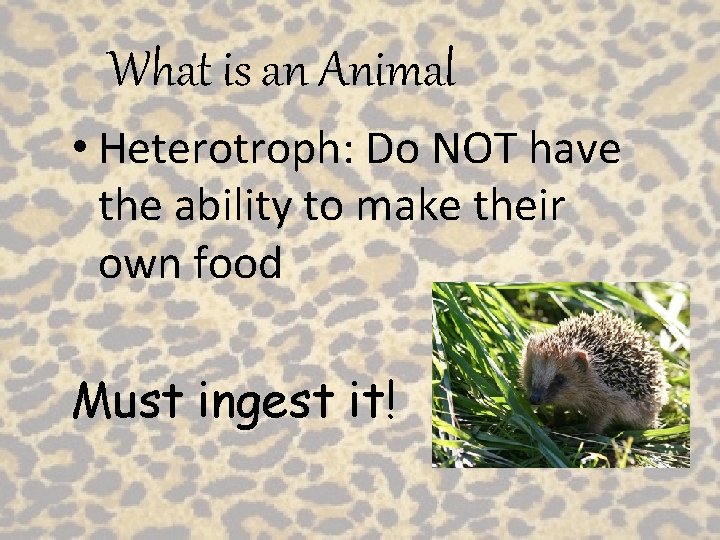
What is an Animal • Heterotroph: Do NOT have the ability to make their own food Must ingest it!
What is an Animal • Multicellular: Made up of many cells So large you do not need a microscope to see them!
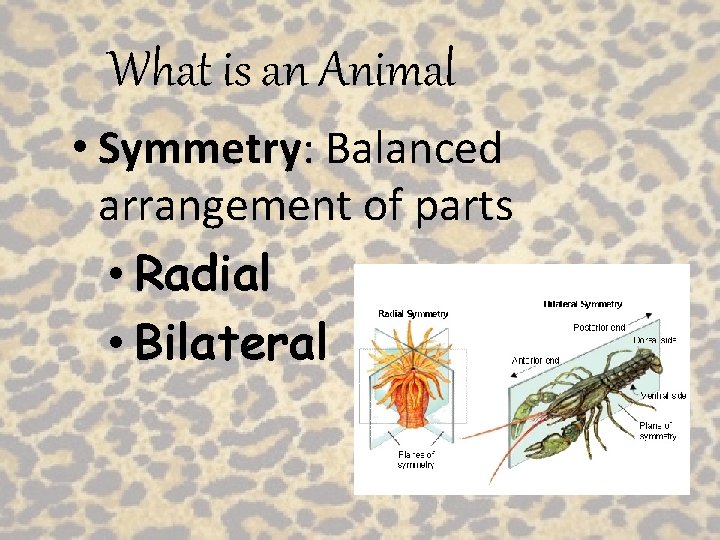
What is an Animal • Symmetry: Balanced arrangement of parts • Radial • Bilateral
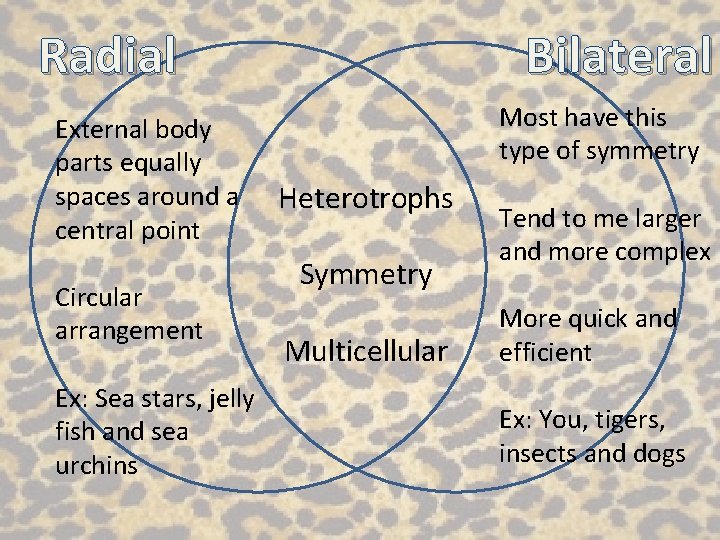
Radial External body parts equally spaces around a central point Circular arrangement Ex: Sea stars, jelly fish and sea urchins Bilateral Most have this type of symmetry Heterotrophs Symmetry Multicellular Tend to me larger and more complex More quick and efficient Ex: You, tigers, insects and dogs

Bilateral Symmetry
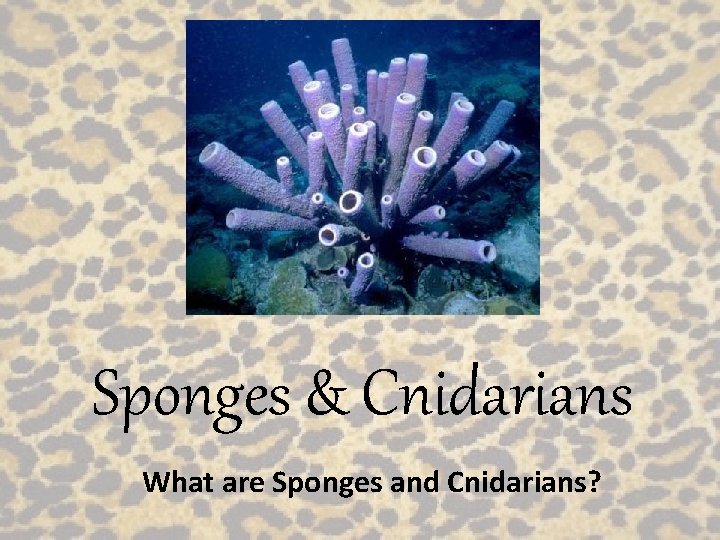
Sponges & Cnidarians What are Sponges and Cnidarians?

Sponges • 12. Sponges are: • Invertebrates • Usually no body symmetry • No tissues or organs (simple) • 13. Sponges belong to the phylum Porifera which means “having pores”.
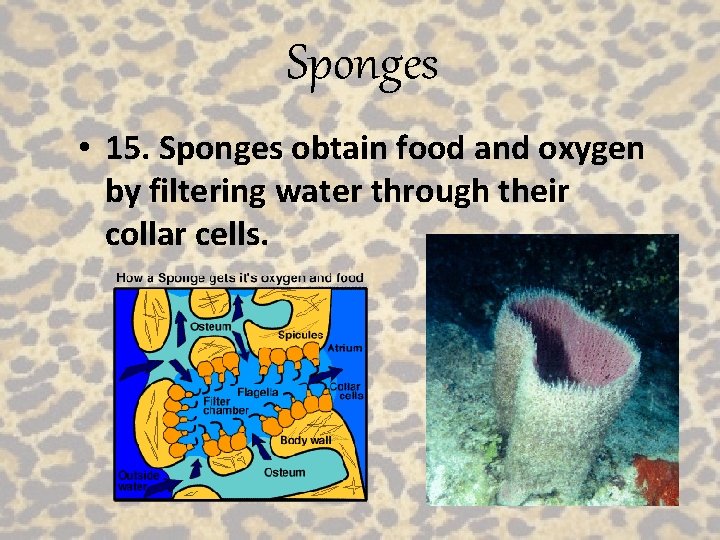
Sponges • 15. Sponges obtain food and oxygen by filtering water through their collar cells.
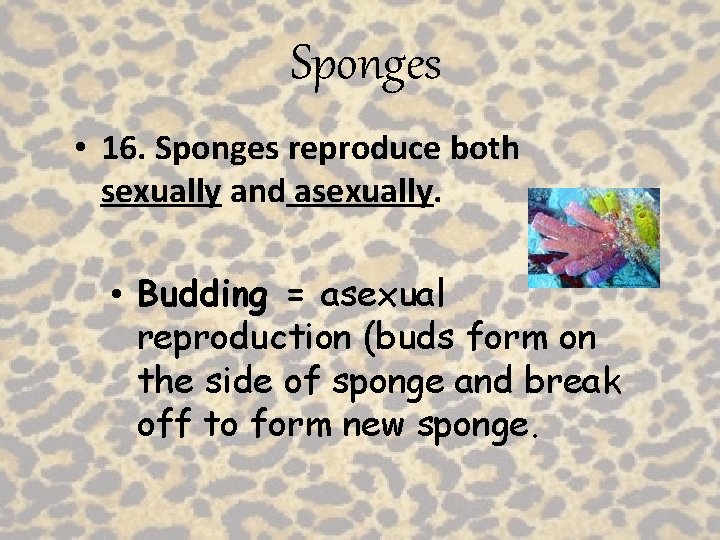
Sponges • 16. Sponges reproduce both sexually and asexually. • Budding = asexual reproduction (buds form on the side of sponge and break off to form new sponge.
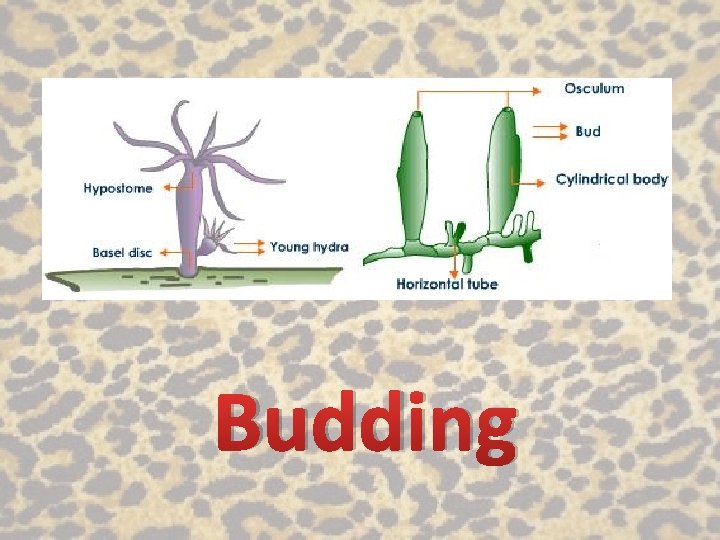
Budding
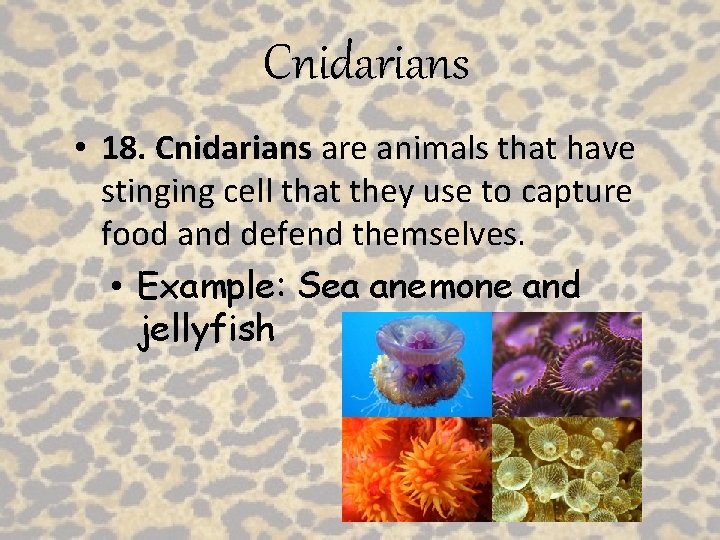
Cnidarians • 18. Cnidarians are animals that have stinging cell that they use to capture food and defend themselves. • Example: Sea anemone and jellyfish
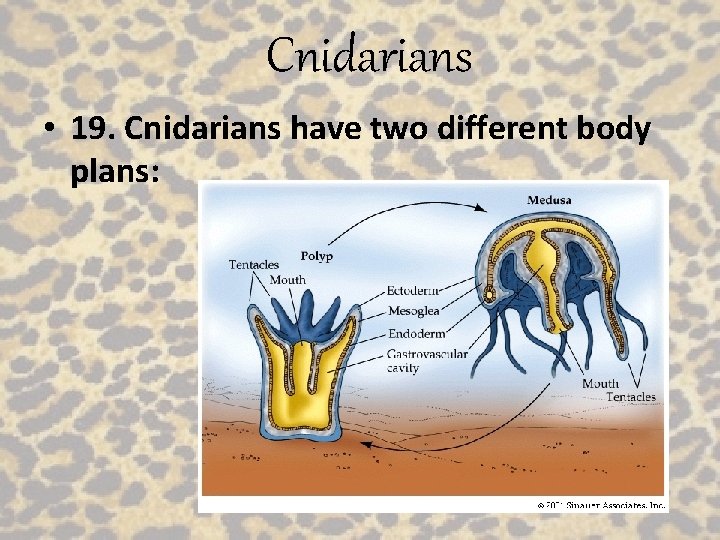
Cnidarians • 19. Cnidarians have two different body plans:

Cnidarians • 20. Cnidarians obtain food by using stinging cells to catch the animals they eat then uses the tentacles to pull the food into its mouth.
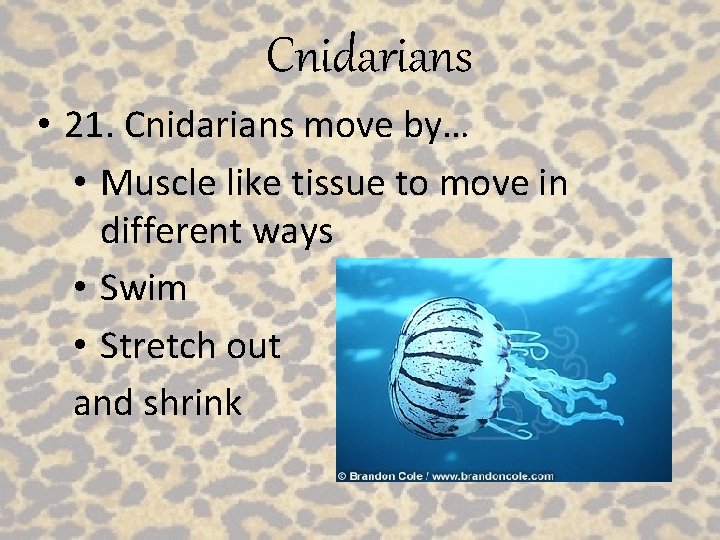
Cnidarians • 21. Cnidarians move by… • Muscle like tissue to move in different ways • Swim • Stretch out and shrink

Worms
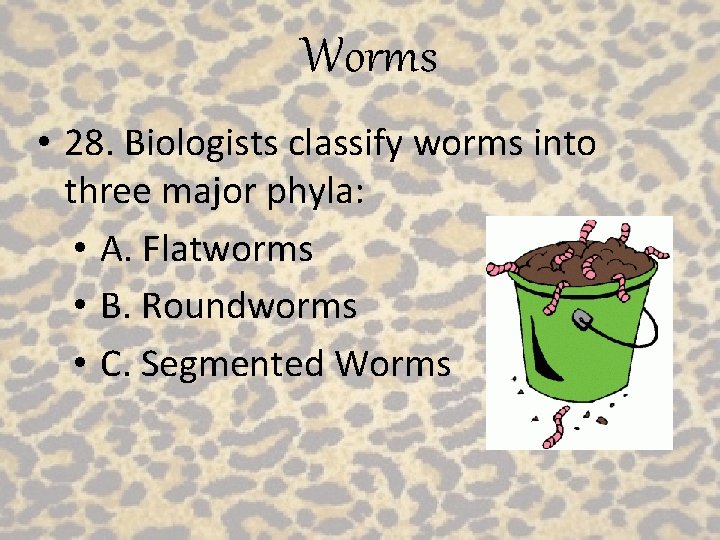
Worms • 28. Biologists classify worms into three major phyla: • A. Flatworms • B. Roundworms • C. Segmented Worms
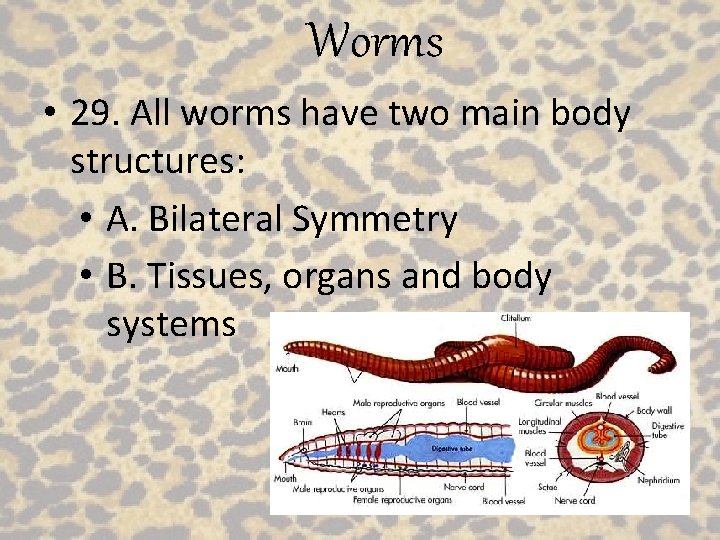
Worms • 29. All worms have two main body structures: • A. Bilateral Symmetry • B. Tissues, organs and body systems
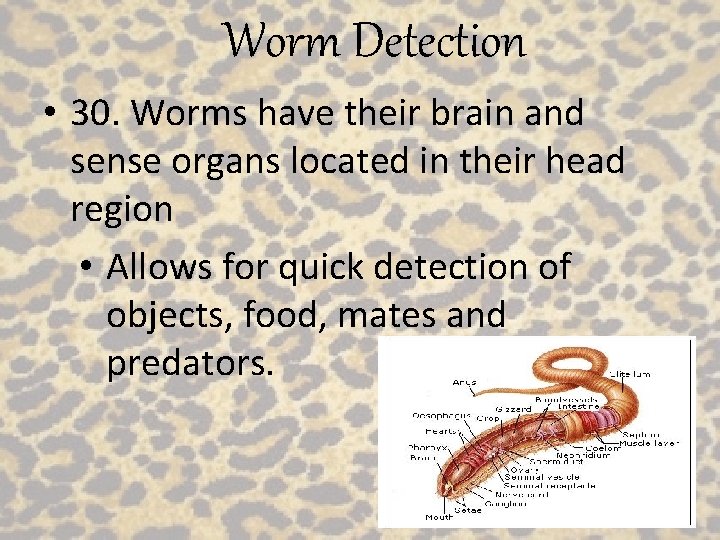
Worm Detection • 30. Worms have their brain and sense organs located in their head region • Allows for quick detection of objects, food, mates and predators.
Worm Reproduction • 31. Most worms are hermaphrodites (male and female sex organs). • Asexual Reproducers (break into smaller pieces and re-grow) • Sexual Reproducers (still exchange genetic material)
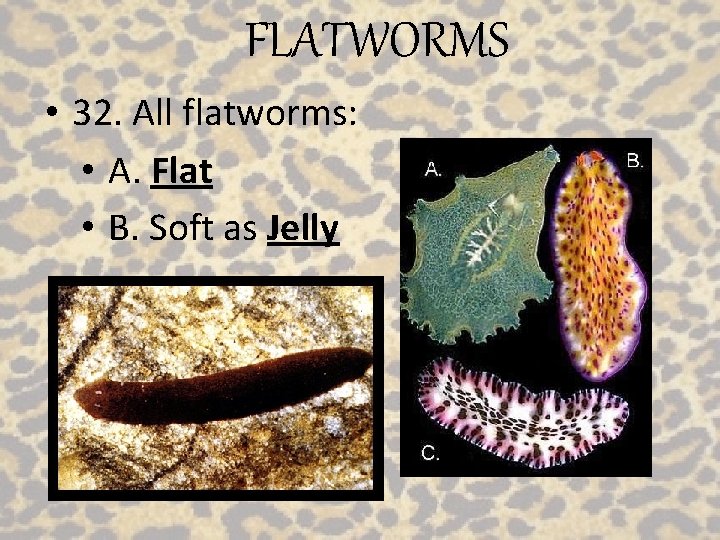
FLATWORMS • 32. All flatworms: • A. Flat • B. Soft as Jelly
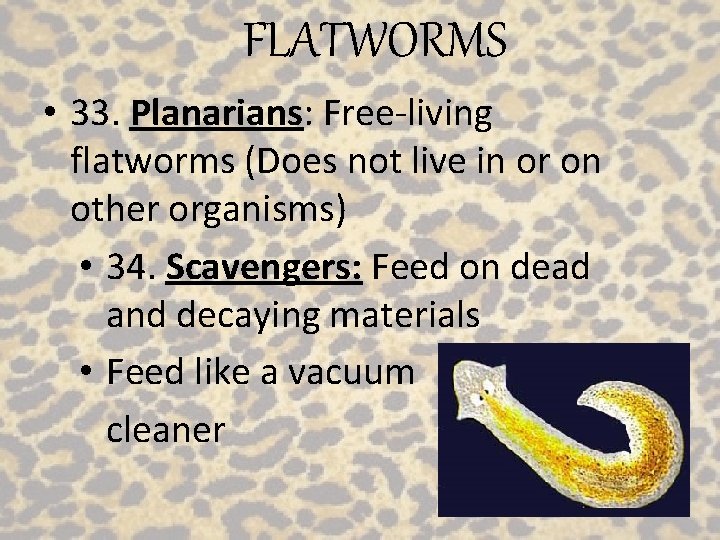
FLATWORMS • 33. Planarians: Free-living flatworms (Does not live in or on other organisms) • 34. Scavengers: Feed on dead and decaying materials • Feed like a vacuum cleaner
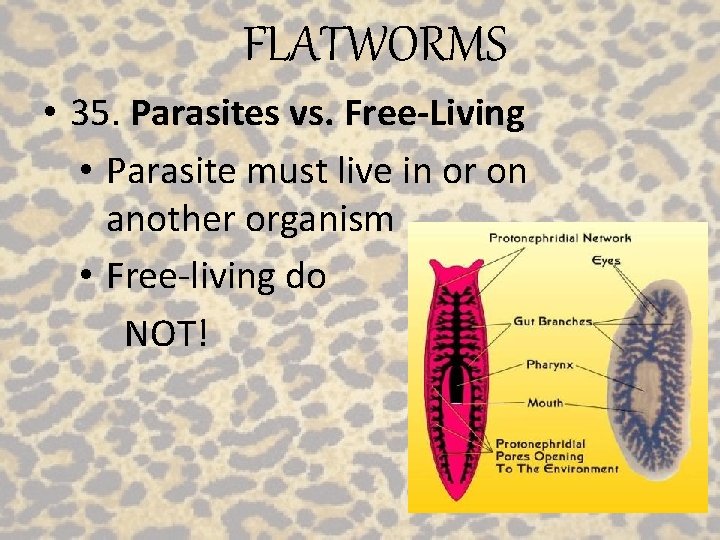
FLATWORMS • 35. Parasites vs. Free-Living • Parasite must live in or on another organism • Free-living do NOT!
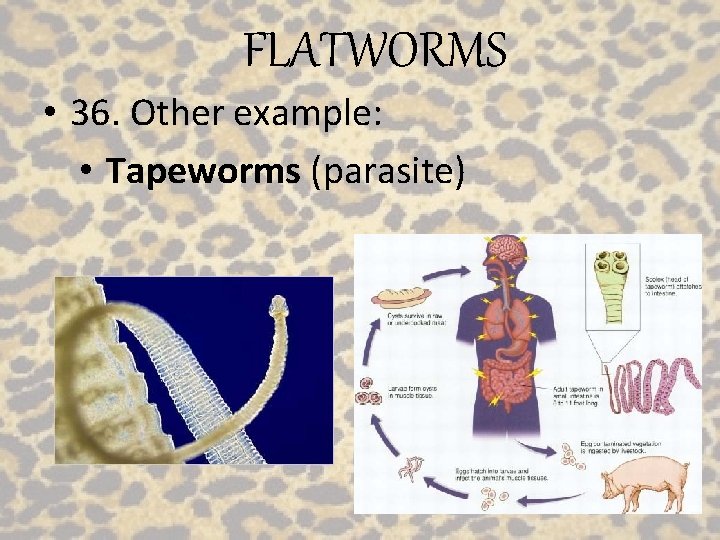
FLATWORMS • 36. Other example: • Tapeworms (parasite)
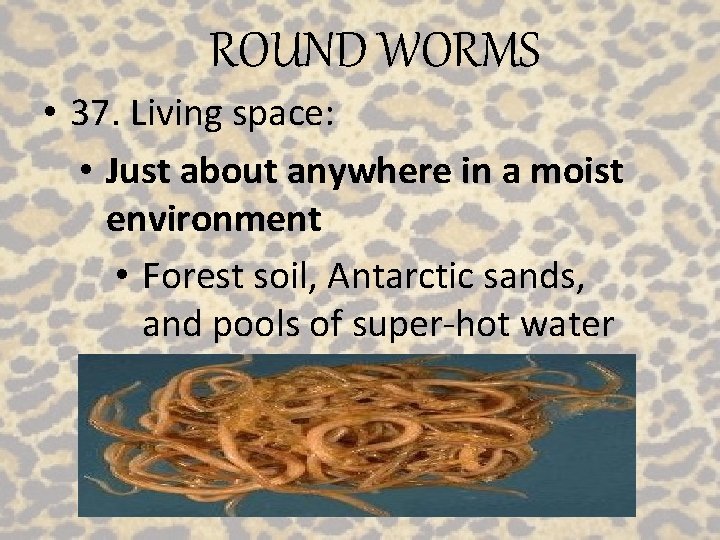
ROUND WORMS • 37. Living space: • Just about anywhere in a moist environment • Forest soil, Antarctic sands, and pools of super-hot water
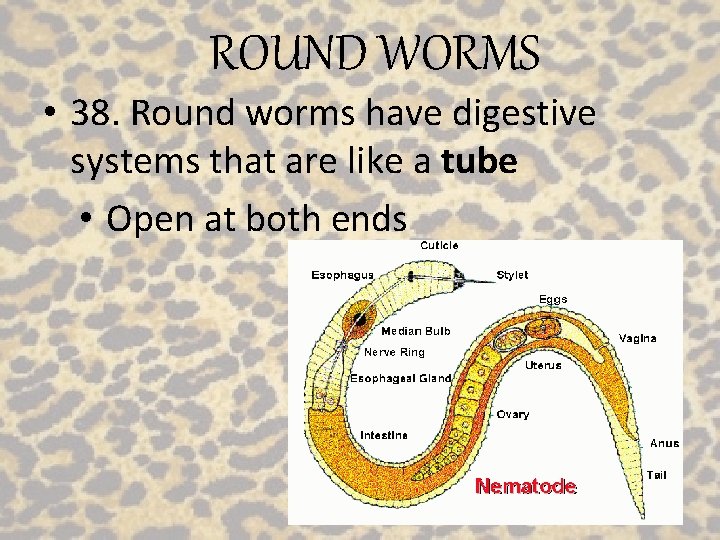
ROUND WORMS • 38. Round worms have digestive systems that are like a tube • Open at both ends
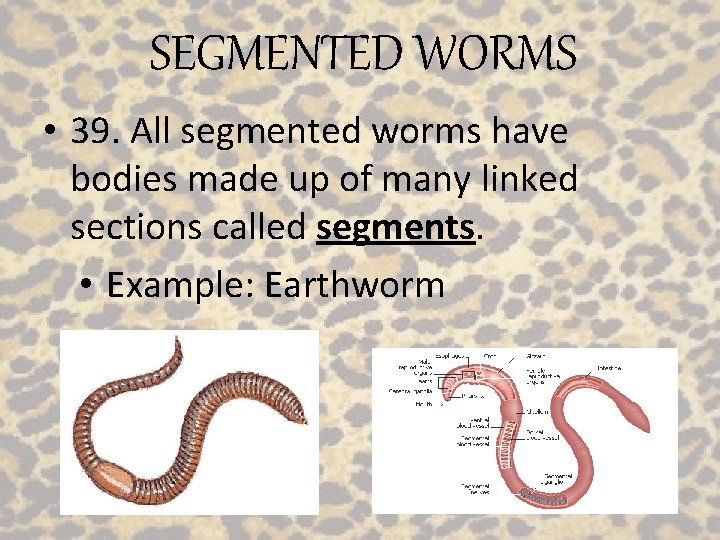
SEGMENTED WORMS • 39. All segmented worms have bodies made up of many linked sections called segments. • Example: Earthworm
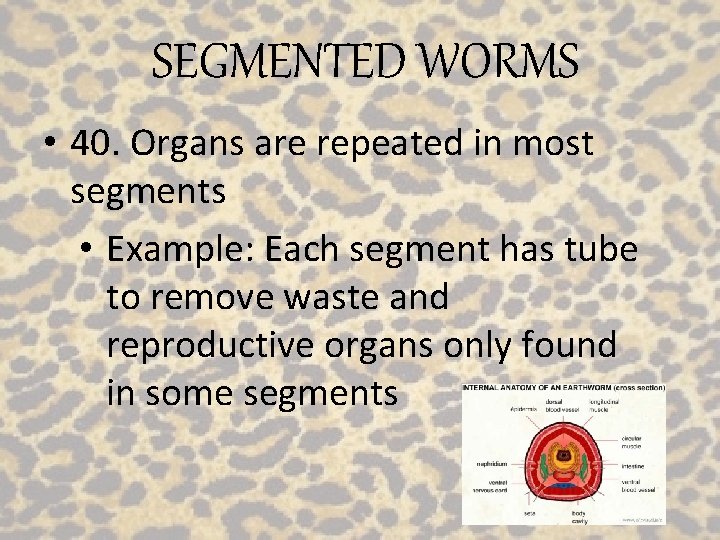
SEGMENTED WORMS • 40. Organs are repeated in most segments • Example: Each segment has tube to remove waste and reproductive organs only found in some segments
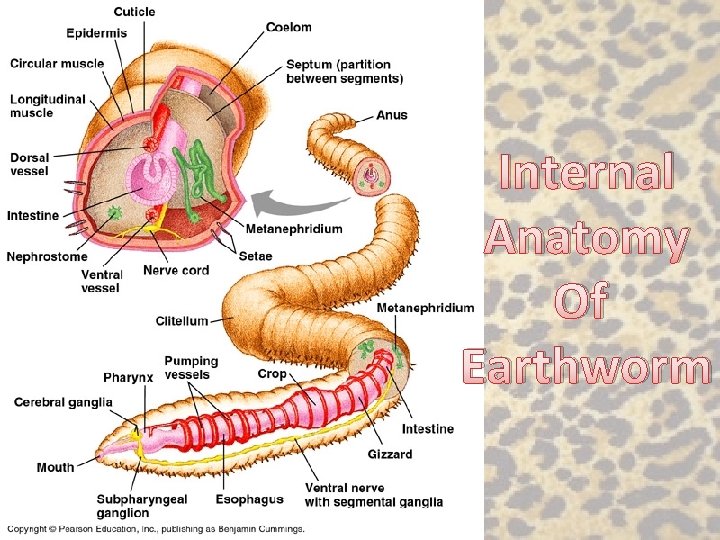
Internal Anatomy Of Earthworm
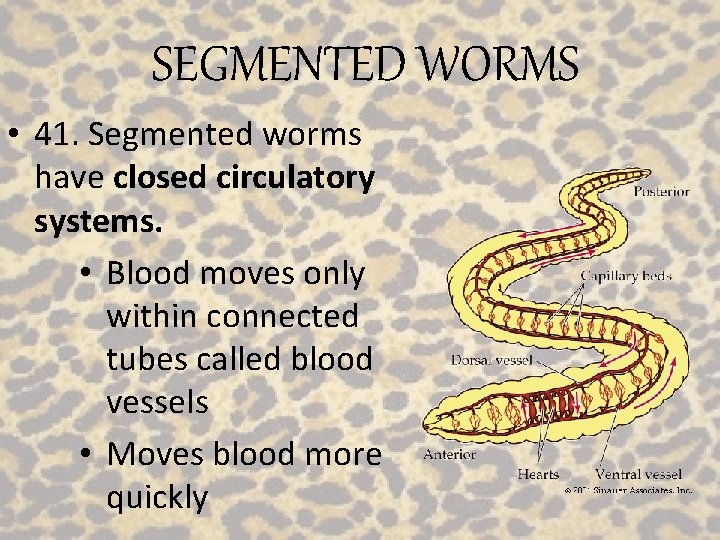
SEGMENTED WORMS • 41. Segmented worms have closed circulatory systems. • Blood moves only within connected tubes called blood vessels • Moves blood more quickly
SEGMENTED WORMS • 42. Earthworms must stay moist because it’s how they breathe! • Obtain oxygen through moisture on their skin
- Slides: 43