
Kingdom Animalia Classification Domain Eukaryota Kingdom Animalia Cell
- Slides: 22
Kingdom Animalia
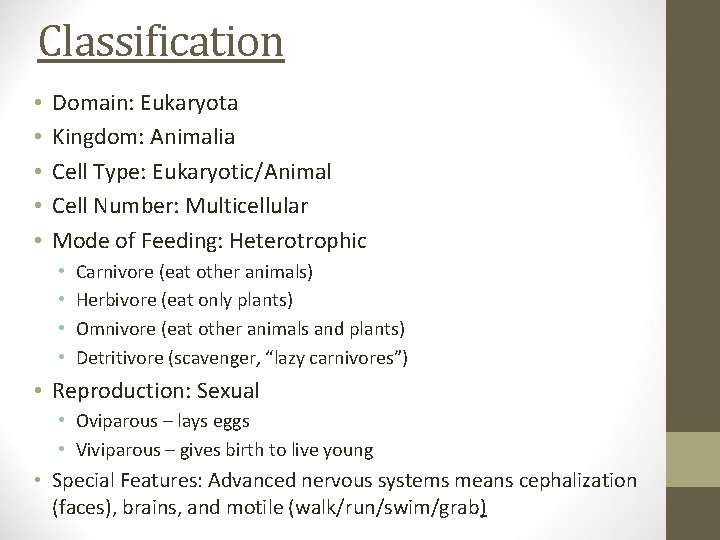
Classification • • • Domain: Eukaryota Kingdom: Animalia Cell Type: Eukaryotic/Animal Cell Number: Multicellular Mode of Feeding: Heterotrophic • • Carnivore (eat other animals) Herbivore (eat only plants) Omnivore (eat other animals and plants) Detritivore (scavenger, “lazy carnivores”) • Reproduction: Sexual • Oviparous – lays eggs • Viviparous – gives birth to live young • Special Features: Advanced nervous systems means cephalization (faces), brains, and motile (walk/run/swim/grab)
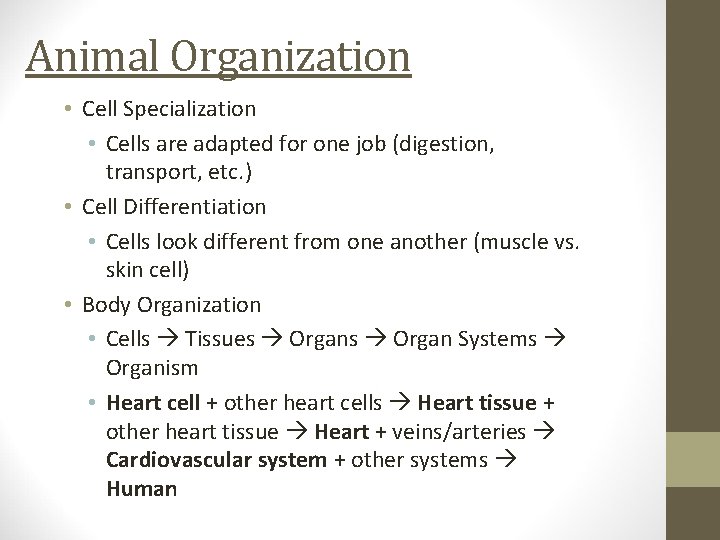
Animal Organization • Cell Specialization • Cells are adapted for one job (digestion, transport, etc. ) • Cell Differentiation • Cells look different from one another (muscle vs. skin cell) • Body Organization • Cells Tissues Organ Systems Organism • Heart cell + other heart cells Heart tissue + other heart tissue Heart + veins/arteries Cardiovascular system + other systems Human
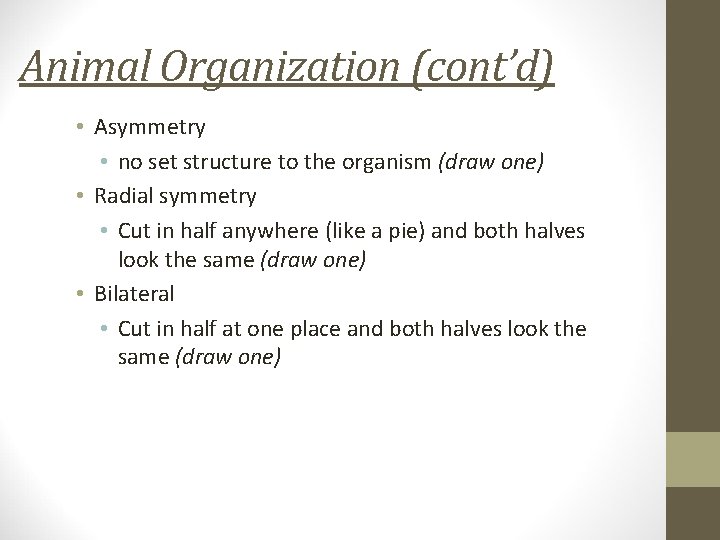
Animal Organization (cont’d) • Asymmetry • no set structure to the organism (draw one) • Radial symmetry • Cut in half anywhere (like a pie) and both halves look the same (draw one) • Bilateral • Cut in half at one place and both halves look the same (draw one)
Animal Classification • Vertebrates • Animals with a notochord (backbone) • Only one phylum- Chordata • Invertebrates • Animals with no notochord (backbone) • Lots of phyla - Most animals are invertebrates
Animal Reproduction • Sexual with sperm (male) and eggs (female). Sperm + Egg = Zygote Embryo Fetus • The more advanced the animals, the more complicated sexual reproduction • Some animals exhibit metamorphosis in their life cycles • Complete metamorphosis – juvenile hatches as a larvae (ex: tadpole or caterpillar) and then develops into an adult that looks very different (ex: frog or butterfly) • Incomplete metamorphosis – juvenile hatches as a nymph, which is just a smaller version of the adult
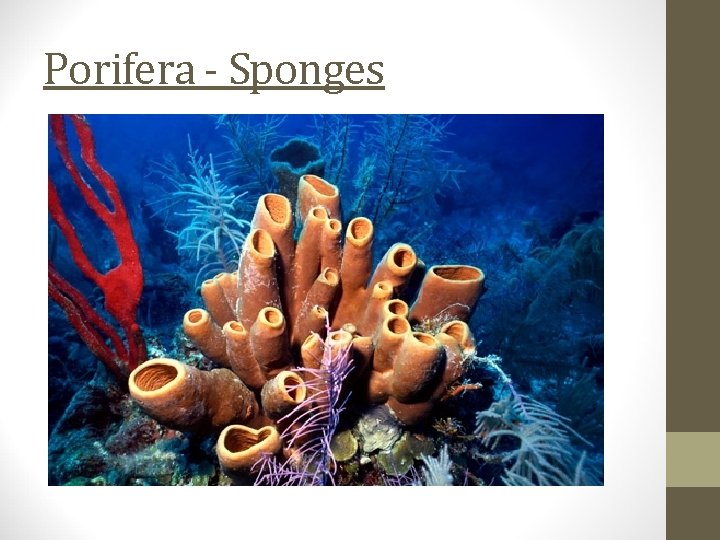
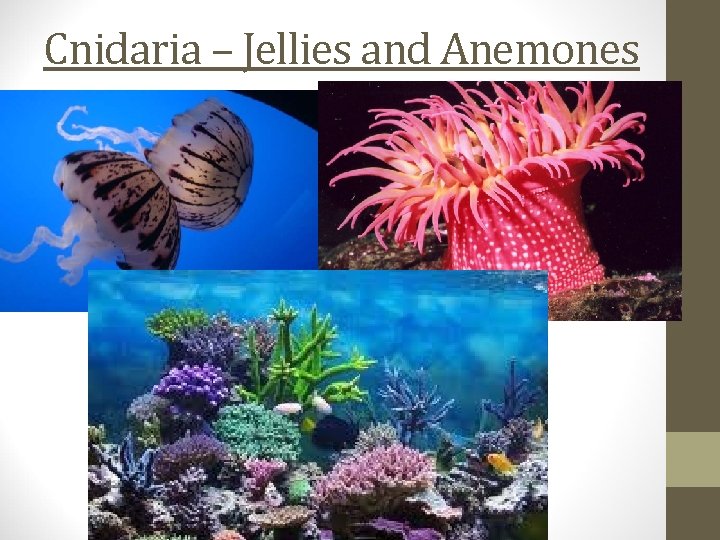
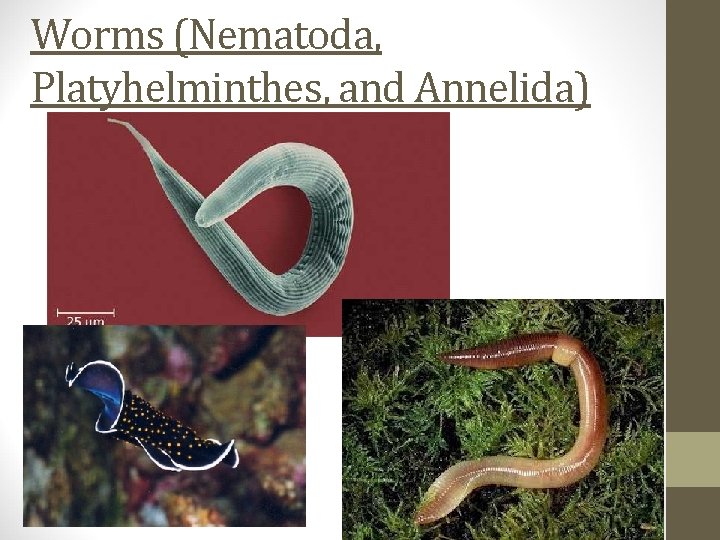
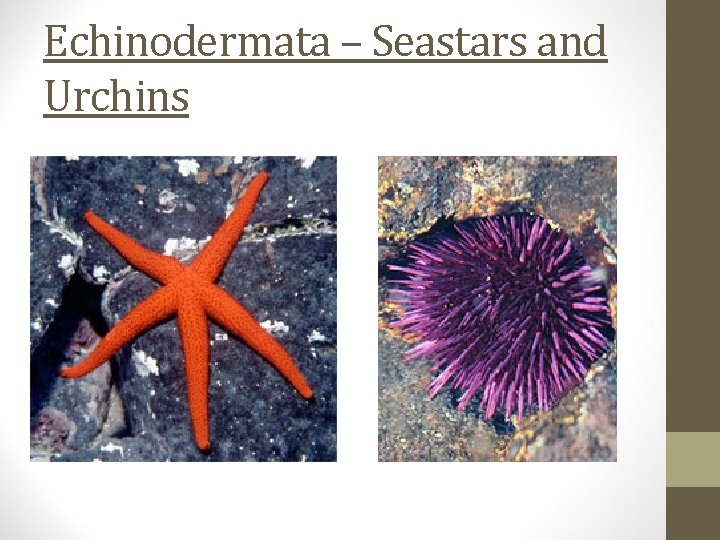
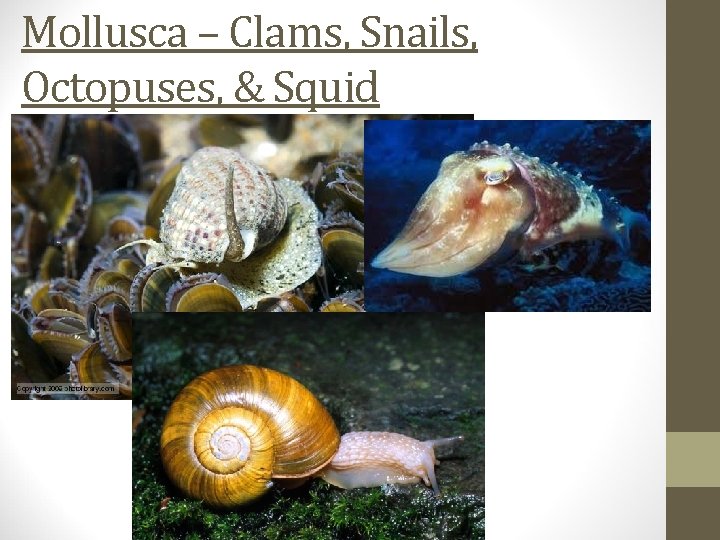
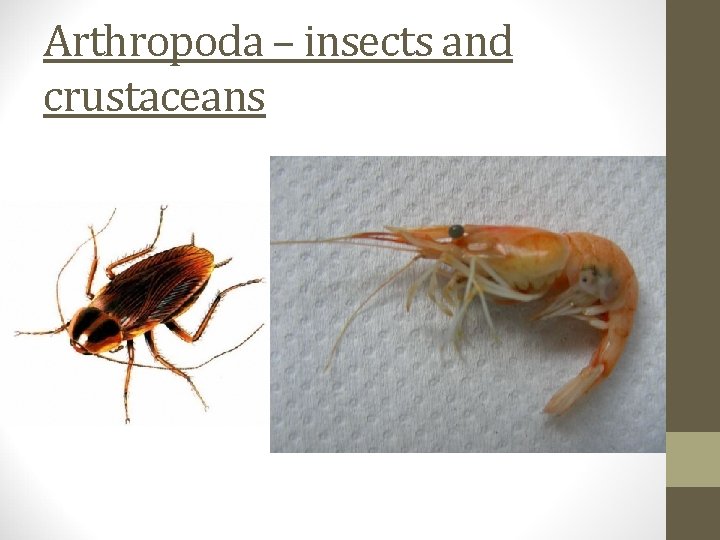
Animal Evolution – first to last • Invertebrates • Simplest Animals – Porifera (Sponges) • Asymmetrical; aquatic; filter feeders; sessile (do not move as adults); hermaphroditic (both male and female) • Nerves Evolve – Cnidaria (Jellyfish and Anemones) • Radial symmetry; aquatic; some sessile, some motile; specialized tissues for feeding and movement • Organ systems evolve – Nematoda, Annelida, Platyhelminthes (all Worms) • Bilateral symmetry; aquatic or terrestrial (land); motile; digestive and simple nervous systems • Cephalization (faces), Skeletons, and nervous systems evolve - Echinodermata (Starfish and Urchins), Mollusca (Clams, Octopus, Squid), and Arthropoda (Insects, Crabs, and Lobsters) • Bilateral or radial symmetry; aquatic or terrestrial; motile; digestive, circulatory, and sometimes complex nervous systems; insects are most common animals
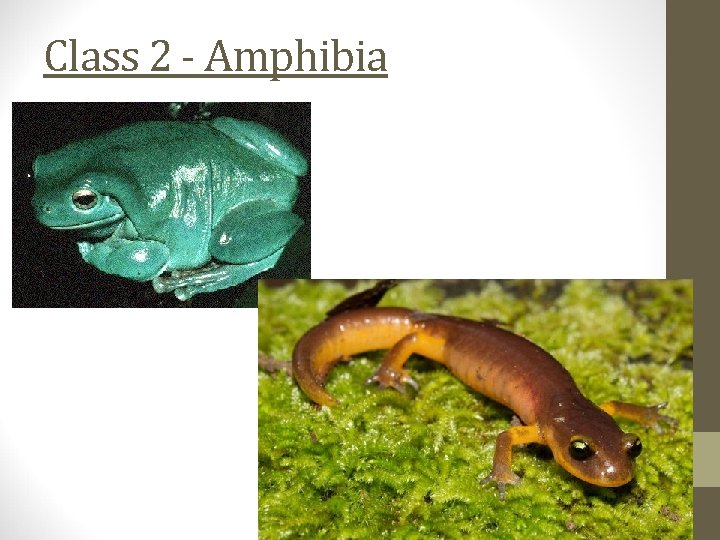
Animal Evolution- first to last (cont’d) • Vertebrates • Backbones and complex brain systems evolve – Chordata (Vertebrates) • Separated into five major classes – Fishes, Amphibia, Reptilia, Aves (birds), and Mammalia • Backbone allows for most complex brains; bilateral symmetry; specialized sensory organs (eyes, ears, antennae, etc); highly organized bodies • Mammals are considered “dominant”; especially humans
Porifera - Sponges
Cnidaria – Jellies and Anemones
Worms (Nematoda, Platyhelminthes, and Annelida)
Echinodermata – Seastars and Urchins
Mollusca – Clams, Snails, Octopuses, & Squid
Arthropoda – insects and crustaceans
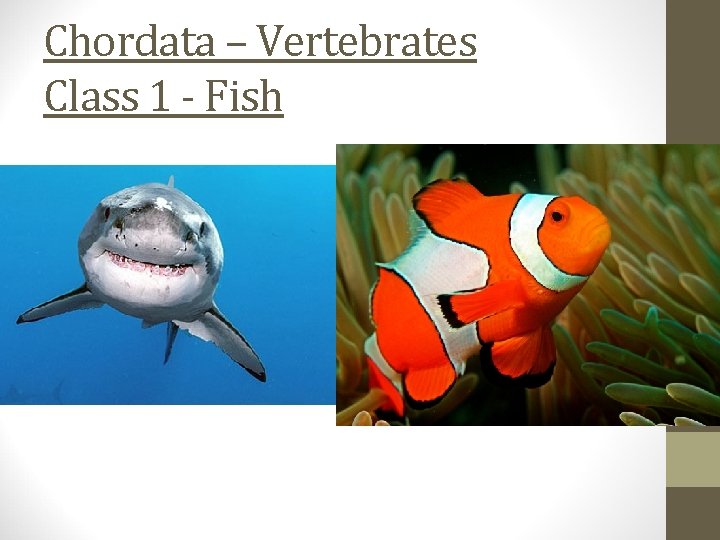
Chordata – Vertebrates Class 1 - Fish
Class 2 - Amphibia
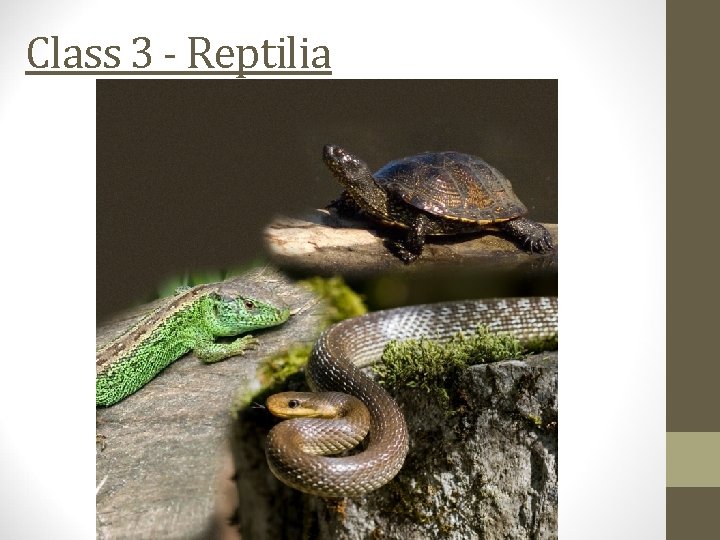
Class 3 - Reptilia
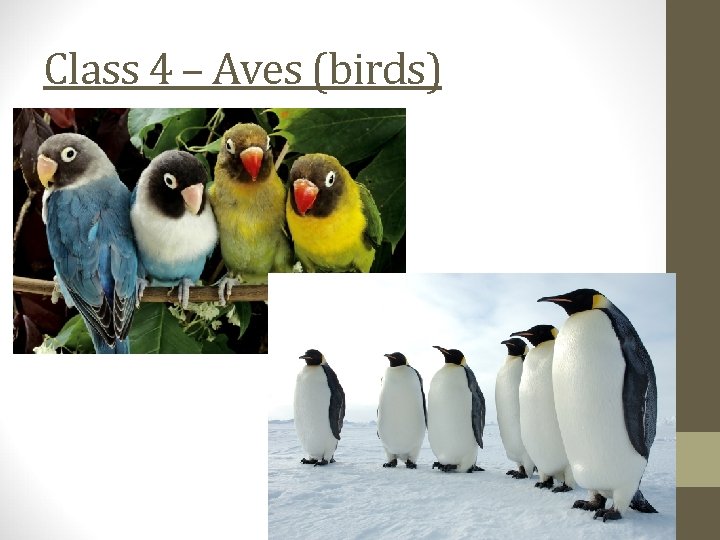
Class 4 – Aves (birds)
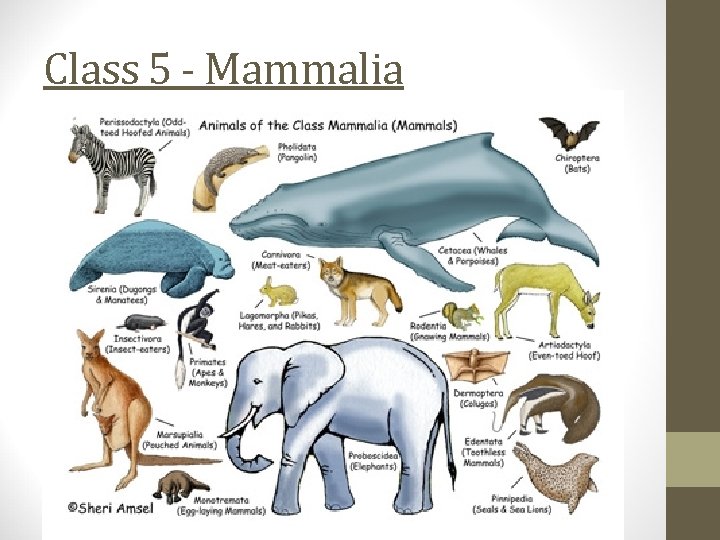
Class 5 - Mammalia
Special Animal Characteristics • Animal Homeostasis • Ectotherm – Cold blooded (internal temperature changes with environment; lay in sun when cold, seek shade when hot) • Endotherm – Warm blooded (special adaptations to keep internal temp the same despite the environment; shiver when cold, sweat or pant when hot) • Cnidarian • Body Plan • Polyp- attached (draw) • Medusa- Free floating (draw) • Special Cell • Nematocyst – stinging cell
Special Animal Characteristics (cont’d) • Chordata – Fishes • Bony or cartilaginous (sharks) • Chordata – Mammals • Live birth and mammary glands • Marsupials – mammals with pouches • Monotremes – rare mammals that lay eggs • Animal Behavior • Nocturnal – active at night; have adaptations (like large eyes) to live in the dark • Diurnal – active during the day