
Kinetics Factors affecting Rate of Reaction By Adriana
Kinetics Factors affecting Rate of Reaction By Adriana Hartmann
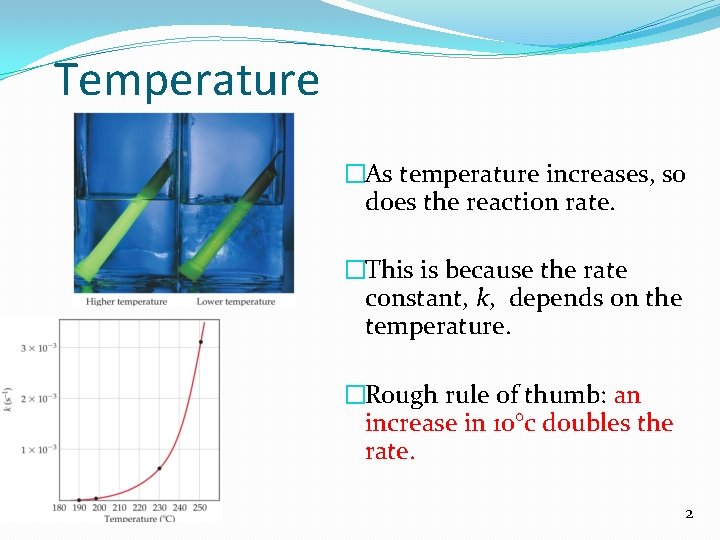
Temperature �As temperature increases, so does the reaction rate. �This is because the rate constant, k, depends on the temperature. �Rough rule of thumb: an increase in 10°c doubles the rate. 2
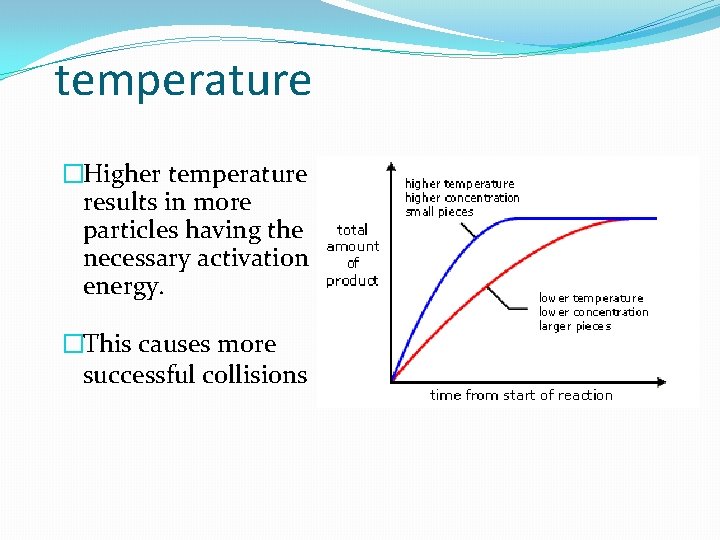
temperature �Higher temperature results in more particles having the necessary activation energy. �This causes more successful collisions
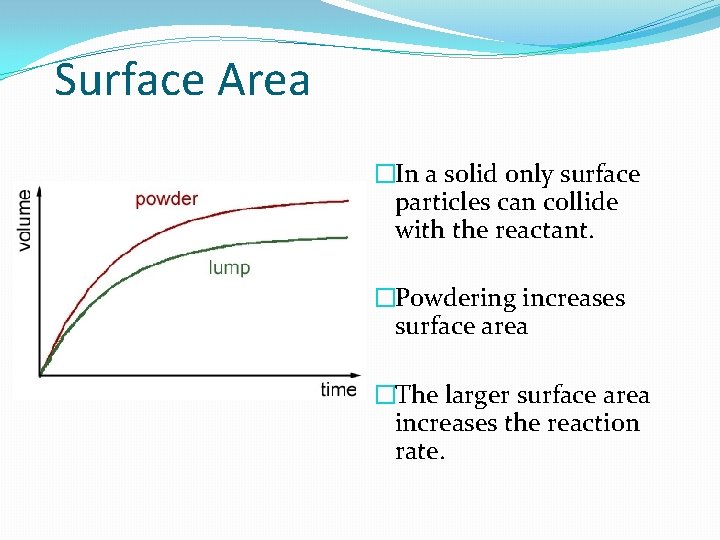
Surface Area �In a solid only surface particles can collide with the reactant. �Powdering increases surface area �The larger surface area increases the reaction rate.

Concentration �More concentration increases collisions per second per unit volume. � As reactants get used up the concentration decreases. �Most reactions slow down as time proceeds
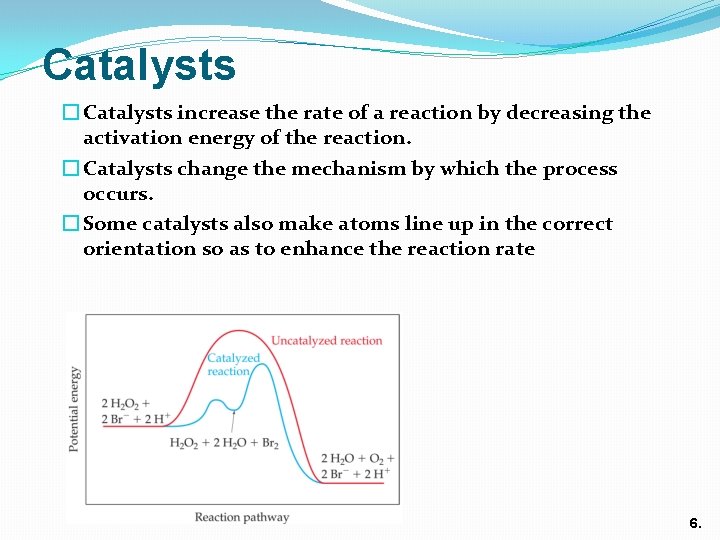
Catalysts � Catalysts increase the rate of a reaction by decreasing the activation energy of the reaction. � Catalysts change the mechanism by which the process occurs. � Some catalysts also make atoms line up in the correct orientation so as to enhance the reaction rate 6.
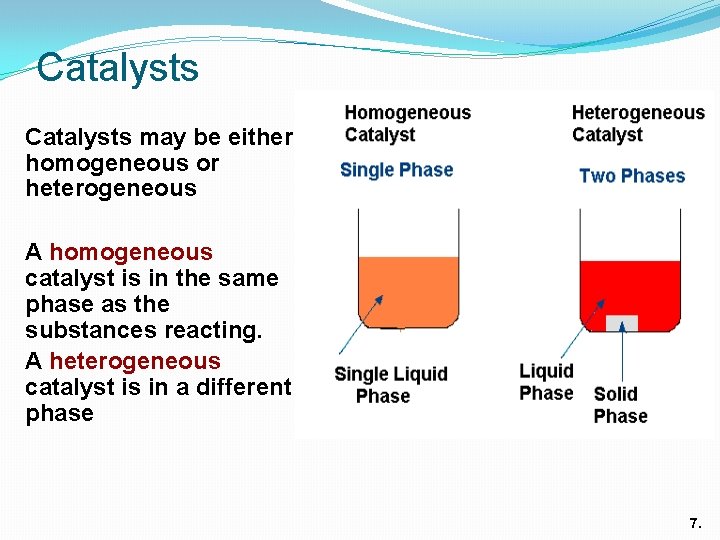
Catalysts may be either homogeneous or heterogeneous A homogeneous catalyst is in the same phase as the substances reacting. A heterogeneous catalyst is in a different phase 7.
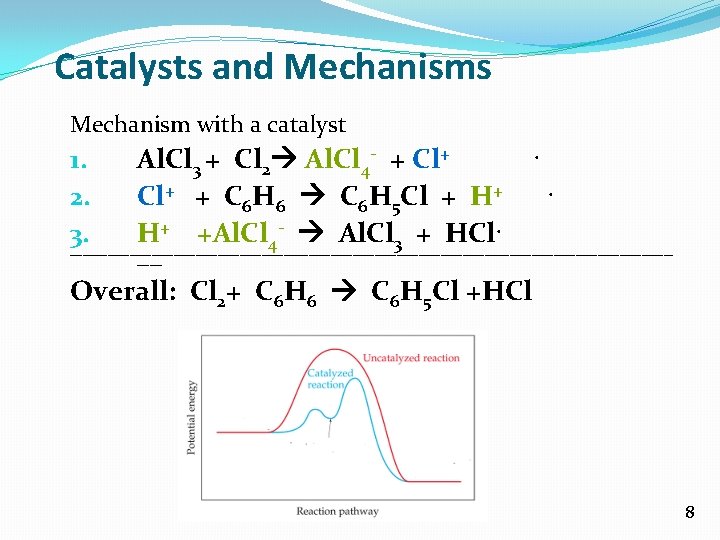
Catalysts and Mechanisms Mechanism with a catalyst 1. 2. 3. Al. Cl 3 + Cl 2 Al. Cl 4 - + Cl+ + C 6 H 6 C 6 H 5 Cl + H+ H+ +Al. Cl 4 - Al. Cl 3 + HCl. . . ---------------------------------------------------------------------------------------------------- Overall: Cl 2+ C 6 H 6 C 6 H 5 Cl +HCl 8
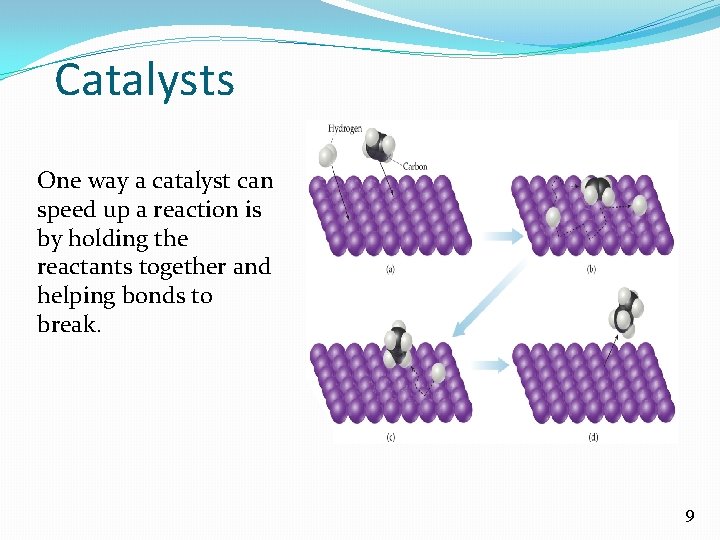
Catalysts One way a catalyst can speed up a reaction is by holding the reactants together and helping bonds to break. 9
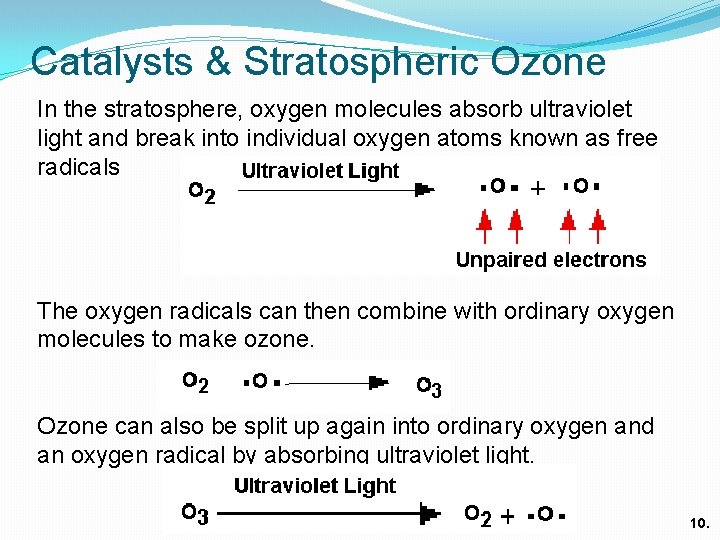
Catalysts & Stratospheric Ozone In the stratosphere, oxygen molecules absorb ultraviolet light and break into individual oxygen atoms known as free radicals The oxygen radicals can then combine with ordinary oxygen molecules to make ozone. Ozone can also be split up again into ordinary oxygen and an oxygen radical by absorbing ultraviolet light. 10.
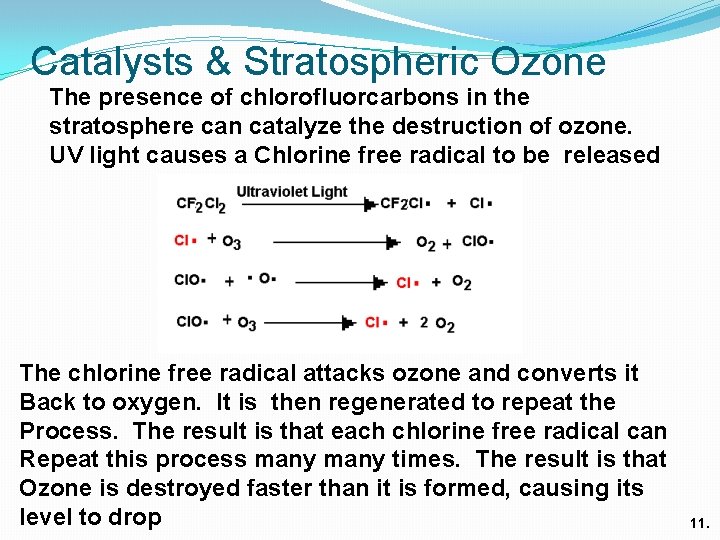
Catalysts & Stratospheric Ozone The presence of chlorofluorcarbons in the stratosphere can catalyze the destruction of ozone. UV light causes a Chlorine free radical to be released The chlorine free radical attacks ozone and converts it Back to oxygen. It is then regenerated to repeat the Process. The result is that each chlorine free radical can Repeat this process many times. The result is that Ozone is destroyed faster than it is formed, causing its level to drop 11.
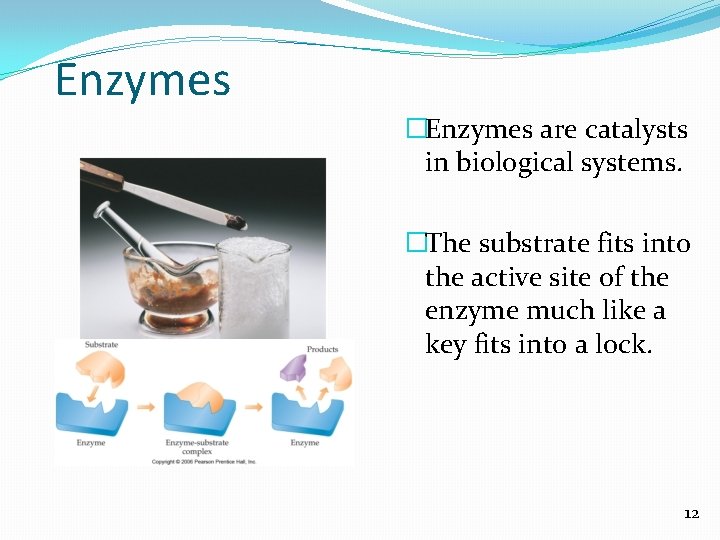
Enzymes �Enzymes are catalysts in biological systems. �The substrate fits into the active site of the enzyme much like a key fits into a lock. 12

End
Bibiliography �http: //en. wikipedia. org/wiki/Chemical_kinetics �http: //www. saskschools. ca/curr_content/chem 30_05/ 2_kinetics/kinetics 2_1. htm �Geoffrey Neuss. Chemistry course companion. Bell and Bain Ltd. Glascow, 2007.
- Slides: 14