
Kinetic Theory Part 1 By Dr Rozina Chaudhary
Kinetic Theory (Part 1) By Dr. Rozina Chaudhary Lahore College For Women University, Lahore.
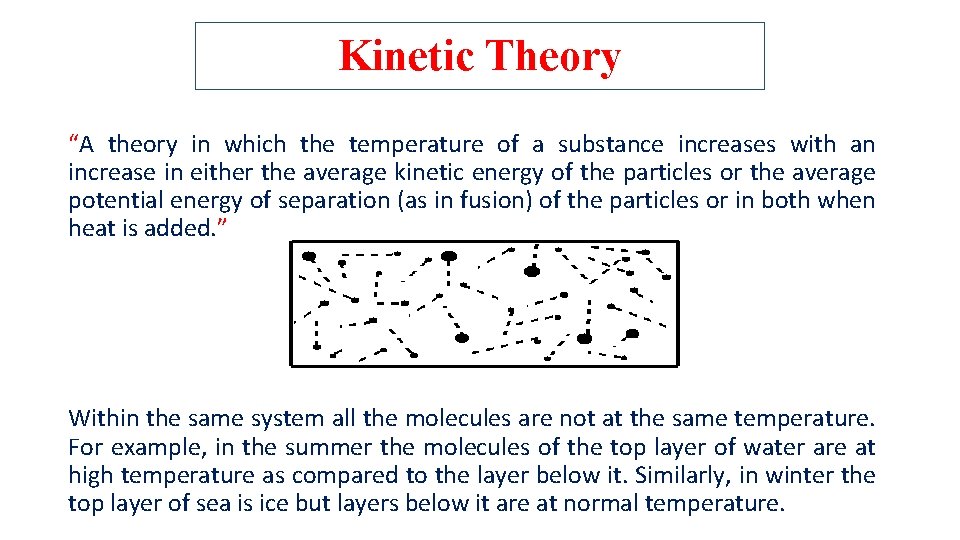
Kinetic Theory “A theory in which the temperature of a substance increases with an increase in either the average kinetic energy of the particles or the average potential energy of separation (as in fusion) of the particles or in both when heat is added. ” Within the same system all the molecules are not at the same temperature. For example, in the summer the molecules of the top layer of water are at high temperature as compared to the layer below it. Similarly, in winter the top layer of sea is ice but layers below it are at normal temperature.
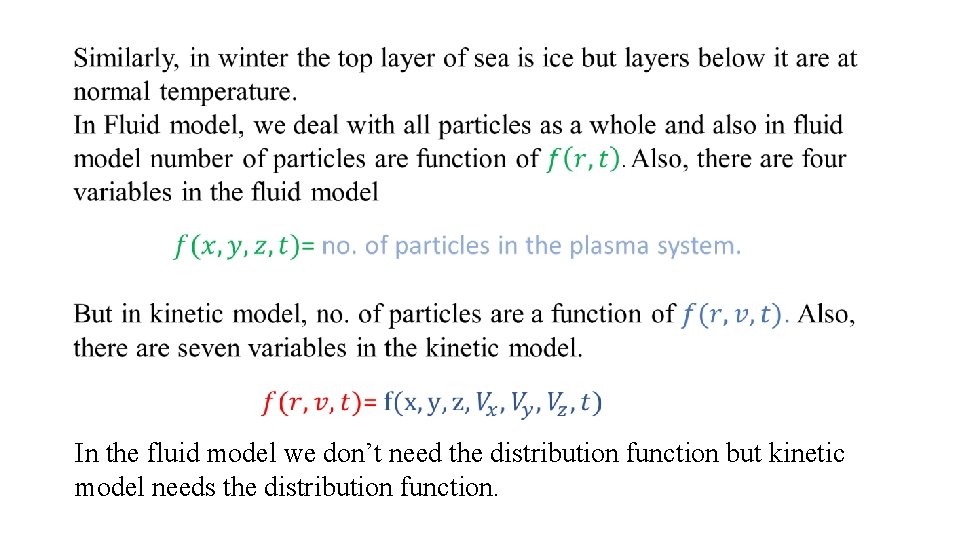
In the fluid model we don’t need the distribution function but kinetic model needs the distribution function.
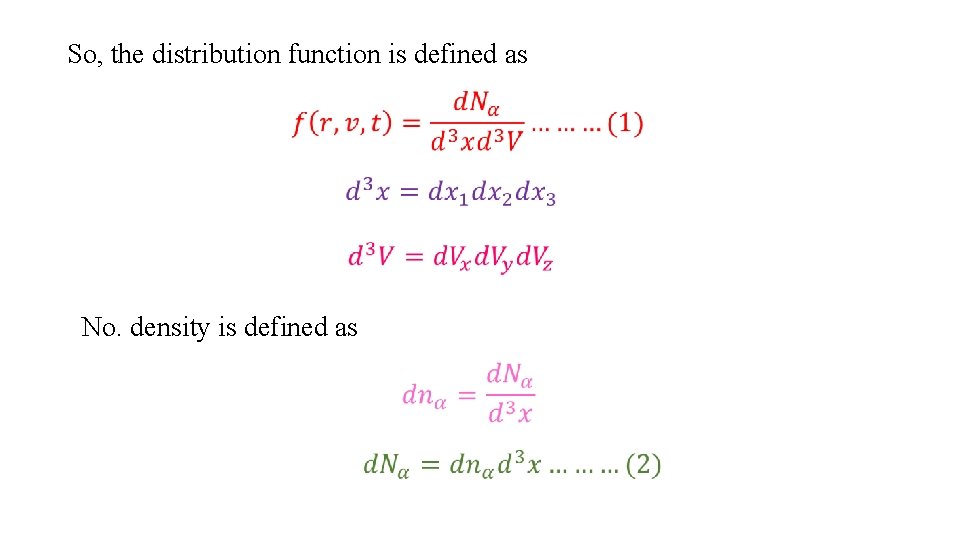
So, the distribution function is defined as No. density is defined as
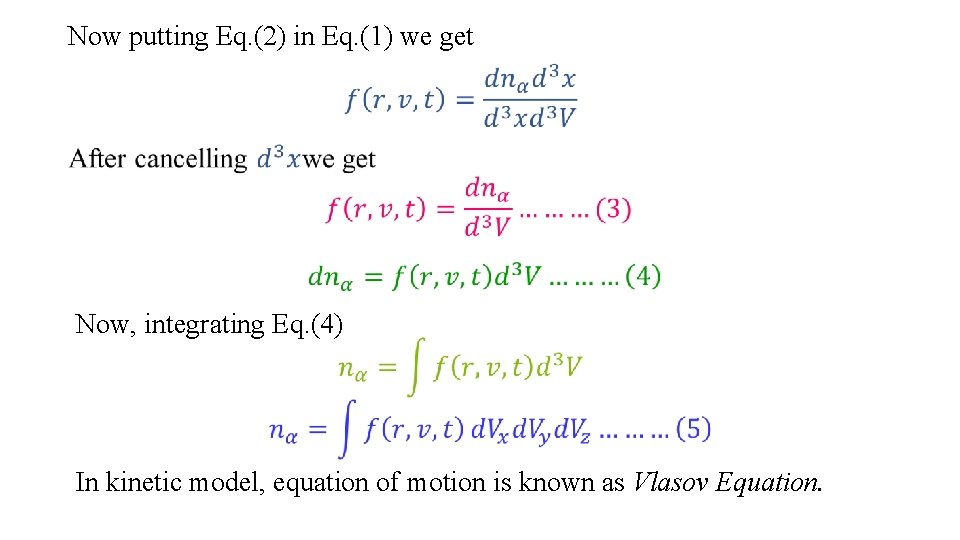
Now putting Eq. (2) in Eq. (1) we get Now, integrating Eq. (4) In kinetic model, equation of motion is known as Vlasov Equation.
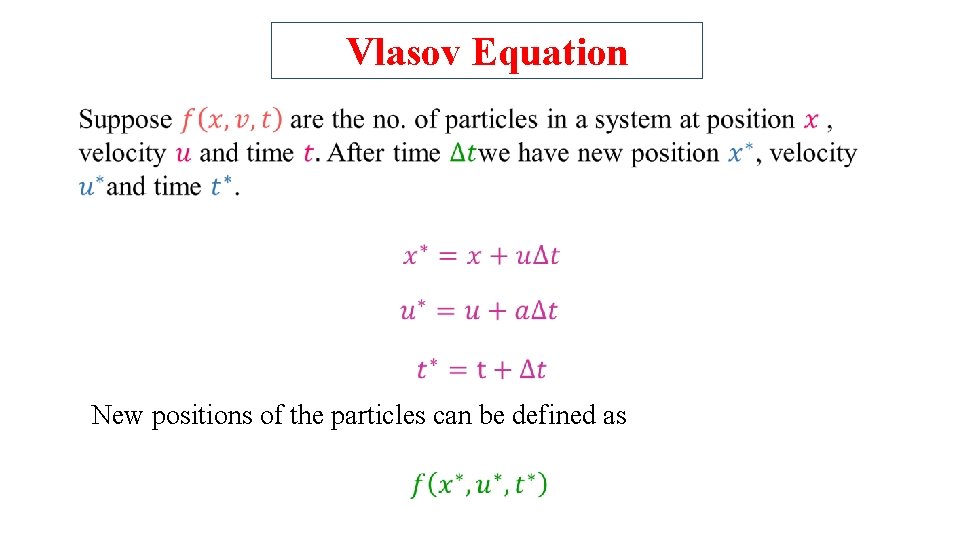
Vlasov Equation New positions of the particles can be defined as
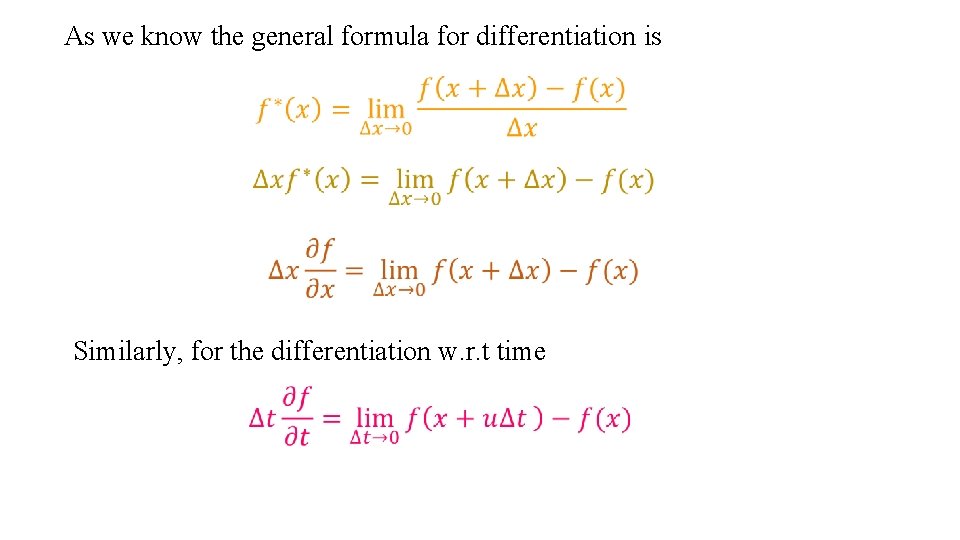
As we know the general formula for differentiation is Similarly, for the differentiation w. r. t time
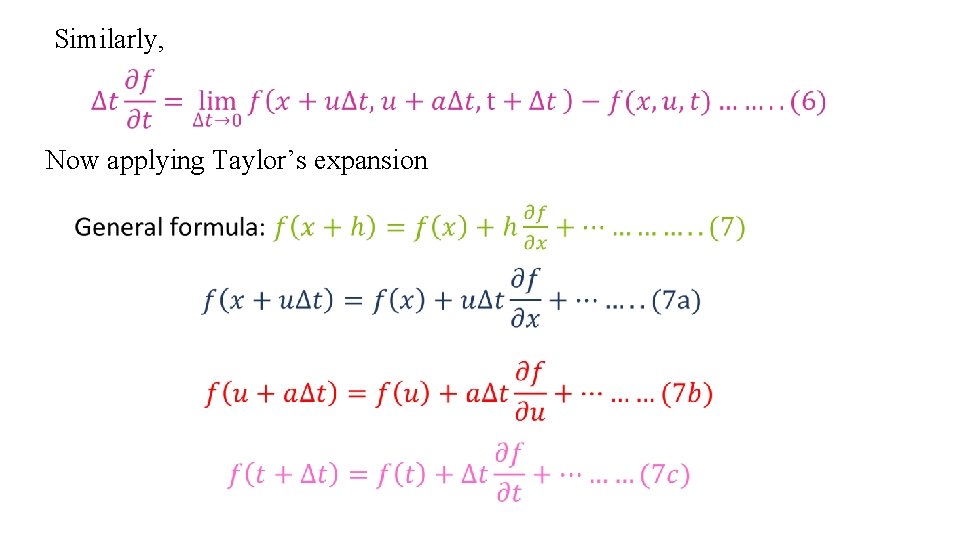
Similarly, Now applying Taylor’s expansion
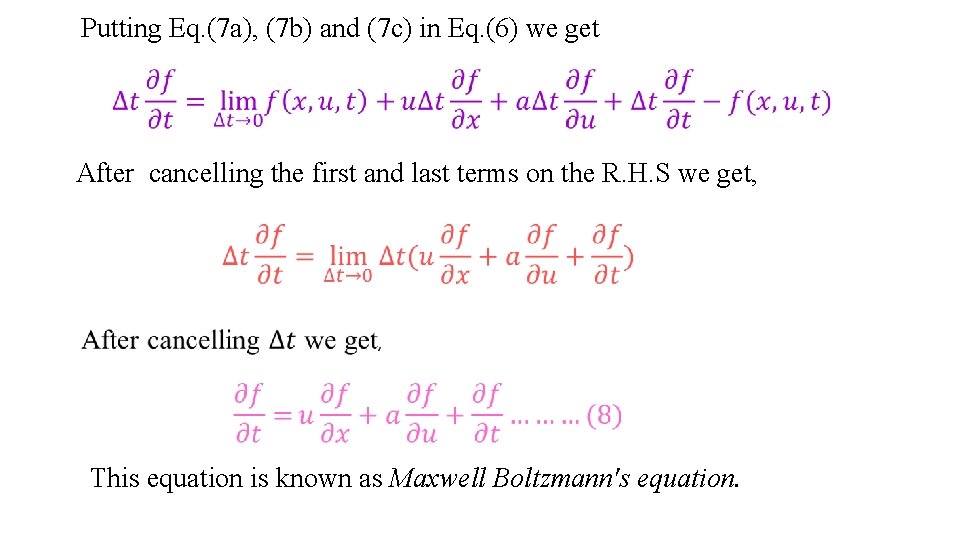
Putting Eq. (7 a), (7 b) and (7 c) in Eq. (6) we get After cancelling the first and last terms on the R. H. S we get, This equation is known as Maxwell Boltzmann's equation.
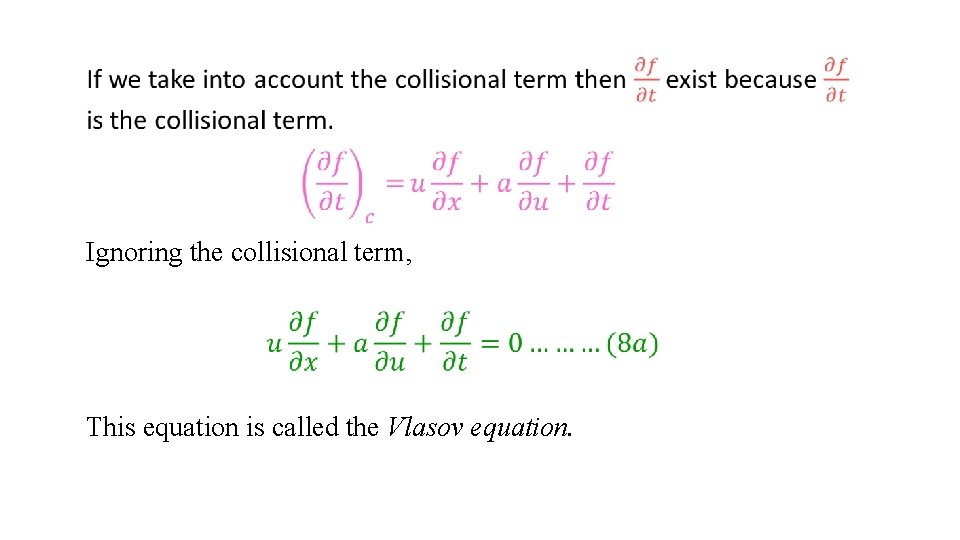
Ignoring the collisional term, This equation is called the Vlasov equation.
- Slides: 10