
Kinetic Molecular Theory KMT Matter Energy 1 Kinetic
- Slides: 20
Kinetic Molecular Theory (KMT) Matter & Energy 1
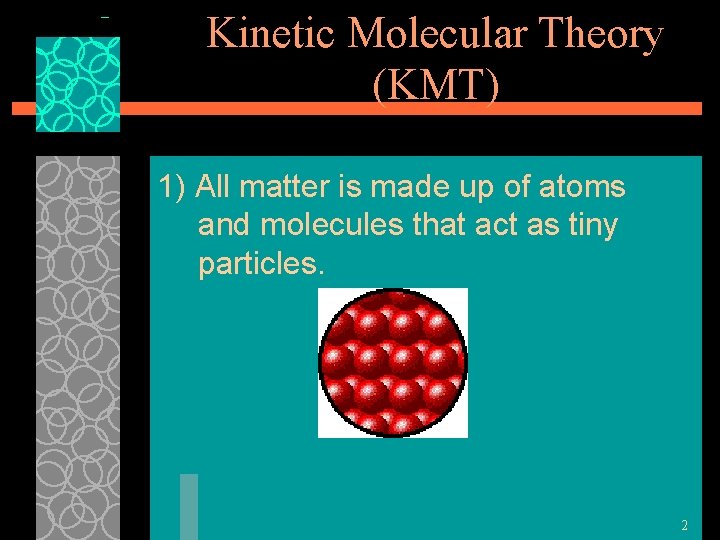
Kinetic Molecular Theory (KMT) 1) All matter is made up of atoms and molecules that act as tiny particles. 2
Kinetic Molecular Theory (KMT) 2) These tiny particles are always in motion. – State of matter depends on its molecular motion as measured by temperature – ↑ temperature = ↑ motion of particles – ↓ temperature = ↓ motion of 3
Kinetic Molecular Theory (KMT) 3) At the same temperature, the heavier particles move slower than the lighter particles. 4
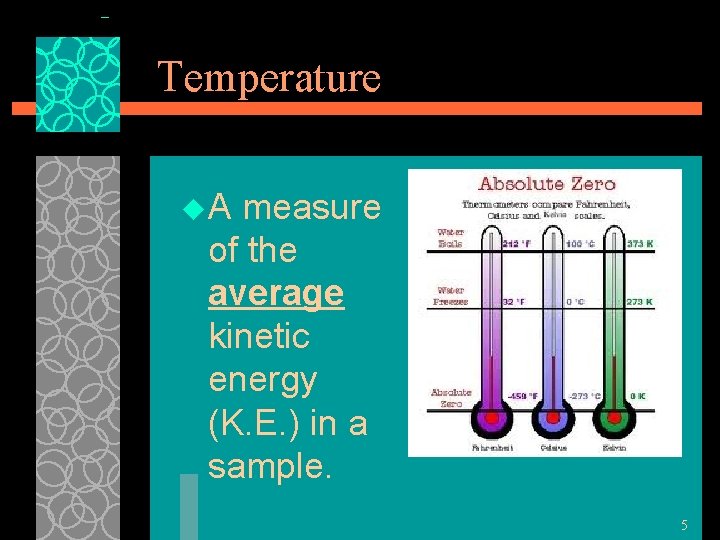
Temperature u. A measure of the average kinetic energy (K. E. ) in a sample. 5
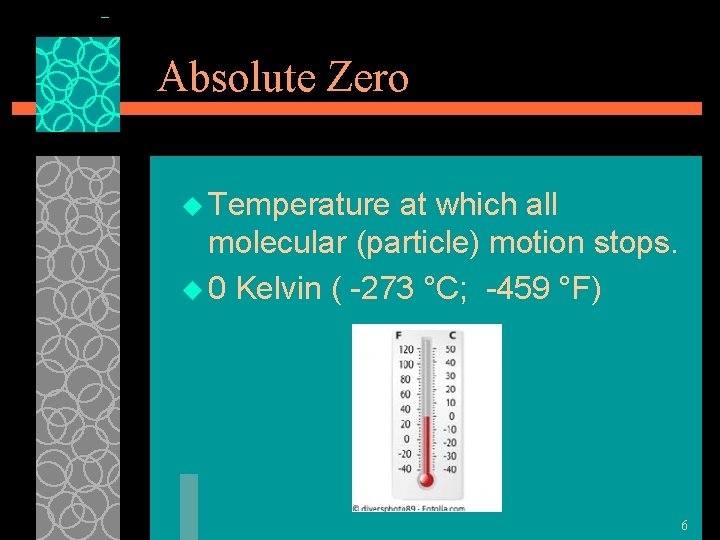
Absolute Zero u Temperature at which all molecular (particle) motion stops. u 0 Kelvin ( -273 °C; -459 °F) 6
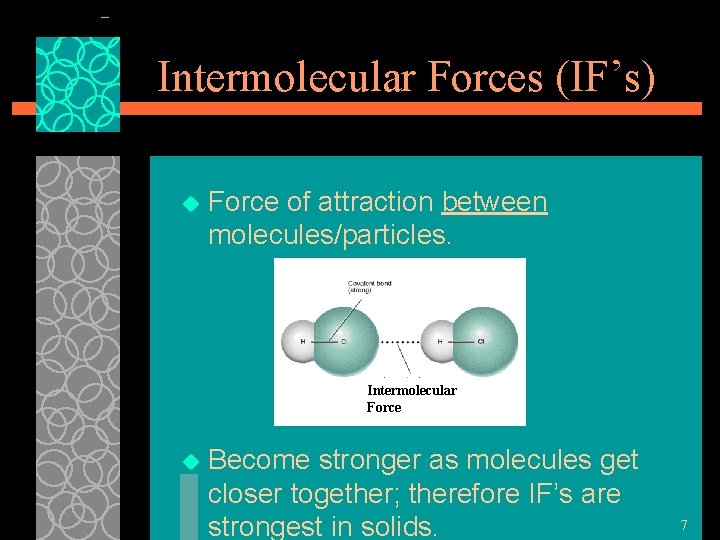
Intermolecular Forces (IF’s) u Force of attraction between molecules/particles. Intermolecular Force u Become stronger as molecules get closer together; therefore IF’s are strongest in solids. 7
States of Matter The Four States of Matter u. Solid u. Liquid u. Gas u. Plasma 8
States of Matter The Four States of Matter Basis of Classification of the Four Types ØBased upon particle arrangement ØBased upon energy of particles 9
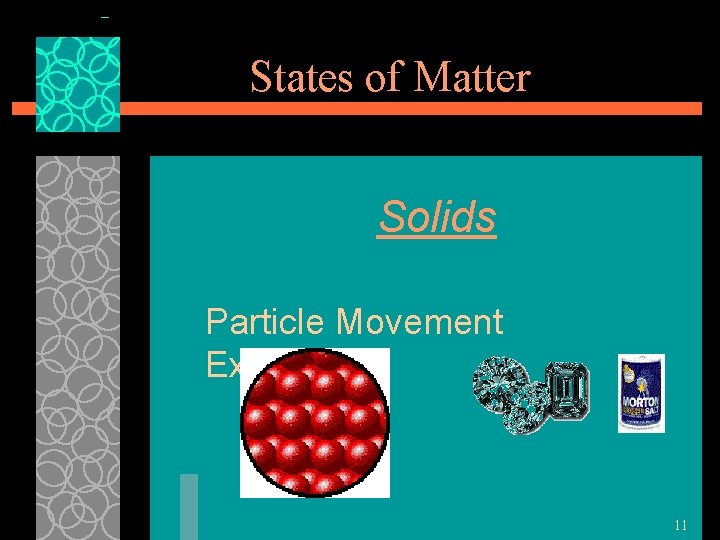
States of Matter Solids §Particles are held by intermolecular forces (bonds between molecules) §Particles of solids are tightly packed, vibrating about a fixed position. In other words, they do not move out of position. §Solids have a definite shape and a definite volume. 10
States of Matter Solids Particle Movement Examples 11
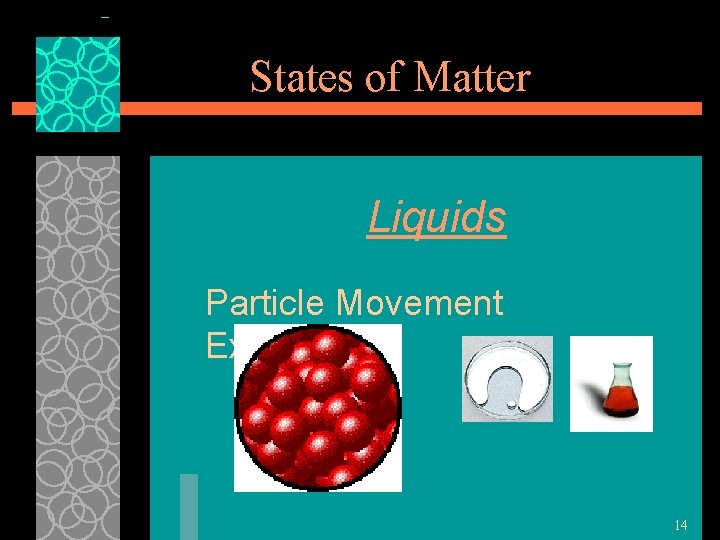
States of Matter Liquids §Particles of liquids are tightly packed, but are far enough apart to slide over one another. (intermolecular forces have weakened) §Liquids have an indefinite shape and a definite volume. §So, liquids take the shape of whatever container they are in but 12 they cannot be squeezed into a
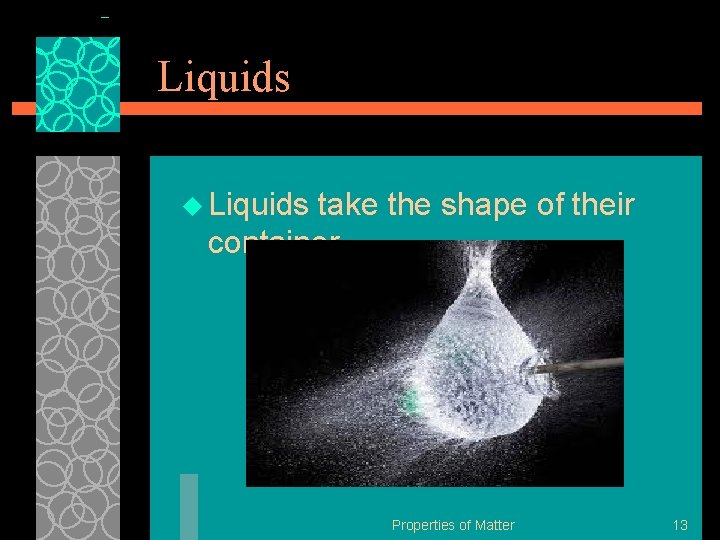
Liquids u Liquids take the shape of their container Properties of Matter 13
States of Matter Liquids Particle Movement Examples 14
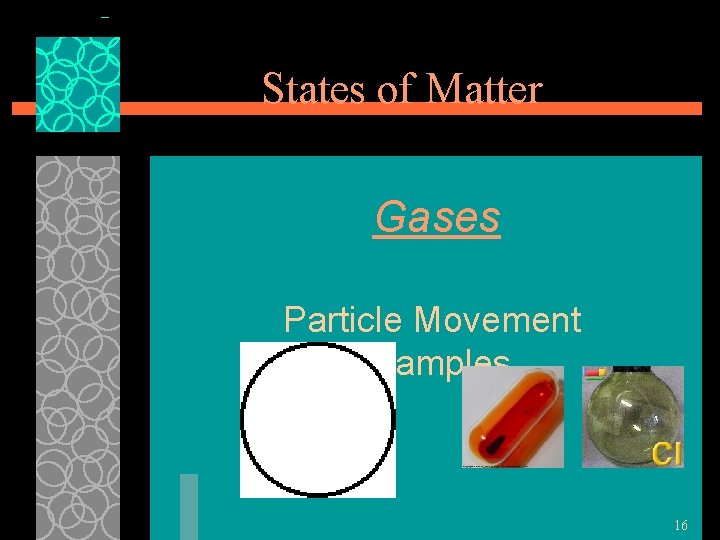
States of Matter Gases §Particles of gases are very far apart and move freely. (intermolecular forces have been completely broken) §Gases have an indefinite shape and an indefinite volume. §b/c particles are not close together, they can be squeezed into 15 a smaller space
States of Matter Gases Particle Movement Examples 16
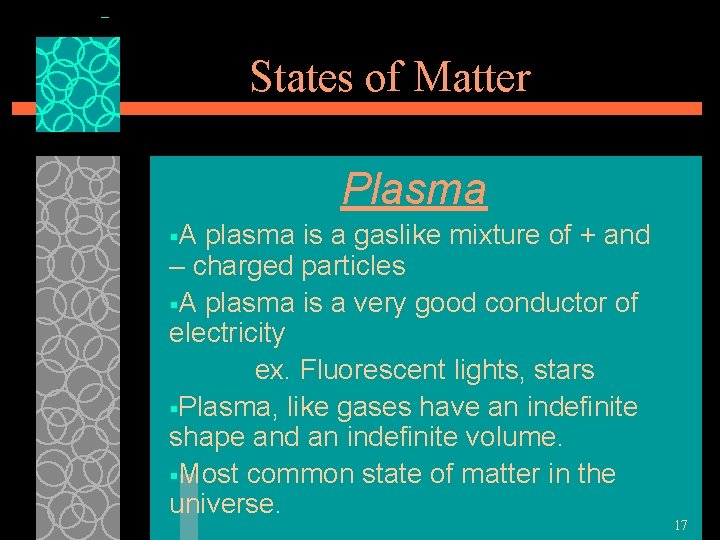
States of Matter Plasma §A plasma is a gaslike mixture of + and – charged particles §A plasma is a very good conductor of electricity ex. Fluorescent lights, stars §Plasma, like gases have an indefinite shape and an indefinite volume. §Most common state of matter in the universe. 17
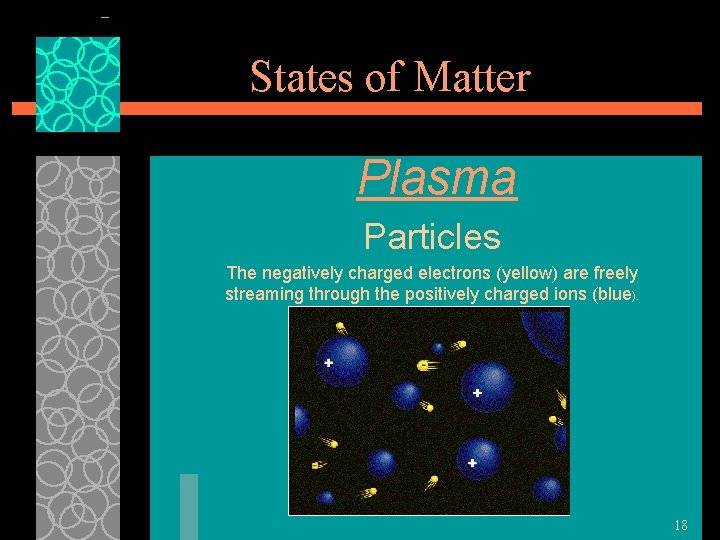
States of Matter Plasma Particles The negatively charged electrons (yellow) are freely streaming through the positively charged ions (blue). 18
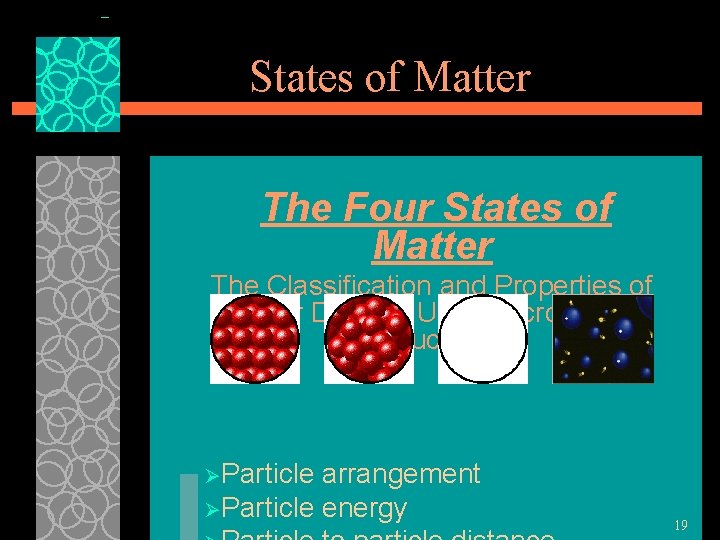
States of Matter The Four States of Matter The Classification and Properties of Matter Depend Upon Microscopic Structure ØParticle arrangement ØParticle energy 19
Phase Changes u Melting/Freezing u Boiling(vaporization)/Condensin g u Sublimation u Evaporation 20