
Kinetic Letters Making Handwriting Easy for Everyone Parent
- Slides: 22
Kinetic Letters Making Handwriting Easy for Everyone Parent Workshop November 2019
Early Years Developmental Matters ● Handles tools, objects, construction and malleable materials safely and with increasing control. 40 -60 months ● • Shows a preference for a dominant hand. • Begins to use anticlockwise movement and retrace vertical lines. 40 -60 months ● Begins to form recognisable letters. • Uses a pencil and holds it effectively to form recognisable letters, most of which are correctly formed. 40 -60 months ● Early Learning Goal Children show good control and coordination in large and small movements. They move confidently in a range of ways, safely negotiating space. They handle equipment and tools effectively, including pencils for writing. End of Reception
The challenge outlined ▶ Learning handwriting is enormously complex as it demands a unique combination of cognitive and physical skills ▶ Many children, especially boys, may not have developed the necessary physical skills and hand-eye coordination to be able to learn to write easily yet ▶ Writing is often physically uncomfortable and frustrating; it can quickly become something they actively dislike and avoid, which then affects academic success, self-esteem and attitudes to school
Key Principles of Kinetic Letters ▶ Building strength underpins handwriting, as poor writing may be the result of poor strength ▶ Children are not expected to do anything before they are developmentally ready for it ▶ The different components of writing are mastered individually before being used in combination. ▶ Letters are learnt as movements not as visual shapes ▶ Handwriting is made easier using a pen and whiteboard. Lying on the floor to write enables the hand to be held in the correct position for writing ▶ Reading and writing are reciprocal processes and so strengthening handwriting skills will support reading and writing development as a whole
The Four Threads of Kinetic Letters Making Bodies Stronger Holding the Pencil Learning the Letters Flow and Fluency
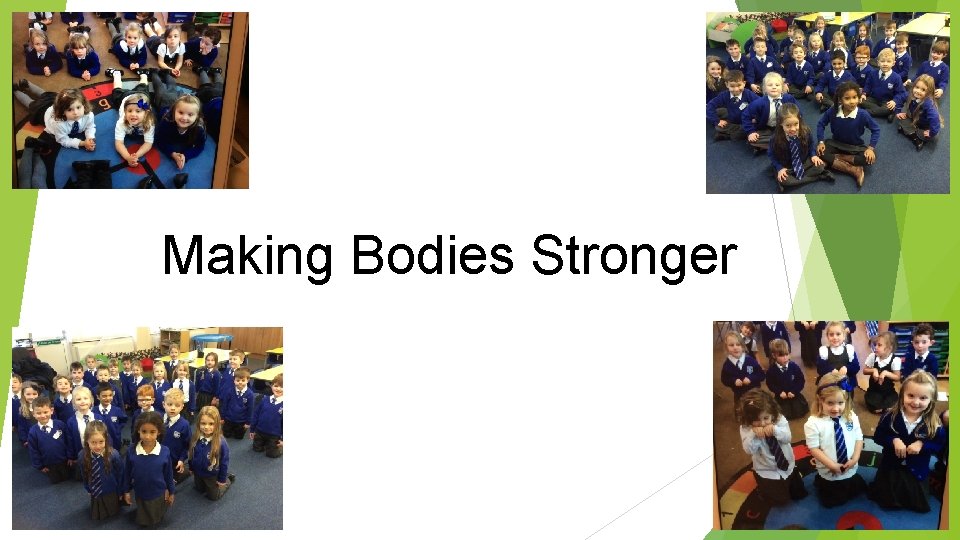
Making Bodies Stronger
Do any of these sound familiar? ▶ “They’re always wriggling around, they just can’t sit still” ▶ “You’d think sitting on a chair without falling off it, couldn’t be that difficult!” ▶ “Children’s concentration seems to be getting worse and worse these days” ▶ “They can’t write for long before they complain that they are tired” ▶ “More and more children come to school not knowing if they are right handed or left handed” ▶ Because. . . children can’t sit still long enough to concentrate on learning, if they have not developed Shoulder and Pelvic Girdle strength and children can’t hold a pencil effectively or comfortably for very long, unless they have developed physical strength
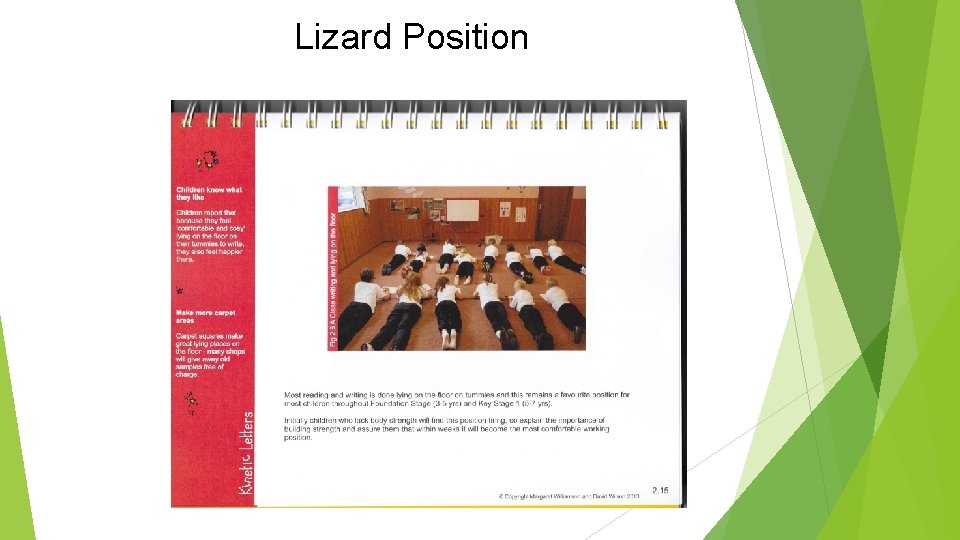
Making Bodies Stronger ▶ Children can’t hold a pencil effectively or comfortably for very long, unless they have developed physical strength Kinetic Letters programme ▶ Essential physical strength is developed by specific activities and working positions ▶ Children work lying on the floor on their tummies – the optimal position for developing body strength. Working whilst lying on the floor, holds the hand arm in the correct positions ▶ The physical strength required to hold a pencil is developed by specific activities and working positions
Lizard Position
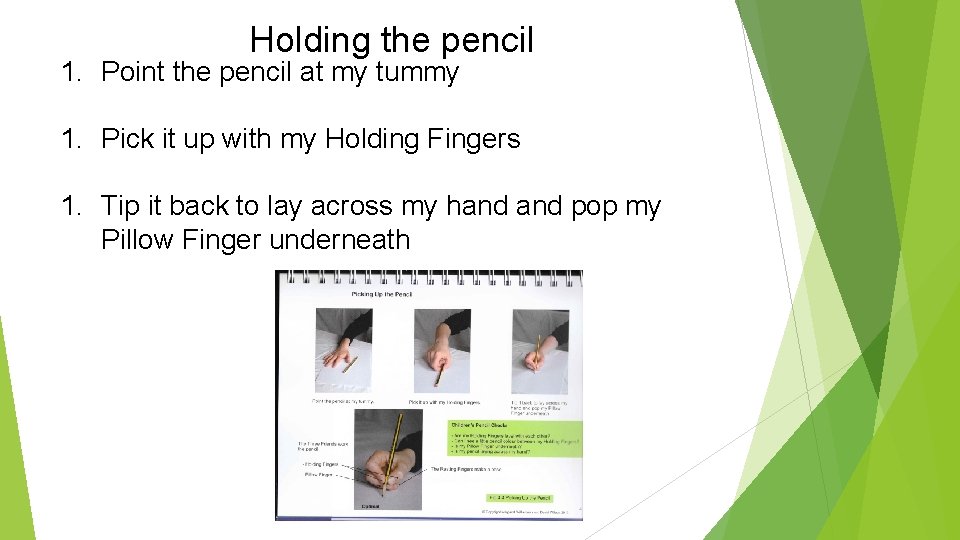
Pencil Hold
Holding the pencil 1. Point the pencil at my tummy 1. Pick it up with my Holding Fingers 1. Tip it back to lay across my hand pop my Pillow Finger underneath
Learning the Letters
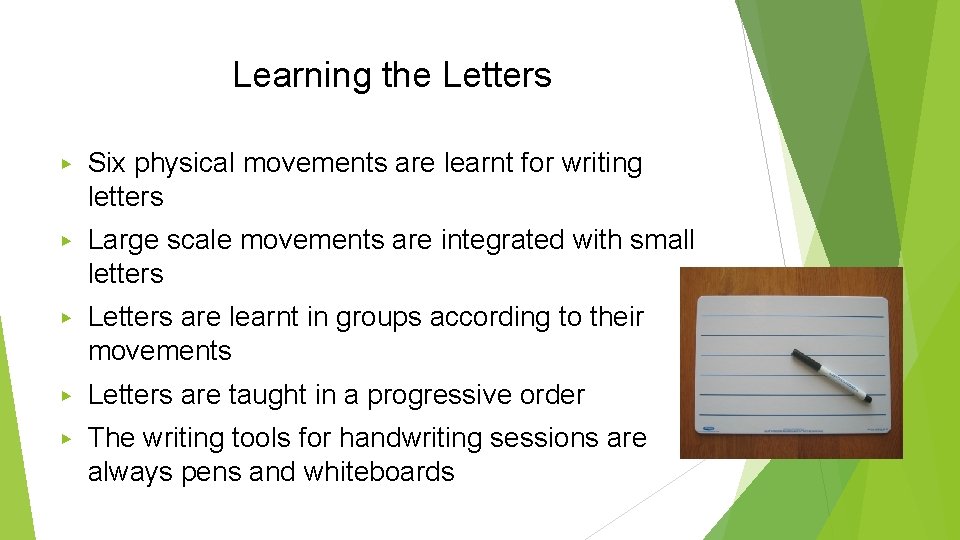
Learning the Letters ▶ Six physical movements are learnt for writing letters ▶ Large scale movements are integrated with small letters ▶ Letters are learnt in groups according to their movements ▶ Letters are taught in a progressive order ▶ The writing tools for handwriting sessions are always pens and whiteboards
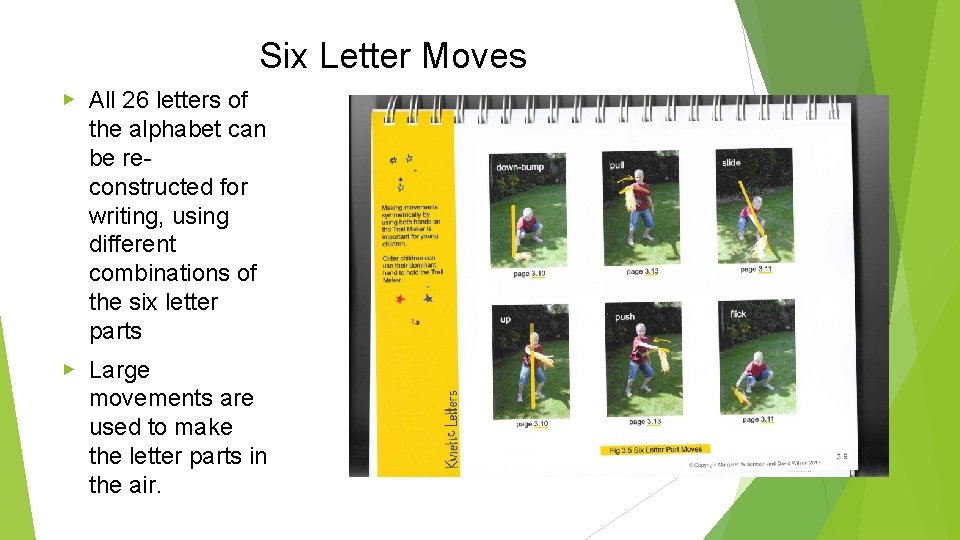
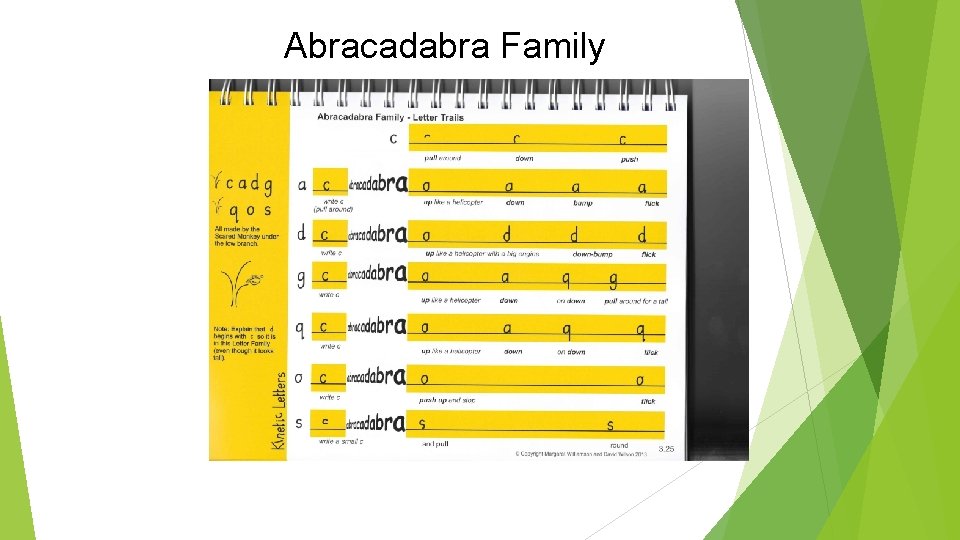
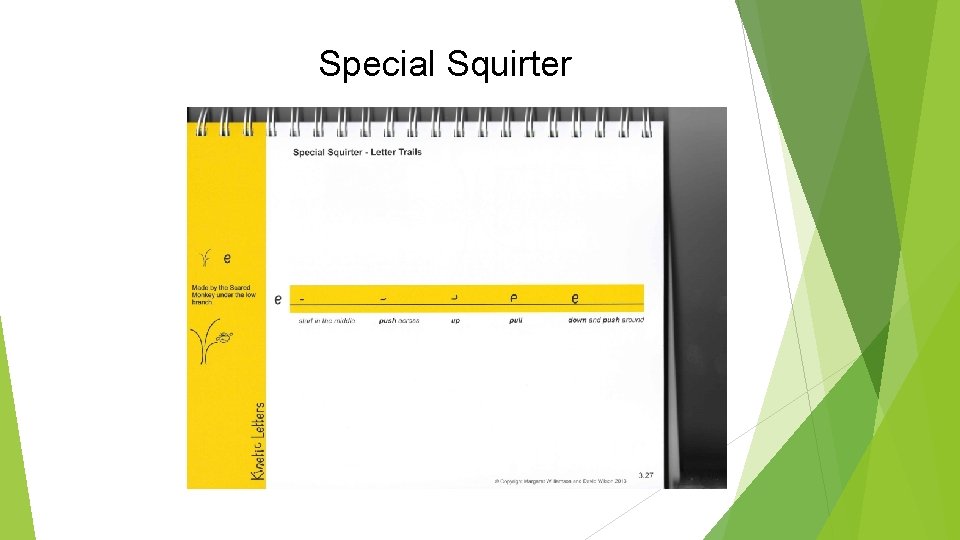
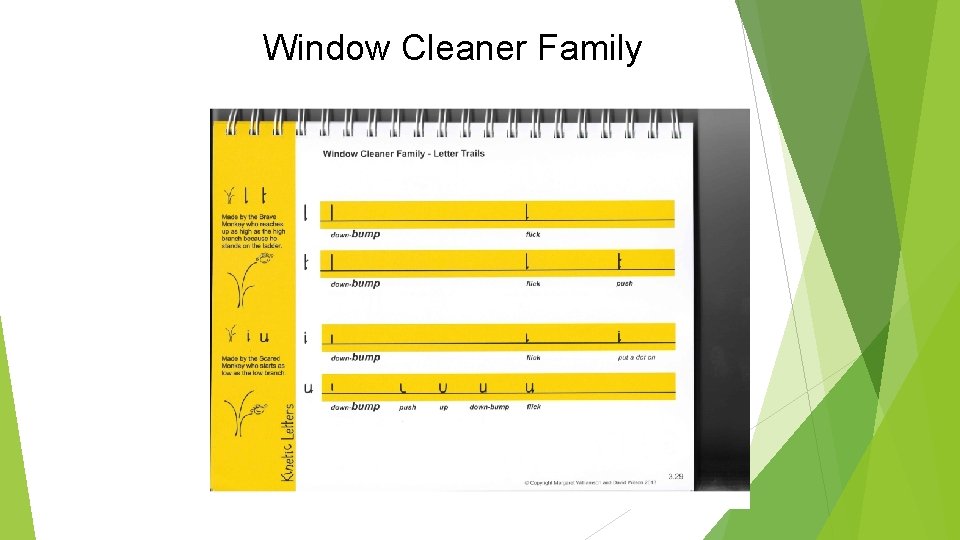
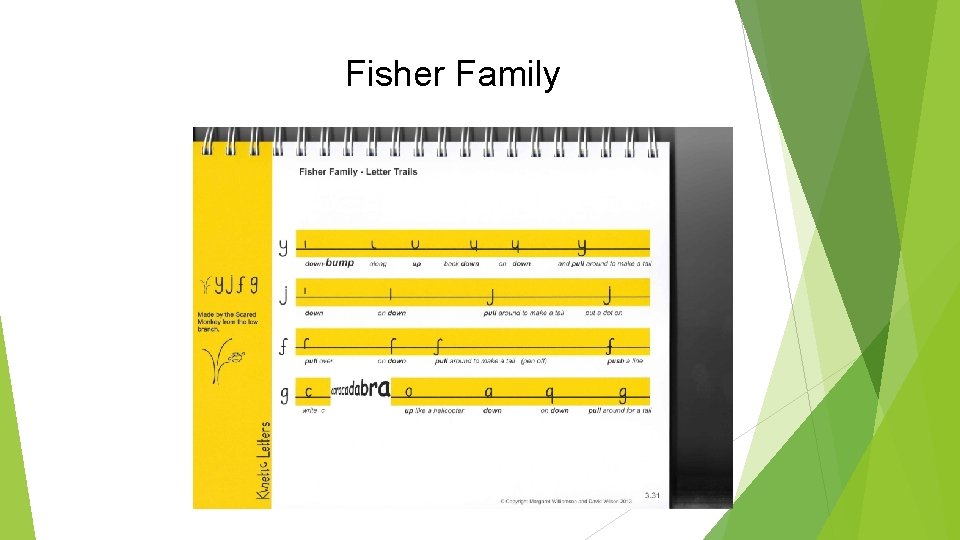
Six Letter Moves ▶ All 26 letters of the alphabet can be reconstructed for writing, using different combinations of the six letter parts ▶ Large movements are used to make the letter parts in the air.
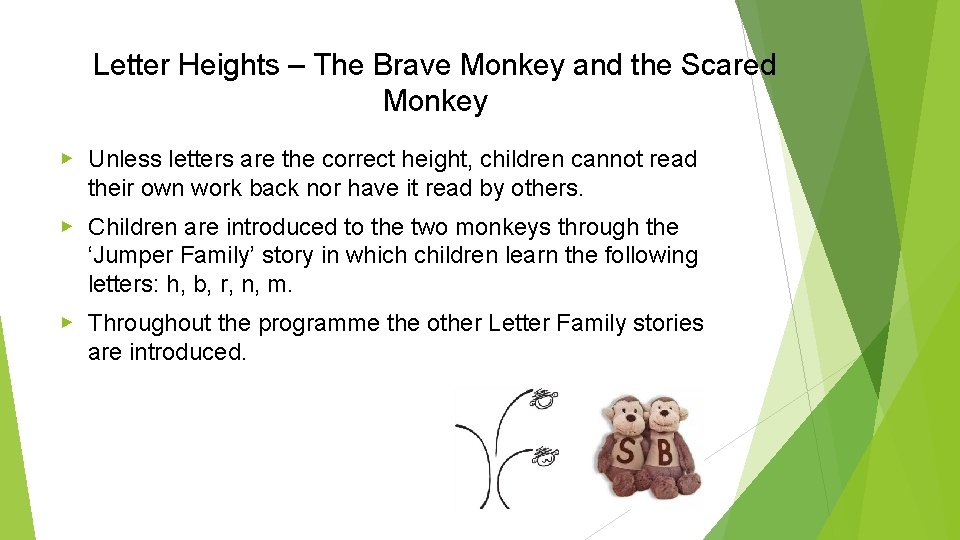
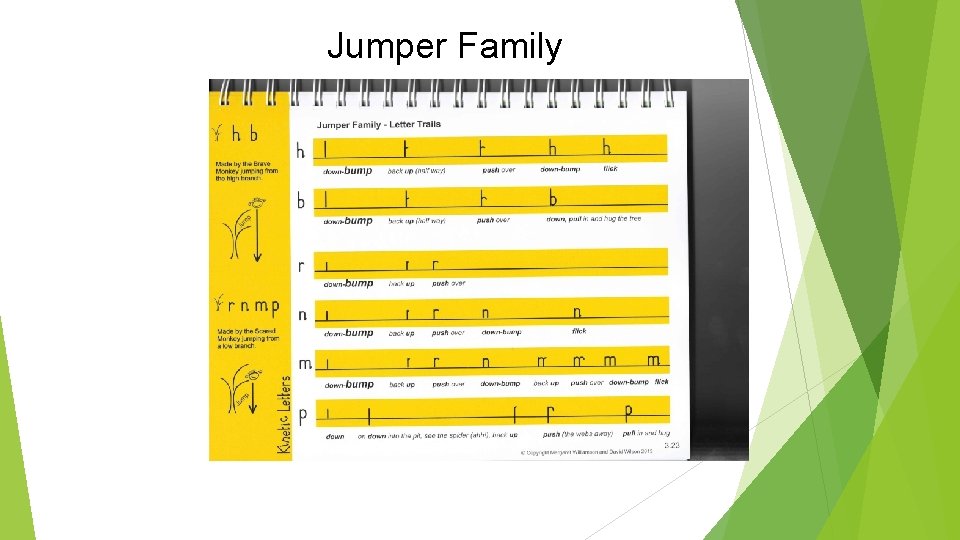
Letter Heights – The Brave Monkey and the Scared Monkey ▶ Unless letters are the correct height, children cannot read their own work back nor have it read by others. ▶ Children are introduced to the two monkeys through the ‘Jumper Family’ story in which children learn the following letters: h, b, r, n, m. ▶ Throughout the programme the other Letter Family stories are introduced.
Jumper Family
Abracadabra Family
Special Squirter
Window Cleaner Family
Fisher Family
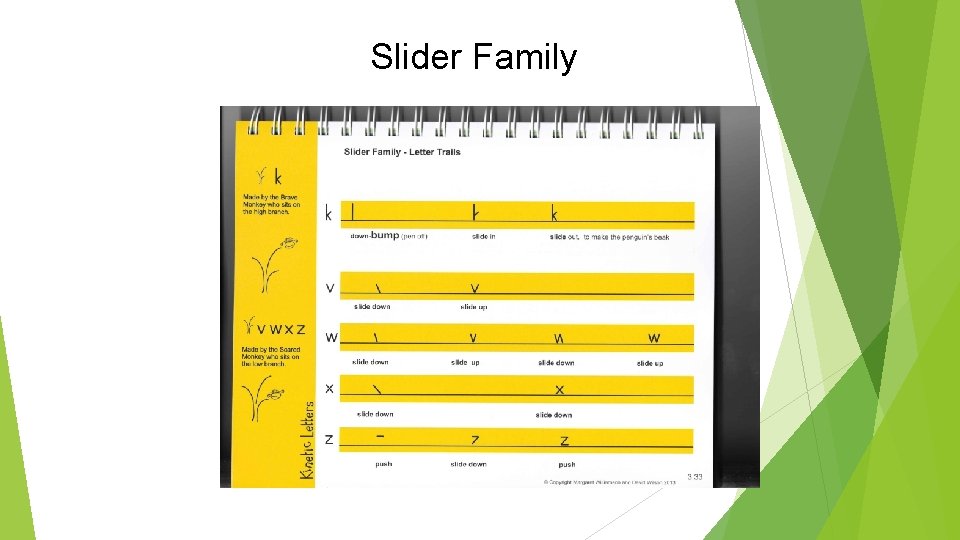
Slider Family
Helping at home 1. Encourage correct pencil hold 2. Strengthening exercises and activities e. g. trampolining, climbing, jumping, hopping skipping, balancing games 3. Encourage children to lie in the lizard position