
Kinetic and Potential Energy The Law of Conservation
- Slides: 11
Kinetic and Potential Energy
The Law of Conservation of Energy cannot be created or destroyed; it may be transformed from one form into another, but the total amount of energy never changes.
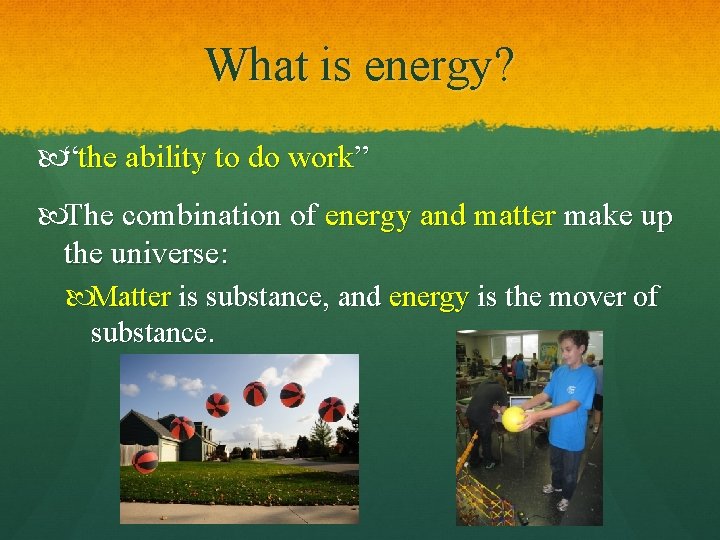
What is energy? “the ability to do work” The combination of energy and matter make up the universe: Matter is substance, and energy is the mover of substance.
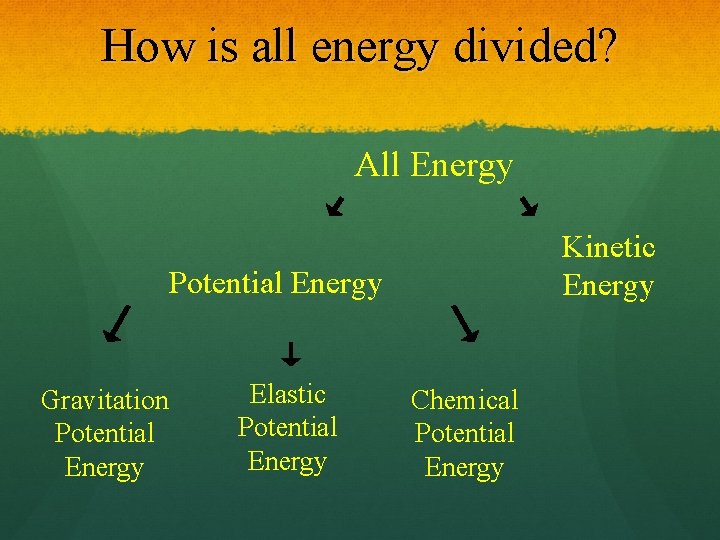
How is all energy divided? All Energy Kinetic Energy Potential Energy Gravitation Potential Energy Elastic Potential Energy Chemical Potential Energy
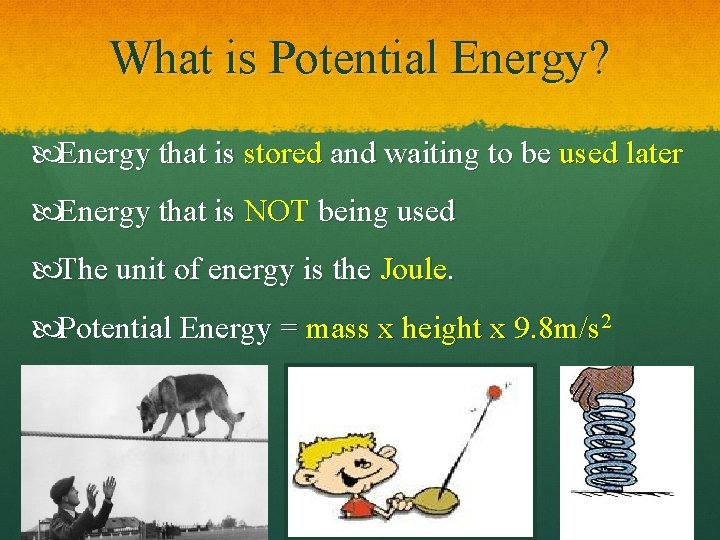
What is Potential Energy? Energy that is stored and waiting to be used later Energy that is NOT being used The unit of energy is the Joule. Potential Energy = mass x height x 9. 8 m/s 2
Potential Energy Example You are on a roller coaster that has a mass of 300 kg. The height of the roller coaster is 1500 meters. What is the potential energy of the roller coaster? Potential Energy = mass x height x 9. 8 m/s 2
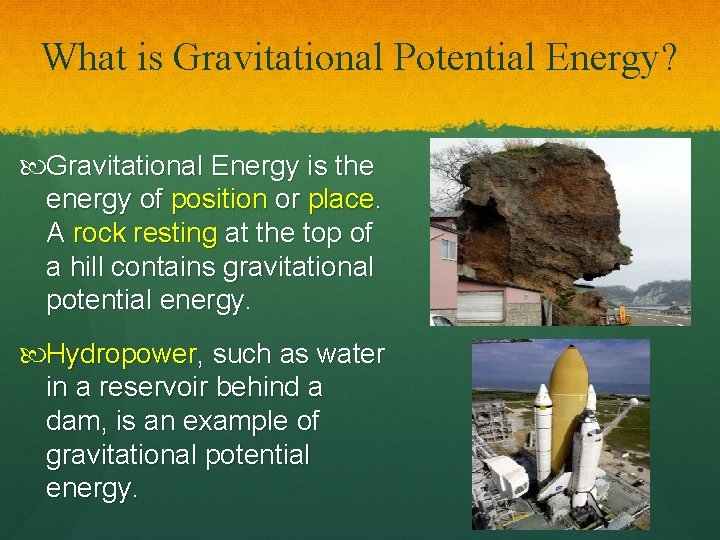
What is Gravitational Potential Energy? Gravitational Energy is the energy of position or place. A rock resting at the top of a hill contains gravitational potential energy. Hydropower, such as water in a reservoir behind a dam, is an example of gravitational potential energy.
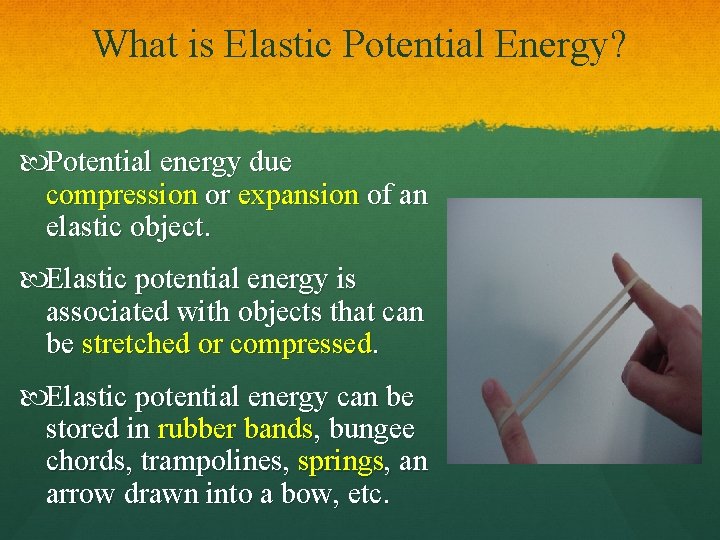
What is Elastic Potential Energy? Potential energy due compression or expansion of an elastic object. Elastic potential energy is associated with objects that can be stretched or compressed. Elastic potential energy can be stored in rubber bands, bungee chords, trampolines, springs, an arrow drawn into a bow, etc.
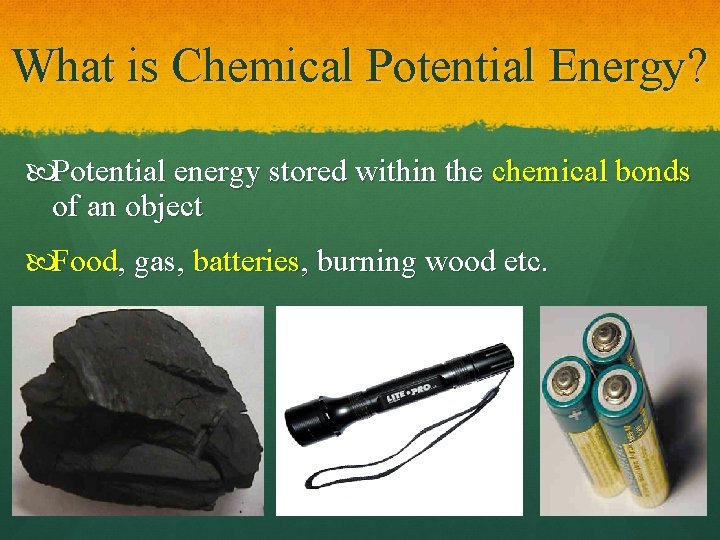
What is Chemical Potential Energy? Potential energy stored within the chemical bonds of an object Food, gas, batteries, burning wood etc.
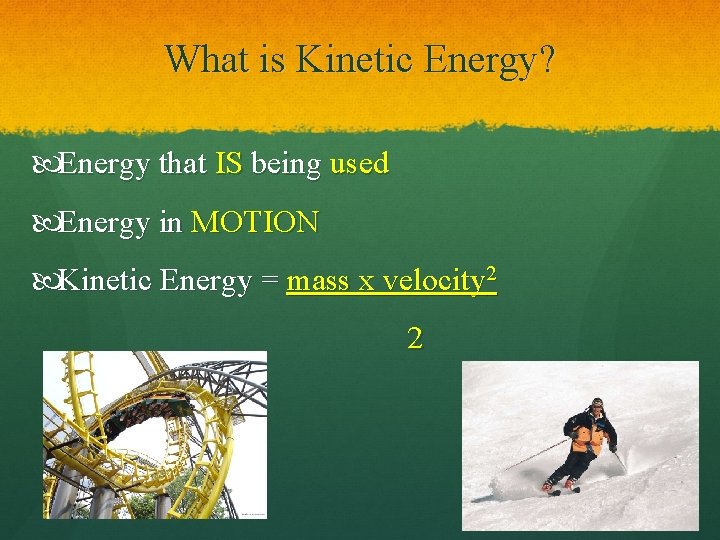
What is Kinetic Energy? Energy that IS being used Energy in MOTION Kinetic Energy = mass x velocity 2 2
Example You push a 20 kg suitcase downstairs, with a velocity of 18 m/s. How much KE does the suitcase have? Kinetic Energy = mass x velocity 2 2