
Kinesiology The Study of Movement From Greek roots
- Slides: 32
Kinesiology – The Study of Movement From Greek roots: Kinein – to move Logos – to discourse or study in a scientific manner
Sports Biomechanics Represents the human body as a mechanical system Involves the application of physics and engineering principles during analysis of locomotion (walking, running, etc. ), exercise, and athletic activities
General Purpose Optimizing performance – Achieving the best possible performance from each individual. Playing safe – Avoiding risk and injury to the individual. v. Individual preparation and training v. Skill analysis and technique modification v. Equipment design
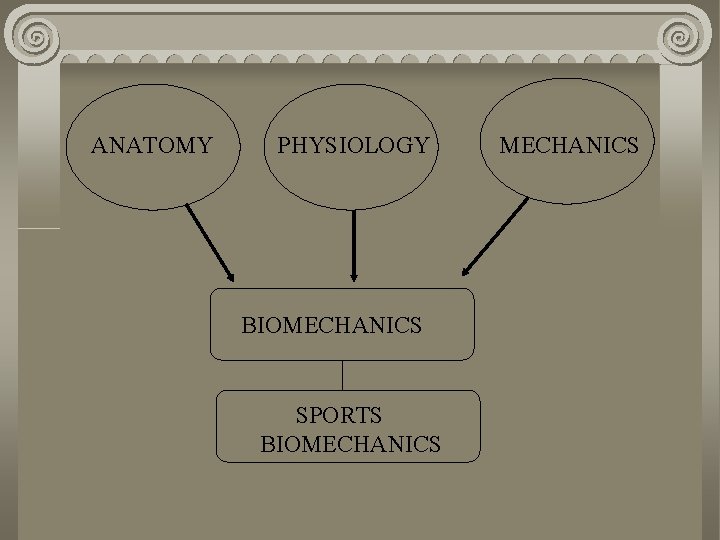
ANATOMY PHYSIOLOGY BIOMECHANICS SPORTS BIOMECHANICS
Components of Sports Biomechanics Anatomy – the study of body structure and function v Gross (whole body) anatomy v Cellular anatomy Physiology – study of the integrated function of cells, tissues, and organ systems Mechanics – branch of physics which studies forces and their effects on mechanical structures
Categories of Biomechanics Tissue Biomechanics v. Bones v. Tendons v. Ligaments v. Cartilage v. Skeletal muscle ØControl of muscle force and power
Categories of Biomechanics Joint Biomechanics v GENERAL –torque production at joints v Major Joints Ø Shoulder Ø Elbow Ø Hip Ø Wrist Ø Knee Ø Ankle Ø Back (spinal column)
Categories of Biomechanics Whole Body Biomechanics v. Sports Applications ØPerformance techniques ØInjury prevention v. Applications to daily living ØDesign of furniture ØWorkplace design (Human Factors Engineering)
Branches of Mechanics Statics – branch of mechanics dealing with a system in a constant state of movement (or nonmovement) (all forces in a static system add up to zero) Dynamics – branch of mechanics dealing with systems subject to acceleration (forces in a dynamic system don’t add up to zero) Biomechanics – application of mechanical principles (statics and dynamics) in the study of living organisms
Complexity of Human Movement In order to understand the basics, we will use the underlying principle of the human body as a mechanical machine.
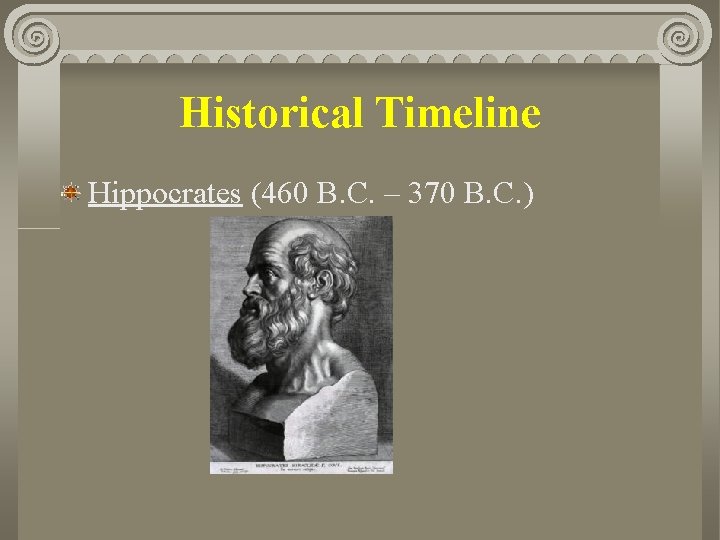
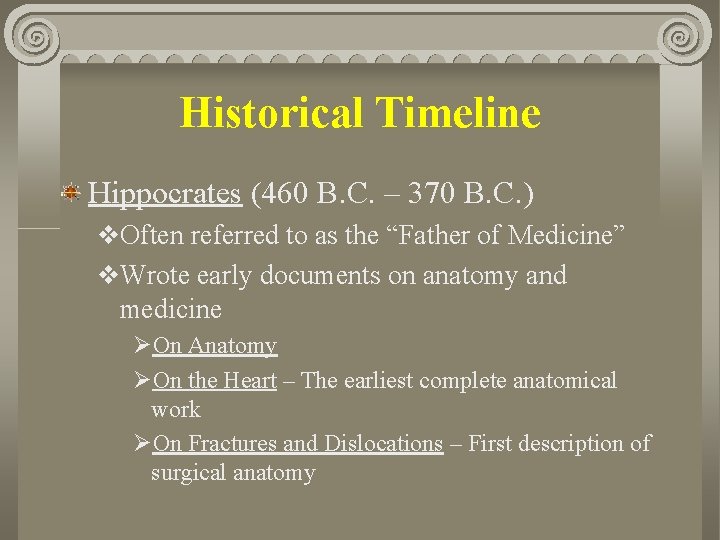
Historical Timeline Hippocrates (460 B. C. – 370 B. C. )
Historical Timeline Hippocrates (460 B. C. – 370 B. C. ) v. Often referred to as the “Father of Medicine” v. Wrote early documents on anatomy and medicine ØOn Anatomy ØOn the Heart – The earliest complete anatomical work ØOn Fractures and Dislocations – First description of surgical anatomy
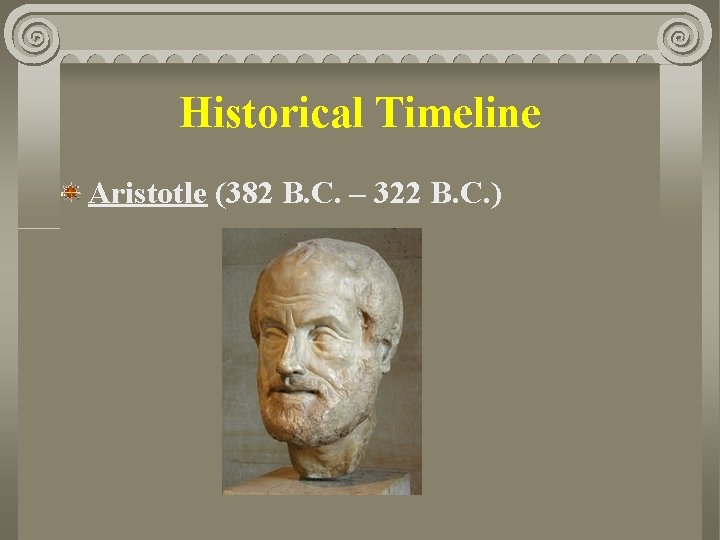
Historical Timeline Aristotle (382 B. C. – 322 B. C. )
Historical Timeline Aristotle (382 B. C. – 322 B. C. ) v. Student of Plato v. Wrote extensively on philosophy, politics, logic, natural sciences, and physics v. The originator of anatomy as a special branch of knowledge v. Pictured the human body as a machine: muscles cause an action which moves the bones at the joints
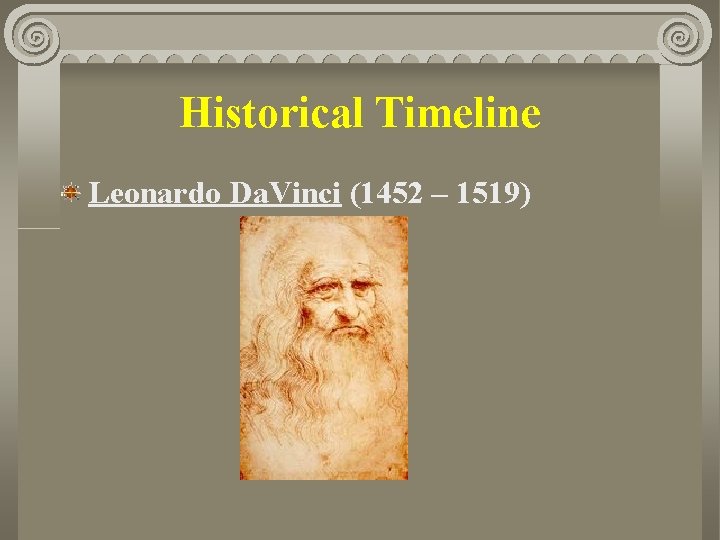
Historical Timeline Leonardo Da. Vinci (1452 – 1519)
Historical Timeline Leonardo Da. Vinci (1452 – 1519) v Artist v. Scientist v. Anatomist (one of the first scientists to make a detailed record of human dissections) ØDetailed descriptions of design of skeleton ØIllustrated muscle origins and insertions
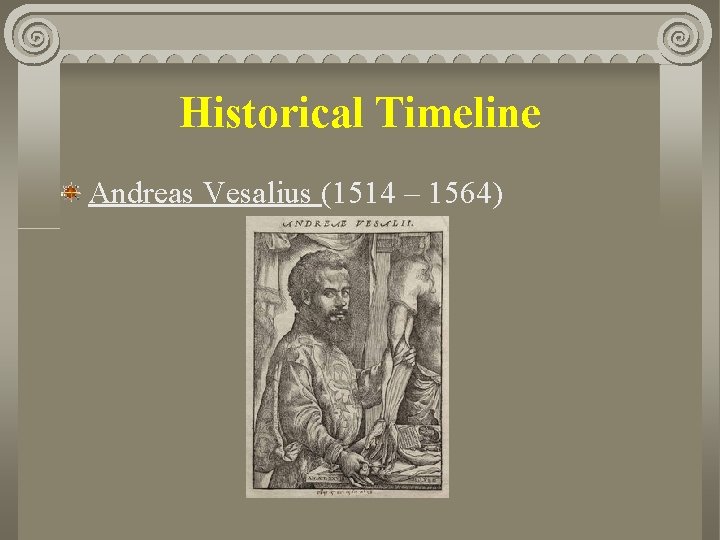
Historical Timeline Andreas Vesalius (1514 – 1564)
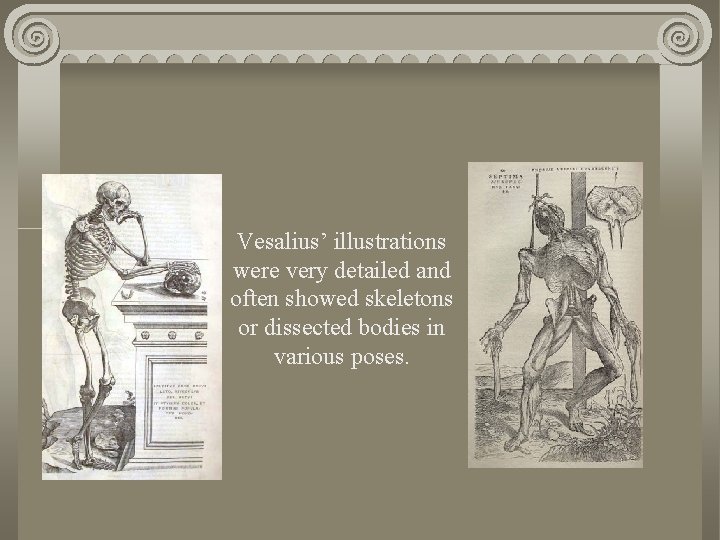
Historical Timeline Andreas Vesalius (1514 – 1564) v. One of history’s greatest anatomists v. Known for his detailed illustrations v. Published On the Workings of the Human Body in 1543 – One of the great classical works on human anatomy
Vesalius’ illustrations were very detailed and often showed skeletons or dissected bodies in various poses.
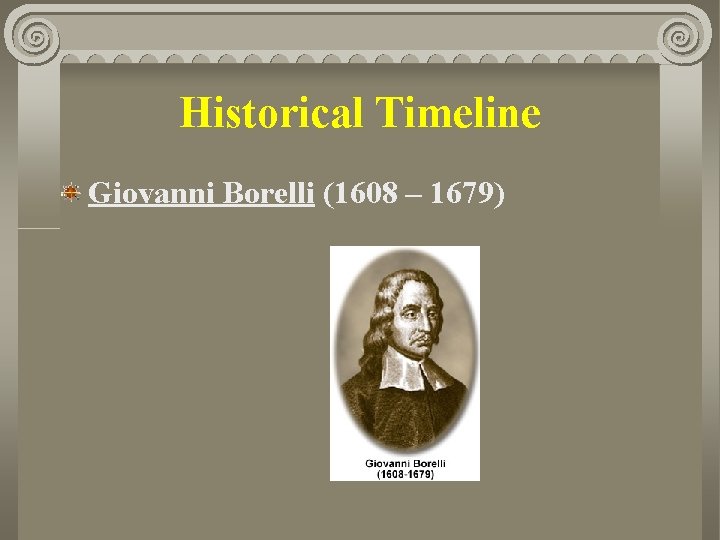
Historical Timeline Giovanni Borelli (1608 – 1679)
Historical Timeline Giovanni Borelli (1608 – 1679) Considered by many to be the father of modern biomechanics Originally studied animal movement and published his studies in two volumes, De Motu Animalium I and De Motu Animalium II In these works he used mathematics to model animal movements as being like machines Unfortunately, these books were both published after his death so his greatest contributions to science were relatively unrecognized during his lifetime.
Historical Timeline Giovanni Borelli (1608 – 1679) Suggested that muscles can produce movement only by contracting Recognized that forward motion was produced by forward movement of the center of gravity Associated the swinging of the limbs during locomotion with the maintenance of balance
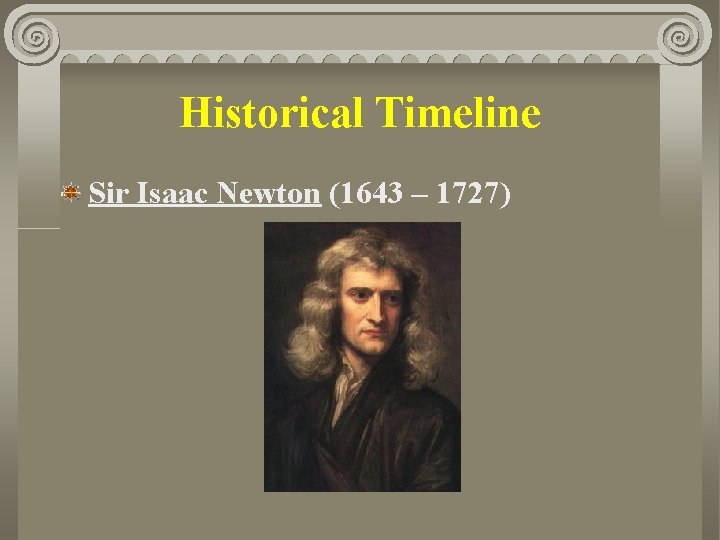
Historical Timeline Sir Isaac Newton (1643 – 1727)
Historical Timeline Sir Isaac Newton (1643 – 1727) v. Developed basic Laws of Motion v. Invented calculus v. Developed theory of gravity which was held until updated by Einstein’s theories v. Founder of the Royal Academy of Sciences
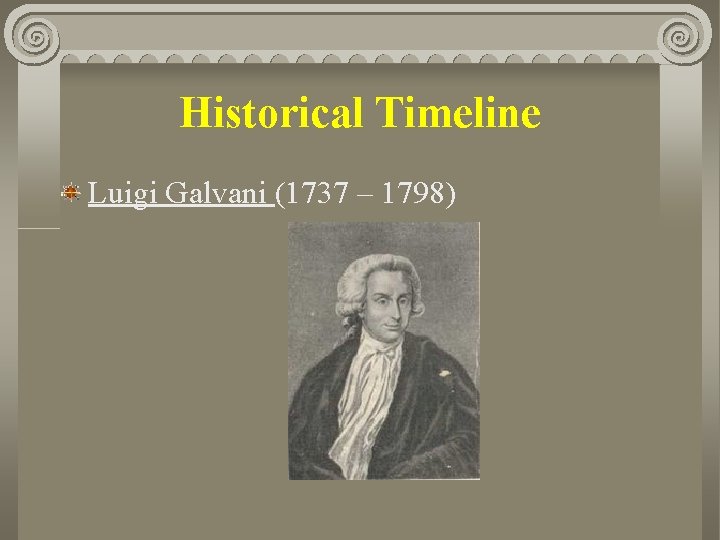
Historical Timeline Luigi Galvani (1737 – 1798)
Historical Timeline Luigi Galvani (1737 – 1798) v. An Italian physician and physicist v. Discovered that the muscle in the leg of a dissected frog would contract when a nerve was struck by an electric spark ØThe first researcher to discover that there is a relationship between electrical activity and movement
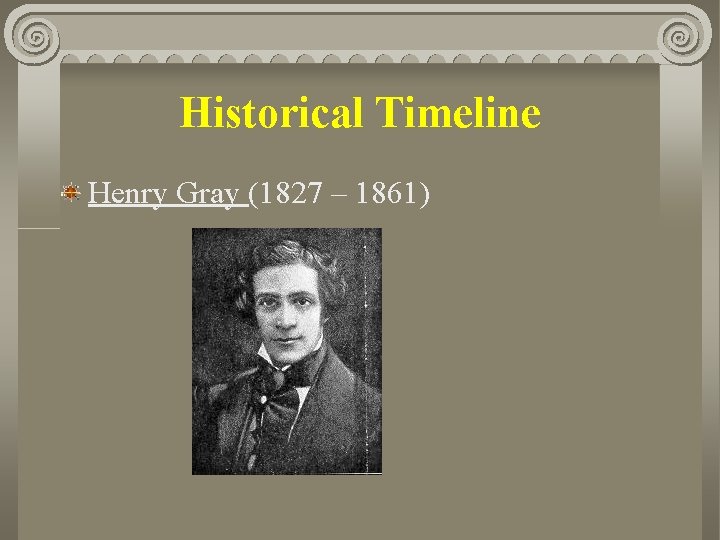
Historical Timeline Henry Gray (1827 – 1861)
Historical Timeline Henry Gray (1827 – 1861) v. British doctor and highly honored surgeon during his medical career v. Published the first edition of his reference book Gray’s Anatomy: Descriptive and Surgical Theory in 1858, probably the best known standard medical anatomy book in history v. This book is still published and is commonly known as Gray’s Anatomy (now in it’s 40 th edition).
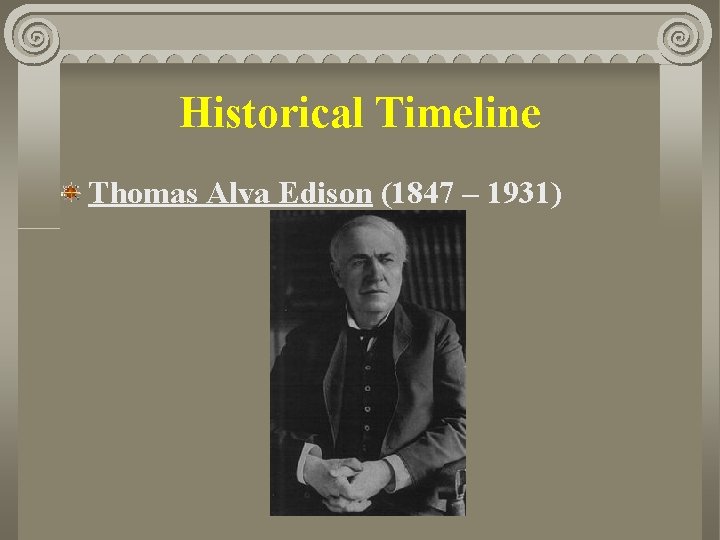
Historical Timeline Thomas Alva Edison (1847 – 1931)
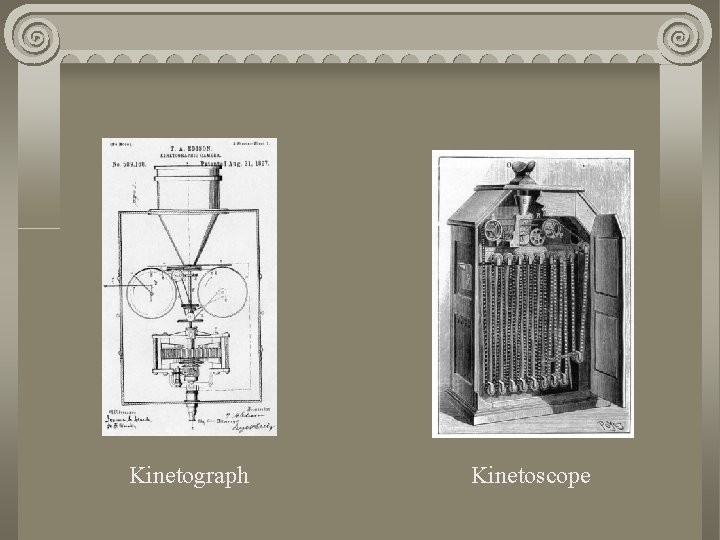
Historical Timeline Thomas Alva Edison (1847 – 1931) v. Had 1093 inventions including the electric light bulb, voice transmitter (amplifier), answering machine, and phonograph v. Invented motion pictures in 1888 (critical for detailed biomechanical analysis) ØHe used a device called a kinetograph for recording motion picture images and a kinetoscope for viewing them
Kinetograph Kinetoscope
Historical Timeline There are centuries of combined knowledge and tools developed by doctors (Hippocrates), anatomists (Aristotle, Da Vinci, Vesalius, Borelli, Gray), physicists (Newton), physiologists (Galvani), and practical researchers and inventors (Edison) that form the foundation for modern sports biomechanics.