
KINEMATICS II Acceleration Acceleration is the rate of

- Slides: 13
KINEMATICS II Acceleration
• Acceleration is the rate of change of velocity with respect to time • If you are in a car that is speeding up or slowing down, you and the car are accelerating • If you make a turn at constant speed, you are accelerating, too (Why? )
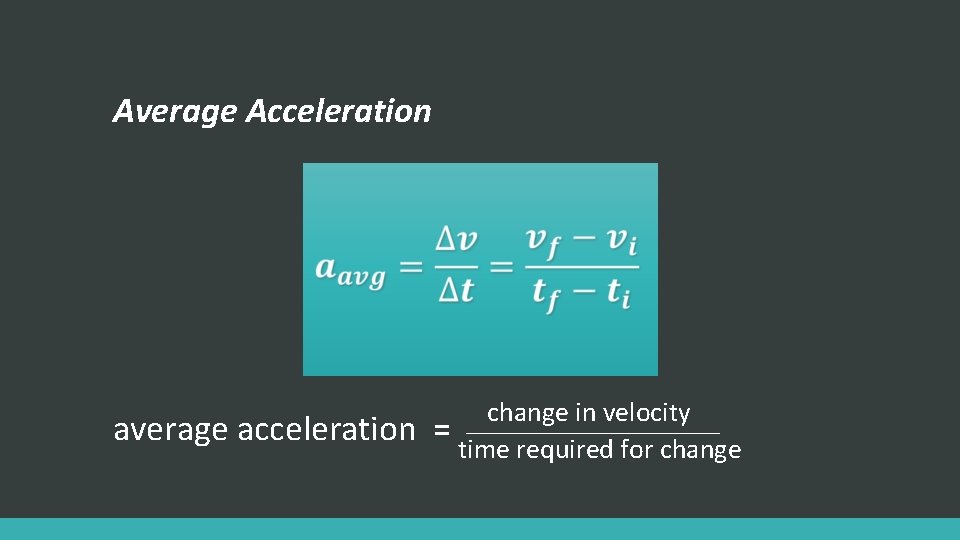
Average Acceleration average acceleration change in velocity = time required for change
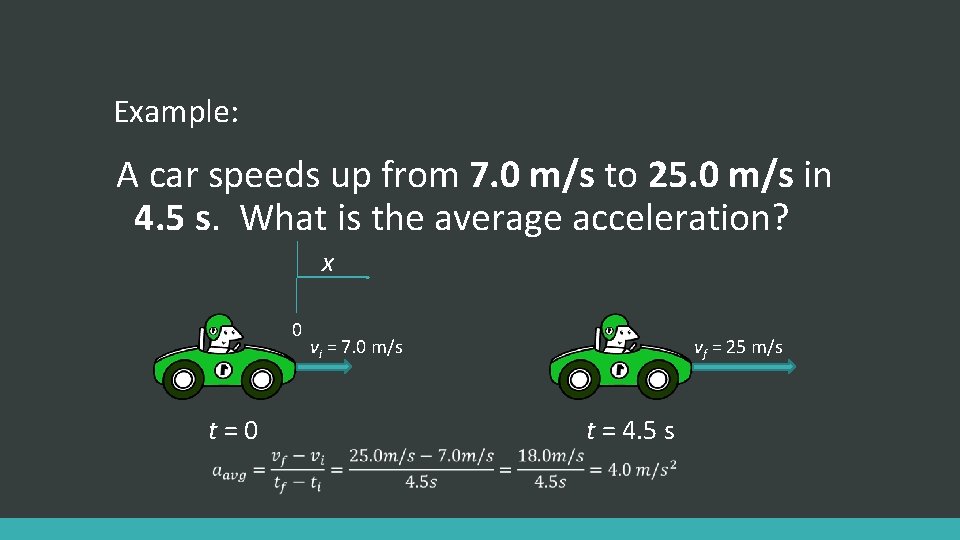
Example: A car speeds up from 7. 0 m/s to 25. 0 m/s in 4. 5 s. What is the average acceleration? x 0 t=0 vi = 7. 0 m/s vf = 25 m/s t = 4. 5 s
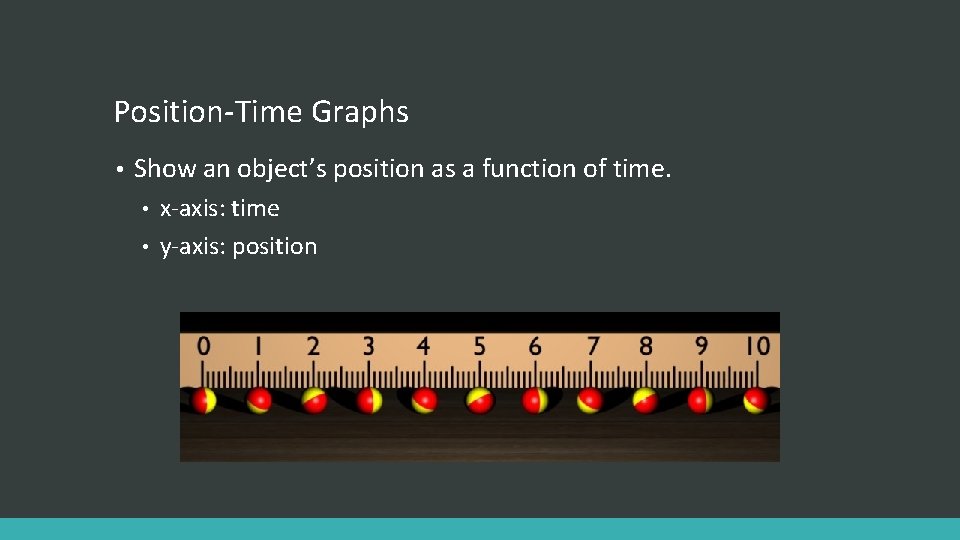
Position-Time Graphs • Show an object’s position as a function of time. x-axis: time • y-axis: position •
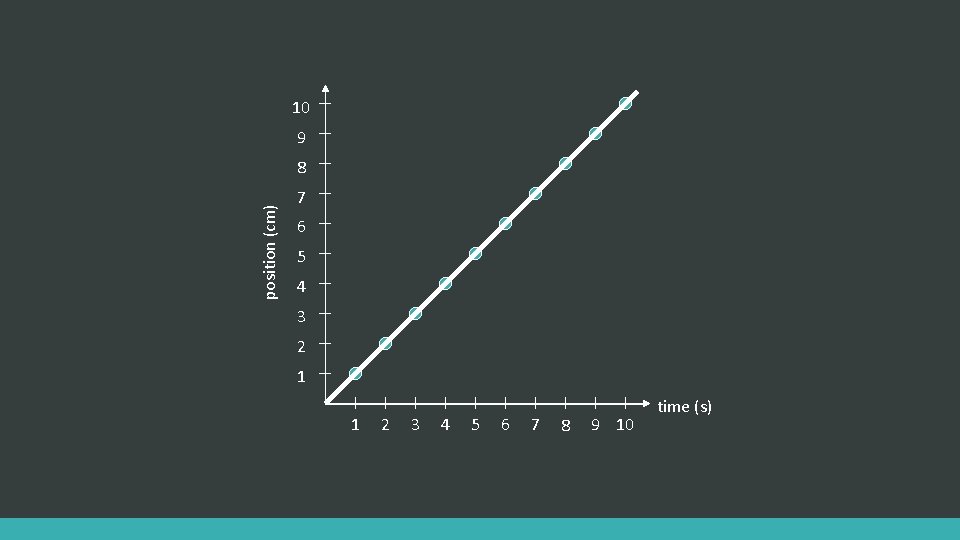
10 9 position (cm) 8 7 6 5 4 3 2 1 1 2 3 4 5 6 7 8 9 10 time (s)
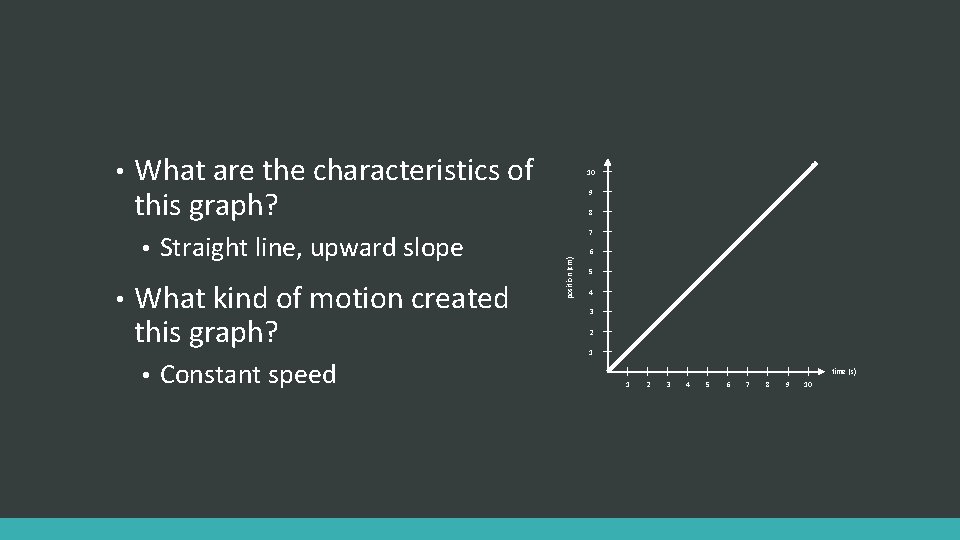
What are the characteristics of this graph? • • Straight line, upward slope What kind of motion created this graph? • Constant speed 10 9 8 7 6 position (cm) • 5 4 3 2 1 time (s) 1 2 3 4 5 6 7 8 9 10
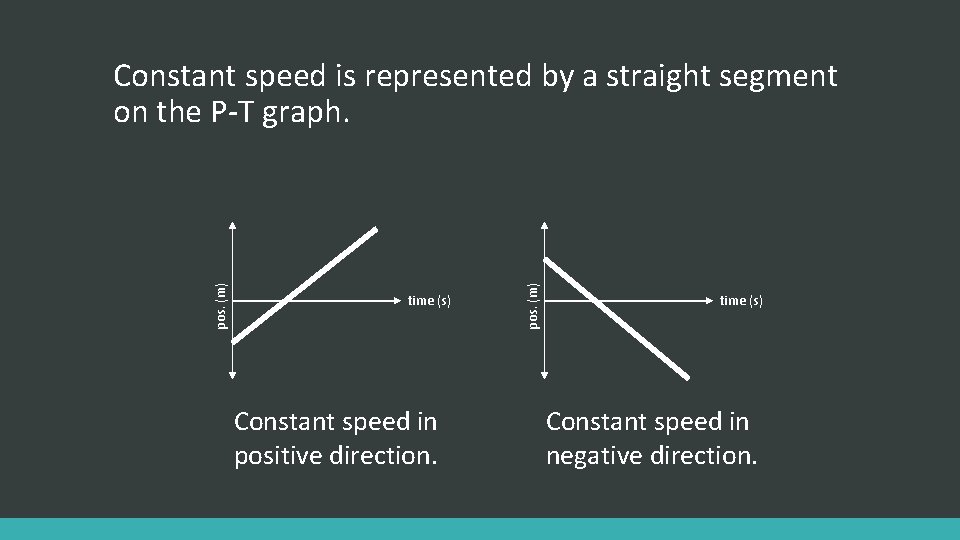
time (s) Constant speed in positive direction. pos. (m) Constant speed is represented by a straight segment on the P-T graph. time (s) Constant speed in negative direction.
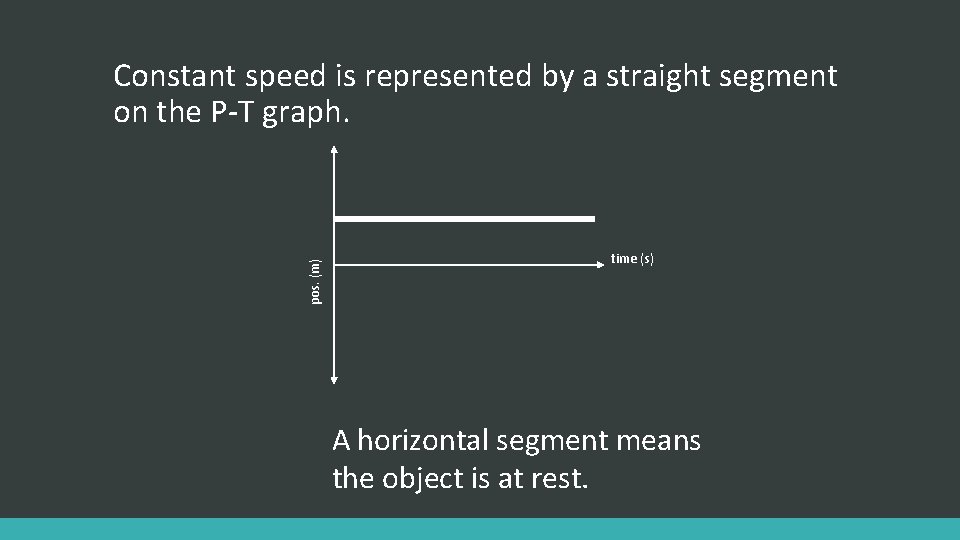
pos. (m) Constant speed is represented by a straight segment on the P-T graph. time (s) A horizontal segment means the object is at rest.
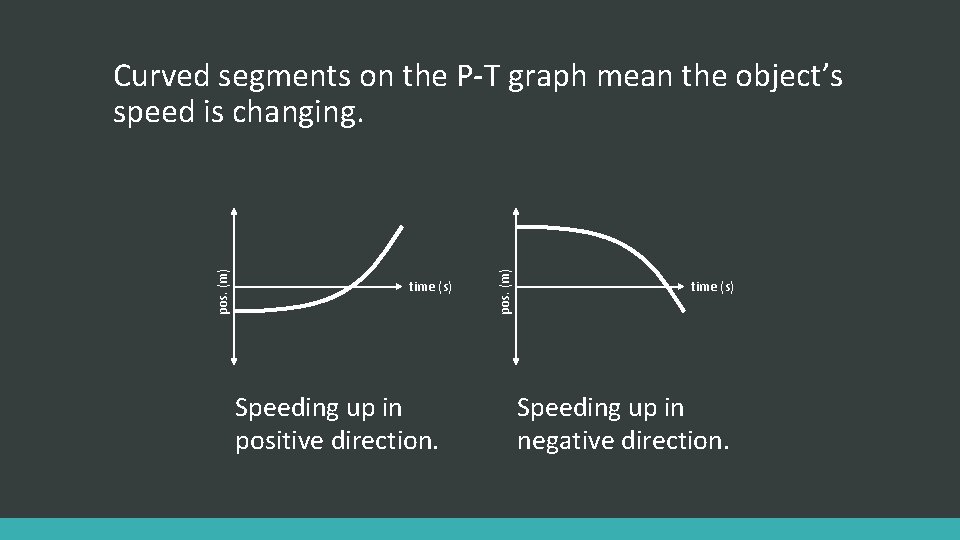
time (s) Speeding up in positive direction. pos. (m) Curved segments on the P-T graph mean the object’s speed is changing. time (s) Speeding up in negative direction.
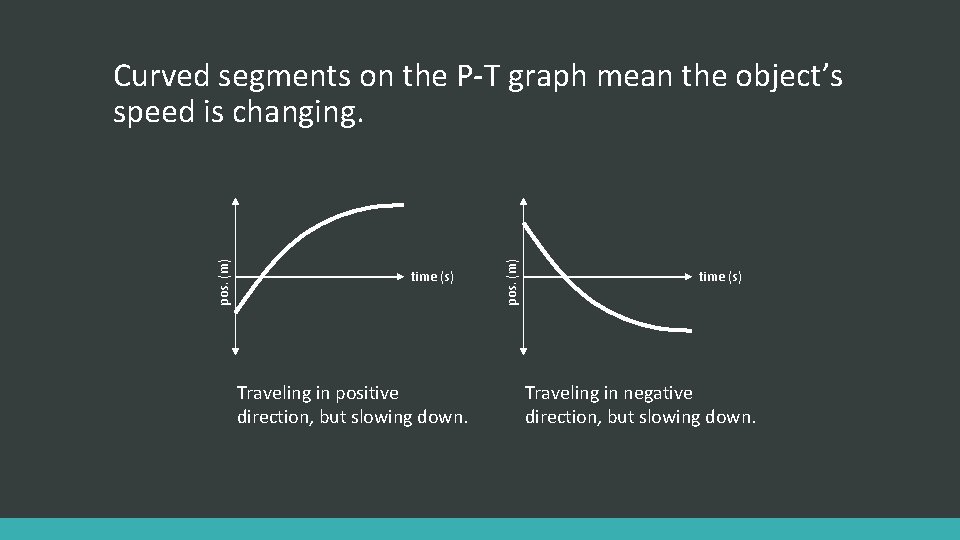
time (s) Traveling in positive direction, but slowing down. pos. (m) Curved segments on the P-T graph mean the object’s speed is changing. time (s) Traveling in negative direction, but slowing down.
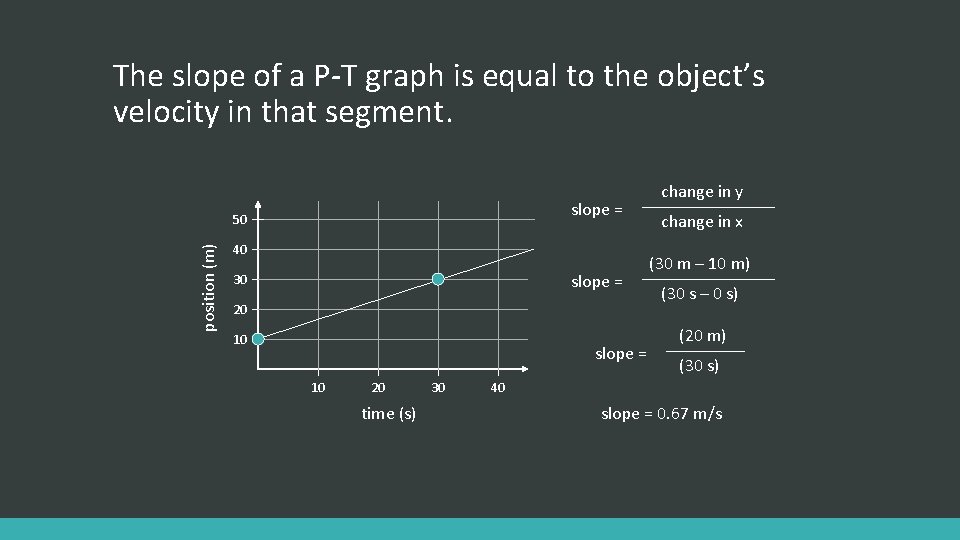
The slope of a P-T graph is equal to the object’s velocity in that segment. slope = position (m) 50 40 slope = 30 20 10 slope = 10 20 time (s) 30 change in y change in x (30 m – 10 m) (30 s – 0 s) (20 m) (30 s) 40 slope = 0. 67 m/s
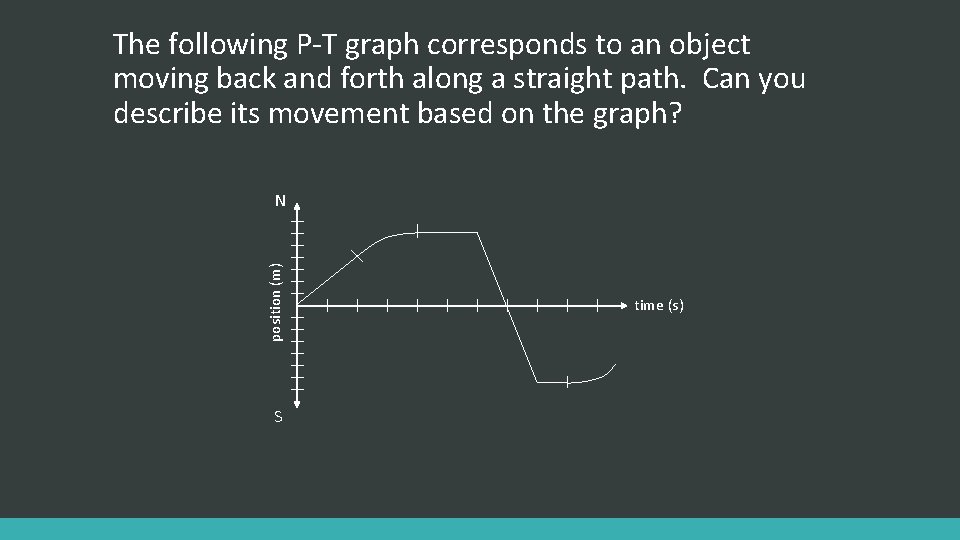
The following P-T graph corresponds to an object moving back and forth along a straight path. Can you describe its movement based on the graph? position (m) N S time (s)