
Kinematics and Dynamics KD 1 Vectors Scalar vs
- Slides: 18
Kinematics and Dynamics KD 1 Vectors
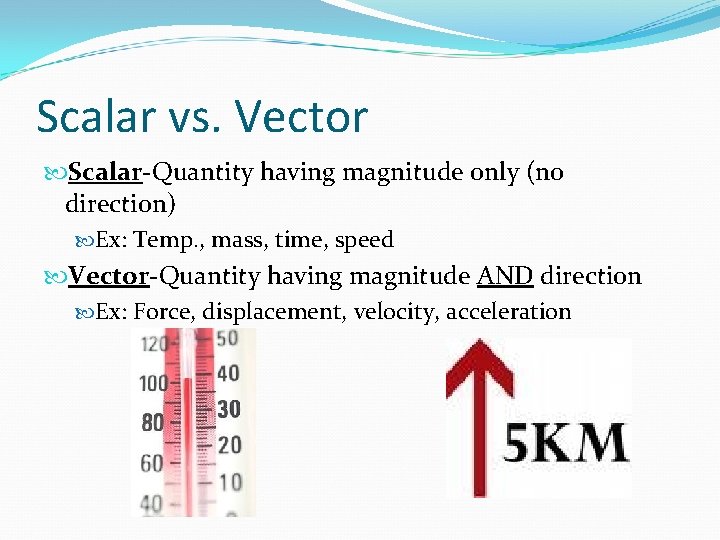
Scalar vs. Vector Scalar-Quantity having magnitude only (no direction) Ex: Temp. , mass, time, speed Vector-Quantity having magnitude AND direction Ex: Force, displacement, velocity, acceleration
Examples: Scalar or Vector? 1) 15 m/s up 2) 21 degrees F 3) 100 watts 4) 50 km N of W 5) 75 mi/hr 1) Vector 2) Scalar 3) Scalar 4) Vector 5) Scalar
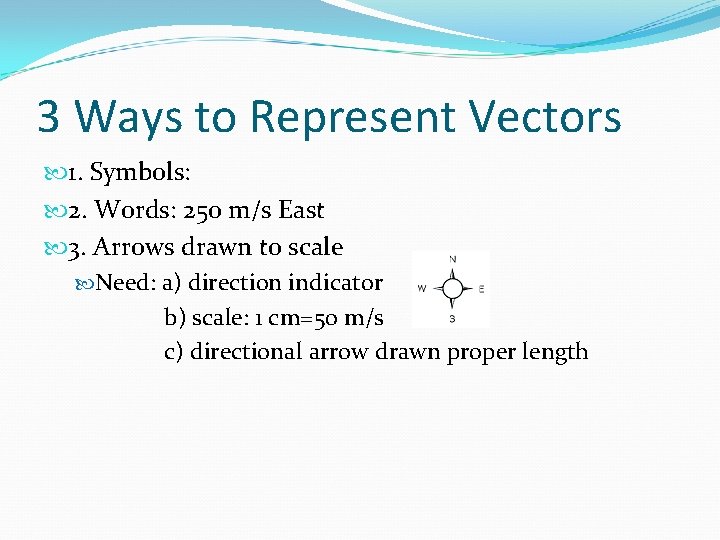
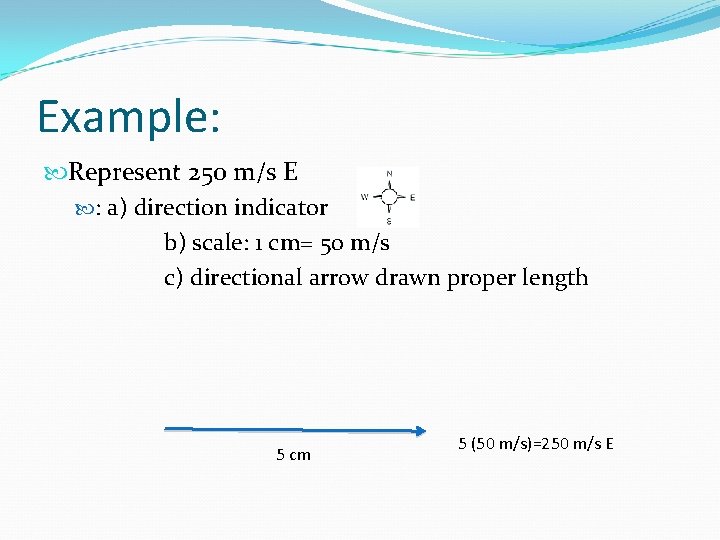
3 Ways to Represent Vectors 1. Symbols: 2. Words: 250 m/s East 3. Arrows drawn to scale Need: a) direction indicator b) scale: 1 cm=50 m/s c) directional arrow drawn proper length
Example: Represent 250 m/s E : a) direction indicator b) scale: 1 cm= 50 m/s c) directional arrow drawn proper length 5 cm 5 (50 m/s)=250 m/s E
Vectors Length of arrow=magnitude Head of arrow=direction
Vectors Components-Vectors whose sum is the resultant can be simplified into horizontal (X) and vertical (Y) vectors Resultant-The vector sum of 2 or more components
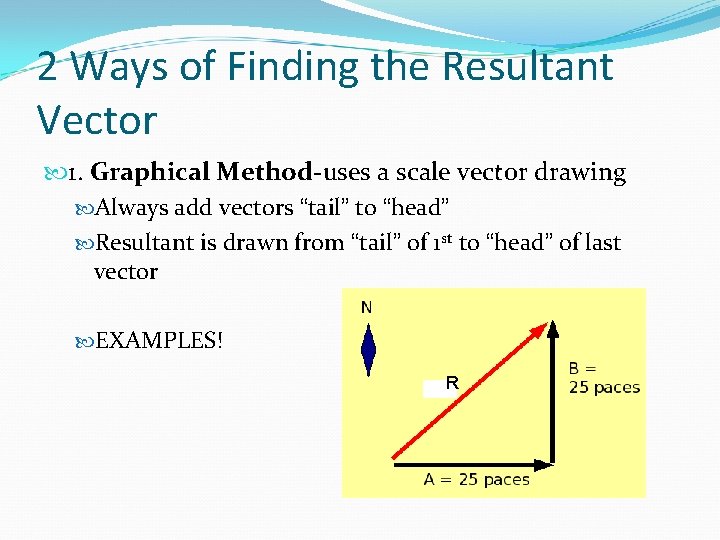
2 Ways of Finding the Resultant Vector 1. Graphical Method-uses a scale vector drawing Always add vectors “tail” to “head” Resultant is drawn from “tail” of 1 st to “head” of last vector EXAMPLES! R
Graphical Method When subtracting vectors, change subtraction to addition A – B = A + (-B) The negative (-B) changes the direction of the vector Negative vectors: ADD the OPPOSITE direction of the original vector
2 Ways of Finding the Resultant Vector 2. Component Method-Uses calculations to find resultant
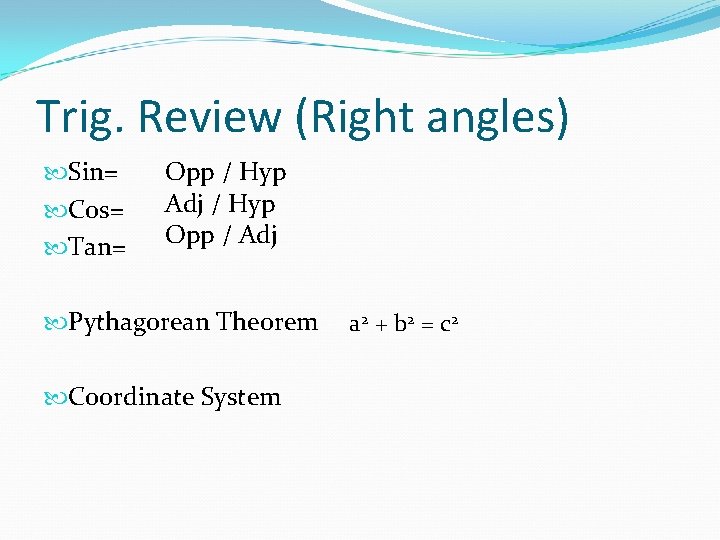
Trig. Review (Right angles) Sin= Cos= Tan= Opp / Hyp Adj / Hyp Opp / Adj Pythagorean Theorem Coordinate System a 2 + b 2 = c 2
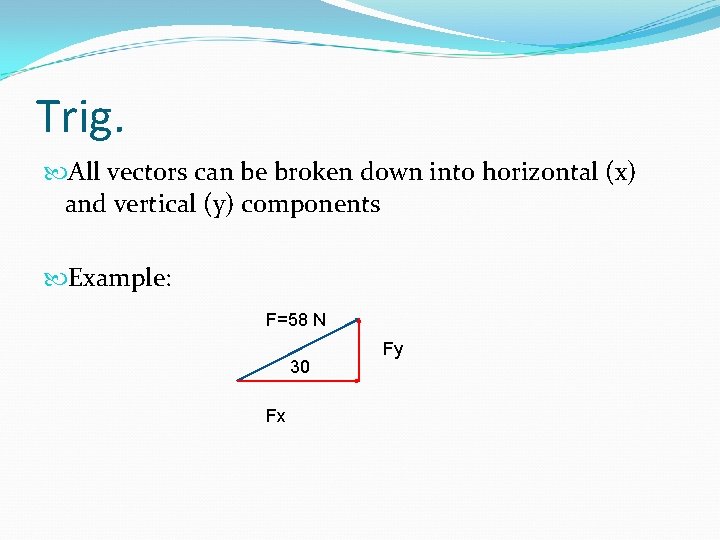
Trig. All vectors can be broken down into horizontal (x) and vertical (y) components Example: F=58 N 30 Fx Fy
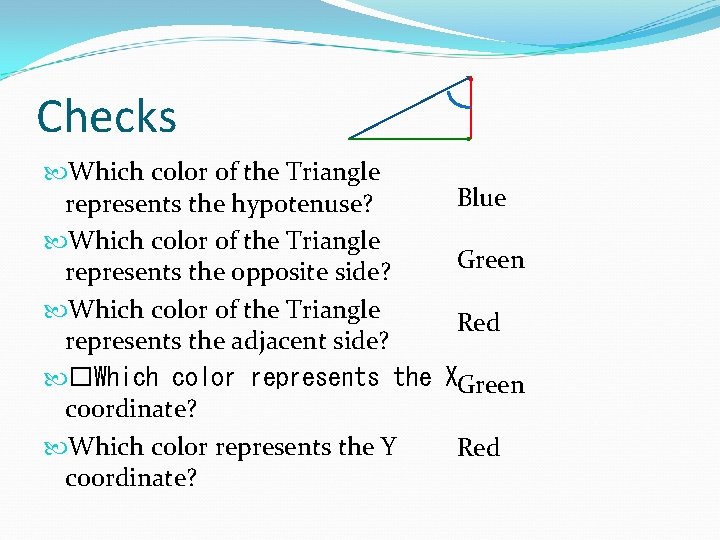
Checks Which color of the Triangle represents the hypotenuse? Which color of the Triangle represents the opposite side? Which color of the Triangle represents the adjacent side? �Which color represents the coordinate? Which color represents the Y coordinate? Blue Green Red XGreen Red
Distance vs. Displacement Distance- Displacement- How far something move without regards to the direction (example - 3 miles east and 4 miles north is a total distance of 7 miles) The change in position of something WITH respects to the direction (example - 3 miles east and 4 miles north is a total displacement of 5 miles North East
Steps to Add Vectors by Component Method 1) Break down each vector into x and y components 2) Add similar components Add all “x” components Add all “y” components 3) Use Pythagorean theorem to find magnitude of resultant 4) Use tangent function to find angle and direction of resultant
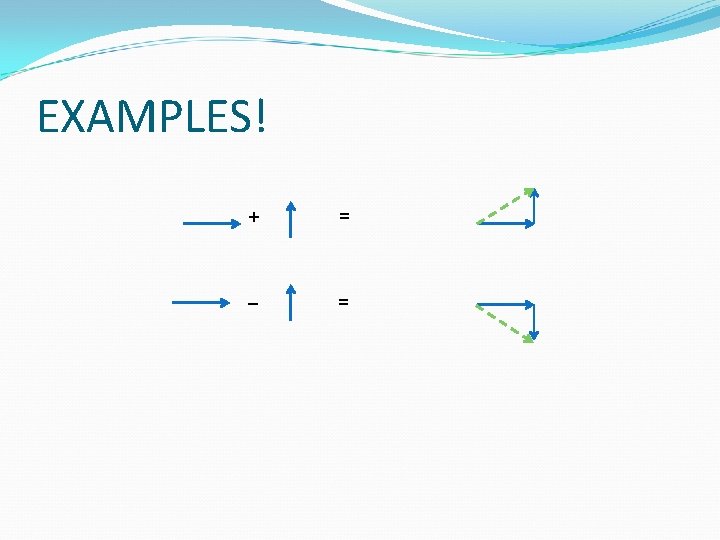
EXAMPLES! + = – =
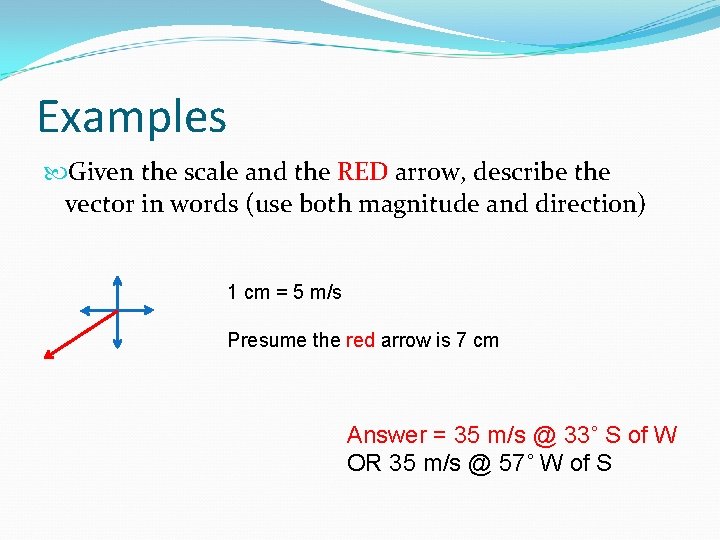
Examples Given the scale and the RED arrow, describe the vector in words (use both magnitude and direction) 1 cm = 5 m/s Presume the red arrow is 7 cm Answer = 35 m/s @ 33˚ S of W OR 35 m/s @ 57˚ W of S
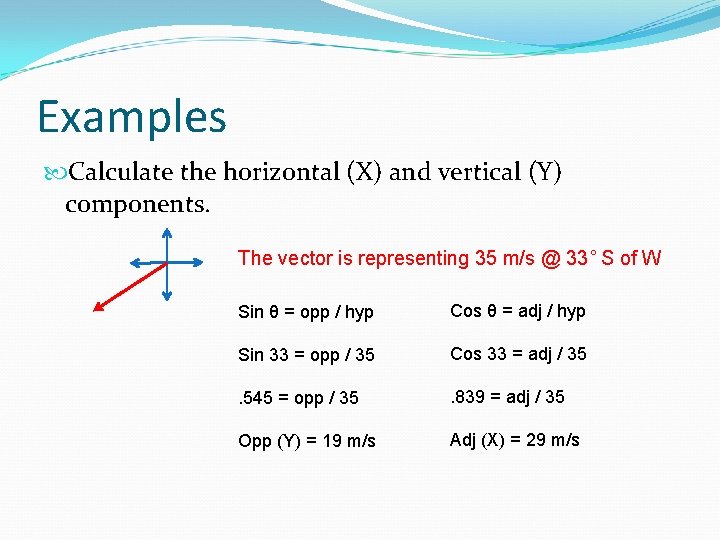
Examples Calculate the horizontal (X) and vertical (Y) components. The vector is representing 35 m/s @ 33˚ S of W Sin θ = opp / hyp Cos θ = adj / hyp Sin 33 = opp / 35 Cos 33 = adj / 35 . 545 = opp / 35 . 839 = adj / 35 Opp (Y) = 19 m/s Adj (X) = 29 m/s