
Kinematic Analysis for A Conventional I C Engine
- Slides: 23
Kinematic Analysis for A Conventional I. C. Engine P M V Subbarao Professor Mechanical Engineering Department Creation of Instantaneous Volume, Surface Area …. .
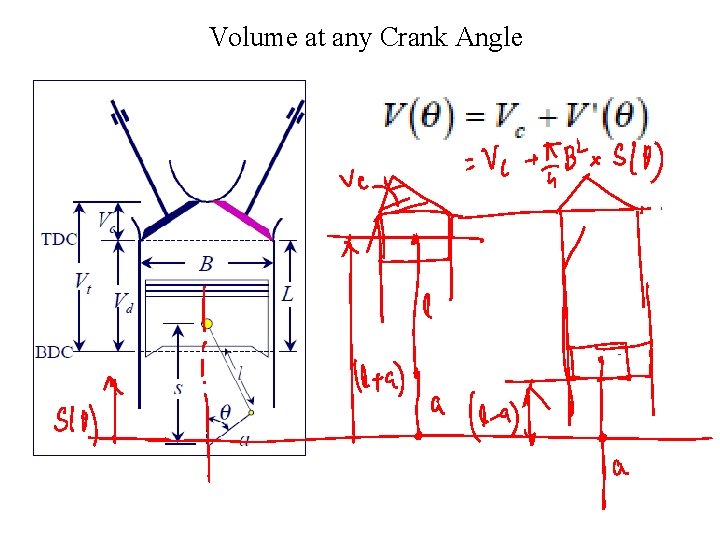
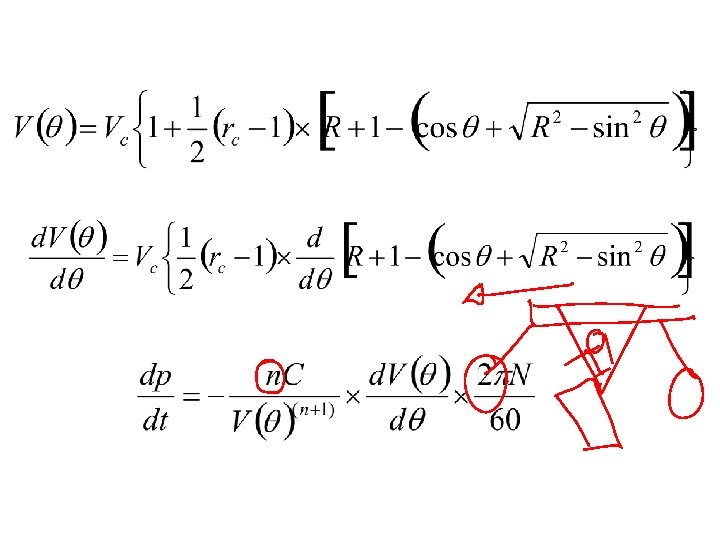
Volume at any Crank Angle
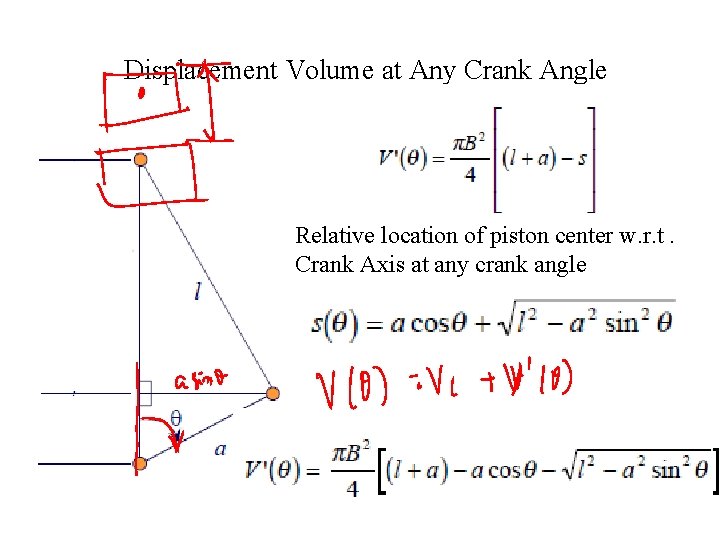
Displacement Volume at Any Crank Angle Relative location of piston center w. r. t. Crank Axis at any crank angle
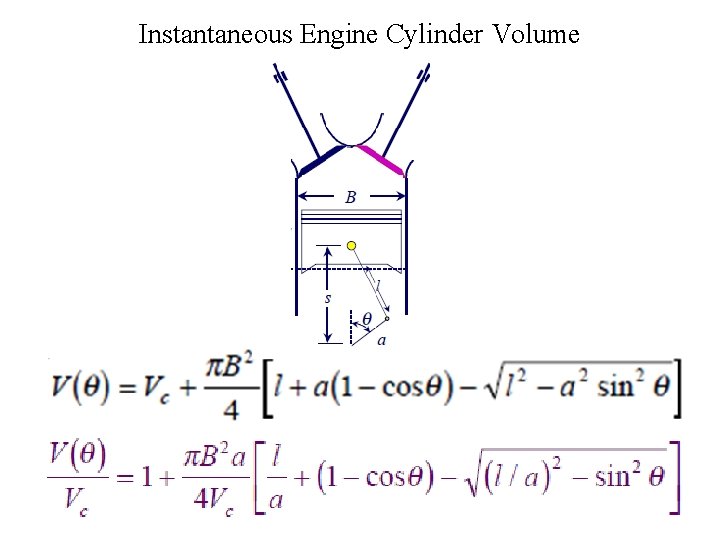
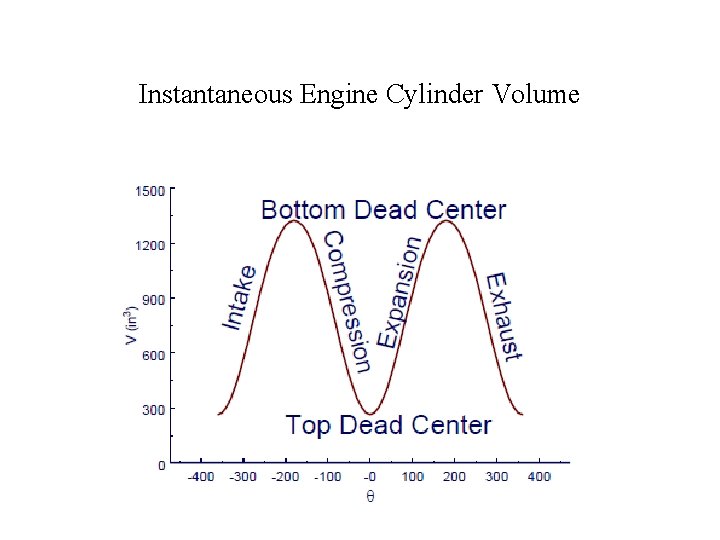
Instantaneous Engine Cylinder Volume
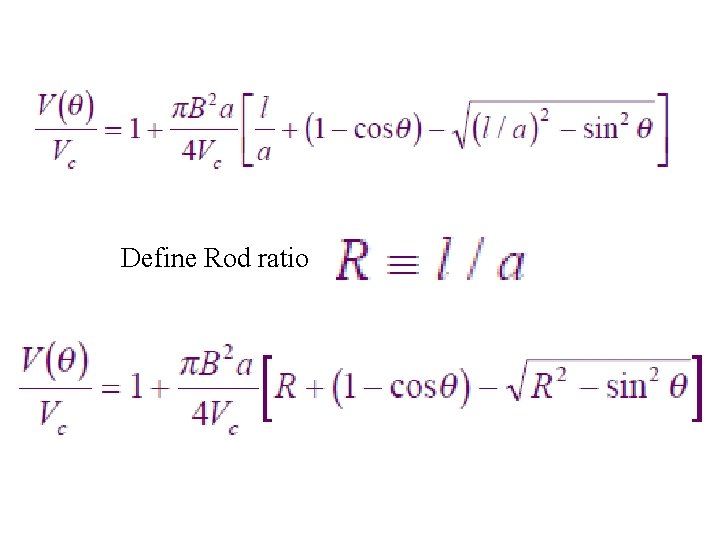
Define Rod ratio
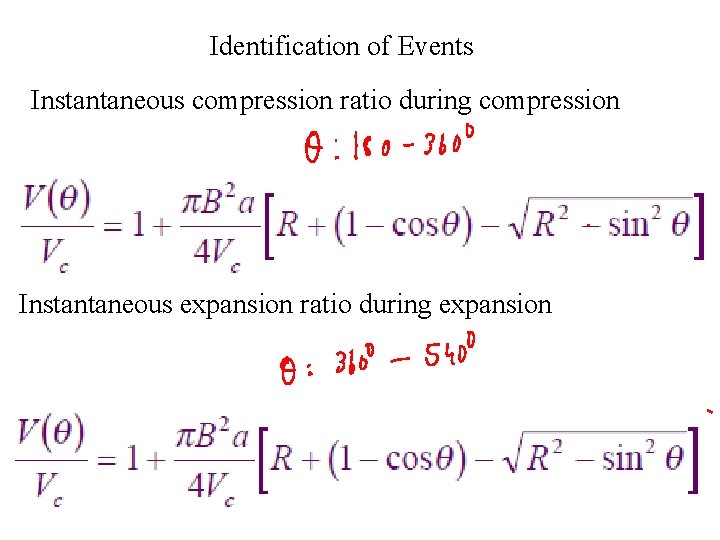
Identification of Events Instantaneous compression ratio during compression Instantaneous expansion ratio during expansion
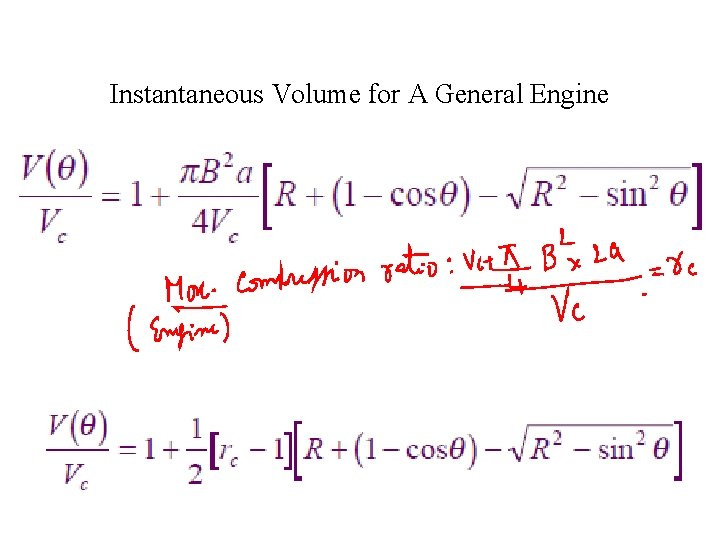
Instantaneous Volume for A General Engine
Instantaneous Engine Cylinder Volume
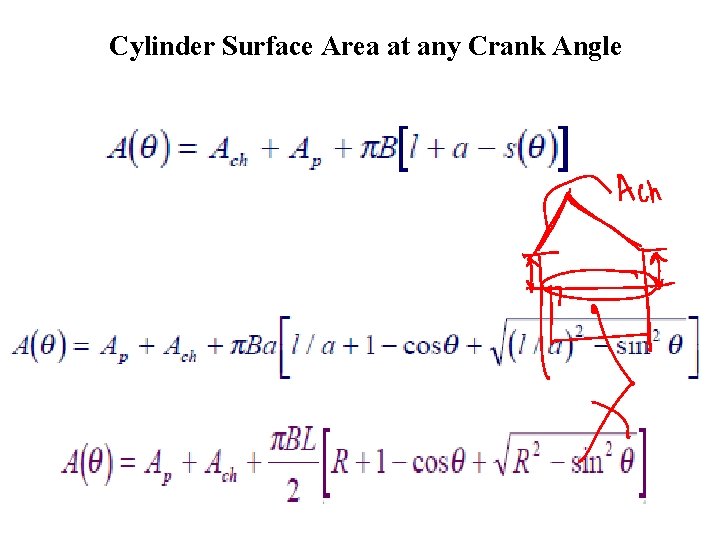
Cylinder Surface Area at any Crank Angle
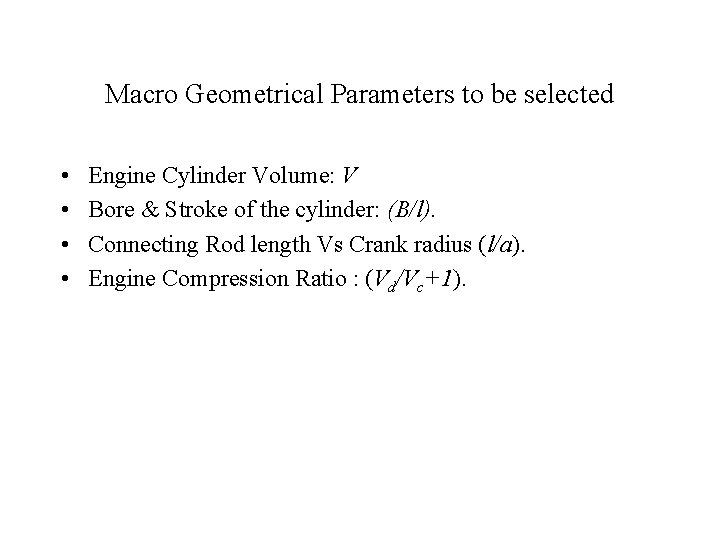
Macro Geometrical Parameters to be selected • • Engine Cylinder Volume: V Bore & Stroke of the cylinder: (B/l). Connecting Rod length Vs Crank radius (l/a). Engine Compression Ratio : (Vd/Vc+1).
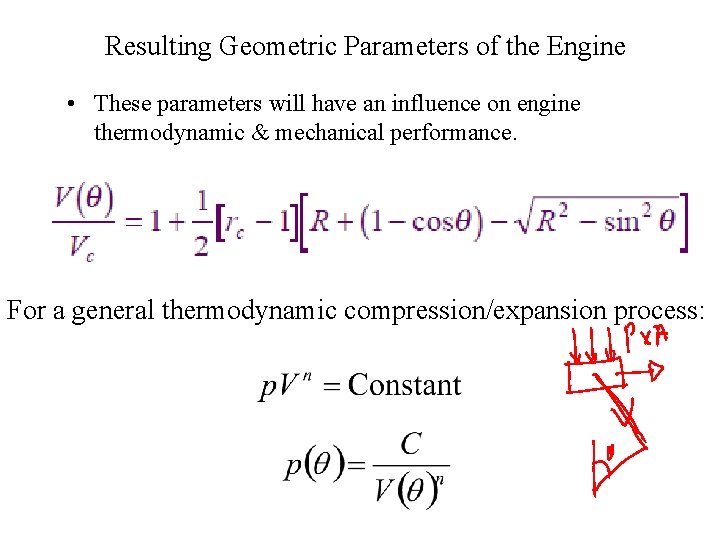
Resulting Geometric Parameters of the Engine • These parameters will have an influence on engine thermodynamic & mechanical performance. For a general thermodynamic compression/expansion process:
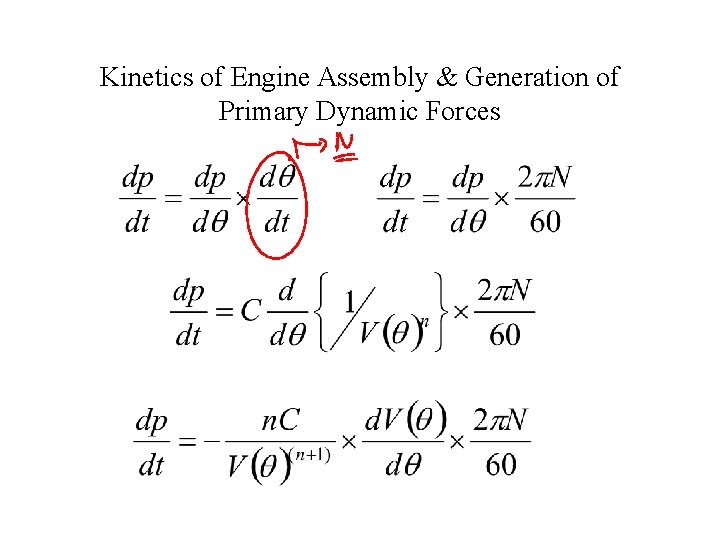
Kinetics of Engine Assembly & Generation of Primary Dynamic Forces
Effect on Frictional Losses • Engine friction is affected by the stroke-to-bore ratio because of two competing effects: • Crankshaft bearing friction and power-cylinder friction. • As the bore-to-stroke ratio increases, the bearing friction increases because the larger piston area transfers larger forces to the crankshaft bearings. • However, the corresponding shorter stroke results in decreased power-cylinder friction originating at the ring/cylinder interface.
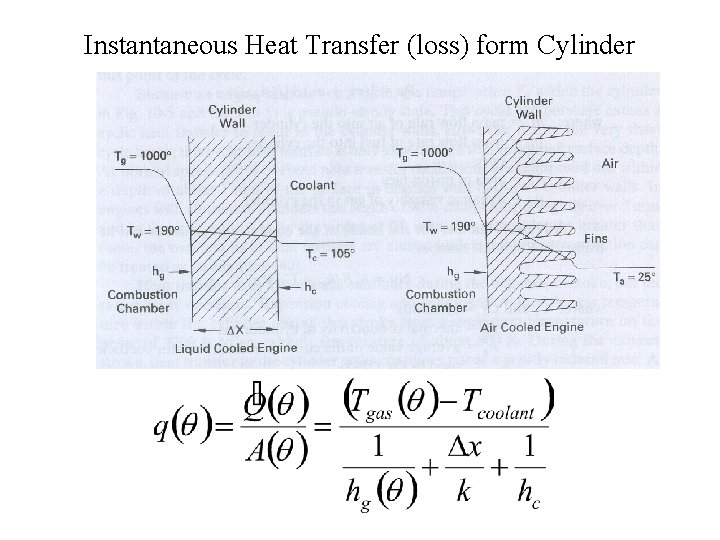
Instantaneous Heat Transfer (loss) form Cylinder
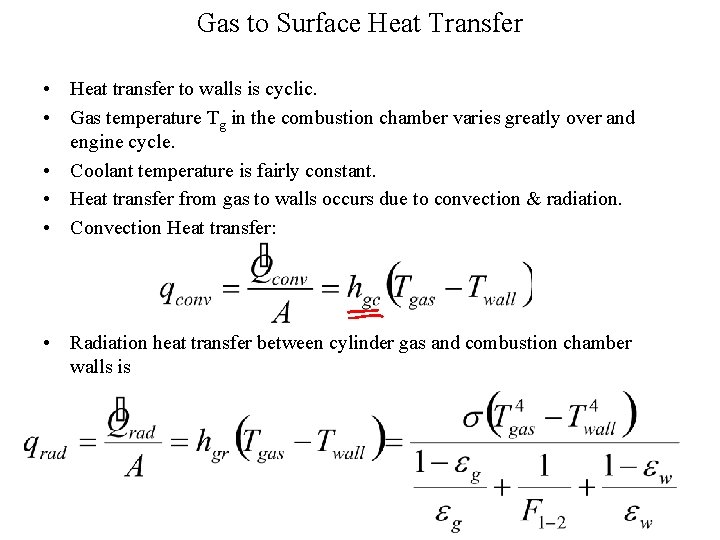
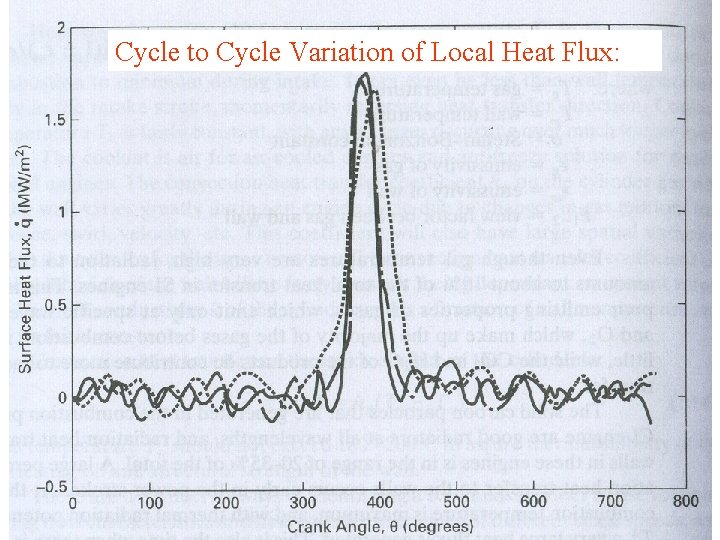
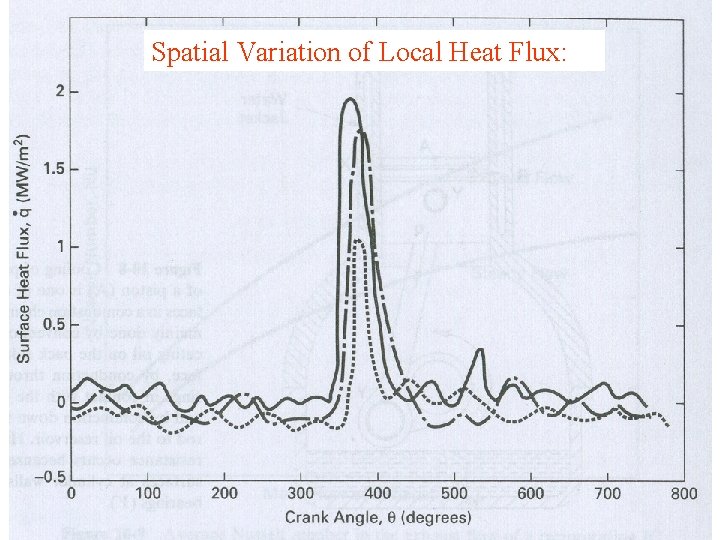
Gas to Surface Heat Transfer • Heat transfer to walls is cyclic. • Gas temperature Tg in the combustion chamber varies greatly over and engine cycle. • Coolant temperature is fairly constant. • Heat transfer from gas to walls occurs due to convection & radiation. • Convection Heat transfer: • Radiation heat transfer between cylinder gas and combustion chamber walls is
Cycle to Cycle Variation of Local Heat Flux:
Spatial Variation of Local Heat Flux:
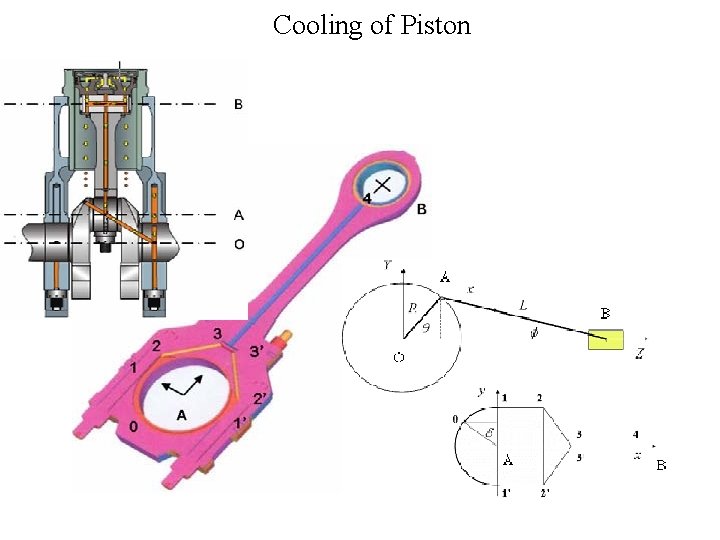
Cooling of Piston
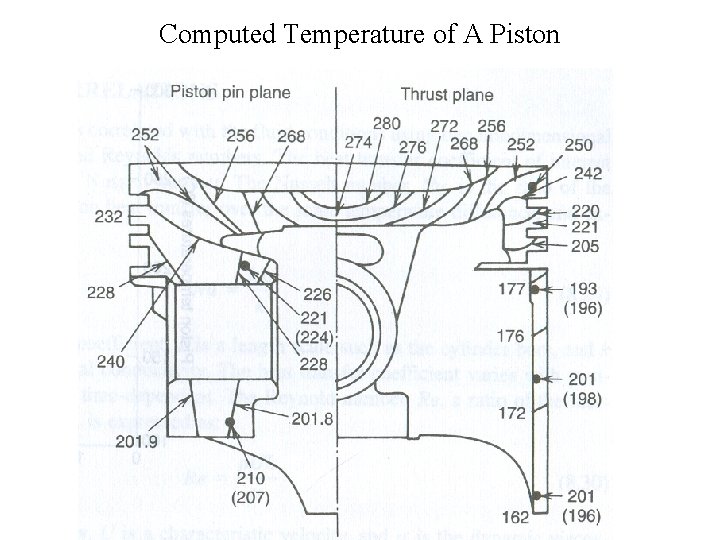
Computed Temperature of A Piston
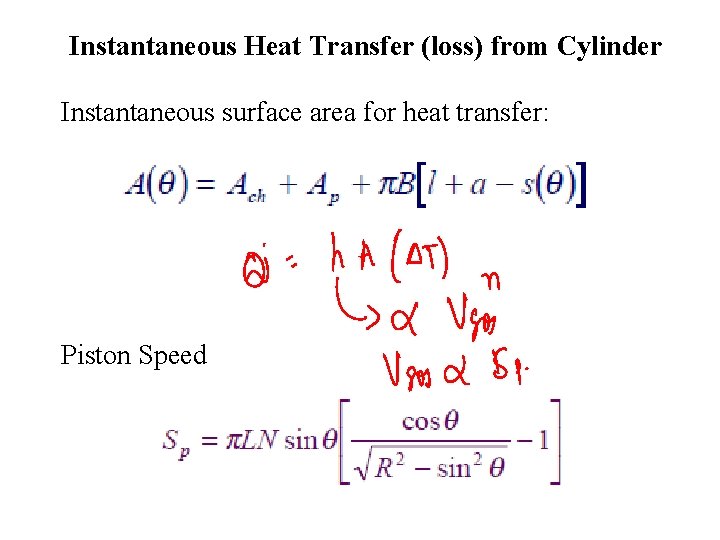
Instantaneous Heat Transfer (loss) from Cylinder Instantaneous surface area for heat transfer: Piston Speed
Effect on Heat Transfer • Simple geometric relationships show that an engine cylinder with shorter bore -to- stroke ratio will have a smaller surface area exposed to the combustion chamber gasses compared to a cylinder with longer bore-to- stroke ratio. • The smaller area leads directly to reduced in-cylinder heat transfer, increased energy transfer to the crankshaft and, therefore, higher efficiency.
Optimum Cylinder Geometry • Identification of the optimum engine geometry that provides the best opportunity to have a highly efficient internal combustion engine is the first step in designing an engine. • In-cylinder simulations have shown that the heat transfer increases rapidly above a bore-to-stroke ratio of about 0. 5. • Engine systems simulations have shown that the pumping work increases rapidly above a bore=to-stroke ratio of about 0. 45. • Engine friction models have shown that the crankshaft bearing and power-cylinder friction values, for the most part, cancel each other out for our opposed-piston, twostroke engine.