
Kimberley 2017 BUILDING THINKING CLASSROOMS Peter Liljedahl Kimberley

Kimberley 2017 BUILDING THINKING CLASSROOMS - Peter Liljedahl
Kimberley 2017 @pgliljedahl #thinkingclassrooms #VNPS liljedahl@sfu. ca www. peterliljedahl. com/presentations Global Math Department
• Liljedahl, P. (2014). The affordances of using visibly random groups in a mathematics classroom. In Y. Li, E. Silver, & S. Li (eds. ), Transforming Mathematics Instruction: Multiple Approaches and Practices. (pp. 127 -144). New York, NY: Springer. • Liljedahl, P. (2016). Flow: A Framework for Discussing Teaching. Proceedings of the 40 th Conference of the International Group for the Psychology of Mathematics Education, Szeged, Hungary. • Liljedahl, P. (in press). On the edges of flow: Student problem solving behavior. In S. Carreira, N. Amado, & K. Jones (eds. ), Broadening the scope of research on mathematical problem solving: A focus on technology, creativity and affect. New York, NY: Springer. • Liljedahl, P. (in press). On the edges of flow: Student engagement in problem solving. Proceedings of the 10 th Congress of the European Society for Research in Mathematics Education. Dublin, Ireland. • Liljedahl, P. (in press). Building Thinking Classrooms: A Story of Teacher Professional Development. The 1 st International Forum on Professional Development for Teachers. Seoul, Korea. • Liljedahl, P. (under review). Building thinking classrooms. In A. Kajander, J. Holm, & E. Chernoff (eds. ) Teaching and learning secondary school mathematics: Canadian perspectives in an international context. New York, NY: Springer. • Liljedahl, P. (under review). Conditions for Supporting Problem Solving: Vertical Non. Permanent Surfaces. In P. Liljedahl & M. Santos (eds. ), Problem Solving in Mathematics Education: Perspectives from 2016. New York, NY: Springer. Kimberley 2017 • Liljedahl, P. (2016). Building thinking classrooms: Conditions for problem solving. In P. Felmer, J. Kilpatrick, & E. Pekhonen (eds. ), Posing and Solving Mathematical Problems: Advances and New Perspectives. (pp. 361 -386). New York, NY: Springer.
Kimberley 2017 D E T S A S I ! R
Kimberley 2017 [CATEGORY NAME] (53%) ORY G E T [CA 6%) ( ] E NAM [CATEGORY NAME] (13%) D U T S G N I T N E 0% [CATEGORY NAME] (9%) Checking Understanding (19%)

Kimberley 2017
Kimberley 2017 CASTING ABOUT (n = 400+)
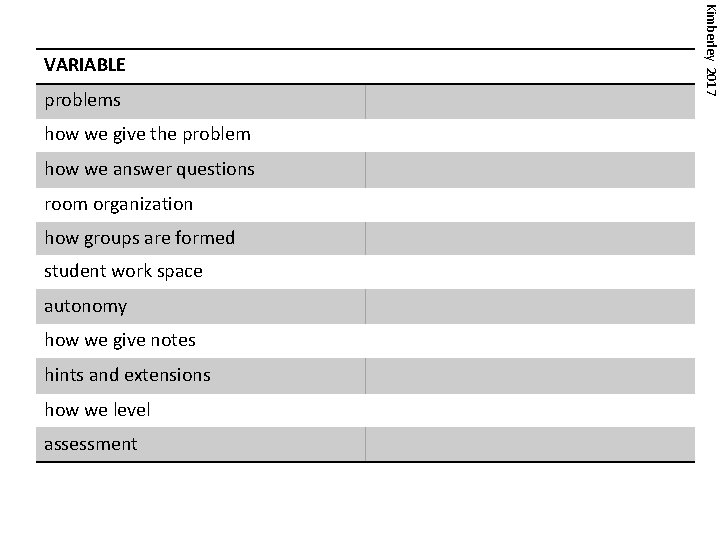
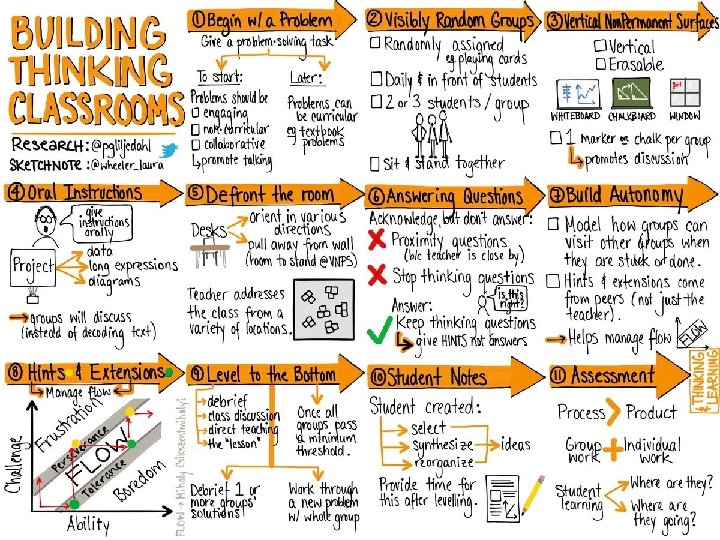
problems how we give the problem how we answer questions room organization how groups are formed student work space autonomy how we give notes hints and extensions how we level assessment Kimberley 2017 VARIABLE
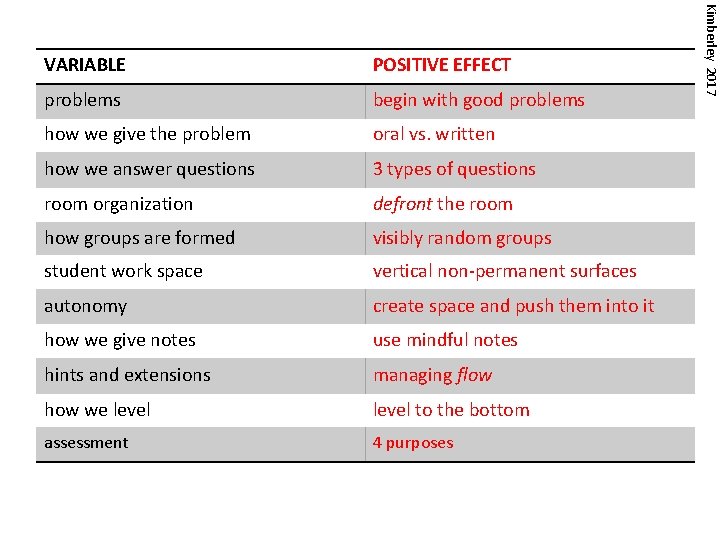
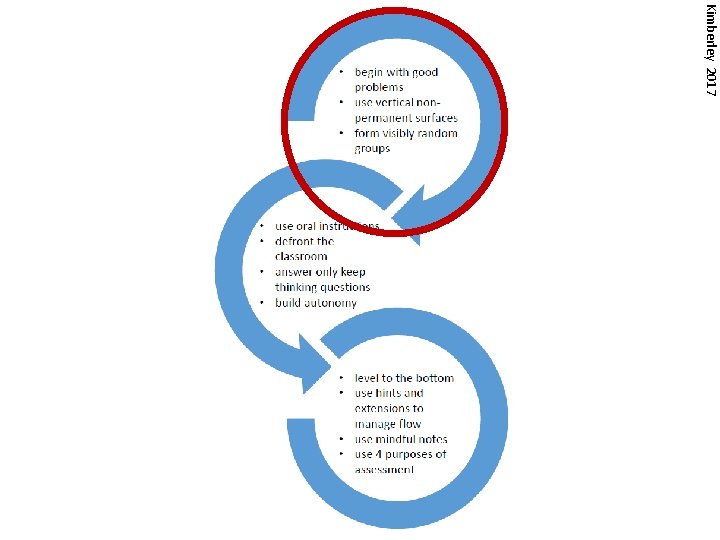
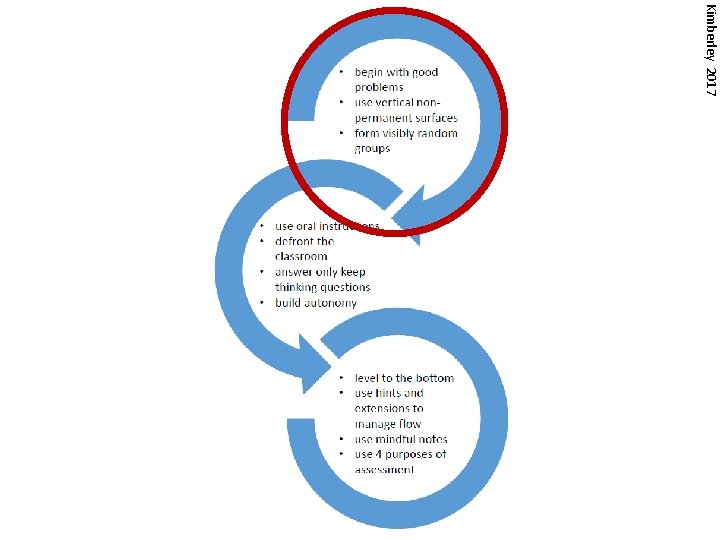
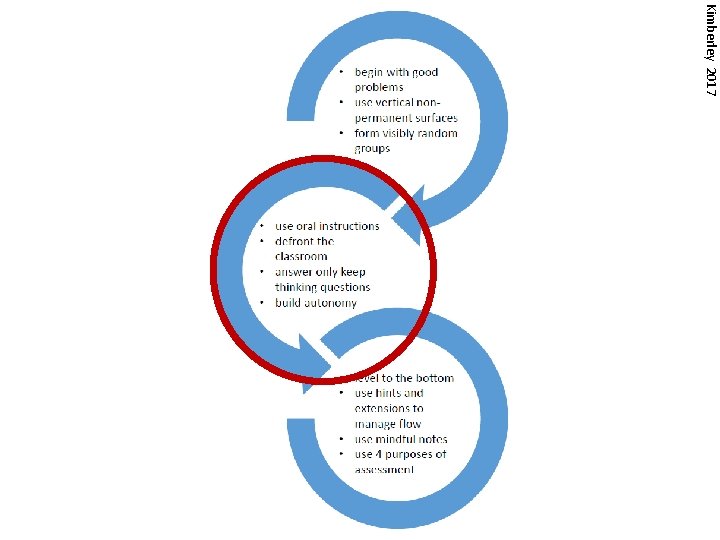
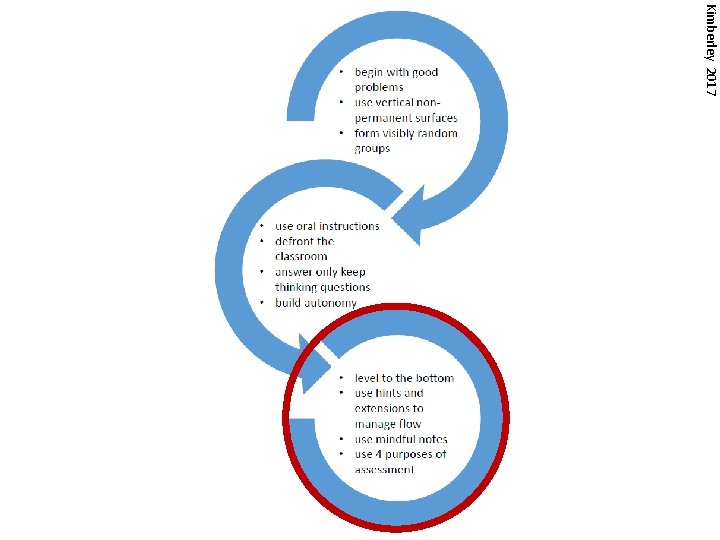
POSITIVE EFFECT problems begin with good problems how we give the problem oral vs. written how we answer questions 3 types of questions room organization defront the room how groups are formed visibly random groups student work space vertical non-permanent surfaces autonomy create space and push them into it how we give notes use mindful notes hints and extensions managing flow how we level to the bottom assessment 4 purposes Kimberley 2017 VARIABLE
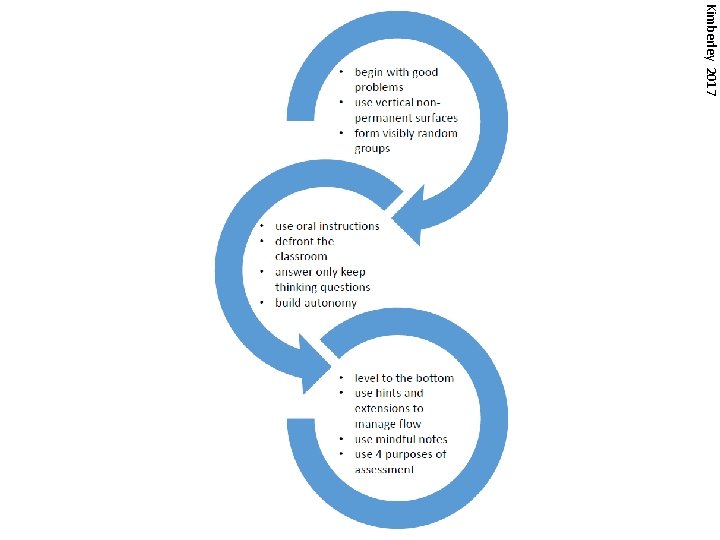
Kimberley 2017
Kimberley 2017
Kimberley 2017
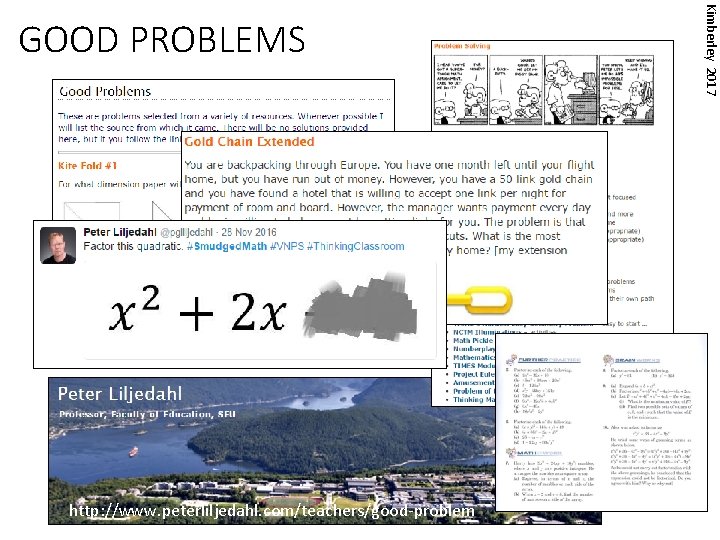
http: //www. peterliljedahl. com/teachers/good-problem Kimberley 2017 GOOD PROBLEMS
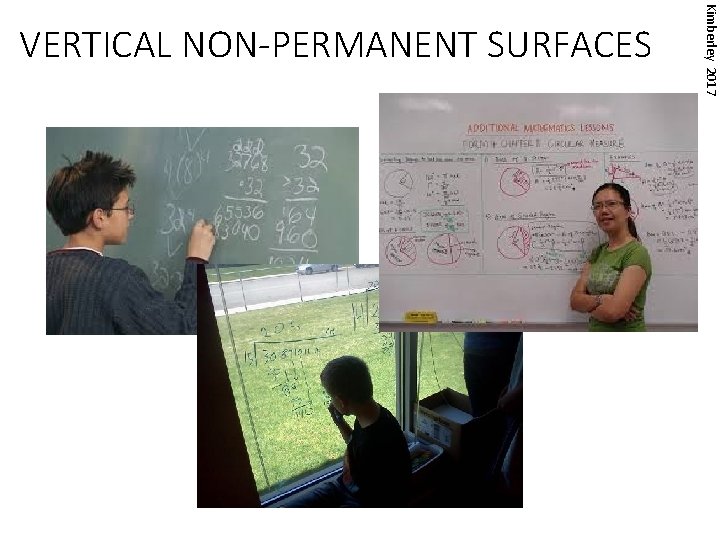
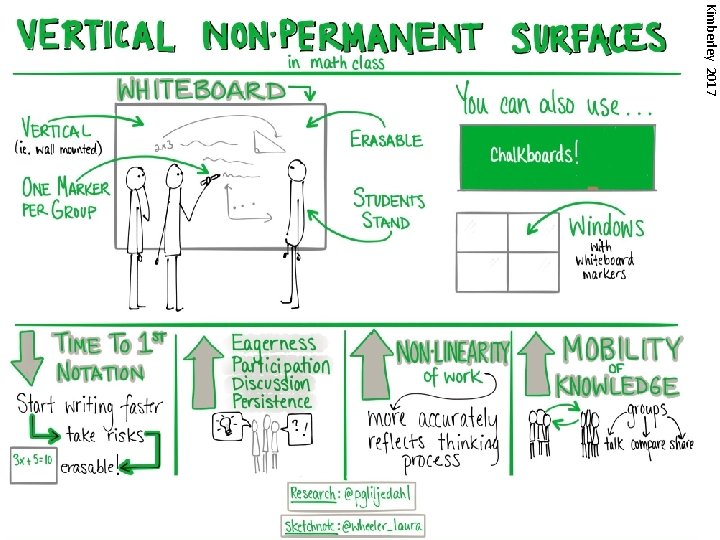
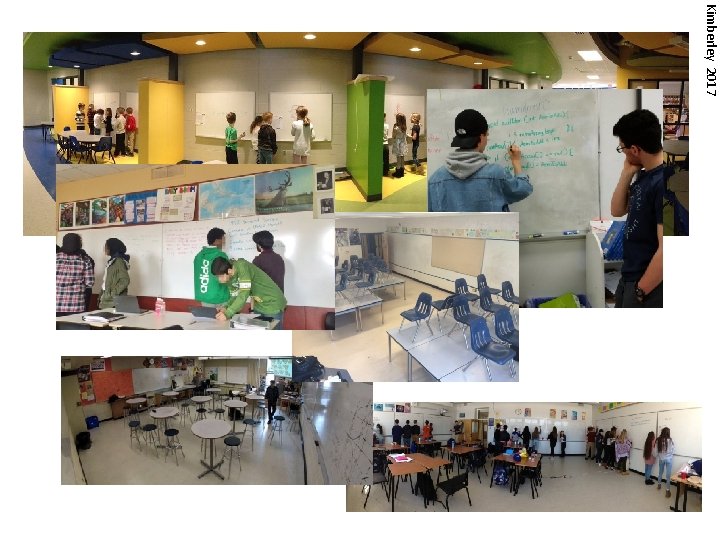
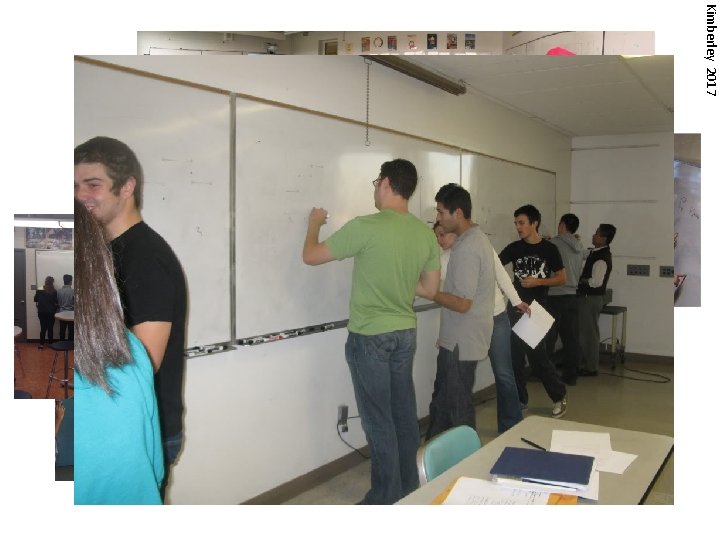
Kimberley 2017 VERTICAL NON-PERMANENT SURFACES
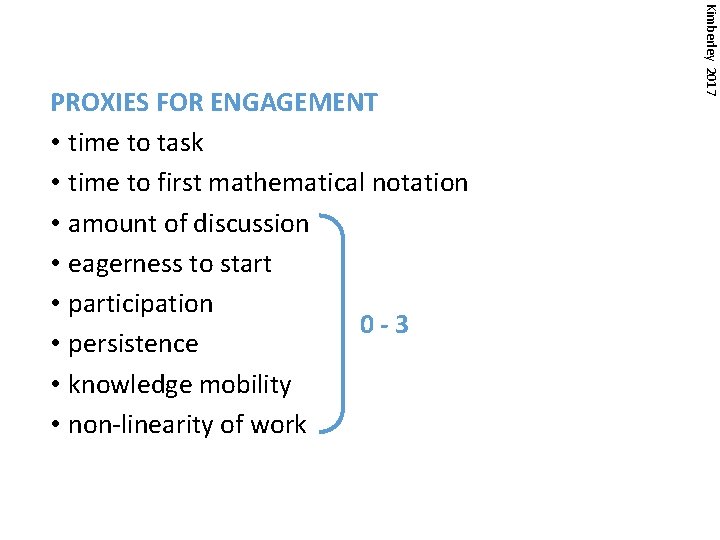
Kimberley 2017 PROXIES FOR ENGAGEMENT • time to task • time to first mathematical notation • amount of discussion • eagerness to start • participation 0 -3 • persistence • knowledge mobility • non-linearity of work
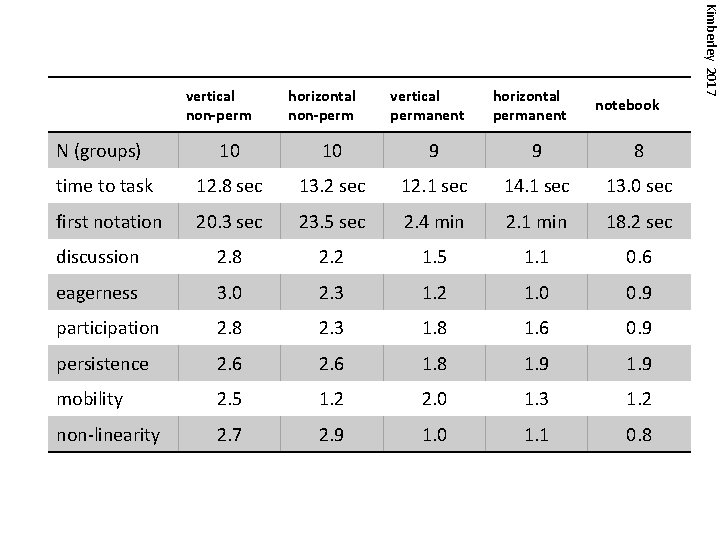
horizontal non-perm vertical permanent horizontal permanent notebook N (groups) 10 10 9 9 8 time to task 12. 8 sec 13. 2 sec 12. 1 sec 14. 1 sec 13. 0 sec first notation 20. 3 sec 23. 5 sec 2. 4 min 2. 1 min 18. 2 sec discussion 2. 8 2. 2 1. 5 1. 1 0. 6 eagerness 3. 0 2. 3 1. 2 1. 0 0. 9 participation 2. 8 2. 3 1. 8 1. 6 0. 9 persistence 2. 6 1. 8 1. 9 mobility 2. 5 1. 2 2. 0 1. 3 1. 2 non-linearity 2. 7 2. 9 1. 0 1. 1 0. 8 Kimberley 2017 vertical non-perm
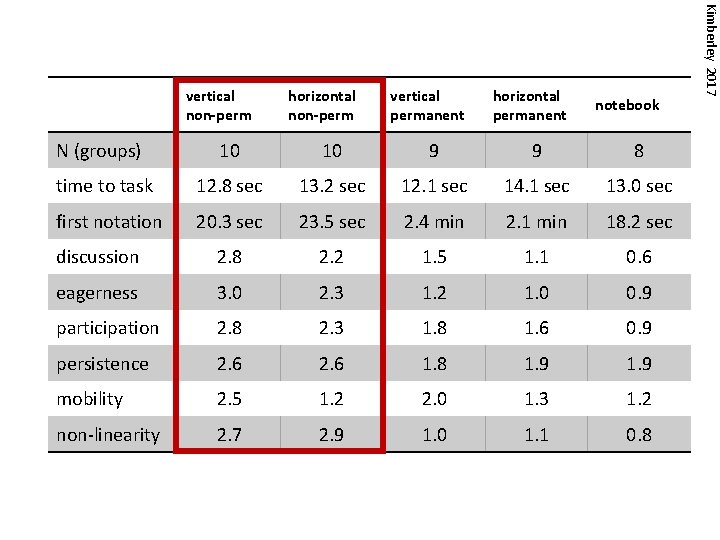
horizontal non-perm vertical permanent horizontal permanent notebook N (groups) 10 10 9 9 8 time to task 12. 8 sec 13. 2 sec 12. 1 sec 14. 1 sec 13. 0 sec first notation 20. 3 sec 23. 5 sec 2. 4 min 2. 1 min 18. 2 sec discussion 2. 8 2. 2 1. 5 1. 1 0. 6 eagerness 3. 0 2. 3 1. 2 1. 0 0. 9 participation 2. 8 2. 3 1. 8 1. 6 0. 9 persistence 2. 6 1. 8 1. 9 mobility 2. 5 1. 2 2. 0 1. 3 1. 2 non-linearity 2. 7 2. 9 1. 0 1. 1 0. 8 Kimberley 2017 vertical non-perm
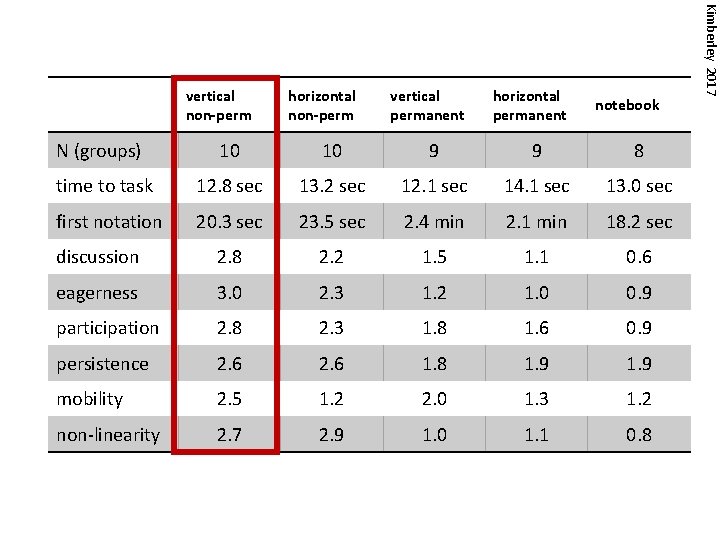
horizontal non-perm vertical permanent horizontal permanent notebook N (groups) 10 10 9 9 8 time to task 12. 8 sec 13. 2 sec 12. 1 sec 14. 1 sec 13. 0 sec first notation 20. 3 sec 23. 5 sec 2. 4 min 2. 1 min 18. 2 sec discussion 2. 8 2. 2 1. 5 1. 1 0. 6 eagerness 3. 0 2. 3 1. 2 1. 0 0. 9 participation 2. 8 2. 3 1. 8 1. 6 0. 9 persistence 2. 6 1. 8 1. 9 mobility 2. 5 1. 2 2. 0 1. 3 1. 2 non-linearity 2. 7 2. 9 1. 0 1. 1 0. 8 Kimberley 2017 vertical non-perm
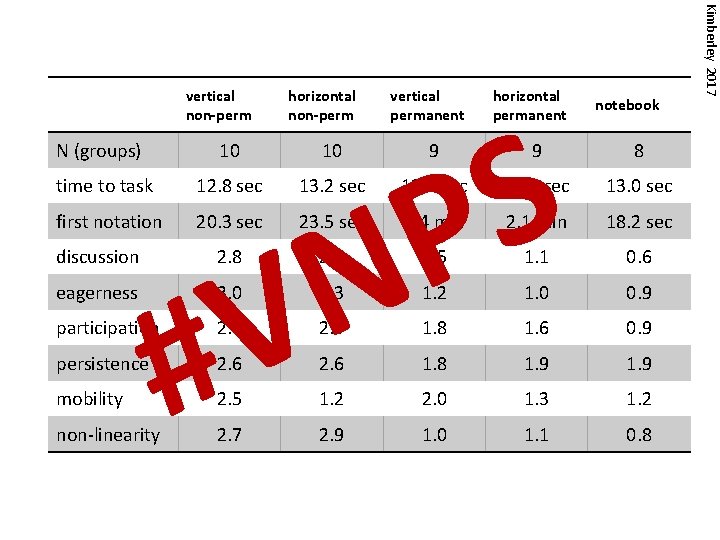
horizontal non-perm vertical permanent horizontal permanent S P N notebook N (groups) 10 10 9 9 8 time to task 12. 8 sec 13. 2 sec 12. 1 sec 14. 1 sec 13. 0 sec first notation 20. 3 sec 23. 5 sec 2. 4 min 2. 1 min 18. 2 sec 2. 8 2. 2 1. 5 1. 1 0. 6 3. 0 2. 3 1. 2 1. 0 0. 9 2. 8 2. 3 1. 8 1. 6 0. 9 2. 6 1. 8 1. 9 2. 5 1. 2 2. 0 1. 3 1. 2 2. 7 2. 9 1. 0 1. 1 0. 8 discussion eagerness participation persistence mobility non-linearity V # Kimberley 2017 vertical non-perm
Kimberley 2017
Kimberley 2017
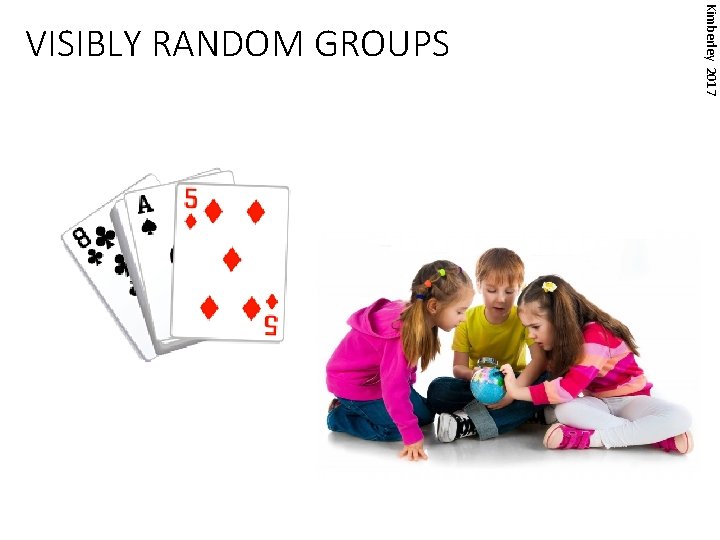
Kimberley 2017 VISIBLY RANDOM GROUPS
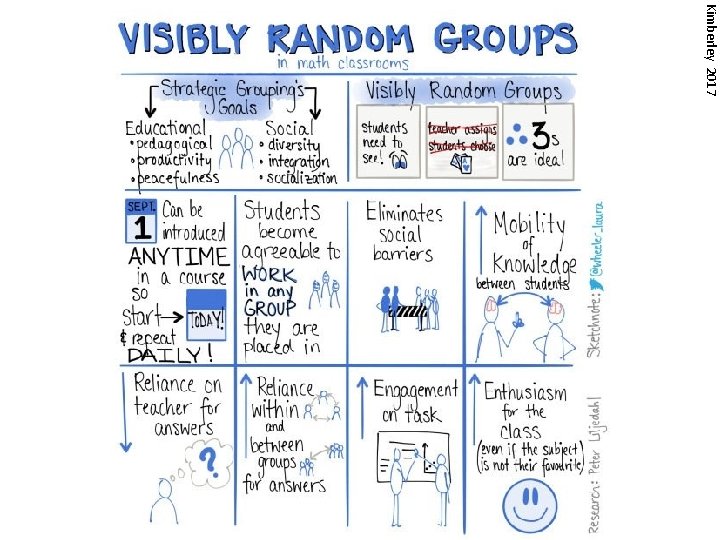
Kimberley 2017 • students become agreeable to work in any group they are placed in • there is an elimination of social barriers within the classroom • mobility of knowledge between students increases • reliance on co-constructed intra- and inter-group answers increases • reliance on the teacher for answers decreases • engagement in classroom tasks increase • students become more enthusiastic about mathematics class
Kimberley 2017
Kimberley 2017
Kimberley 2017
Kimberley 2017
Kimberley 2017
Kimberley 2017 THANK YOU! liljedahl@sfu. ca www. peterliljedahl. com/presentations @pgliljedahl, #VNPS, #Thinking. Classroom Global Math Department
- Slides: 29