
Kidney Pancreas Intestinal Transplantation Mr James Gilbert Consultant
Kidney, Pancreas & Intestinal Transplantation Mr James Gilbert Consultant Transplant & Vascular Access Surgeon


A Lot to squeeze in!
Kidney Transplantation
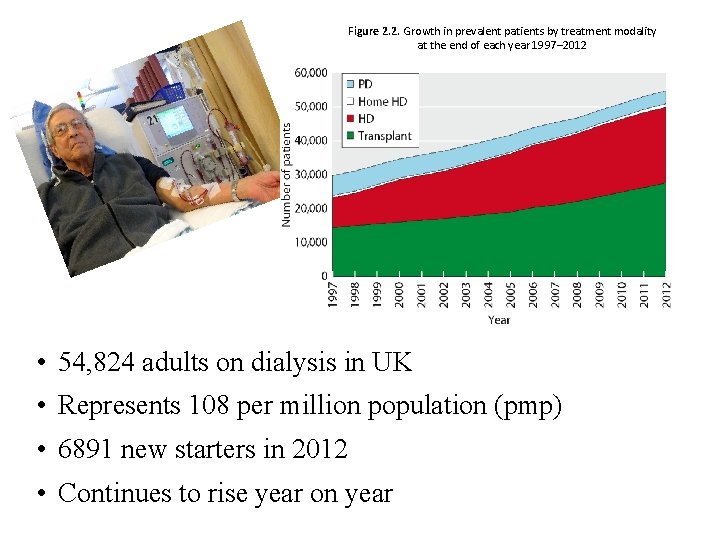
Figure 2. 2. Growth in prevalent patients by treatment modality at the end of each year 1997– 2012 • 54, 824 adults on dialysis in UK • Represents 108 per million population (pmp) • 6891 new starters in 2012 • Continues to rise year on year
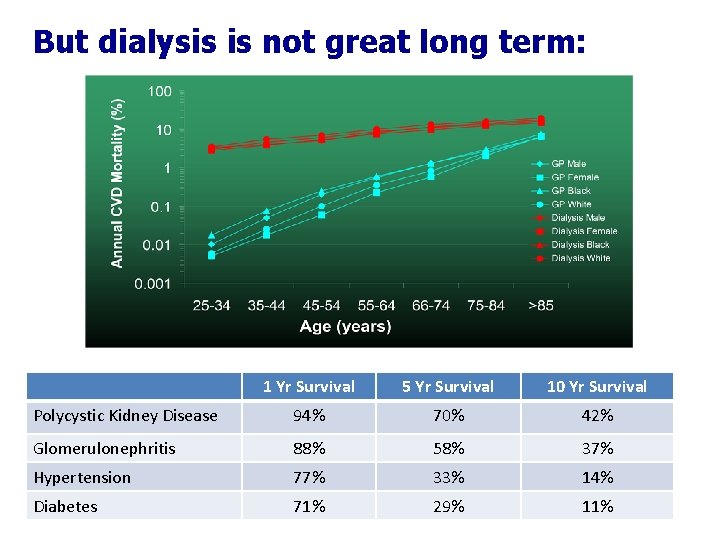
But dialysis is not great long term: 1 Yr Survival 5 Yr Survival 10 Yr Survival Polycystic Kidney Disease 94% 70% 42% Glomerulonephritis 88% 58% 37% Hypertension 77% 33% 14% Diabetes 71% 29% 11%
Transplant is a ‘treatment option’ • Ultimate form of RRT • Improves quality and quantity of life • Allows normal diet and fluid intake • Progressive reversal of anaemia & bone disease • All patients with ESRF should be considered • Not necessarily for everyone • There is an alternative (HD, PD, Conservative) • Transplants don’t last forever
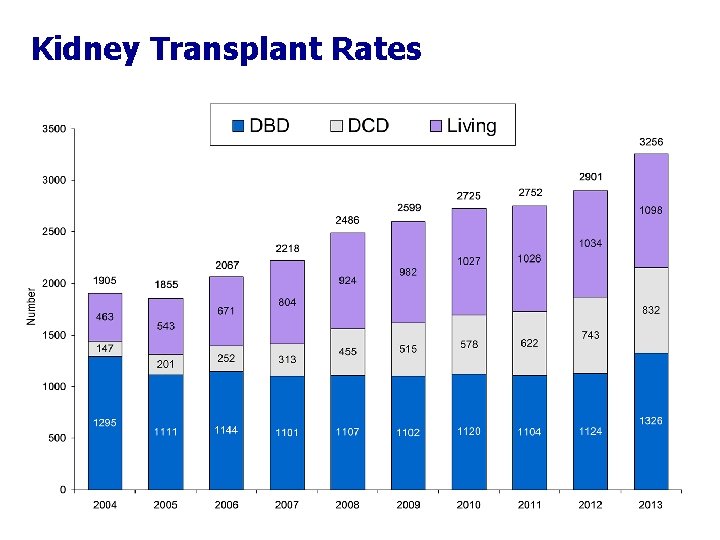
Kidney Transplant Rates
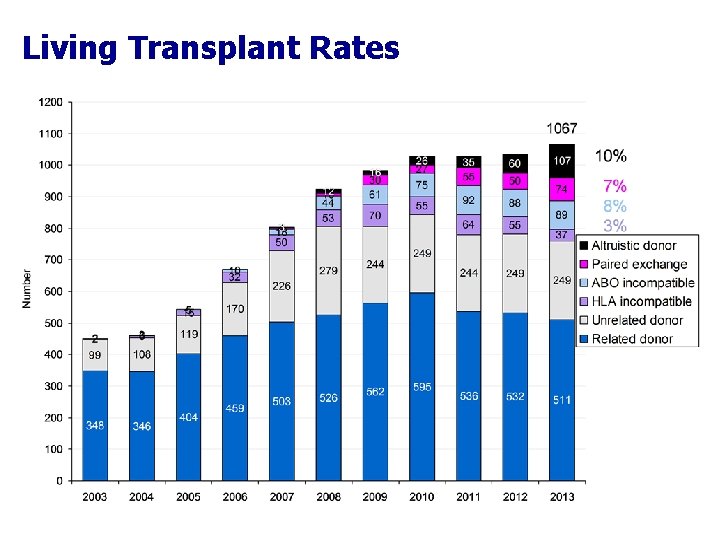
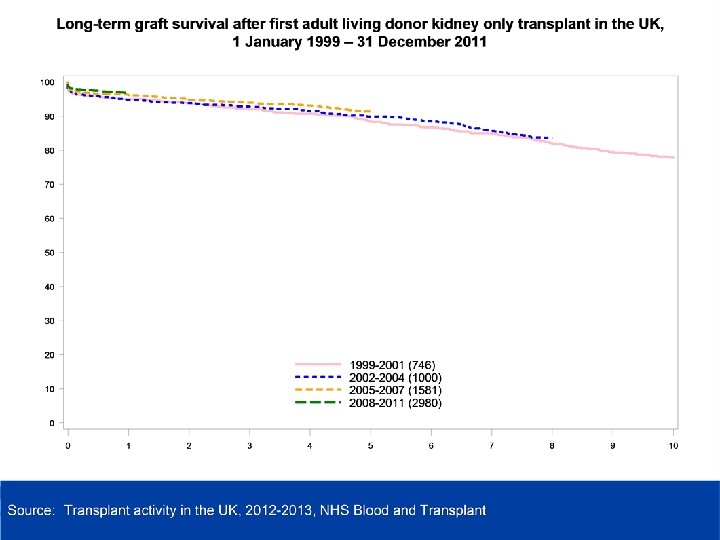
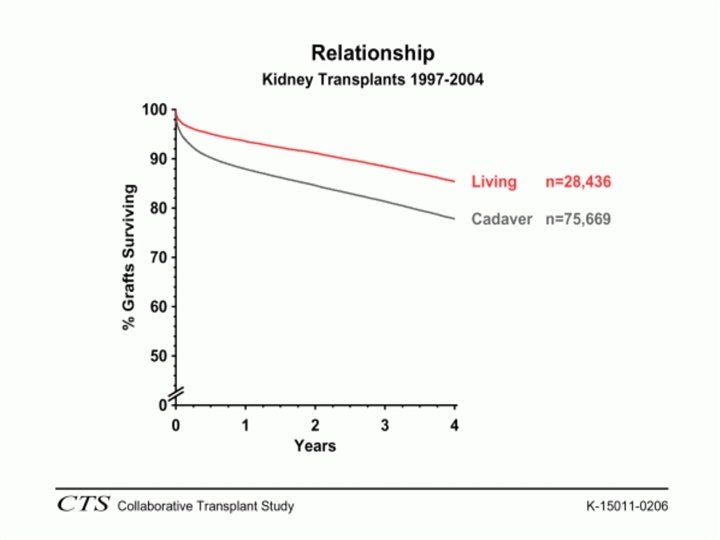
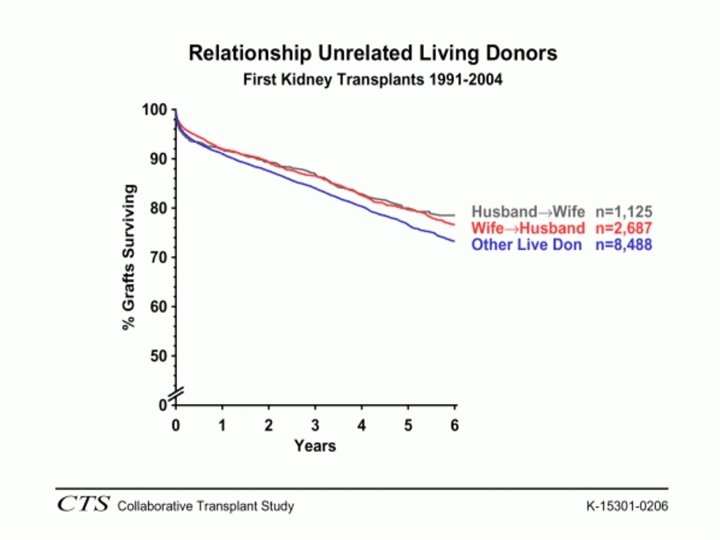
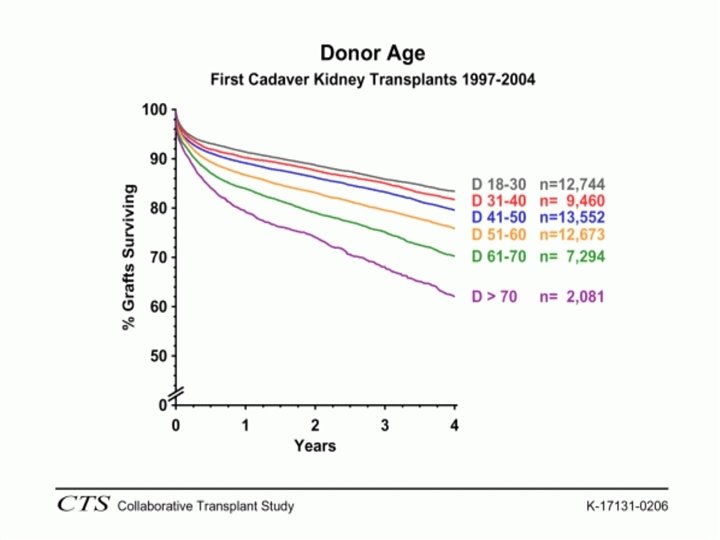
Living Transplant Rates
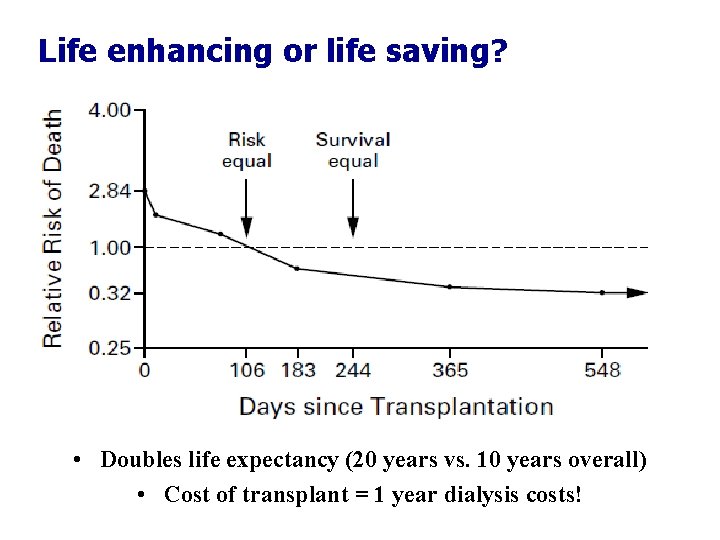
Life enhancing or life saving? • Doubles life expectancy (20 years vs. 10 years overall) • Cost of transplant = 1 year dialysis costs!
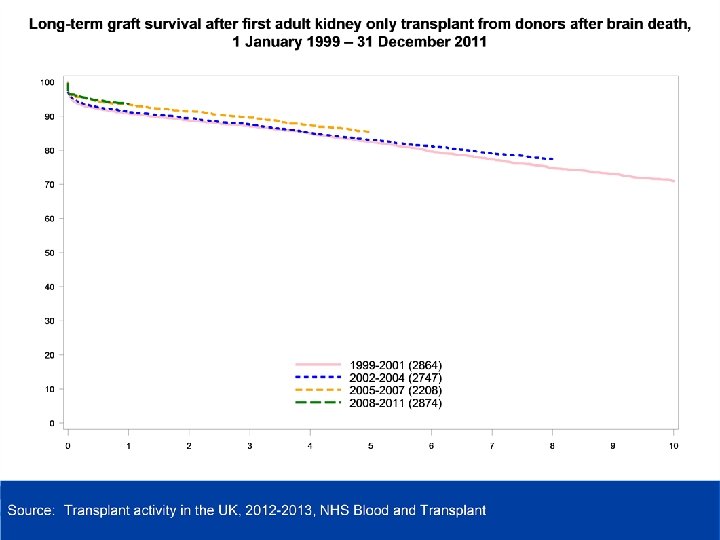
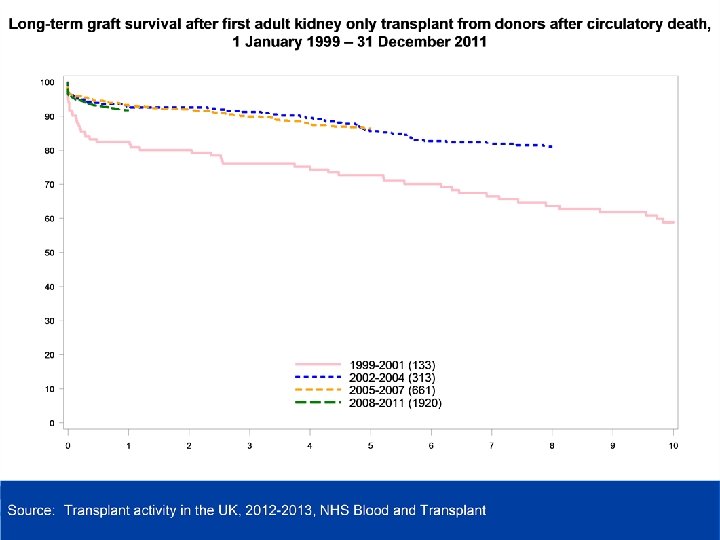
Pancreas Transplantation
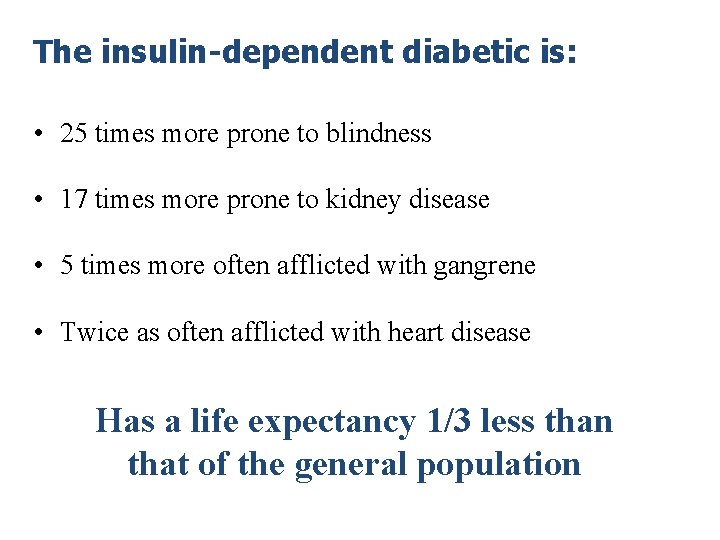
The insulin-dependent diabetic is: • 25 times more prone to blindness • 17 times more prone to kidney disease • 5 times more often afflicted with gangrene • Twice as often afflicted with heart disease Has a life expectancy 1/3 less than that of the general population
Pancreas Transplantation: • Only treatment that reliably offers type 1 diabetics: – – – Insulin independence Normal glucose metabolism Normal Diet Ameliorate secondary complications DM Improved quality and quantity of life • Now associated with improved outcomes • Viewed more enthusiastically rather than sceptically
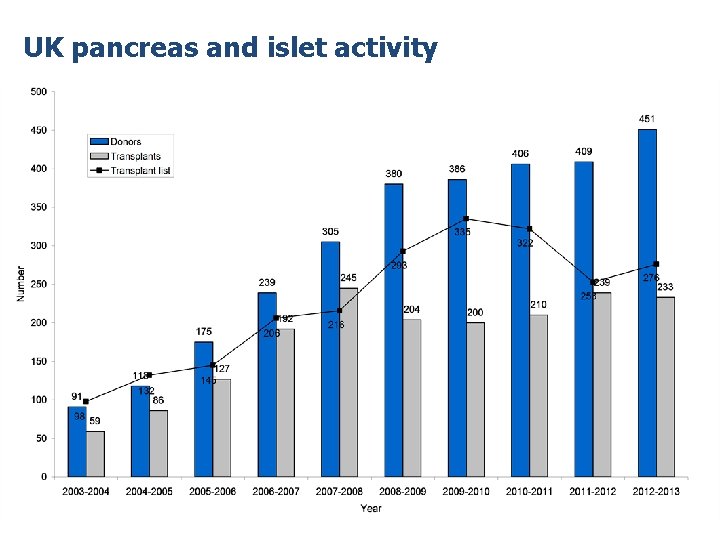
UK pancreas and islet activity
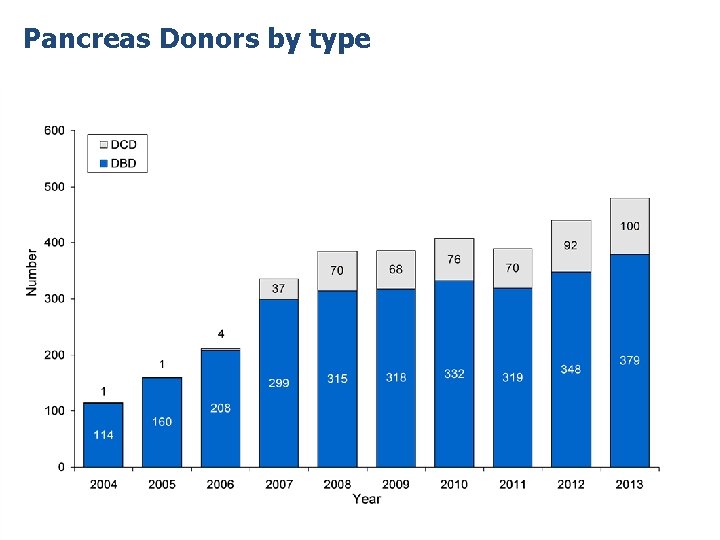
Pancreas Donors by type
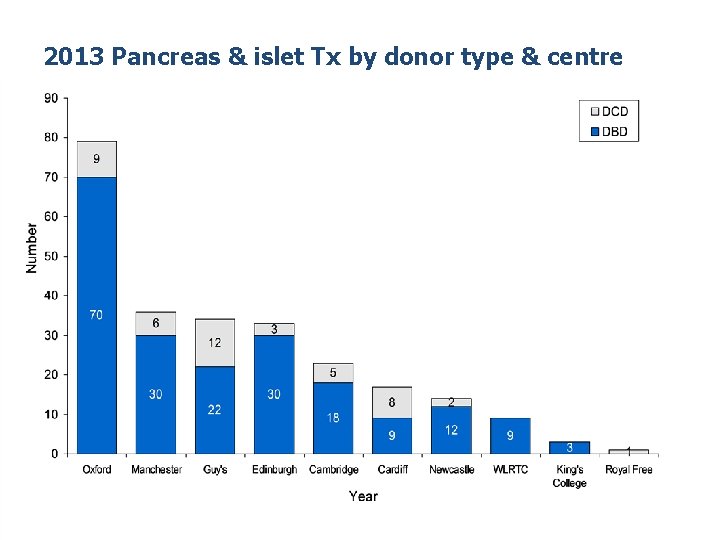
2013 Pancreas & islet Tx by donor type & centre
Any pancreas program should: • Have overall low morbidity & mortality • Eliminate need for insulin and BM monitoring • Eliminate hypoglycaemic events • Create a euglycaemic state with pre and postprandial sugars comparable to non diabetics • Achieve Hb. A 1 c levels comparable to those in non diabetics
Best results achieved when: • Have a ‘perfect’ donor – Young, slim DBD Donor • Have a ‘perfect’ recipient – Pre-dialysis and slim • ‘Perfect’ retrieval and short cold ischaemic time • No complications • Ideals rarely possible but must strive for ‘perfection’ due to sensitive nature of the pancreas • Hence fussy pancreas transplant surgeons
Donor considerations • Age: <55 (DBD) <50 (DCD) • Girth < 90 cm / BMI < 27 • ‘Good health’ history • Minimal ‘down time’ • Minimal fatty infiltration or fibrosis of parenchyma • Short cold ischaemic time
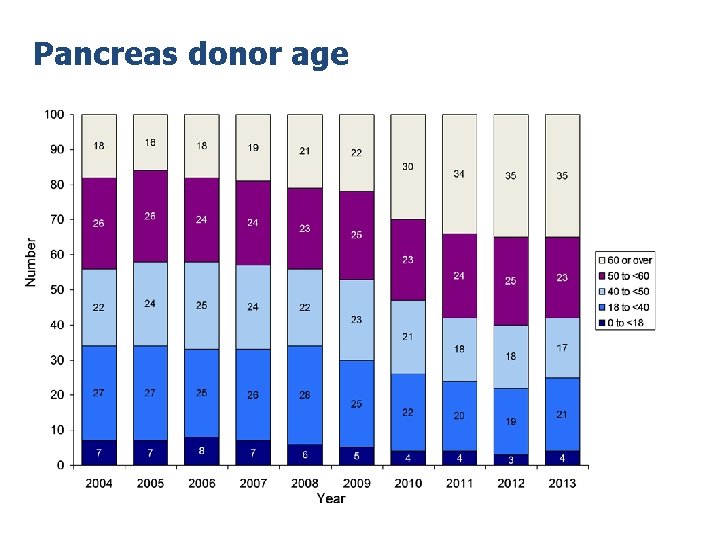
Pancreas donor age
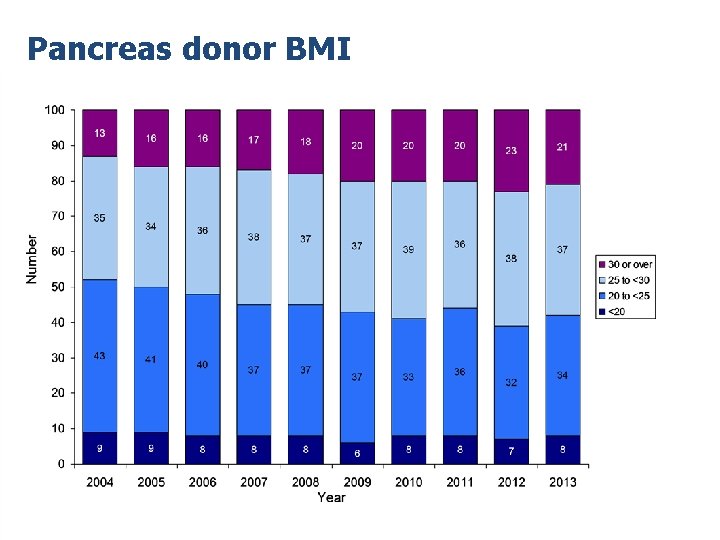
Pancreas donor BMI

Surgical options • Simultaneous Pancreas & Kidney (SPK) • Pancreas after Kidney (PAK) • Pancreas Alone (PAT) • (Islets) – Radiological guided infusion into portal system
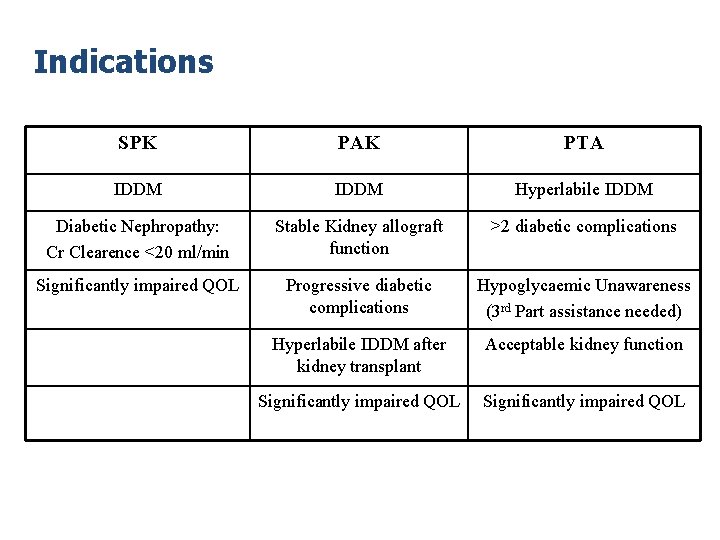
Indications SPK PAK PTA IDDM Hyperlabile IDDM Diabetic Nephropathy: Cr Clearence <20 ml/min Stable Kidney allograft function >2 diabetic complications Significantly impaired QOL Progressive diabetic complications Hypoglycaemic Unawareness (3 rd Part assistance needed) Hyperlabile IDDM after kidney transplant Acceptable kidney function Significantly impaired QOL
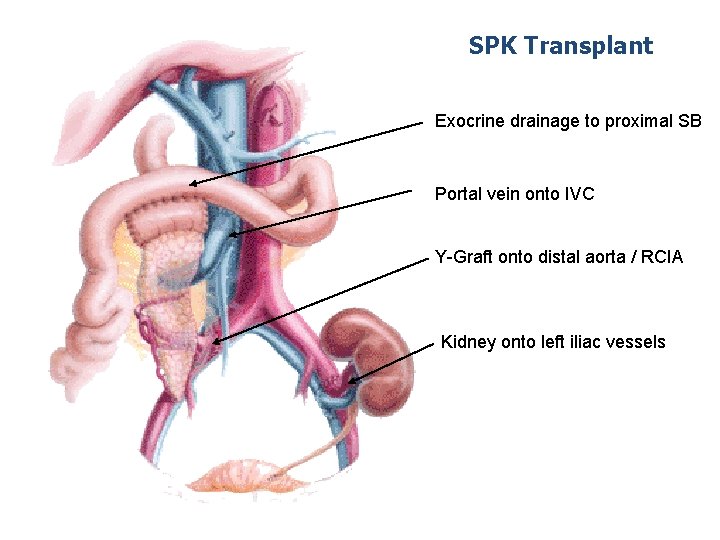
SPK Transplant Exocrine drainage to proximal SB Portal vein onto IVC Y-Graft onto distal aorta / RCIA Kidney onto left iliac vessels
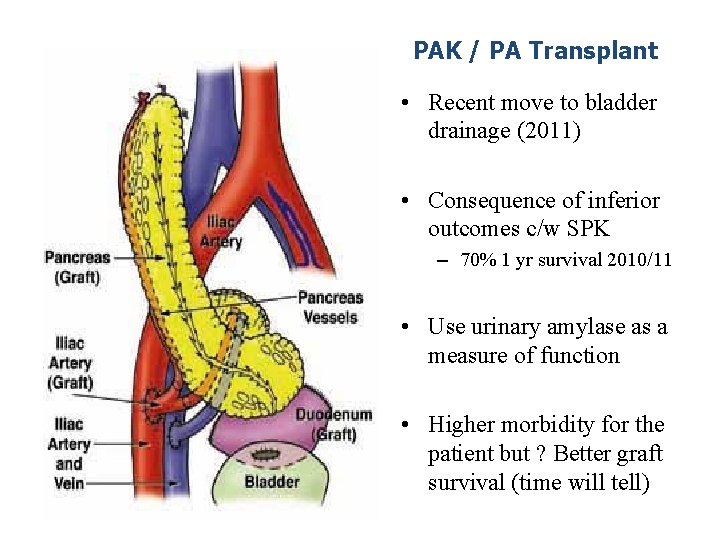
PAK / PA Transplant • Recent move to bladder drainage (2011) • Consequence of inferior outcomes c/w SPK – 70% 1 yr survival 2010/11 • Use urinary amylase as a measure of function • Higher morbidity for the patient but ? Better graft survival (time will tell)
Common peri-operative problems • Bleeding • Thrombosis • Graft Pancreatitis • Delayed Graft Function • Prolonged ileus / exacerbation gastroparesis – Need for TPN • Sepsis – Peri-pancreatic collections – Pancreatic leaks
Graft Pancreatitis • Appears during the first few days and common • Usually self limiting • Pain and tenderness at the graft site • Associated peri-pancreatic oedema / collection • High drain amylase • Usually result of: – Ischaemic reperfusion injury – More common in marginal organ, DCD & larger recipient – Handling – Infection
Oxford Pancreas Programme Activity & Outcome Data April 2011 – Mar 2013
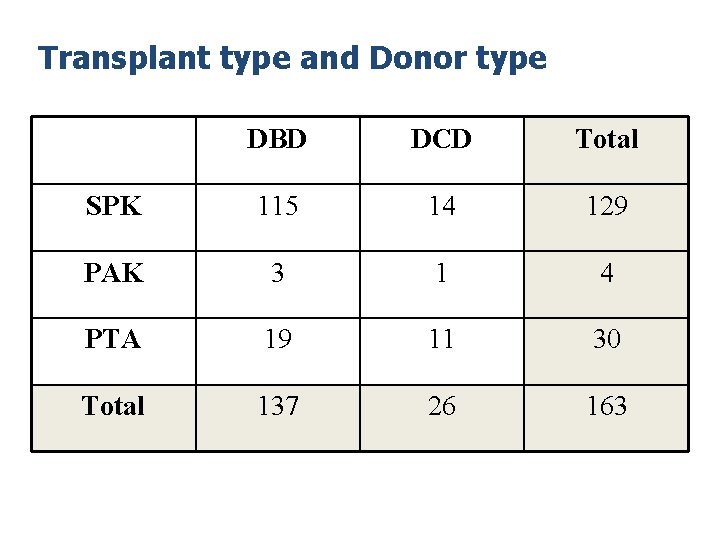
Transplant type and Donor type DBD DCD Total SPK 115 14 129 PAK 3 1 4 PTA 19 11 30 Total 137 26 163
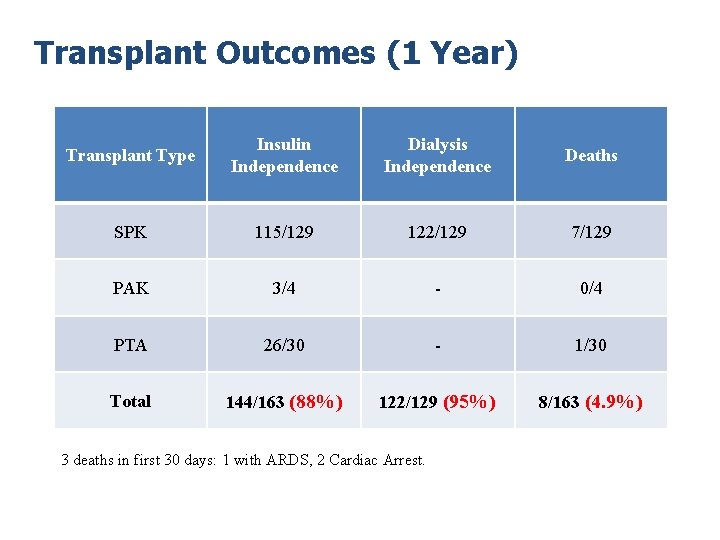
Transplant Outcomes (1 Year) Transplant Type Insulin Independence Dialysis Independence Deaths SPK 115/129 122/129 7/129 PAK 3/4 - 0/4 PTA 26/30 - 1/30 Total 144/163 (88%) 122/129 (95%) 8/163 (4. 9%) 3 deaths in first 30 days: 1 with ARDS, 2 Cardiac Arrest.
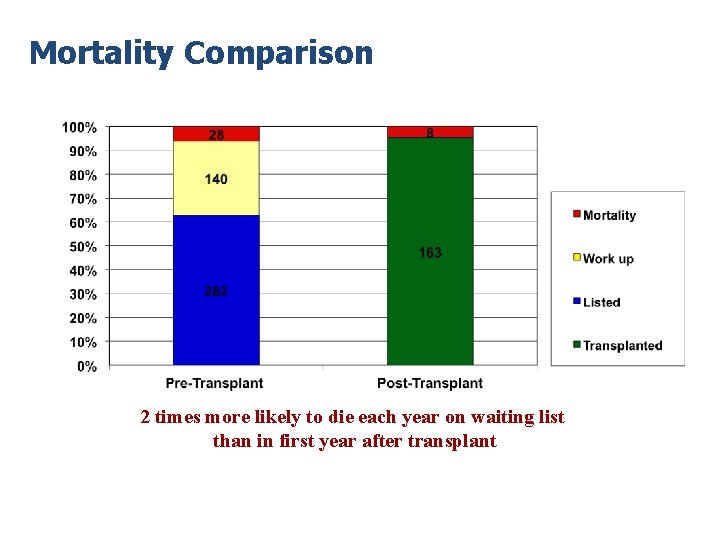
Mortality Comparison 2 times more likely to die each year on waiting list than in first year after transplant
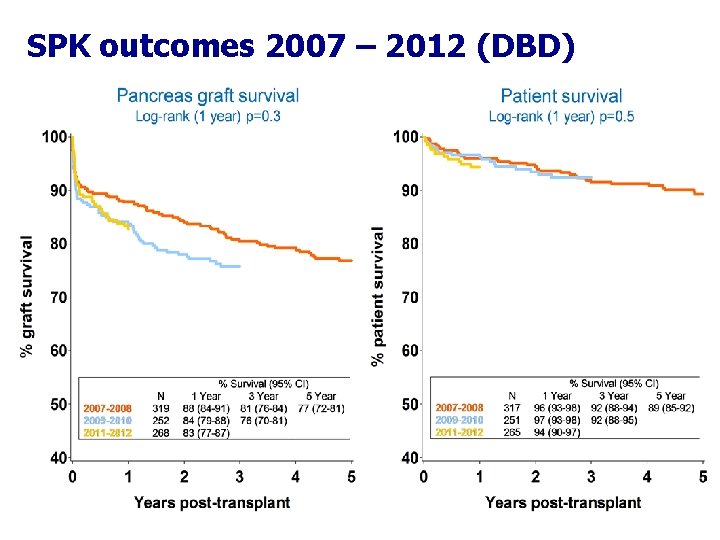
SPK outcomes 2007 – 2012 (DBD)
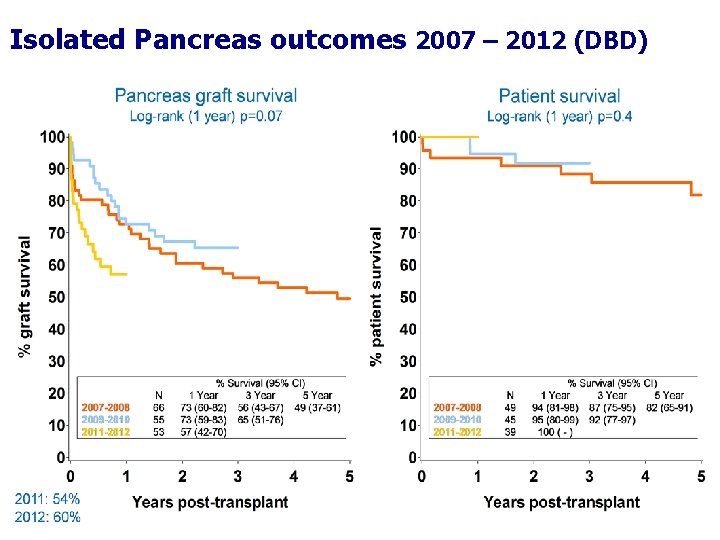
Isolated Pancreas outcomes 2007 – 2012 (DBD)
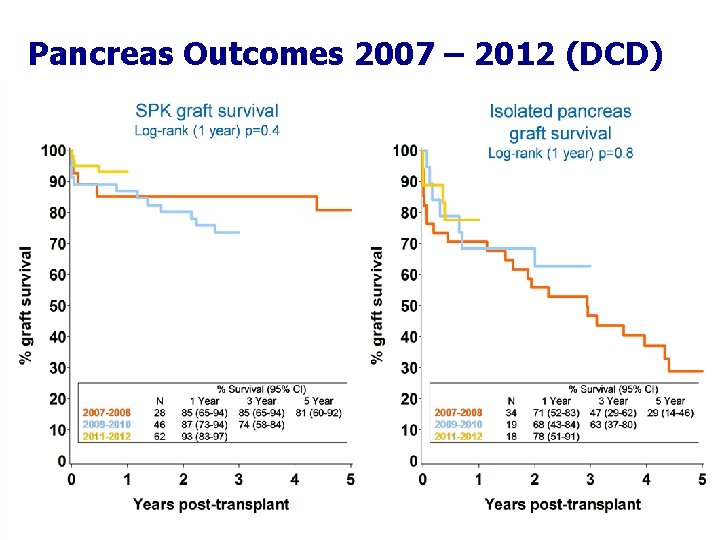
Pancreas Outcomes 2007 – 2012 (DCD)
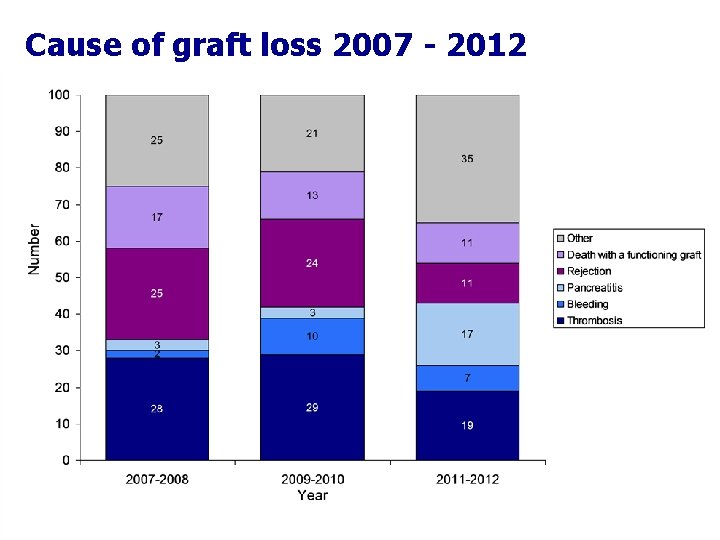
Cause of graft loss 2007 - 2012
Intestinal Transplantation
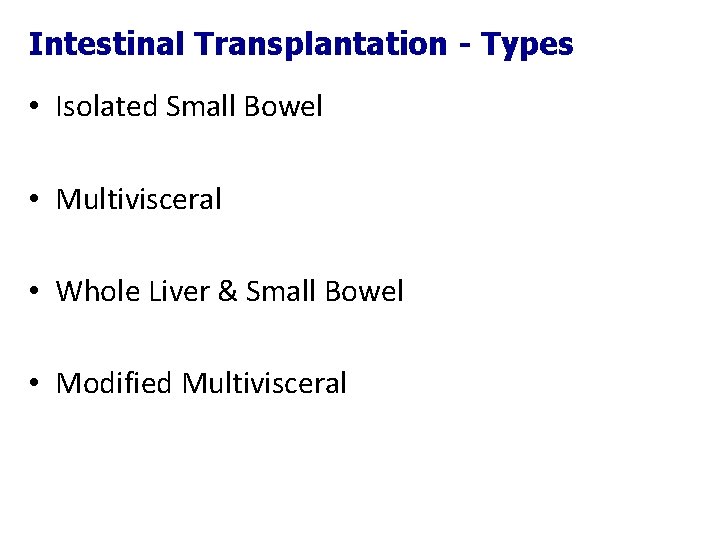
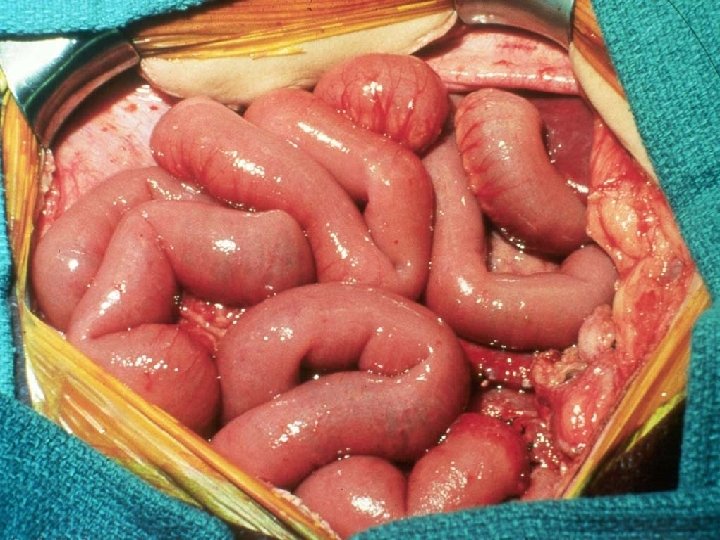
Intestinal Transplantation - Types • Isolated Small Bowel • Multivisceral • Whole Liver & Small Bowel • Modified Multivisceral
Indications • Presence of irreversible intestinal failure with – Impaired venous access for TPN (reduced to the last two suitable veins for placement of the feeding catheter) – Progressive fibrotic liver disease (usually from TPN) – Life threatening episodes of catheter related sepsis • Broadly two situations that lead to intestinal failure: 1. Short gut syndrome (less than 40 cm in length) 2. Non functioning bowel
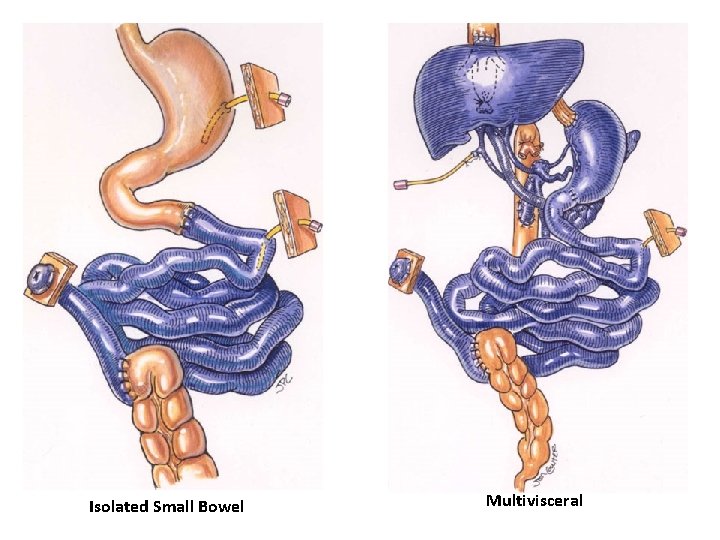
Isolated Small Bowel Multivisceral
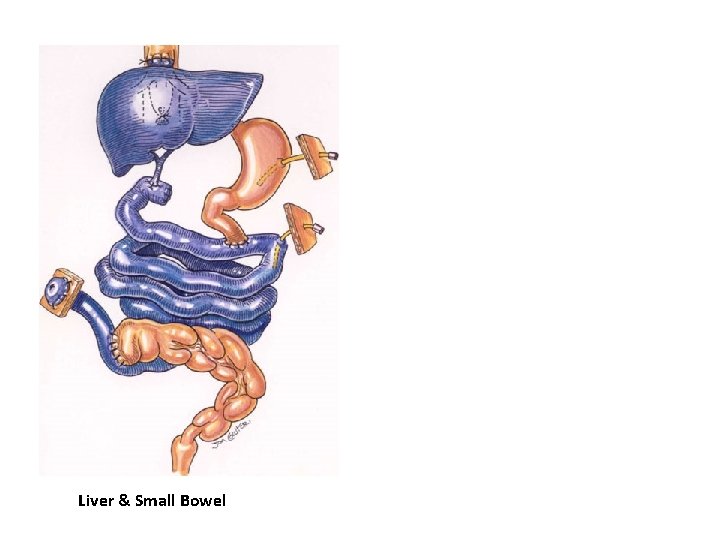
Liver & Small Bowel
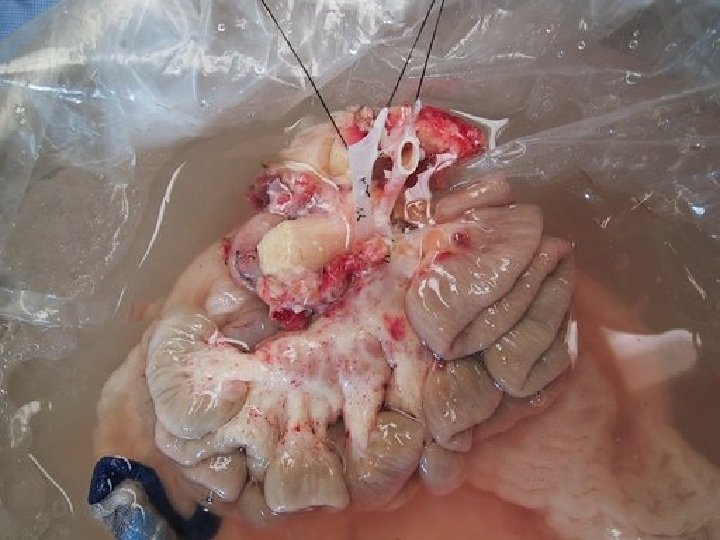
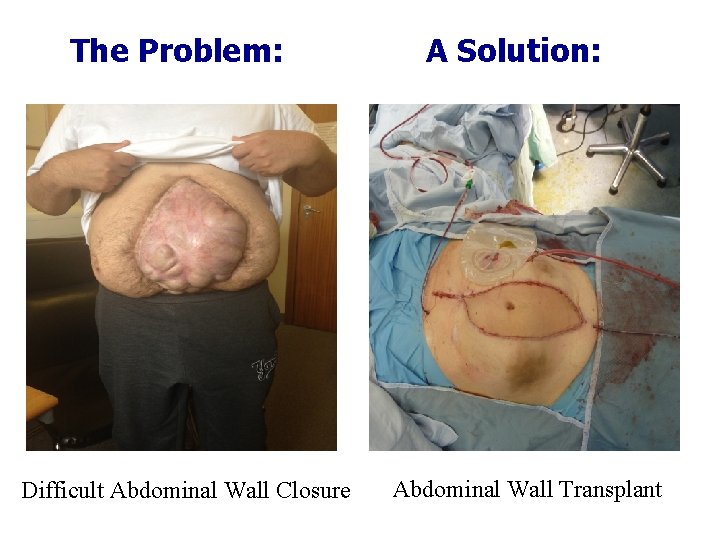
The Problem: Difficult Abdominal Wall Closure A Solution: Abdominal Wall Transplant
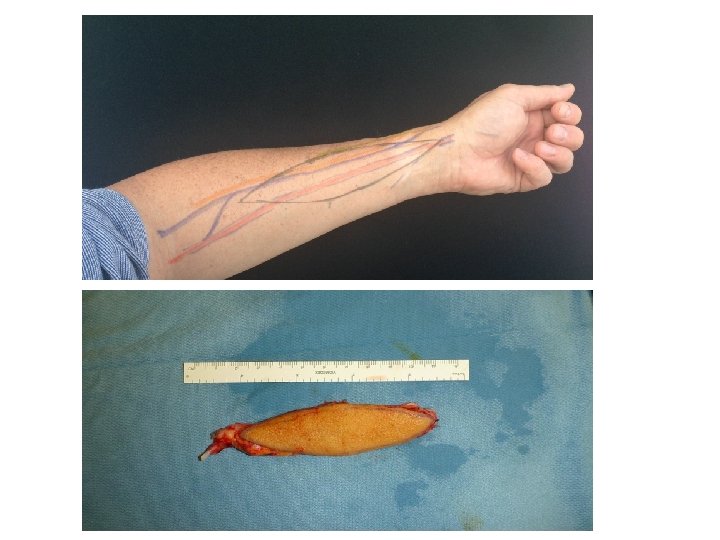
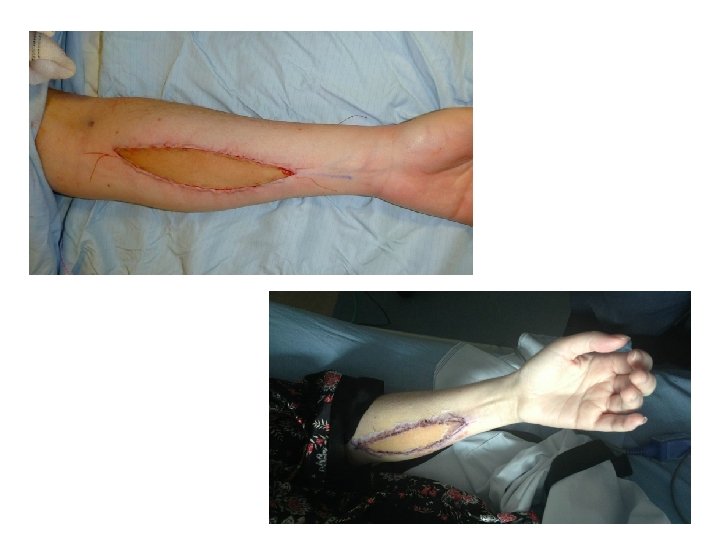
The sentinel skin graft • Novel concept for graft surveillance • Skin more allo-sensitive and rejects before organs • Early cases suggest a lead time of 2 weeks • Provides option for PAT / intestinal transplant where organ monitoring very difficult • Based on vascularised skin island from forearm • 2 cases to date • Number of re-do PAT patients being listed for SSG
- Slides: 56