
Keywords Ribbed vault bveda de crucera en la
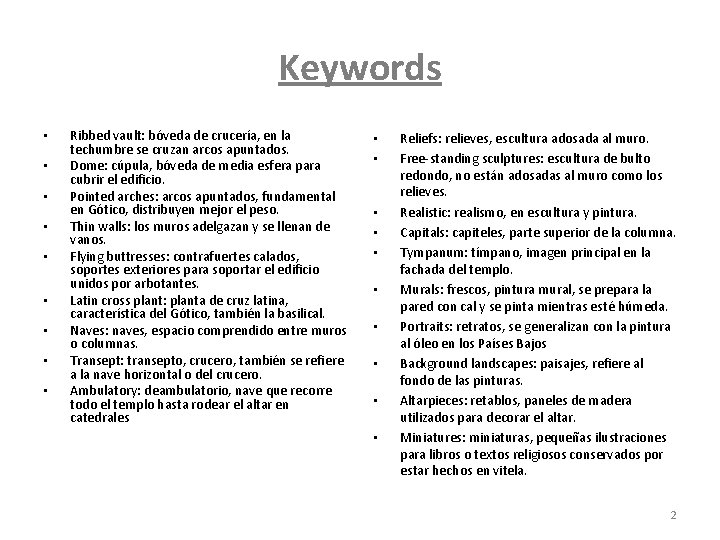
Keywords • • • Ribbed vault: bóveda de crucería, en la techumbre se cruzan arcos apuntados. Dome: cúpula, bóveda de media esfera para cubrir el edificio. Pointed arches: arcos apuntados, fundamental en Gótico, distribuyen mejor el peso. Thin walls: los muros adelgazan y se llenan de vanos. Flying buttresses: contrafuertes calados, soportes exteriores para soportar el edificio unidos por arbotantes. Latin cross plant: planta de cruz latina, característica del Gótico, también la basilical. Naves: naves, espacio comprendido entre muros o columnas. Transept: transepto, crucero, también se refiere a la nave horizontal o del crucero. Ambulatory: deambulatorio, nave que recorre todo el templo hasta rodear el altar en catedrales • • • Reliefs: relieves, escultura adosada al muro. Free-standing sculptures: escultura de bulto redondo, no están adosadas al muro como los relieves. Realistic: realismo, en escultura y pintura. Capitals: capiteles, parte superior de la columna. Tympanum: tímpano, imagen principal en la fachada del templo. Murals: frescos, pintura mural, se prepara la pared con cal y se pinta mientras esté húmeda. Portraits: retratos, se generalizan con la pintura al óleo en los Países Bajos Background landscapes: paisajes, refiere al fondo de las pinturas. Altarpieces: retablos, paneles de madera utilizados para decorar el altar. Miniatures: miniaturas, pequeñas ilustraciones para libros o textos religiosos conservados por estar hechos en vitela. 2
3
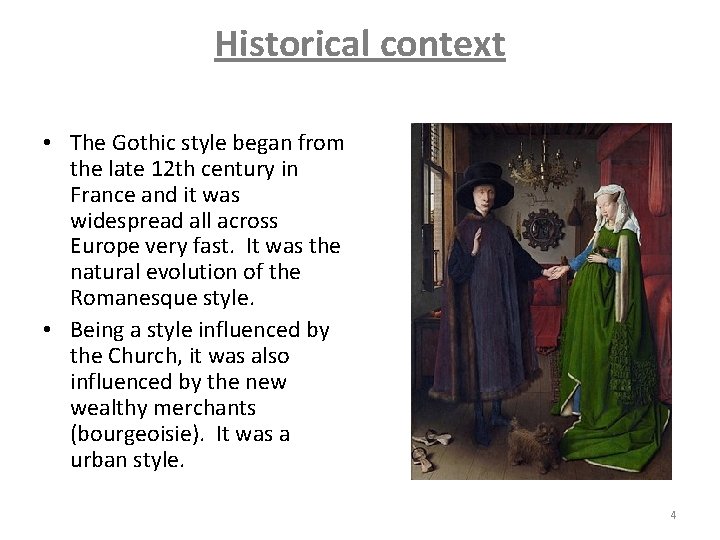
Historical context • The Gothic style began from the late 12 th century in France and it was widespread all across Europe very fast. It was the natural evolution of the Romanesque style. • Being a style influenced by the Church, it was also influenced by the new wealthy merchants (bourgeoisie). It was a urban style. 4
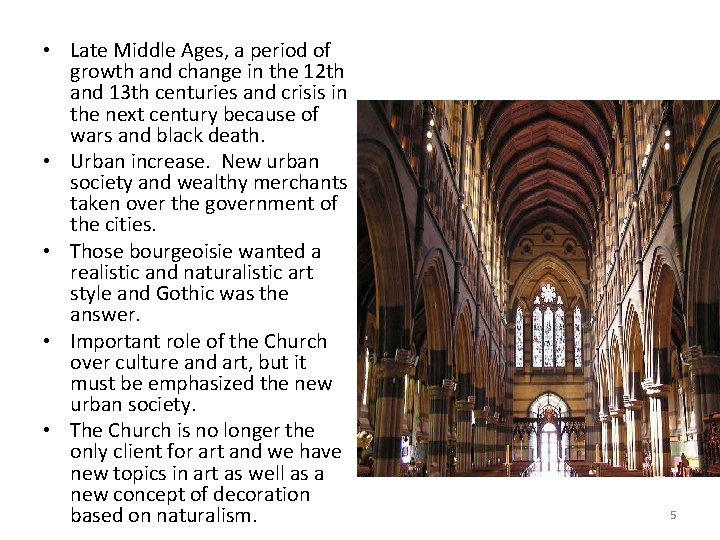
• Late Middle Ages, a period of growth and change in the 12 th and 13 th centuries and crisis in the next century because of wars and black death. • Urban increase. New urban society and wealthy merchants taken over the government of the cities. • Those bourgeoisie wanted a realistic and naturalistic art style and Gothic was the answer. • Important role of the Church over culture and art, but it must be emphasized the new urban society. • The Church is no longer the only client for art and we have new topics in art as well as a new concept of decoration based on naturalism. 5
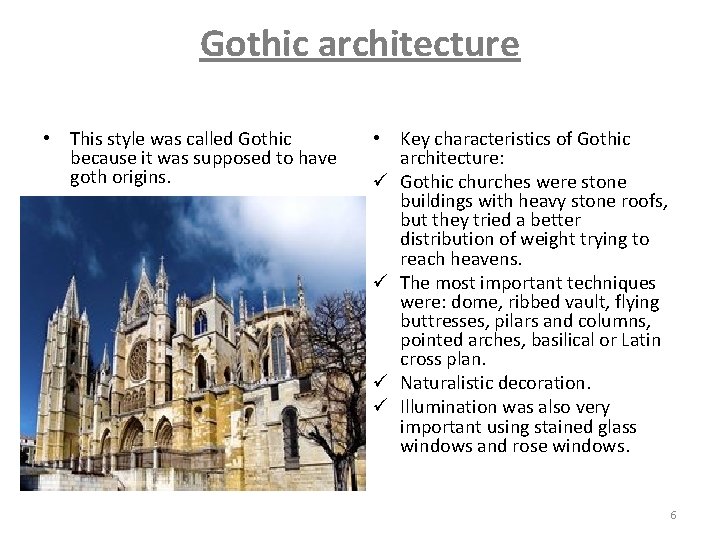
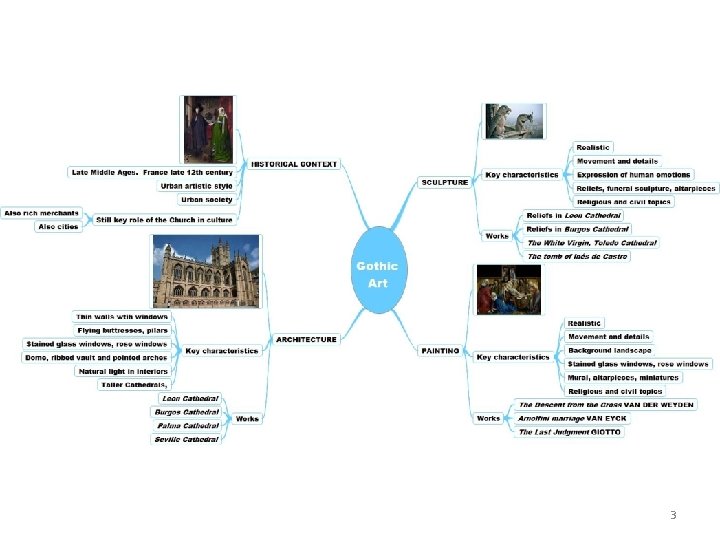
Gothic architecture • This style was called Gothic because it was supposed to have goth origins. • Key characteristics of Gothic architecture: ü Gothic churches were stone buildings with heavy stone roofs, but they tried a better distribution of weight trying to reach heavens. ü The most important techniques were: dome, ribbed vault, flying buttresses, pilars and columns, pointed arches, basilical or Latin cross plan. ü Naturalistic decoration. ü Illumination was also very important using stained glass windows and rose windows. 6
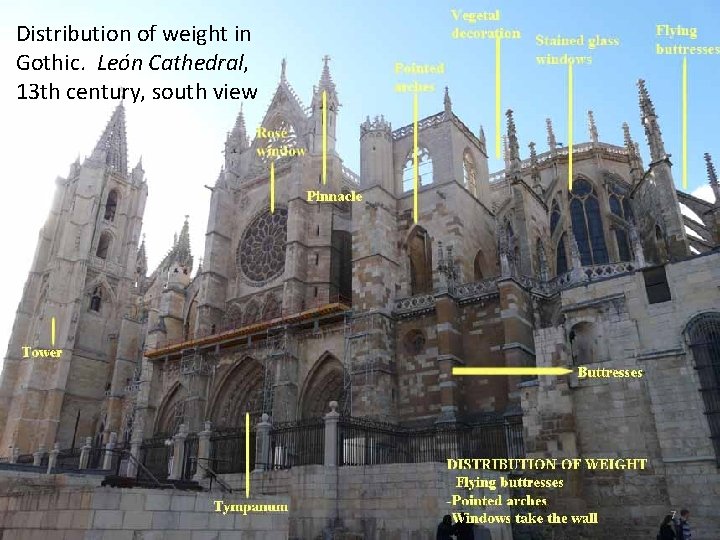
Distribution of weight in Gothic. León Cathedral, 13 th century, south view 7
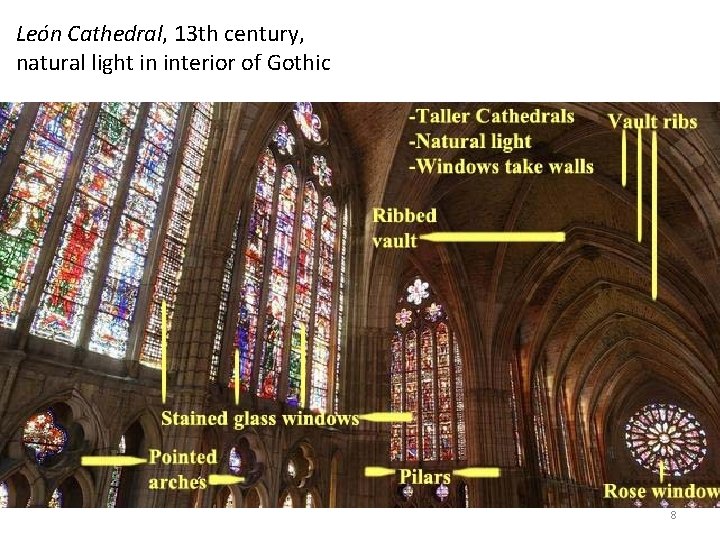
León Cathedral, 13 th century, natural light in interior of Gothic 8
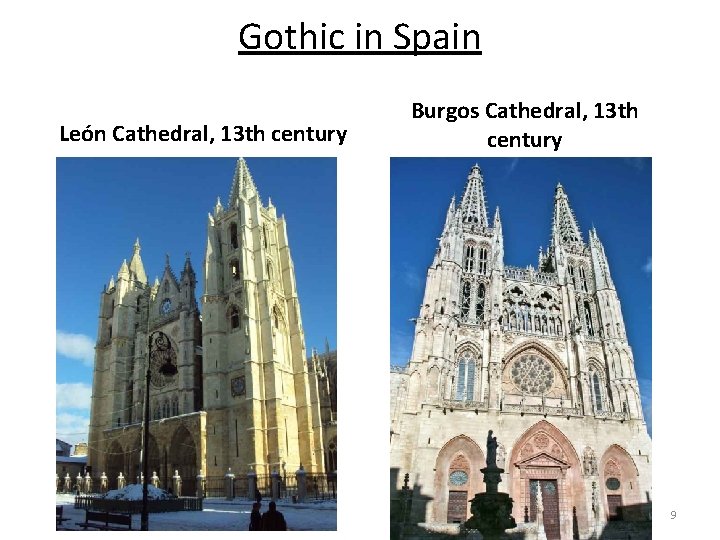
Gothic in Spain León Cathedral, 13 th century Burgos Cathedral, 13 th century 9
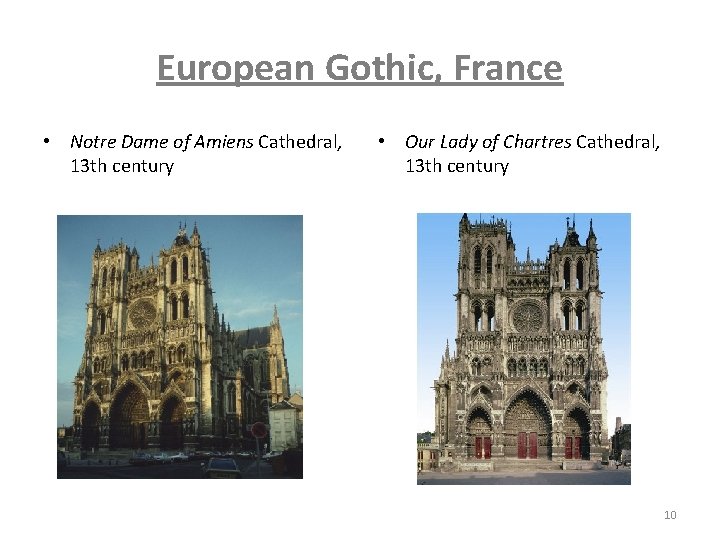
European Gothic, France • Notre Dame of Amiens Cathedral, 13 th century • Our Lady of Chartres Cathedral, 13 th century 10
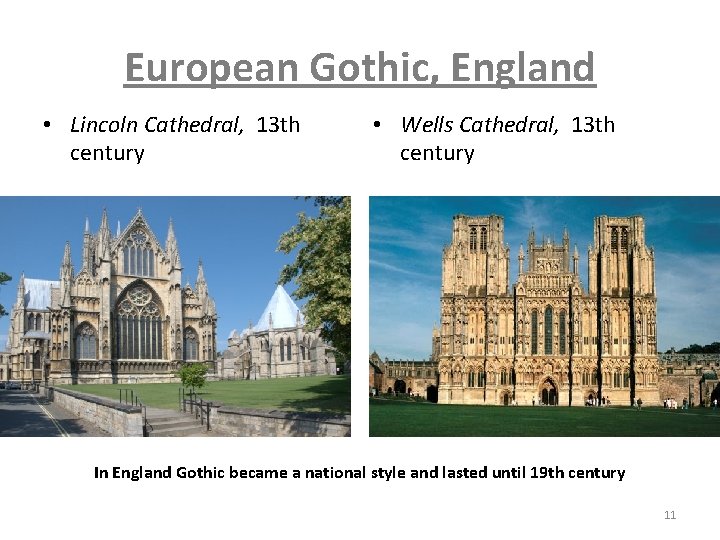
European Gothic, England • Lincoln Cathedral, 13 th century • Wells Cathedral, 13 th century In England Gothic became a national style and lasted until 19 th century 11
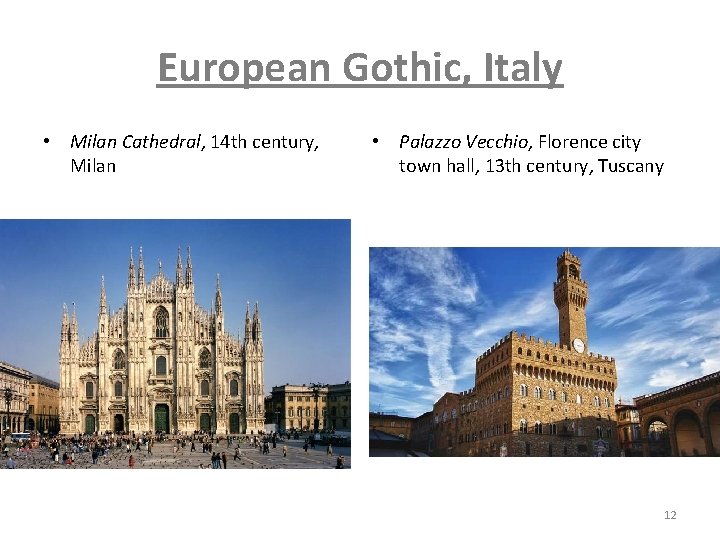
European Gothic, Italy • Milan Cathedral, 14 th century, Milan • Palazzo Vecchio, Florence city town hall, 13 th century, Tuscany 12
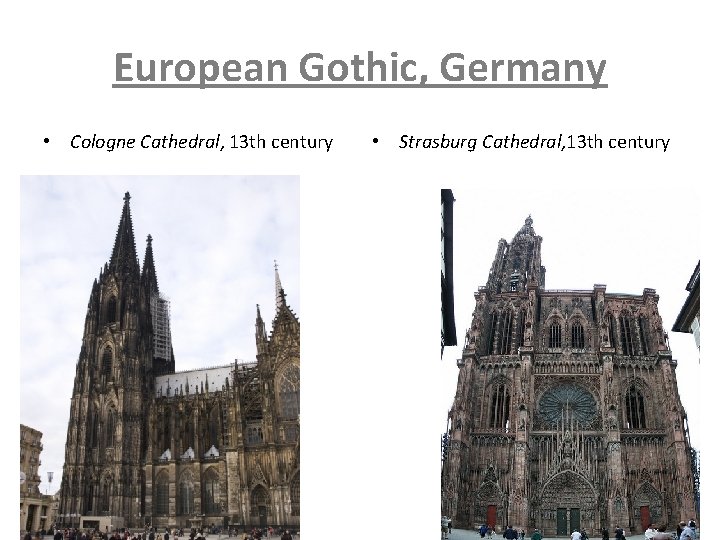
European Gothic, Germany • Cologne Cathedral, 13 th century • Strasburg Cathedral, 13 th century 13
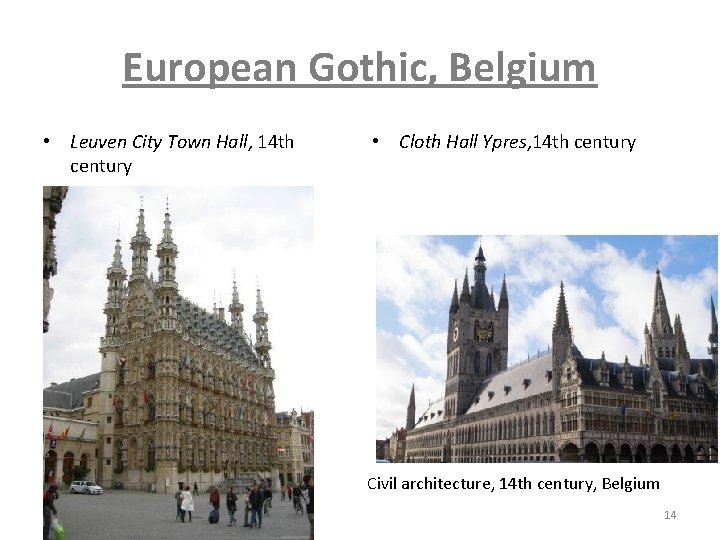
European Gothic, Belgium • Leuven City Town Hall, 14 th century • Cloth Hall Ypres, 14 th century Civil architecture, 14 th century, Belgium 14
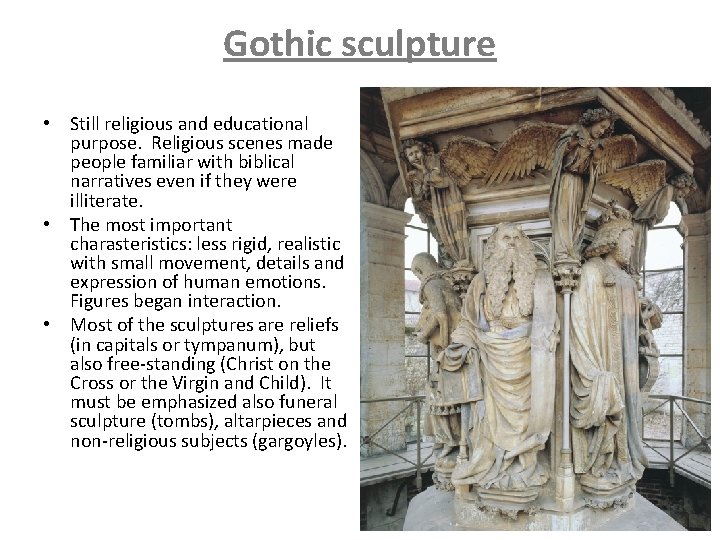
Gothic sculpture • Still religious and educational purpose. Religious scenes made people familiar with biblical narratives even if they were illiterate. • The most important charasteristics: less rigid, realistic with small movement, details and expression of human emotions. Figures began interaction. • Most of the sculptures are reliefs (in capitals or tympanum), but also free-standing (Christ on the Cross or the Virgin and Child). It must be emphasized also funeral sculpture (tombs), altarpieces and non-religious subjects (gargoyles). 15
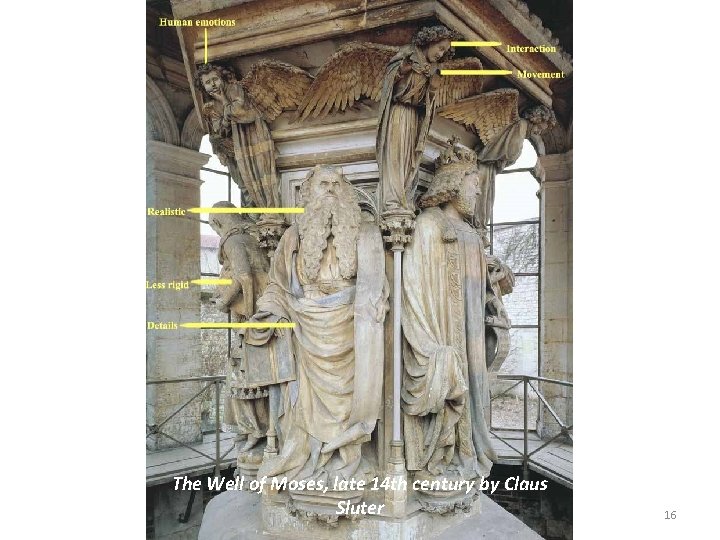
The Well of Moses, late 14 th century by Claus Sluter 16
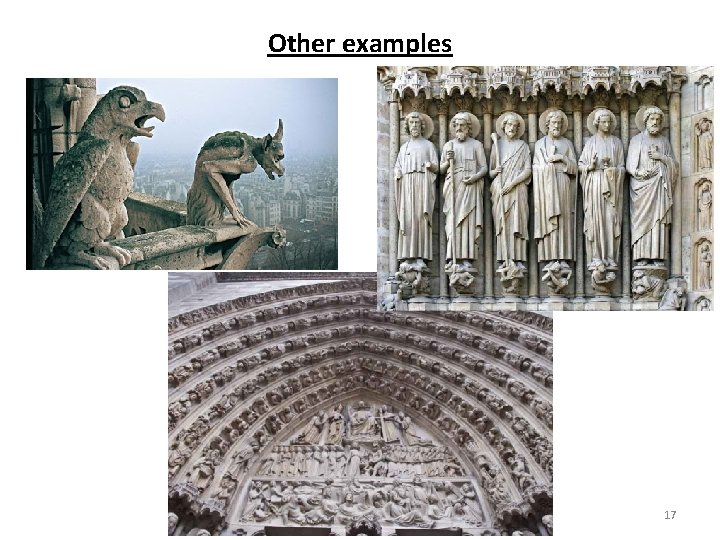
Other examples 17
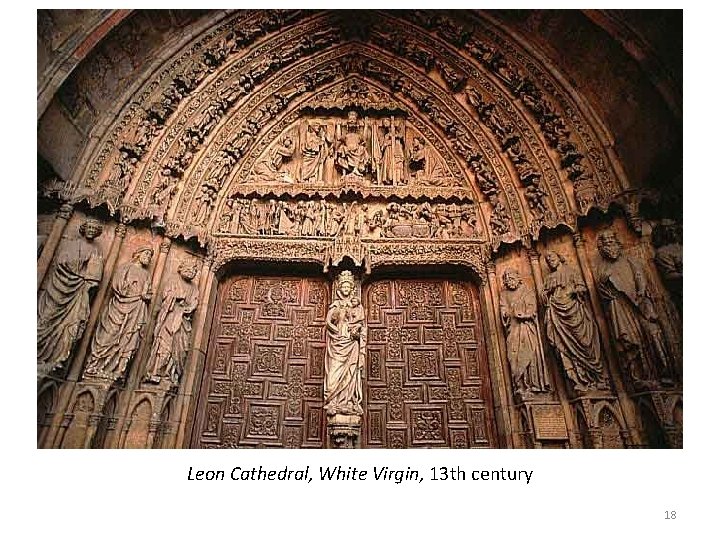
Leon Cathedral, White Virgin, 13 th century 18
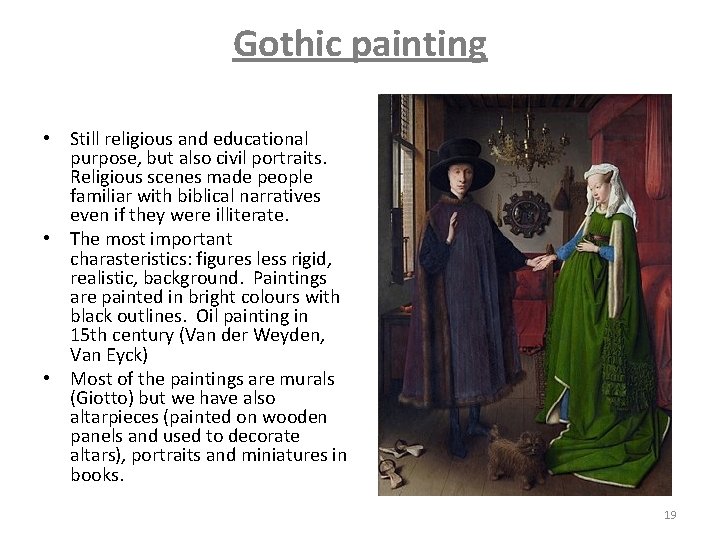
Gothic painting • Still religious and educational purpose, but also civil portraits. Religious scenes made people familiar with biblical narratives even if they were illiterate. • The most important charasteristics: figures less rigid, realistic, background. Paintings are painted in bright colours with black outlines. Oil painting in 15 th century (Van der Weyden, Van Eyck) • Most of the paintings are murals (Giotto) but we have also altarpieces (painted on wooden panels and used to decorate altars), portraits and miniatures in books. 19
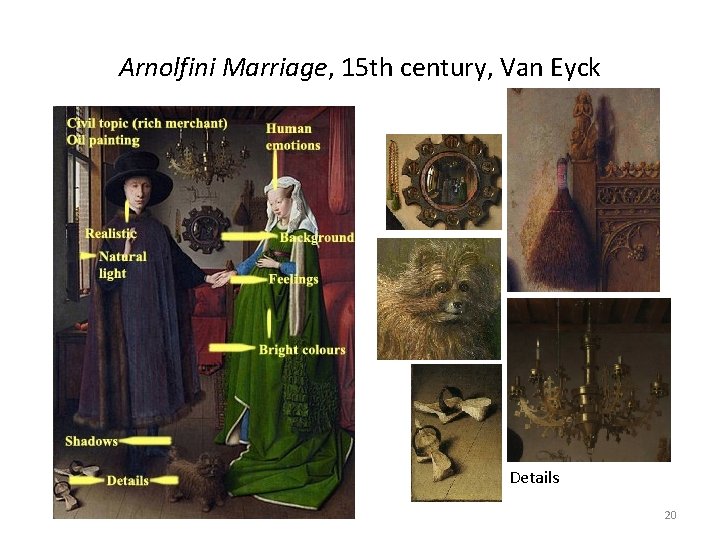
Arnolfini Marriage, 15 th century, Van Eyck Details 20
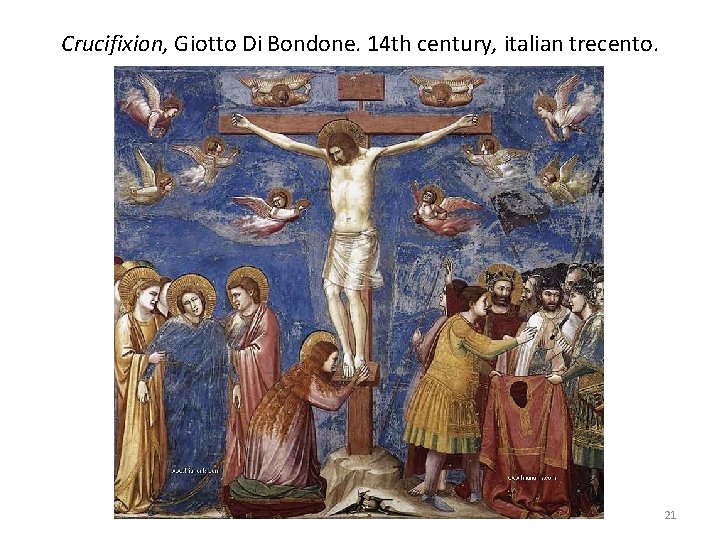
Crucifixion, Giotto Di Bondone. 14 th century, italian trecento. 21
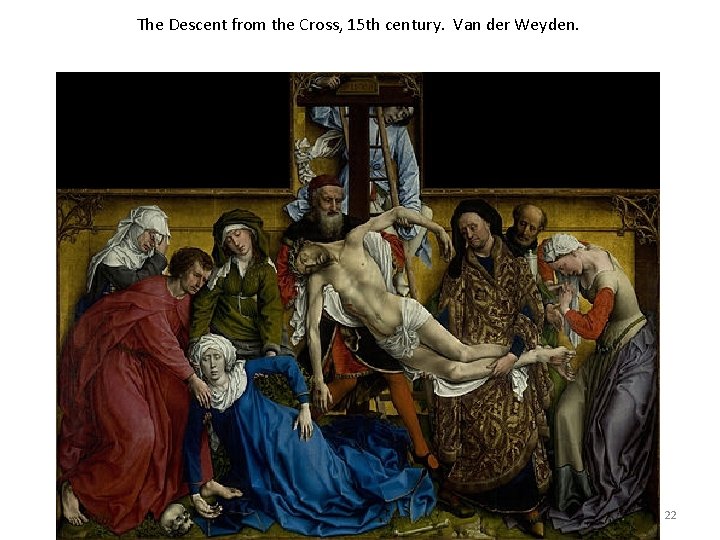
The Descent from the Cross, 15 th century. Van der Weyden. 22
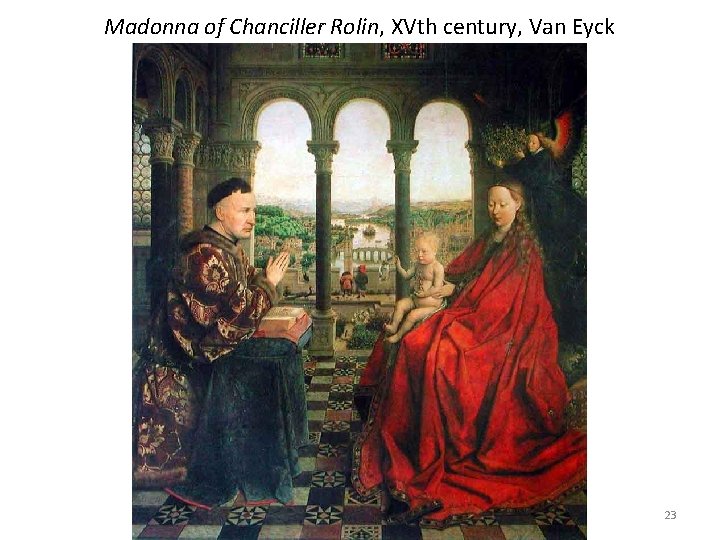
Madonna of Chanciller Rolin, XVth century, Van Eyck 23

Made by Francisco Javier Abades Ansián History teacher at Castilla y León (Spain) Feel free to use, study or share this presentation
- Slides: 24