
Keystone Species Coastal Redwoods Saguaro Catci Sea Birds
Keystone Species • Coastal Redwoods • Saguaro Catci • Sea Birds Scott Rohlf 3/1/10
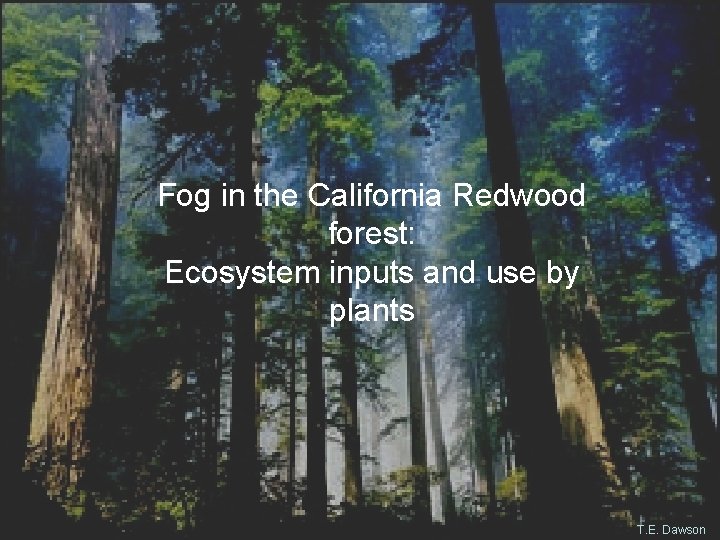
Fog in the California Redwood forest: Ecosystem inputs and use by plants T. E. Dawson
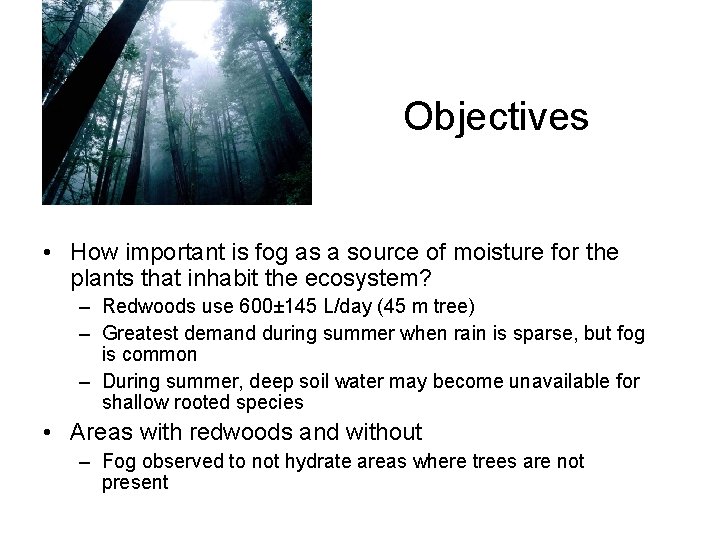
Objectives • How important is fog as a source of moisture for the plants that inhabit the ecosystem? – Redwoods use 600± 145 L/day (45 m tree) – Greatest demand during summer when rain is sparse, but fog is common – During summer, deep soil water may become unavailable for shallow rooted species • Areas with redwoods and without – Fog observed to not hydrate areas where trees are not present
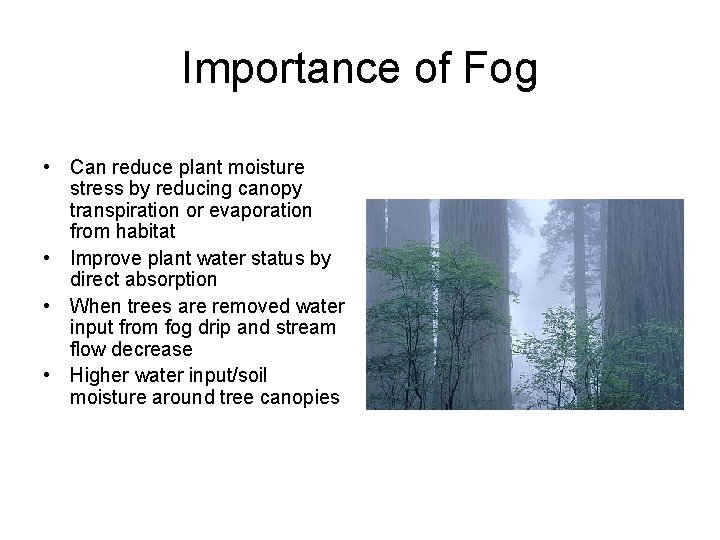
Importance of Fog • Can reduce plant moisture stress by reducing canopy transpiration or evaporation from habitat • Improve plant water status by direct absorption • When trees are removed water input from fog drip and stream flow decrease • Higher water input/soil moisture around tree canopies
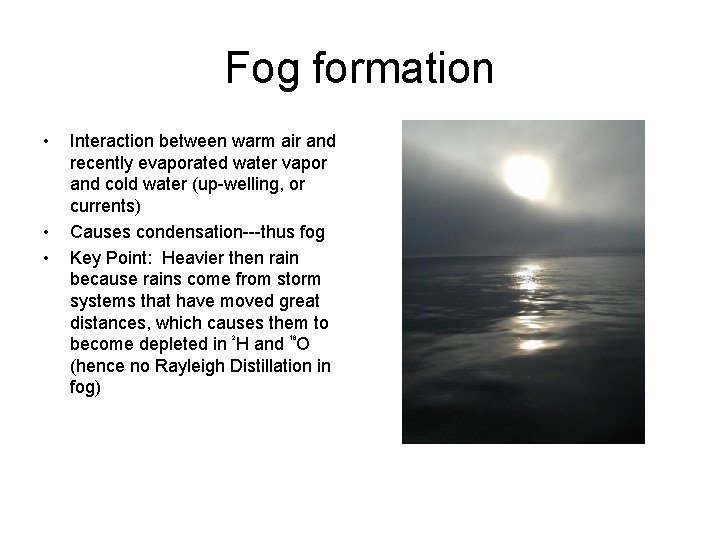
Fog formation • • • Interaction between warm air and recently evaporated water vapor and cold water (up-welling, or currents) Causes condensation---thus fog Key Point: Heavier then rain because rains come from storm systems that have moved great distances, which causes them to become depleted in H and O (hence no Rayleigh Distillation in fog) 2 18
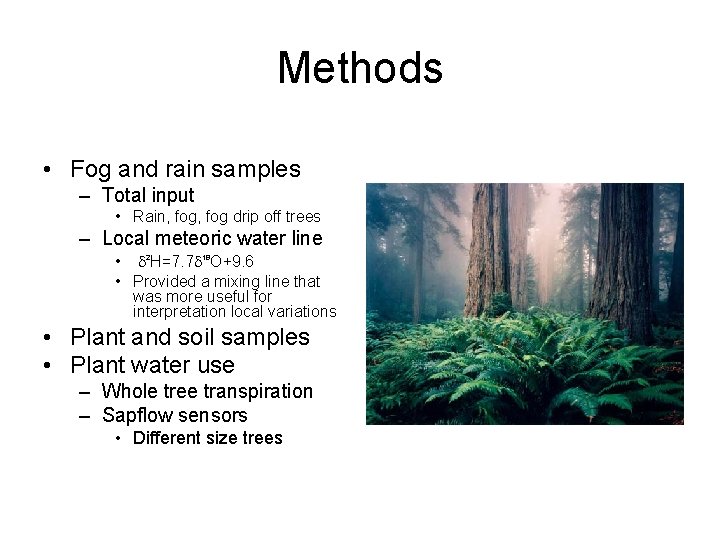
Methods • Fog and rain samples – Total input • Rain, fog drip off trees – Local meteoric water line • 2 H=7. 7 18 O+9. 6 • Provided a mixing line that was more useful for interpretation local variations • Plant and soil samples • Plant water use – Whole tree transpiration – Sapflow sensors • Different size trees
Mixing Models • Proportion of fog water (Pf) used by plants – Two compartment mixing model (Brunel et al) • Assumes water comes from 2 sources – Fog or Rain • Weighted values-not all sources are equally available
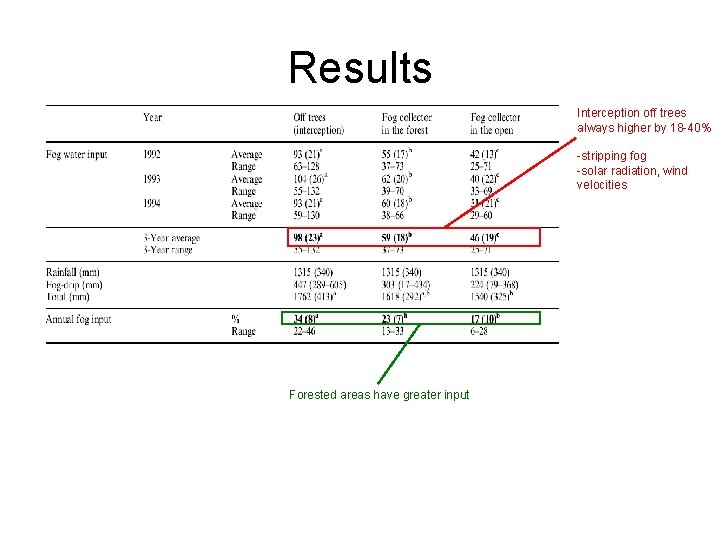
Results Interception off trees always higher by 18 -40% -stripping fog -solar radiation, wind velocities Forested areas have greater input
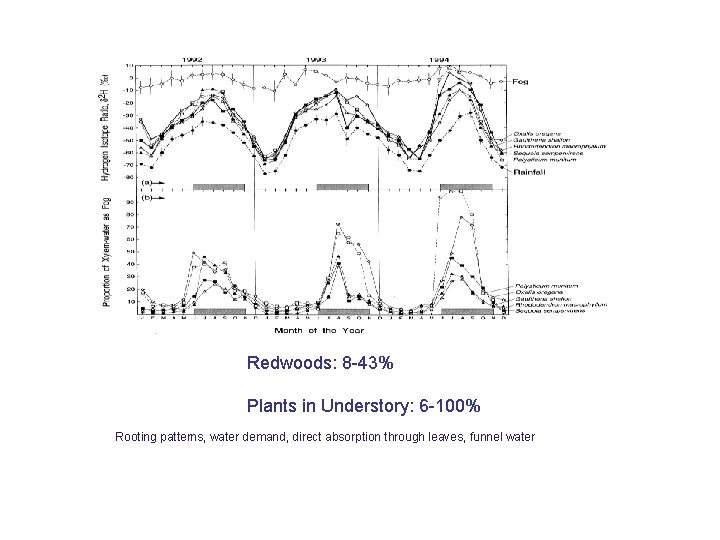
Redwoods: 8 -43% Plants in Understory: 6 -100% Rooting patterns, water demand, direct absorption through leaves, funnel water
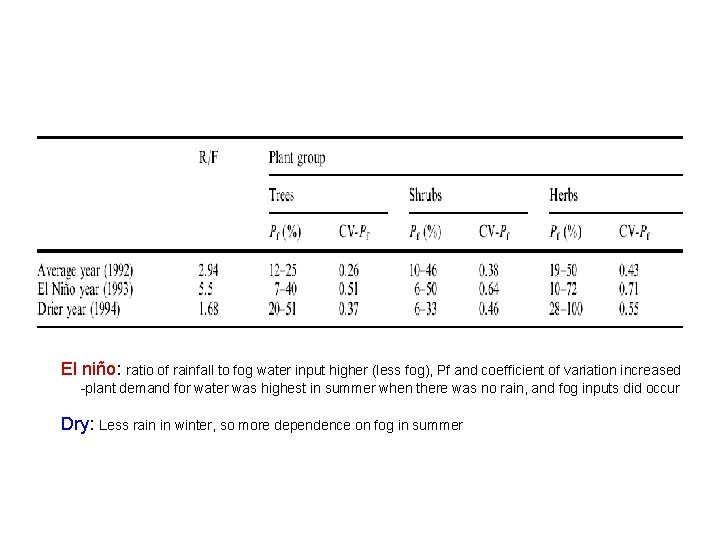
El niño: ratio of rainfall to fog water input higher (less fog), Pf and coefficient of variation increased -plant demand for water was highest in summer when there was no rain, and fog inputs did occur Dry: Less rain in winter, so more dependence on fog in summer
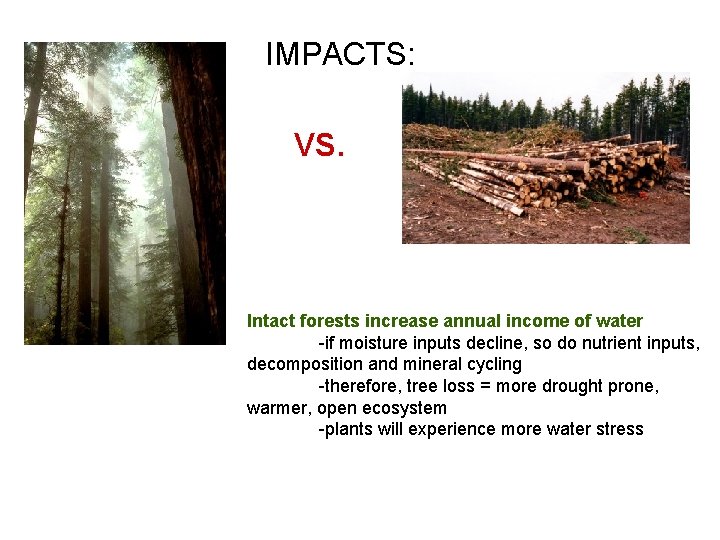
IMPACTS: VS. Intact forests increase annual income of water -if moisture inputs decline, so do nutrient inputs, decomposition and mineral cycling -therefore, tree loss = more drought prone, warmer, open ecosystem -plants will experience more water stress
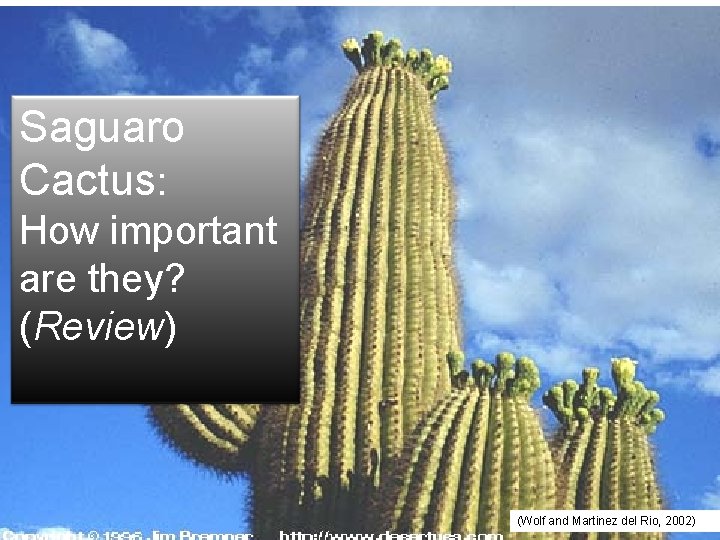
Saguaro Cactus: How important are they? (Review) (Wolf and Martinez del Rio, 2002)
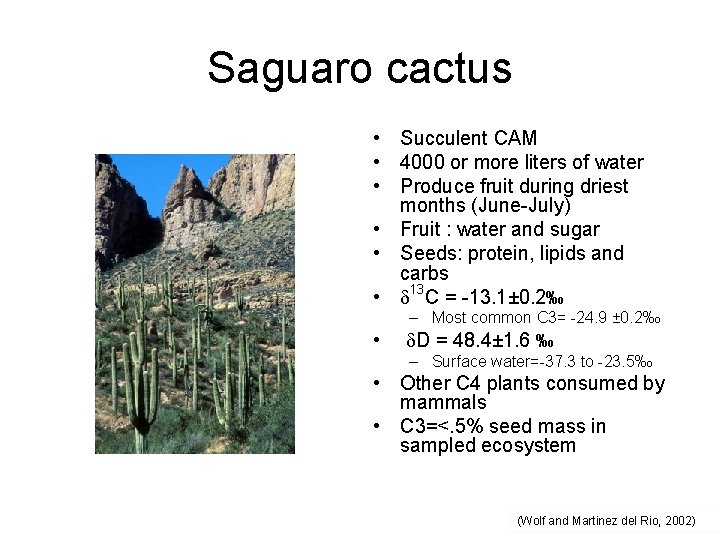
Saguaro cactus • Succulent CAM • 4000 or more liters of water • Produce fruit during driest months (June-July) • Fruit : water and sugar • Seeds: protein, lipids and carbs • 13 C = -13. 1± 0. 2‰ – Most common C 3= -24. 9 ± 0. 2‰ • D = 48. 4± 1. 6 ‰ – Surface water=-37. 3 to -23. 5‰ • Other C 4 plants consumed by mammals • C 3=<. 5% seed mass in sampled ecosystem (Wolf and Martinez del Rio, 2002)
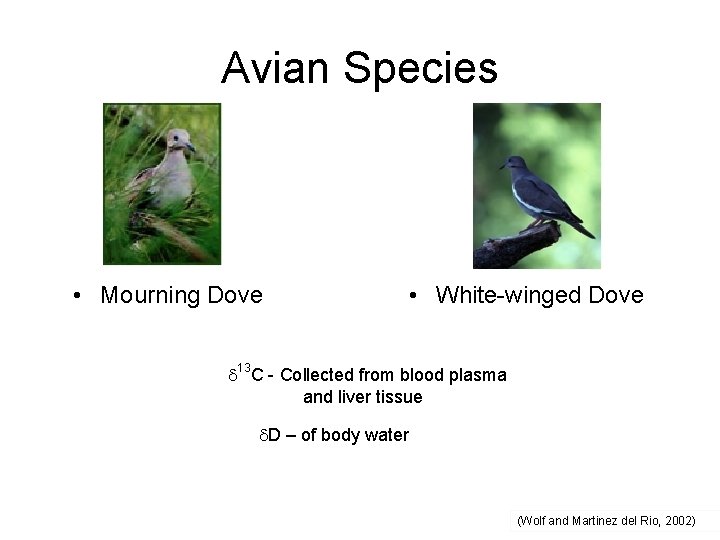
Avian Species • Mourning Dove • White-winged Dove 13 C - Collected from blood plasma and liver tissue D – of body water (Wolf and Martinez del Rio, 2002)
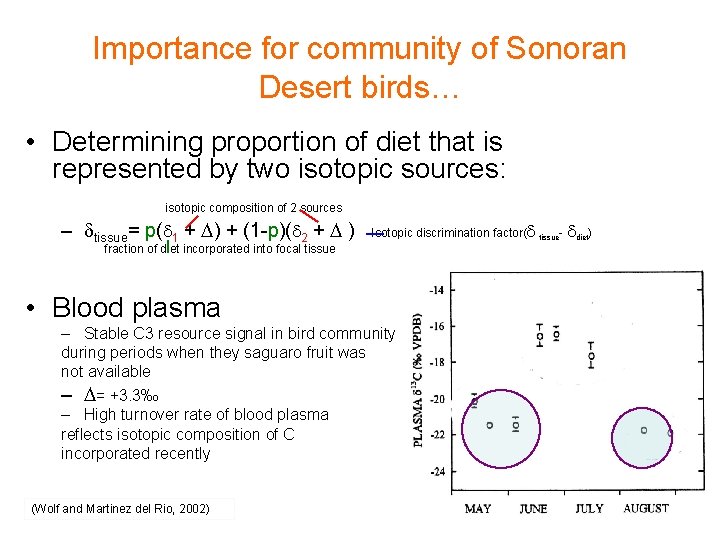
Importance for community of Sonoran Desert birds… • Determining proportion of diet that is represented by two isotopic sources: isotopic composition of 2 sources – tissue= p( 1 + ) + (1 -p)( 2 + ) Isotopic discrimination factor( tissue- diet) fraction of diet incorporated into focal tissue • Blood plasma – Stable C 3 resource signal in bird community during periods when they saguaro fruit was not available – = +3. 3‰ – High turnover rate of blood plasma reflects isotopic composition of C incorporated recently (Wolf and Martinez del Rio, 2002)
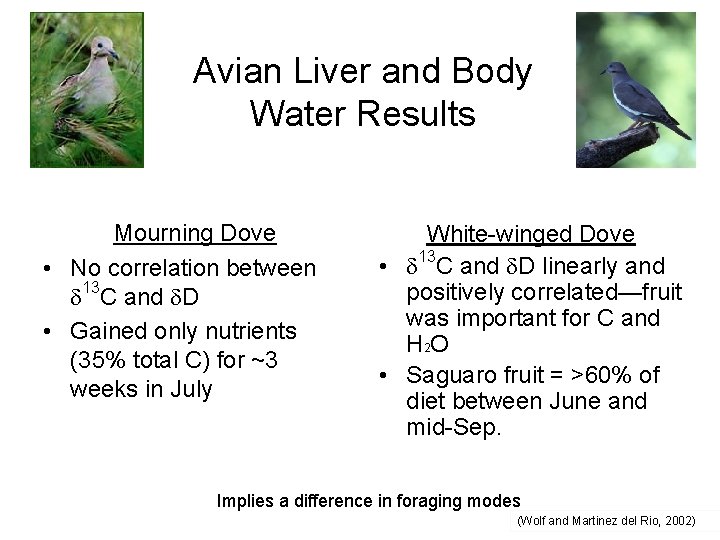
Avian Liver and Body Water Results Mourning Dove • No correlation between 13 C and D • Gained only nutrients (35% total C) for ~3 weeks in July White-winged Dove • 13 C and D linearly and positively correlated—fruit was important for C and H 2 O • Saguaro fruit = >60% of diet between June and mid-Sep. Implies a difference in foraging modes (Wolf and Martinez del Rio, 2002)
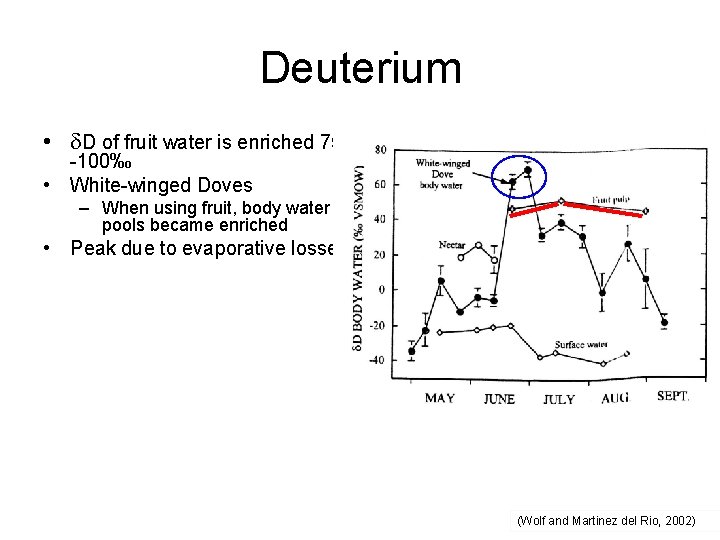
Deuterium • D of fruit water is enriched 75 -100‰ • White-winged Doves – When using fruit, body water pools became enriched • Peak due to evaporative losses (Wolf and Martinez del Rio, 2002)
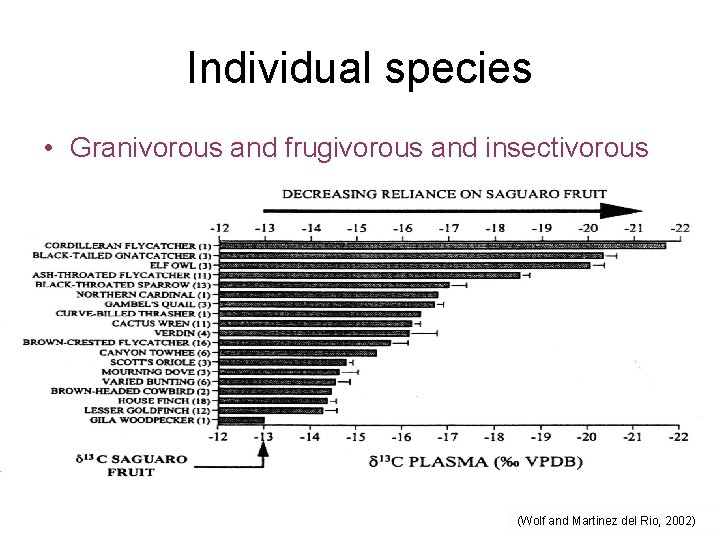
Individual species • Granivorous and frugivorous and insectivorous (Wolf and Martinez del Rio, 2002)
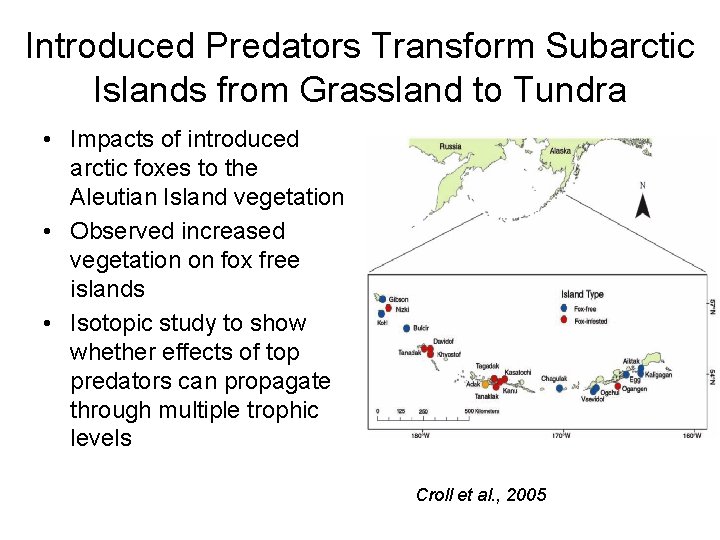
Introduced Predators Transform Subarctic Islands from Grassland to Tundra • Impacts of introduced arctic foxes to the Aleutian Island vegetation • Observed increased vegetation on fox free islands • Isotopic study to show whether effects of top predators can propagate through multiple trophic levels Croll et al. , 2005
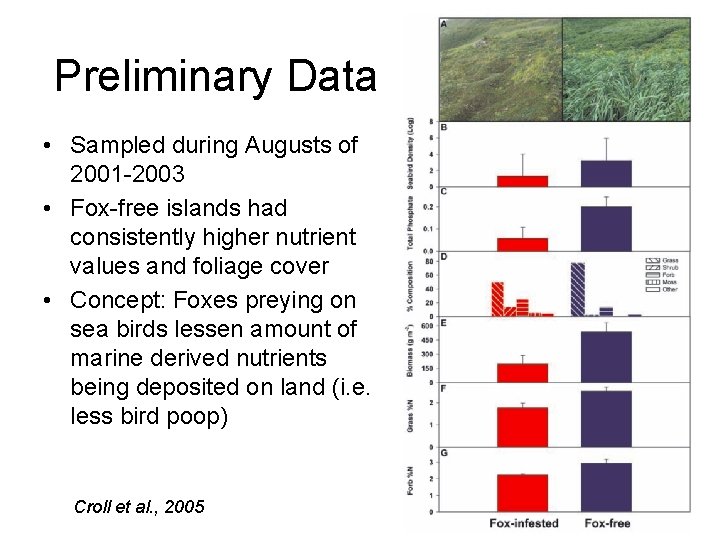
Preliminary Data • Sampled during Augusts of 2001 -2003 • Fox-free islands had consistently higher nutrient values and foliage cover • Concept: Foxes preying on sea birds lessen amount of marine derived nutrients being deposited on land (i. e. less bird poop) Croll et al. , 2005
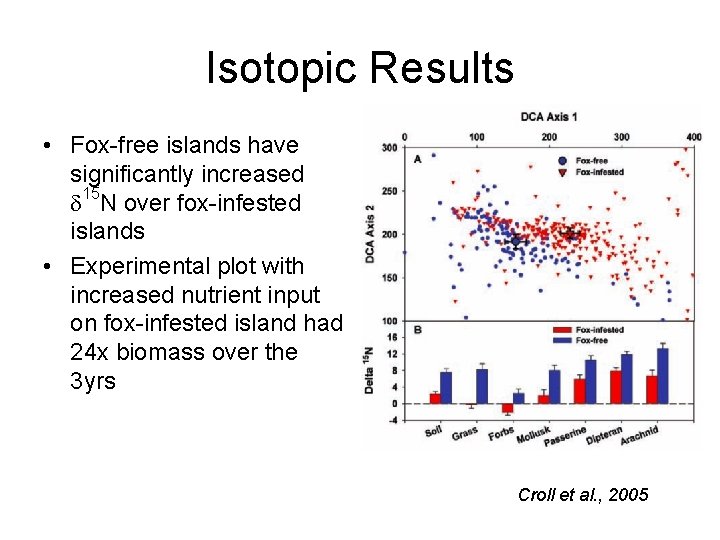
Isotopic Results • Fox-free islands have significantly increased 15 N over fox-infested islands • Experimental plot with increased nutrient input on fox-infested island had 24 x biomass over the 3 yrs Croll et al. , 2005
- Slides: 21