
KEYS TO WRITING AN EFFECTIVE CAPABILITY STATEMENT BUSINESS

KEYS TO WRITING AN EFFECTIVE CAPABILITY STATEMENT & BUSINESS PLAN Presented by: Dr. Reggie R. Lewis, Fusion Consulting Associates, LLC
Government contracting is a competitive market with infinite profitability opportunities. Businesses of all sizes and capacity are able to sell products and services at the local, state, and federal levels. Be competitive and innovative in highlighting product and/or services to agencies as well as potential primes/partners…… A Powerful Capability Statement can open doors to contracting and team opportunities with the government. The document is key to building relationships with key decision-makers.

THE PURPOSE OF A CAPABILIT Y STATEME NT § Successful businesses use Capability Statements for various purposes, such as: § To satisfy government registration processes; § Introduction to new agencies; § Proof of qualification; § Proof of past performance; § It sets companies apart from their competitor
§ A Capability Statement should be: § Brief (1 -2 pages) § Use short sentences and bulleted list for quick § § visual scanning. Concise and specific to the individual needs of the targeted agency § Revise the statement for each agency, prime or teaming opportunity Visually interesting (add graphic elements from company’s branding and logo) Include all critical information on to one side of page Save and distribute as a PDF file
CAPABILITY STATEMENT CONTENT § Critical content to include: § Company Logo/Branding § Company Overview § Core Competencies § Contact Information § Certifications § Company Identifiers (DUNS#, CAGE Code, etc. ) § NAICS, NIGP Codes, etc.
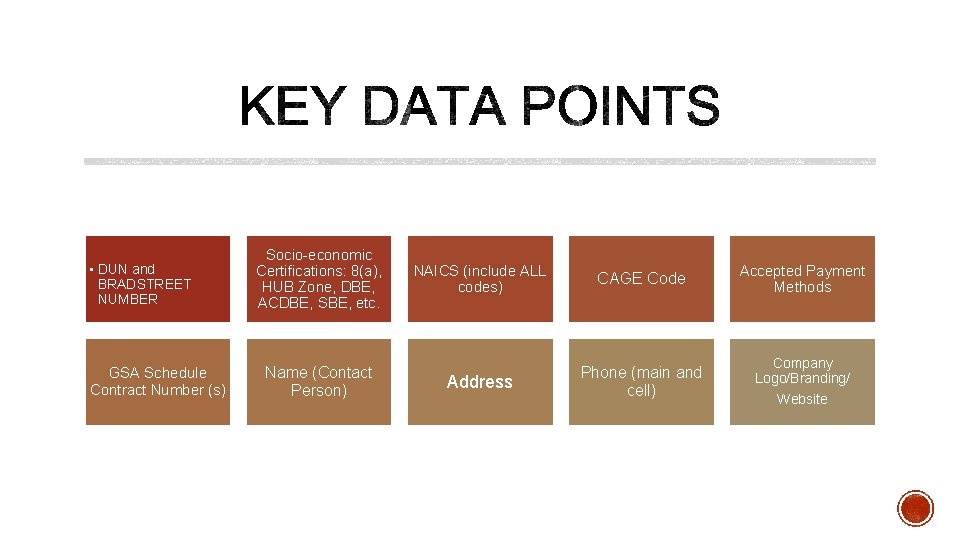
• DUN and BRADSTREET NUMBER GSA Schedule Contract Number (s) Socio-economic Certifications: 8(a), HUB Zone, DBE, ACDBE, SBE, etc. Name (Contact Person) NAICS (include ALL codes) CAGE Code Accepted Payment Methods Address Phone (main and cell) Company Logo/Branding/ Website

BUSINESS PLAN 101 Every business should have a business plan. Business plans are essential to: • Providing a road map to better help organizations for future planning. • Used to attract potential investors • Clearly define goals and mission
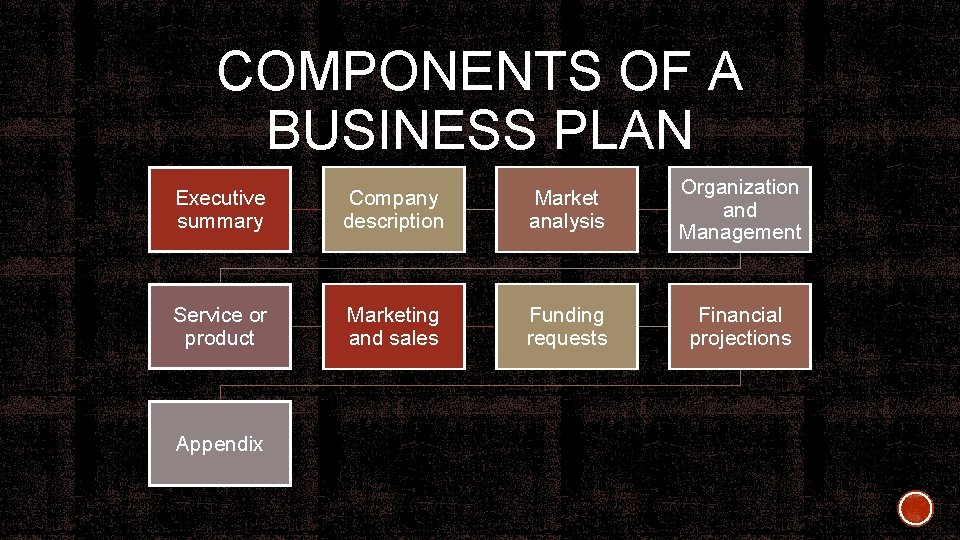
COMPONENTS OF A BUSINESS PLAN Executive summary Company description Market analysis Organization and Management Service or product Marketing and sales Funding requests Financial projections Appendix
STEPS FOR WRITING A SOLID BUSINESS PLAN Step 1: Research— § Research and analyze your product/services, market and your expertise. § Know your company, product, competition and market. Step 2: Determine the purpose of your plan— § Describe the nature of your business, sales, and marketing strategy, financial background, and projected profit and loss statement Step 3: Create a company profile— § The profile should include the: § organization’s history § products/service offering § Target market and audience § Organization’s uniqueness
STEPS FOR WRITING A BUSINESS PLAN Step 4: Document all aspects of your business— § It’s important to know the company’s expenses, cash flow and industry projections. § Highlight location strategy (if applicable) § Licensing agreement (if applicable)
Steps 5: Develop a strategic marketing plan with clear goals and objectives--- STEPS FOR WRITING A BUSINESS PLAN § Effective marketing plans typically includes: § Introducing new products and/or services § Extending or regaining market for existing products and/or services § Entering new territories for the company § Cross-selling(bundling) one product/services with another § Raising prices without impacting sales figures § Refining a product and/or service § Allocate budget for each planned activity
STEP 6: MAKE IT ADAPTABLE BASED ON YOUR AUDIENCE PREPARE THE BUSINESS PLAN BASED ON YOUR AUDIENCE (BANK, INVESTOR, ETC. ) KEEP FINANCIAL PROJECTION DATA CONSISTENT
FUSION CONSULTING ASSOCIATES, LLC INFO@FUSIONCONSULTING. BZ (954)544 -7000
- Slides: 13