
Keynesian vs New Classical Different Interpretations of AS

- Slides: 23
Keynesian vs New Classical Different Interpretations of AS and therefore of Equilibrium…particularly in the Long Run
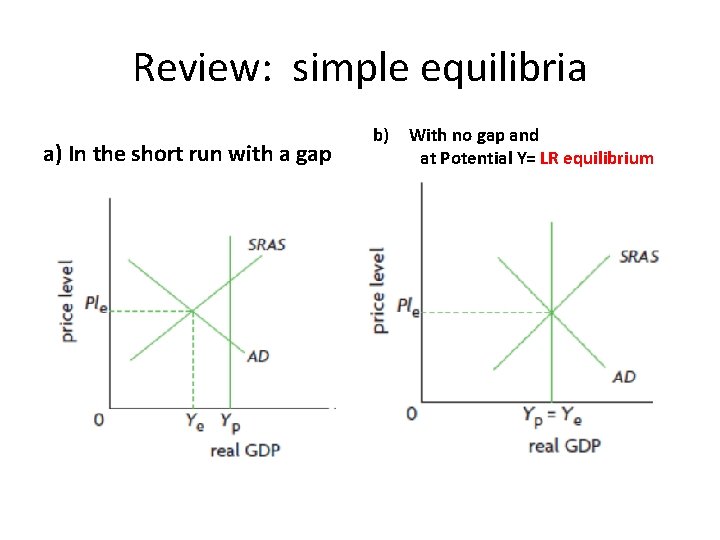
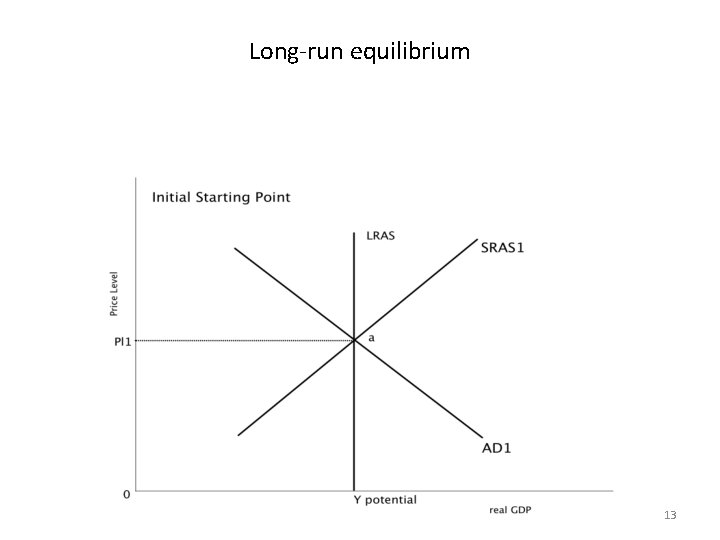
Review: simple equilibria a) In the short run with a gap b) With no gap and at Potential Y= LR equilibrium
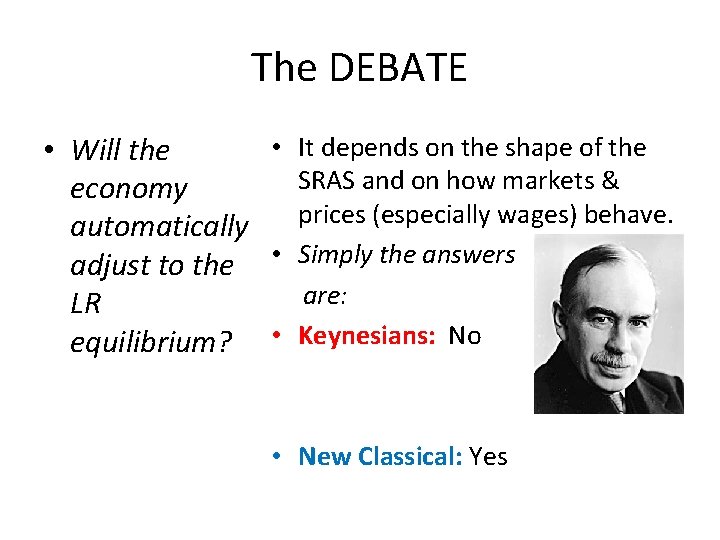
The DEBATE • It depends on the shape of the • Will the SRAS and on how markets & economy prices (especially wages) behave. automatically adjust to the • Simply the answers are: LR equilibrium? • Keynesians: No • New Classical: Yes
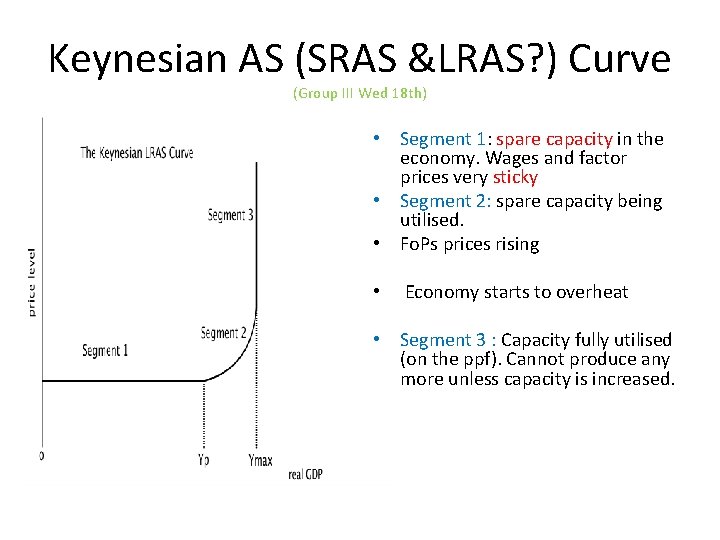
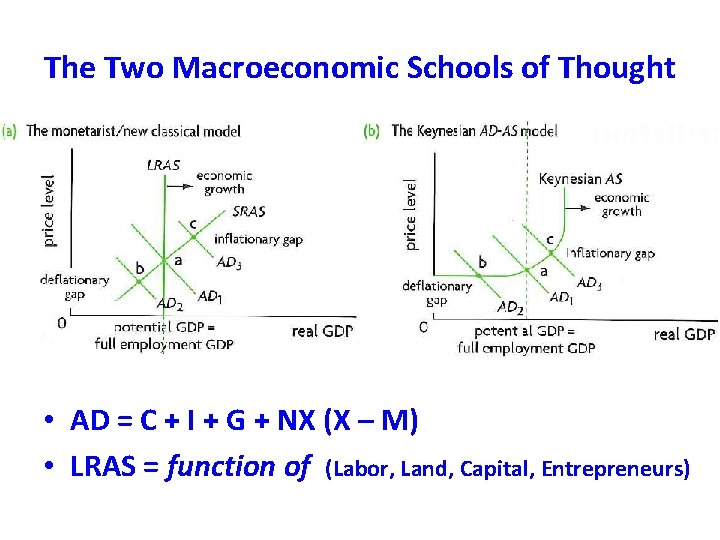
In addition to the upwards sloping SRAS……… – The long-run aggregate supply curve (LRAS) (New Classical) shows the relationship between the price level and output (real GDP) produced by firms when the prices of all resources, especially price of labor (wages), are flexible and change along with changes in the price level. It assumes the economy has reached its potential – The Keynesian AS curve is for both LR and SR. It assumes spare capacity at low levels of AD and sticky prices/wages
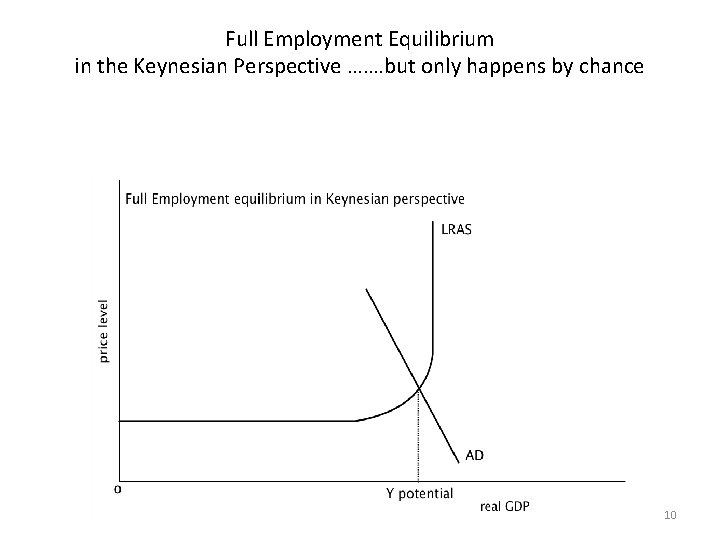
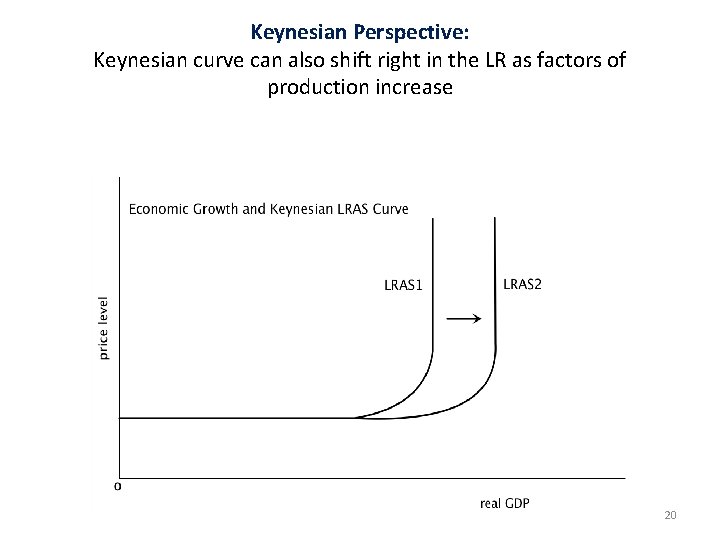
Keynesian AS (SRAS &LRAS? ) Curve (Group III Wed 18 th) • Segment 1: spare capacity in the economy. Wages and factor prices very sticky • Segment 2: spare capacity being utilised. • Fo. Ps prices rising • Economy starts to overheat • Segment 3 : Capacity fully utilised (on the ppf). Cannot produce any more unless capacity is increased. • Spare • capacity in the economy
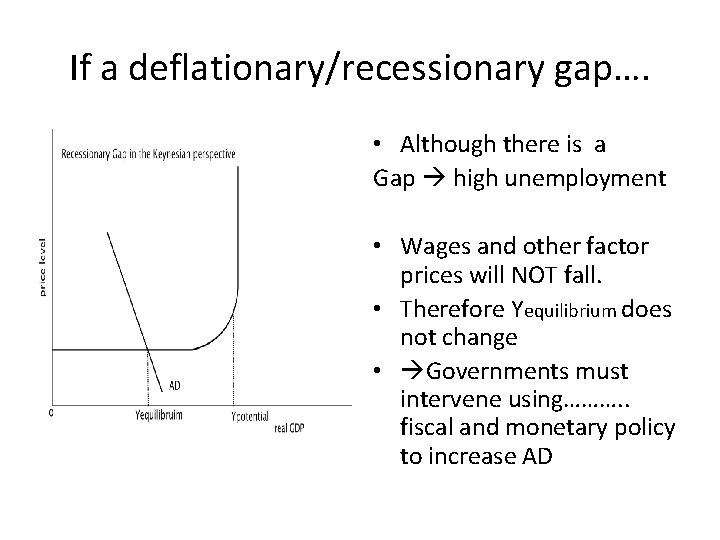
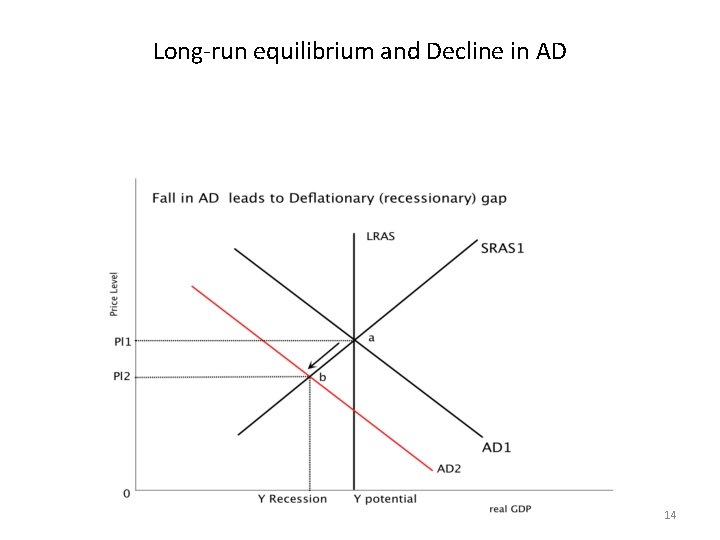
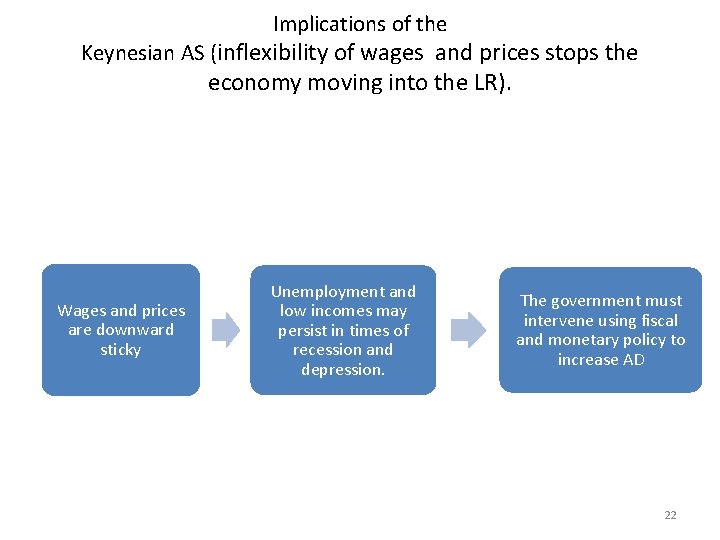
If a deflationary/recessionary gap…. • Although there is a Gap high unemployment • Wages and other factor prices will NOT fall. • Therefore Yequilibrium does not change • Governments must intervene using………. . fiscal and monetary policy to increase AD
Great Depression of 1930 s
Keynesian SRAS=LRAS • Keynes argued that as there is nothing inherent in the economy to move the SR into the LR SRAS = LRAS (NOTE: In diagrams taking a Keynesian viewpoint you may see the AS curve labeled Keynesian AS or simply LRAS. Either is all right, as long as the diagram’s title makes clear which perspective is being adopted) 8
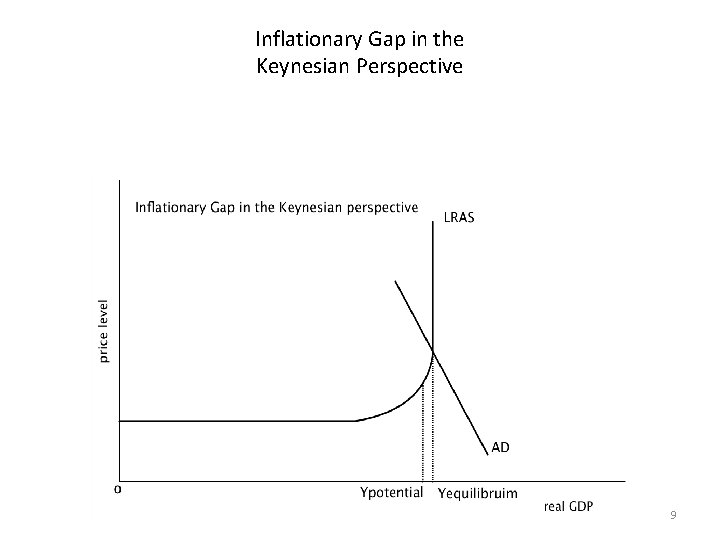
Inflationary Gap in the Keynesian Perspective 9
Full Employment Equilibrium in the Keynesian Perspective ……. but only happens by chance 10
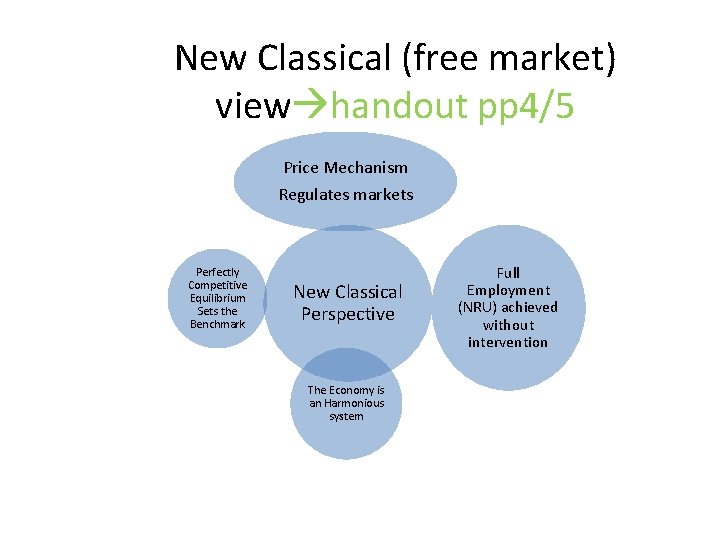
New Classical (free market) view handout pp 4/5 Price Mechanism Regulates markets Perfectly Competitive Equilibrium Sets the Benchmark New Classical Perspective The Economy is an Harmonious system Full Employment (NRU) achieved without intervention
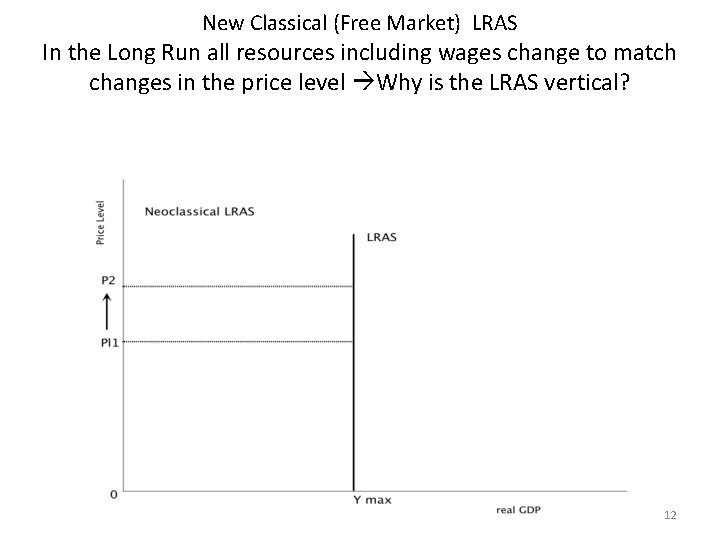
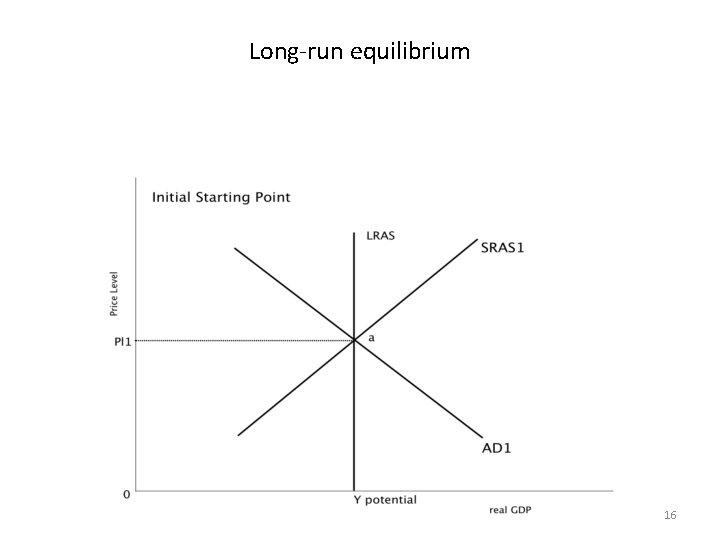
New Classical (Free Market) LRAS In the Long Run all resources including wages change to match changes in the price level Why is the LRAS vertical? LRAS perfectly inelastic at Full Employment Level of Output (Ymax) Potential Output is determined by the Quantity and Quality of Factors of production (so independent of the price level) 12
Long-run equilibrium 13
Long-run equilibrium and Decline in AD 14
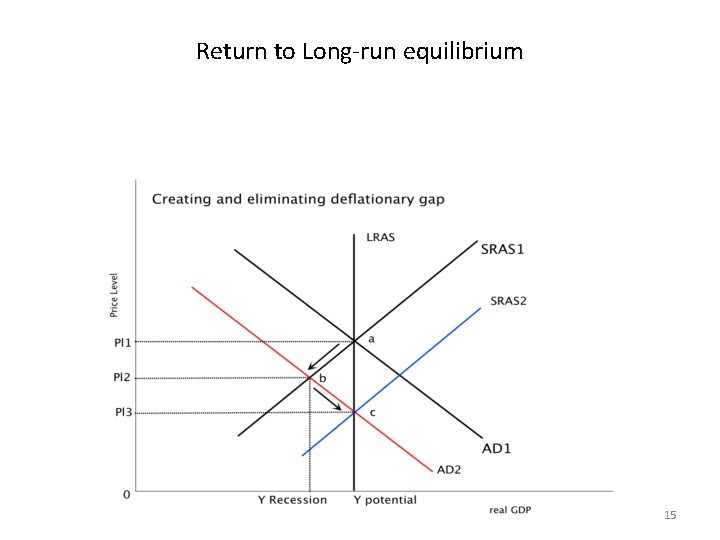
Return to Long-run equilibrium 15
Long-run equilibrium 16
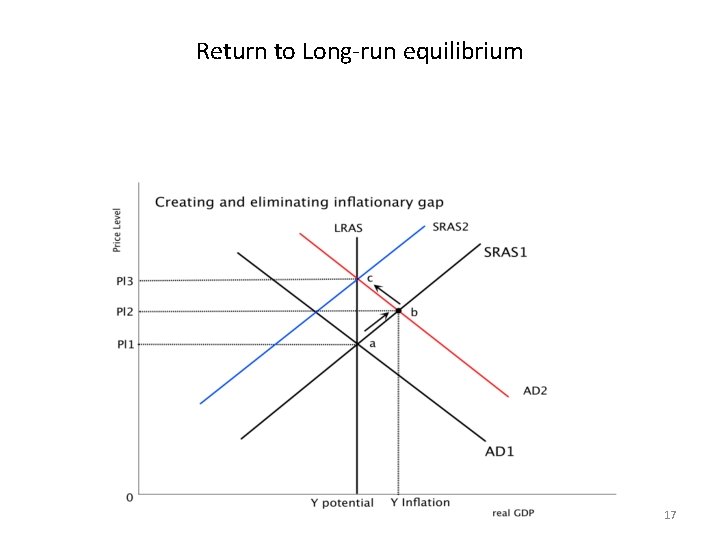
Return to Long-run equilibrium 17
Implications of the New Classical LRAS ? • In time any inflationary or recessionary gap will disappear and the economy will move to full employment (potential GDP with only the natural rate of unemp. ) • Governments do NOT need to intervene in the market • In the LR increases in AD will not impact real GDP but only bring about inflation • Group Work (3 groups) 18
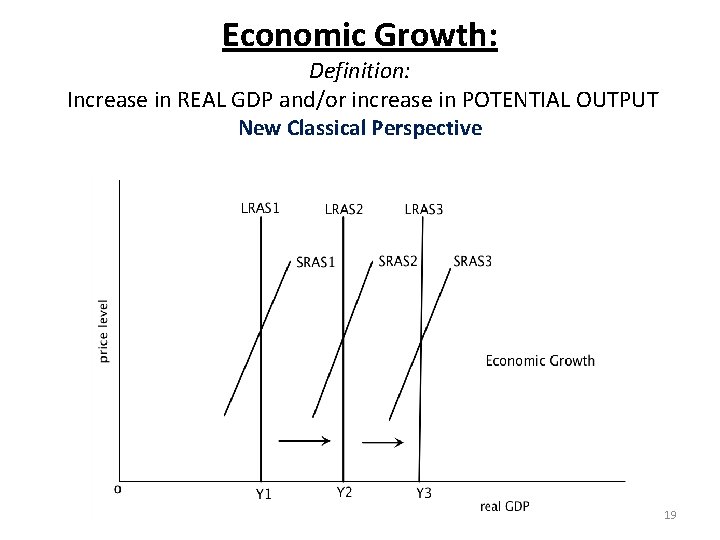
Economic Growth: Definition: Increase in REAL GDP and/or increase in POTENTIAL OUTPUT New Classical Perspective 19
Keynesian Perspective: Keynesian curve can also shift right in the LR as factors of production increase 20
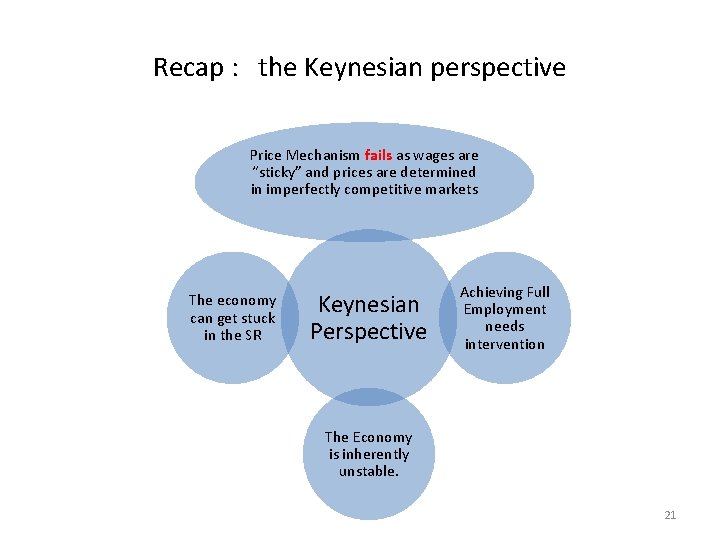
Recap : the Keynesian perspective Price Mechanism fails as wages are “sticky” and prices are determined in imperfectly competitive markets The economy can get stuck in the SR Keynesian Perspective Achieving Full Employment needs intervention The Economy is inherently unstable. 21
Implications of the Keynesian AS (inflexibility of wages and prices stops the economy moving into the LR). Wages and prices are downward sticky Unemployment and low incomes may persist in times of recession and depression. The government must intervene using fiscal and monetary policy to increase AD 22
The Two Macroeconomic Schools of Thought • AD = C + I + G + NX (X – M) • LRAS = function of (Labor, Land, Capital, Entrepreneurs)