
Key Workflow Developments Brad Taylor Research Advisor Prof
Key Workflow Developments Brad Taylor Research Advisor Prof. Shmuel Rotenstreich October 17, 2005
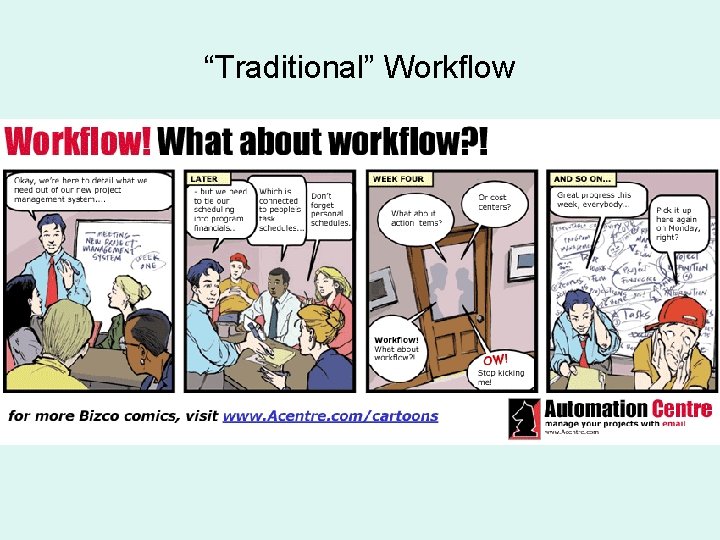
“Traditional” Workflow
Introduction and Motivation • Traditional Workflow: controls activities within single centrally controlled organization using static (or limited changes) workflow model to specify business processes • Inter-Organizational Workflow: highly dynamic environment: requires coordination of dynamic workflows across enterprise boundaries • Dynamic systems change over time: although laws invariant, the things they govern change • Even simple modern workflows complex to implement (not operating in isolation) • Key WF vs. WS (Web Service) difference: State retention • Ex: Auto Model Production (next slide) <COMP SCI ex 2> Slide 3
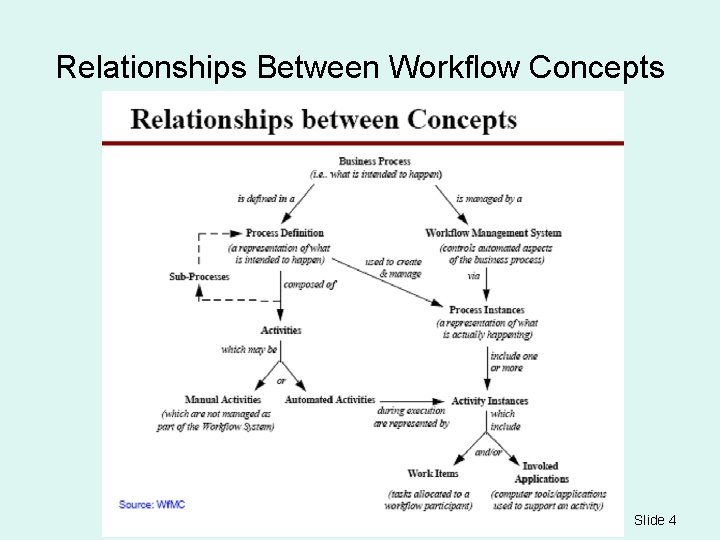
Relationships Between Workflow Concepts Slide 4
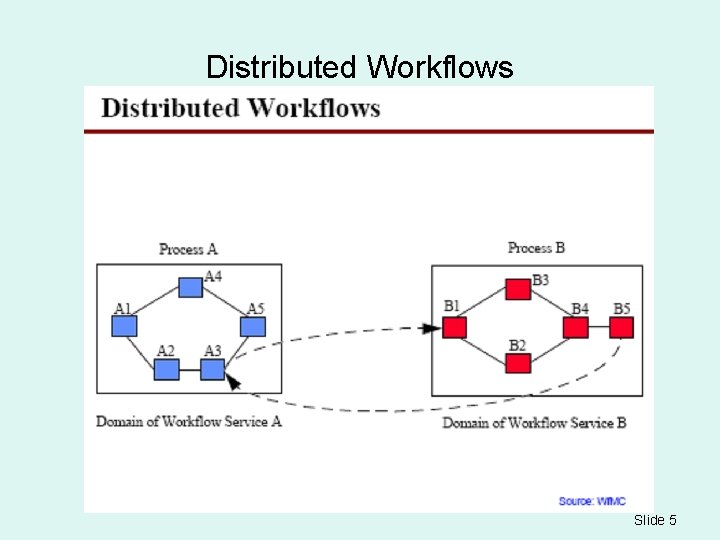
Distributed Workflows Slide 5
Interorganizational Workflow – Challenges Remaining • http: //jibjab. com/Home. aspx • Flexibility & adaptability using autonomous service providers preferred to strict captive resource task (script) enactment (Dynamic vs. Static Cost/Benefit Analysis) • Robust cooperation among organizations require advanced monitoring & control mechanisms (I/O alone inadequate) • Simple, non-contractual agreements (trust & reputation basis) work best, lessen enforcement cost <PROF CONCERN> • Complex, heterogeneous (HW & SW), dynamic (entity birth, evolution & death) environment • Comprehensive, reliable IOWF solution being sought • Gray Box--IOPE {Inputs, Outputs, Preconditions, Effects} Slide 6
Conclusions • Workflow: well-studied Computer Science area • Inter-Organizational Workflow “fits” Complex Organizational Distributed Systems Area • Cooperation Mechanism development promising area, given research group’s middleware & complex organizational system study background Slide 7
- Slides: 7