
Key Topic The FRAME Introduction to Ancient Greece
- Slides: 14
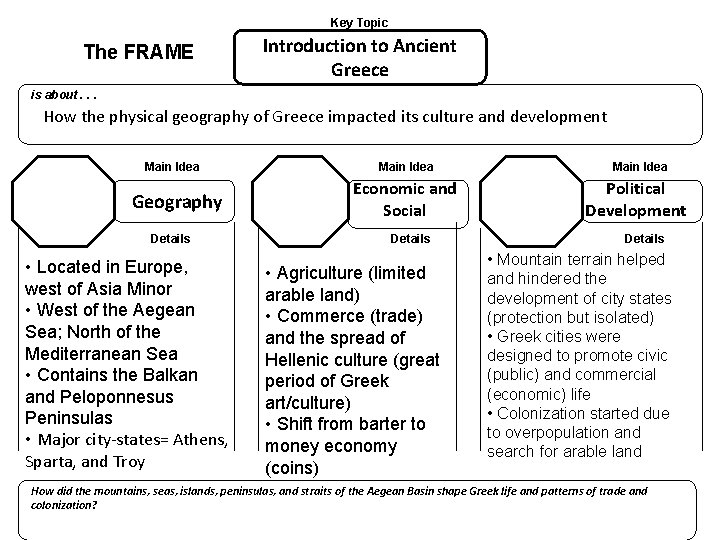
Key Topic The FRAME Introduction to Ancient Greece is about. . . How the physical geography of Greece impacted its culture and development Main Idea Geography Details • Located in Europe, west of Asia Minor • West of the Aegean Sea; North of the Mediterranean Sea • Contains the Balkan and Peloponnesus Peninsulas • Major city-states= Athens, Sparta, and Troy Main Idea Economic and Social Details • Agriculture (limited arable land) • Commerce (trade) and the spread of Hellenic culture (great period of Greek art/culture) • Shift from barter to money economy (coins) Main Idea Political Development Details • Mountain terrain helped and hindered the development of city states (protection but isolated) • Greek cities were designed to promote civic (public) and commercial (economic) life • Colonization started due to overpopulation and search for arable land How did the mountains, seas, islands, peninsulas, and straits of the Aegean Basin shape Greek life and patterns of trade and colonization?
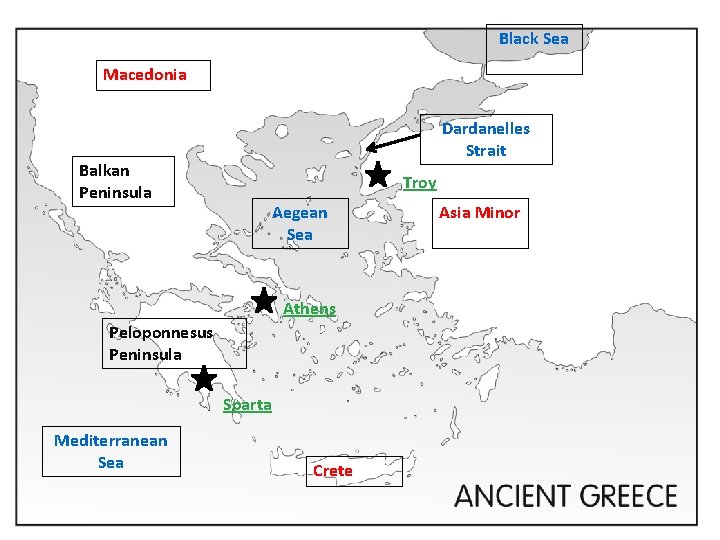
Black Sea Macedonia Dardanelles Strait Balkan Peninsula Troy Aegean Sea Athens Peloponnesus Peninsula Sparta Mediterranean Sea Crete Asia Minor
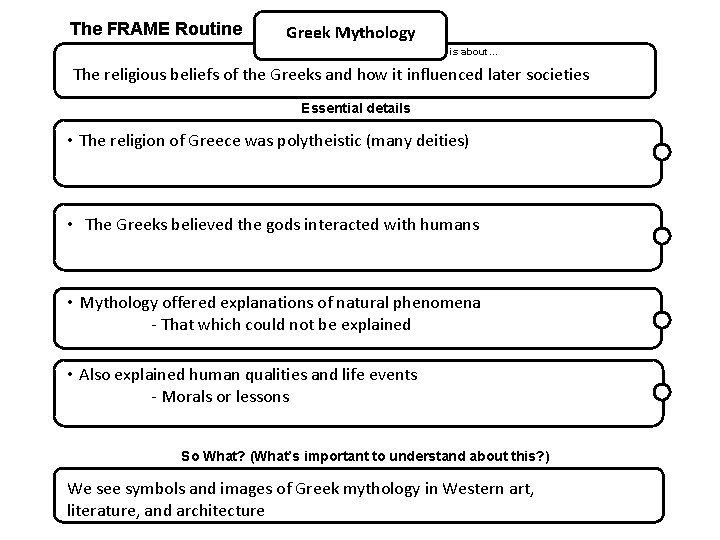
The FRAME Routine Greek Mythology is about… The religious beliefs of the Greeks and how it influenced later societies Essential details • The religion of Greece was polytheistic (many deities) • The Greeks believed the gods interacted with humans • Mythology offered explanations of natural phenomena - That which could not be explained • Also explained human qualities and life events - Morals or lessons So What? (What’s important to understand about this? ) We see symbols and images of Greek mythology in Western art, literature, and architecture
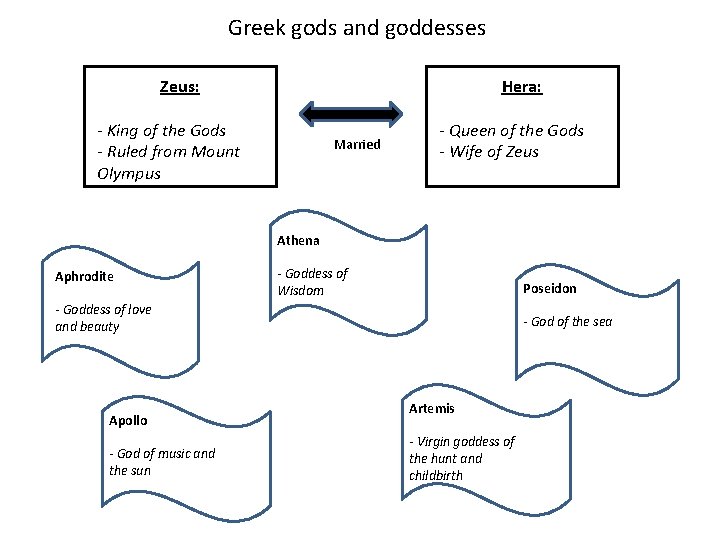
Greek gods and goddesses Zeus: Hera: - King of the Gods - Ruled from Mount Olympus Married - Queen of the Gods - Wife of Zeus Athena Aphrodite - Goddess of Wisdom Poseidon - Goddess of love and beauty Apollo - God of music and the sun - God of the sea Artemis - Virgin goddess of the hunt and childbirth
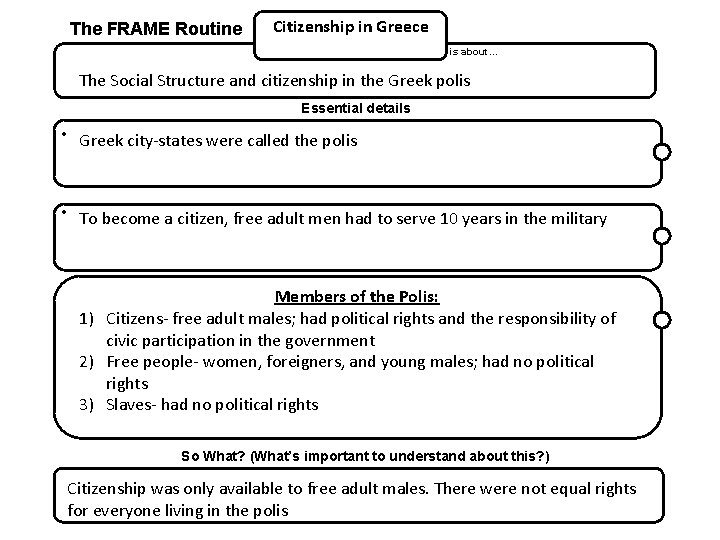
The FRAME Routine Citizenship in Greece is about… The Social Structure and citizenship in the Greek polis Essential details • Greek city-states were called the polis • To become a citizen, free adult men had to serve 10 years in the military Members of the Polis: 1) Citizens- free adult males; had political rights and the responsibility of civic participation in the government 2) Free people- women, foreigners, and young males; had no political rights 3) Slaves- had no political rights So What? (What’s important to understand about this? ) Citizenship was only available to free adult males. There were not equal rights for everyone living in the polis
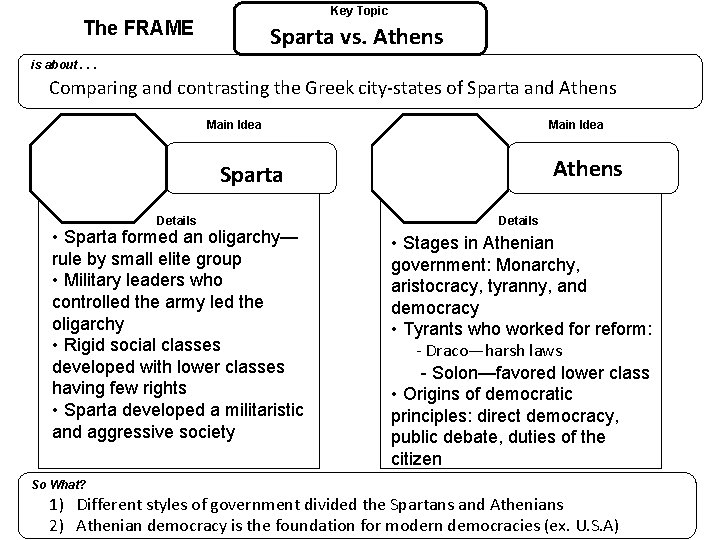
Key Topic The FRAME Sparta vs. Athens is about. . . Comparing and contrasting the Greek city-states of Sparta and Athens Main Idea Athens Sparta Details • Sparta formed an oligarchy— rule by small elite group • Military leaders who controlled the army led the oligarchy • Rigid social classes developed with lower classes having few rights • Sparta developed a militaristic and aggressive society Details • Stages in Athenian government: Monarchy, aristocracy, tyranny, and democracy • Tyrants who worked for reform: - Draco—harsh laws - Solon—favored lower class • Origins of democratic principles: direct democracy, public debate, duties of the citizen So What? 1) Different styles of government divided the Spartans and Athenians 2) Athenian democracy is the foundation for modern democracies (ex. U. S. A)
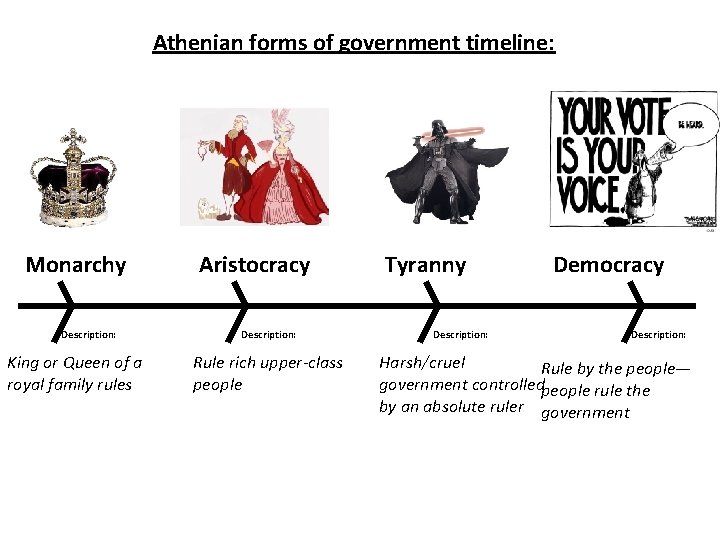
Athenian forms of government timeline: Monarchy Description: King or Queen of a royal family rules Aristocracy Description: Rule rich upper-class people Tyranny Description: Democracy Description: Harsh/cruel Rule by the people— government controlledpeople rule the by an absolute ruler government
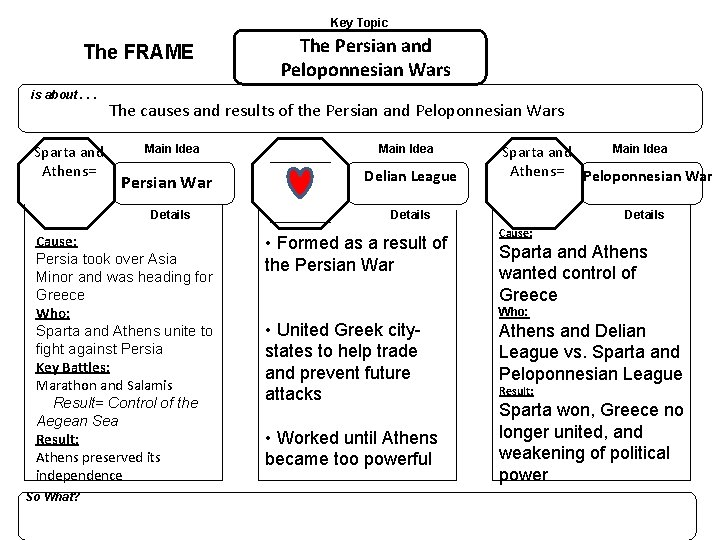
Key Topic The FRAME is about. . . Sparta and Athens= The causes and results of the Persian and Peloponnesian Wars Main Idea Persian War Details Cause: Persia took over Asia Minor and was heading for Greece Who: Sparta and Athens unite to fight against Persia Key Battles: Marathon and Salamis Result= Control of the Aegean Sea Result: Athens preserved its independence So What? The Persian and Peloponnesian Wars Main Idea Delian League Main Idea Sparta and Athens= Peloponnesian War Details • Formed as a result of the Persian War • United Greek citystates to help trade and prevent future attacks • Worked until Athens became too powerful Details Cause: Sparta and Athens wanted control of Greece Who: Athens and Delian League vs. Sparta and Peloponnesian League Result: Sparta won, Greece no longer united, and weakening of political power
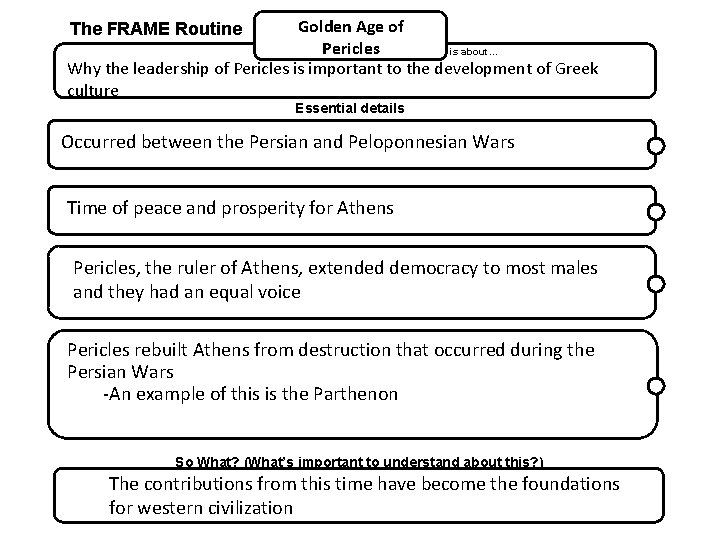
Golden Age of Pericles is about… Why the leadership of Pericles is important to the development of Greek culture The FRAME Routine Essential details Occurred between the Persian and Peloponnesian Wars Time of peace and prosperity for Athens Pericles, the ruler of Athens, extended democracy to most males and they had an equal voice Pericles rebuilt Athens from destruction that occurred during the Persian Wars -An example of this is the Parthenon So What? (What’s important to understand about this? ) The contributions from this time have become the foundations for western civilization
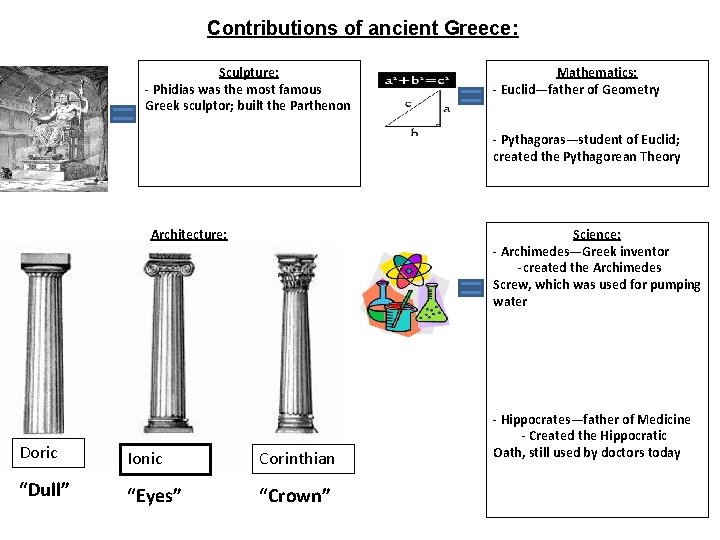
Contributions of ancient Greece: Sculpture: - Phidias was the most famous Greek sculptor; built the Parthenon Mathematics: - Euclid—father of Geometry - Pythagoras—student of Euclid; created the Pythagorean Theory Architecture: Science: - Archimedes—Greek inventor -created the Archimedes Screw, which was used for pumping water Doric Ionic Corinthian “Dull” “Eyes” “Crown” - Hippocrates—father of Medicine - Created the Hippocratic Oath, still used by doctors today
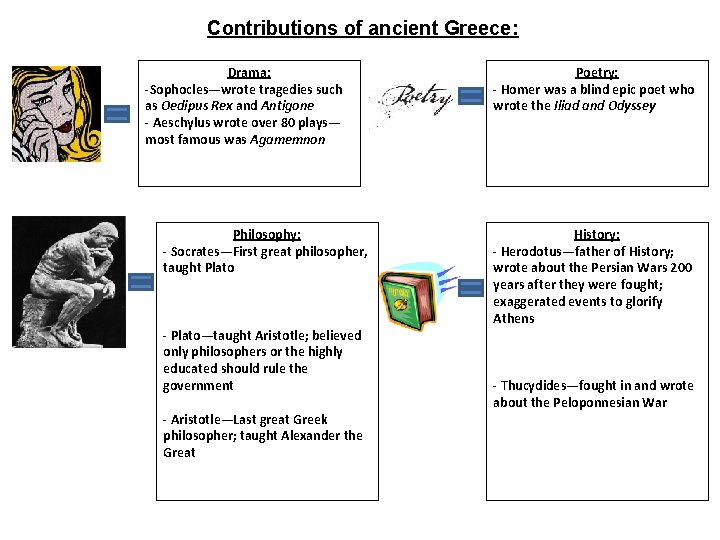
Contributions of ancient Greece: Drama: -Sophocles—wrote tragedies such as Oedipus Rex and Antigone - Aeschylus wrote over 80 plays— most famous was Agamemnon Philosophy: - Socrates—First great philosopher, taught Plato - Plato—taught Aristotle; believed only philosophers or the highly educated should rule the government - Aristotle—Last great Greek philosopher; taught Alexander the Great Poetry: - Homer was a blind epic poet who wrote the Iliad and Odyssey History: - Herodotus—father of History; wrote about the Persian Wars 200 years after they were fought; exaggerated events to glorify Athens - Thucydides—fought in and wrote about the Peloponnesian War
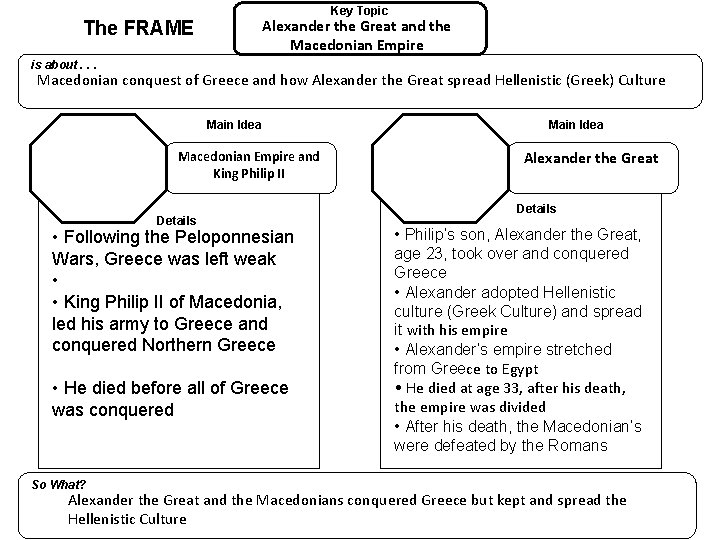
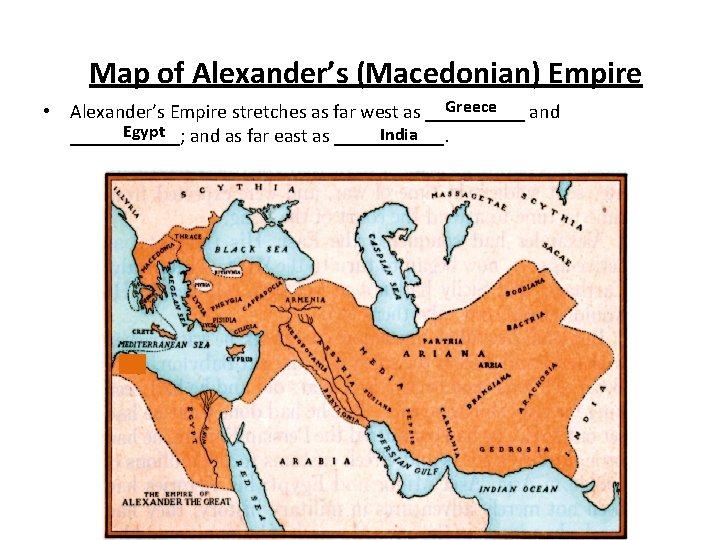
Key Topic Alexander the Great and the Macedonian Empire The FRAME is about. . . Macedonian conquest of Greece and how Alexander the Great spread Hellenistic (Greek) Culture Main Idea Macedonian Empire and King Philip II Details • Following the Peloponnesian Wars, Greece was left weak • • King Philip II of Macedonia, led his army to Greece and conquered Northern Greece • He died before all of Greece was conquered So What? Main Idea Alexander the Great Details • Philip’s son, Alexander the Great, age 23, took over and conquered Greece • Alexander adopted Hellenistic culture (Greek Culture) and spread it with his empire • Alexander’s empire stretched from Greece to Egypt • He died at age 33, after his death, the empire was divided • After his death, the Macedonian’s were defeated by the Romans Alexander the Great and the Macedonians conquered Greece but kept and spread the Hellenistic Culture
Map of Alexander’s (Macedonian) Empire Greece • Alexander’s Empire stretches as far west as _____ and Egypt and as far east as ______. India ______;
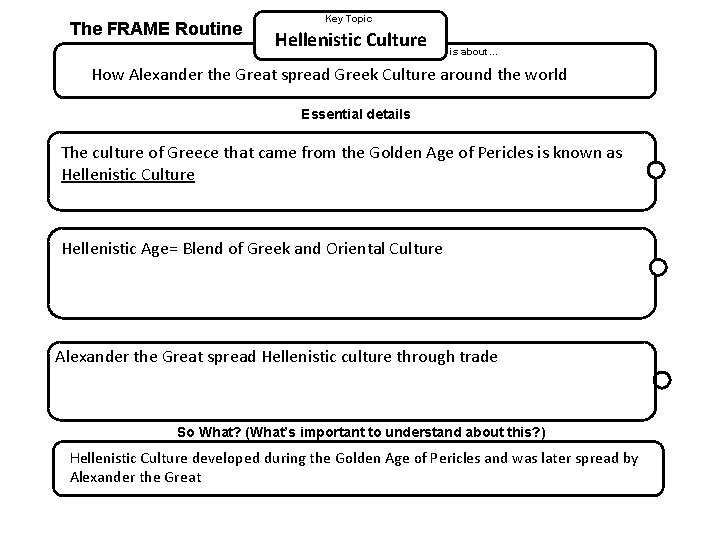
The FRAME Routine Key Topic Hellenistic Culture is about… How Alexander the Great spread Greek Culture around the world Essential details The culture of Greece that came from the Golden Age of Pericles is known as Hellenistic Culture Hellenistic Age= Blend of Greek and Oriental Culture Alexander the Great spread Hellenistic culture through trade So What? (What’s important to understand about this? ) Hellenistic Culture developed during the Golden Age of Pericles and was later spread by Alexander the Great