
Key Terms The Age of Exploration Constantinople Martin
- Slides: 17
Key Terms - The Age of Exploration Constantinople Martin Frobisher Ottoman Turks Henry Hudson Hanseatic League Jacques Cartier Portugal Samuel de Champlain Henry the Navigator Columbian Exchange New Spain New France New Netherland Treaty of Tordesillas Christopher Columbus Ferdinand Magellan John Cabot
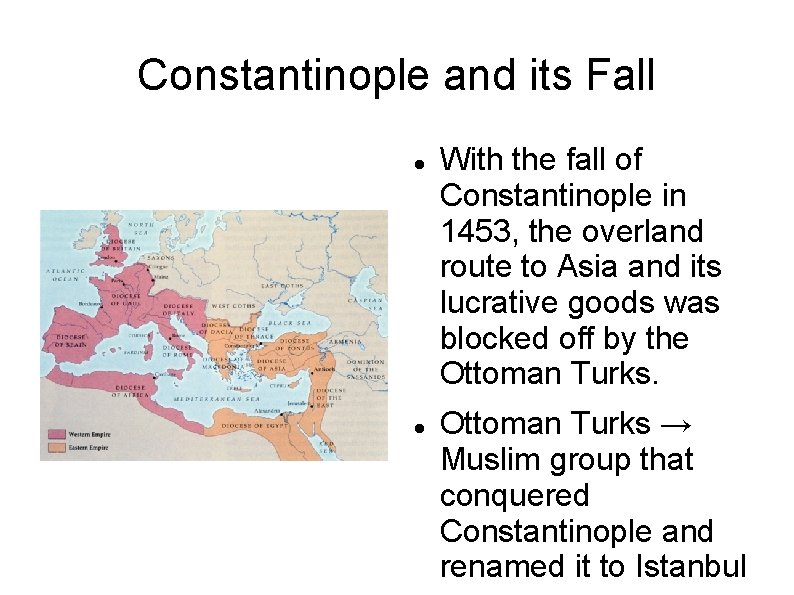
Constantinople and its Fall With the fall of Constantinople in 1453, the overland route to Asia and its lucrative goods was blocked off by the Ottoman Turks → Muslim group that conquered Constantinople and renamed it to Istanbul
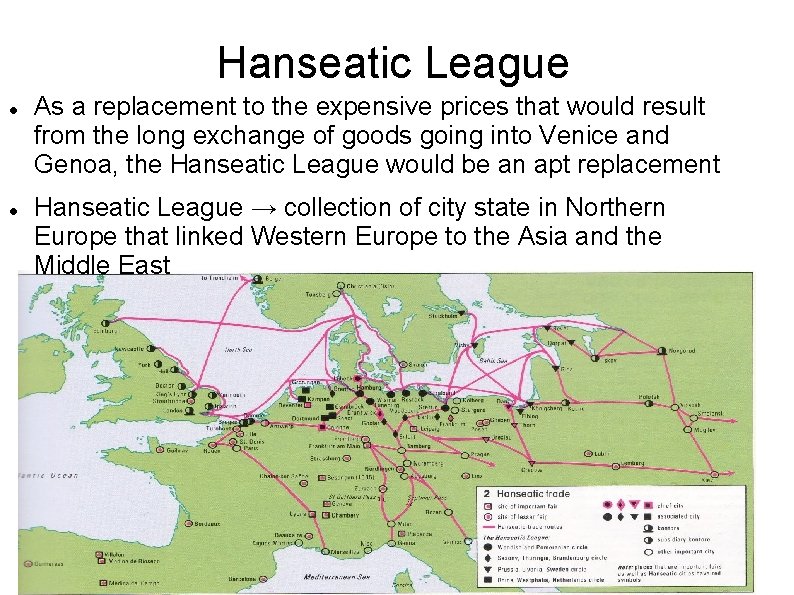
Hanseatic League As a replacement to the expensive prices that would result from the long exchange of goods going into Venice and Genoa, the Hanseatic League would be an apt replacement Hanseatic League → collection of city state in Northern Europe that linked Western Europe to the Asia and the Middle East
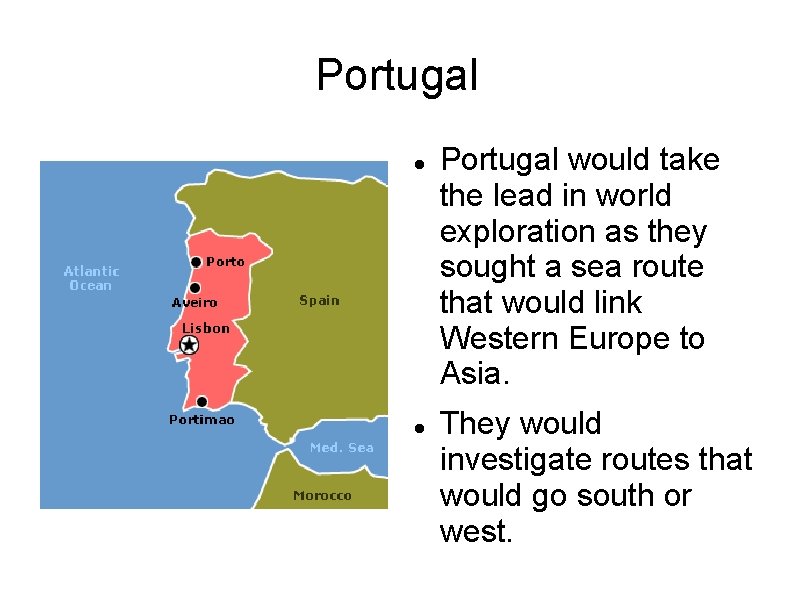
Portugal would take the lead in world exploration as they sought a sea route that would link Western Europe to Asia. They would investigate routes that would go south or west.
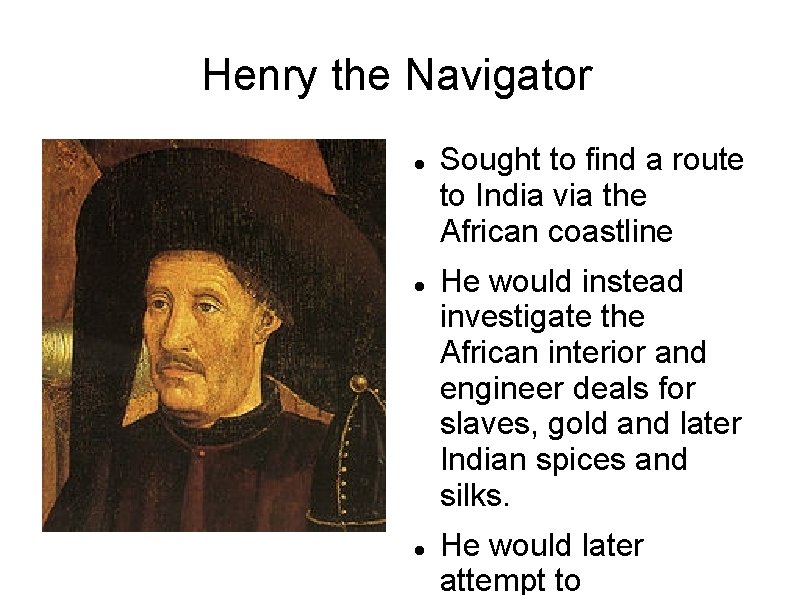
Henry the Navigator Sought to find a route to India via the African coastline He would instead investigate the African interior and engineer deals for slaves, gold and later Indian spices and silks. He would later attempt to
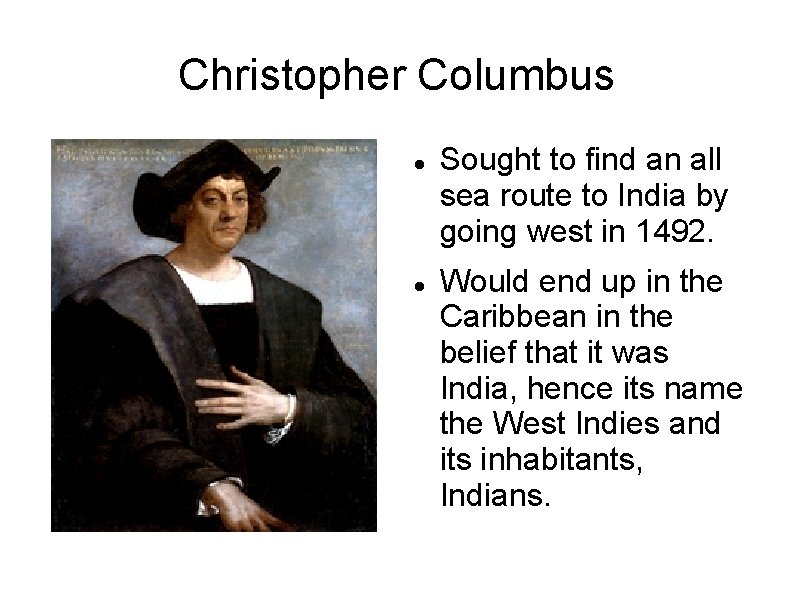
Christopher Columbus Sought to find an all sea route to India by going west in 1492. Would end up in the Caribbean in the belief that it was India, hence its name the West Indies and its inhabitants, Indians.
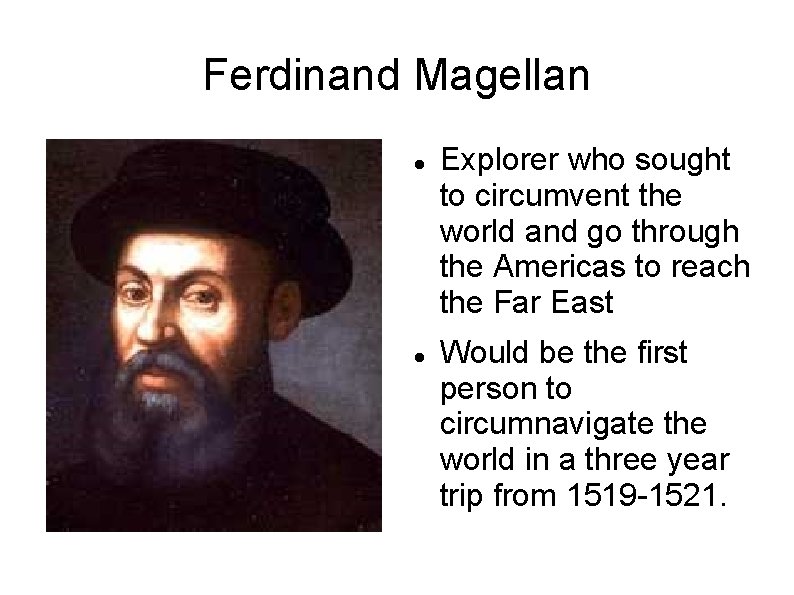
Ferdinand Magellan Explorer who sought to circumvent the world and go through the Americas to reach the Far East Would be the first person to circumnavigate the world in a three year trip from 1519 -1521.
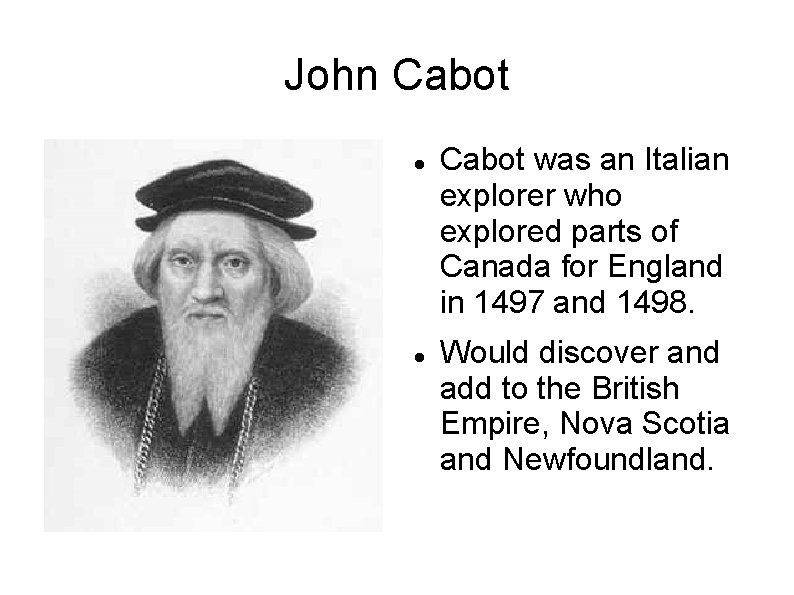
John Cabot was an Italian explorer who explored parts of Canada for England in 1497 and 1498. Would discover and add to the British Empire, Nova Scotia and Newfoundland.
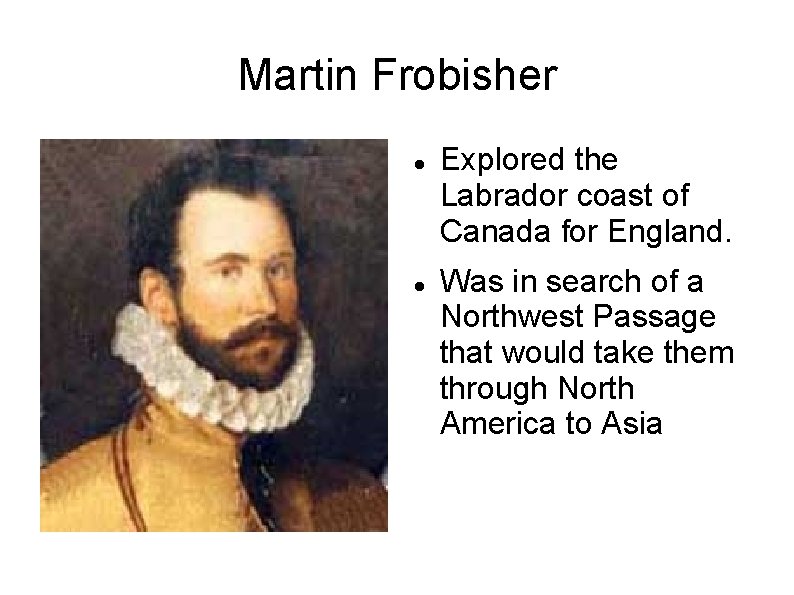
Martin Frobisher Explored the Labrador coast of Canada for England. Was in search of a Northwest Passage that would take them through North America to Asia
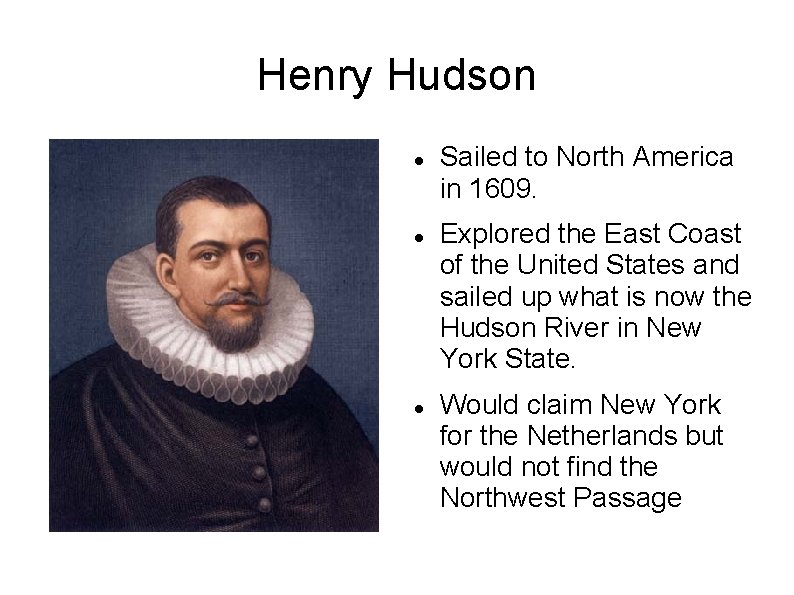
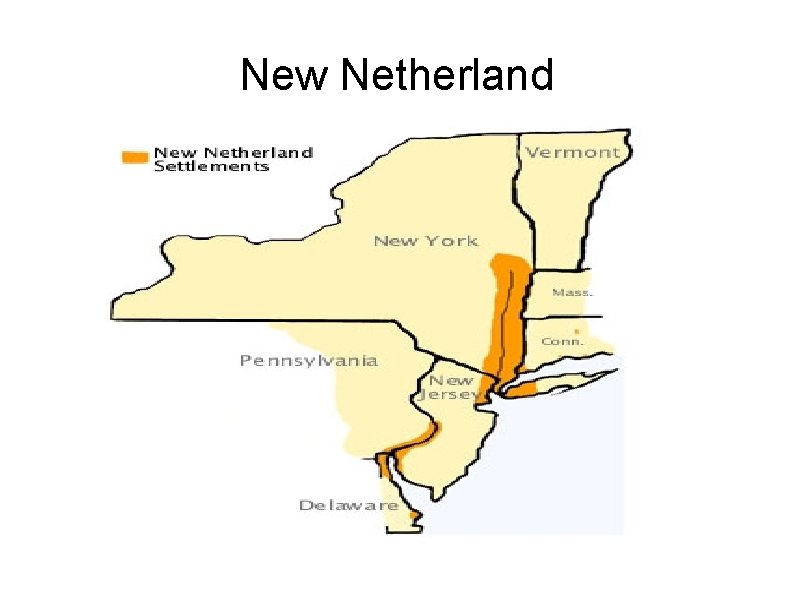
Henry Hudson Sailed to North America in 1609. Explored the East Coast of the United States and sailed up what is now the Hudson River in New York State. Would claim New York for the Netherlands but would not find the Northwest Passage
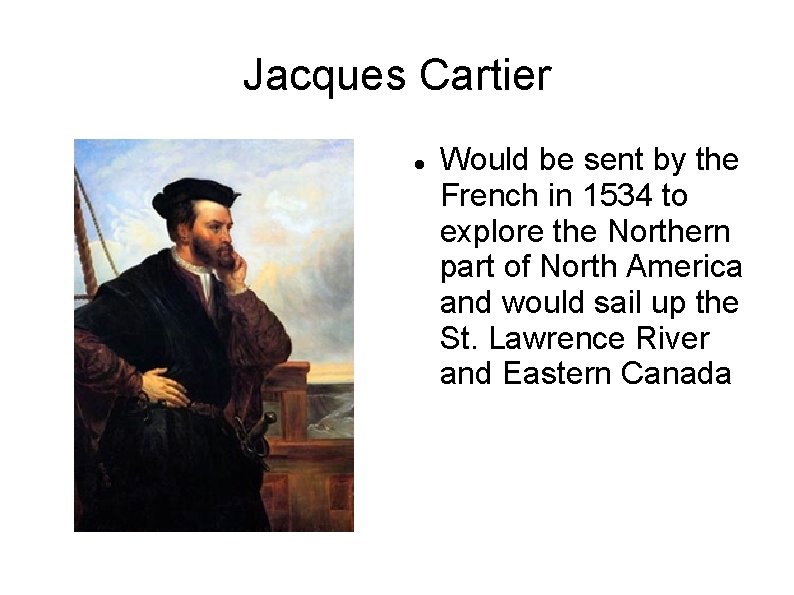
Jacques Cartier Would be sent by the French in 1534 to explore the Northern part of North America and would sail up the St. Lawrence River and Eastern Canada
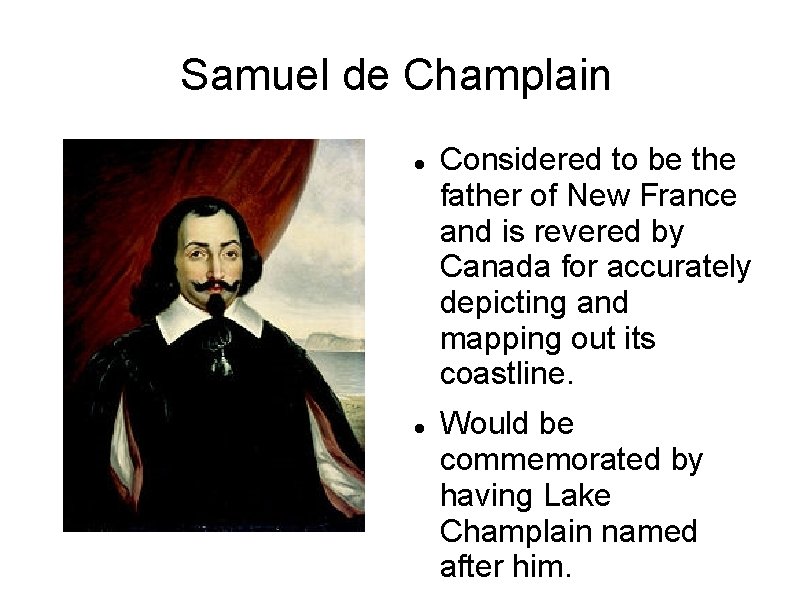
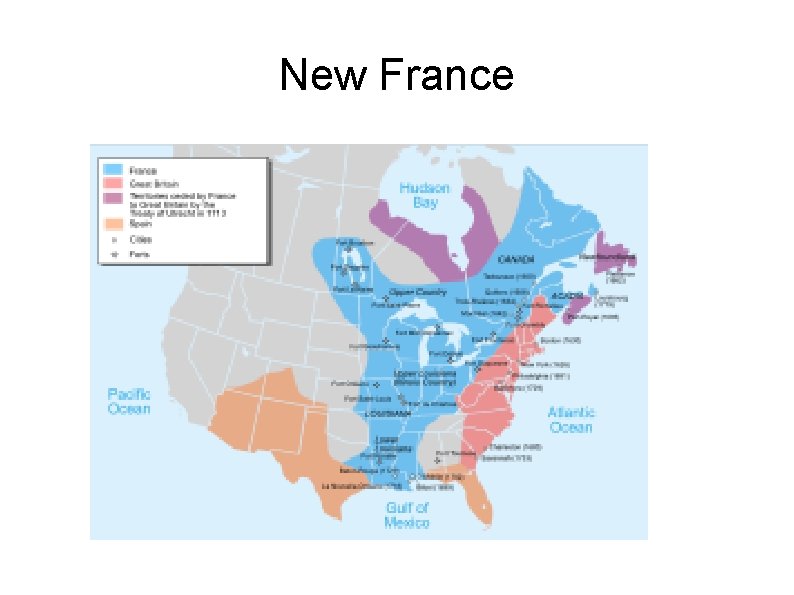
Samuel de Champlain Considered to be the father of New France and is revered by Canada for accurately depicting and mapping out its coastline. Would be commemorated by having Lake Champlain named after him.
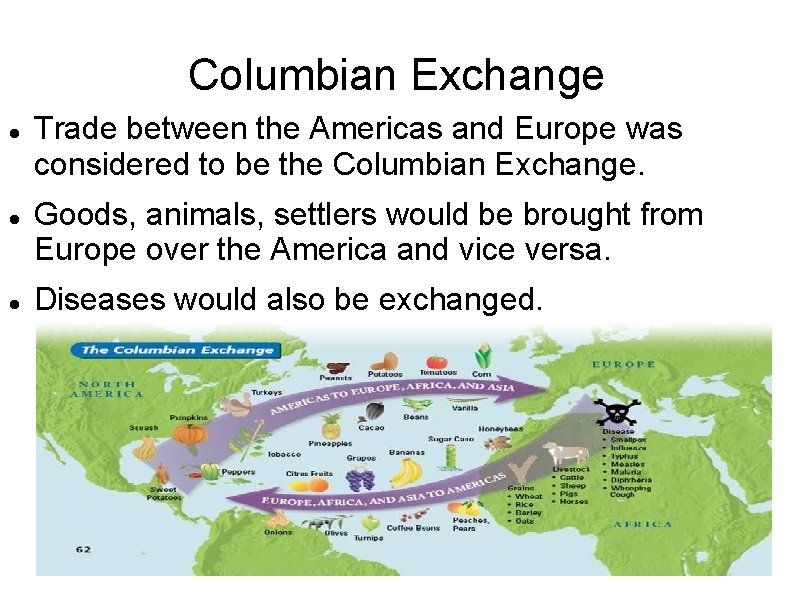
Columbian Exchange Trade between the Americas and Europe was considered to be the Columbian Exchange. Goods, animals, settlers would be brought from Europe over the America and vice versa. Diseases would also be exchanged.
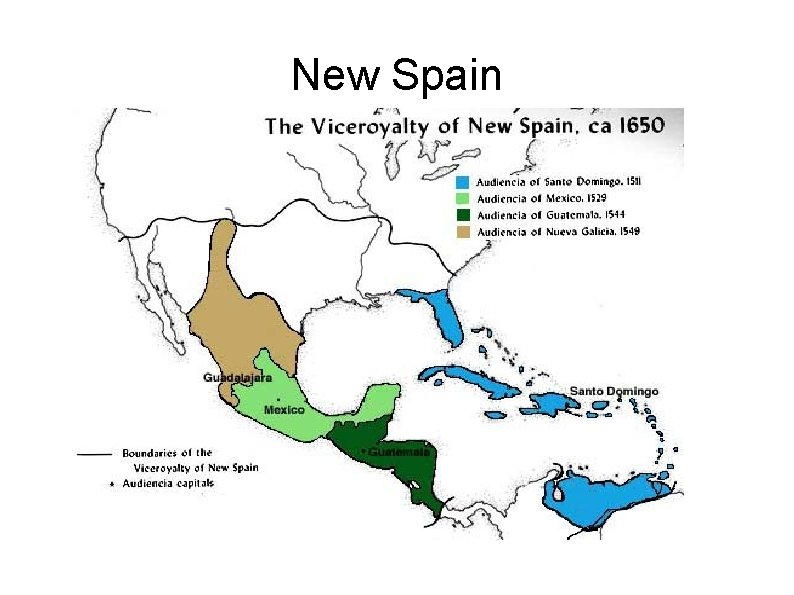
New Spain
New France
New Netherland
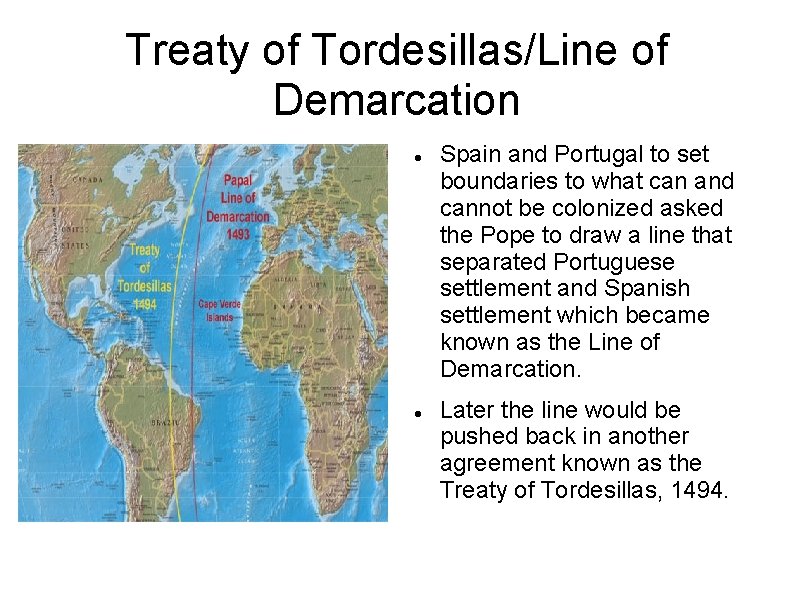
Treaty of Tordesillas/Line of Demarcation Spain and Portugal to set boundaries to what can and cannot be colonized asked the Pope to draw a line that separated Portuguese settlement and Spanish settlement which became known as the Line of Demarcation. Later the line would be pushed back in another agreement known as the Treaty of Tordesillas, 1494.