
Key Terms Modernity Attfield What is authentic l

- Slides: 21
Key Terms: Modernity
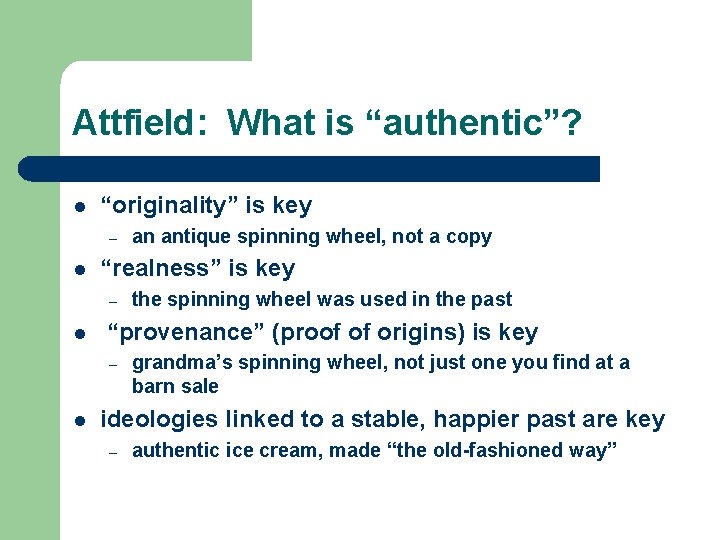
Attfield: What is “authentic”? l “originality” is key – l “realness” is key – l the spinning wheel was used in the past “provenance” (proof of origins) is key – l an antique spinning wheel, not a copy grandma’s spinning wheel, not just one you find at a barn sale ideologies linked to a stable, happier past are key – authentic ice cream, made “the old-fashioned way”
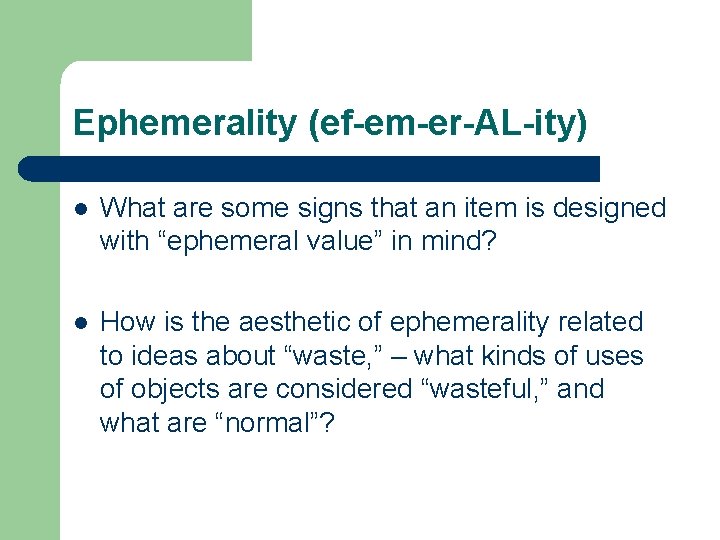
Ephemerality (ef-em-er-AL-ity) l What are some signs that an item is designed with “ephemeral value” in mind? l How is the aesthetic of ephemerality related to ideas about “waste, ” – what kinds of uses of objects are considered “wasteful, ” and what are “normal”?
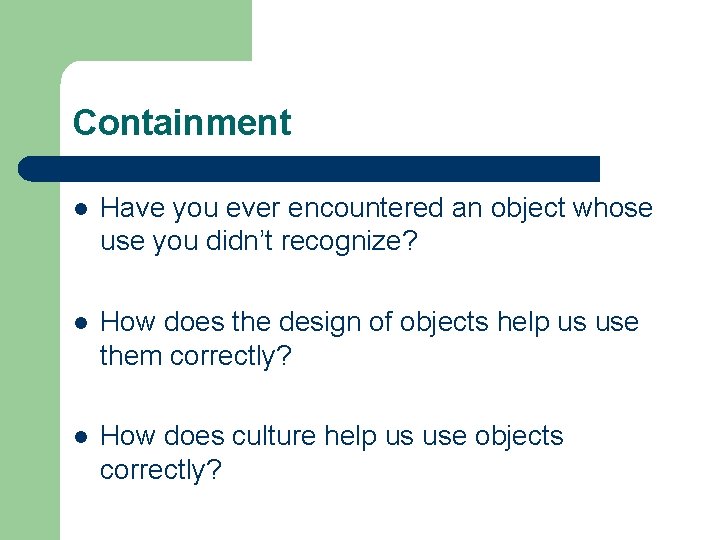
Containment l Have you ever encountered an object whose use you didn’t recognize? l How does the design of objects help us use them correctly? l How does culture help us use objects correctly?
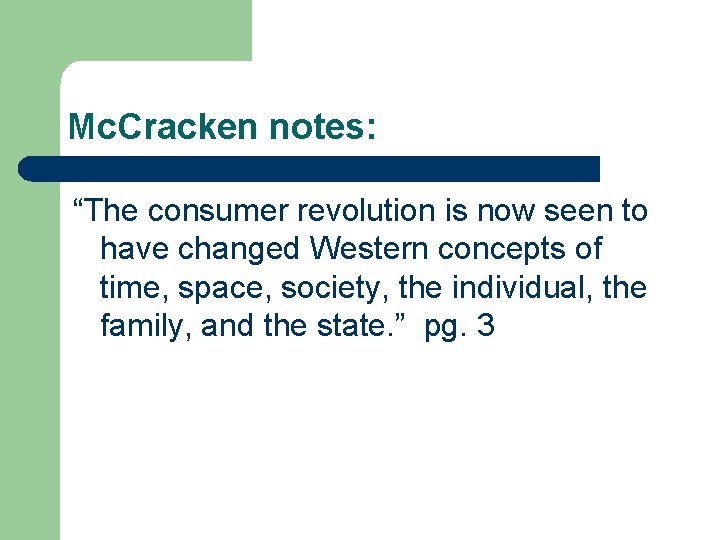
Mc. Cracken notes: “The consumer revolution is now seen to have changed Western concepts of time, space, society, the individual, the family, and the state. ” pg. 3
“The Great Transformation” l Rapid rise of modern consumerism in the 18 th century l Karl Polanyi argued that in a “market society, ” everything is for sale, and everything can be treated that way l Why do you need a consumer revolution to make the Industrial Revolution work?
The Consumer Revolution What are some features or stages of consumerism that Mc. Cracken relates to the “consumer revolution”? 16 th/17 th century – “patina” and corporate consumption 18 th century – “novelty” and obsolescence driving “fashion” 19 th – making consumption public; “expressive power of goods” as seen in consumer lifestyles
What is “modernity”? Modernity can be defined in many ways, but should not be confused with the aesthetic movement of modernism in literature and art in the first half of the 20 th century. Generally, “modernity” means “having the features of a capitalist society in the modern period” – usually considered later than the 18 th century, and in particular, the 19 th and 20 th centuries
Frederic Jameson – stages of capitalism l market capitalism – 18 th – 19 th centuries; emphasis on production of goods l monopoly capitalism – late 19 th to mid-20 th centuries; emphasis on consolidation of industries l consumer capitalism – (post-modernity or “late capitalism”) current phase; emphasis on marketing, not production
What is modernity all about? l l rationality and order; rejection of non-objective (non-scientific or magical) worldviews reproducibility in goods, scientific results, etc. binary oppositions that separate a modern “us” from “pre-modern” societies (e. g. order/disorder; logical/magical; science/superstition; government/kinship) organization and control of knowledge is essential to modernity
Where is modernity NOT? What’s in a name? l “pre-modern” l “traditional”
Post-modernity Much of what we read in this class has a “post-modern” twist to it, even if it isn’t “pure” postmodern theory. Post-modern approaches reject the idea that knowledge is self-evident and objectively knowable – instead it recognizes that “science” is also a belief system. Postmodern theory asks us to think about how people/groups construct their own realities using particular cultural tools. Postmodernism also pays attention to how power influences or controls perceptions of possibilities or reality
Sara Baartman film The first modern museums were cabinets with “curiosities” in them – how does the display of the “Hottentot Venus” fit into this? What was the role of “freaks” in the early 19 th century, as mentioned in the film? How have things changed in “late modernity”…or have they?
“Money is No Object” Keane article l “alienable” – can be removed from you, given a price, turned into a commodity l “inalienable” – can’t be removed/taken from you; shouldn’t or can’t have a price. (We say that you can “sell your soul, ” but can you? )
Objectification of “parts” l What parts of Baartman’s body were preserved and why? l Are body parts “alienable” in Keane’s definition?
What’s going on on Sumba? l link between money and materialism l local people contrast traditional subsistence/ceremonial exchange economy, and “modern age” of money
l “natural meaning” – condition of objects tells us something about them (a torn cloth) l “non-natural meaning” – social intentions and meanings we encode into objects and their features (cloth was torn, or given in torn condition, as an insult)
Money vs. ceremonial exchange Why does Keane say that most scholars see money and ceremonial exchange as being in direct opposition to one another? What examples does he give of how money has been incorporated into ceremonial exchange to question this opposition?
Money as an instrument of alienation l Keane, pp. 79 -82 l Money is often seen as making true alienation possible – buying and selling snap the links of people to their property l “[Money] circulates promiscuously, without respecting persons or things. ”
Traditional vs “Modern” exchange? How is traditional exchange on Sumba different from money-based (modern) exchanges? Do you believe in modernity? [Were you convinced by the historical perspective offered by Mc. Cracken and the scholars he cites in his chapter? How would this process of modernization translate to other cultural contexts (or would it? )]
Alienability and value Does refusing to give something a price limit or alter its value? Can objects without prices really “circulate”? Think of an example.