
Key Stage 3 Our Teeth Our Teeth Why
- Slides: 58
Key Stage 3
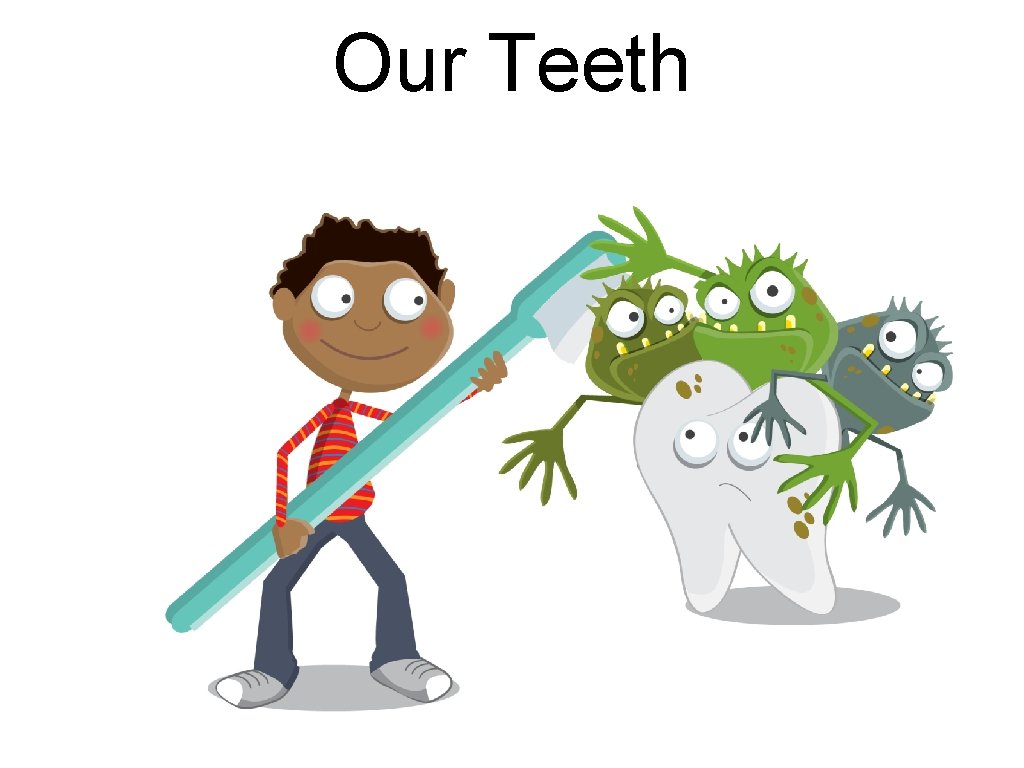
Our Teeth
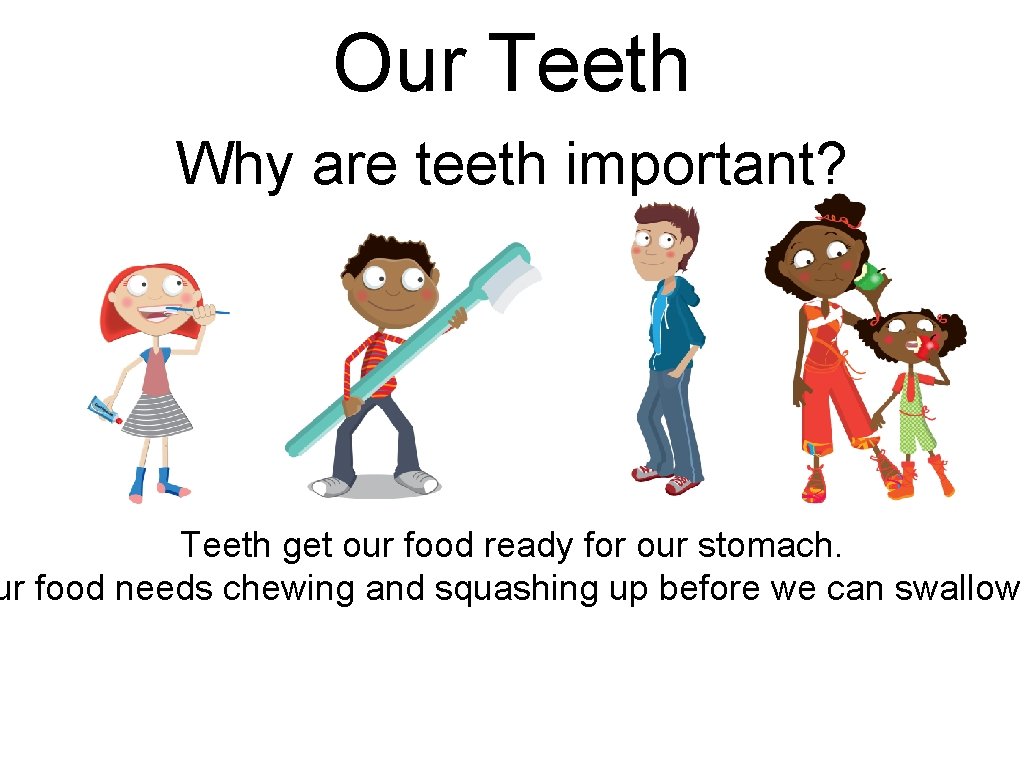
Our Teeth Why are teeth important? Teeth get our food ready for our stomach. ur food needs chewing and squashing up before we can swallow
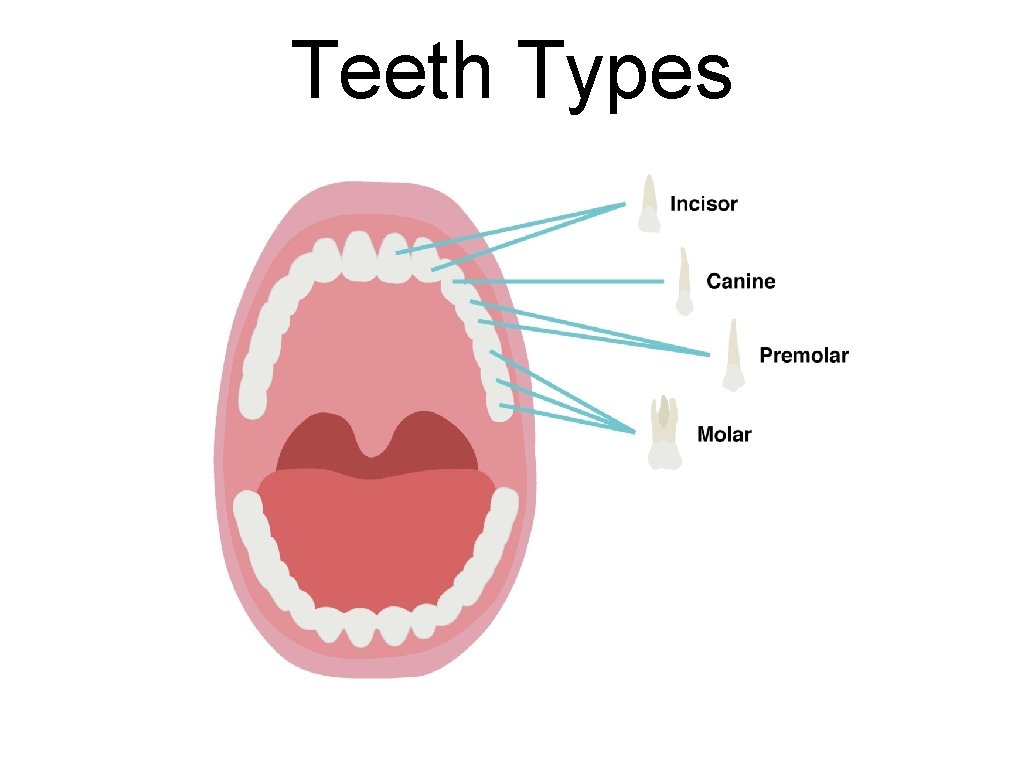
Teeth Types ideo; Different types of teet
Teeth Types
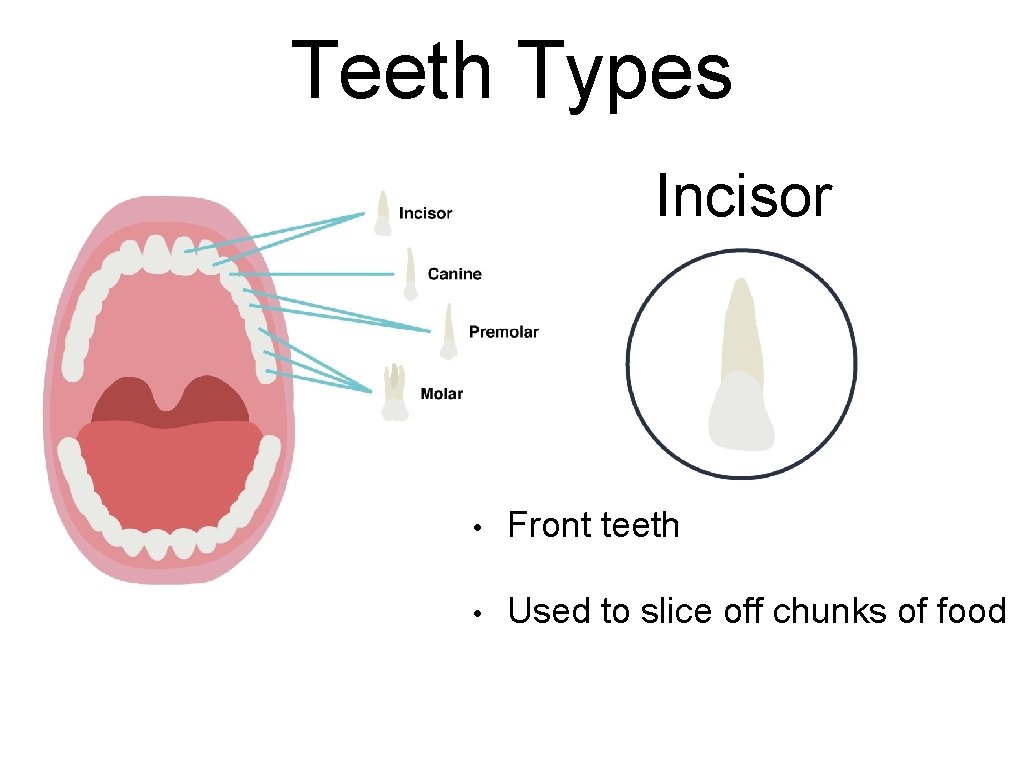
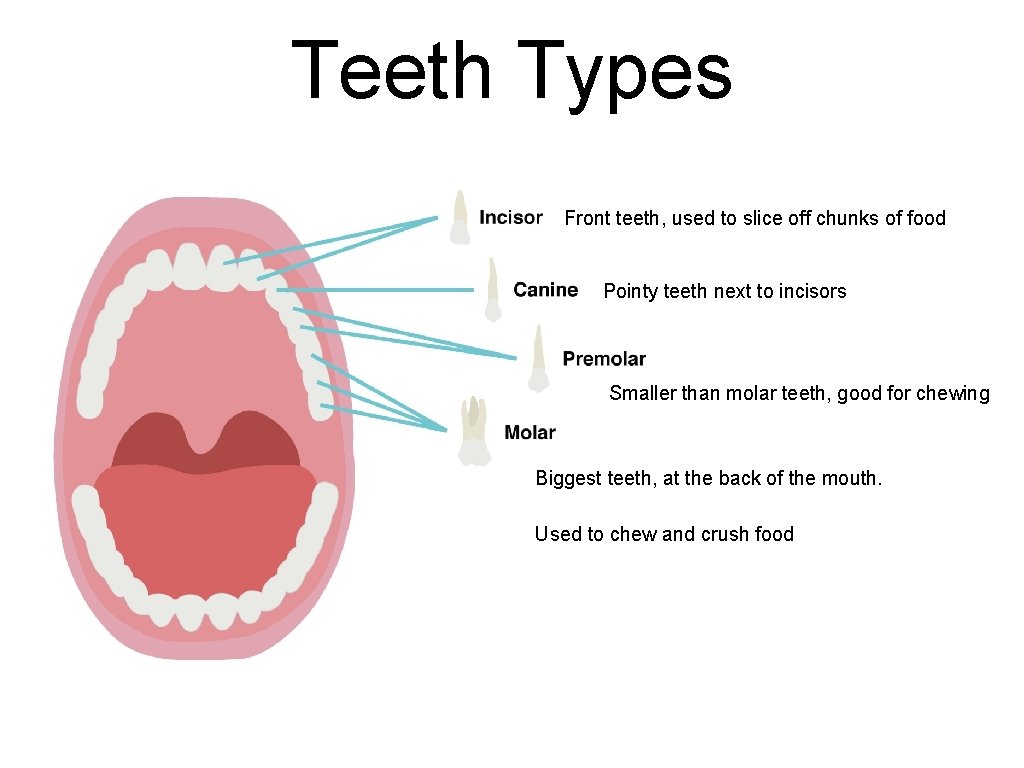
Teeth Types Incisor • Front teeth • Used to slice off chunks of food
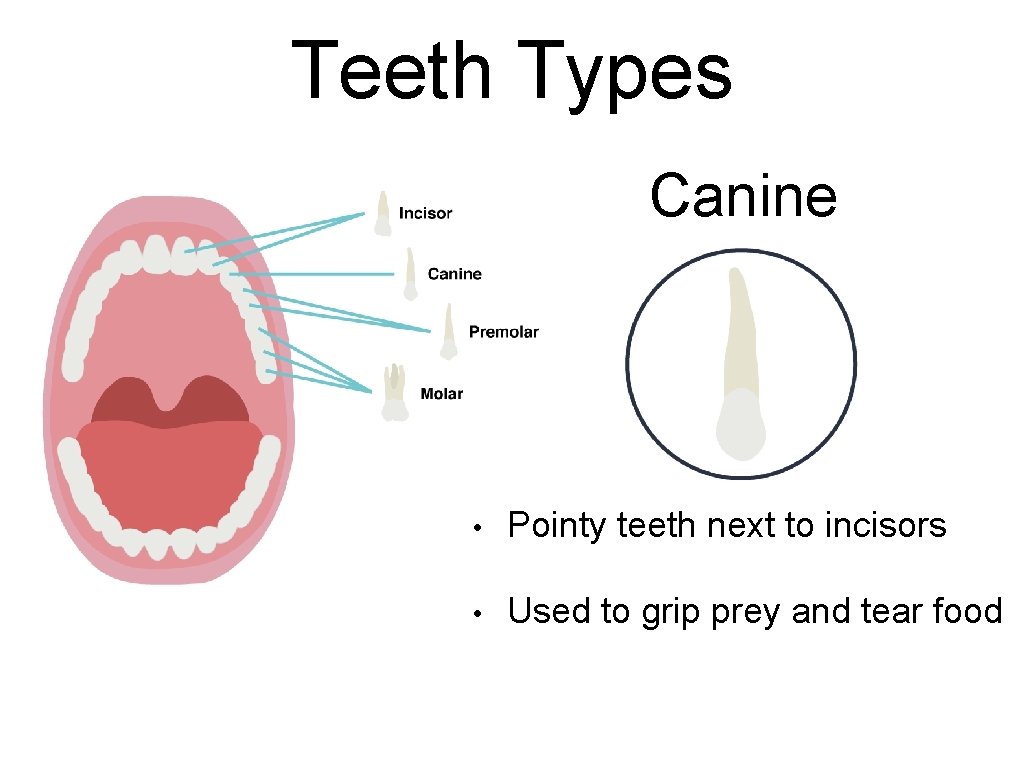
Teeth Types Canine • Pointy teeth next to incisors • Used to grip prey and tear food
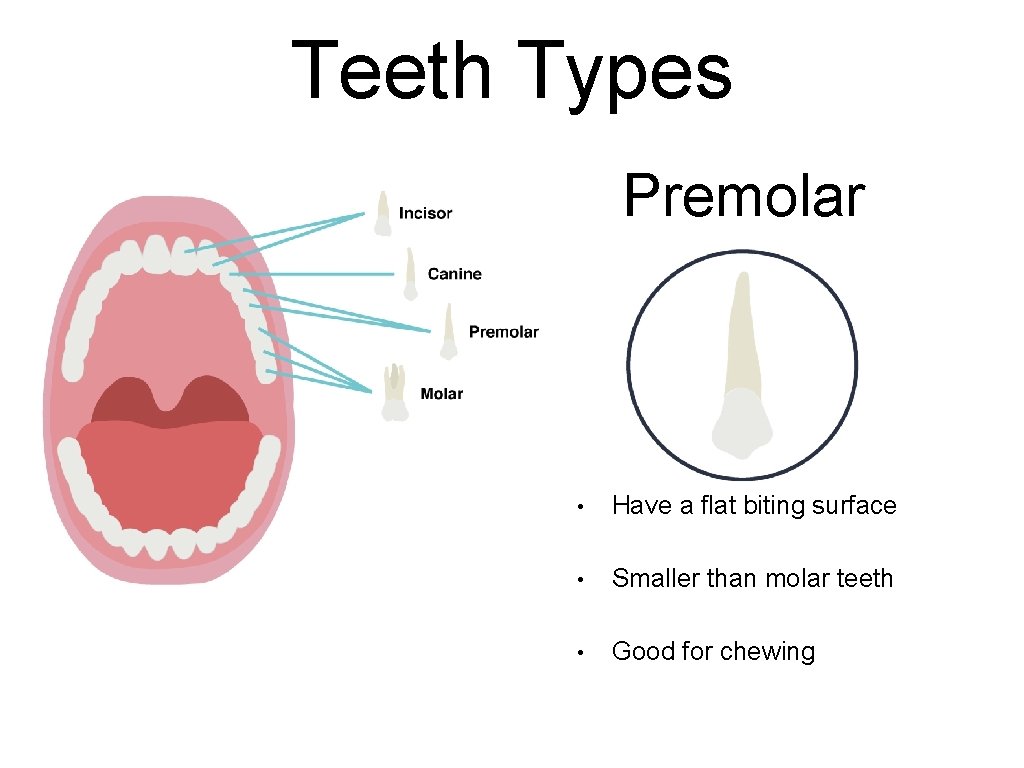
Teeth Types Premolar • Have a flat biting surface • Smaller than molar teeth • Good for chewing
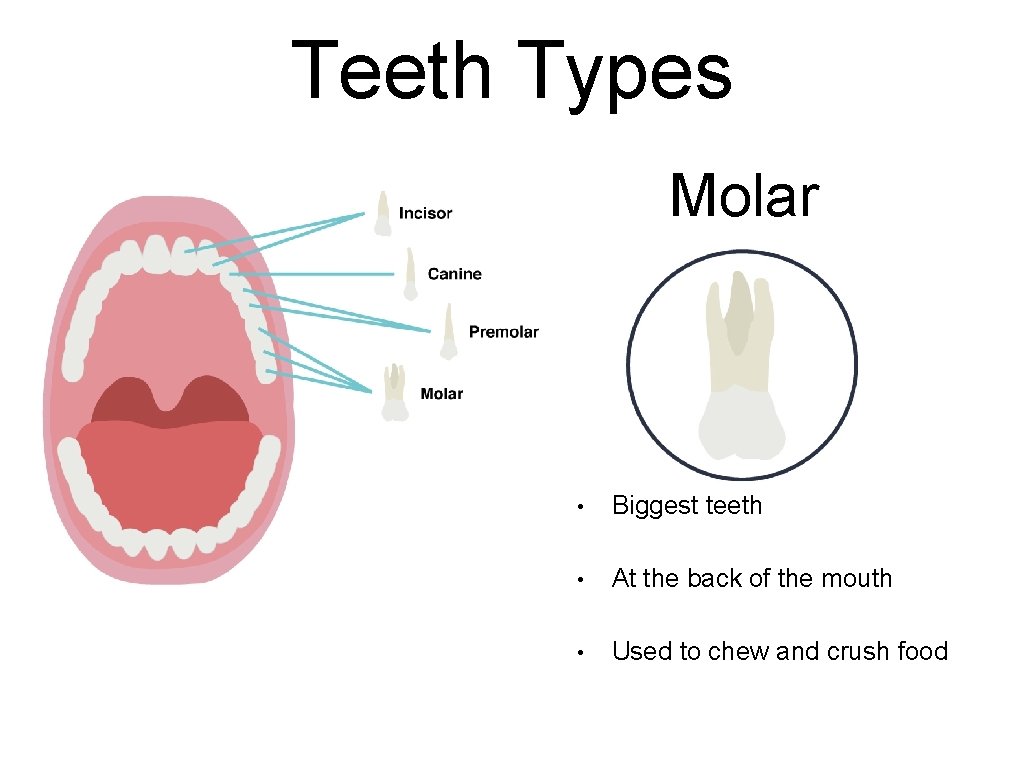
Teeth Types Molar • Biggest teeth • At the back of the mouth • Used to chew and crush food
Teeth Types Front teeth, used to slice off chunks of food Pointy teeth next to incisors Smaller than molar teeth, good for chewing Biggest teeth, at the back of the mouth. Used to chew and crush food
Tooth Types Tooth types Worksheet
What are teeth made of? deo; What are teeth made o
What are teeth made of?
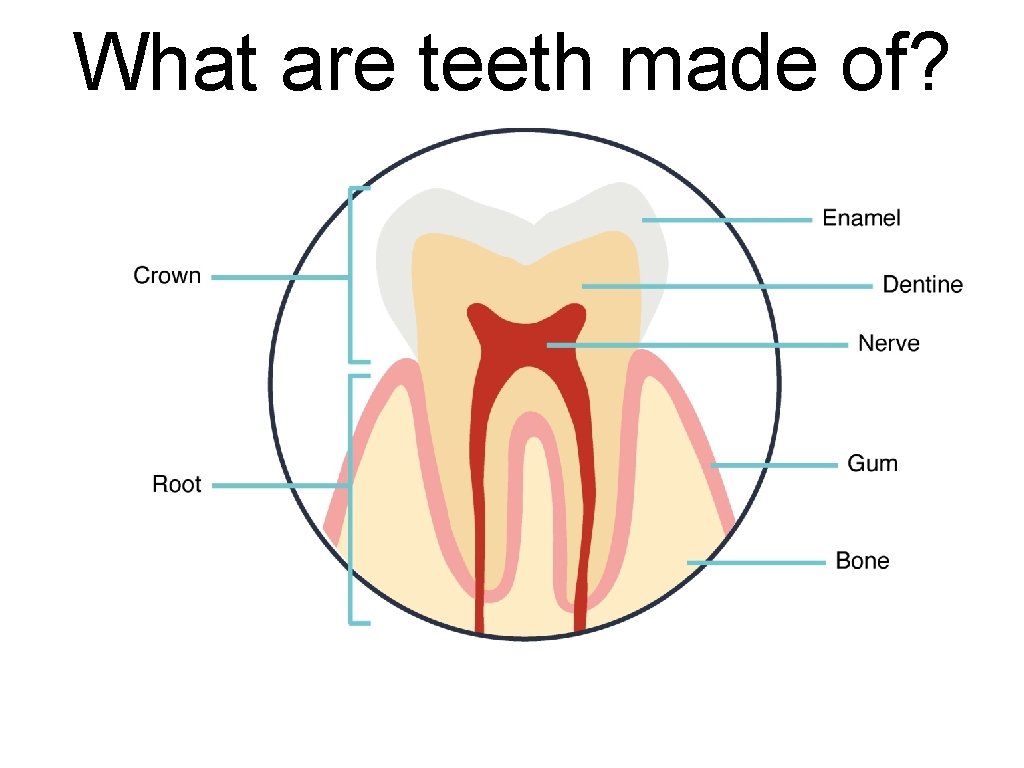
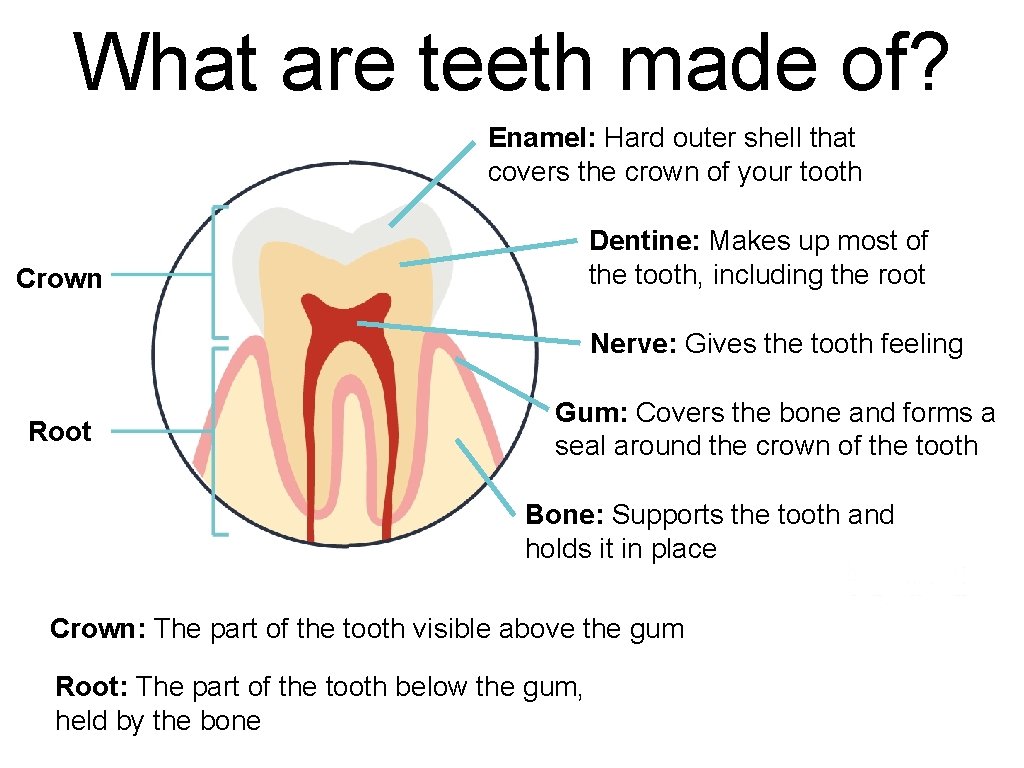
What are teeth made of? Enamel: Hard outer shell that covers the crown of your tooth Dentine: Makes up most of the tooth, including the root Crown Nerve: Gives the tooth feeling Root Gum: Covers the bone and forms a seal around the crown of the tooth Bone: Supports the tooth and holds it in place Crown: The part of the tooth visible above the gum Root: The part of the tooth below the gum, held by the bone
What are teeth made of? Tooth anatomy worksheet
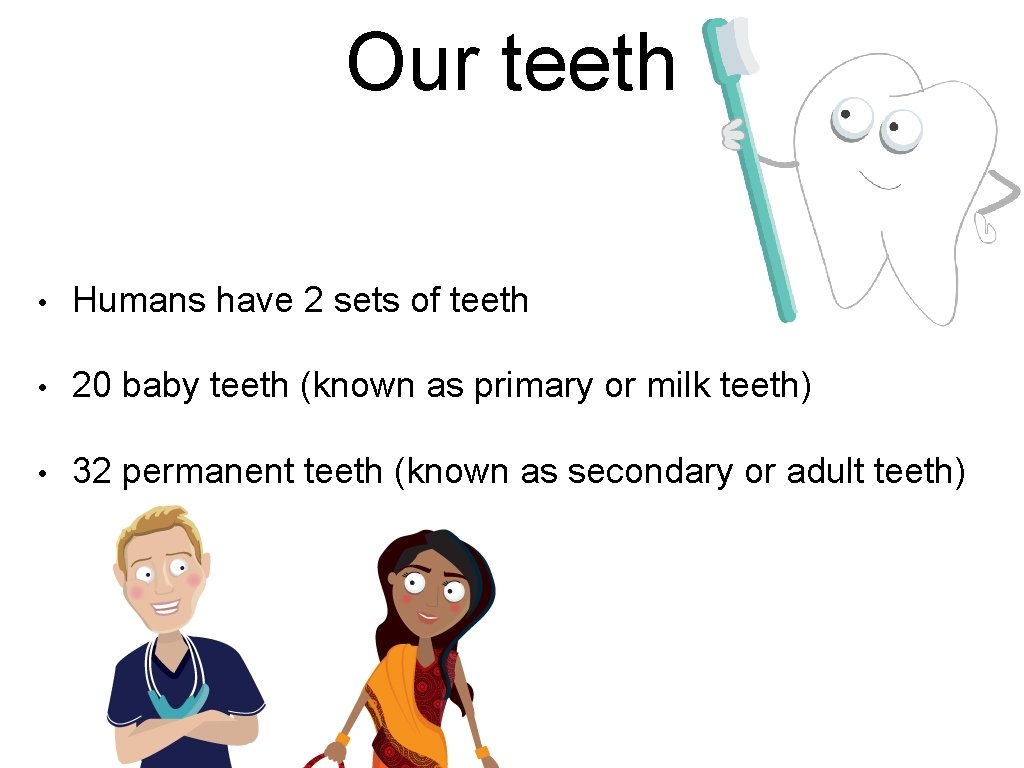
Our teeth • Humans have 2 sets of teeth • 20 baby teeth (known as primary or milk teeth) • 32 permanent teeth (known as secondary or adult teeth)
Our teeth • Baby teeth are the first teeth we get. They start to erupt when we are 6 months old. They are small teeth that quickly wear out. • From the age of 6 years old, permanent teeth start to replace baby teeth. Permanent teeth are much bigger and stronger than milk teeth. They are naturally more yellow in colour because they are thicker and tougher than baby teeth. • The last baby teeth are replaced around 12 years old. • Our final permanent teeth to erupt are called ‘wisdom teeth’. ‘Wisdom teeth’ erupt after the age of 18 years old but not everyone has wisdom teeth.
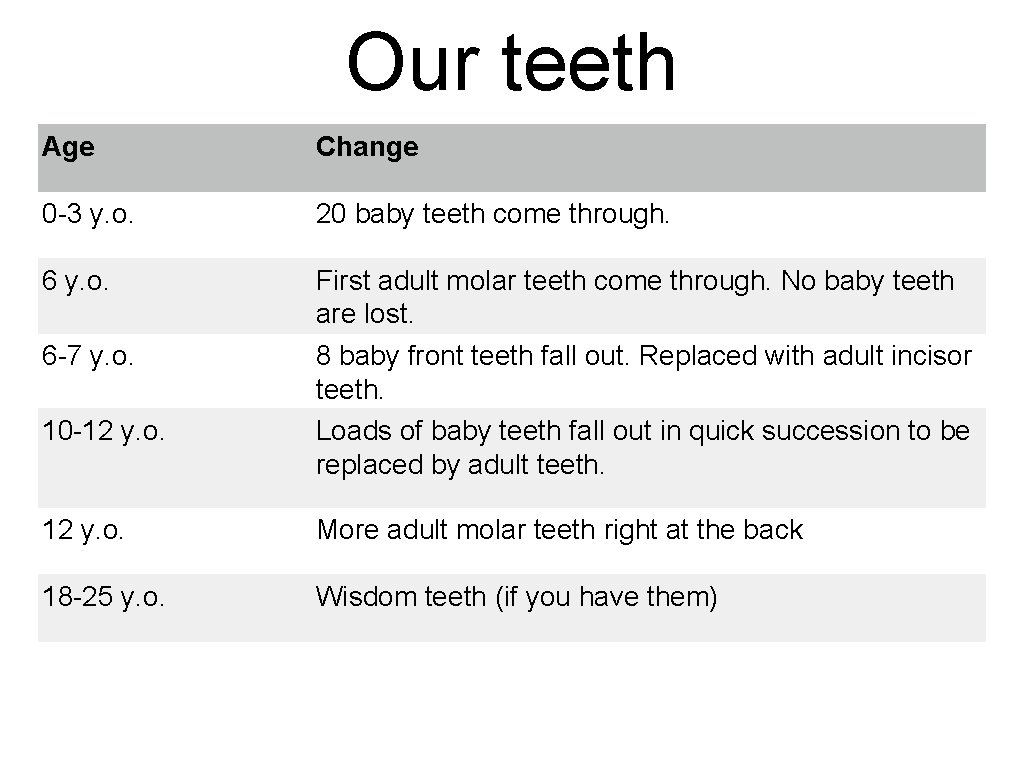
Our teeth Age Change 0 -3 y. o. 20 baby teeth come through. 6 y. o. First adult molar teeth come through. No baby teeth are lost. 8 baby front teeth fall out. Replaced with adult incisor teeth. Loads of baby teeth fall out in quick succession to be replaced by adult teeth. 6 -7 y. o. 10 -12 y. o. More adult molar teeth right at the back 18 -25 y. o. Wisdom teeth (if you have them)
Our teeth ental development workshe
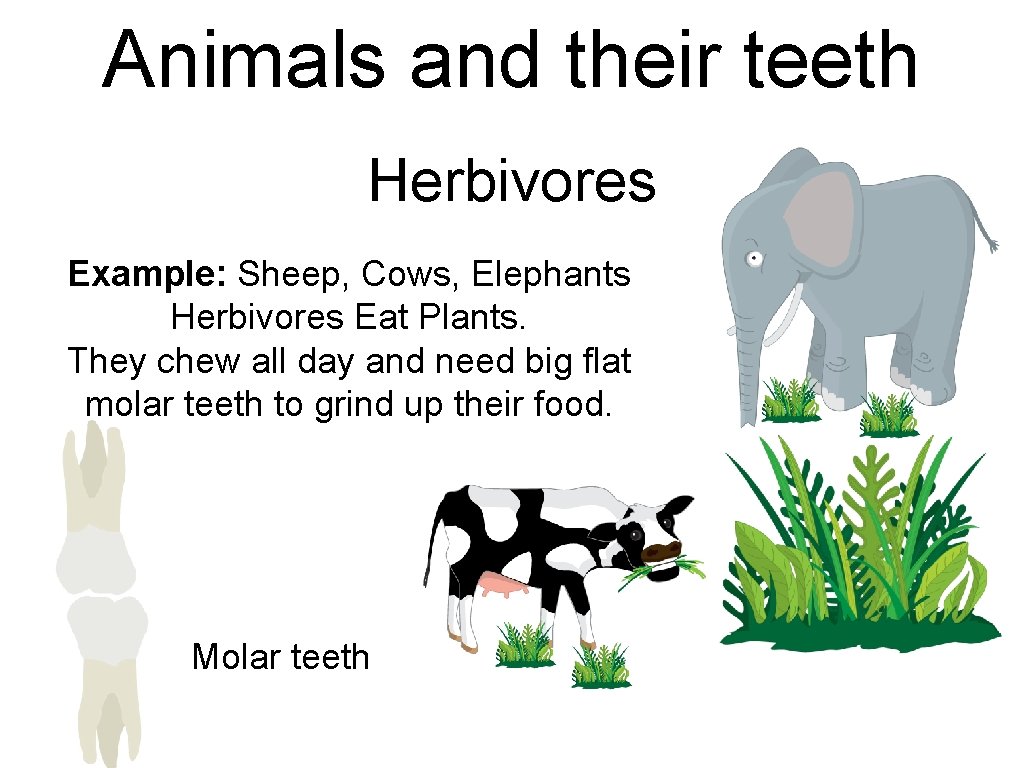
Animals and their teeth Herbivores Example: Sheep, Cows, Elephants Herbivores Eat Plants. They chew all day and need big flat molar teeth to grind up their food. Molar teeth
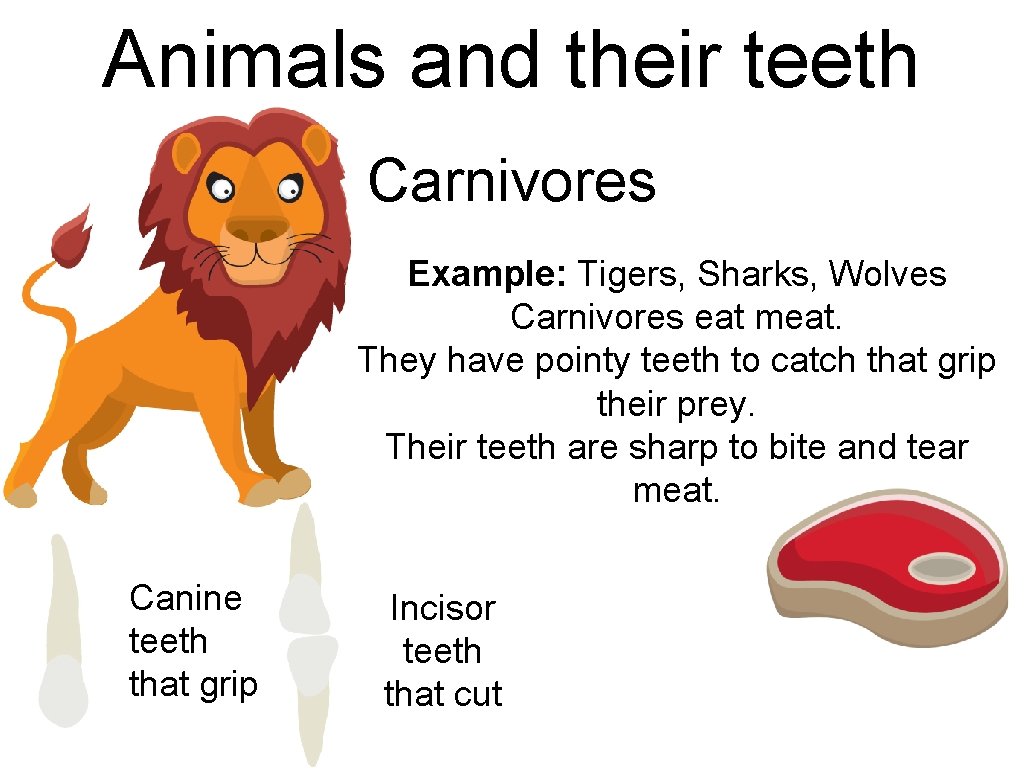
Animals and their teeth Carnivores Example: Tigers, Sharks, Wolves Carnivores eat meat. They have pointy teeth to catch that grip their prey. Their teeth are sharp to bite and tear meat. Canine teeth that grip Incisor teeth that cut
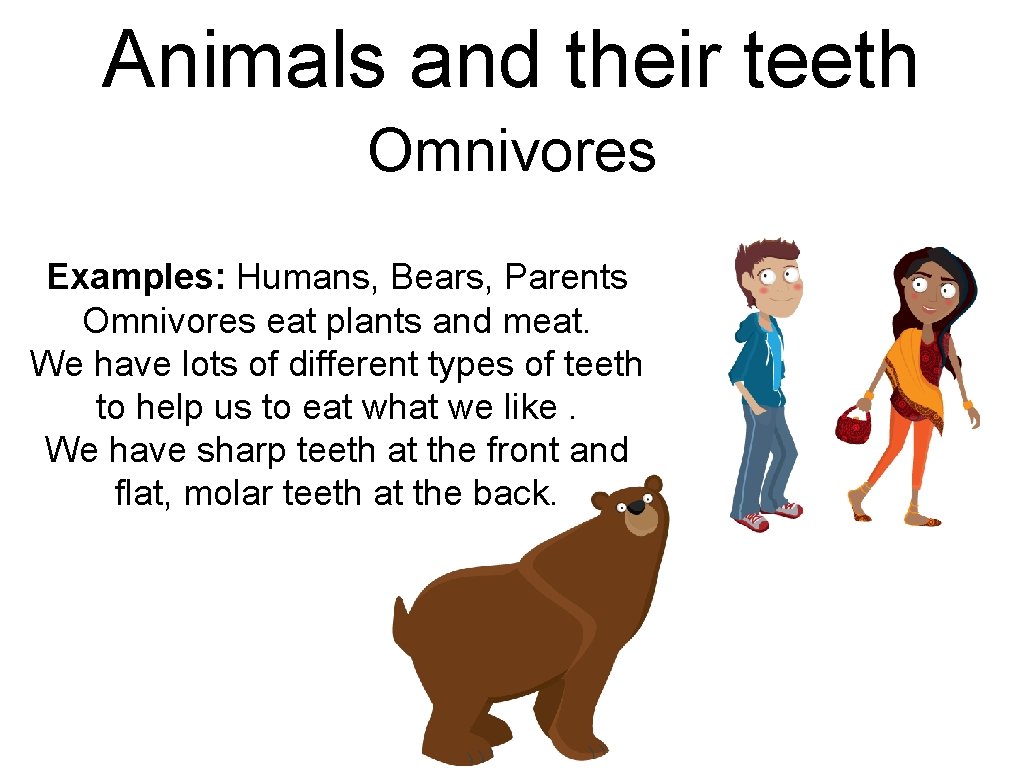
Animals and their teeth Omnivores Examples: Humans, Bears, Parents Omnivores eat plants and meat. We have lots of different types of teeth to help us to eat what we like. We have sharp teeth at the front and flat, molar teeth at the back.
Animals and their teeth Animals’ teeth worksheet l illustrations; print for use in class disc
Tooth decay Video; About tooth decay
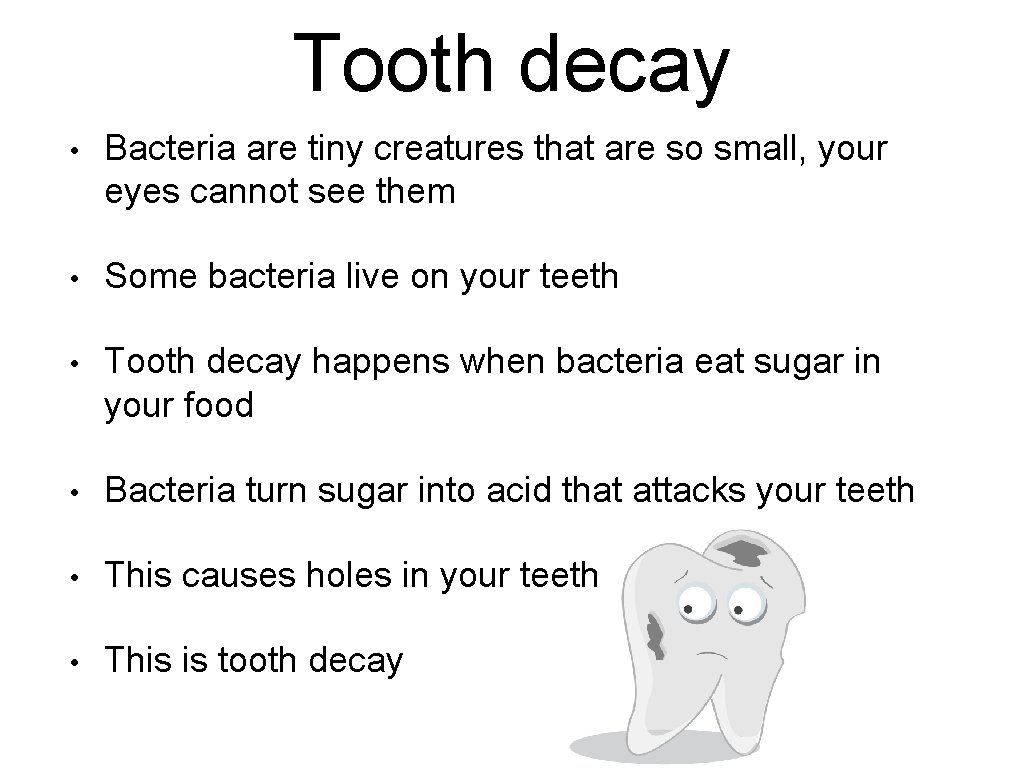
Tooth decay • Bacteria are tiny creatures that are so small, your eyes cannot see them • Some bacteria live on your teeth • Tooth decay happens when bacteria eat sugar in your food • Bacteria turn sugar into acid that attacks your teeth • This causes holes in your teeth • This is tooth decay
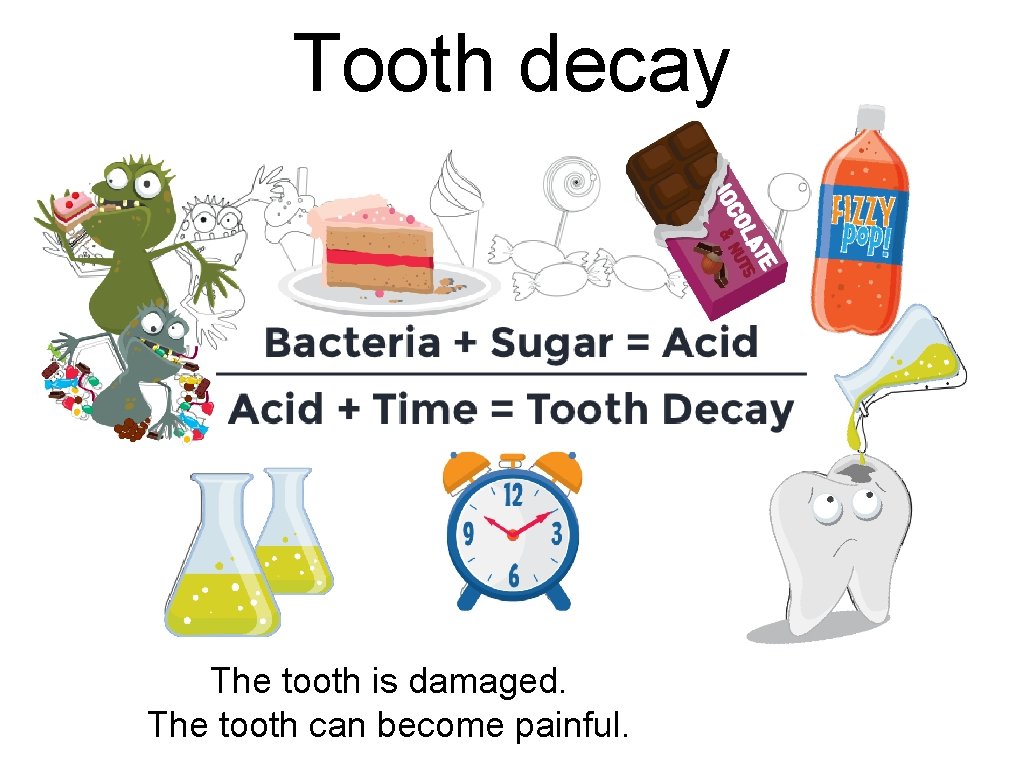
Tooth decay The tooth is damaged. The tooth can become painful.
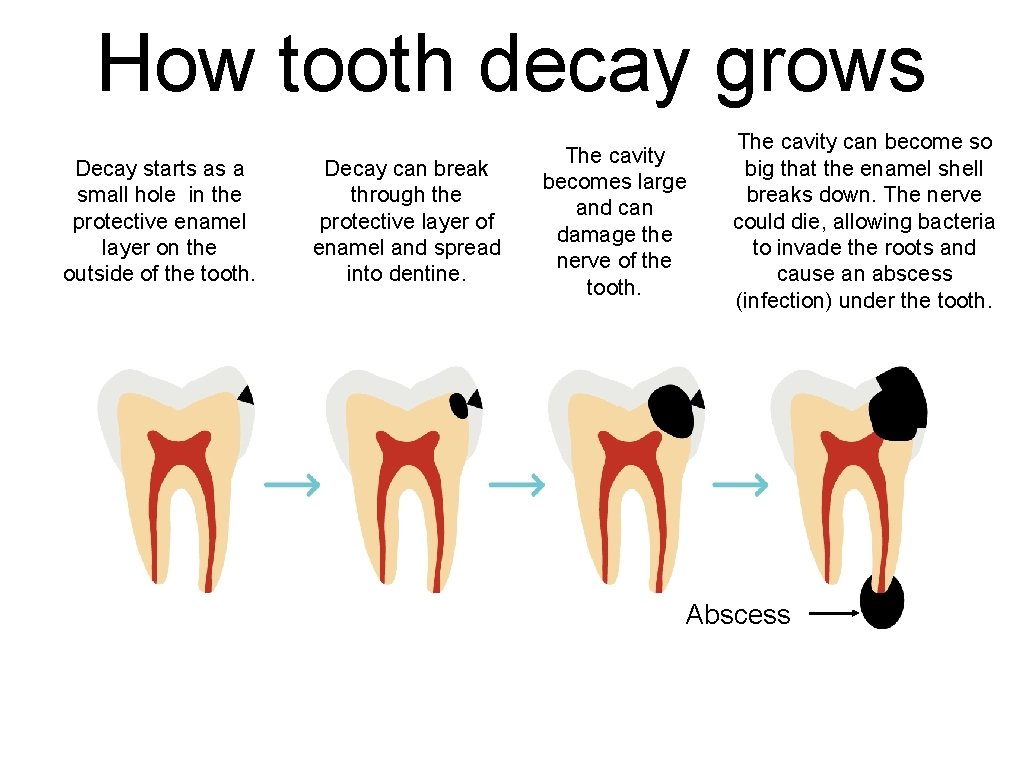
How tooth decay grows Decay starts as a small hole in the protective enamel layer on the outside of the tooth. Decay can break through the protective layer of enamel and spread into dentine. The cavity becomes large and can damage the nerve of the tooth. The cavity can become so big that the enamel shell breaks down. The nerve could die, allowing bacteria to invade the roots and cause an abscess (infection) under the tooth. Abscess
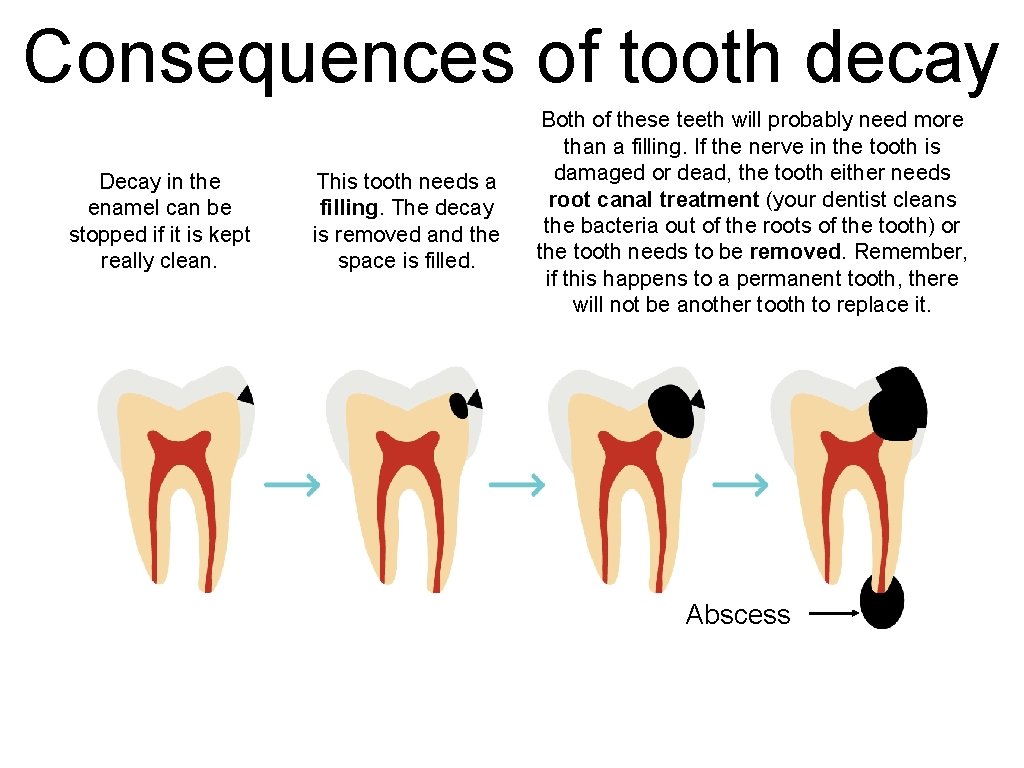
Consequences of tooth decay Decay in the enamel can be stopped if it is kept really clean. This tooth needs a filling. The decay is removed and the space is filled. Both of these teeth will probably need more than a filling. If the nerve in the tooth is damaged or dead, the tooth either needs root canal treatment (your dentist cleans the bacteria out of the roots of the tooth) or the tooth needs to be removed. Remember, if this happens to a permanent tooth, there will not be another tooth to replace it. Abscess
Tooth decay worksheet and Stages of decay worksheet
How do we protect our teeth?
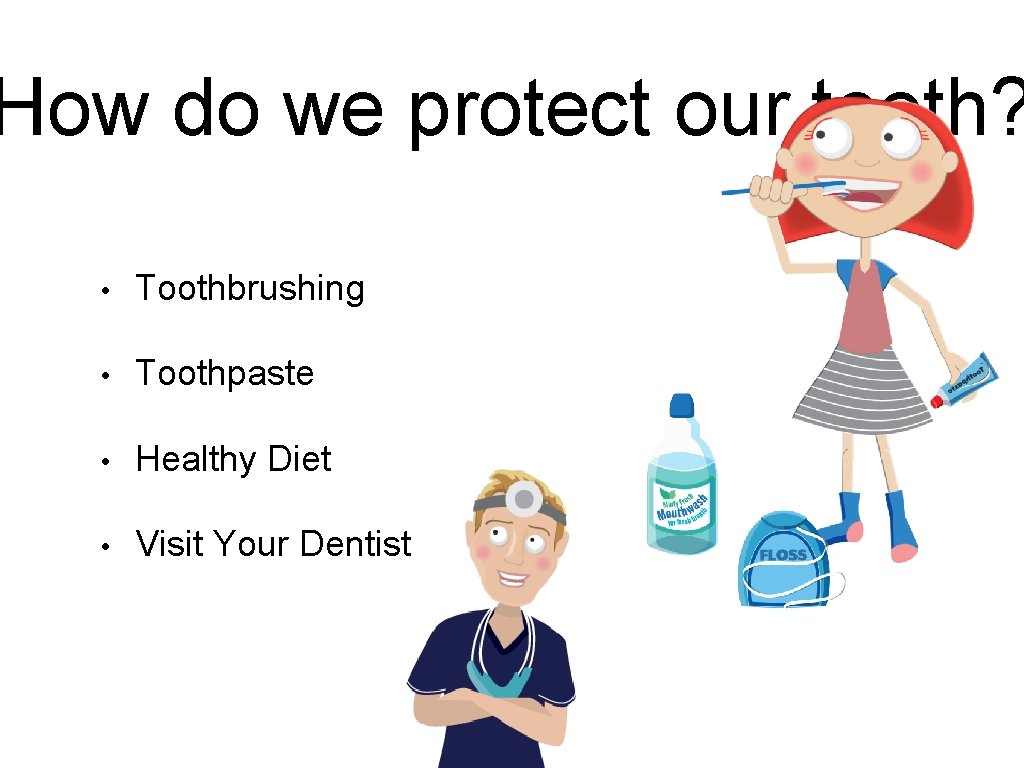
How do we protect our teeth? • Toothbrushing • Toothpaste • Healthy Diet • Visit Your Dentist
Toothbrushing We need to brush our teeth to get rid of food and bacteria deo; How to brush your tee
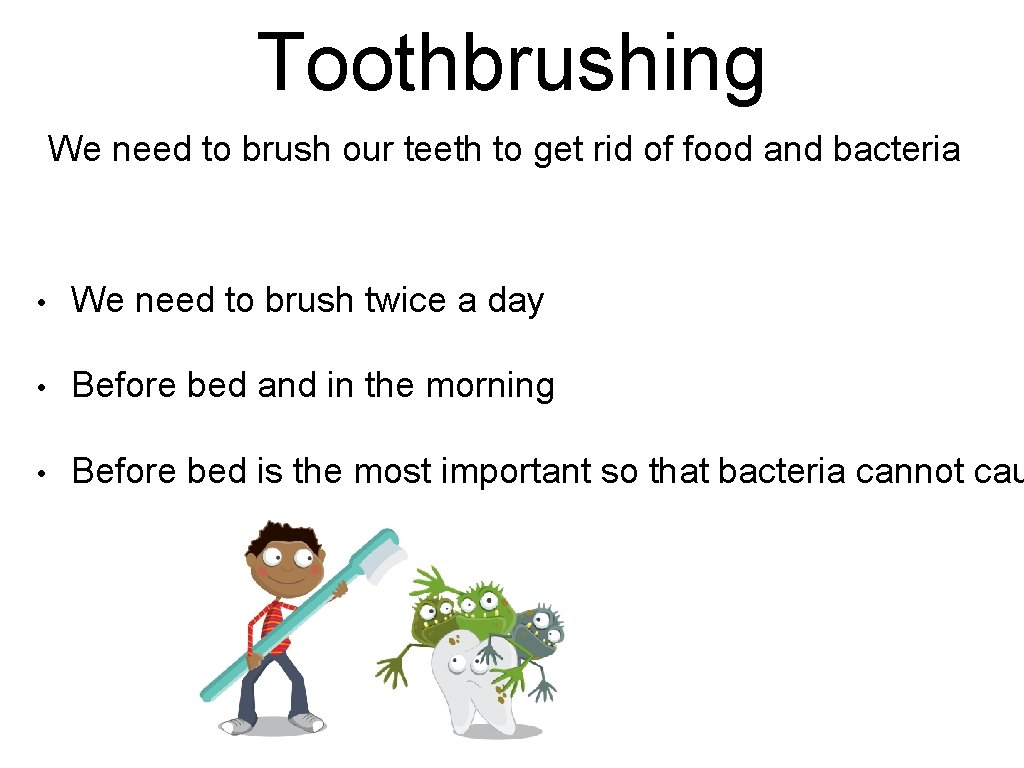
Toothbrushing We need to brush our teeth to get rid of food and bacteria • We need to brush twice a day • Before bed and in the morning • Before bed is the most important so that bacteria cannot cau
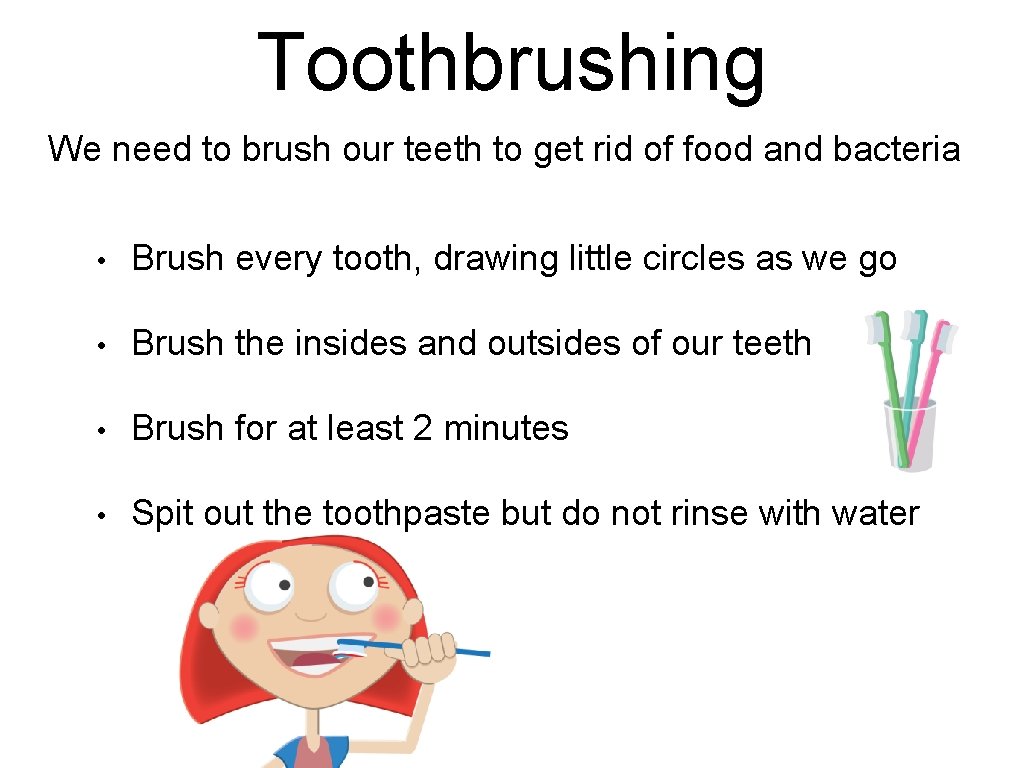
Toothbrushing We need to brush our teeth to get rid of food and bacteria • Brush every tooth, drawing little circles as we go • Brush the insides and outsides of our teeth • Brush for at least 2 minutes • Spit out the toothpaste but do not rinse with water
Toothbrushing Where does plaque mainly build up? laque activity and workshee
Toothbrushing Where does plaque mainly build up? Plaque mainly collects; • At the gum margin, where the tooth meets the gum • In between the teeth • In the fissures of the teeth (the little valleys on the top of the teeth)
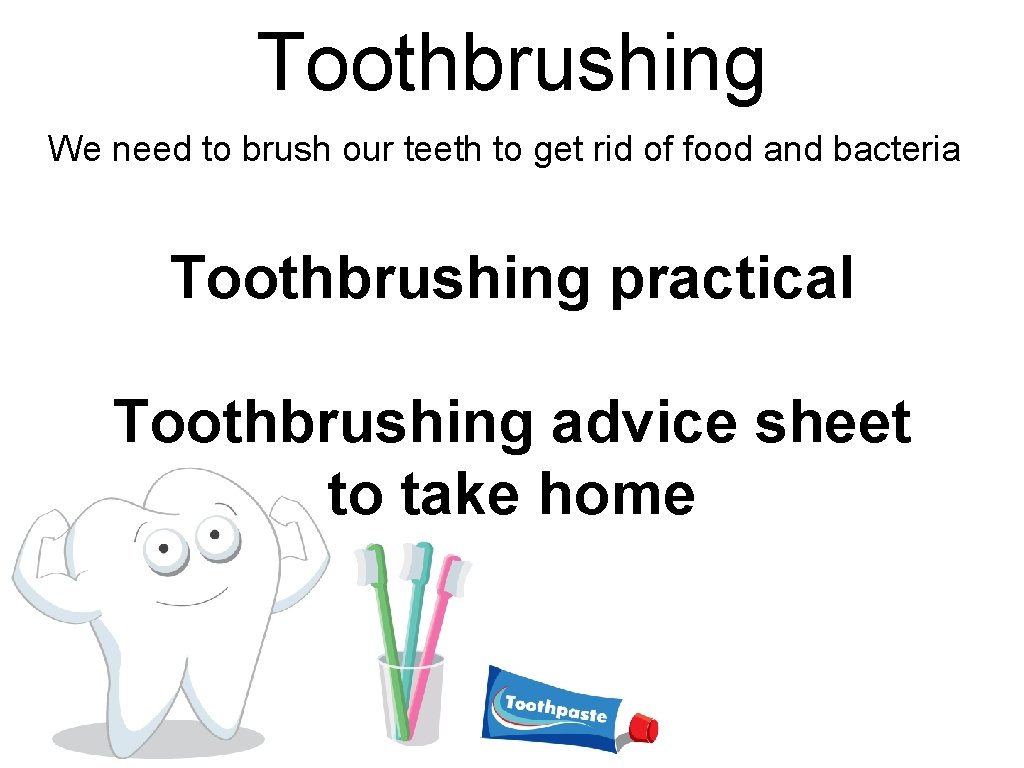
Toothbrushing We need to brush our teeth to get rid of food and bacteria Toothbrushing practical Toothbrushing advice sheet to take home
Toothpaste key ingredient in toothpaste is FLUOR
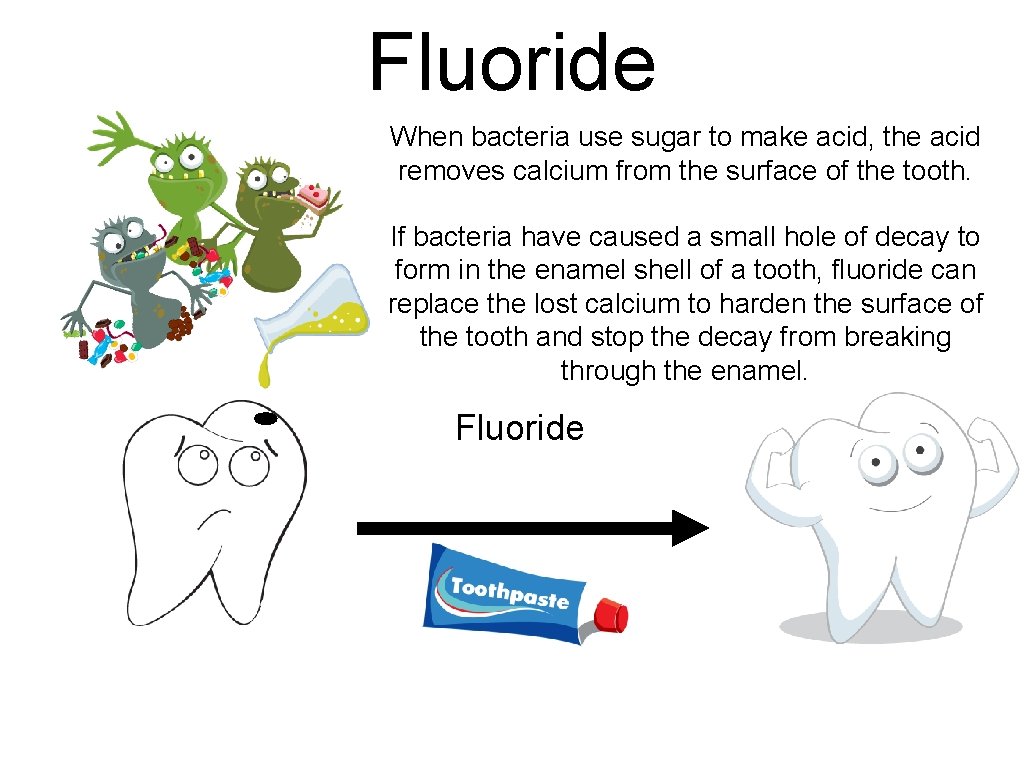
Toothpaste key ingredient in toothpaste is FLUOR • Fluoride makes teeth stronger • Fluoride adds itself to the surface of your teeth to make them harder • Fluoride can harden early holes in your teeth to stop tooth decay
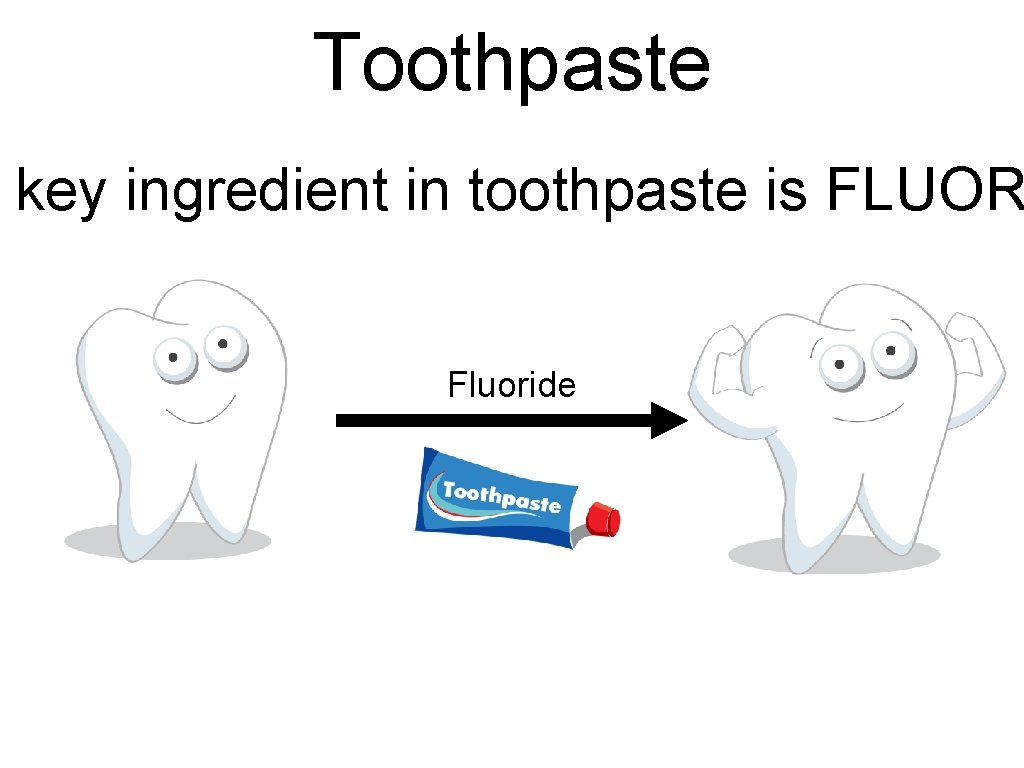
Toothpaste key ingredient in toothpaste is FLUOR Fluoride
Fluoride When bacteria use sugar to make acid, the acid removes calcium from the surface of the tooth. If bacteria have caused a small hole of decay to form in the enamel shell of a tooth, fluoride can replace the lost calcium to harden the surface of the tooth and stop the decay from breaking through the enamel. Fluoride
Toothpaste key ingredient in toothpaste is FLUOR Video; Eggsperiment
Toothpaste key ingredient in toothpaste is FLUOR Eggsperiment practical and worksheet
Toothpaste After brushing, spit out the toothpaste BUT do not rinse with water. This leaves a little bit of toothpaste in your mouth so that the fluoride can keep protecting your teeth.
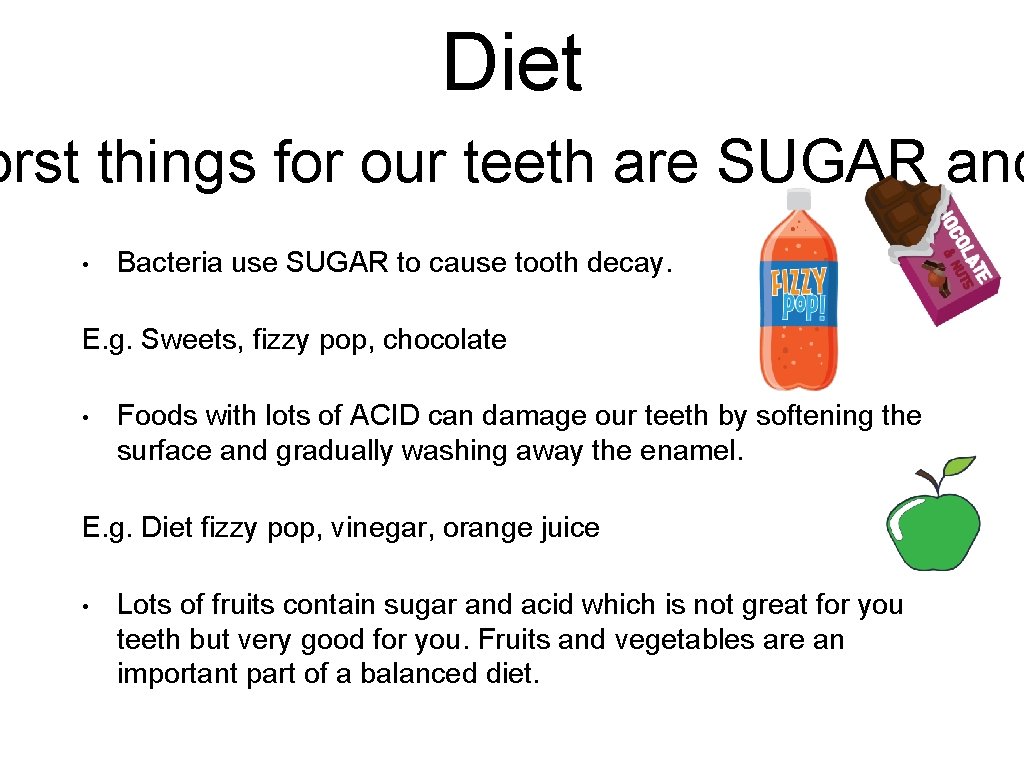
Diet orst things for our teeth are SUGAR and • Bacteria use SUGAR to cause tooth decay. E. g. Sweets, fizzy pop, chocolate • Foods with lots of ACID can damage our teeth by softening the surface and gradually washing away the enamel. E. g. Diet fizzy pop, vinegar, orange juice • Lots of fruits contain sugar and acid which is not great for you teeth but very good for you. Fruits and vegetables are an important part of a balanced diet.
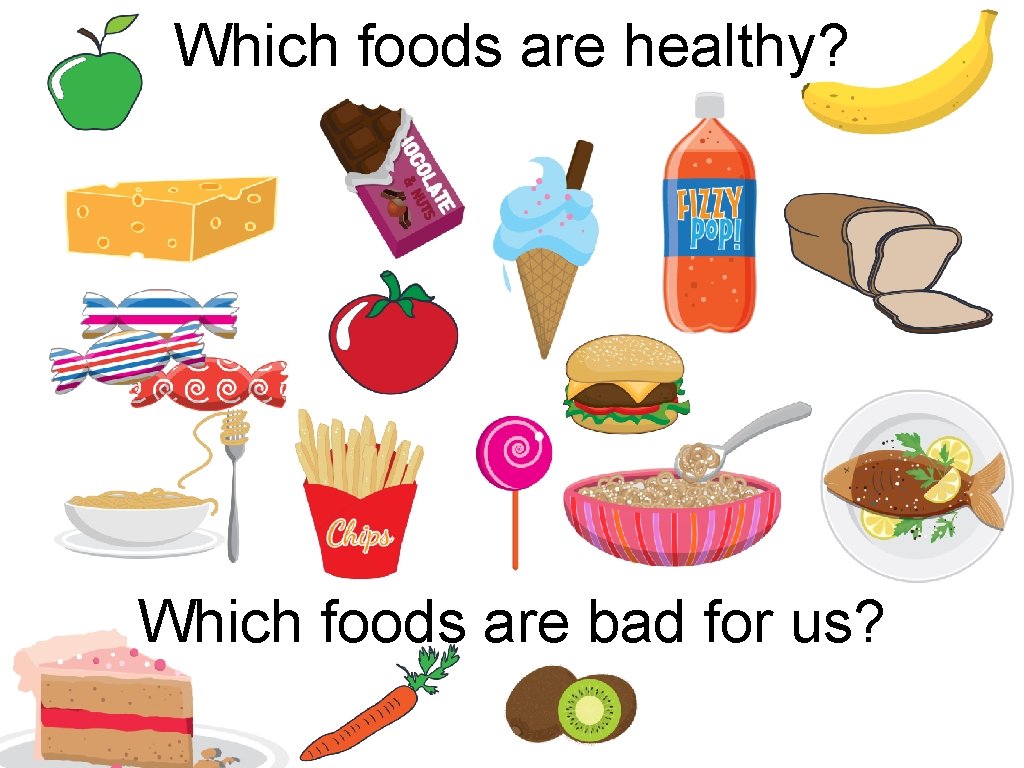
Which foods are healthy? Which foods are bad for us?
Diet Activity; Class discussion Which foods are healthy? Which foods are not? Which foods have the most acid? Food pictures available to print
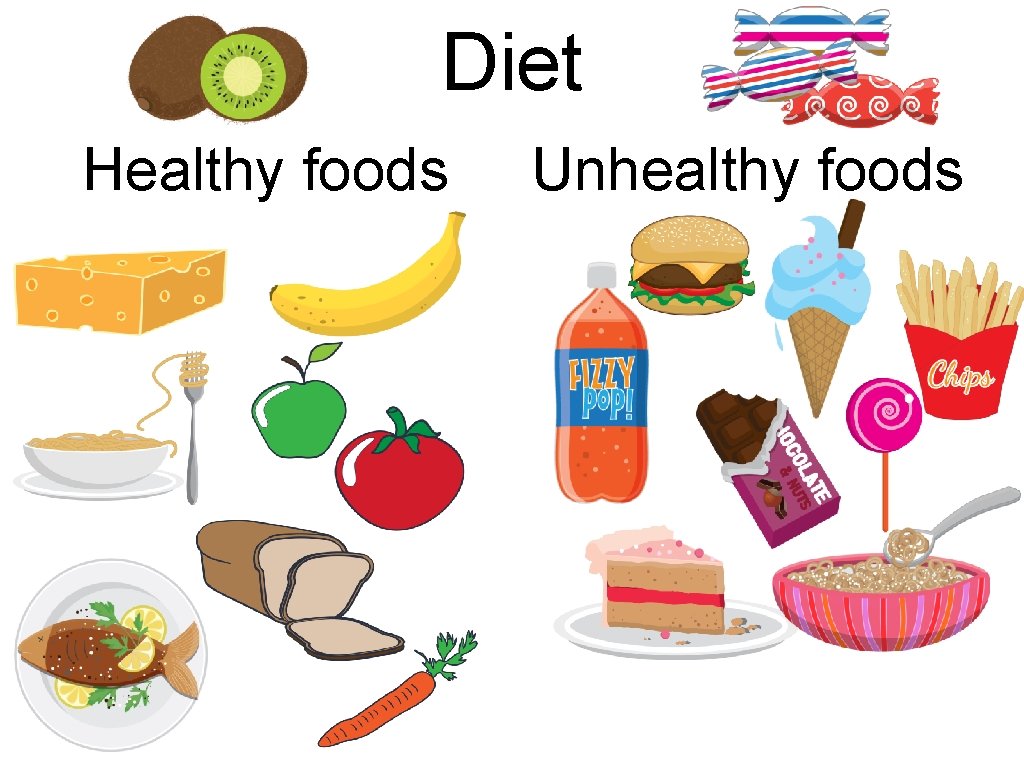
Diet Healthy foods Unhealthy foods
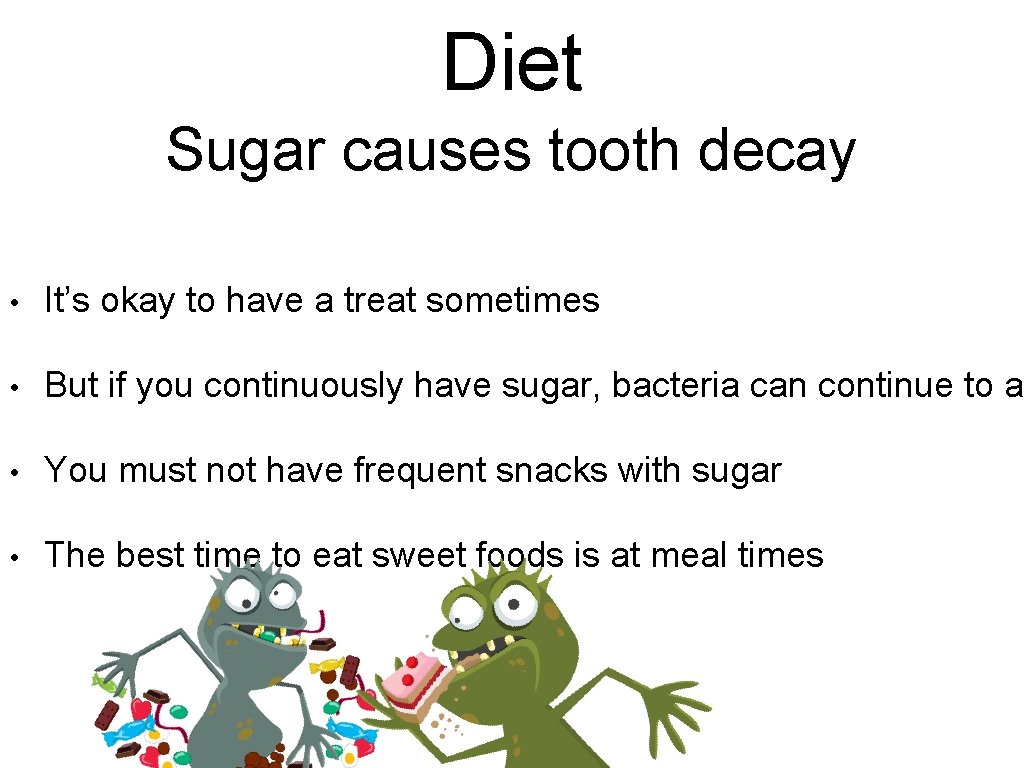
Diet Sugar causes tooth decay • It’s okay to have a treat sometimes • But if you continuously have sugar, bacteria can continue to a • You must not have frequent snacks with sugar • The best time to eat sweet foods is at meal times
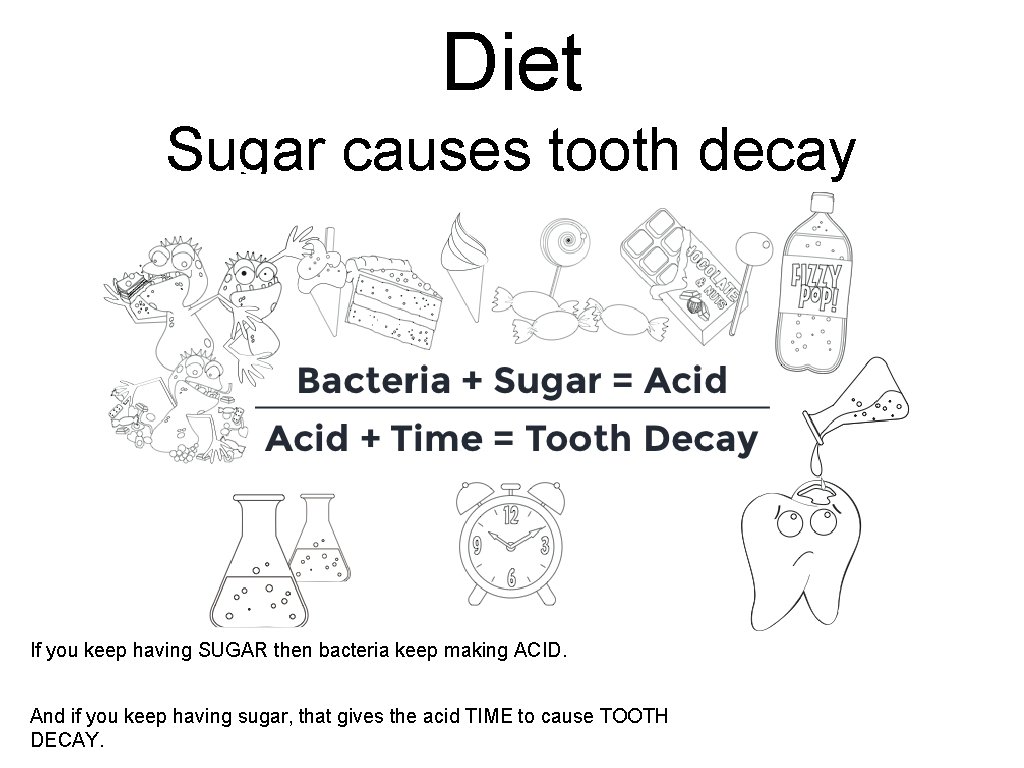
Diet Sugar causes tooth decay If you keep having SUGAR then bacteria keep making ACID. And if you keep having sugar, that gives the acid TIME to cause TOOTH DECAY.
Diet Activity; Class discussion Pupils’ personal diet diaries Example diet diaries See next slide for example questions
Diet diary; example questions • Which character has the healthiest diet? • What are the benefits of this healthy diet? • Who has the least healthy diet? • What problems could this diet cause? (Think about their teeth but also general health. ) • Which foods will affect your teeth? • If you are going to have a sugary food, when is the best time to have it? • When and how should you care for your teeth? • What advice would you give each person? • What do you think of your own diet diary? • What did you eat that was healthy? • What did you eat that was unhealthy?
You and the Dentist What does your dentist do? • Counts your teeth • Checks for tooth decay • Shows you how to protect your teeth • You should go to your dentist ever 6 months
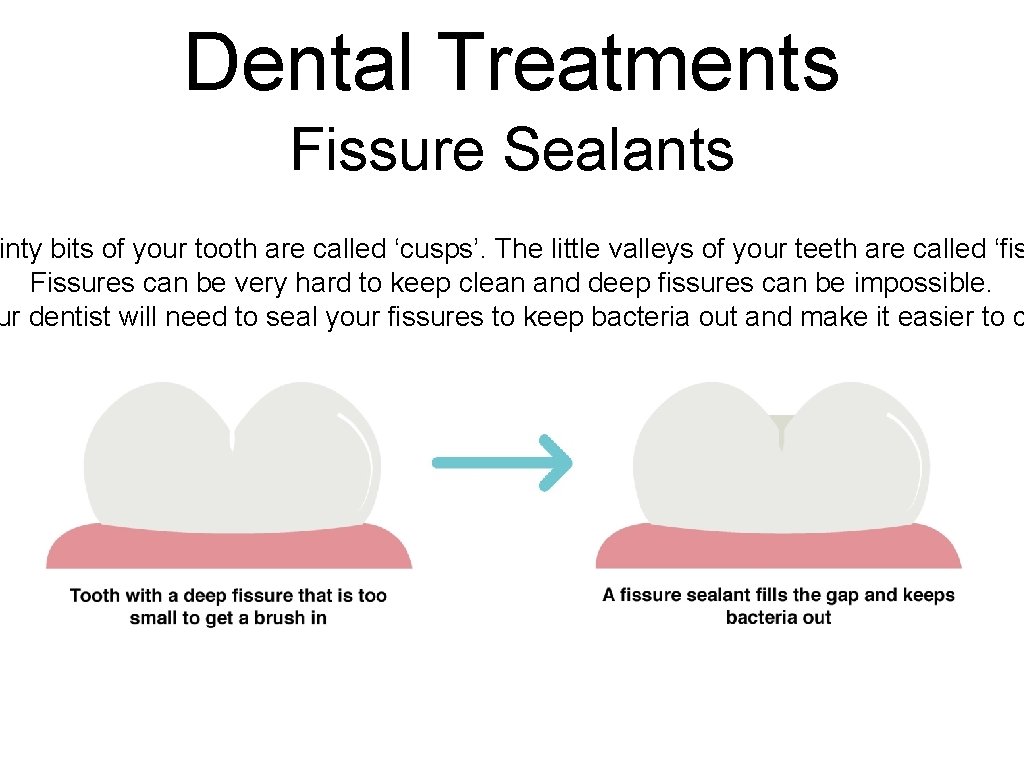
Dental Treatments Fissure Sealants inty bits of your tooth are called ‘cusps’. The little valleys of your teeth are called ‘fis Fissures can be very hard to keep clean and deep fissures can be impossible. ur dentist will need to seal your fissures to keep bacteria out and make it easier to c
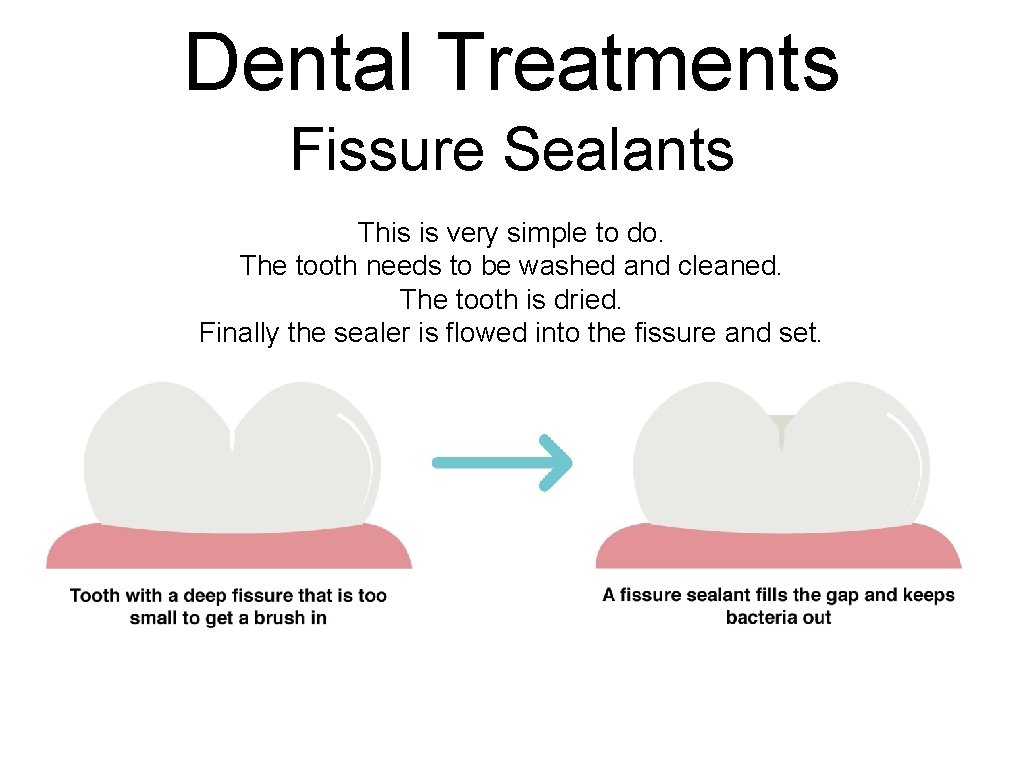
Dental Treatments Fissure Sealants This is very simple to do. The tooth needs to be washed and cleaned. The tooth is dried. Finally the sealer is flowed into the fissure and set.
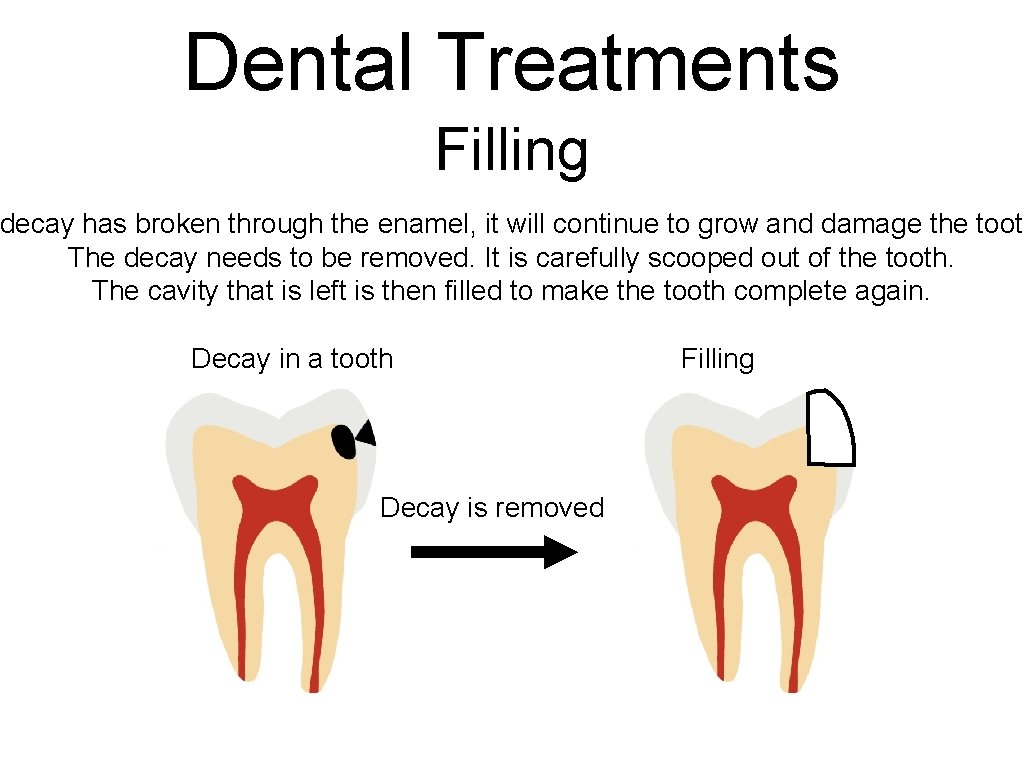
Dental Treatments Filling decay has broken through the enamel, it will continue to grow and damage the tooth The decay needs to be removed. It is carefully scooped out of the tooth. The cavity that is left is then filled to make the tooth complete again. Decay in a tooth Decay is removed Filling
You and The Dentist What does your dentist do? Activity; Be a dentist method sheet and worksheet
What have we learned? • About our teeth? • About tooth decay? • About caring for our teeth? • About food? • About the dentist?