
KEY STAGE 3 ONLINE LEARNING UNDERSTANDING DRAMA Lesson
- Slides: 12
KEY STAGE 3 ONLINE LEARNING UNDERSTANDING DRAMA Lesson 2 - Staging
You have five minutes to write down as many of the different Theatre Makers we discussed last week. House Points if you can also tell me what they actually do.
THEATRE MAKERS Actor Designers: Lighting designer Set designer Costume designer Sound designer Choreographer Musical Director Stage Manager Director
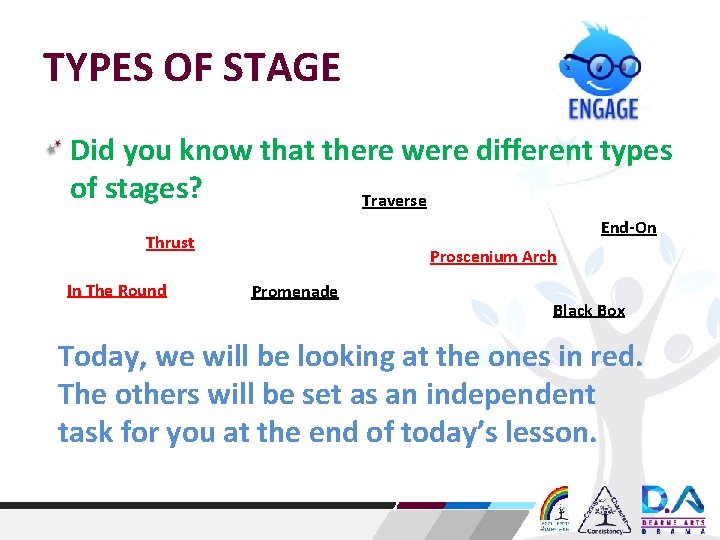
TYPES OF STAGE Did you know that there were different types of stages? Traverse End-On Thrust In The Round Proscenium Arch Promenade Black Box Today, we will be looking at the ones in red. The others will be set as an independent task for you at the end of today’s lesson.
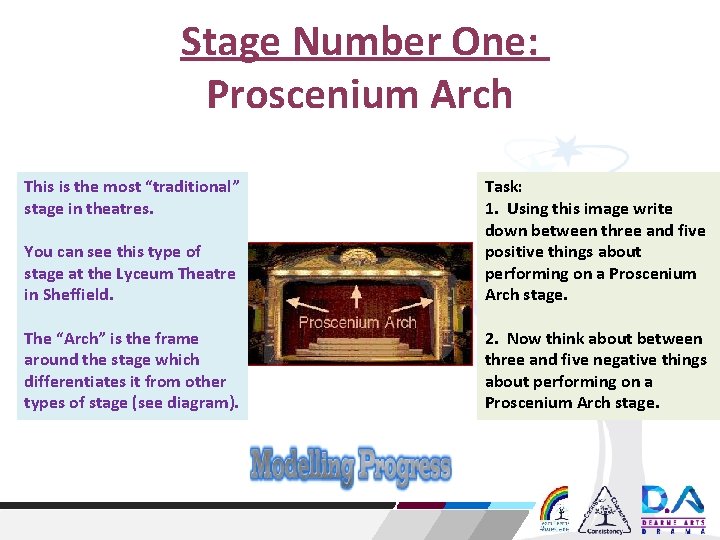
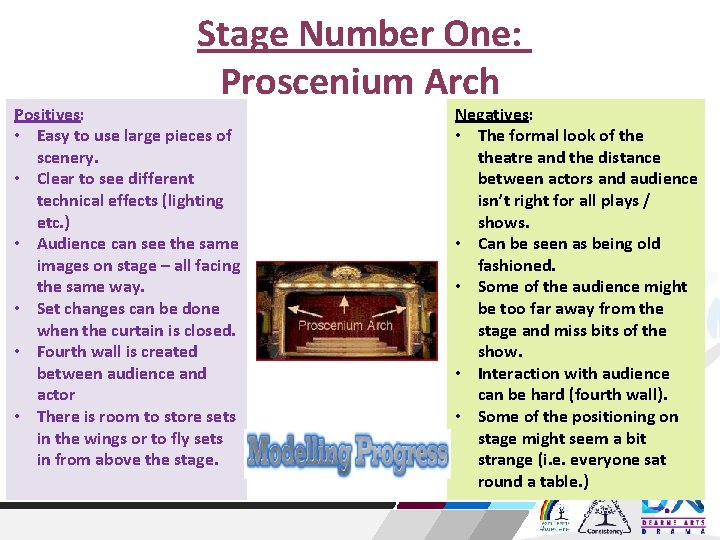
Stage Number One: Proscenium Arch You can see this type of stage at the Lyceum Theatre in Sheffield. Task: 1. Using this image write down between three and five positive things about performing on a Proscenium Arch stage. The “Arch” is the frame around the stage which differentiates it from other types of stage (see diagram). 2. Now think about between three and five negative things about performing on a Proscenium Arch stage. This is the most “traditional” stage in theatres.
Stage Number One: Proscenium Arch Positives: • Easy to use large pieces of scenery. • Clear to see different technical effects (lighting etc. ) • Audience can see the same images on stage – all facing the same way. • Set changes can be done when the curtain is closed. • Fourth wall is created between audience and actor • There is room to store sets in the wings or to fly sets in from above the stage. Negatives: • The formal look of theatre and the distance between actors and audience isn’t right for all plays / shows. • Can be seen as being old fashioned. • Some of the audience might be too far away from the stage and miss bits of the show. • Interaction with audience can be hard (fourth wall). • Some of the positioning on stage might seem a bit strange (i. e. everyone sat round a table. )
Areas of the stage – Task Draw a rectangle on paper. Now label where you think the following areas of the stage are. 1. Upstage 2. Downstage 3. Stage Left 4. Stage Right 5. Centre Stage 6. Apron 7. Wings
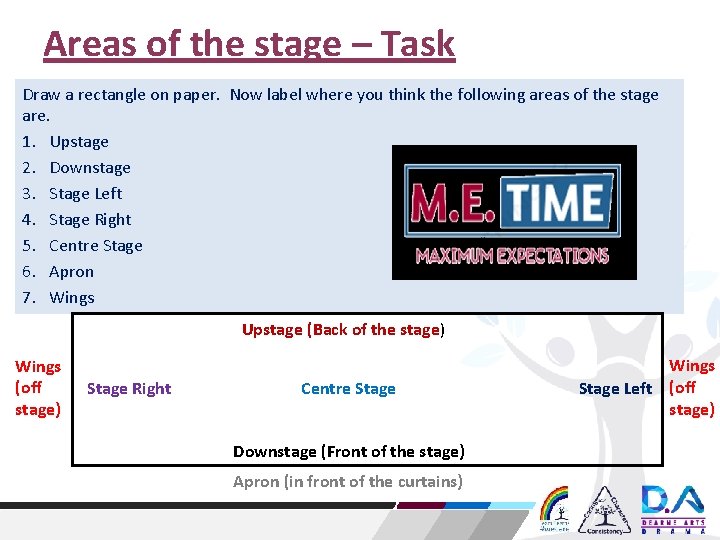
Areas of the stage – Task Draw a rectangle on paper. Now label where you think the following areas of the stage are. 1. Upstage 2. Downstage 3. Stage Left 4. Stage Right 5. Centre Stage 6. Apron 7. Wings Upstage (Back of the stage) Wings (off stage) Stage Right Centre Stage Downstage (Front of the stage) Apron (in front of the curtains) Wings Stage Left (off stage)
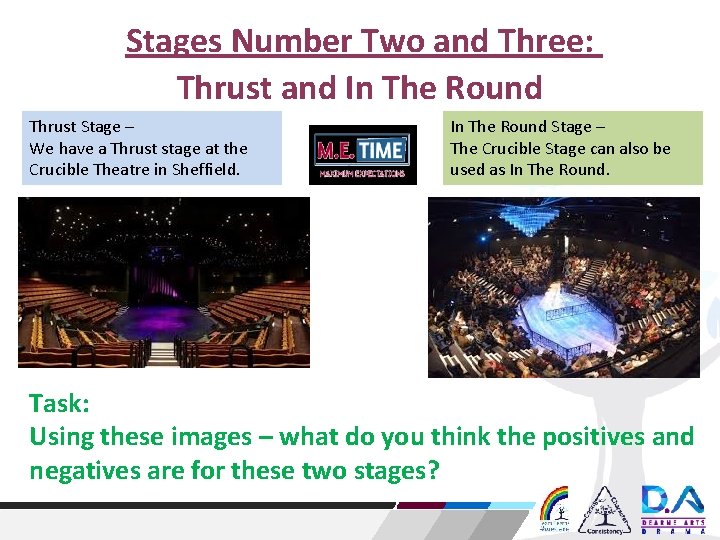
Stages Number Two and Three: Thrust and In The Round Thrust Stage – We have a Thrust stage at the Crucible Theatre in Sheffield. In The Round Stage – The Crucible Stage can also be used as In The Round. Task: Using these images – what do you think the positives and negatives are for these two stages?
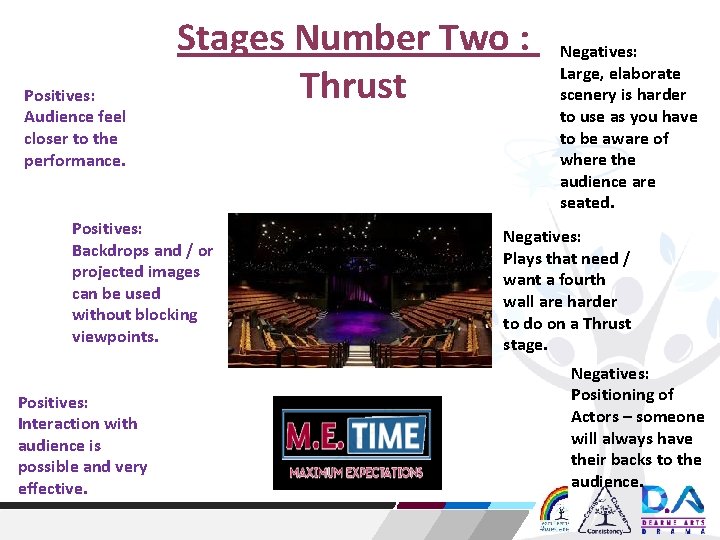
Positives: Audience feel closer to the performance. Stages Number Two : Thrust Positives: Backdrops and / or projected images can be used without blocking viewpoints. Positives: Interaction with audience is possible and very effective. Negatives: Large, elaborate scenery is harder to use as you have to be aware of where the audience are seated. Negatives: Plays that need / want a fourth wall are harder to do on a Thrust stage. Negatives: Positioning of Actors – someone will always have their backs to the audience.
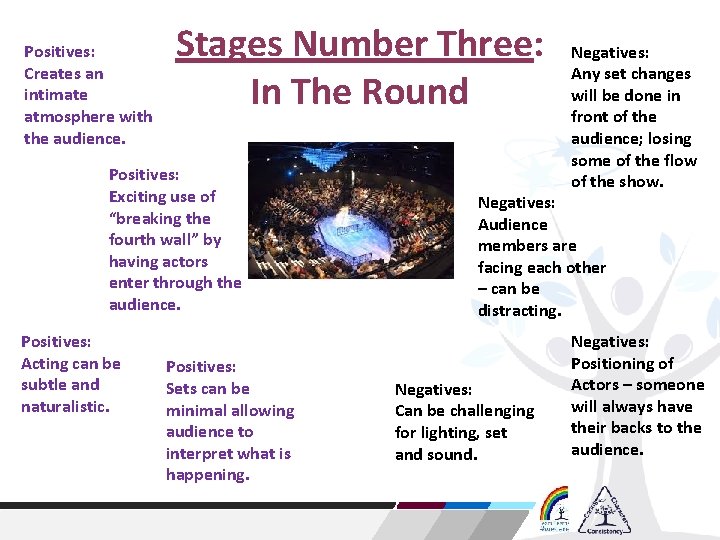
Positives: Creates an intimate atmosphere with the audience. Stages Number Three: In The Round Positives: Exciting use of “breaking the fourth wall” by having actors enter through the audience. Positives: Acting can be subtle and naturalistic. Positives: Sets can be minimal allowing audience to interpret what is happening. Negatives: Any set changes will be done in front of the audience; losing some of the flow of the show. Negatives: Audience members are facing each other – can be distracting. Negatives: Can be challenging for lighting, set and sound. Negatives: Positioning of Actors – someone will always have their backs to the audience.
Independent Task- For Next Lesson Today we have looked at three different stages. On one of the earlier slides there were other stages: Promenade, End-On, Black Box, Traverse. Your task is to create a Power. Point similar to this one – 1. Find a picture of each type of stage. 2. Around the picture; find out positives and negatives for each stage. 3. Label each picture using the areas of the stage. Email this to Mr Moore or Mr Oliver at david. moore@astreadearne. org or gary. oliver@astreadearne. org