
Key Stage 3 Assessment at The Becket School
Key Stage 3 Assessment at The Becket School Information evening Thursday 7 th November 2019
Aims The aim of this evening is to outline how progress of a Year 7/8 student is recorded and how this information is reported home.

KS 3: Assessment for learning Students during KS 3 will be assessed in many different ways. We view assessment/testing as an important and rich learning tool that supports the progress of every student. Low stake testing There is substantial evidence that ‐ Learner checks concludes regular assessment, ‐ Questioning such as low‐stakes testing, improves performance due to the ‐ 4 panel starters active retrieval that takes place during tests. ‐ Quizzes High Stake testing ‐ End of unit tests ‐ End of year exams
Key principles KS 3 Assessment • Progress is monitored from each student’s starting point. • Students are clear on what they need to understand demonstrate within their learning – Learner descriptors. • Students are checked regularly though formative Learner checks. • Learner checks are planned to ensure they assess a student’s progress towards all/some of the Learner Descriptors. • Smaller formative checks of learning are built into lessons (e. g. quizzes, Q&A, exit tickets……) • Teachers use feedback from the Learner Checks to address gaps/strengths. Teachers may set individual targets or adapt planning to close learning gaps. • Students are expected to respond, to a high standard, to targets set.
What are Learner Checks? Below is a list of characteristics of a Learner Check: • Independent activity that assesses a student’s progress towards meeting the set Learner Descriptors. • Can be a variety of activities/tasks – test (open or closed book), piece of extended writing, problem solving activity, experiment write up, monologue, etc. • Assesses some or all of the intended Learner Descriptors. • Set across the subject. • Conducted at appropriate regular times (within units of work). • Vary in length e. g. Maybe a 30 minute activity or a whole hour. • Often not linked to a grade/level, but formative feedback from the teacher will be provided along with response time for the student to address any gaps in learning. These may act as key pieces of work that will be marked in depth by the teacher • They are visible to the student by being retained in their exercise books/files so it is part of their learning journey.
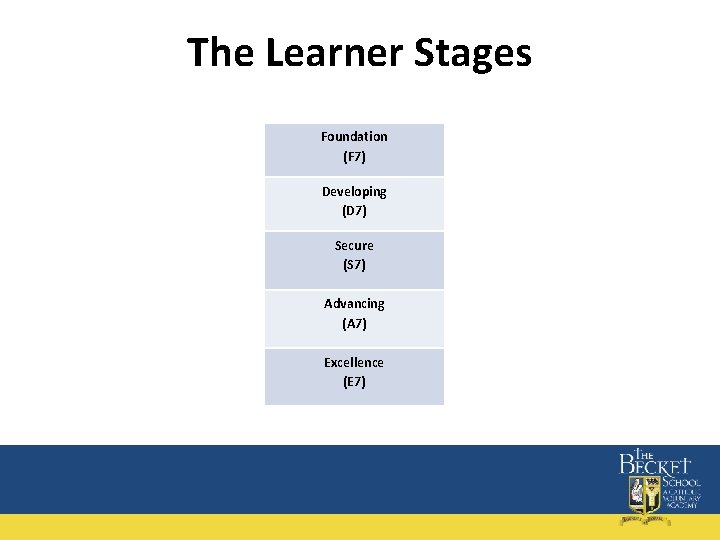
The Learner Stages Foundation (F 7) Developing (D 7) Secure (S 7) Advancing (A 7) Excellence (E 7)
KS 3 Assessment: the structure • We feed our KS 2 data into a national data base called Fisher Family Trust (FFT) • FFT calculates based on KS 2 SATS on average what they might be expected to get at GCSE. • CAUTION ‐ there is of course a lot of room for error here, most especially because those crucial KS 2 results can depend so much on how a pupil has performed on one given day of the test, and how different schools prepare pupils for SATs. • So we use our five‐level targets for Years 7 and 8 so that we do not get too hung up on a precise grade.
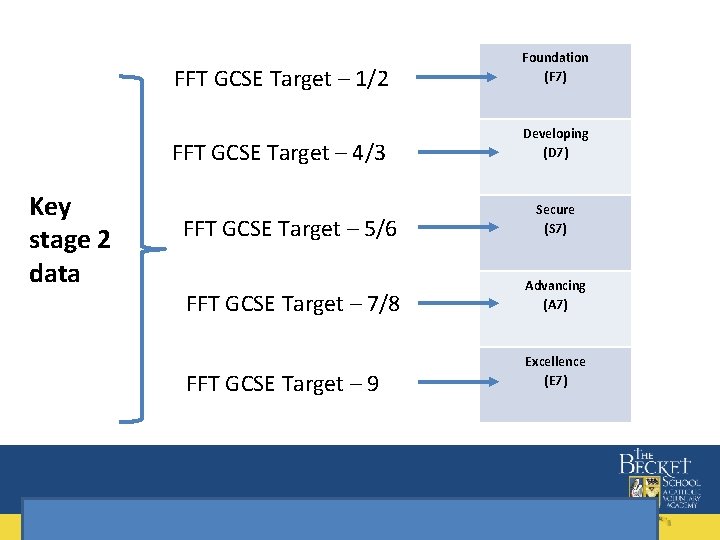
FFT GCSE Target – 1/2 FFT GCSE Target – 4/3 Key stage 2 data Foundation (F 7) Developing (D 7) FFT GCSE Target – 5/6 Secure (S 7) FFT GCSE Target – 7/8 Advancing (A 7) FFT GCSE Target – 9 Excellence (E 7)

KS 3 Assessment: the structure • Each student is allocated an appropriate pathway (Learner Stage) from their starting point. • The Learner Stages may vary from subject to subject • Each Learner Stage outlines what they must do/demonstrate (Learner Descriptors) by the end of the year in each subject to make good progress.
The Learner Stages • Majority of students will be on the Secure (S 7) Learner Stage pathway. • Important to note that these Learner Stage pathways are not fixed and transition between the different Stages can and will occur when appropriate. • Also important that there is no ceiling for students – students will always have the opportunity to be challenged in their learning. • Very few students will be assigned the Learner Stage Excellence (E 7). • If your child is assigned ‘Secure 7’ (S 7) as a target at the start of the academic year, they would be making good progress if they met the Year 7 Secure Learner Descriptors for the year. This would then lead onto ‘Secure 8’ (S 8) as a target for the following year.
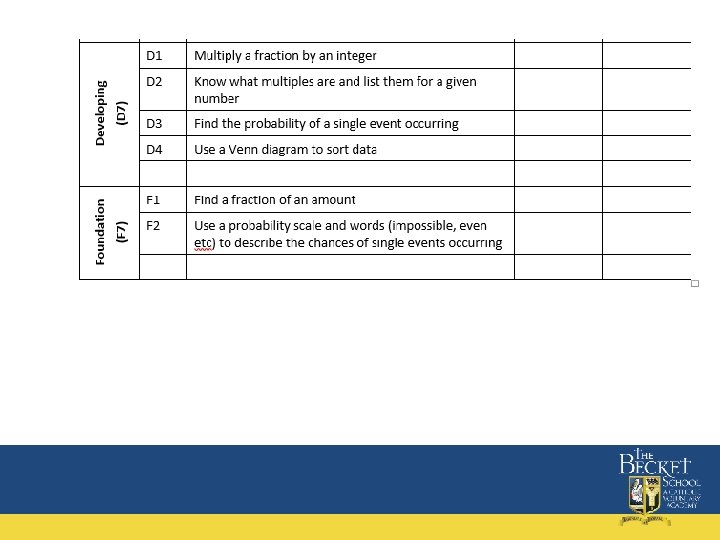
The Learner descriptors • Each subject has a list of key content/skills that each student needs to demonstrate within their Learner Stage. • These have been carefully planned out by the leaders of learning. In Year 7 the learner descriptors are set to enable progression from KS 2 and build on into year 8. In Year 8 they build progress further preparing students for KS 4. • The Learner Descriptors for every subject are available in each student’s book for reference. • They can also be accessed on the website. • Students will be assessed against these descriptors regularly through Learner Checks/low stake testing strategies or more formal assessments to track progress within their Learner Stage.
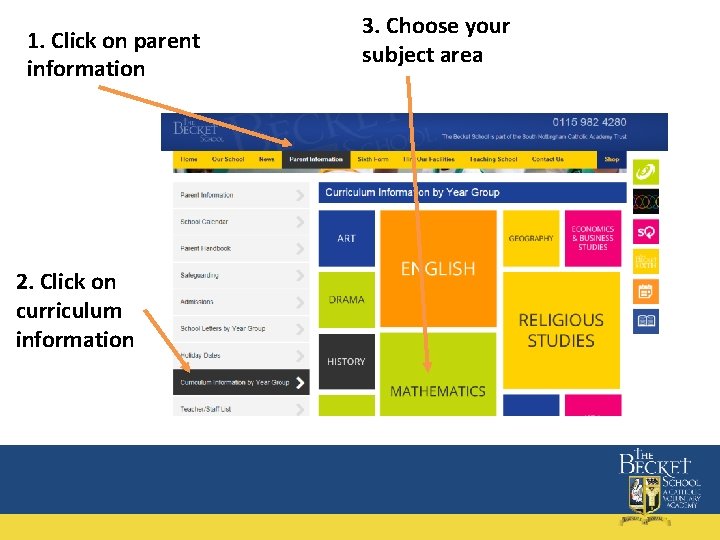
1. Click on parent information 2. Click on curriculum information 3. Choose your subject area
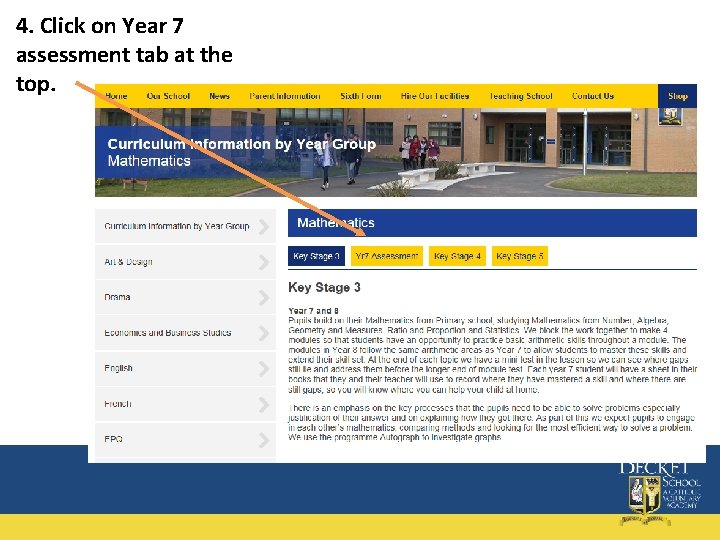
4. Click on Year 7 assessment tab at the top.
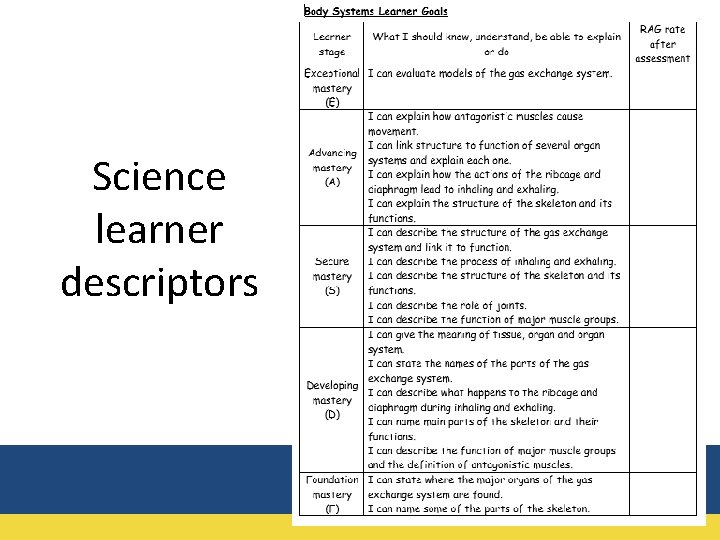
Science learner descriptors
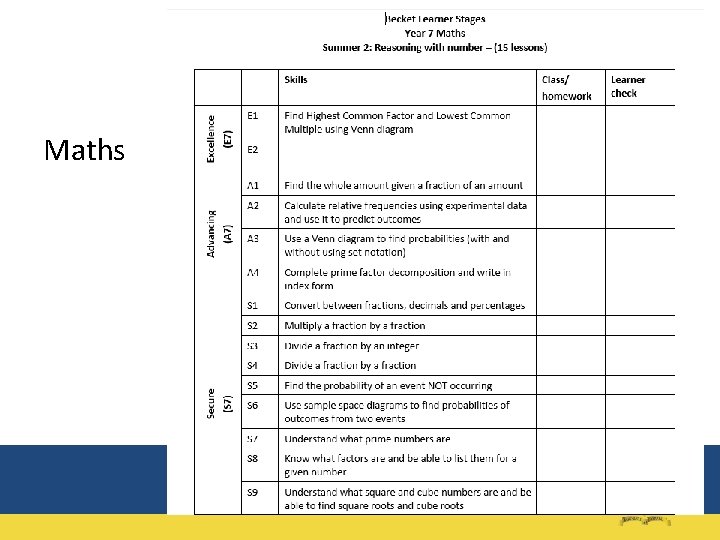
Maths
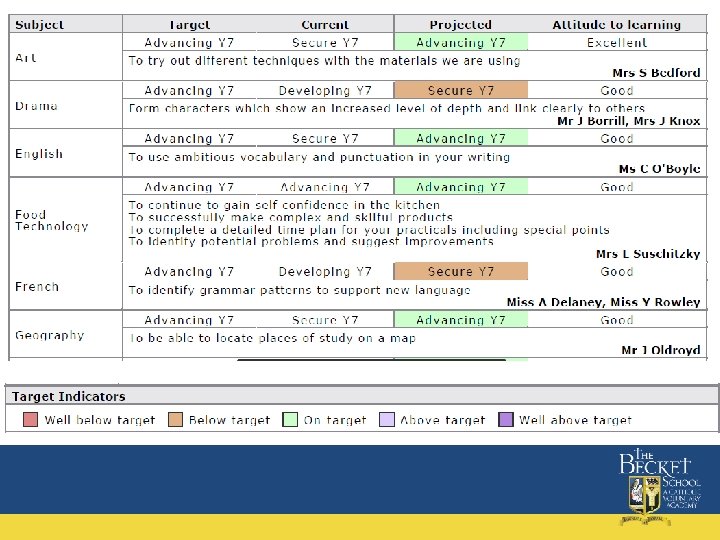
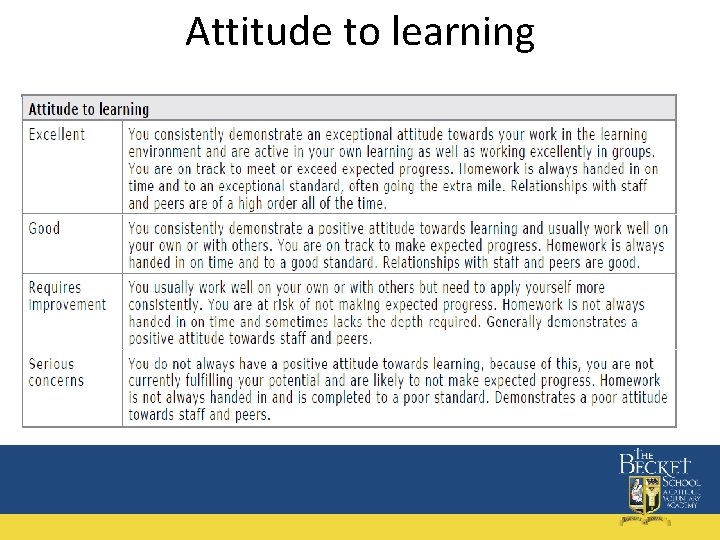
Attitude to learning
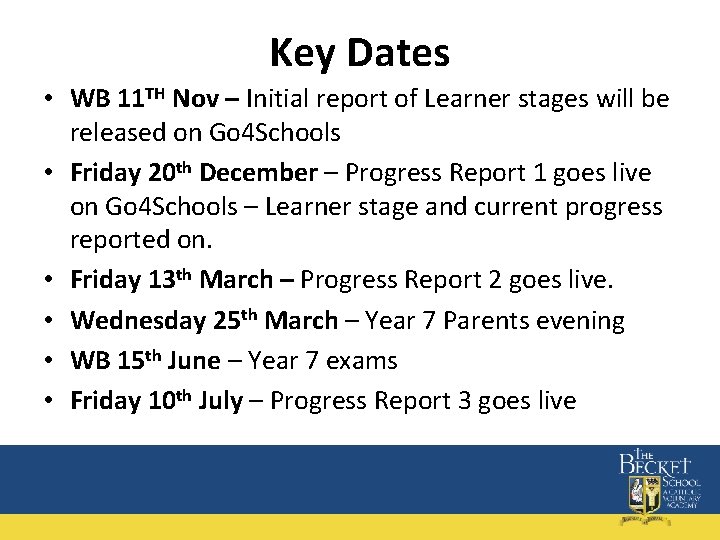
Key Dates • WB 11 TH Nov – Initial report of Learner stages will be released on Go 4 Schools • Friday 20 th December – Progress Report 1 goes live on Go 4 Schools – Learner stage and current progress reported on. • Friday 13 th March – Progress Report 2 goes live. • Wednesday 25 th March – Year 7 Parents evening • WB 15 th June – Year 7 exams • Friday 10 th July – Progress Report 3 goes live
- Slides: 19