
Key Stage 2 National Assessment 2015 The Assessment


- Slides: 20
Key Stage 2 National Assessment 2015
The Assessment ü What are the National Assessments? ü SATs week begins on Monday 11 th May 2015 ü This year there are 3 areas being tested in the SATs: Maths and Reading, English: grammar, punctuation and spelling.
Why are SATs so important? üGive you information about where your child is (academically). ü Gives you a comparison to see how much they have progressed throughout their time at Ravenor Primary School. ü Informs secondary schools of academic ability ü Improves child's educational chances and opportunities in future. Pupils attaining a Level 4+ have a greater chance of attaining A* - C at GCSE. üMost importantly it’s a chance for your child to show all they have learnt.
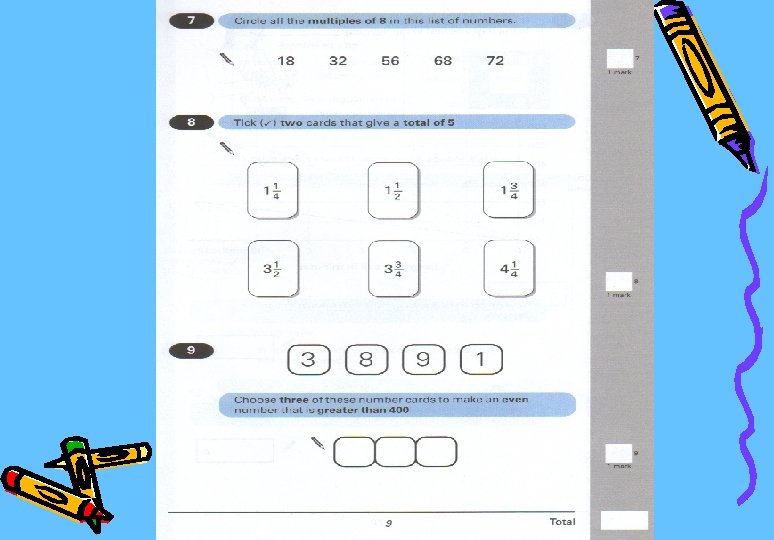
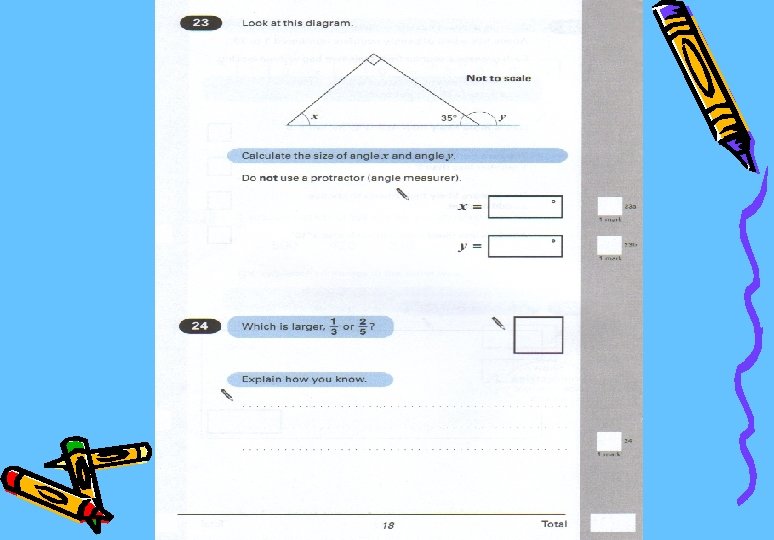
Maths This test has three papers: ü Paper 1– 45 minutes ü Paper 2 – 45 minutes ü Mental Arithmetic – 5, 10 or 15 seconds per question Changes this year: paper A and B are non- calculator papers ü Some of the questions require the children to show their processing skills ü Many of the questions require the children to show their skill in using and applying maths in a variety of situations. ü Example of mental maths - 2014 paper ü
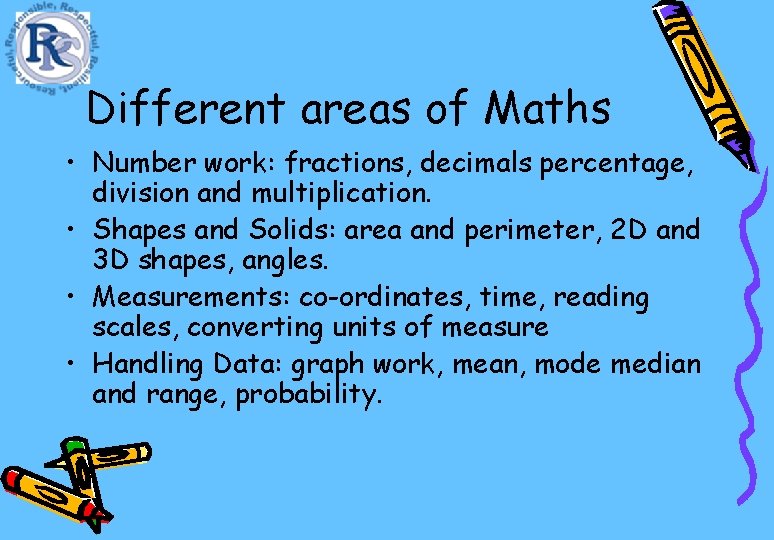
Different areas of Maths • Number work: fractions, decimals percentage, division and multiplication. • Shapes and Solids: area and perimeter, 2 D and 3 D shapes, angles. • Measurements: co-ordinates, time, reading scales, converting units of measure • Handling Data: graph work, mean, mode median and range, probability.
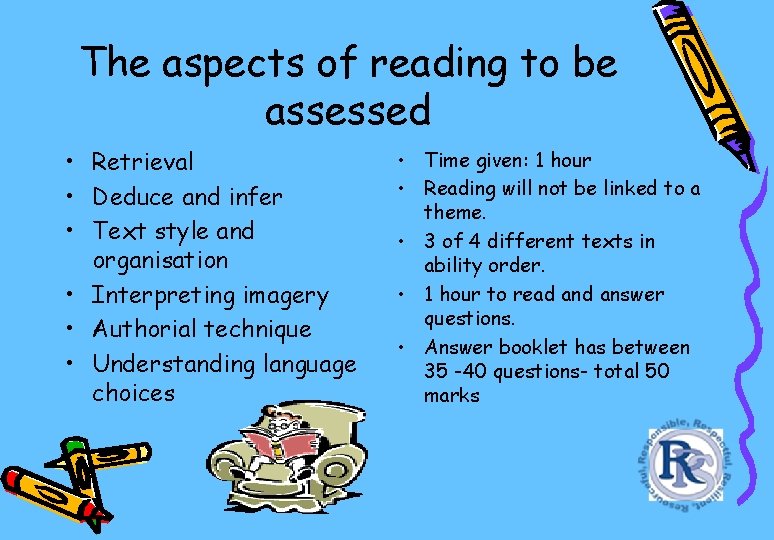
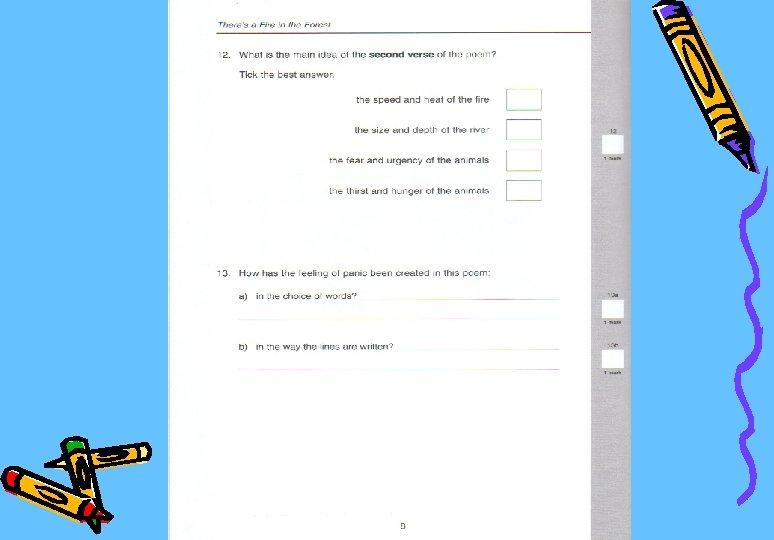
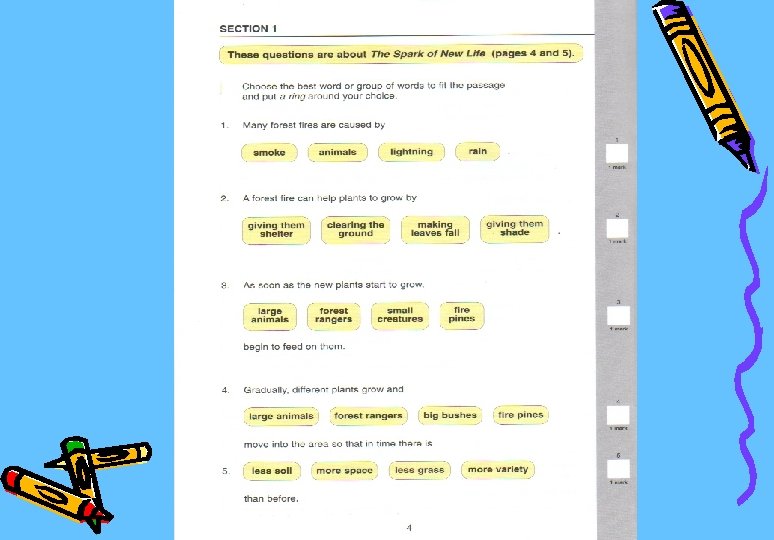
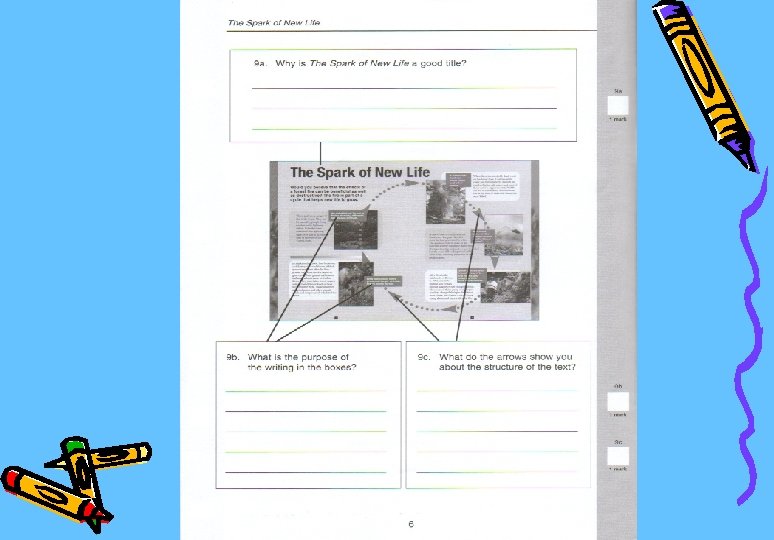
The aspects of reading to be assessed • Retrieval • Deduce and infer • Text style and organisation • Interpreting imagery • Authorial technique • Understanding language choices • Time given: 1 hour • Reading will not be linked to a theme. • 3 of 4 different texts in ability order. • 1 hour to read answer questions. • Answer booklet has between 35 -40 questions- total 50 marks
English: writing Children’s writing will not be assessed by a single test. Writing levels will be determined through the work children produce during their lessons across the year. Books across all subject areas will be looked at to get an overall judgement for their writing level.
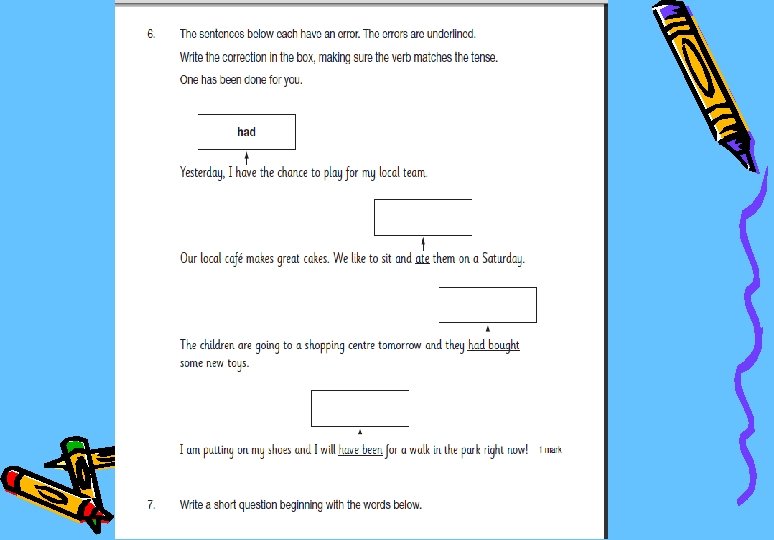
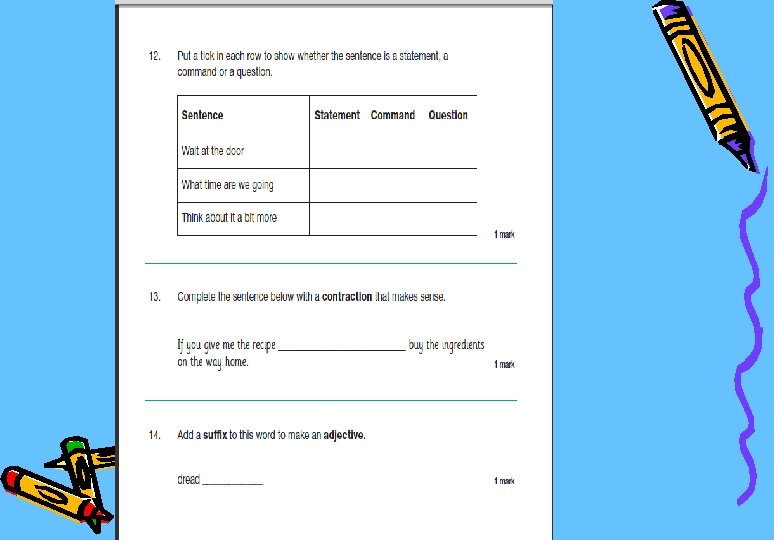
Grammar, spelling and punctuation test The new English test (2 years ago) will assess vocabulary, sentence-grammar, spelling and punctuation. Children will be assessed by a series of shortanswer questions in a variety of ways. Spelling: children will be tested on 20 words with different spelling patterns
How Can You Help? ü Praise and encourage your child, leading up to and during SATs week and when the results come out ü Encourage your child to use the CGP books and visit revision website such as Bitesize. ü Your child will need to be in school everyday, for each test, on time. Telephone the school if you think that your child might be late or not coming in to school. ü Your child should go to bed early prior to SATs – including Friday and Saturday ü Make sure they have a good breakfast and a snack for break time may also help. Water during the test also helps.
What can you do to prepare your child? ü Revision – help your child to revise & practise skills. ü Daily reading and discussion about their books. ü Learn & practise spellings. ü Learn & practise times tables (forwards and backwards). ü Discuss with your child's teachers - areas to work on at home/specific activities/concerns. ü Ensure your child completes their homelearning. üStay calm and relaxed.
And finally. . . Ö Any questions? Ö Thank you for your time this evening