
Key sequences in MSK imaging Benoit Hainaux Clinique
Key sequences in MSK imaging Benoit Hainaux Clinique Paris V Paris Basics Of MRI: How I Do It AFIIM -ISRA 2015
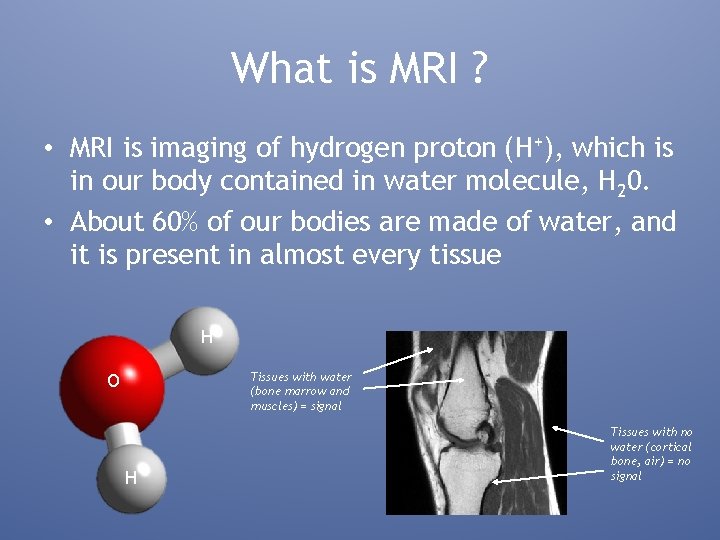
What is MRI ? • MRI is imaging of hydrogen proton (H+), which is in our body contained in water molecule, H 20. • About 60% of our bodies are made of water, and it is present in almost every tissue H O Tissues with water (bone marrow and muscles) = signal H Tissues with no water (cortical bone, air) = no signal
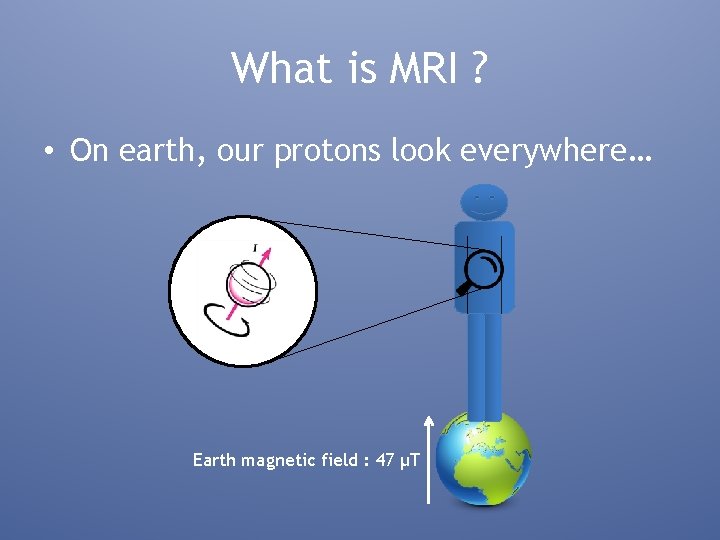
What is MRI ? • On earth, our protons look everywhere… Earth magnetic field : 47 μT
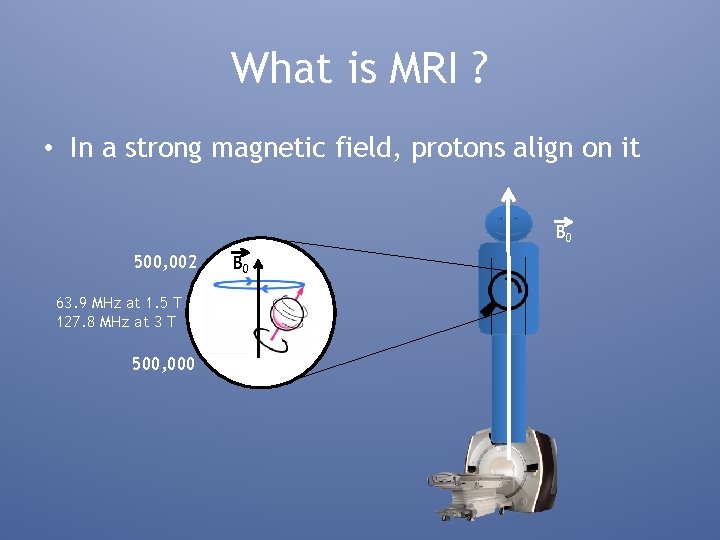
What is MRI ? • In a strong magnetic field, protons align on it B 0 500, 002 63. 9 MHz at 1. 5 T 127. 8 MHz at 3 T 500, 000 B 0 M
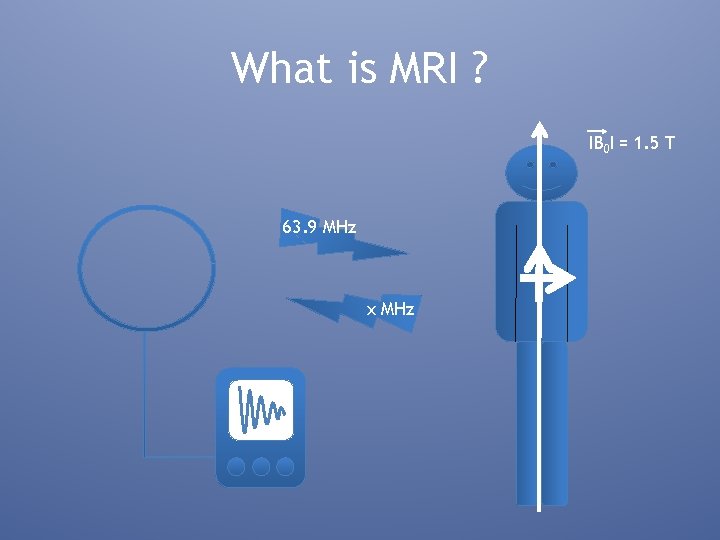
What is MRI ? IB 0 I = 1. 5 T 63. 9 MHz x MHz
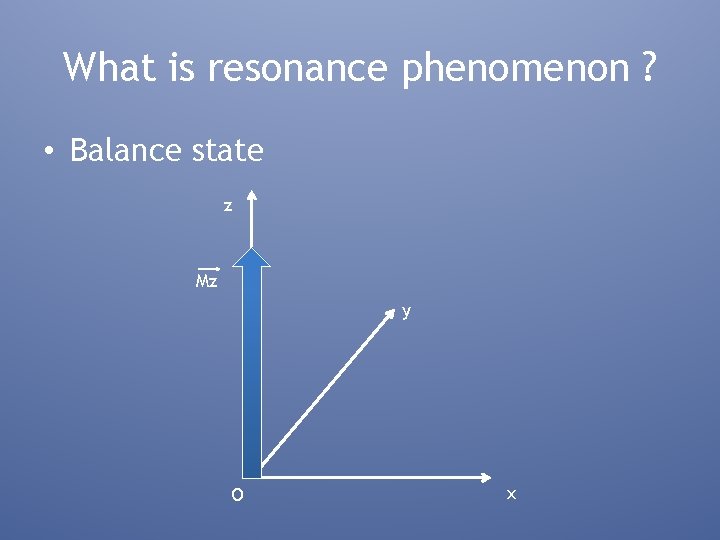
What is resonance phenomenon ? • Balance state z Mz y O x
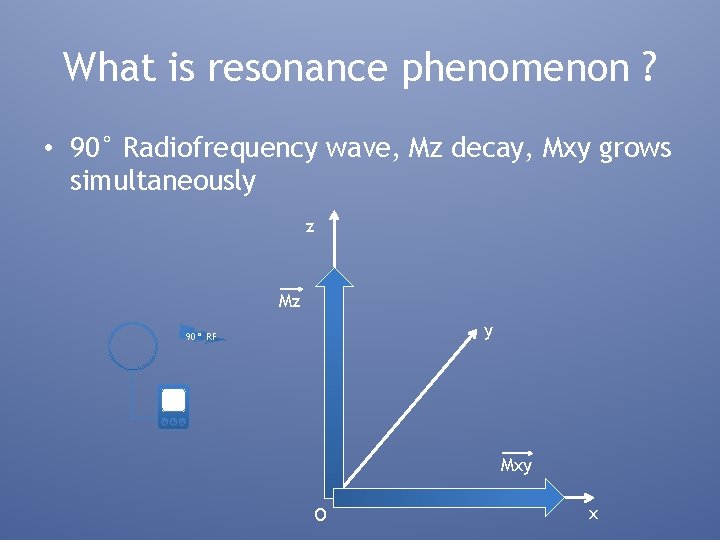
What is resonance phenomenon ? • 90° Radiofrequency wave, Mz decay, Mxy grows simultaneously z Mz y 90° RF Mxy O x
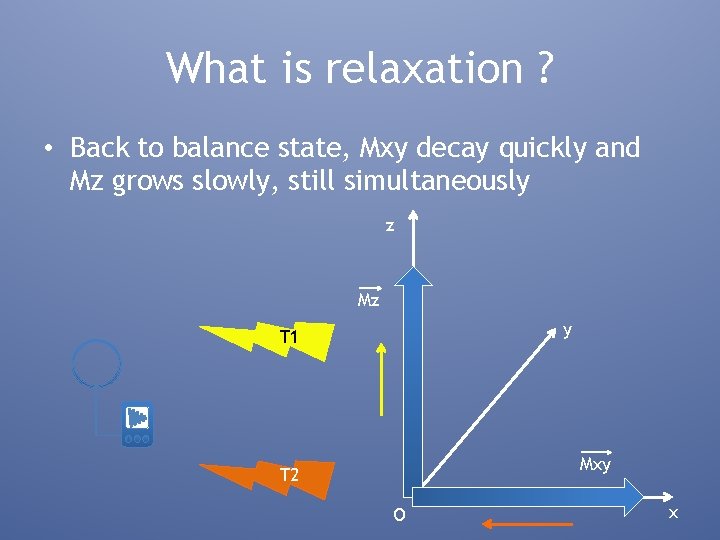
What is relaxation ? • Back to balance state, Mxy decay quickly and Mz grows slowly, still simultaneously z Mz y T 1 Mxy T 2 O x
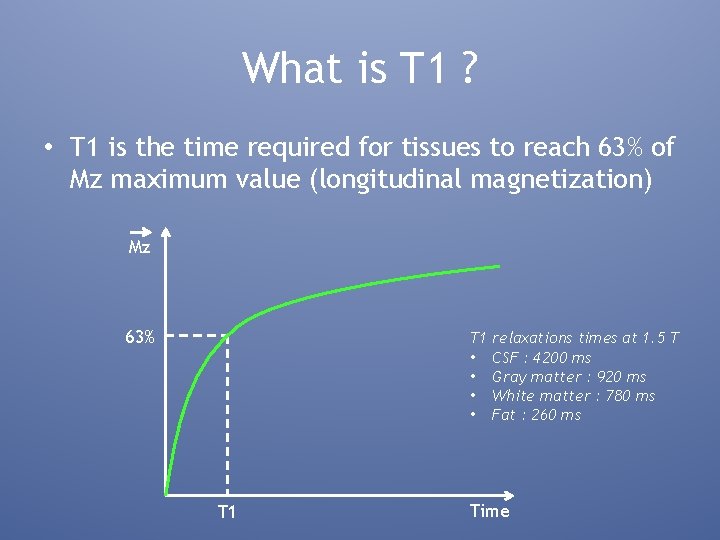
What is T 1 ? • T 1 is the time required for tissues to reach 63% of Mz maximum value (longitudinal magnetization) Mz 63% T 1 • • T 1 relaxations times at 1. 5 T CSF : 4200 ms Gray matter : 920 ms White matter : 780 ms Fat : 260 ms Time
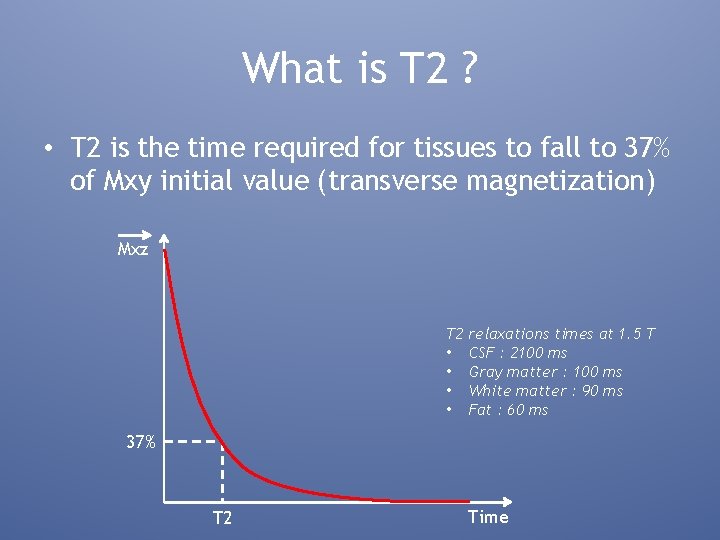
What is T 2 ? • T 2 is the time required for tissues to fall to 37% of Mxy initial value (transverse magnetization) Mxz T 2 • • relaxations times at 1. 5 T CSF : 2100 ms Gray matter : 100 ms White matter : 90 ms Fat : 60 ms 37% T 2 Time
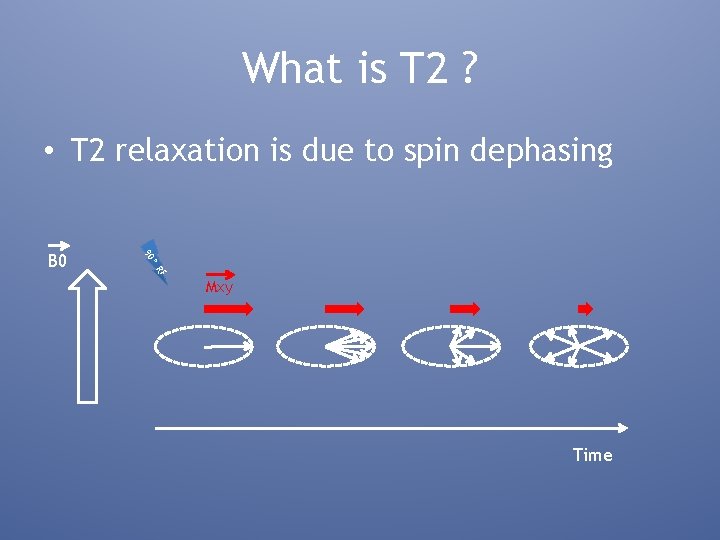
What is T 2 ? • T 2 relaxation is due to spin dephasing F °R 90 B 0 Mxy Time
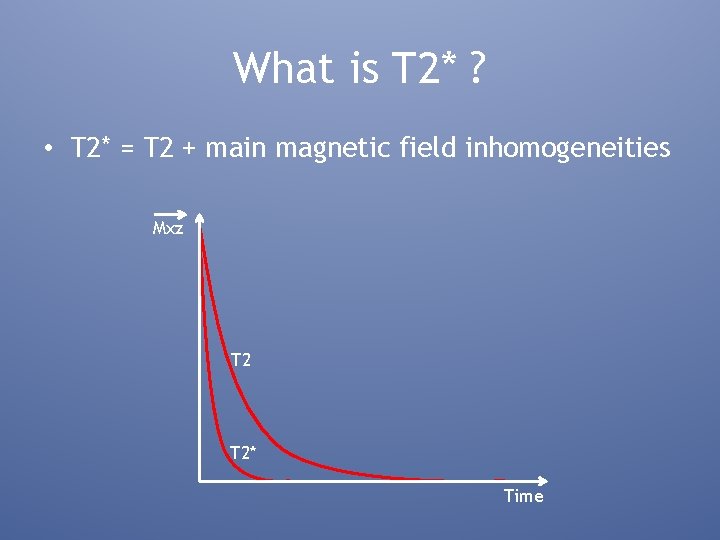
What is T 2* ? • T 2* = T 2 + main magnetic field inhomogeneities Mxz T 2* Time
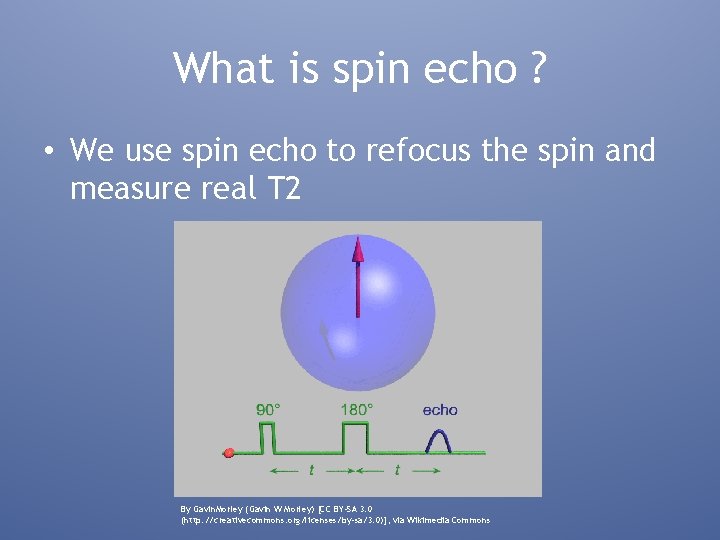
What is spin echo ? • We use spin echo to refocus the spin and measure real T 2 By Gavin. Morley (Gavin W Morley) [CC BY-SA 3. 0 (http: //creativecommons. org/licenses/by-sa/3. 0)], via Wikimedia Commons
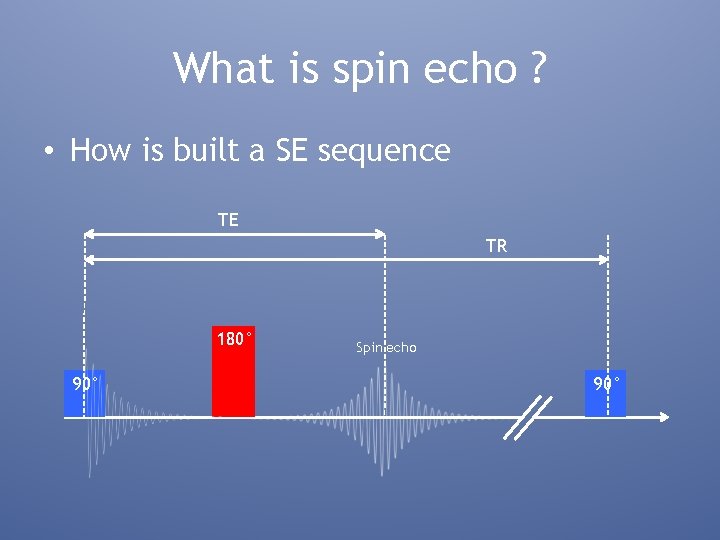
What is spin echo ? • How is built a SE sequence TE TR 180° 90° Spin echo 90°
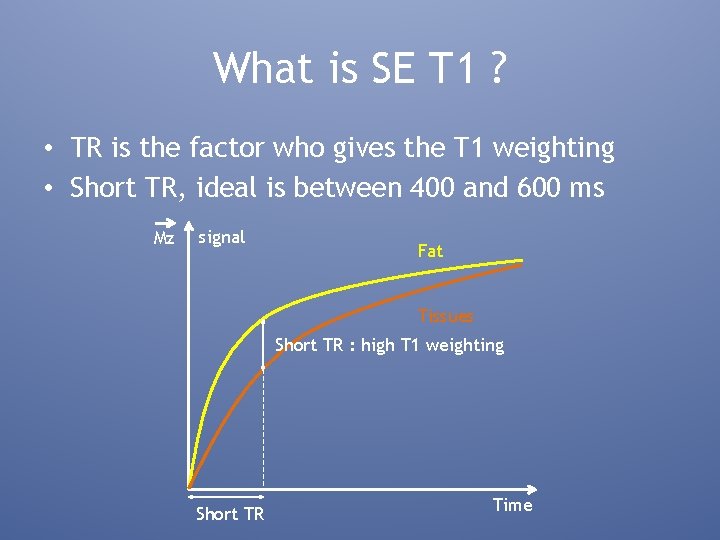
What is SE T 1 ? • TR is the factor who gives the T 1 weighting • Short TR, ideal is between 400 and 600 ms Mz signal Fat Tissues Short TR : high T 1 weighting Short TR Time
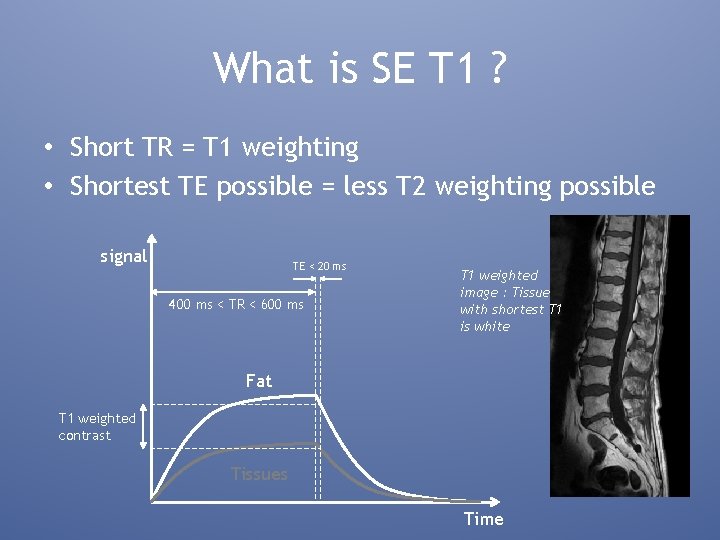
What is SE T 1 ? • Short TR = T 1 weighting • Shortest TE possible = less T 2 weighting possible signal TE < 20 ms 400 ms < TR < 600 ms T 1 weighted image : Tissue with shortest T 1 is white Fat T 1 weighted contrast Tissues Time
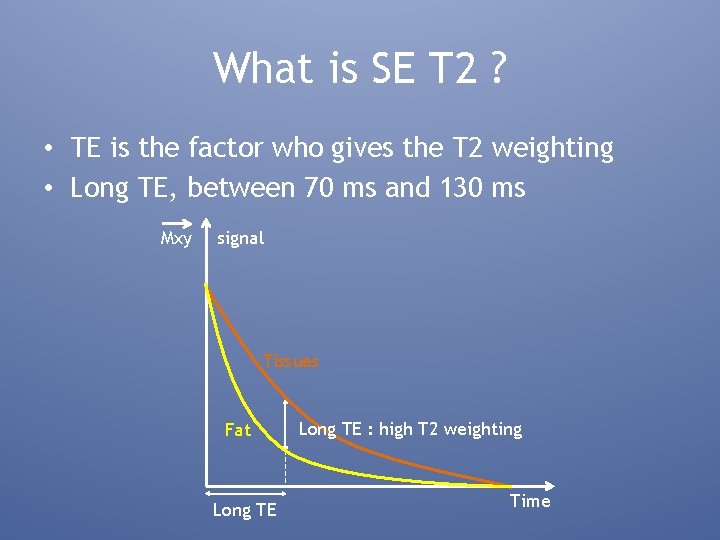
What is SE T 2 ? • TE is the factor who gives the T 2 weighting • Long TE, between 70 ms and 130 ms Mxy signal Tissues Fat Long TE : high T 2 weighting Time
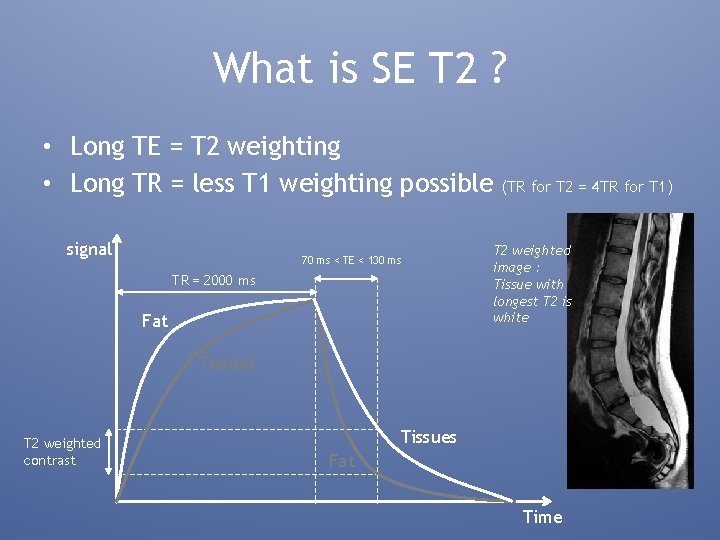
What is SE T 2 ? • Long TE = T 2 weighting • Long TR = less T 1 weighting possible signal 70 ms < TE < 130 ms TR = 2000 ms Fat (TR for T 2 = 4 TR for T 1) T 2 weighted image : Tissue with longest T 2 is white Tissues T 2 weighted contrast Tissues Fat Time
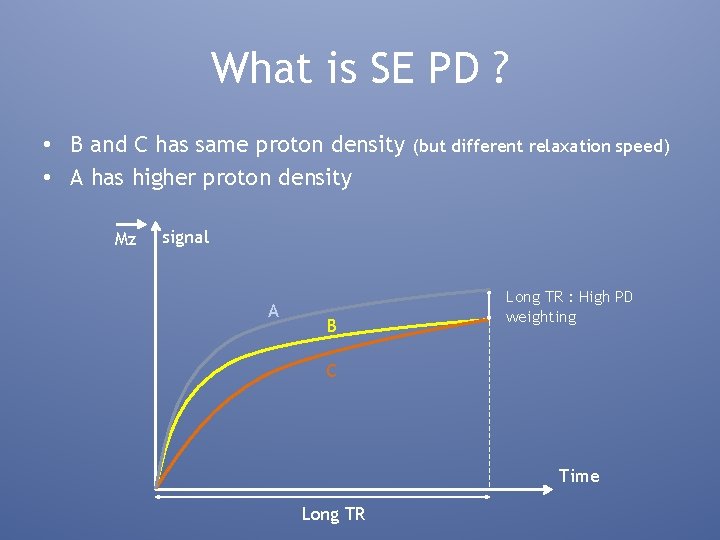
What is SE PD ? • B and C has same proton density • A has higher proton density Mz (but different relaxation speed) signal A B Long TR : High PD weighting C Time Long TR
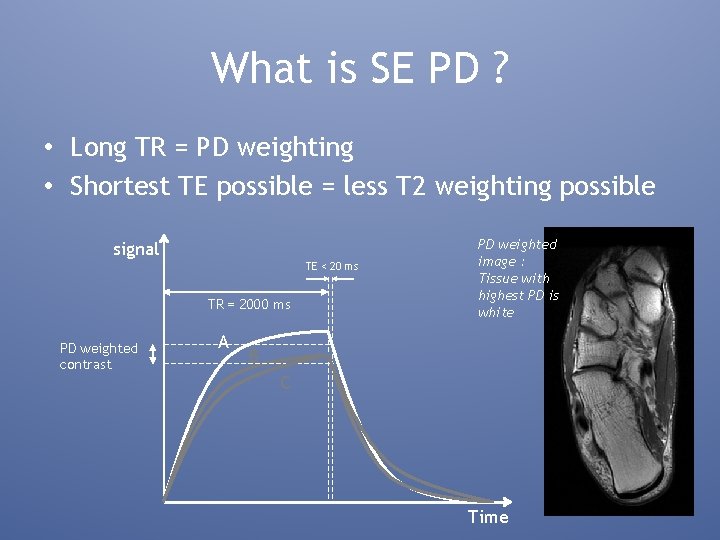
What is SE PD ? • Long TR = PD weighting • Shortest TE possible = less T 2 weighting possible signal TE < 20 ms TR = 2000 ms PD weighted contrast A PD weighted image : Tissue with highest PD is white B C Time
Why rapid imaging ? • Fast SE or Turbo SE • Using multiple 180° pulses to generate multiple echoes • Significantly reduce scanning time
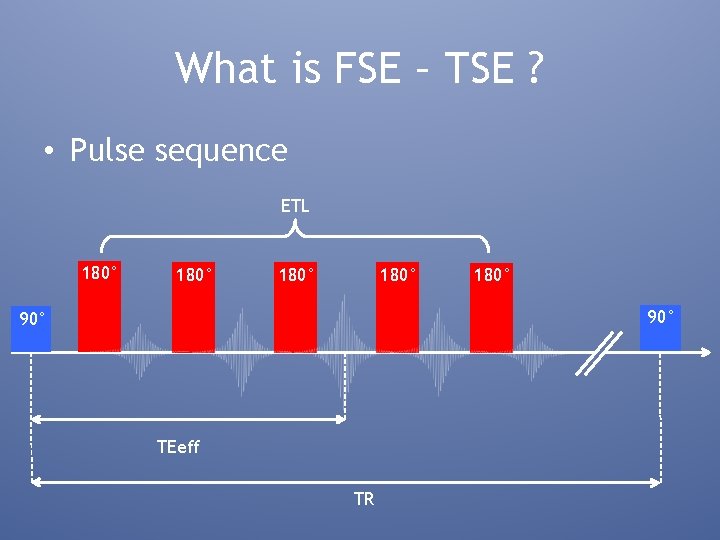
What is FSE – TSE ? • Pulse sequence ETL 180° 180° 90° TEeff TR
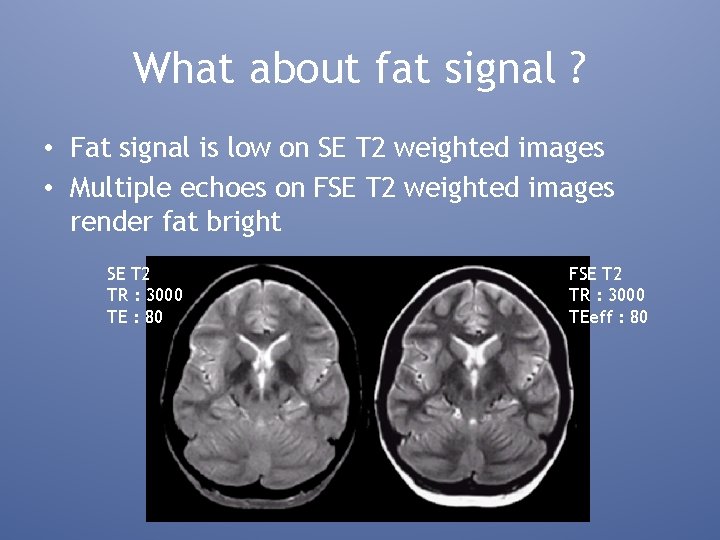
What about fat signal ? • Fat signal is low on SE T 2 weighted images • Multiple echoes on FSE T 2 weighted images render fat bright SE T 2 TR : 3000 TE : 80 FSE T 2 TR : 3000 TEeff : 80
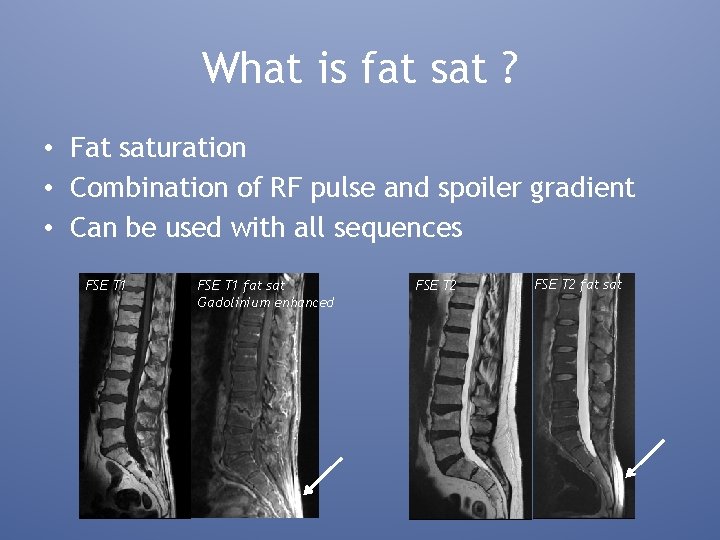
What is fat sat ? • Fat saturation • Combination of RF pulse and spoiler gradient • Can be used with all sequences FSE T 1 fat sat Gadolinium enhanced FSE T 2 fat sat
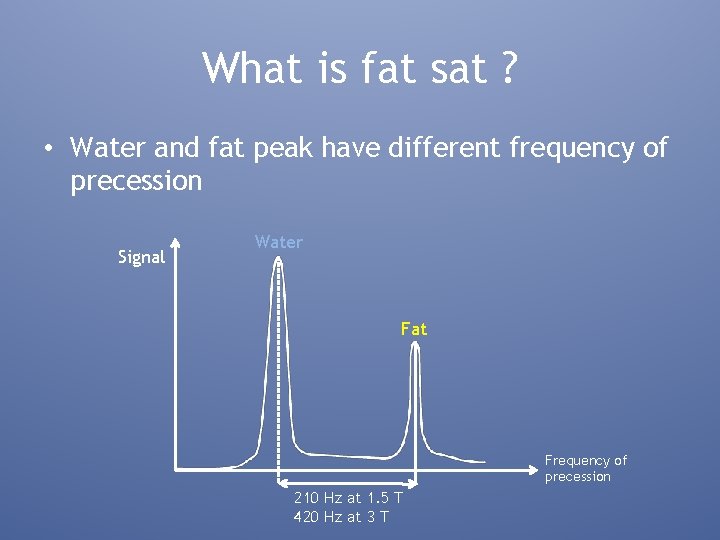
What is fat sat ? • Water and fat peak have different frequency of precession Signal Water Fat Frequency of precession 210 Hz at 1. 5 T 420 Hz at 3 T
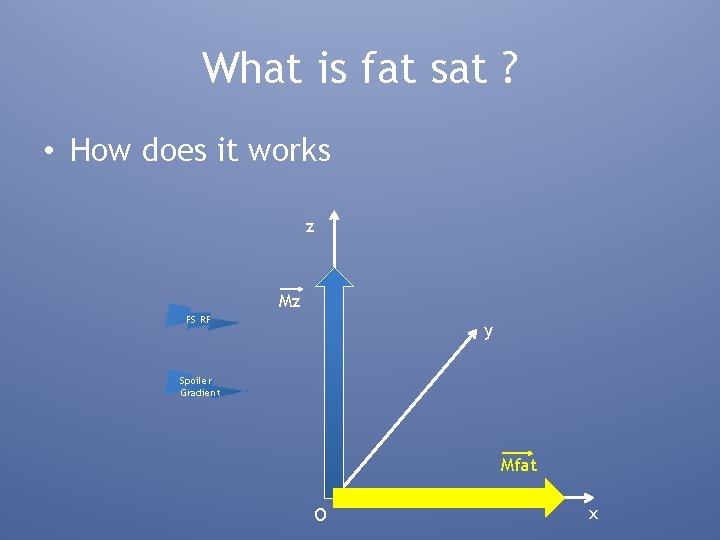
What is fat sat ? • How does it works z Mz FS RF y Spoiler Gradient Mfat O x
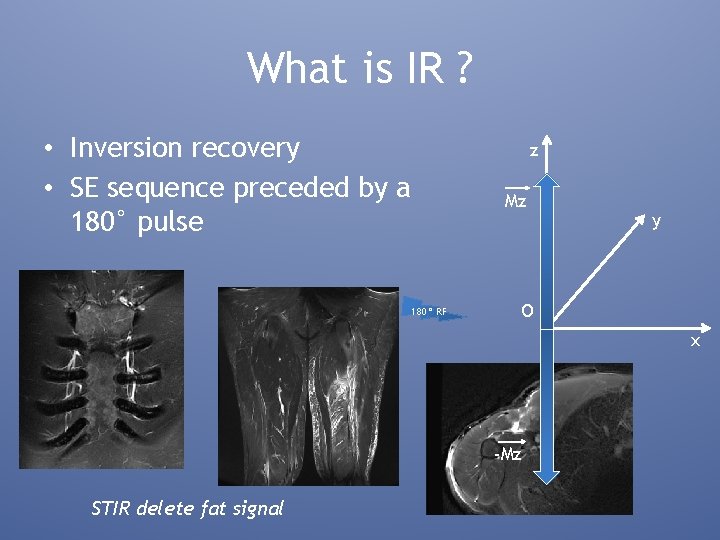
What is IR ? • Inversion recovery • SE sequence preceded by a 180° pulse z Mz y O 180° RF x -Mz STIR delete fat signal
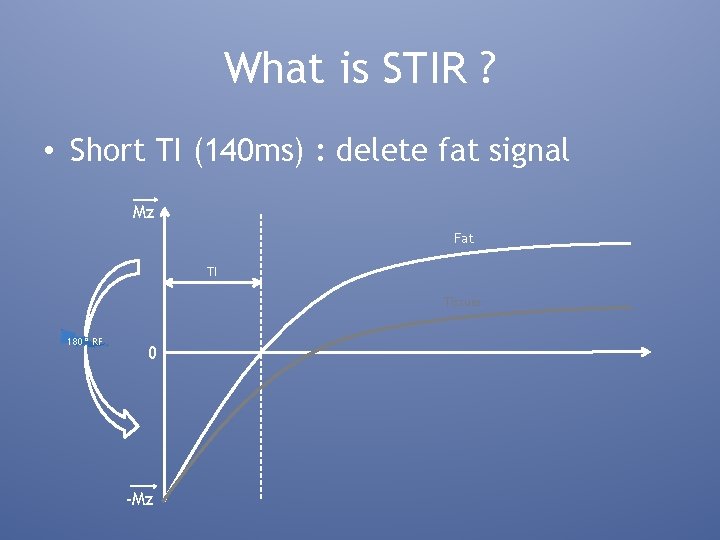
What is STIR ? • Short TI (140 ms) : delete fat signal Mz Fat TI Tissues 180° RF 0 -Mz
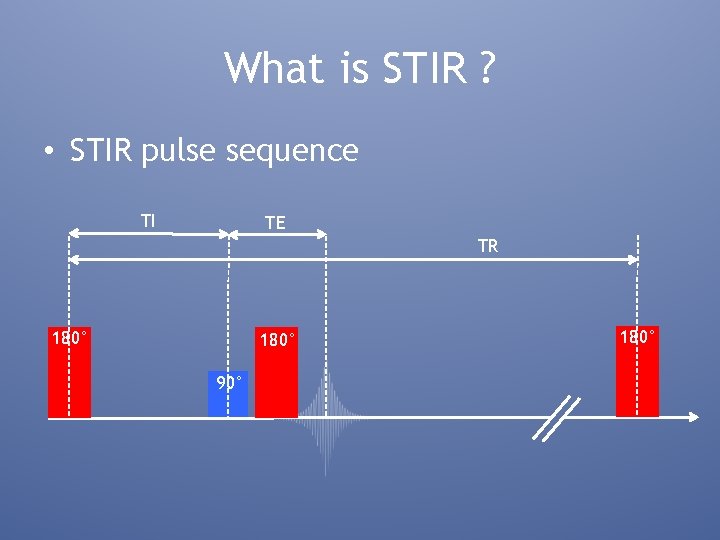
What is STIR ? • STIR pulse sequence TI TE TR 180° 90° 180°
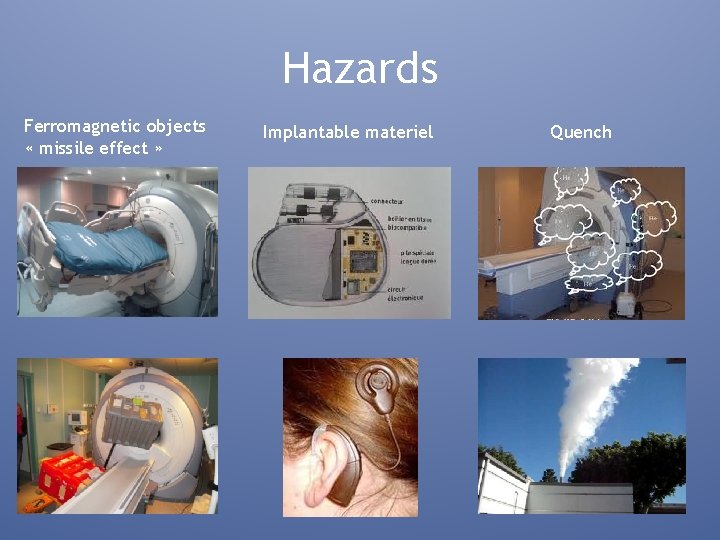
Hazards Ferromagnetic objects « missile effect » Implantable materiel Quench
Thank you for your attention • Visit http: //mri-q. com • Musculoskeletal MRI techniques – Eric Lévêque (in french)
- Slides: 31