
Key Points Chapter 2 External Analysis Understand apply
- Slides: 19
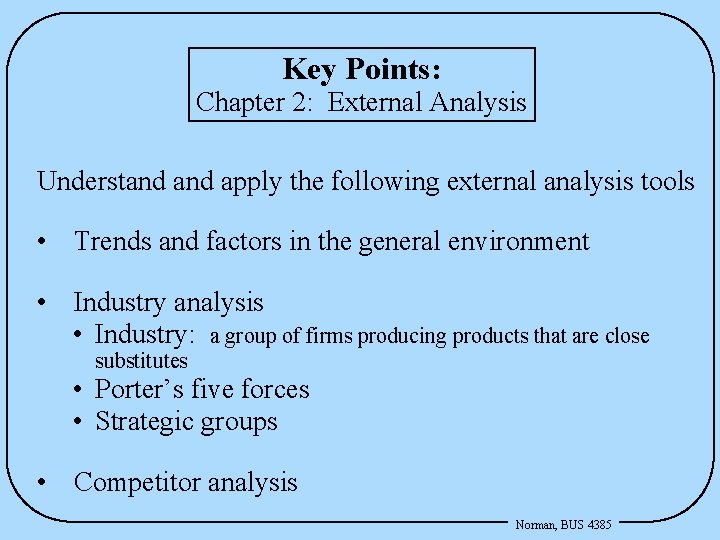
Key Points: Chapter 2: External Analysis Understand apply the following external analysis tools • Trends and factors in the general environment • Industry analysis • Industry: a group of firms producing products that are close substitutes • Porter’s five forces • Strategic groups • Competitor analysis Norman, BUS 4385
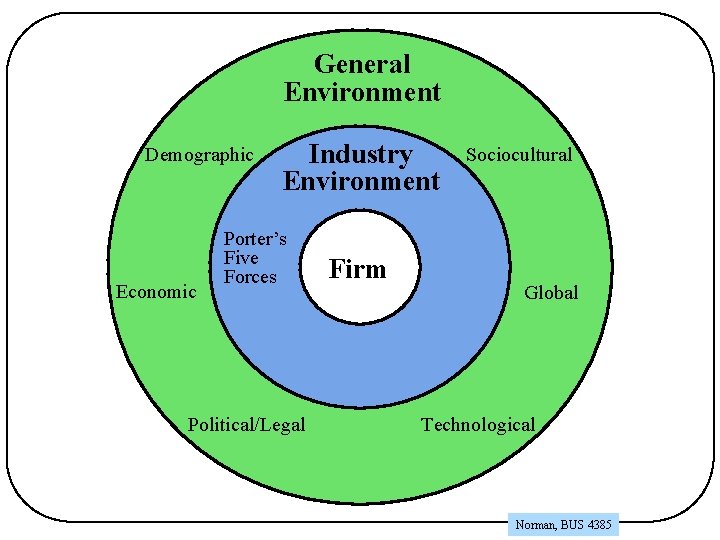
General Environment Demographic Economic Industry Environment Porter’s Five Forces Political/Legal Firm Sociocultural Global Technological Norman, BUS 4385
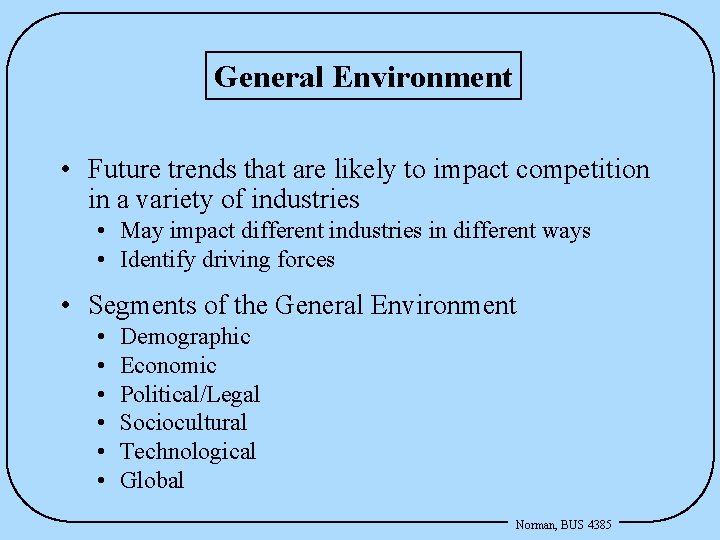
General Environment • Future trends that are likely to impact competition in a variety of industries • May impact different industries in different ways • Identify driving forces • Segments of the General Environment • • • Demographic Economic Political/Legal Sociocultural Technological Global Norman, BUS 4385
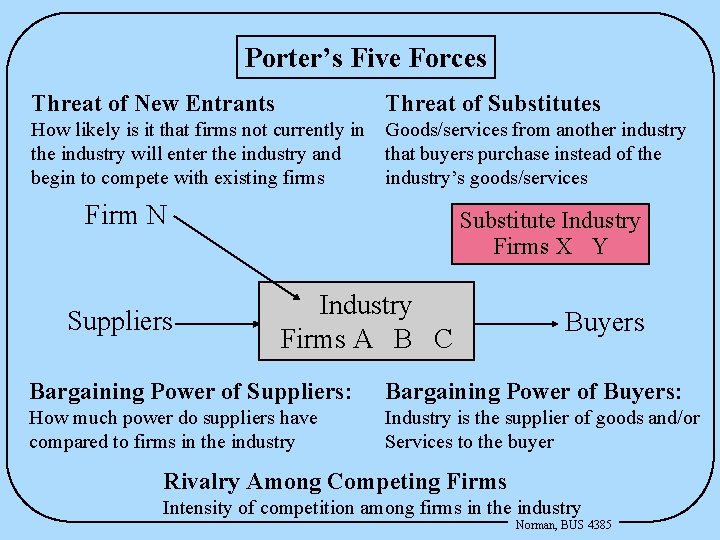
Porter’s Five Forces Threat of New Entrants Threat of Substitutes How likely is it that firms not currently in Goods/services from another industry the industry will enter the industry and that buyers purchase instead of the begin to compete with existing firms industry’s goods/services Firm N Suppliers Substitute Industry Firms X Y Industry Firms A B C Buyers Bargaining Power of Suppliers: Bargaining Power of Buyers: How much power do suppliers have compared to firms in the industry Industry is the supplier of goods and/or Services to the buyer Rivalry Among Competing Firms Intensity of competition among firms in the industry Norman, BUS 4385
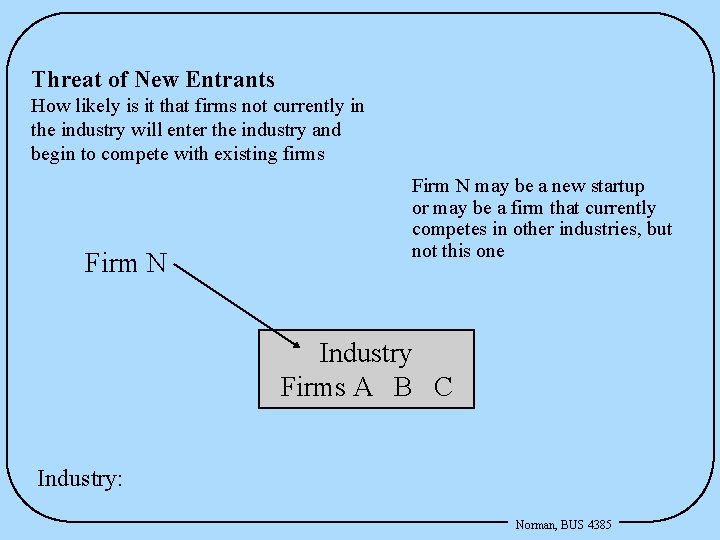
Threat of New Entrants How likely is it that firms not currently in the industry will enter the industry and begin to compete with existing firms Firm N may be a new startup or may be a firm that currently competes in other industries, but not this one Industry Firms A B C Industry: Norman, BUS 4385
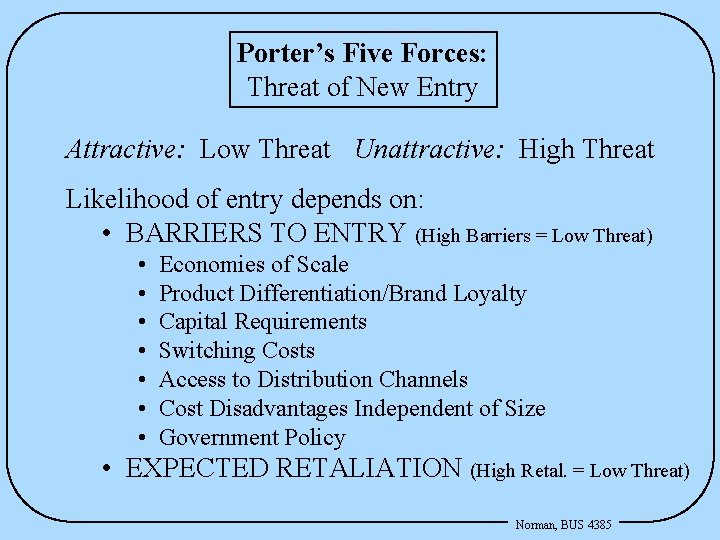
Porter’s Five Forces: Threat of New Entry Attractive: Low Threat Unattractive: High Threat Likelihood of entry depends on: • BARRIERS TO ENTRY (High Barriers = Low Threat) • • Economies of Scale Product Differentiation/Brand Loyalty Capital Requirements Switching Costs Access to Distribution Channels Cost Disadvantages Independent of Size Government Policy • EXPECTED RETALIATION (High Retal. = Low Threat) Norman, BUS 4385
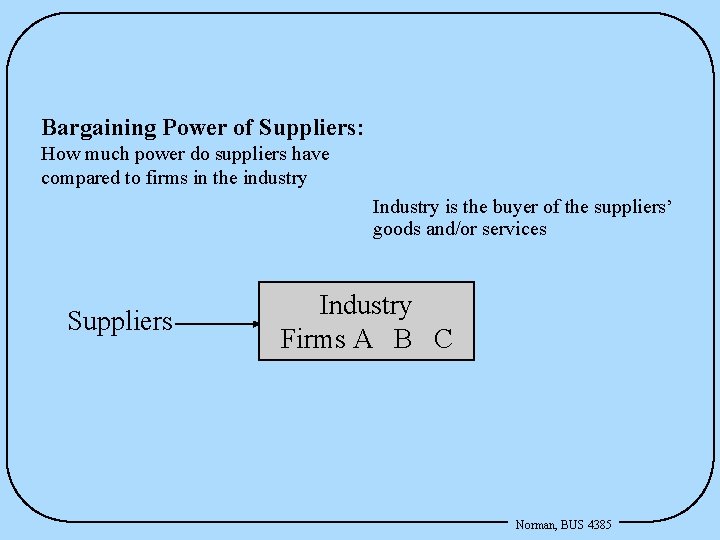
Bargaining Power of Suppliers: How much power do suppliers have compared to firms in the industry Industry is the buyer of the suppliers’ goods and/or services Suppliers Industry Firms A B C Norman, BUS 4385
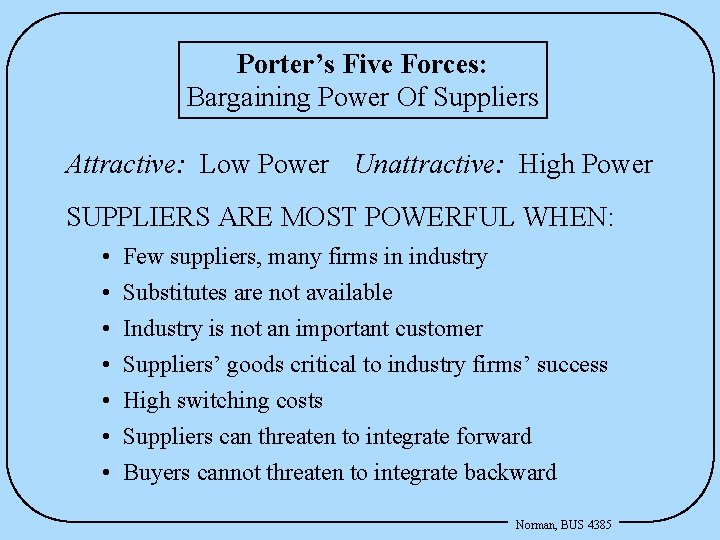
Porter’s Five Forces: Bargaining Power Of Suppliers Attractive: Low Power Unattractive: High Power SUPPLIERS ARE MOST POWERFUL WHEN: • • Few suppliers, many firms in industry Substitutes are not available Industry is not an important customer Suppliers’ goods critical to industry firms’ success High switching costs Suppliers can threaten to integrate forward Buyers cannot threaten to integrate backward Norman, BUS 4385
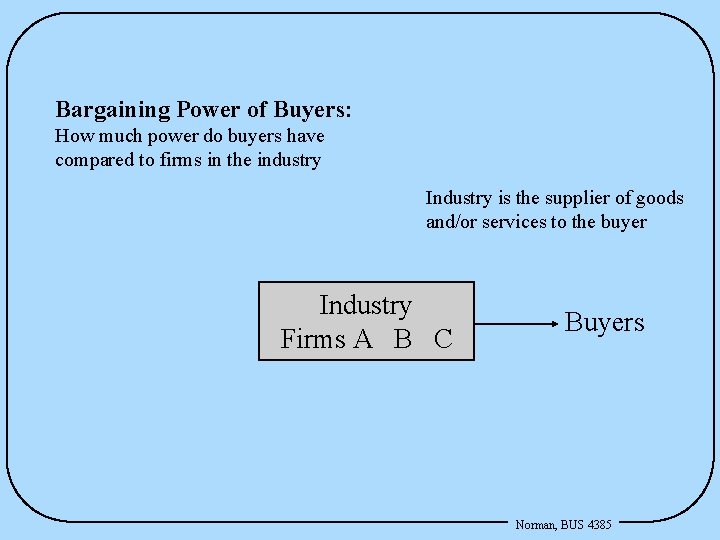
Bargaining Power of Buyers: How much power do buyers have compared to firms in the industry Industry is the supplier of goods and/or services to the buyer Industry Firms A B C Buyers Norman, BUS 4385
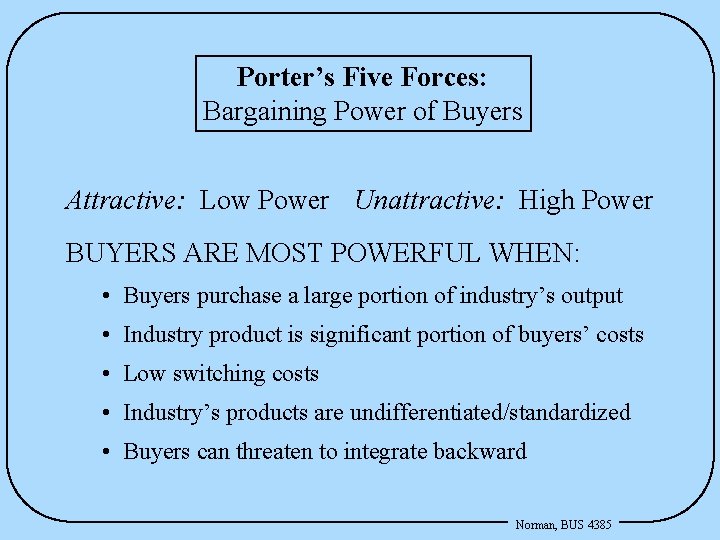
Porter’s Five Forces: Bargaining Power of Buyers Attractive: Low Power Unattractive: High Power BUYERS ARE MOST POWERFUL WHEN: • Buyers purchase a large portion of industry’s output • Industry product is significant portion of buyers’ costs • Low switching costs • Industry’s products are undifferentiated/standardized • Buyers can threaten to integrate backward Norman, BUS 4385
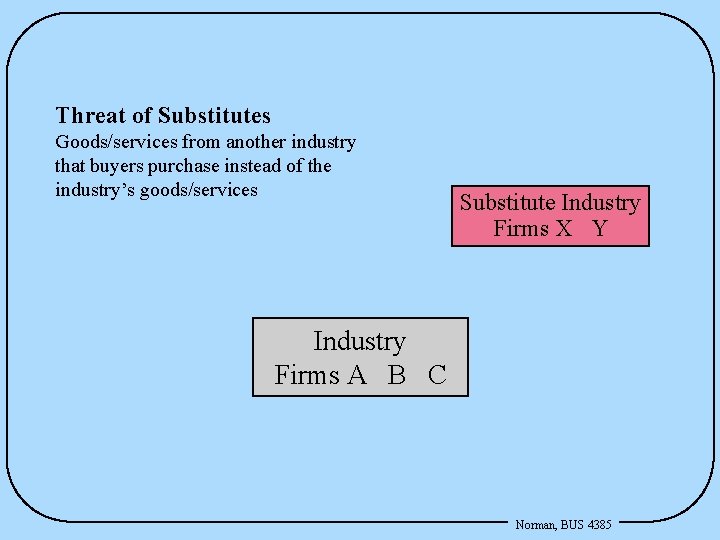
Threat of Substitutes Goods/services from another industry that buyers purchase instead of the industry’s goods/services Substitute Industry Firms X Y Industry Firms A B C Norman, BUS 4385
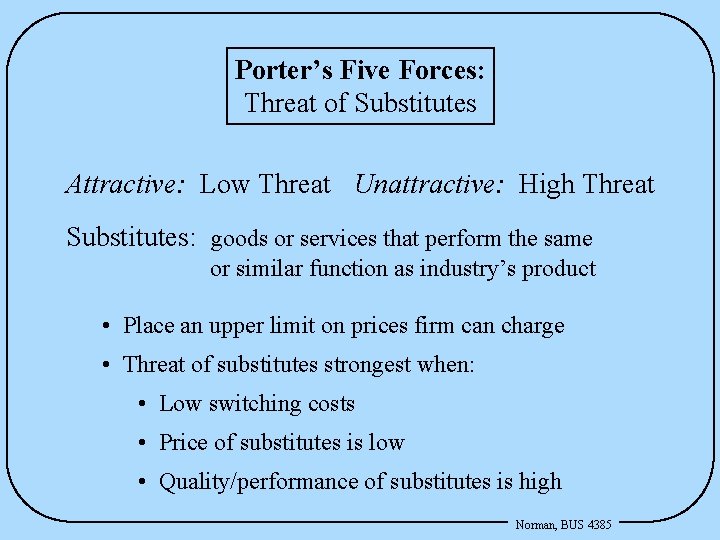
Porter’s Five Forces: Threat of Substitutes Attractive: Low Threat Unattractive: High Threat Substitutes: goods or services that perform the same or similar function as industry’s product • Place an upper limit on prices firm can charge • Threat of substitutes strongest when: • Low switching costs • Price of substitutes is low • Quality/performance of substitutes is high Norman, BUS 4385
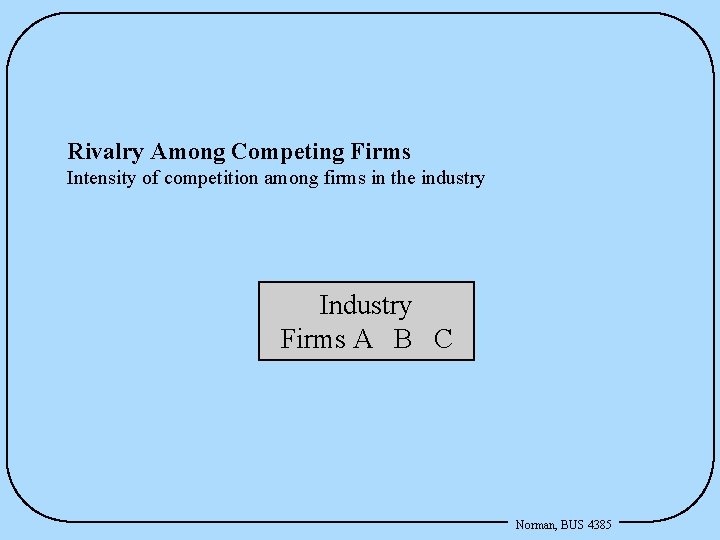
Rivalry Among Competing Firms Intensity of competition among firms in the industry Industry Firms A B C Norman, BUS 4385
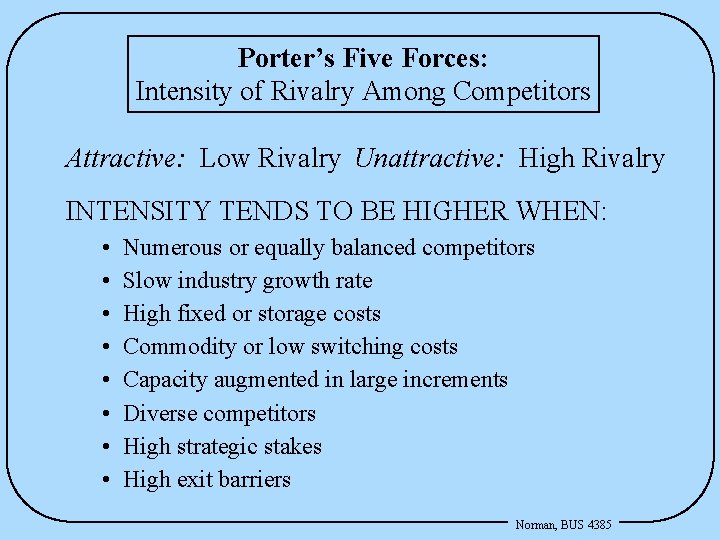
Porter’s Five Forces: Intensity of Rivalry Among Competitors Attractive: Low Rivalry Unattractive: High Rivalry INTENSITY TENDS TO BE HIGHER WHEN: • • Numerous or equally balanced competitors Slow industry growth rate High fixed or storage costs Commodity or low switching costs Capacity augmented in large increments Diverse competitors High strategic stakes High exit barriers Norman, BUS 4385
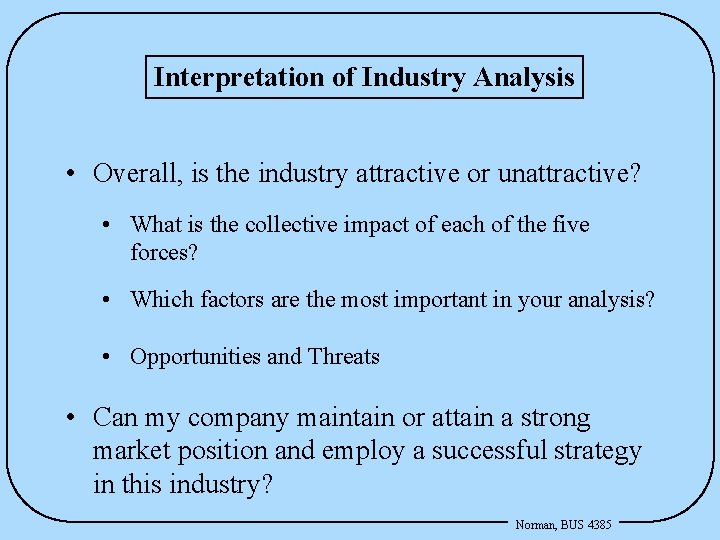
Interpretation of Industry Analysis • Overall, is the industry attractive or unattractive? • What is the collective impact of each of the five forces? • Which factors are the most important in your analysis? • Opportunities and Threats • Can my company maintain or attain a strong market position and employ a successful strategy in this industry? Norman, BUS 4385
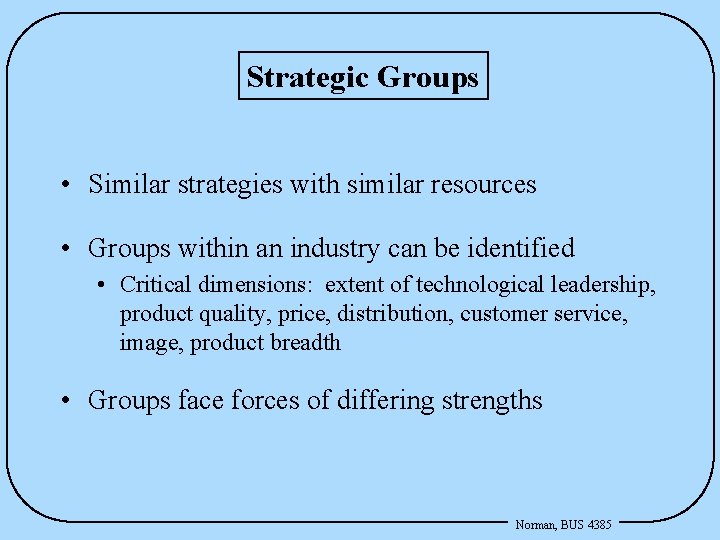
Strategic Groups • Similar strategies with similar resources • Groups within an industry can be identified • Critical dimensions: extent of technological leadership, product quality, price, distribution, customer service, image, product breadth • Groups face forces of differing strengths Norman, BUS 4385
Strategic Groups Norman, BUS 4385
Competitor Analysis • Who are the key competitors in the industry? • • Objectives Assumptions Strategy Capabilities • Who will be the key competitors in the future? • What moves are these firms likely to make? Norman, BUS 4385
Key Success Factors • The major determinants of financial and competitive success in the industry • Usually a few factors (3 -4) • Impact long-term success • Examples • Ability to meet specific customer needs (e. g. , airlines having on-time arrivals and not losing baggage) • Ability to innovate and offer new products/services • Efficiency • Excellence in customer service Norman, BUS 4385