
Key Points 1 30 Dr Ioannis N Lagoudis


- Slides: 16
Key Points 1 -30 Dr. Ioannis N. Lagoudis ilagoudis@aegean. gr Based on Sussman, Introduction to Transportation Systems, Artech House, Boston 2000
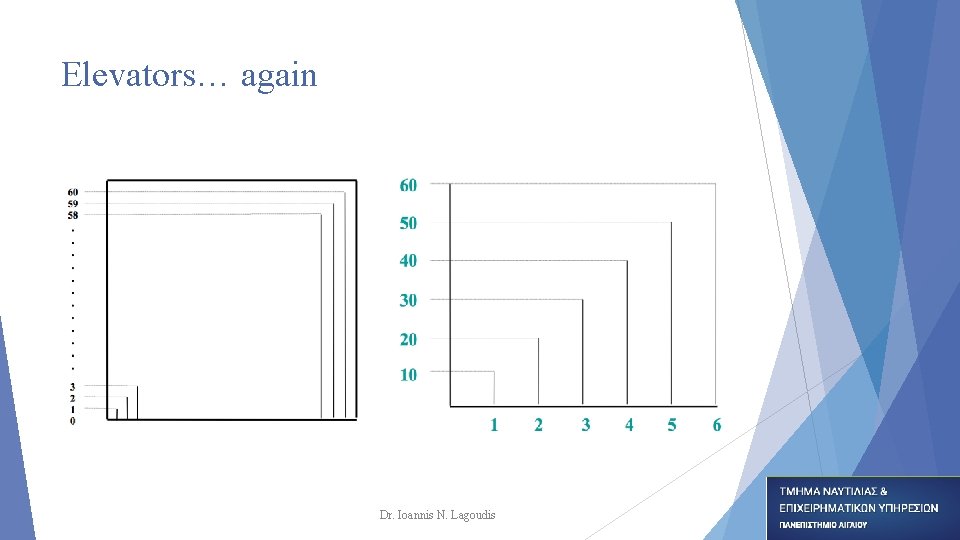
Elevators… again Dr. Ioannis N. Lagoudis
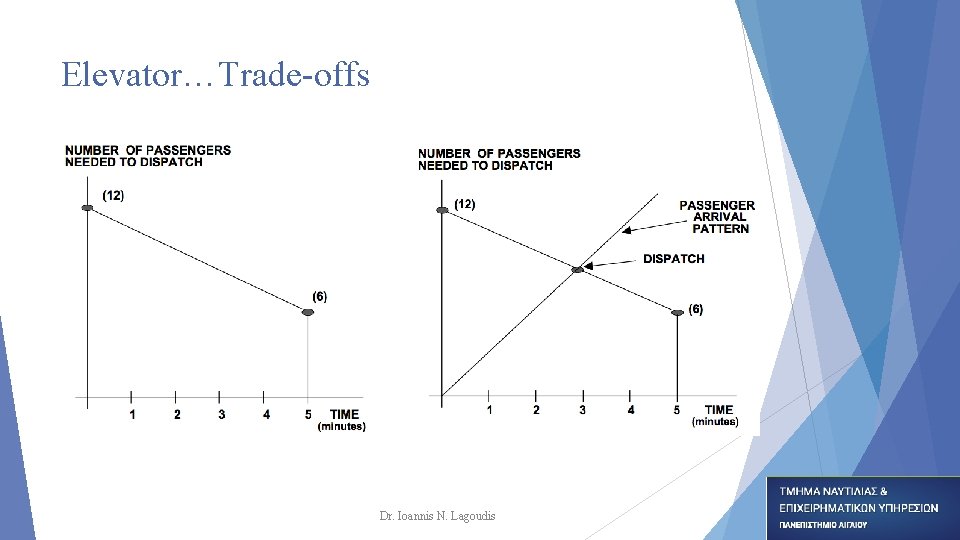
Discussion Which What configuration is best? are the tradeoffs if any from the owner’s point of view? Dr. Ioannis N. Lagoudis
Key Point 11: Infrastructure “shape” of transportation infrastructure impact the fabric of “geo-economic” structures The Dr. Ioannis N. Lagoudis
Key Point 12: Cost, Prices and LOS The cost of providing a specific service, the price charged for that service and the level of service provided may not be consistent. Can you think of an example? Dr. Ioannis N. Lagoudis
Key Point 13: Cost of Service The computation of cost for providing a specific service is complex and ambiguous A passenger, a car and a truck use the same ferry. How do we allocate maintenance expenses? Dr. Ioannis N. Lagoudis
Elevator…Trade-offs Dr. Ioannis N. Lagoudis
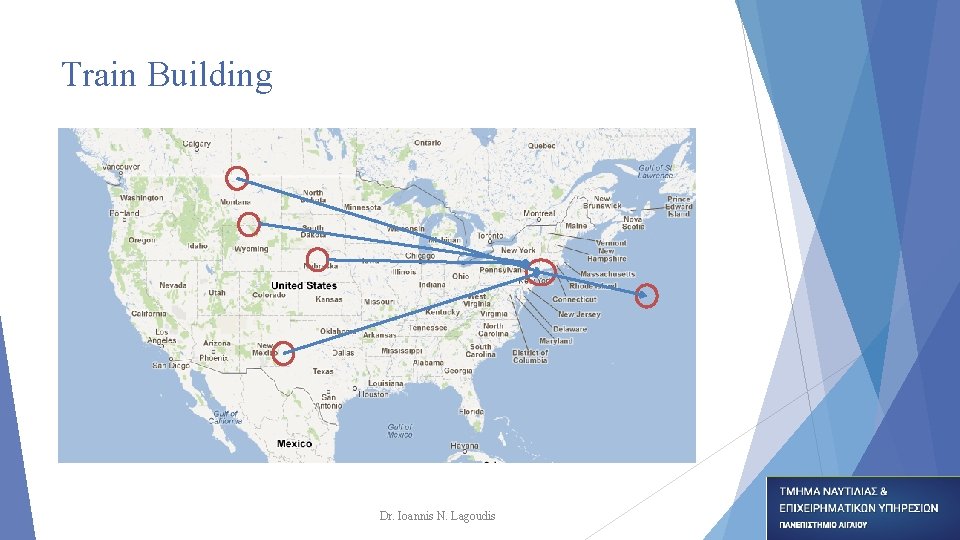
Train Building Dr. Ioannis N. Lagoudis
Key Point 14: Cost/LOS Trade-offs Fundamental tensions for the transportation provider and the transportation customer as well as between the two. Dr. Ioannis N. Lagoudis
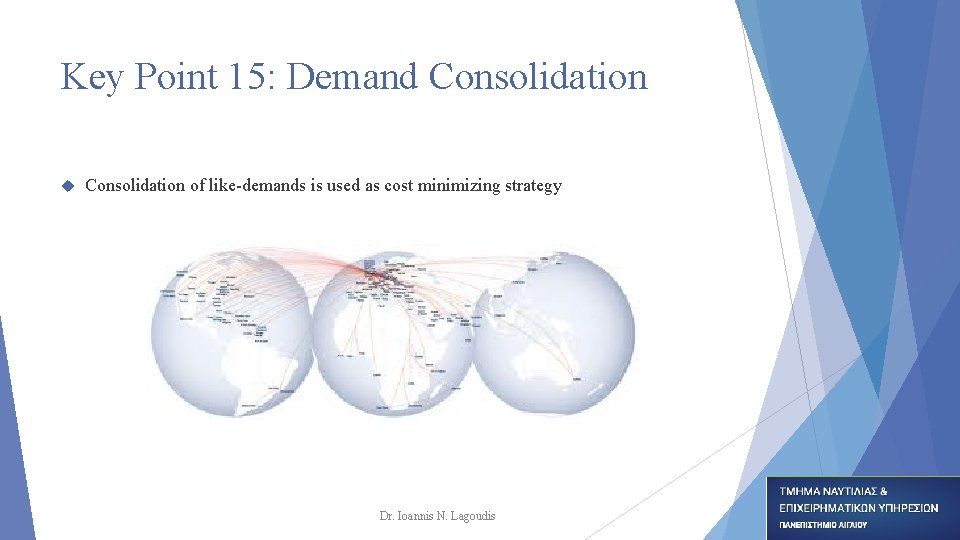
Key Point 15: Demand Consolidation of like-demands is used as cost minimizing strategy Dr. Ioannis N. Lagoudis
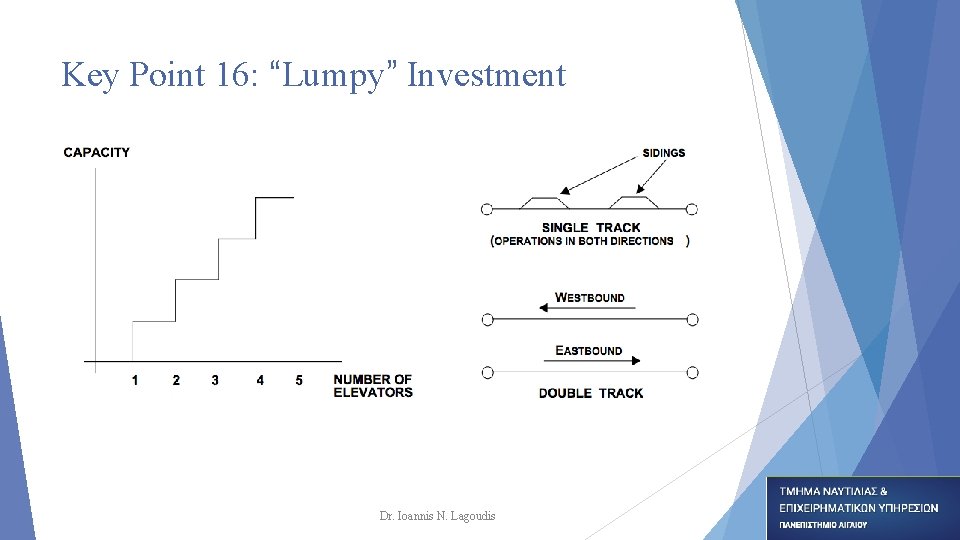
Key Point 16: “Lumpy” Investment Dr. Ioannis N. Lagoudis
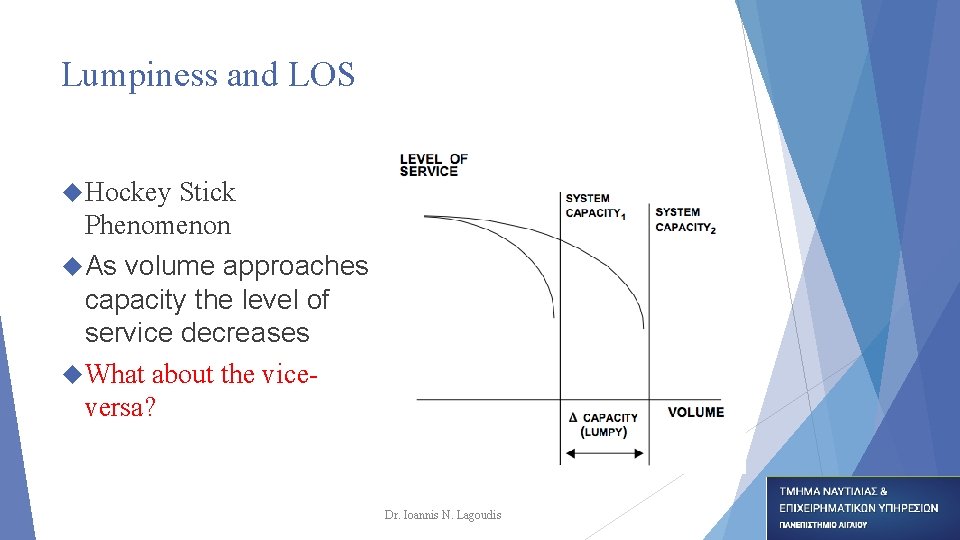
Key Point 17: Capacity, cost and level of service Central challenge of a transportation system is to link: Capacity Cost Level of service The challenge stems mainly from the lumpiness of the investment Dr. Ioannis N. Lagoudis
Lumpiness and LOS Hockey Stick Phenomenon As volume approaches capacity the level of service decreases What about the viceversa? Dr. Ioannis N. Lagoudis
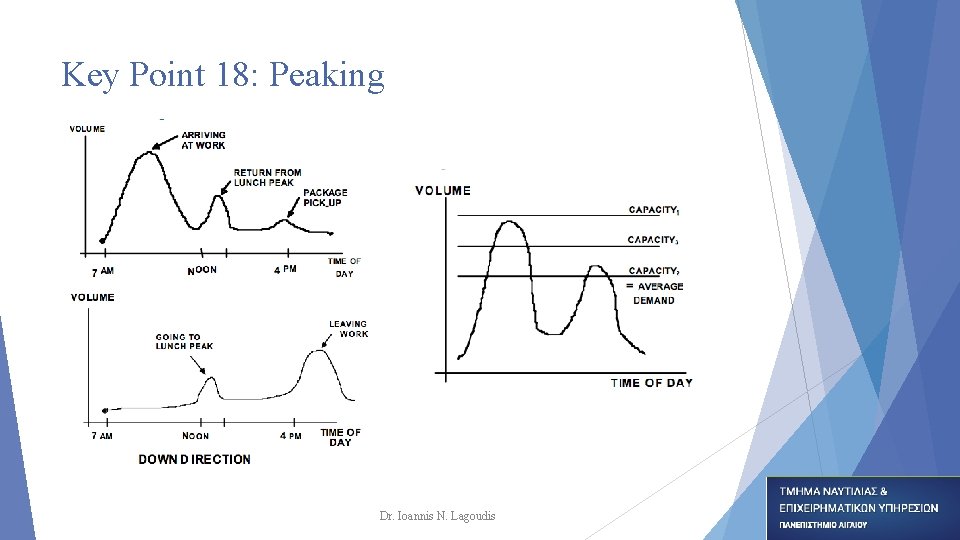
Key Point 18: Peaking Dr. Ioannis N. Lagoudis
Key Point 19: Volume = f(level-ofservice); transportation demand Dr. Ioannis N. Lagoudis
Key Point 20: Level of Service is multidimensional We use many variables to measure LOS. We usually encapsulate all these variables in a single variable “utility” Utility (V) can be thus a linear function of: Travel time Access time Fare Comfort etc Dr. Ioannis N. Lagoudis