
Key Physical Features of Georgia The Fall Line
- Slides: 11
Key Physical Features of Georgia
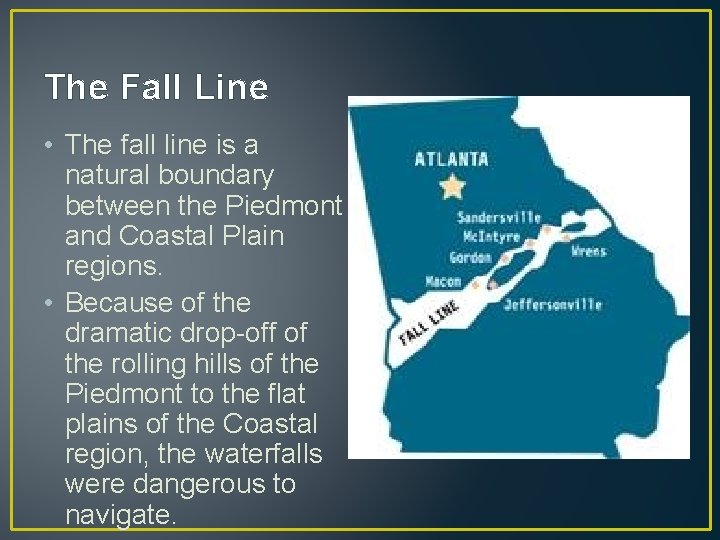
The Fall Line • The fall line is a natural boundary between the Piedmont and Coastal Plain regions. • Because of the dramatic drop-off of the rolling hills of the Piedmont to the flat plains of the Coastal region, the waterfalls were dangerous to navigate.
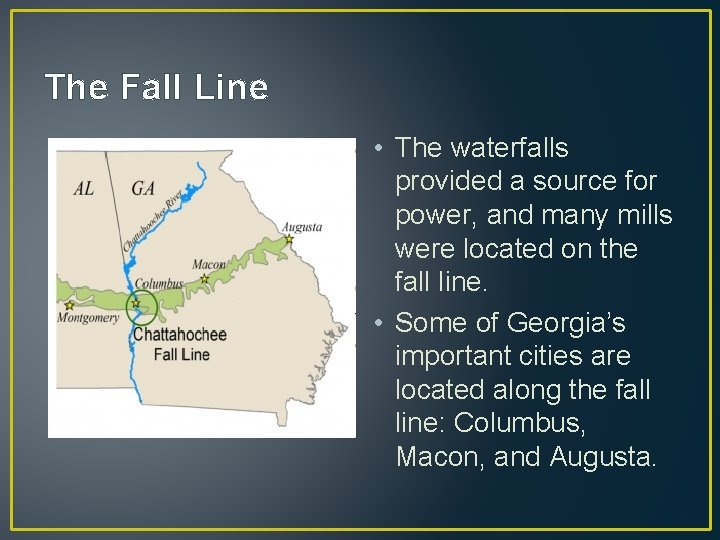
The Fall Line • The waterfalls provided a source for power, and many mills were located on the fall line. • Some of Georgia’s important cities are located along the fall line: Columbus, Macon, and Augusta.
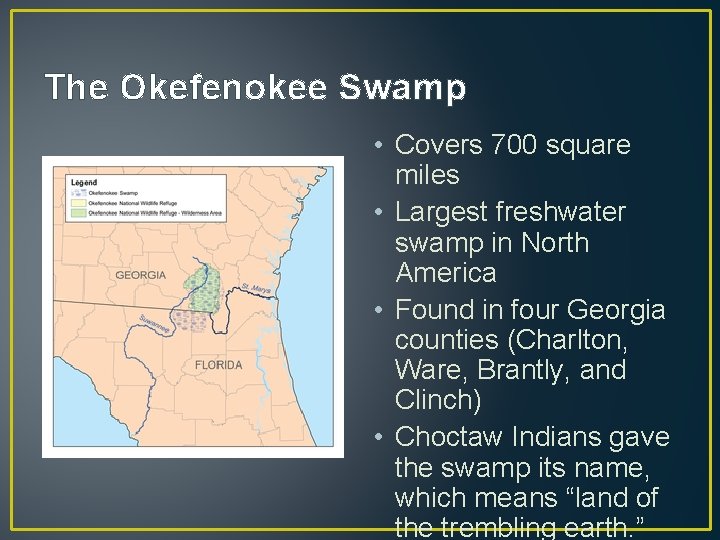
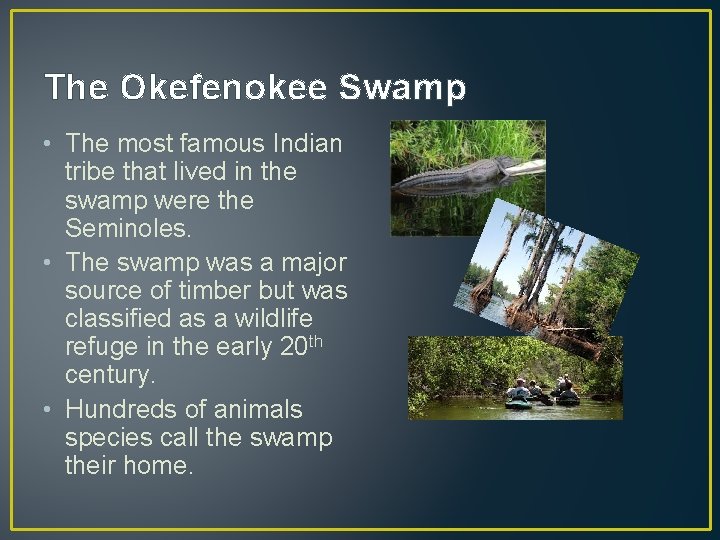
The Okefenokee Swamp • Covers 700 square miles • Largest freshwater swamp in North America • Found in four Georgia counties (Charlton, Ware, Brantly, and Clinch) • Choctaw Indians gave the swamp its name, which means “land of the trembling earth. ”
The Okefenokee Swamp • The most famous Indian tribe that lived in the swamp were the Seminoles. • The swamp was a major source of timber but was classified as a wildlife refuge in the early 20 th century. • Hundreds of animals species call the swamp their home.
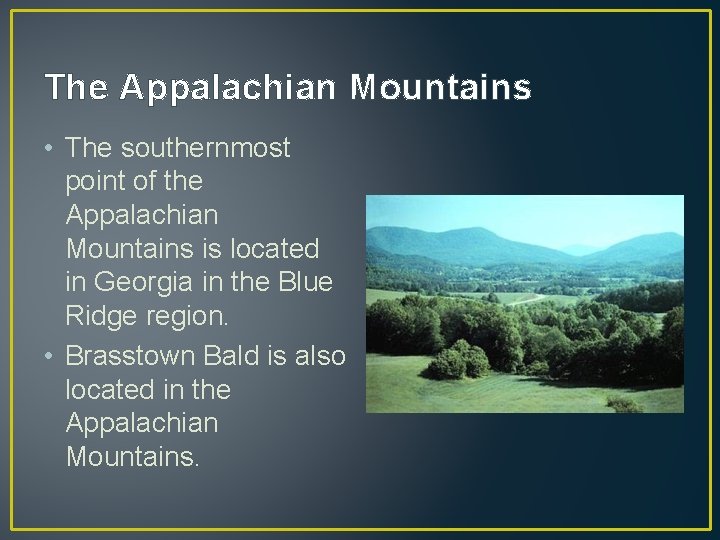
The Appalachian Mountains • The southernmost point of the Appalachian Mountains is located in Georgia in the Blue Ridge region. • Brasstown Bald is also located in the Appalachian Mountains.
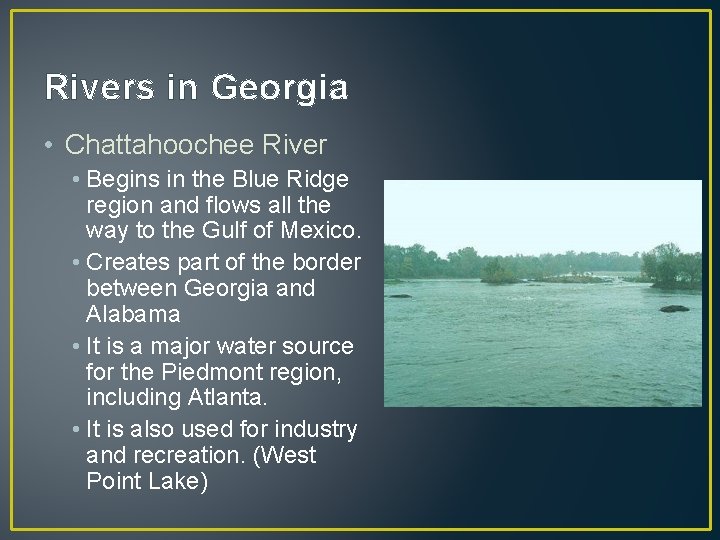
Rivers in Georgia • Chattahoochee River • Begins in the Blue Ridge region and flows all the way to the Gulf of Mexico. • Creates part of the border between Georgia and Alabama • It is a major water source for the Piedmont region, including Atlanta. • It is also used for industry and recreation. (West Point Lake)
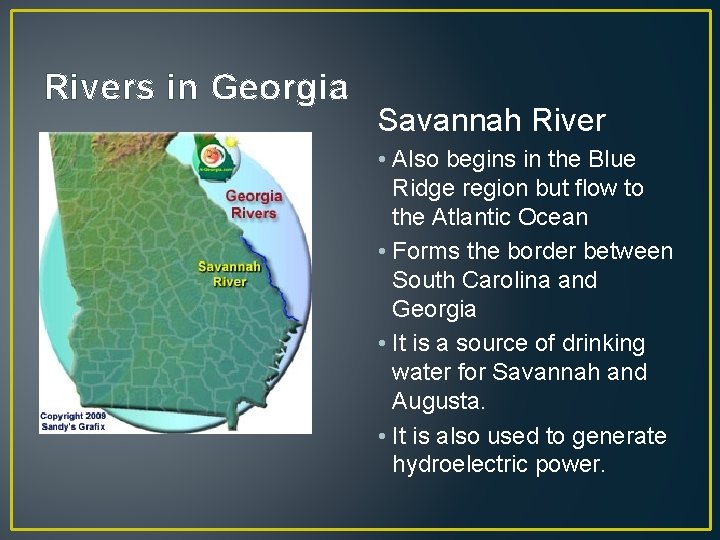
Rivers in Georgia Savannah River • Also begins in the Blue Ridge region but flow to the Atlantic Ocean • Forms the border between South Carolina and Georgia • It is a source of drinking water for Savannah and Augusta. • It is also used to generate hydroelectric power.
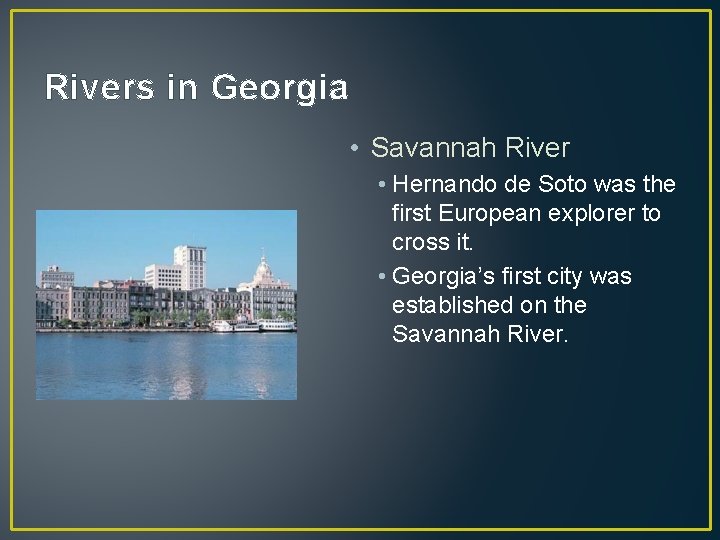
Rivers in Georgia • Savannah River • Hernando de Soto was the first European explorer to cross it. • Georgia’s first city was established on the Savannah River.
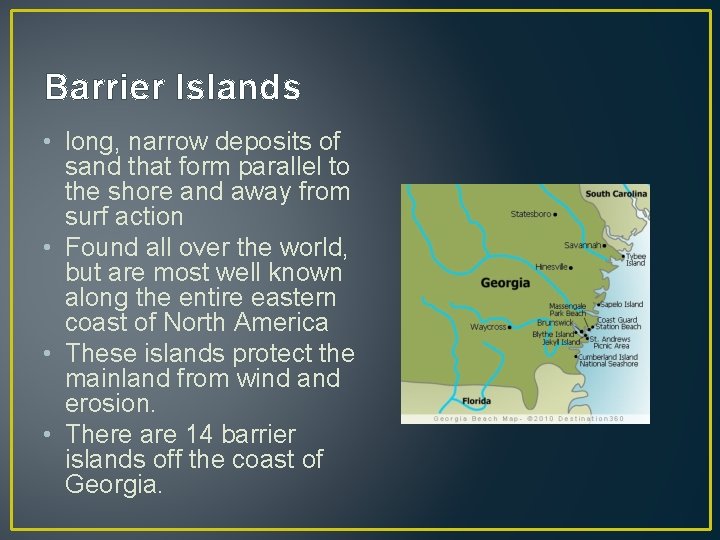
Barrier Islands • long, narrow deposits of sand that form parallel to the shore and away from surf action • Found all over the world, but are most well known along the entire eastern coast of North America • These islands protect the mainland from wind and erosion. • There are 14 barrier islands off the coast of Georgia.
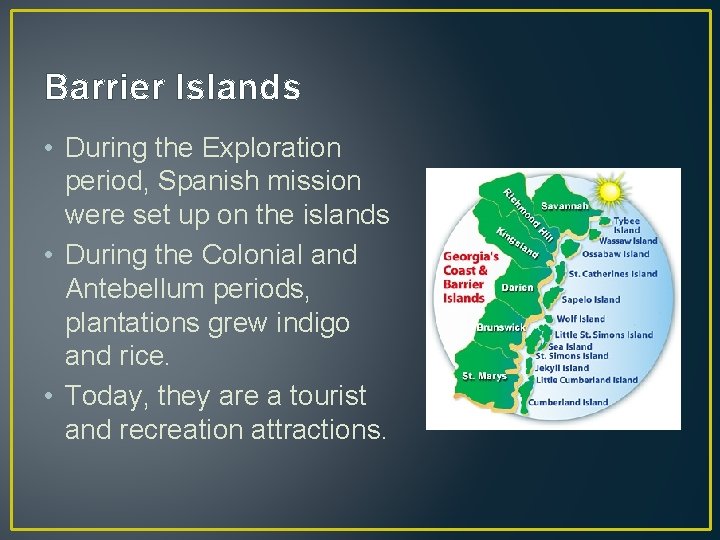
Barrier Islands • During the Exploration period, Spanish mission were set up on the islands • During the Colonial and Antebellum periods, plantations grew indigo and rice. • Today, they are a tourist and recreation attractions.