
Key Pediatric Differences in the Respiratory System Lack
- Slides: 40
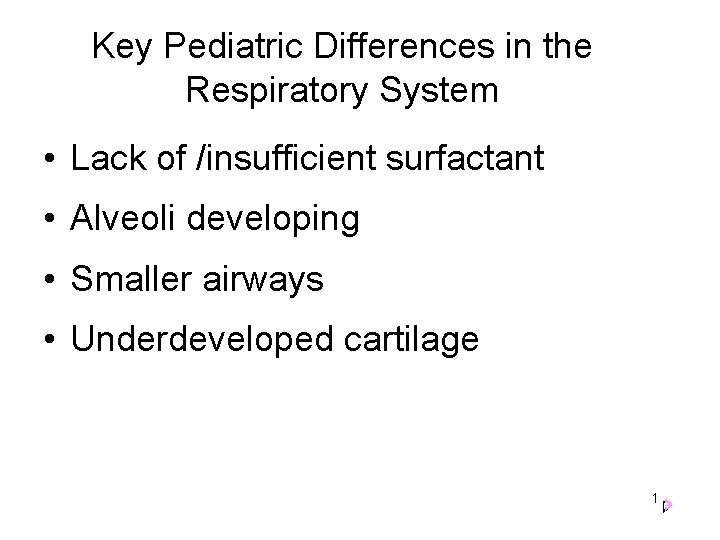
Key Pediatric Differences in the Respiratory System • Lack of /insufficient surfactant • Alveoli developing • Smaller airways • Underdeveloped cartilage 1 F
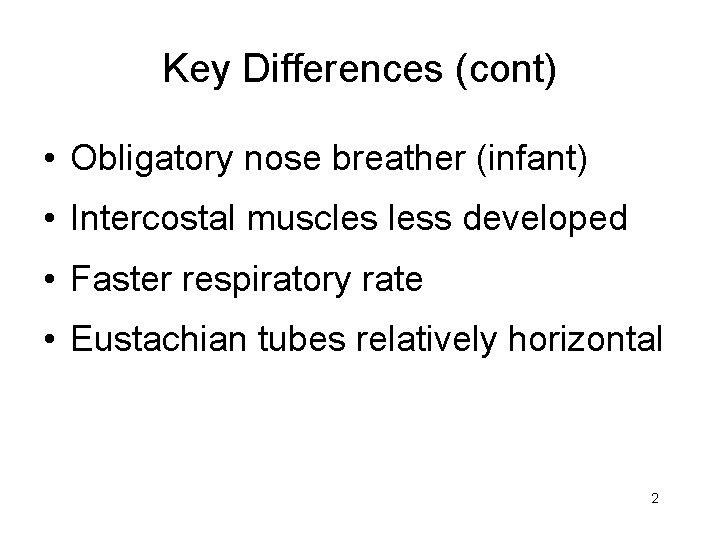
Key Differences (cont) • Obligatory nose breather (infant) • Intercostal muscles less developed • Faster respiratory rate • Eustachian tubes relatively horizontal 2
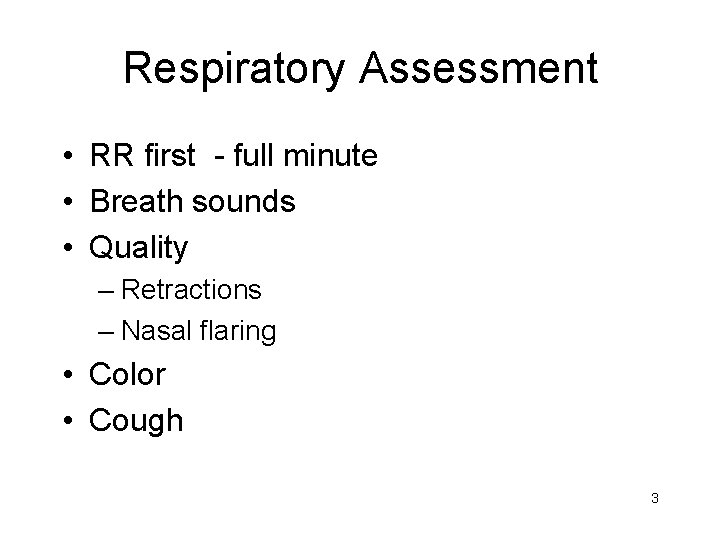
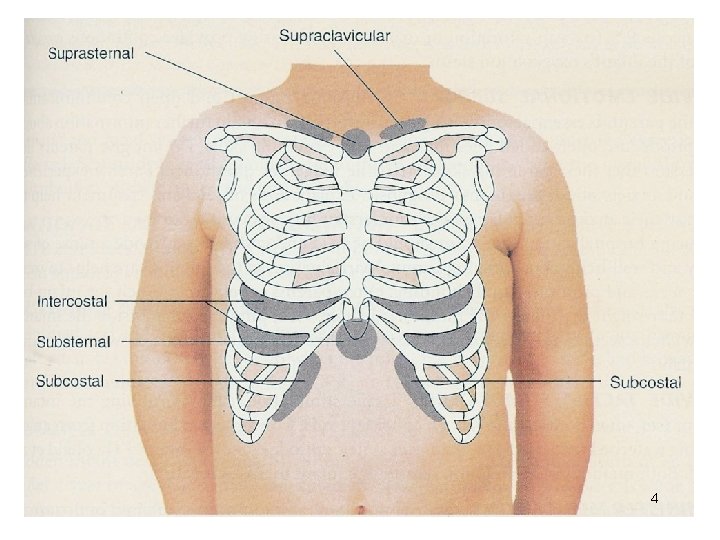
Respiratory Assessment • RR first - full minute • Breath sounds • Quality – Retractions – Nasal flaring • Color • Cough 3
4
Signs Respiratory Distress • • Cough Hoarseness Grunting Stridor Wheezing Nasal flaring Retractions • • Vomiting Diarrhea Anorexia Tachypnea Tachycardia Restlessness Cyanosis 5
Potential Nursing Diagnoses • • • Ineffective Airway Clearance Ineffective Breathing Patterns Impaired Gas Exchange Anxiety Activity Intolerance Risk for FVD Altered nutrition Altered comfort Knowledge deficit Ineffective coping – individual or family 6
Apnea • • Periodic breathing of newborn True apnea ALTE Parental teaching 7
Sudden Infant Death Syndrome • The sudden and unexplained death of an infant less than 1 yr old. • Usually occurs during sleep. • “Back to Sleep” campaign • AAP revised SIDS guidelines (Pediatrics, Vol. 116, No. 5, Nov. 2005) 8
Sepsis • Def: a systemic bacterial infection spread through bloodstream • Neonates high risk: unable to localize infection • High Risk: – Immunocompromised – Skin defects/injuries – Invasive devices 9
Assessment: Sepsis • Know high risk children & monitor – Hypo or hyperthermia – Lethargy; poor feeding – Jaundice, hepatosplenomegaly – Respiratory distress – Vomiting – Hyper or hypoglycemia 10
Otitis Media Description: inflammation middle ear – Acute otitis media – Otitis media w/effusion • Bacterial 11
Risk Factors • • < 3 years Bottle-fed babies Passive smoke Group child care 12
Acute Otitis Media • Definition – Inflammation of middle ear – Rapid onset – Fever – Otalgia • Other Clinical Manifestations: 13 F
Treatment: AOM • Primary Prevention – pneumococcal vaccine – No passive smoke – Hold bottle fed babies upright – handwashing 14
AOM: Secondary Prevention • Pain relief • Rest • Antibiotics after 48 -72 hrs in selected patients 6 mo to 2 yrs. PEDIATRICS Vol. 113 No. 5 May 2004, pp. 14511465 15
Nursing Dx: AOM • Altered comfort r/t inflammation & pressure • Knowledge deficit r/t incomplete understanding of disease • Risk for Fluid Volume Deficit 16
Otitis Media w/Effusion • Definition – Fluid in middle ear – No s/s acute infection • Clinical Manifestations: 17 F
Treatment: OME • Antibiotics if > 3 mo. • Assess for hearing loss *** • Myringotomy w/placement tympanostomy tubes 18
Pharyngitis • 80 -90% sore throats viral in origin – Gradual onset • Bacterial – Group A beta-hemolytic strep greatest concern. 19 F
Therapeutic Management • • Primarily symptomatic Pain relief Rest Abx only if positive bacterial culture 20
Tonsillectomy/adenoidectomy • Most common reason: OSA • Monitor for post-op bleeding – ***Excessive swallowing – Elevated pulse, decreased BP – Evidence of fresh bleeding – Restlessness • Pain meds – teach parents • Fluids 21
Croup • Broad classification of upper airway illness • Group of conditions with: – Inspiratory stridor – Harsh cough – Hoarseness – Degrees of respiratory distress • 4 different types Fig. 45 -UF 03, p. 1209 22 F
Laryngotracheobronchitis • Def: inflammatory condition of larynx, trachea, bronchi • viral • Gradual onset • harsh cough & insp. stridor • Very important to differentiate from epiglottitis 23
LTB - treatment • • • Racemic epinephrine via neb Corticosteroids Tylenol Cool mist Oxygen Observe for sudden silent respiration 24
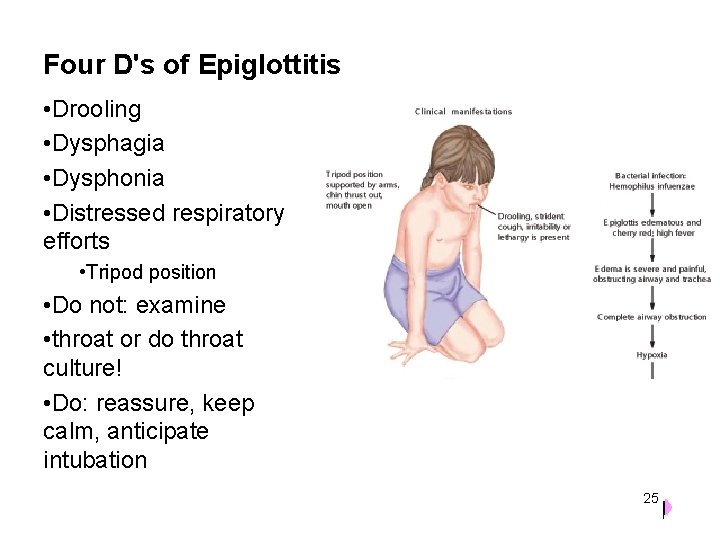
Four D's of Epiglottitis • Drooling • Dysphagia • Dysphonia • Distressed respiratory efforts • Tripod position • Do not: examine • throat or do throat culture! • Do: reassure, keep calm, anticipate intubation 25 F
Brochiolitis • Lower airway • 50% RSV (respiratory syncytial virus) – Contact and droplet precautions – Mycoplasma, parainfluenza, adenovirus • Usually young infants who need hospitalization. 26
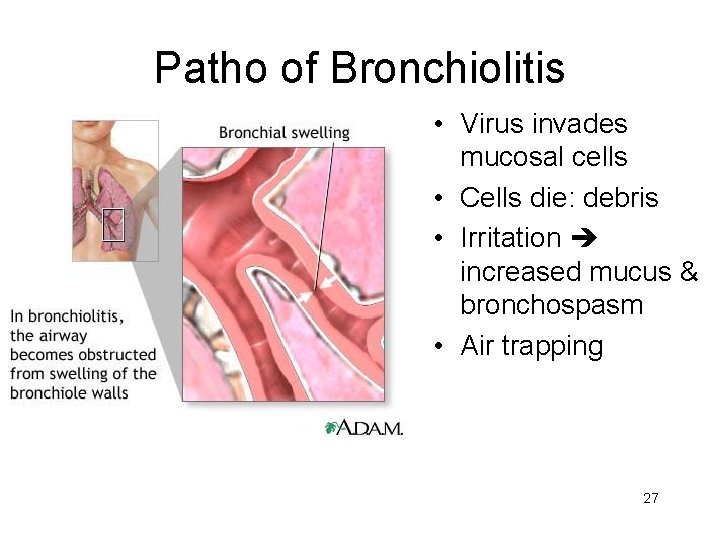
Patho of Bronchiolitis • Virus invades mucosal cells • Cells die: debris • Irritation increased mucus & bronchospasm • Air trapping 27
Bronchiolitis Clinical Manifestation • • • Tachypnea Wheezing, crackles, or rhonchi Retractions Fever- maybe Difficulty feeding Cyanosis 28
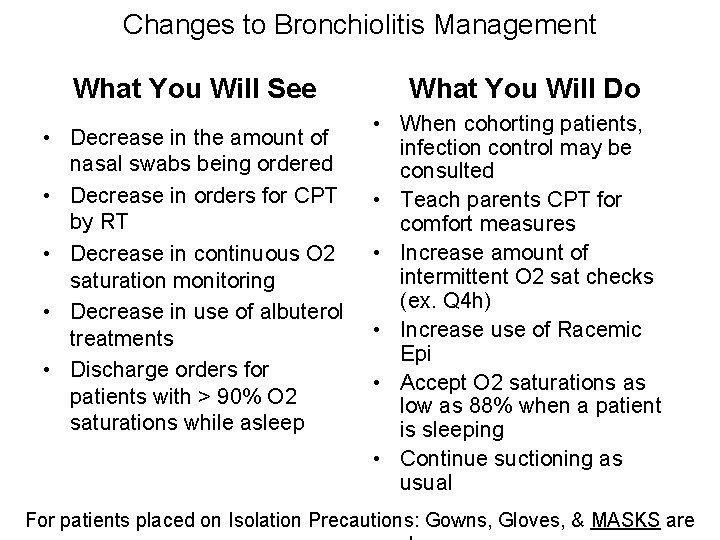
Changes to Bronchiolitis Management What You Will See • Decrease in the amount of nasal swabs being ordered • Decrease in orders for CPT by RT • Decrease in continuous O 2 saturation monitoring • Decrease in use of albuterol treatments • Discharge orders for patients with > 90% O 2 saturations while asleep What You Will Do • When cohorting patients, infection control may be consulted • Teach parents CPT for comfort measures • Increase amount of intermittent O 2 sat checks (ex. Q 4 h) • Increase use of Racemic Epi • Accept O 2 saturations as low as 88% when a patient is sleeping • Continue suctioning as usual For patients placed on Isolation Precautions: Gowns, Gloves, & MASKS are
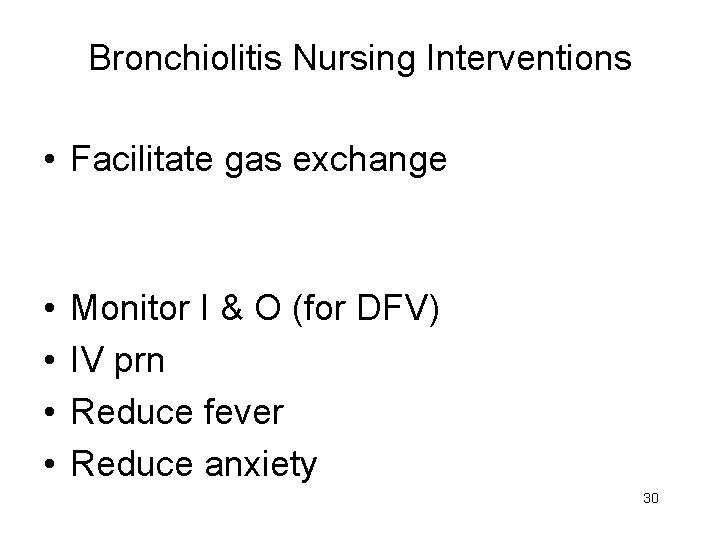
Bronchiolitis Nursing Interventions • Facilitate gas exchange • • Monitor I & O (for DFV) IV prn Reduce fever Reduce anxiety 30
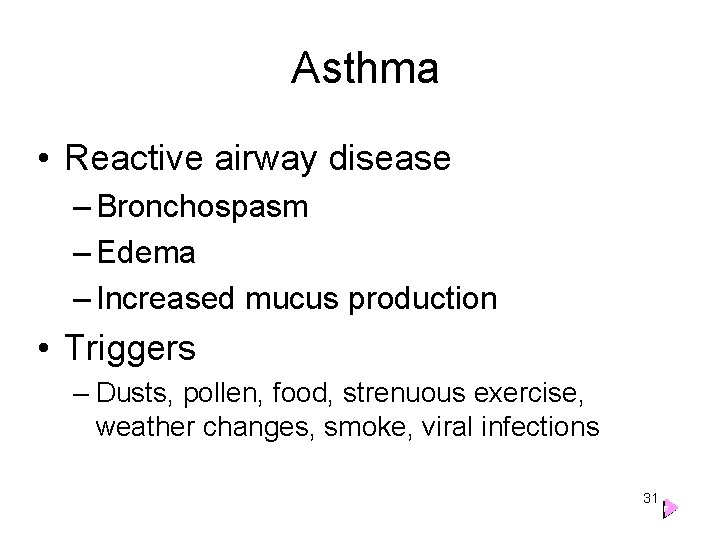
Asthma • Reactive airway disease – Bronchospasm – Edema – Increased mucus production • Triggers – Dusts, pollen, food, strenuous exercise, weather changes, smoke, viral infections 31 F
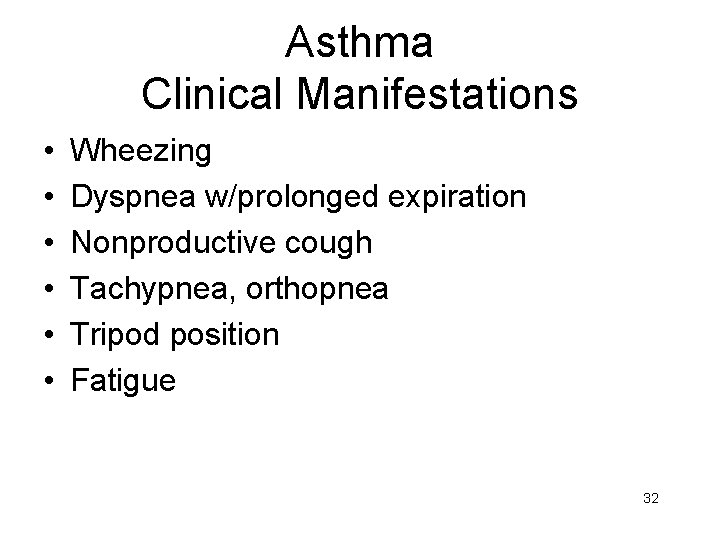
Asthma Clinical Manifestations • • • Wheezing Dyspnea w/prolonged expiration Nonproductive cough Tachypnea, orthopnea Tripod position Fatigue 32
Asthma treatment • • Short-acting bronchodilator Mast cell inhibitor Systemic corticosteroids Inhaled steroids Leukotriene receptor antagonist Peak expiratory flow rate Immunizations 33
Cystic Fibrosis • Mechanical obstruction r/t increased viscosity of mucous secretions. • Autosomal recessive disorder 34
Cystic Fibrosis: A Multisystem Disorder • • • Respiratory system Digestive system Integumentary system Reproductive system Growth and development 35 F
Assessment findings - CF • • Salty-tasting skin Profuse sweating Frequent infections Dry, non-productive cough Increased amt, thickness of secretions Wheezing Cyanosis 36
Assessment findings – CF (cont) • • Digital clubbing Increased A-P diameter of chest Steatorrhea Thin extremities Muscle wasting Failure to thrive Meconium ileus 37
Cystic Fibrosis: Interventions strengthen lines of resistance • Facilitate airway clearance and gas exchange. – CPT – Pulmozyme • Prevent infection – Immunizations – TOBI – Azithromycin • Promote increased exercise tolerance. 38
CF: Interventions Provide optimal nutrition for growth. • High-calorie, high protein • Pancreatic enzymes with every meal – Creon, Pancrase – Dosage adjusted to stool formation 39
CF interventions (cont) Strengthen FLD/extrapersonal environment – Child's and family's emotional needs – Prepare the family for home care 40