
Key Mechanisms of Immunological ToleranceCentral and Peripheral Tolerance
- Slides: 4
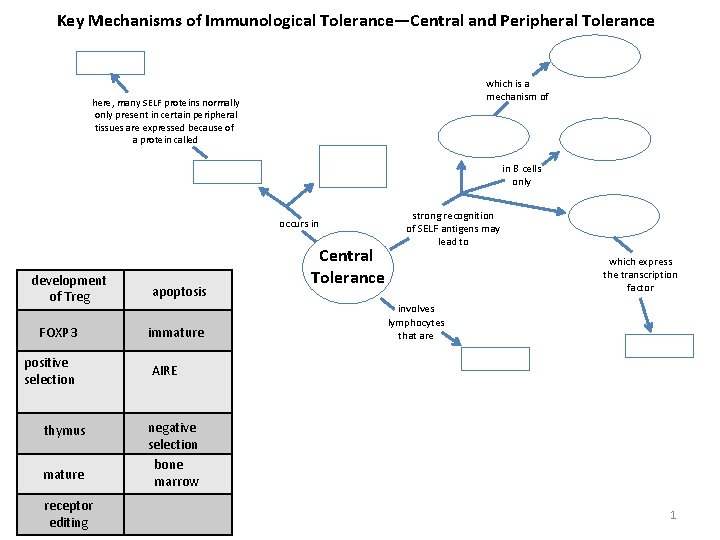
Key Mechanisms of Immunological Tolerance—Central and Peripheral Tolerance which is a mechanism of here, many SELF proteins normally only present in certain peripheral tissues are expressed because of a protein called in B cells only occurs in development of Treg FOXP 3 positive selection thymus mature receptor editing apoptosis immature Central Tolerance strong recognition of SELF antigens may lead to which express the transcription factor involves lymphocytes that are AIRE negative selection bone marrow 1
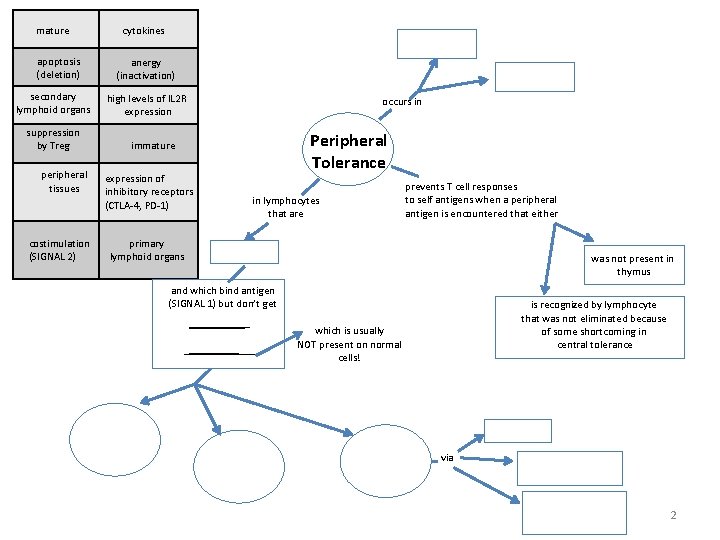
mature apoptosis (deletion) secondary lymphoid organs suppression by Treg peripheral tissues costimulation (SIGNAL 2) cytokines anergy (inactivation) high levels of IL 2 R expression occurs in Peripheral Tolerance immature expression of inhibitory receptors (CTLA-4, PD-1) in lymphocytes that are prevents T cell responses to self antigens when a peripheral antigen is encountered that either primary lymphoid organs was not present in thymus and which bind antigen (SIGNAL 1) but don’t get _____________ is recognized by lymphocyte that was not eliminated because of some shortcoming in central tolerance which is usually NOT present on normal cells! via 2
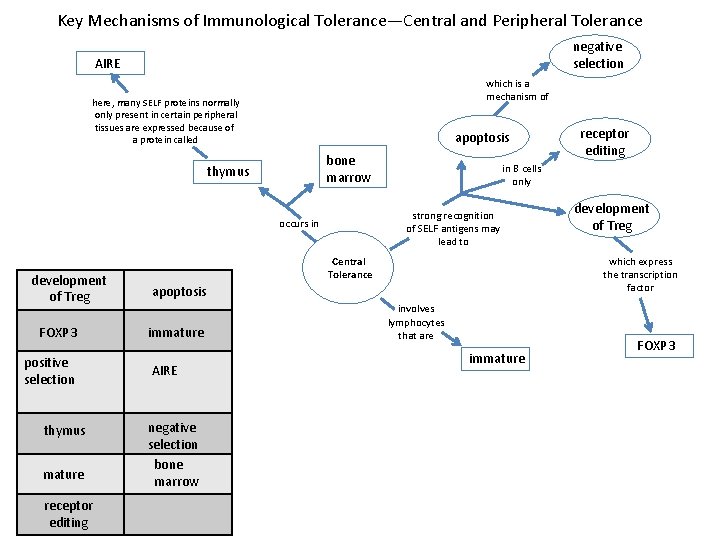
Key Mechanisms of Immunological Tolerance—Central and Peripheral Tolerance negative selection AIRE which is a mechanism of here, many SELF proteins normally only present in certain peripheral tissues are expressed because of a protein called apoptosis bone marrow thymus development of Treg FOXP 3 positive selection thymus mature receptor editing in B cells only strong recognition of SELF antigens may lead to occurs in Central Tolerance AIRE negative selection bone marrow development of Treg which express the transcription factor apoptosis immature receptor editing involves lymphocytes that are immature FOXP 3
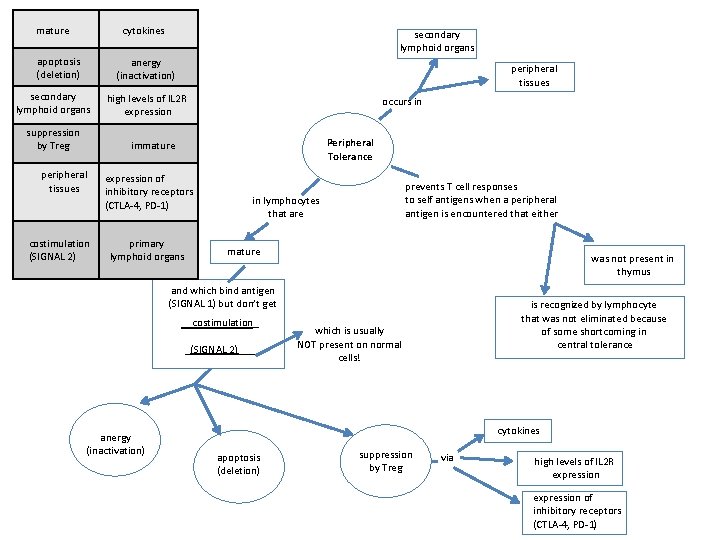
mature cytokines apoptosis (deletion) secondary lymphoid organs anergy (inactivation) secondary lymphoid organs suppression by Treg peripheral tissues high levels of IL 2 R expression occurs in Peripheral Tolerance immature peripheral tissues costimulation (SIGNAL 2) expression of inhibitory receptors (CTLA-4, PD-1) primary lymphoid organs prevents T cell responses to self antigens when a peripheral antigen is encountered that either in lymphocytes that are mature was not present in thymus and which bind antigen (SIGNAL 1) but don’t get __costimulation_ _(SIGNAL 2)___ anergy (inactivation) is recognized by lymphocyte that was not eliminated because of some shortcoming in central tolerance which is usually NOT present on normal cells! cytokines apoptosis (deletion) suppression by Treg via high levels of IL 2 R expression of inhibitory receptors (CTLA-4, PD-1)