
KEY ISSUE 4 Why are Situation and Site




- Slides: 50
KEY ISSUE 4 Why are Situation and Site Factors Changing?
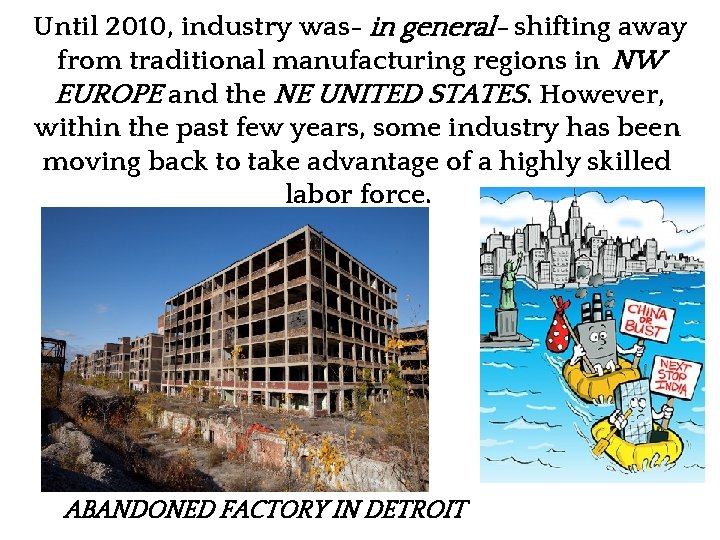
Until 2010, industry was- in general- shifting away from traditional manufacturing regions in NW EUROPE and the NE UNITED STATES. However, within the past few years, some industry has been moving back to take advantage of a highly skilled labor force. ABANDONED FACTORY IN DETROIT
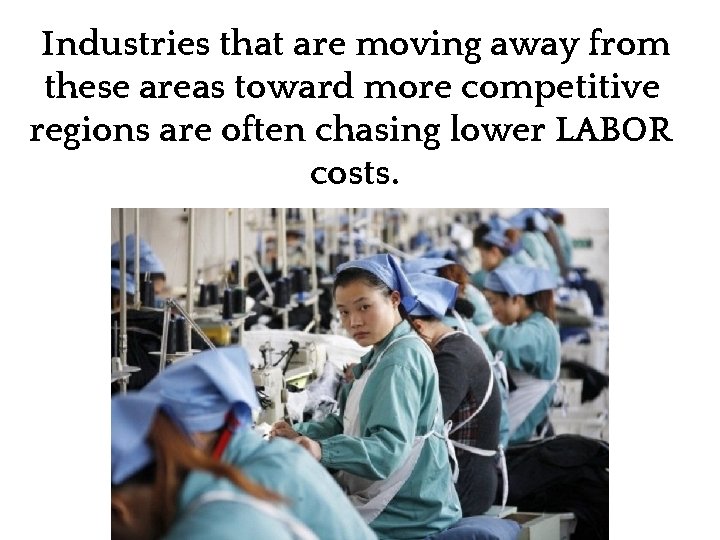
Industries that are moving away from these areas toward more competitive regions are often chasing lower LABOR costs.
Manufacturing shift in the UNITED STATES
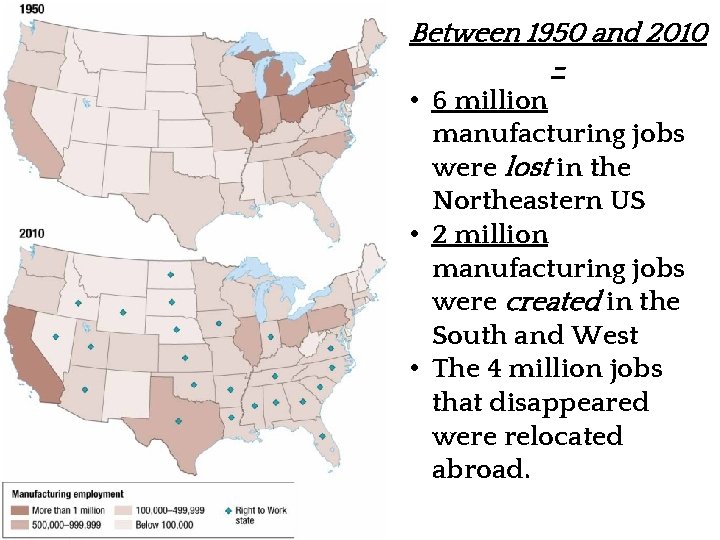
Between 1950 and 2010 • 6 million manufacturing jobs were lost in the Northeastern US • 2 million manufacturing jobs were created in the South and West • The 4 million jobs that disappeared were relocated abroad.
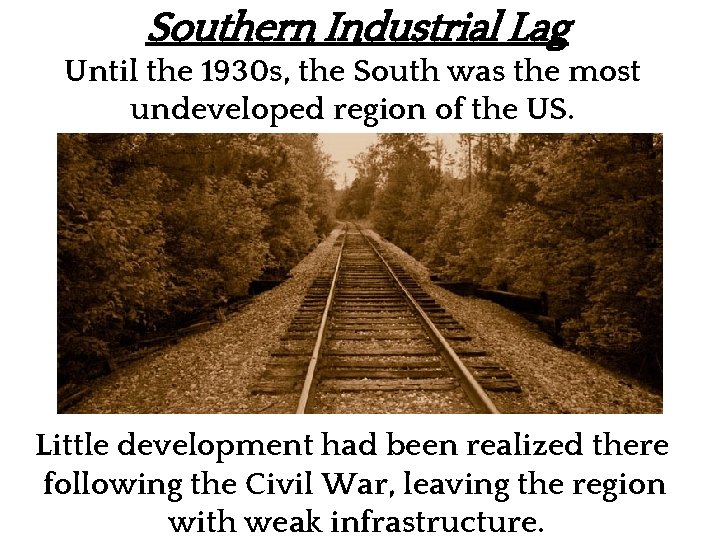
Southern Industrial Lag Until the 1930 s, the South was the most undeveloped region of the US. Little development had been realized there following the Civil War, leaving the region with weak infrastructure.
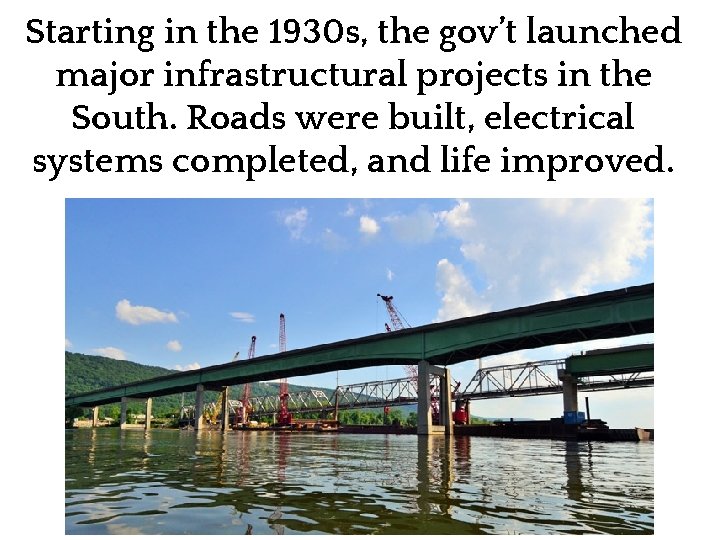
Starting in the 1930 s, the gov’t launched major infrastructural projects in the South. Roads were built, electrical systems completed, and life improved.
Though development finally arrived, by one metric the South lagged far behind the rest of the country- WAGES. Rooted in a traditional and agricultural culture, incomes had not risen in the South as they had elsewhere.
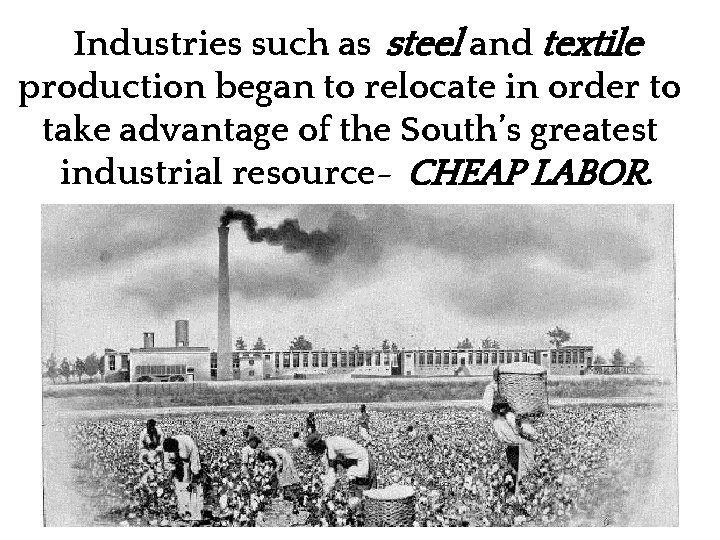
Industries such as steel and textile production began to relocate in order to take advantage of the South’s greatest industrial resource- CHEAP LABOR.
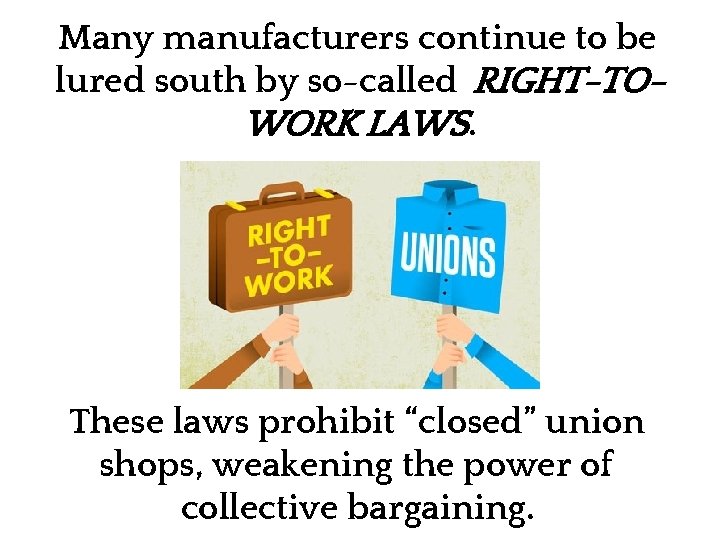
Many manufacturers continue to be lured south by so-called RIGHT-TOWORK LAWS. These laws prohibit “closed” union shops, weakening the power of collective bargaining.
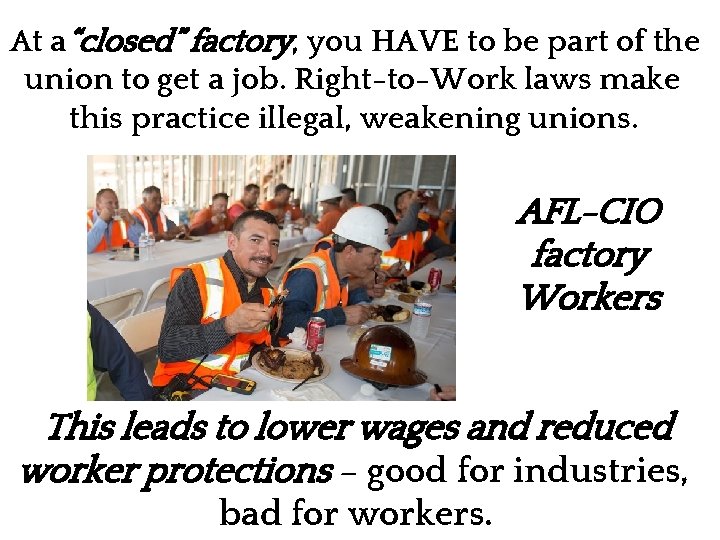
At a“closed” factory, you HAVE to be part of the union to get a job. Right-to-Work laws make this practice illegal, weakening unions. AFL-CIO factory Workers This leads to lower wages and reduced worker protections – good for industries, bad for workers.
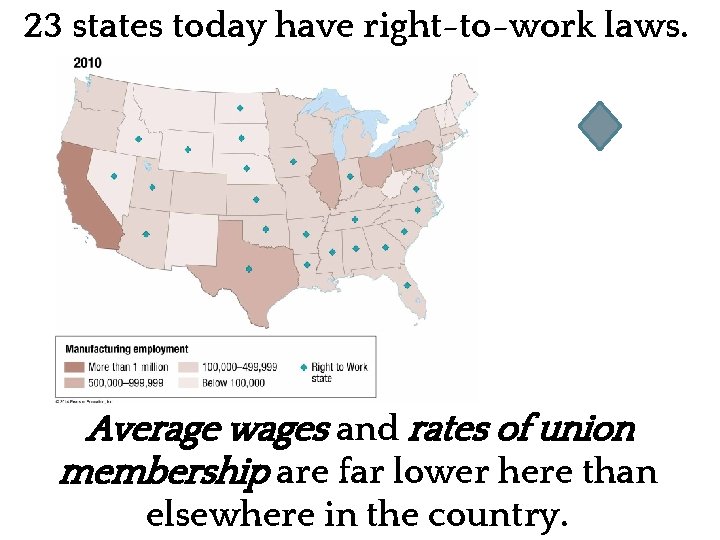
23 states today have right-to-work laws. = Rightto-Work state Average wages and rates of union membership are far lower here than elsewhere in the country.
The evolution of the TEXTILE INDUSTRY provides an example of companies chasing cheap labor.
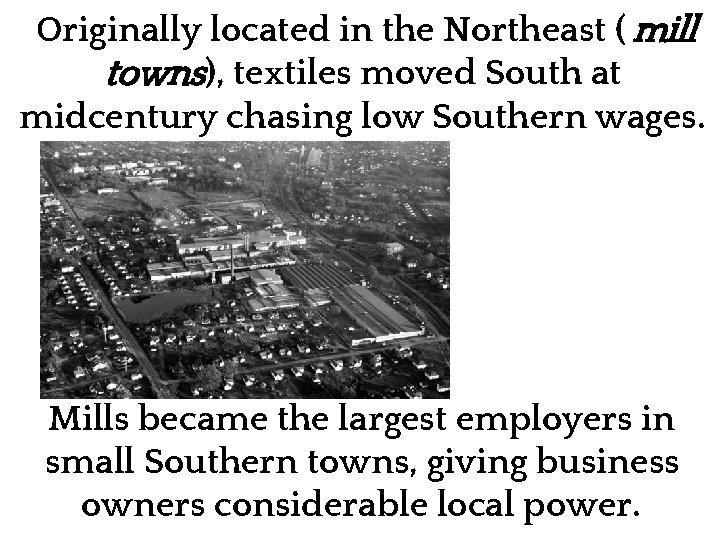
Originally located in the Northeast ( mill towns), textiles moved South at midcentury chasing low Southern wages. Erwin cotton mill, Erwin, NCsurrounded by factory-owned worker houses. Mills became the largest employers in small Southern towns, giving business owners considerable local power.
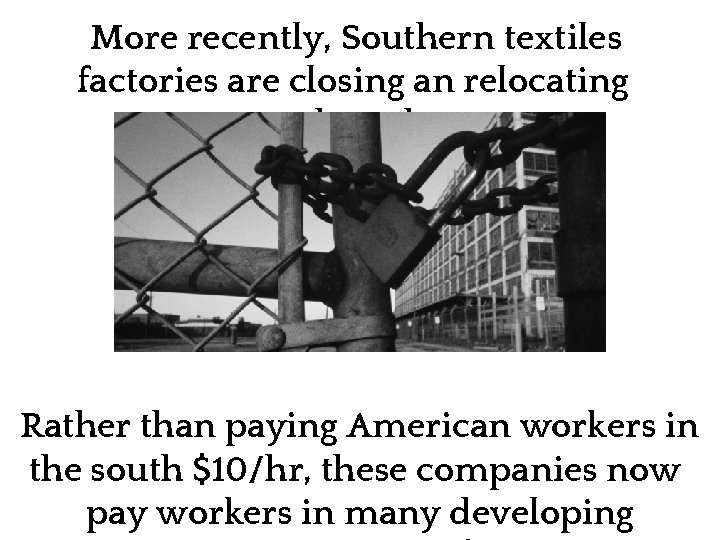
More recently, Southern textiles factories are closing an relocating abroad. Rather than paying American workers in the south $10/hr, these companies now pay workers in many developing
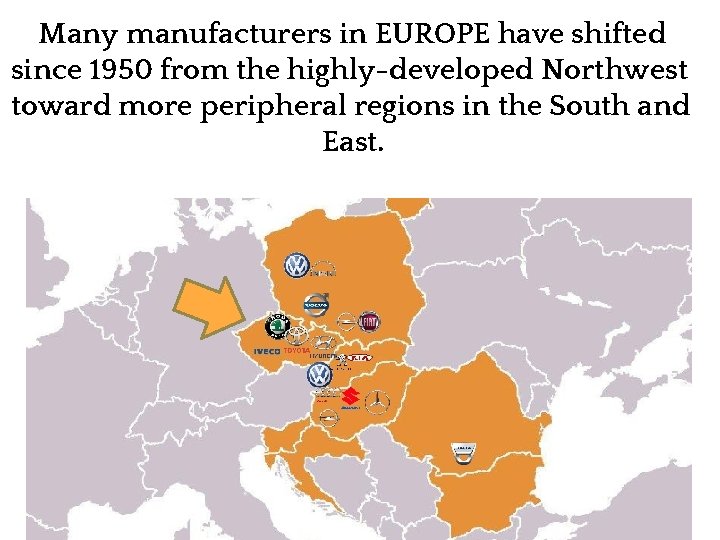
Many manufacturers in EUROPE have shifted since 1950 from the highly-developed Northwest toward more peripheral regions in the South and East.
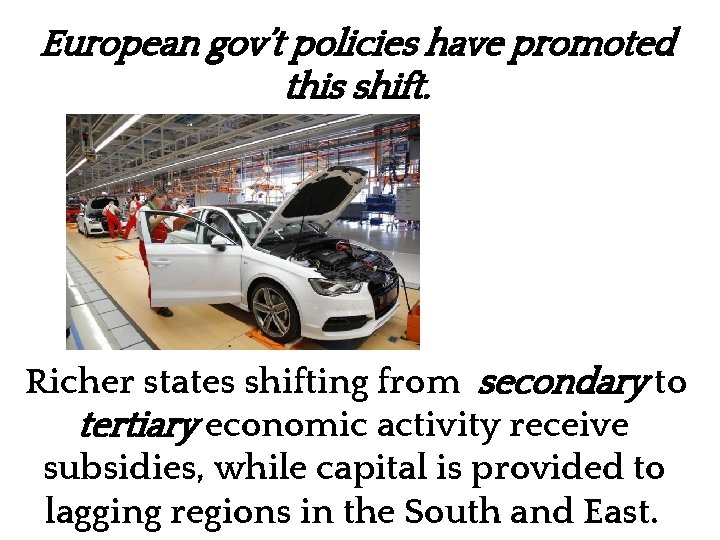
European gov’t policies have promoted this shift. Workers assemble Audis in Hungary Richer states shifting from secondary to tertiary economic activity receive subsidies, while capital is provided to lagging regions in the South and East.
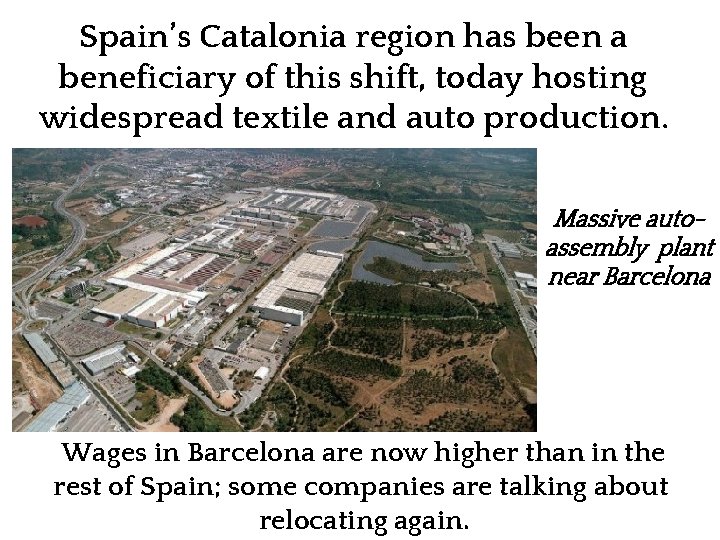
Spain’s Catalonia region has been a beneficiary of this shift, today hosting widespread textile and auto production. Massive autoassembly plant near Barcelona Wages in Barcelona are now higher than in the rest of Spain; some companies are talking about relocating again.
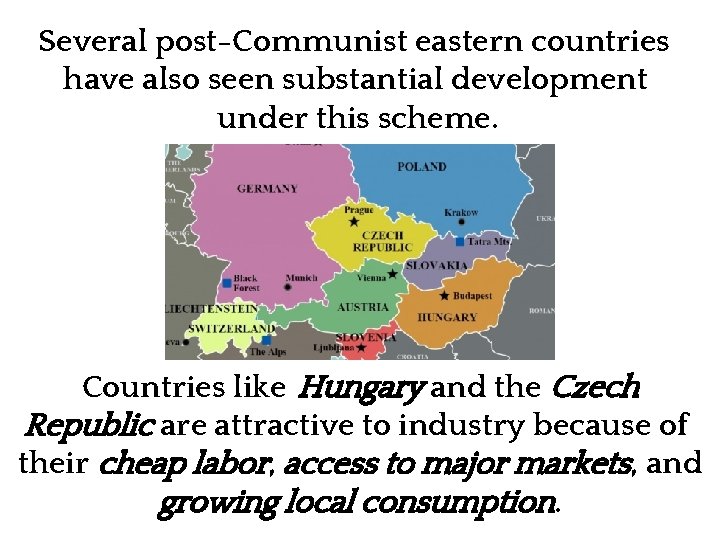
Several post-Communist eastern countries have also seen substantial development under this scheme. Countries like Hungary and the Czech Republic are attractive to industry because of their cheap labor, access to major markets, and growing local consumption.
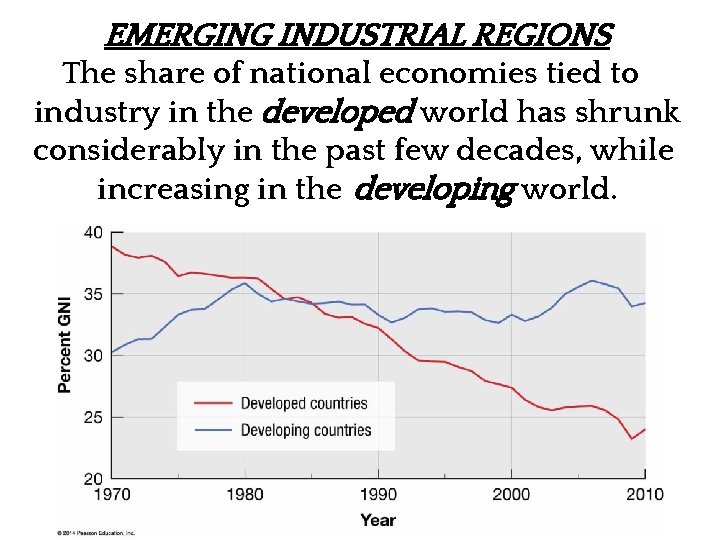
EMERGING INDUSTRIAL REGIONS The share of national economies tied to industry in the developed world has shrunk considerably in the past few decades, while increasing in the developing world.
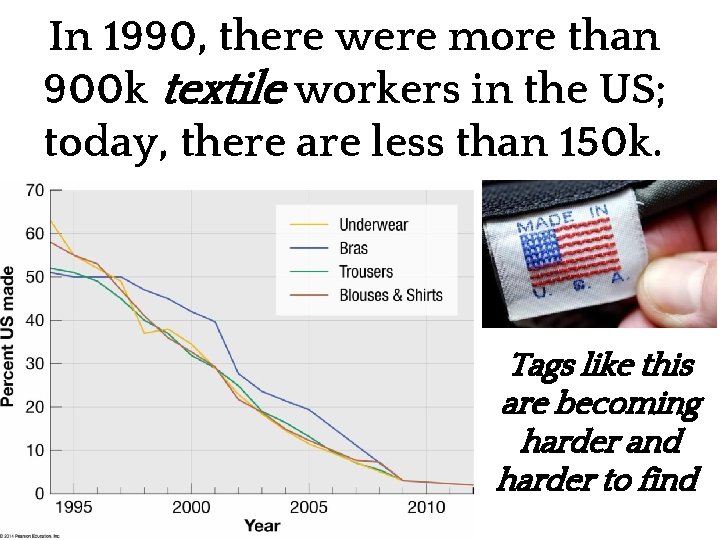
In 1990, there were more than 900 k textile workers in the US; today, there are less than 150 k. Tags like this are becoming harder and harder to find!
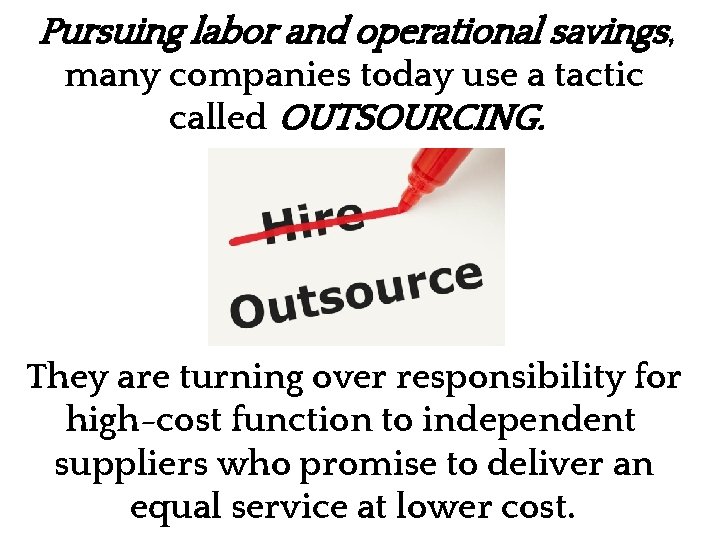
Pursuing labor and operational savings, many companies today use a tactic called OUTSOURCING. They are turning over responsibility for high-cost function to independent suppliers who promise to deliver an equal service at lower cost.
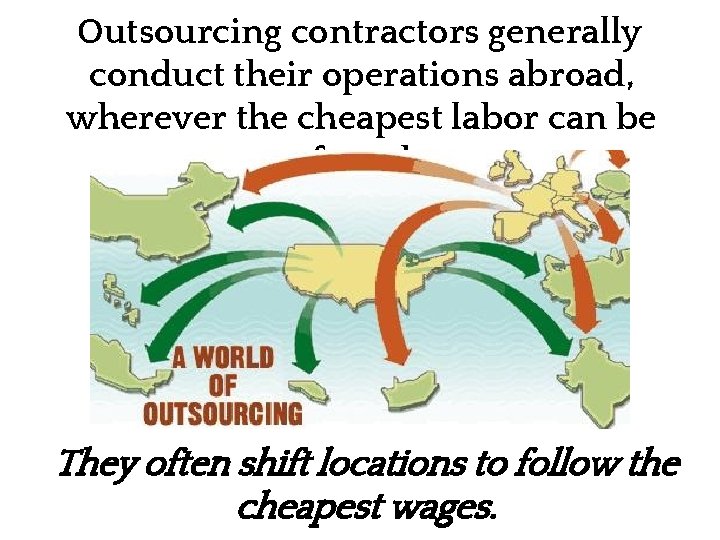
Outsourcing contractors generally conduct their operations abroad, wherever the cheapest labor can be found. They often shift locations to follow the cheapest wages.
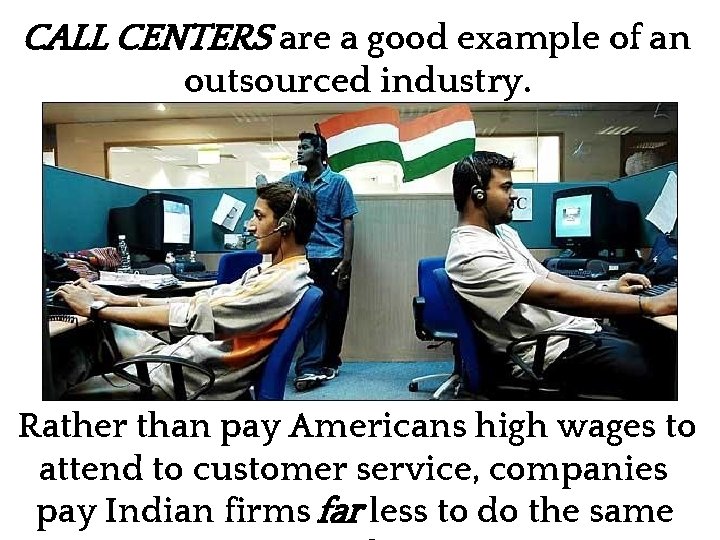
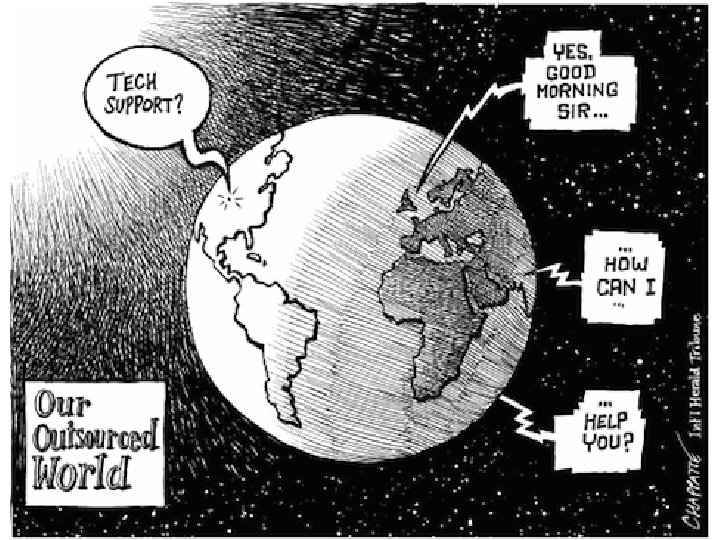
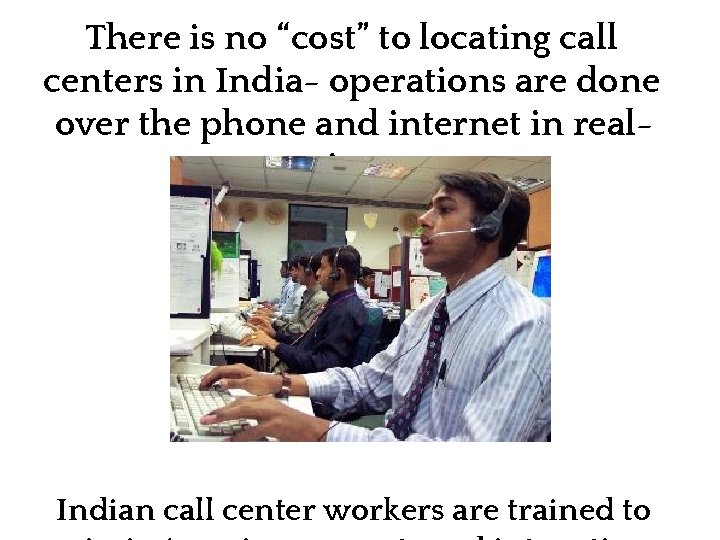
CALL CENTERS are a good example of an outsourced industry. Rather than pay Americans high wages to attend to customer service, companies pay Indian firms far less to do the same
There is no “cost” to locating call centers in India- operations are done over the phone and internet in realtime. Indian call center workers are trained to
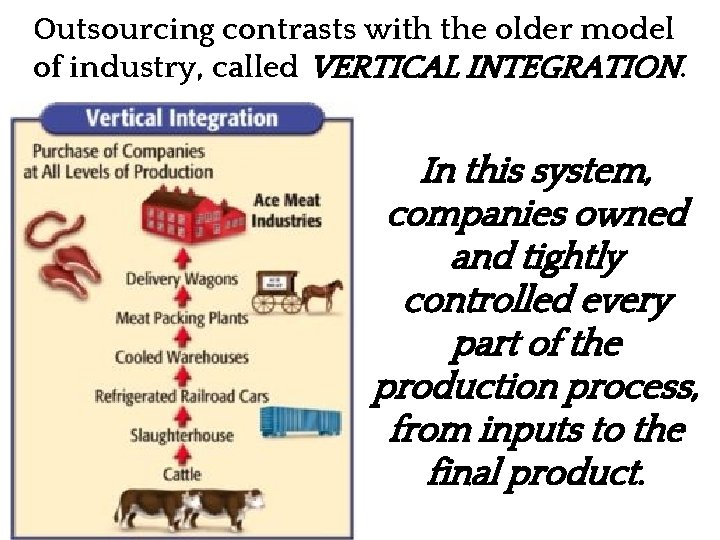
Outsourcing contrasts with the older model of industry, called VERTICAL INTEGRATION. In this system, companies owned and tightly controlled every part of the production process, from inputs to the final product.
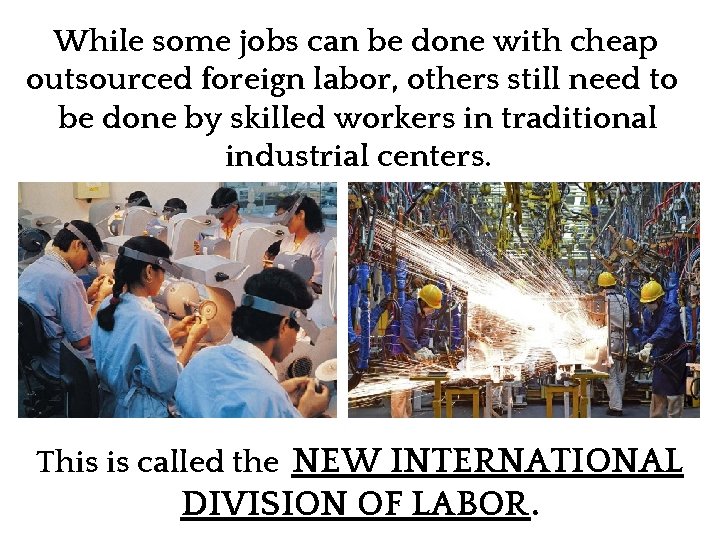
While some jobs can be done with cheap outsourced foreign labor, others still need to be done by skilled workers in traditional industrial centers. This is called the NEW INTERNATIONAL DIVISION OF LABOR.
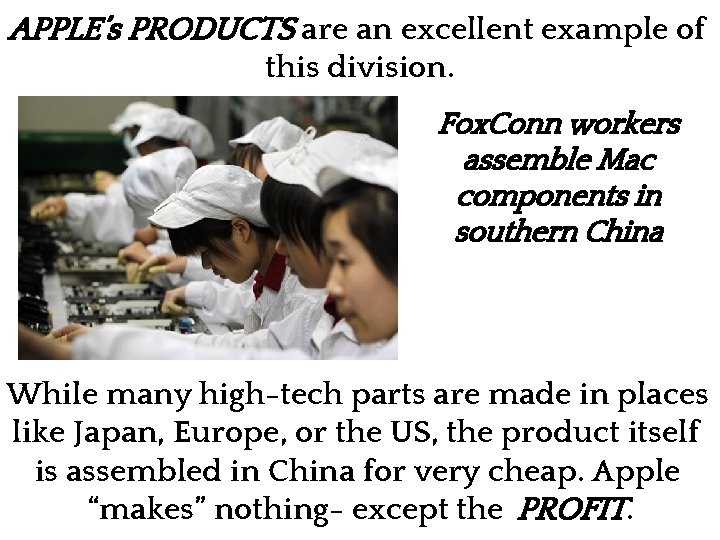
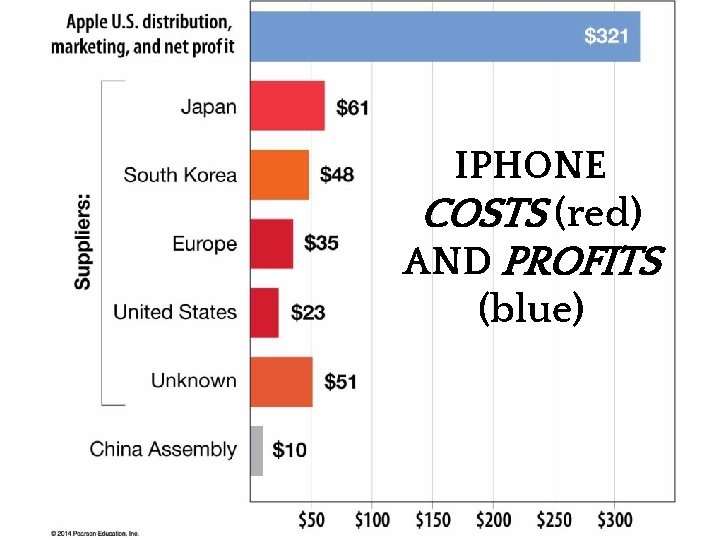
APPLE’s PRODUCTS are an excellent example of this division. Fox. Conn workers assemble Mac components in southern China While many high-tech parts are made in places like Japan, Europe, or the US, the product itself is assembled in China for very cheap. Apple “makes” nothing- except the PROFIT.
IPHONE COSTS (red) AND PROFITS (blue)
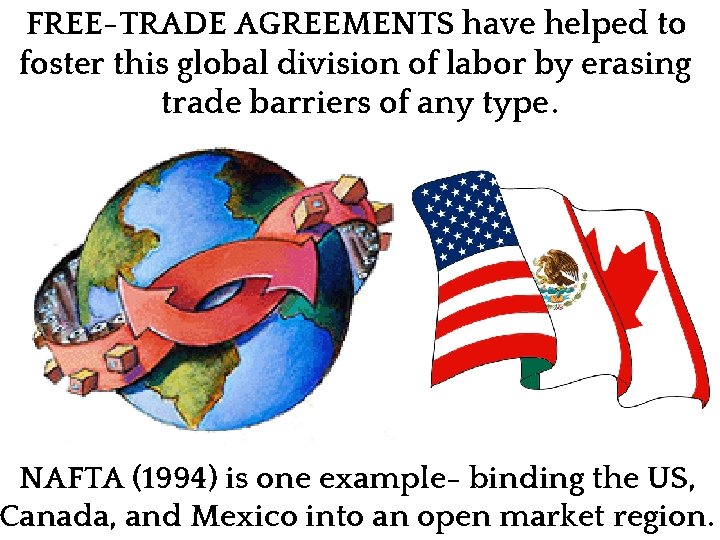
FREE-TRADE AGREEMENTS have helped to foster this global division of labor by erasing trade barriers of any type. NAFTA (1994) is one example- binding the US, Canada, and Mexico into an open market region.
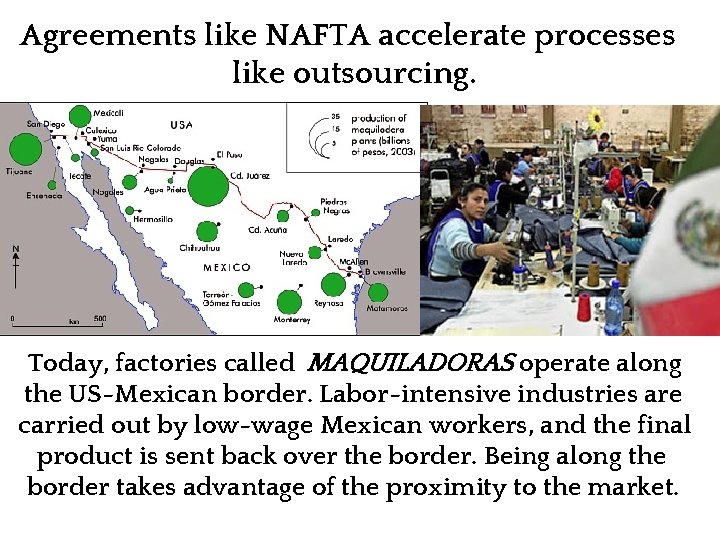
Agreements like NAFTA accelerate processes like outsourcing. Today, factories called MAQUILADORAS operate along the US-Mexican border. Labor-intensive industries are carried out by low-wage Mexican workers, and the final product is sent back over the border. Being along the border takes advantage of the proximity to the market.
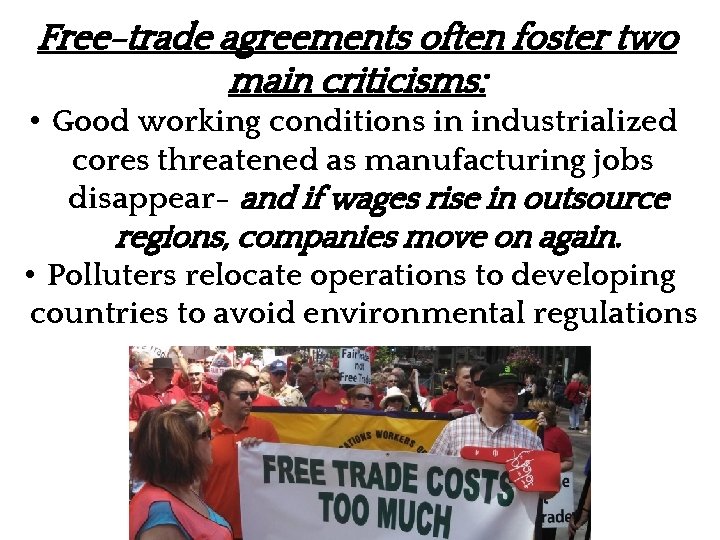
Free-trade agreements often foster two main criticisms: • Good working conditions in industrialized cores threatened as manufacturing jobs disappear- and if wages rise in outsource regions, companies move on again. • Polluters relocate operations to developing countries to avoid environmental regulations
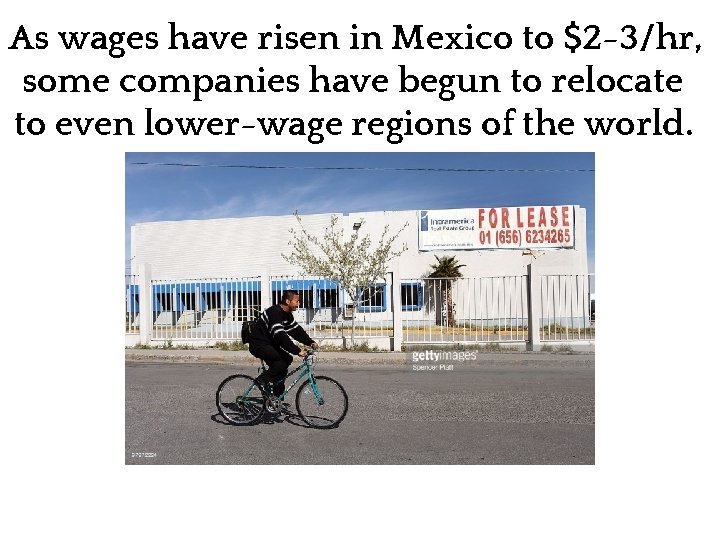
As wages have risen in Mexico to $2 -3/hr, some companies have begun to relocate to even lower-wage regions of the world. Closed Maquiladora
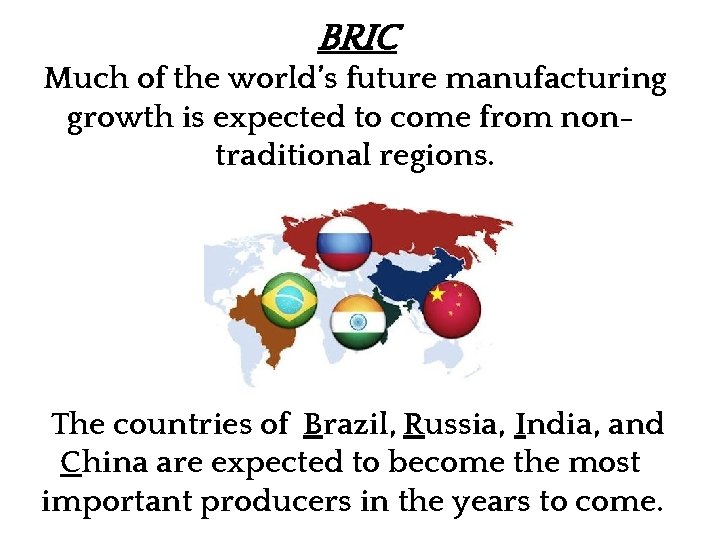
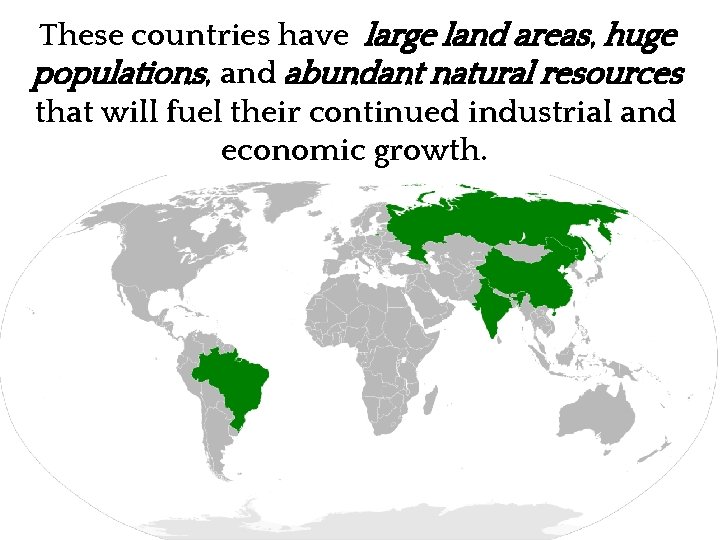
BRIC Much of the world’s future manufacturing growth is expected to come from nontraditional regions. The countries of Brazil, Russia, India, and China are expected to become the most important producers in the years to come.
These countries have large land areas, huge populations, and abundant natural resources that will fuel their continued industrial and economic growth.
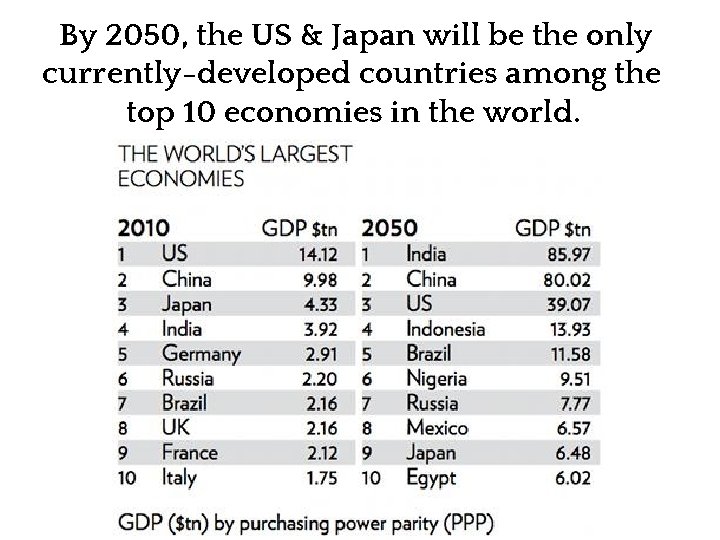
By 2050, the US & Japan will be the only currently-developed countries among the top 10 economies in the world.
In 2010, South Africa was invited to join this collection – changing the acronym to
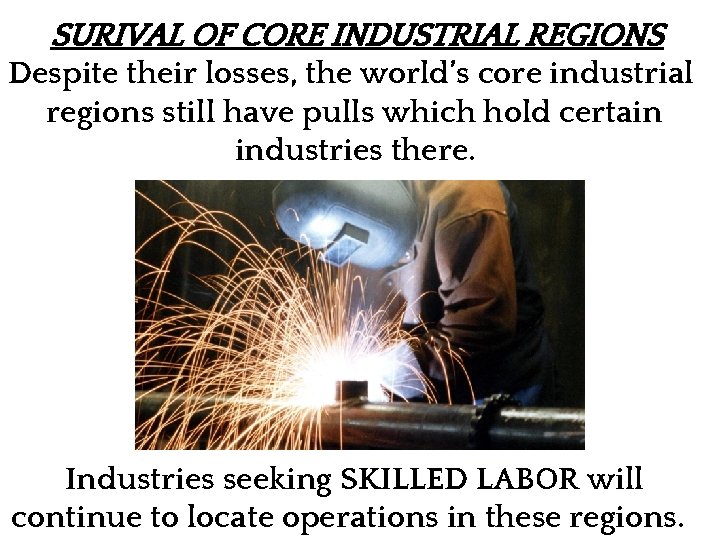
SURIVAL OF CORE INDUSTRIAL REGIONS Despite their losses, the world’s core industrial regions still have pulls which hold certain industries there. Industries seeking SKILLED LABOR will continue to locate operations in these regions.
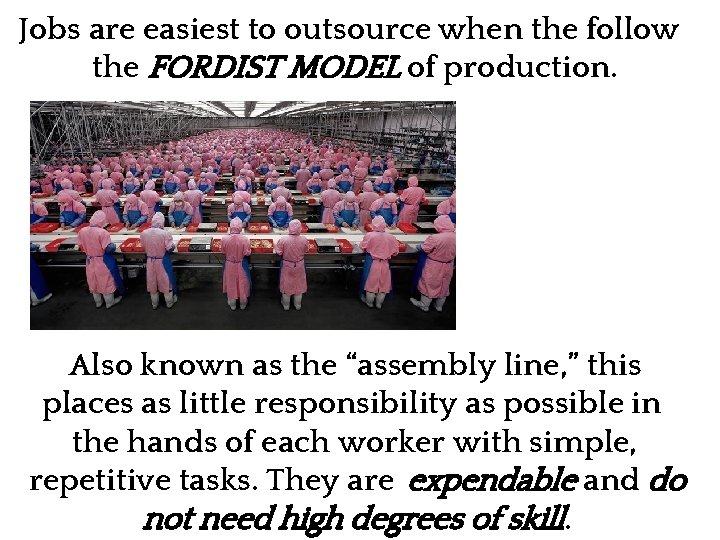
Jobs are easiest to outsource when the follow the FORDIST MODEL of production. Single-task workers at an assembly plant in China Also known as the “assembly line, ” this places as little responsibility as possible in the hands of each worker with simple, repetitive tasks. They are expendable and do not need high degrees of skill.
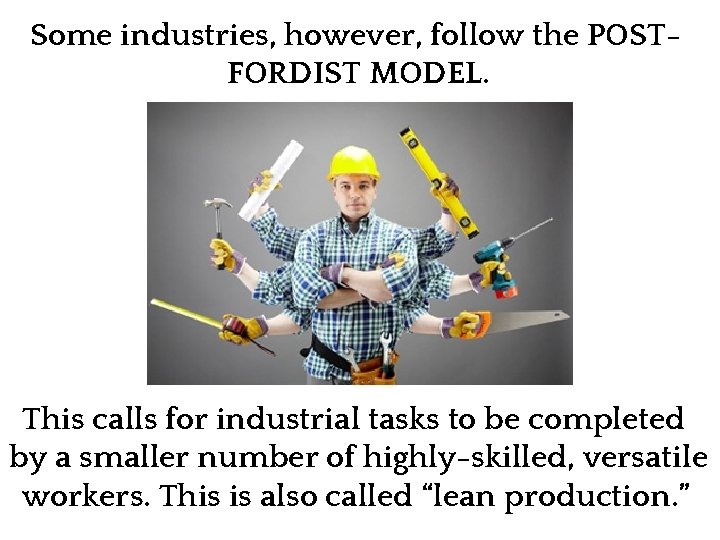
Some industries, however, follow the POSTFORDIST MODEL. This calls for industrial tasks to be completed by a smaller number of highly-skilled, versatile workers. This is also called “lean production. ”
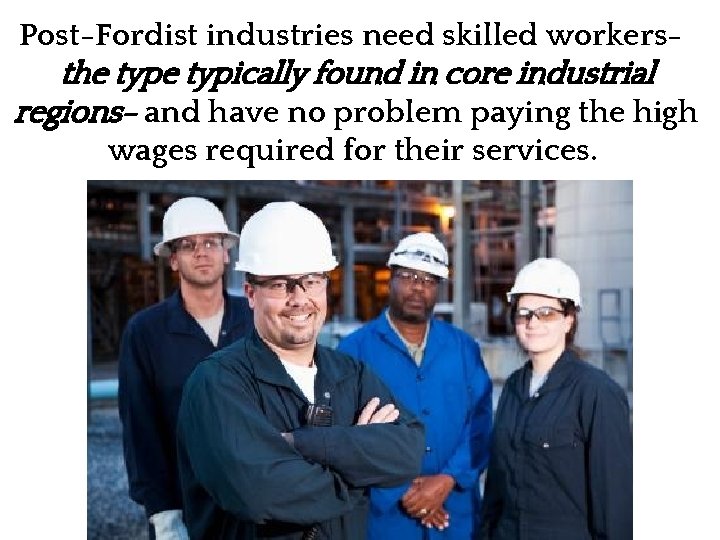
Post-Fordist industries need skilled workers- the typically found in core industrial regions- and have no problem paying the high wages required for their services.
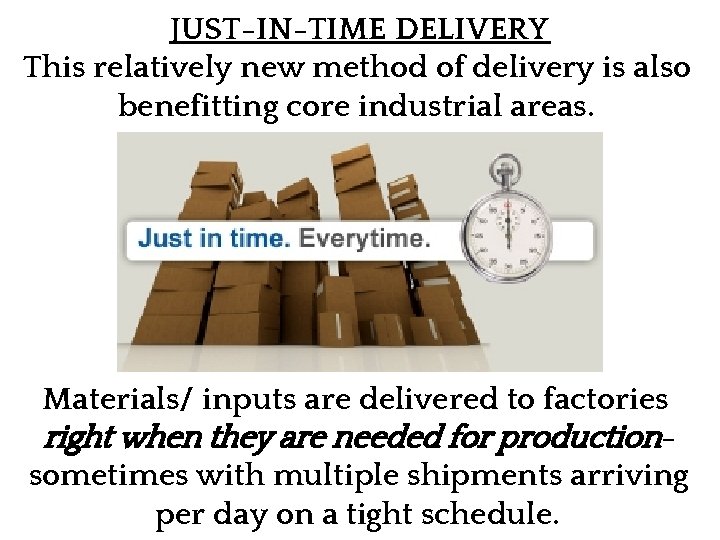
JUST-IN-TIME DELIVERY This relatively new method of delivery is also benefitting core industrial areas. Materials/ inputs are delivered to factories right when they are needed for productionsometimes with multiple shipments arriving per day on a tight schedule.
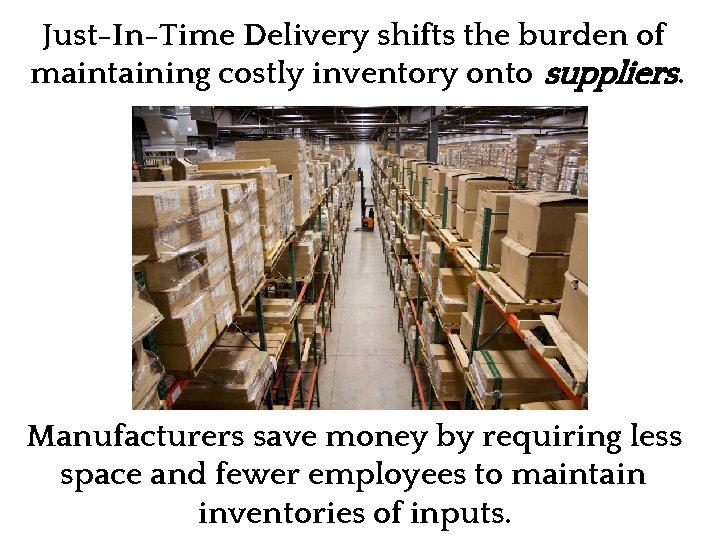
Just-In-Time Delivery shifts the burden of maintaining costly inventory onto suppliers. Manufacturers save money by requiring less space and fewer employees to maintain inventories of inputs.
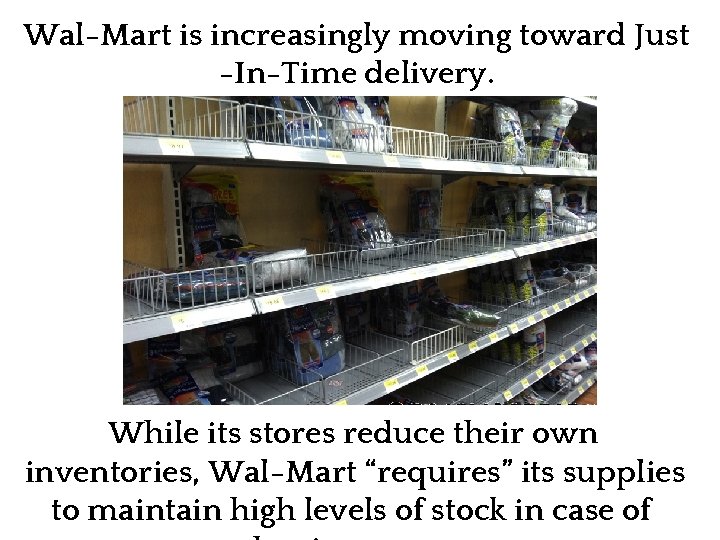
Wal-Mart is increasingly moving toward Just -In-Time delivery. While its stores reduce their own inventories, Wal-Mart “requires” its supplies to maintain high levels of stock in case of
In order to be effective, Just-in-Time supplies MUST be located near customers, usually within 50 miles. They need to be flexible and responsive, ready to deliver any amount of inputs on very short notice.
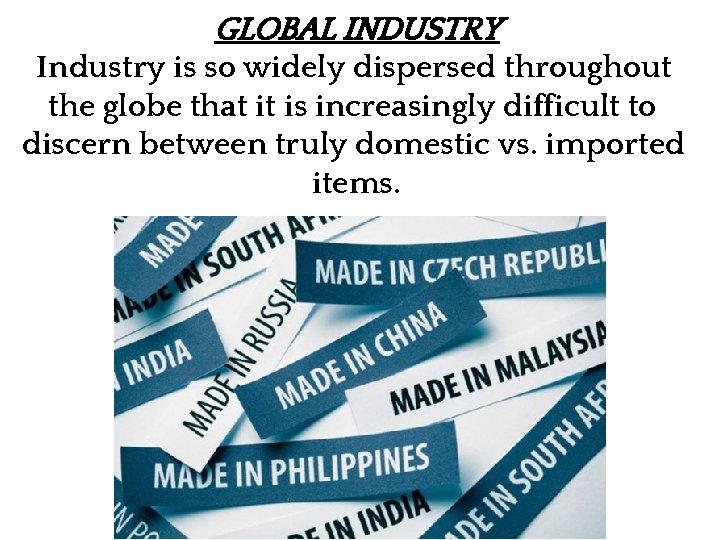
GLOBAL INDUSTRY Industry is so widely dispersed throughout the globe that it is increasingly difficult to discern between truly domestic vs. imported items.
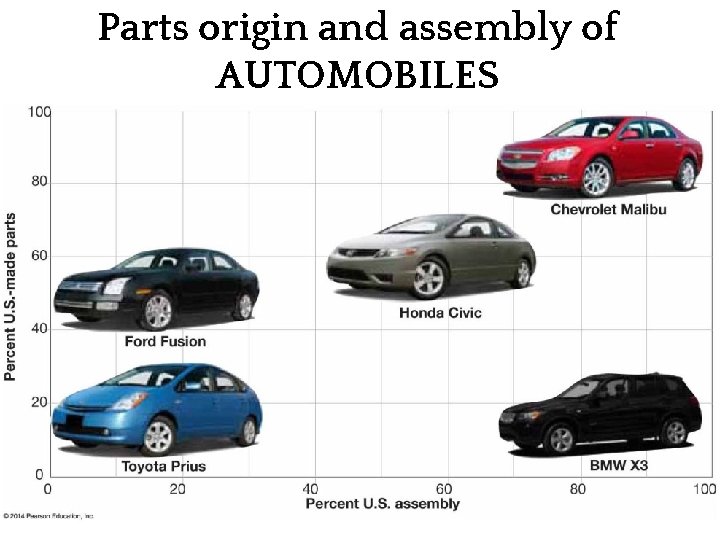
CARS are an excellent example of this. While we are used to thinking of foreign or domestic cars , the lines between the two are actually quite blurry.
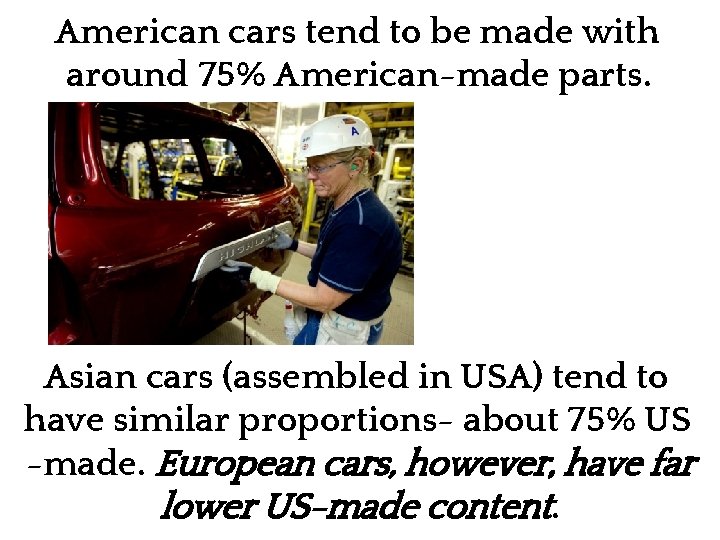
American cars tend to be made with around 75% American-made parts. American factory worker assembles a Toyota Highlander Asian cars (assembled in USA) tend to have similar proportions- about 75% US -made. European cars, however, have far lower US-made content.
Parts origin and assembly of AUTOMOBILES