
Key Ideas Underlying Concept Maps Joseph D Novak

- Slides: 19
Key Ideas Underlying Concept Maps Joseph D. Novak Cornell University & Institute for Human and Machine Cognition University of West Florida
Based on: • A Theory of Knowledge • A Theory of Learning
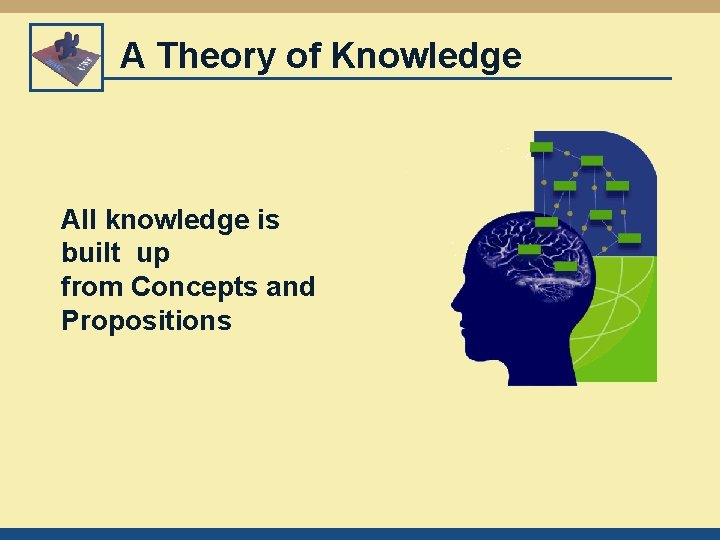
A Theory of Knowledge All knowledge is built up from Concepts and Propositions
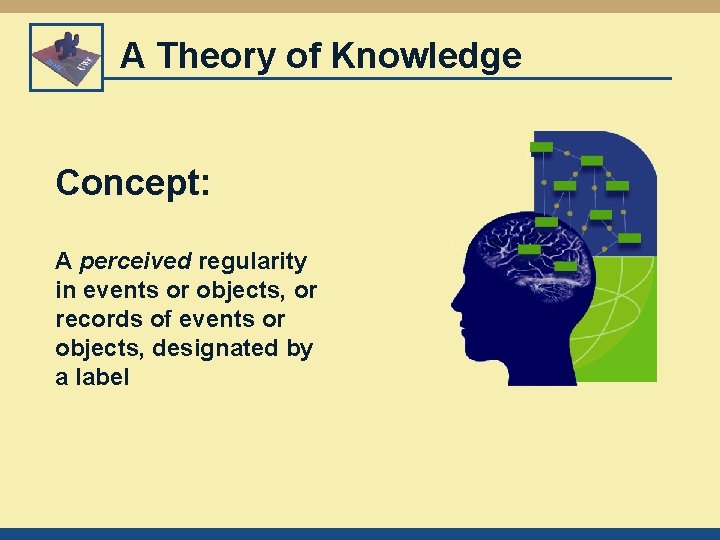
A Theory of Knowledge Concept: A perceived regularity in events or objects, or records of events or objects, designated by a label
A Theory of Knowledge Proposition: Two or more concepts combined to form a statement about something: a unit of meaning
A Theory of Knowledge Concept Maps: A tool to represent the Structure of knowledge
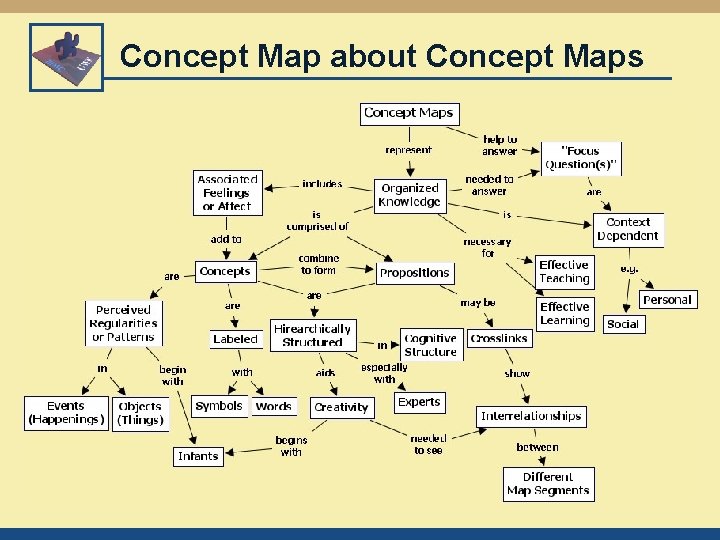
Concept Map about Concept Maps
A Theory of Learning Key idea: Each person must construct her/his own meanings for concept and propositions from experiences over time, building her/his knowledge structure
National Academy of Sciences 2002
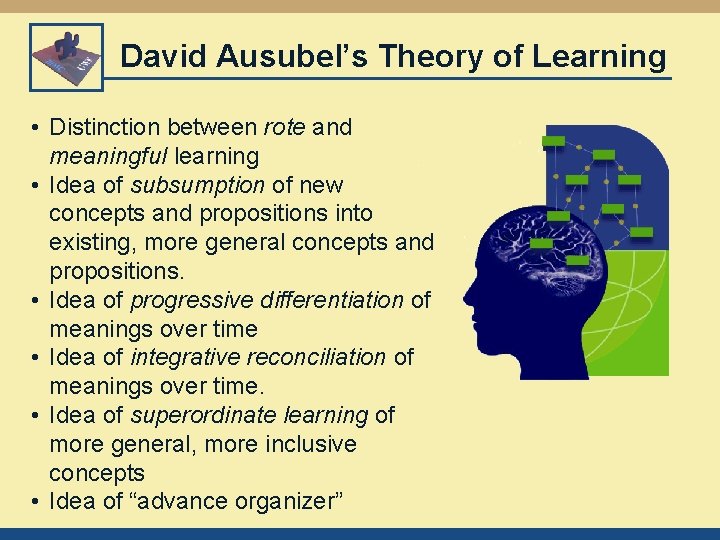
David Ausubel’s Theory of Learning • Distinction between rote and meaningful learning • Idea of subsumption of new concepts and propositions into existing, more general concepts and propositions. • Idea of progressive differentiation of meanings over time • Idea of integrative reconciliation of meanings over time. • Idea of superordinate learning of more general, more inclusive concepts • Idea of “advance organizer”
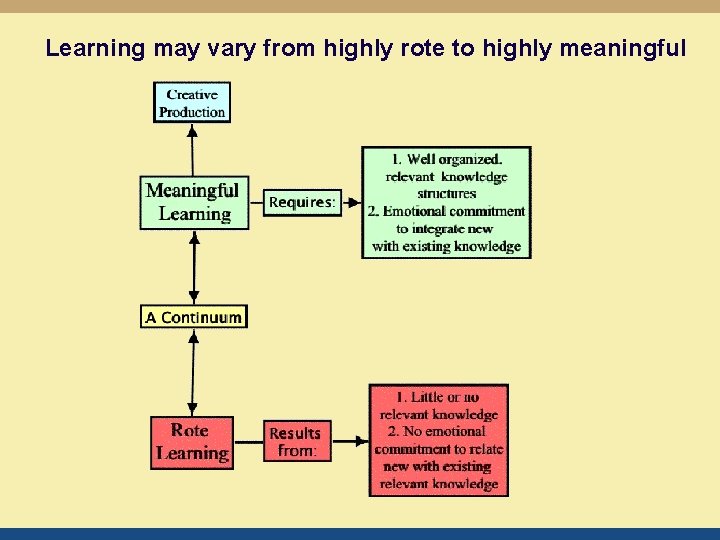
Learning may vary from highly rote to highly meaningful
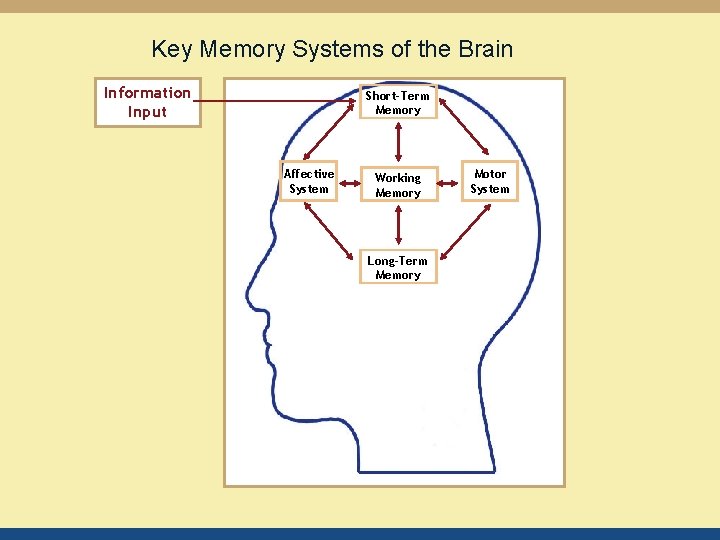
Key Memory Systems of the Brain Information Input Short-Term Memory Affective System Working Memory Long-Term Memory Motor System
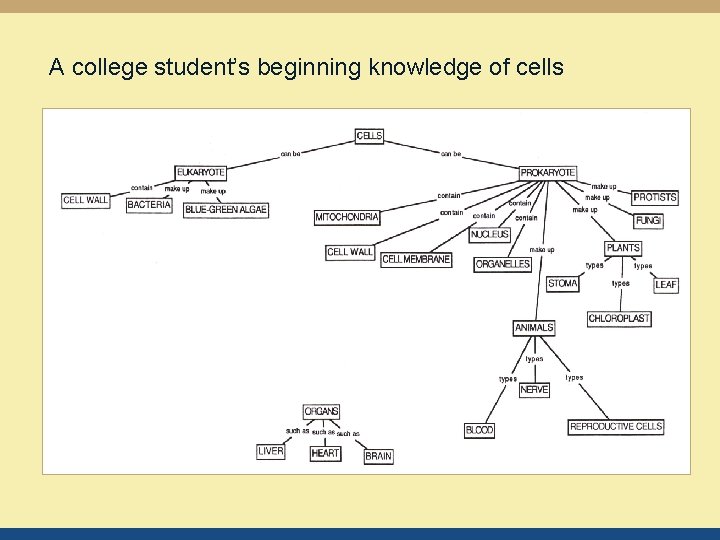
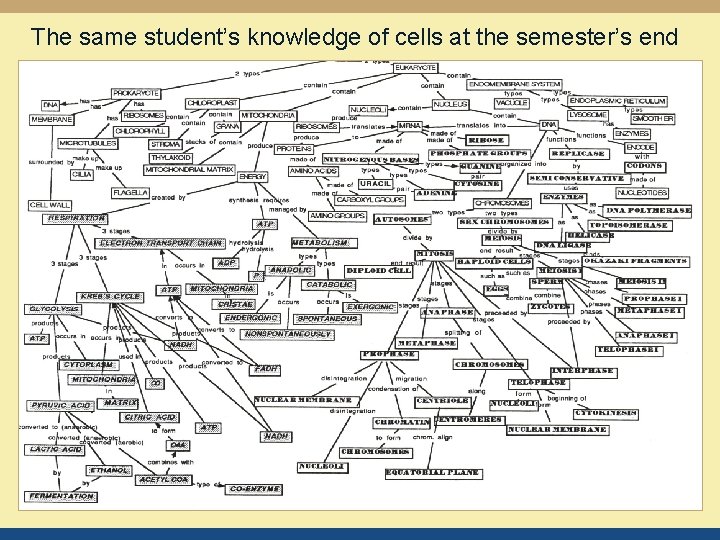
A college student’s beginning knowledge of cells
The same student’s knowledge of cells at the semester’s end
In Summary • Concept maps can represent the knowledge of experts and can facilitate the development of expertise • Building expertise requires building complex knowledge structures through meaningful learning