
Key Ideas Many systems failures were because analysts

Key Ideas • Many systems failures were because analysts tried to build wonderful systems without understanding the organization and applying a systematic approach. • The primarily goal is to create value for the organization.
Key Ideas • The systems analyst is a key person analyzing the business, identifying opportunities for improvement, and designing information systems to implement these ideas. • It is important to understand develop through practice the skills needed to successfully design and implement new information systems.
Types of Information Systems • Transaction Processing Systems • Management Information Systems • Decision Support Systems • Expert Systems Development of these systems require a good understanding of business processes and data
Systems Development Lifecycle Approach • The project – Moves systematically through phases where each phase has a standard set of outputs – Produces project deliverables – Uses deliverables in implementation – Uses gradual refinement and an iterative approach
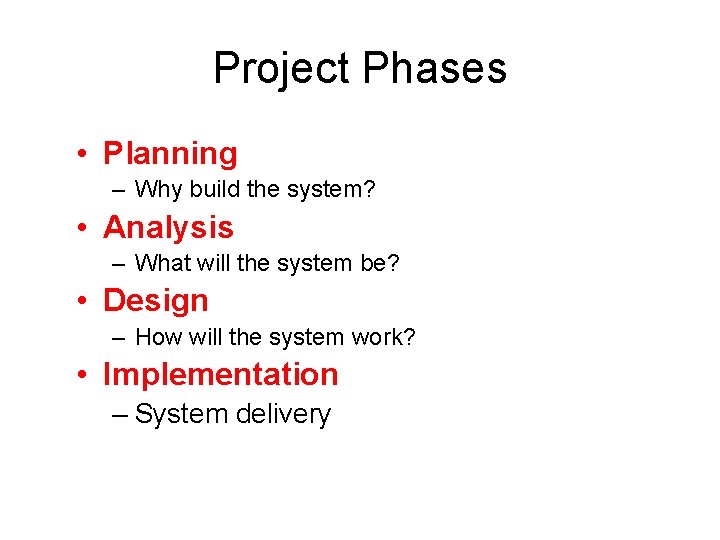
Project Phases • Planning – Why build the system? • Analysis – What will the system be? • Design – How will the system work? • Implementation – System delivery
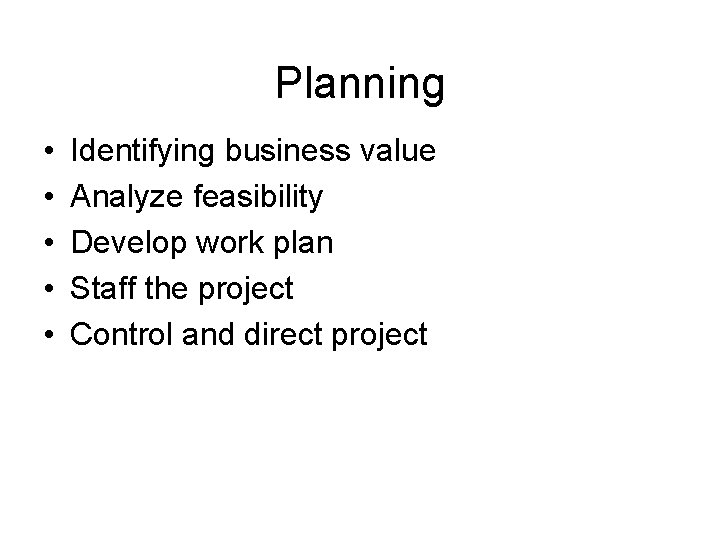
Planning • • • Identifying business value Analyze feasibility Develop work plan Staff the project Control and direct project
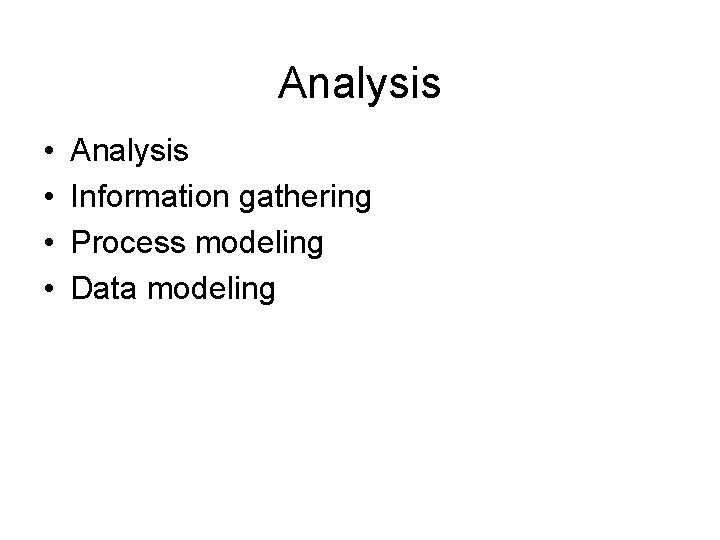
Analysis • • Analysis Information gathering Process modeling Data modeling
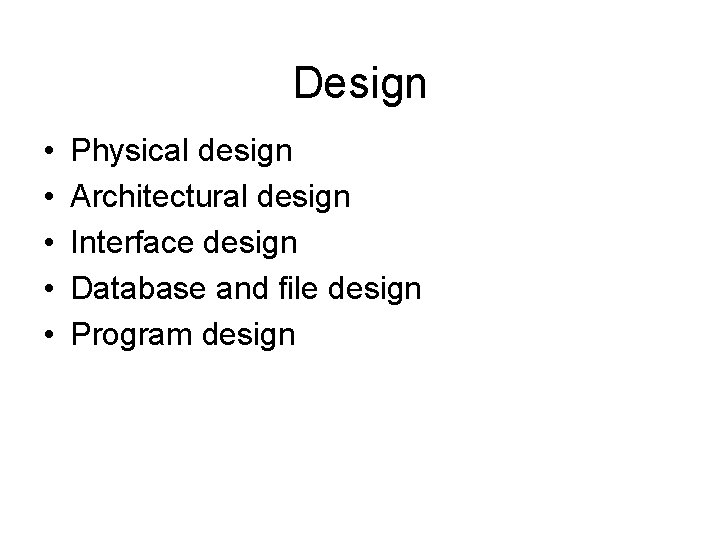
Design • • • Physical design Architectural design Interface design Database and file design Program design
Implementation • Construction • Verification and testing • Installation
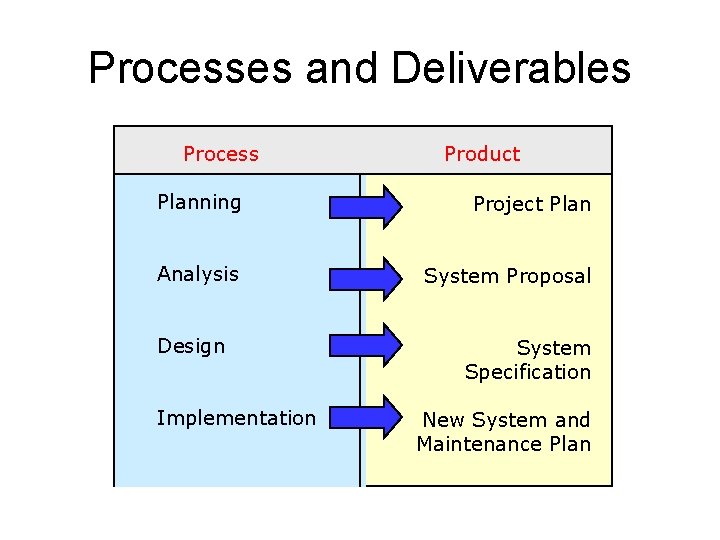
Processes and Deliverables Process Product Planning Project Plan Analysis System Proposal Design Implementation System Specification New System and Maintenance Plan
SYSTEM DEVELOPMENT METHODOLOGIES
What Is a Methodology? • A formalized approach or series of steps
Structured Design • Projects move methodically from one to the next step • Generally, a step is finished before the next one begins
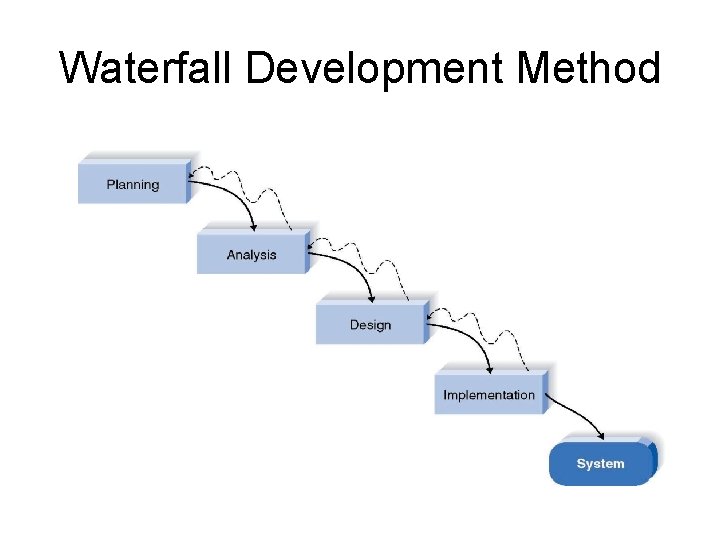
Waterfall Development Method
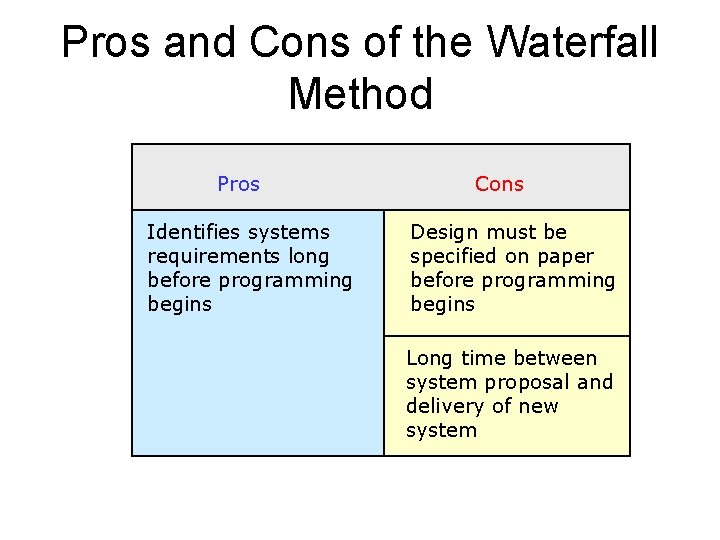
Pros and Cons of the Waterfall Method Pros Identifies systems requirements long before programming begins Cons Design must be specified on paper before programming begins Long time between system proposal and delivery of new system
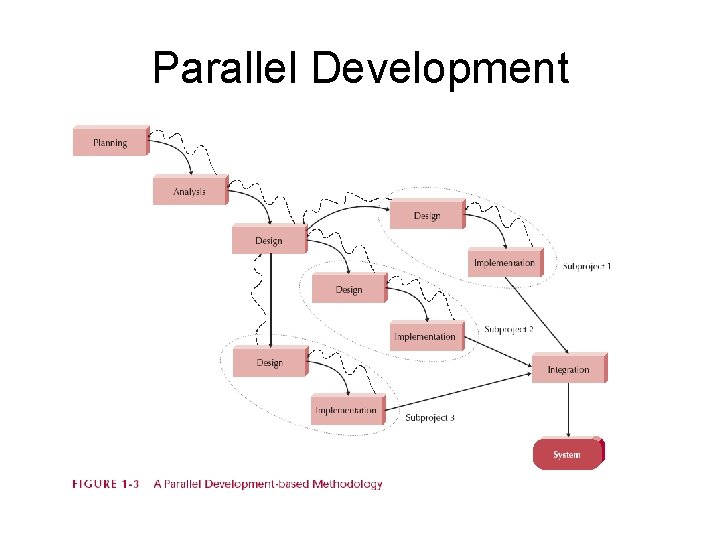
Parallel Development
Alternatives to the SDLC • Rapid Application Development (RAD) • Prototyping
Rapid Application Development • Critical elements – CASE (computer-aided software engineering) tools – JAD (join development design) sessions – Fourth generation/visualization programming languages – Code generators
Rapid Application Development Categories • Phased development – A series of versions • Prototyping – System prototyping • Throw-away prototyping – Design prototyping • Agile Development – Extreme Development
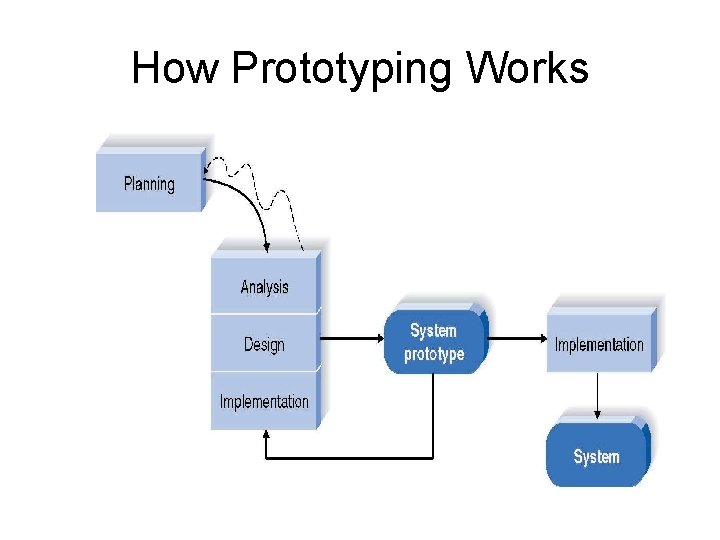
How Prototyping Works
Object-Oriented Analysis and Design • Attempts to balance emphasis on data and process • Uses Unified Modeling Language (UML) for diagramming – Use-case Driven – Architecture Centric • Functional, Static, and Dynamic views – Iterative and Incremental
Key Elements • • • Classes -- template to define objects Instances -- specific examples of class members Objects -- building block of the system Attributes -- describe data aspects of the object Methods -- the processes the object can perform Messages -- instructions sent to or received from other objects
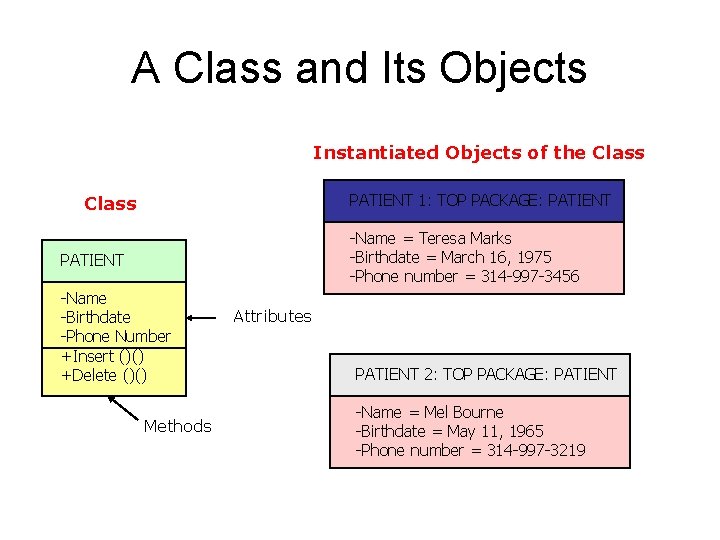
A Class and Its Objects Instantiated Objects of the Class PATIENT 1: TOP PACKAGE: PATIENT Class -Name = Teresa Marks -Birthdate = March 16, 1975 -Phone number = 314 -997 -3456 PATIENT -Name -Birthdate -Phone Number +Insert ()() +Delete ()() Methods Attributes PATIENT 2: TOP PACKAGE: PATIENT -Name = Mel Bourne -Birthdate = May 11, 1965 -Phone number = 314 -997 -3219
The Key to Reusability • Information hiding is the principle that only information required to use the object is available outside the object • Encapsulation is the mechanism that combines data and processes in a single object
UML • Unified Modeling Language • The full UML provides 9 separate diagramming techniques
- Slides: 26