
Key Ideas for class Phases of a lesson

- Slides: 21
Key Ideas for class ® Phases of a lesson ® Characteristics of teaching style groupings ® Basic Task model - task progression ® Learning domains (channels) or curriculum organizers 1
Mechanics of unit planning Tim Hopper PE 352 - 2001 Due: Friday, March 7 th 2
“The journey is the destination. ” Eldon, Kathy. (1997) The Journals of Dan Eldon. San Francisco: Chronicle Books. 3
Expectations ®A unit with subject matter and behaviour outcomes for 10 x 1 hr lessons, NOT 10 LESSON PLANS ® Choose an activity from list 4
Requirements ® Philosophical statement How you believe your unit can contribute to an active lifestyle aim. ® What is teaching? What is learning? ® What assumptions are in your understanding of these two terms? 5
How can the way you understand teaching maximize student learning? 6
Outcomes ® Intents to tasks you create. ® Tasks will lead to CAPS objectives ® Assumed entry characteristics (Experience, culture, age) 7
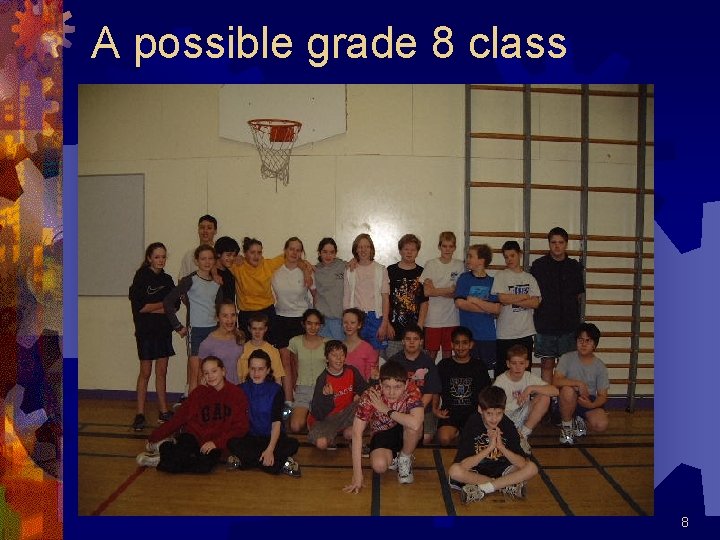
A possible grade 8 class 8
Diversity Issues - How are they different? ® Gender ratio ® Ability range ® Cultural groups UNIQUE ® Children with Special Educational needs How will diversity add to your unit? 9
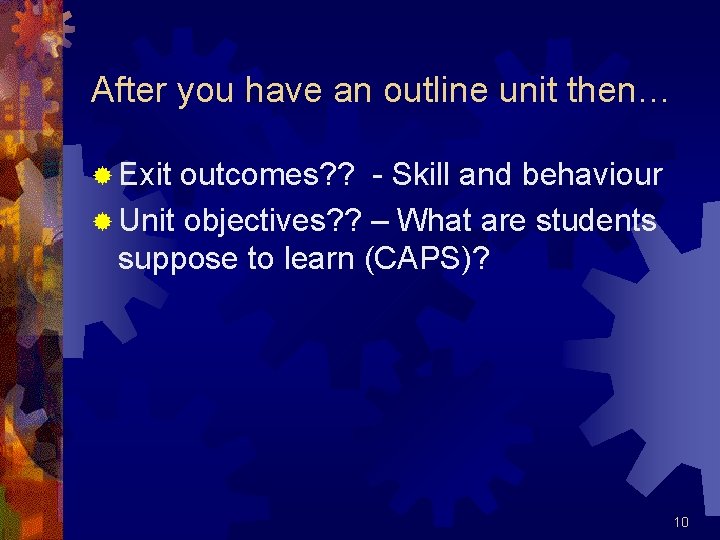
After you have an outline unit then… ® Exit outcomes? ? - Skill and behaviour ® Unit objectives? ? – What are students suppose to learn (CAPS)? 10
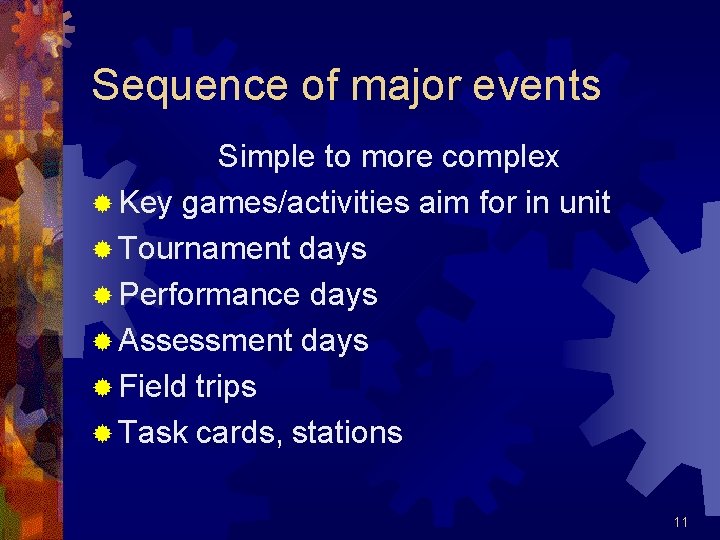
Sequence of major events Simple to more complex ® Key games/activities aim for in unit ® Tournament days ® Performance days ® Assessment days ® Field trips ® Task cards, stations 11
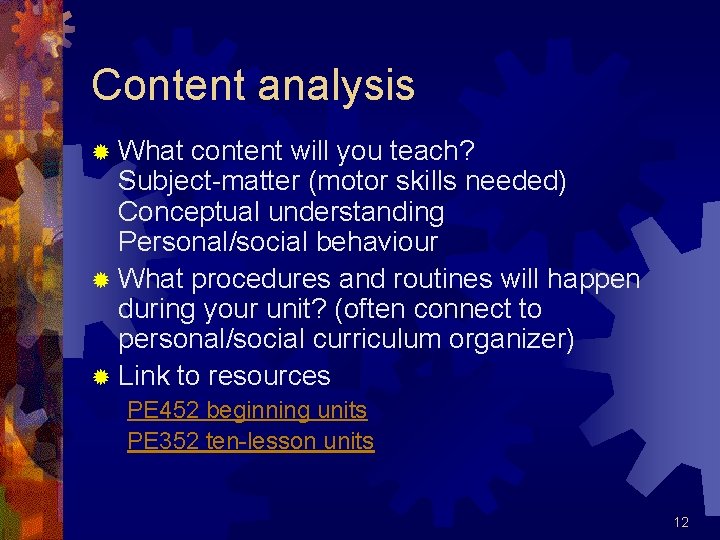
Content analysis ® What content will you teach? Subject-matter (motor skills needed) Conceptual understanding Personal/social behaviour ® What procedures and routines will happen during your unit? (often connect to personal/social curriculum organizer) ® Link to resources PE 452 beginning units PE 352 ten-lesson units 12
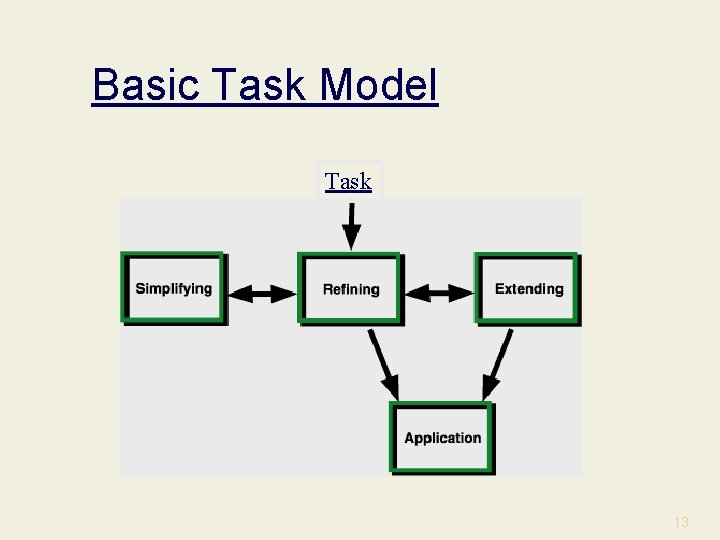
Basic Task Model Task 13
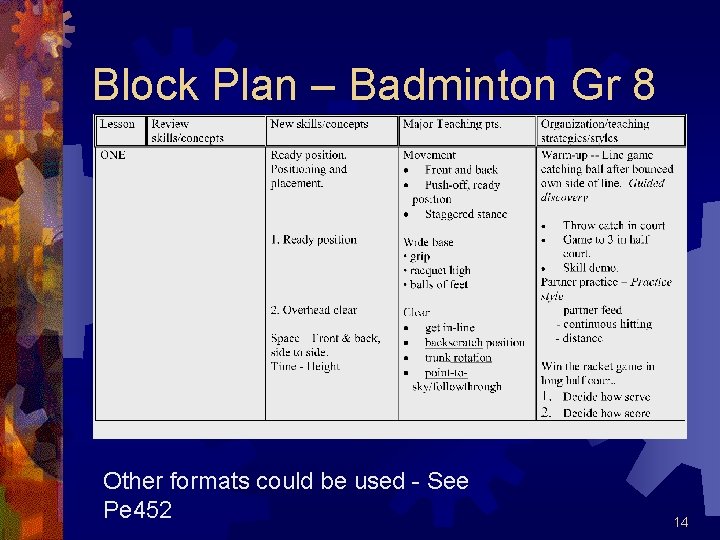
Block Plan – Badminton Gr 8 Other formats could be used - See Pe 452 14
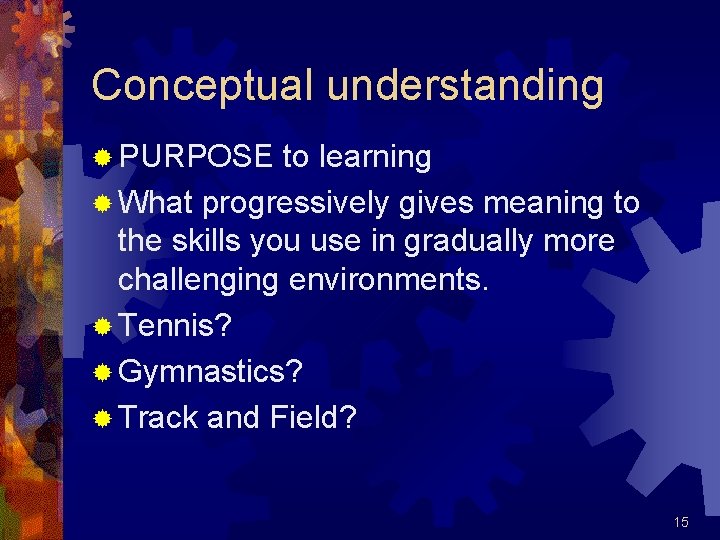
Conceptual understanding ® PURPOSE to learning ® What progressively gives meaning to the skills you use in gradually more challenging environments. ® Tennis? ® Gymnastics? ® Track and Field? 15
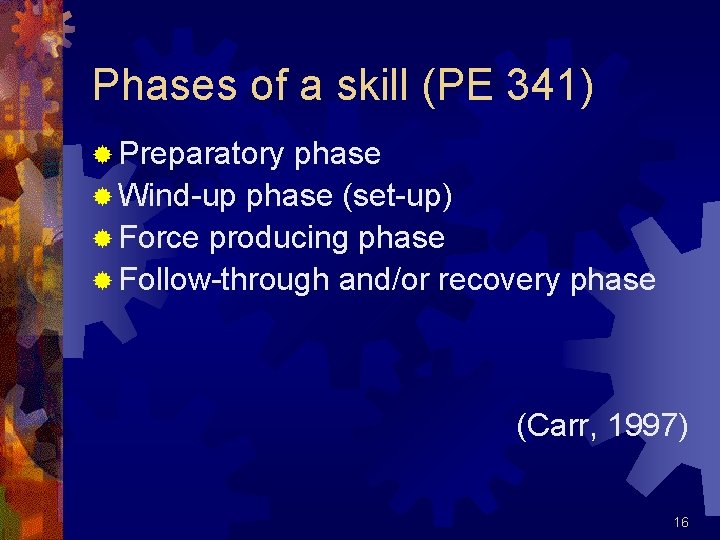
Phases of a skill (PE 341) ® Preparatory phase ® Wind-up phase (set-up) ® Force producing phase ® Follow-through and/or recovery phase (Carr, 1997) 16
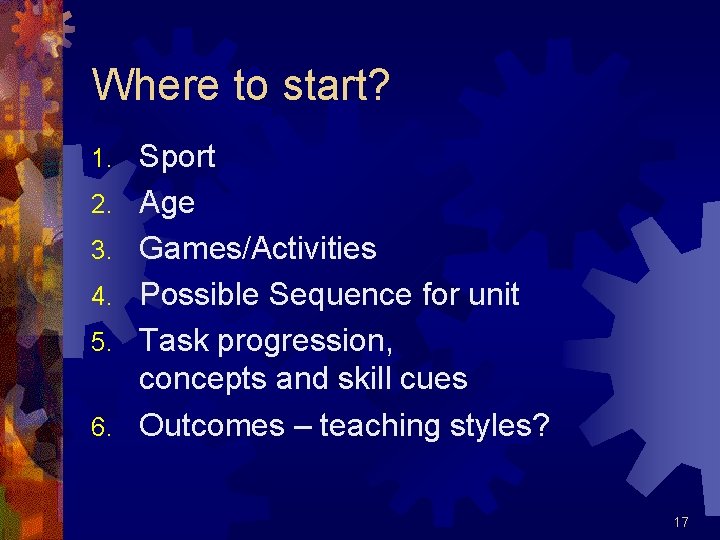
Where to start? 1. 2. 3. 4. 5. 6. Sport Age Games/Activities Possible Sequence for unit Task progression, concepts and skill cues Outcomes – teaching styles? 17
Assessment ideas ® What results do you expect? ® How will you provide feedback to the learners regarding their progress? Formal – formative and summative Informal – ongoing (NB - Will develop in class after reading break) 18
Where do teaching styles fit into your plan? ® Student interest ® Practice ® Feedback ® Learning theories ® Student responsibility ® Active lifestyle concepts 19
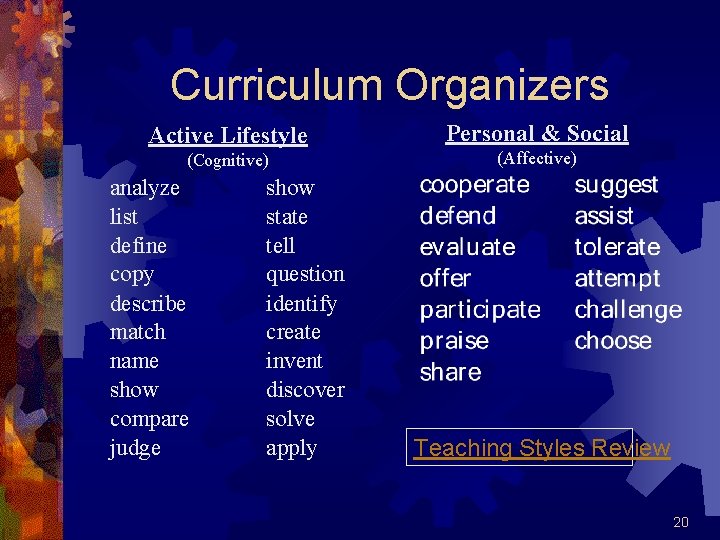
Curriculum Organizers Active Lifestyle (Cognitive) analyze list define copy describe match name show compare judge show state tell question identify create invent discover solve apply Personal & Social (Affective) Teaching Styles Review 20
MISSION 21