
Key Gender Issues in Value Chain Development Examining
- Slides: 24
Key Gender Issues in Value Chain Development
Examining our attitudes • Do you really want to see women succeed as businesspeople and entrepreneurs? • Do you want women to own large businesses? Manage staff? Control new technology?
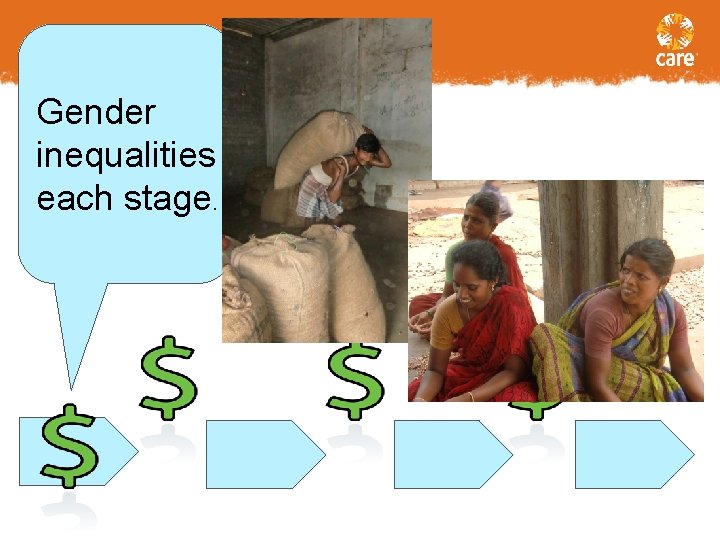
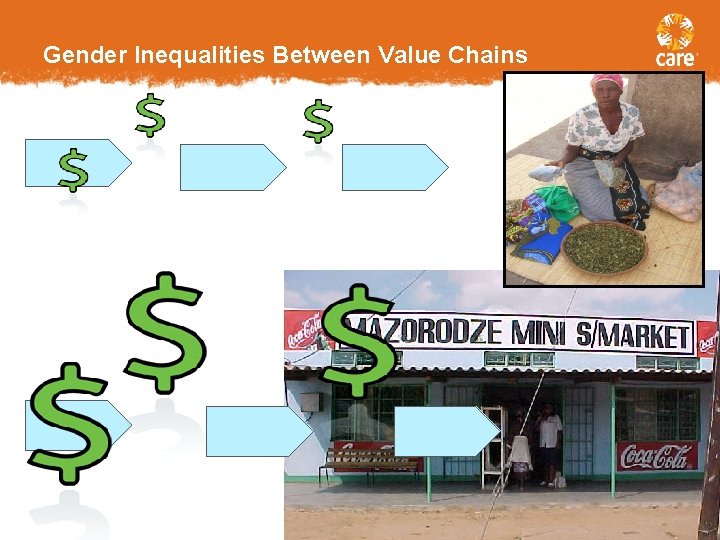
Gender inequalities each stage.
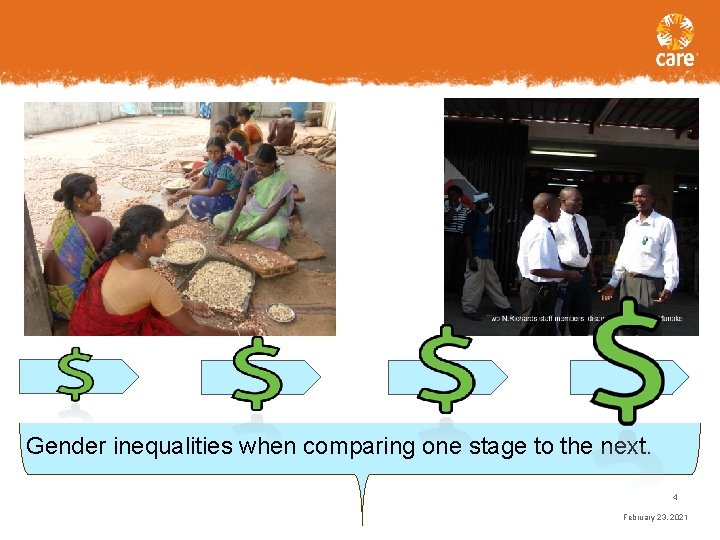
Gender inequalities when comparing one stage to the next. 4 February 23, 2021
Gender Inequalities Between Value Chains
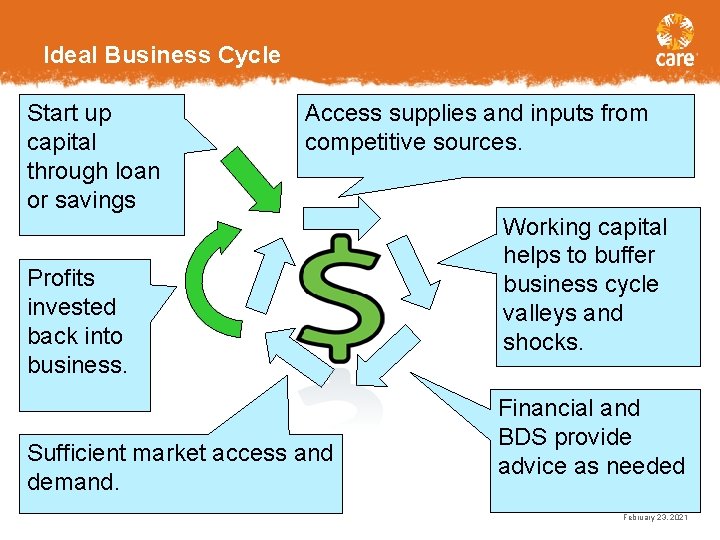
Ideal Business Cycle Start up capital through loan or savings Access supplies and inputs from competitive sources. Profits invested back into business. Sufficient market access and demand. Working capital helps to buffer business cycle valleys and shocks. Financial and BDS provide advice as needed 6 February 23, 2021
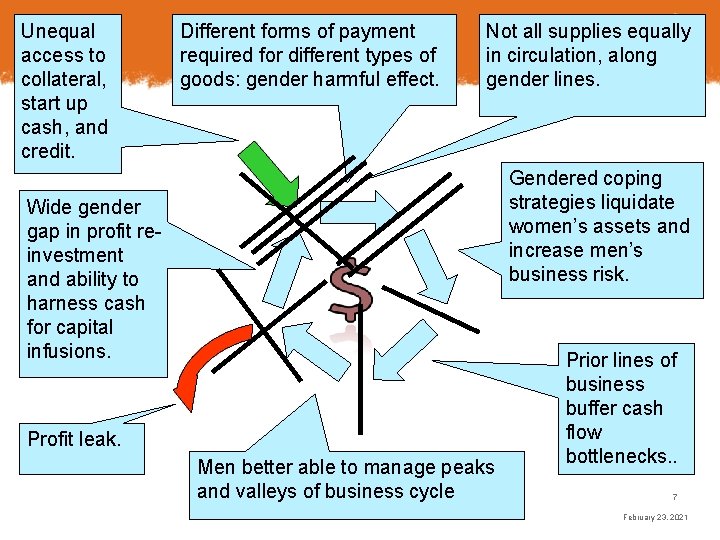
Unequal access to collateral, start up cash, and credit. Different forms of payment required for different types of goods: gender harmful effect. Not all supplies equally in circulation, along gender lines. Gendered coping strategies liquidate women’s assets and increase men’s business risk. Wide gender gap in profit reinvestment and ability to harness cash for capital infusions. Profit leak. Men better able to manage peaks and valleys of business cycle Prior lines of business buffer cash flow bottlenecks. . 7 February 23, 2021
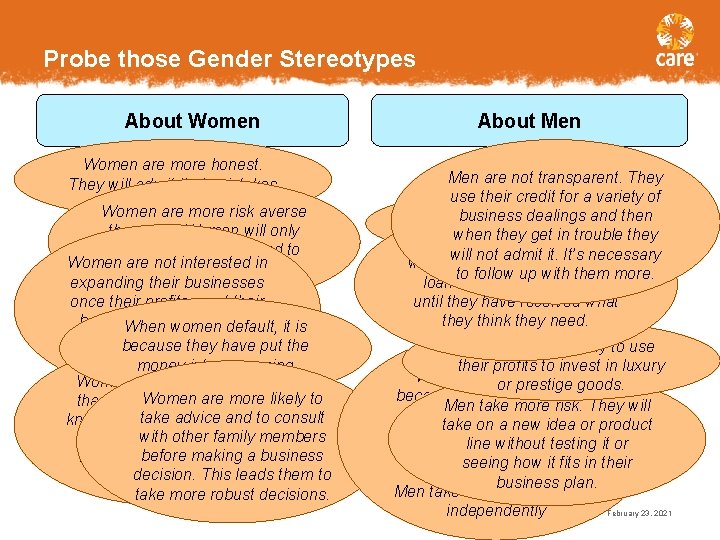
Probe those Gender Stereotypes About Women are more honest. They will admit their mistakes and ask formore help. risk averse Women are than men. Women will only take the credit they need to Womenmeet are not interested basic businessinand expandinglivelihood their businesses needs. once their profits meet their basic needs. Womendefault, are When women it is more likely to reinvest in the because they have put the business money or in basic intoneeds. a pressing Women arehousehold more cautious need. Women are more than men. Women want to likely to advice and to consult know moretake about the product otherinvest familyinmembers lines andwith will only before a business something they making think they decision. can sell. This leads them to take more robust decisions. About Men are not transparent. They use their credit for a variety of Men will expand into too business dealings and then manywhen businesses quickly. they gettoo in trouble Men are more pushy than will not admit it. It’s necessary women. They will ask for large to follow up with them more. loans and will keep asking until they have received what they think they need. Men are more likely to use their profits to invest in luxury When men default, it is or prestige goods. because they have taken on Men take more risk. They will too much risk, spread take on a new idea or product themselves too thin, and not line without testing it or reinvested back into the seeing how it fits in their business plan. Men take business decisions February 23, 2021 independently
Examples of What Works from Other CARE Projects Will these approaches change gender relations? structures?
Common Lessons 1. Explicitly go and find the women and ensure they participate in all processes of economic development. 2. Training, training. 3. Focus on women as small and medium enterprise owners and cooperative managers (not just better producers). 4. Specifically combat the “businessman” mindset at household, cooperative, government and private sector levels. 5. Link women’s organizations directly to government schemes and private sector services and products. 6. Work with both mixed-sex and same sex groups (but remember to change your strategy!) 7. Give control over key technology over to women. 10 February 23, 2021
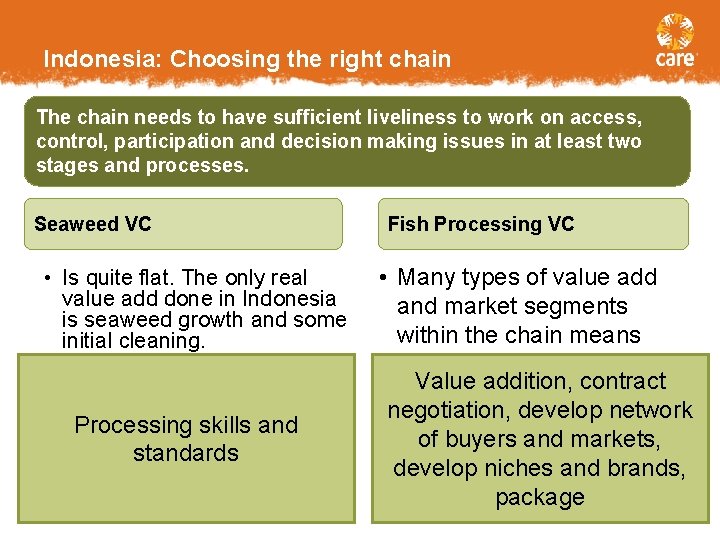
Indonesia: Choosing the right chain The chain needs to have sufficient liveliness to work on access, control, participation and decision making issues in at least two stages and processes. Seaweed VC • Is quite flat. The only real value add done in Indonesia is seaweed growth and some initial cleaning. • In this context, there is little room to push different patterns in access to and Processing skills and control over key processes and products in the chain. standards Fish Processing VC • Many types of value add and market segments within the chain means that there are more Value addition, contract possibilities to engage negotiation, develop network women in valued trade of diversification. buyers and markets, and develop niches and brands, package February 23, 2021
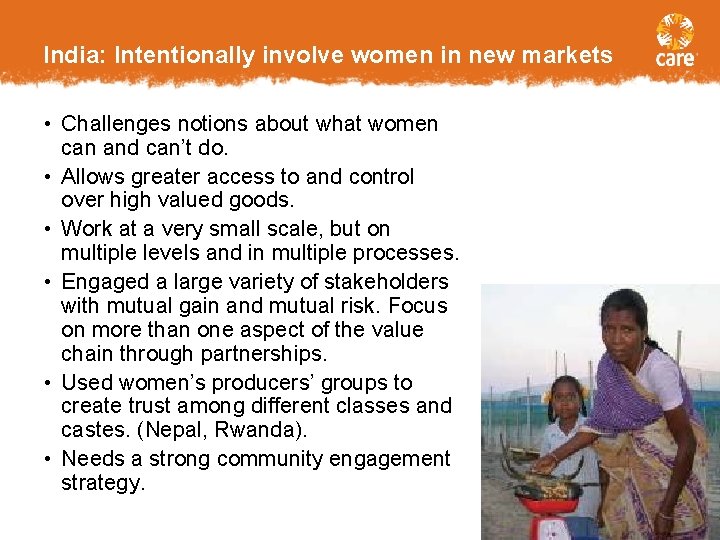
India: Intentionally involve women in new markets • Challenges notions about what women can and can’t do. • Allows greater access to and control over high valued goods. • Work at a very small scale, but on multiple levels and in multiple processes. • Engaged a large variety of stakeholders with mutual gain and mutual risk. Focus on more than one aspect of the value chain through partnerships. • Used women’s producers’ groups to create trust among different classes and castes. (Nepal, Rwanda). • Needs a strong community engagement strategy.
MEDA Pakistan: Going beyond IGAs • First phase concentrated on business management and home-based production. Focus was on the idea of women earning an independent wage or salary from their sole proprietor businesses within the family context. • Second phase developed female aggregators and intermediaries and promoted women in non-traditional jobs such as small appliance repair. Link with ILO to complement VC studies. • http: //www. meda. org. pk/pathways-pursestrings/ Yes, there is a value in working on basic management and technical skills for women’s home based businesses, but there also needs to be a strategy to push the envelope at downstream stages and within stages.
Rwanda, Kenya: Limits to group savings Advantages Disadvantages • Good to build up a savings culture and instill basic money and budget management principles. • Good for start ups and entrants. • New VSLA manual provides some simple tools to address gender issues arising from women’s increasing economic activity. • VSLA recommended only if no indigenous system exists. • Not appropriate for entrepreneurs as focus is on savings and livelihood behavior change, not on business growth and sustenance. February 23, 2021
Ghana: Prevent gender harm before it happens The Structural Risk The “Power With” Solution • Understand that if soybeans and cowpeas suddenly become valuable, men will begin to control the more valued stages of these two traditionally femaledominated chains. • Form women’s buying and lobbying associations. • Work with current maledominated associations to include women who have been strengthened through their marketing groups. • Engage male champions for women as entrepreneurs right at the beginning. February 23, 2021
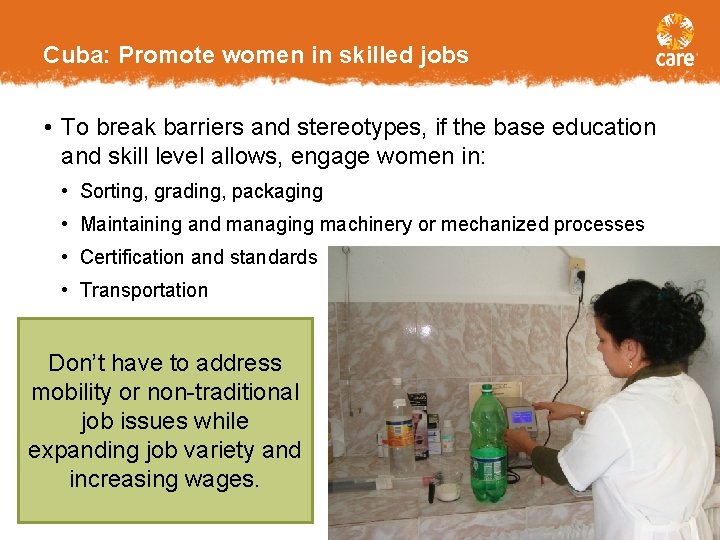
Cuba: Promote women in skilled jobs • To break barriers and stereotypes, if the base education and skill level allows, engage women in: • Sorting, grading, packaging • Maintaining and managing machinery or mechanized processes • Certification and standards • Transportation Don’t have to address mobility or non-traditional job issues while expanding job variety and increasing wages.
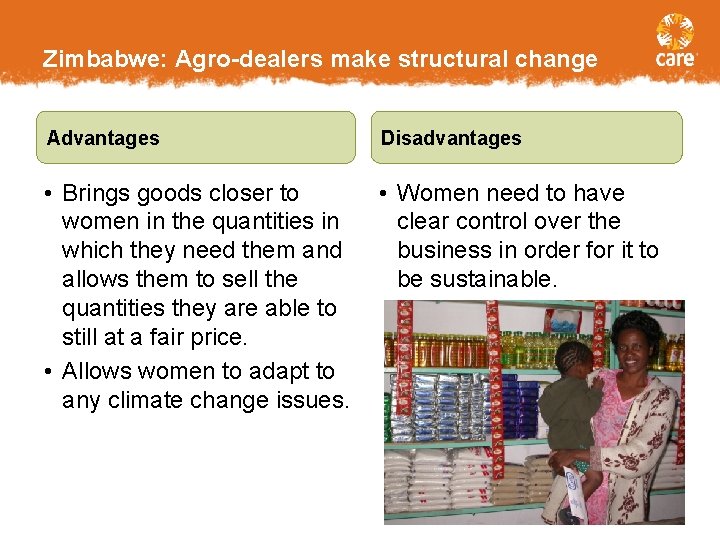
Zimbabwe: Agro-dealers make structural change Advantages Disadvantages • Brings goods closer to women in the quantities in which they need them and allows them to sell the quantities they are able to still at a fair price. • Allows women to adapt to any climate change issues. • Women need to have clear control over the business in order for it to be sustainable. February 23, 2021
Peru and Pakistan: Women can be visible Women can deliver mobile services if an appropriate model has been established. Peru: Cattle Marketing Project Pakistan: Earthquake Recon • Trained 109 community vets who acted as technical assistants and market intermediaries. • Responsible for 81% increase in income in related households. • All vets were young men. • Set men up as mobile vets in remote hilly areas and women up in point-ofsale shops in the valleys. • Met coverage needs without oversupply of services. • 35% - 40% of vets were female. February 23, 2021
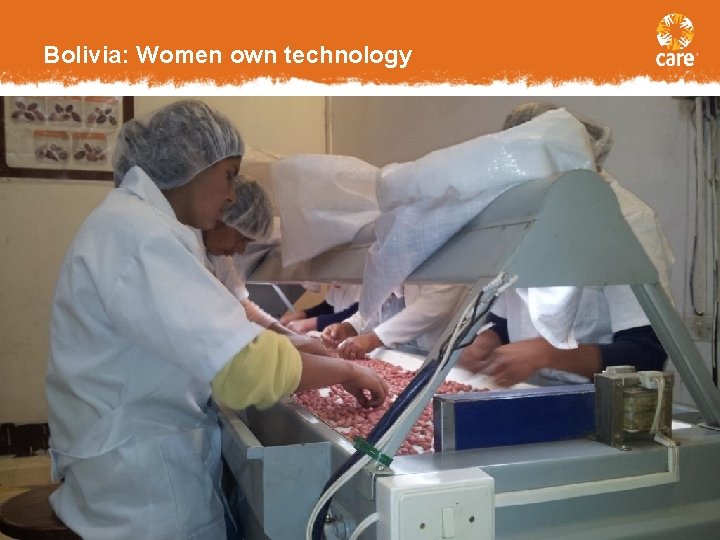
Bolivia: Women own technology 19
Bolivia and India: Same sex or mixed sex cooperatives? Bolivia Peanuts • Will perform gender assessment of business associations to change gender biases in existing cooperatives. • Women as well as men to register. • Quotas for membership and leadership. Attempts to increase women’s • Change jobs that women do as power withinmembers the center of cooperative to include control management key power, butand baby-steps foroflong pieces of technology and selling. -term change. DFATD’s preferred method. India Cashews • Women’s businesses and cooperatives means women learn about all stages of business, from regional management to processing. • Diversity Women’s then of businesses jobs, very decent entering into a malework, still power to engage in dominated field but have downstream, downstream the chain. women beeninghetto-ised? February 23, 2021
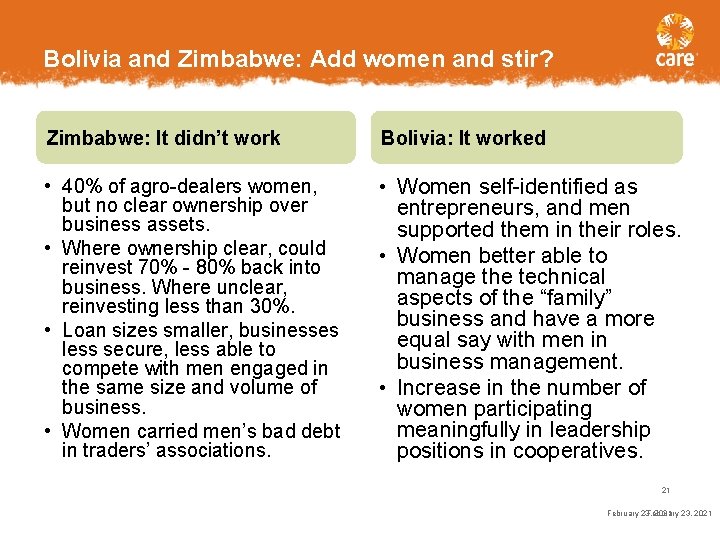
Bolivia and Zimbabwe: Add women and stir? Zimbabwe: It didn’t work Bolivia: It worked • 40% of agro-dealers women, but no clear ownership over business assets. • Where ownership clear, could reinvest 70% - 80% back into business. Where unclear, reinvesting less than 30%. • Loan sizes smaller, businesses less secure, less able to compete with men engaged in the same size and volume of business. • Women carried men’s bad debt in traders’ associations. • Women self-identified as entrepreneurs, and men supported them in their roles. • Women better able to manage the technical aspects of the “family” business and have a more equal say with men in business management. • Increase in the number of women participating meaningfully in leadership positions in cooperatives. 21 February 23, 2021
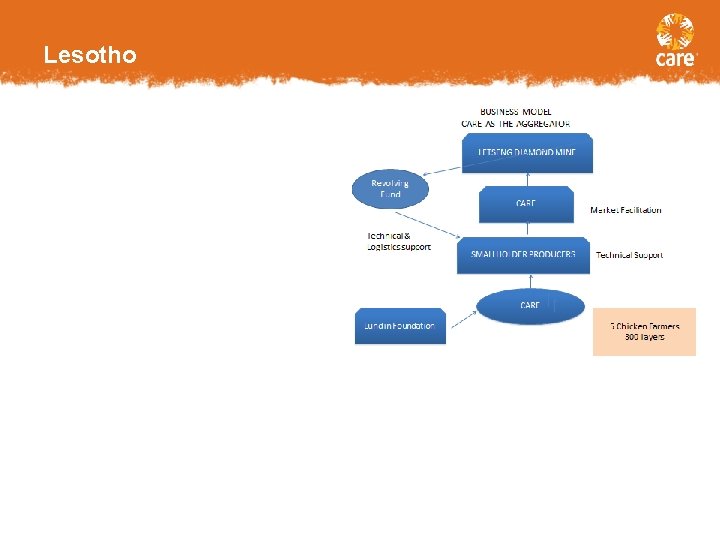
Lesotho
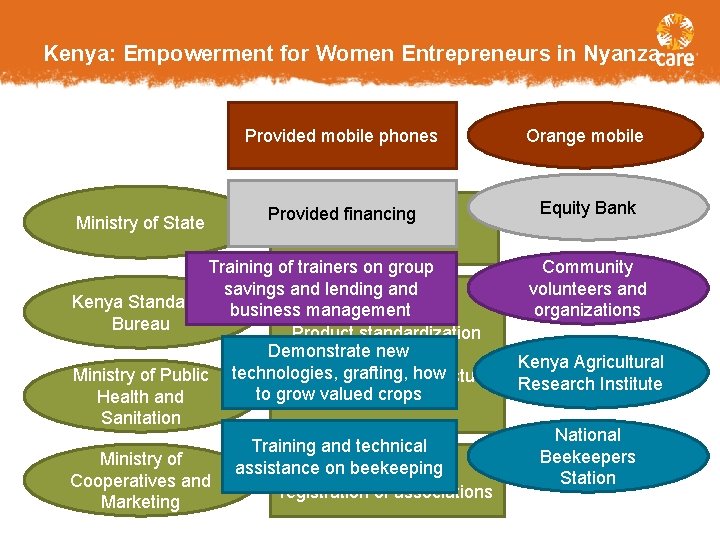
Kenya: Empowerment for Women Entrepreneurs in Nyanza Provided mobile phones Ministry of State Provided financing Leader buy in Training of trainers on group savings and lending and Kenya Standards business management Bureau Product standardization Demonstrate newhealth and public grafting, Ministry of Public technologies, requirements for how foodstuffs to grow valued crops Health and Sanitation Ministry of Cooperatives and Marketing Training and technical assistance Association on beekeeping and registration of associations Orange mobile Equity Bank Community volunteers and organizations Kenya Agricultural Research Institute National Beekeepers Station
What are others in SL doing? • Oxfam is doing dairy in SL but admittedly fewer women have participated the more developed the chain has become. • ILO